Sunday, July 5, 2020

Rebuilding History at Kumamoto Castle

-- Susan, every other Sunday

Japan has many castles, treasured relics from a long and historically fascinating feudal age. While most of these castles are reproductions, several have been preserved almost intact since their construction during the 16th and 17th centuries (and in a few cases, even earlier).

The main keep at Kumamoto Castle


One of the most beautiful and (largely) well-preserved castles in Japan is Kumamoto-jō (Kumamoto Castle), located in the city of Kumamoto, on Kyushu (the southernmost of Japan's four major islands.

First completed in 1607 (toward the end of the Sengoku Jidai, or Warring States period), Kumamoto-jō was originally the stronghold of Daimyō Kato Kiyomasa, who ruled the Kumamoto area.

The castle featured high stone foundations that curved to repel intruders, and to give the castle extra protection against Japan's many earthquakes. These walls, known as musha-gaeshi, are seen in many Japanese castles, but many people believe Kumamoto Castle represents the apex of this architectural feature.

The curving walls beneath the keep were designed to repel invaders and provide support against earthquakes.

Kumamoto-jō also had a unique double tenshu (keep). The tenshu was the central command area of the castle, and although most Japanese castles had only a single multi-story tenshu, Kumamoto Castle's was twice as large, and featured a second tower adjacent and joined to the first.

The unique double tenshu of Kumamoto-jō

Like most Japanese castles, Kumamoto-jō had a series of outer fortifications, consisting of tall stone walls surmounted by yagura (turrets) that served double duty as watchtowers and platforms for defense.

The Hitsujisaru Yagura, in the outer fortifications.


Today, as throughout its history, visitors to Kumamoto Castle must walk along curving paths through several rings of walls and gates to reach the inner ring where the keep still stands.

If you've been paying close attention to the images in this post, you probably noticed that many of the walls appear to be in tumble-down disarray--a sharp contrast to my earlier description of Kumamoto-jō as a well-preserved historical site.

Note the crumbling wall beneath the turret.


On April 16, 2016, a magnitude 7.0 earthquake struck Kumamoto, damaging the castle and collapsing not only a number of exterior walls:

Another casualty of the 2016 quake.

but also a large portion of the foundation beneath the smaller side of the castle keep, called the Sho-tenshu. Many of the Sho-tenshu's interior walls also collapsed when the foundation fell away.

The inner portion of the foundation beneath the left side tower fell away in the earthquake. Scaffolds support it now.


Remarkably, the Dai-tenshu--the larger side of the keep--suffered almost no exterior damage from the quake (although a number of its interior walls collapsed).


The entirety of the massive castle grounds--which had been a public park since the castle was first restored to its original glory after the end of World War II--were closed to the public for safety reasons. Fortunately, because the castle has been an important part of Kumamoto's history for centuries, a massive restoration effort began almost immediately, and has been in progress since the summer of 2016.

A photograph of the Tenshu, taken shortly after the quake in 2016.

The first phase of the castle reopening took place in October 2019, and I was lucky enough to visit, and tour the grounds, in January of 2020. While enormous cranes still tower over the Tenshu and the castle buildings remain off limits to visitors (and likely will remain that way for at least another year), it is once again possible to walk the entire grounds, and to marvel at the size and beauty of this massive monument to the storied history of Japan.

While not all monuments are necessarily worth preserving, Kumamoto-jō is not only a lovely example of traditional castle architecture from a period most of us can experience only in history books, but also a symbol of the enduring love and respect the people of Kumamoto have for their place in Japanese history.

Kato Kiyomasa, original lord of Kumamoto Castle.

Walking the gravel paths and staring up at the massive towers engenders deep feelings of awe and respect for the people who designed and built these massive structures many centuries ago, without the benefits of cranes and other modern engineering devices. It's impossible to appreciate them fully from photographs and history books--for example: consider the fact that despite the massive damage it sustained, most of the castle survived a 7.0 earthquake--400 years after it was originally constructed.

That kind of effort and craftsmanship deserves to be preserved and restored for future generations to enjoy.




Saturday, July 4, 2020

This is How It Used to Be

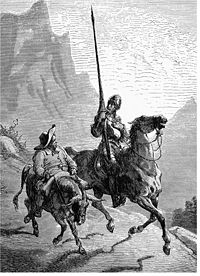
Woodcut print by Gustave Dore

Jeff—Saturday

Happy Fourth of July, US folks. And Happy Open for Tourist Season, Greece.

Not sure when Americans will be able to visit Greece or anywhere in the EU again, but I don’t want to talk about any of that, or anything else that makes us question what the hell’s going on in our world.  At least not this week.

There’s plenty of that everywhere you turn, whether you’re looking for it or not.

So, I’m going to talk about something crazy.  Not really crazy, but decidedly Greek and exemplative of how I’ve gone about writing my books based in Greece.  Admittedly, retelling the tale also shows how much I miss being there.  

Researching a new murder mystery can be fun.  Especially when it’s placed in Greece and you’re looking for the perfect spot to do the deed. Or find the corpse(s).   Deep blue seas, wispy white clouds, green-brown hills, blood-red blood.  Yes, finding the site is fun.   Mainly because it’s something you can do without confiding your purpose to a soul beyond your own. 

Saying, “Hi, can you suggest the perfect spot for a dismembering moment,” is not likely to get you the same sort of warm response as, “Your spanikopita are the best spinach pies I’ve ever tasted.”  [Note: On the off chance that it does, take a hint from Sweeney Todd and dine elsewhere.]

In that spirit, I’ve taken to fading in among the anonymous tourists driving and hiking about Greece until the moment I come across that spot my deep, dark mysterious mind always told me must be out there.  Then, voilà, let the mayhem begin.

Having said all that, some plot elements can take hold of your mind that by their nature necessitate a far more adventuresome sort of exploration.  Like when a little voice in your head says, “Hey, genius, why don’t you make the robbery of the millennium pivotal to your story.”

When will I ever learn that the most dangerous voices are the most flattering ones?   And of that lot, the worst by far are those blithering away inside your own head—even more so than that of an agent hot to represent you.

Don Quixote (Honore Daumier)
But the trouble with imagination is that once it takes hold the most difficult aspirations turn irresistible.  I’ve been told that Quixotic characteristic passes with maturity. 

To get to the point of all this, the novel I’m working on requires a detailed understanding of security surrounding one of the least know treasures in the world—if you’re not Greek—in order to make the leap from reality to the impossible not that far.

The Treasure of the Sierra Madre
To do that, I needed to speak to an insider, someone with intimate knowledge of the target.   And so, at the beginning of this week I set off on my quest with a friend (let’s call him Sancho) who knew such an insider (let’s call her Dulcinea).  My friend had read all of my books and knew I was working on a new murder mystery, but had no idea why I was interested in learning about the treasure.

Guy Fawkes Conspirators (Crispijn van de Passe)
“If Dulcinea wants to know the purpose of the meeting, tell her I’m an American writer working on a book about the hidden charms of Greece and could not possibly write such a book without including their priceless treasure.” 

I had my questions and my approach all prepared and worked out in advance. Sancho assured me that Dulcinea spoke perfect English because my Greek could not carry off the type of in-depth, subtle fishing expedition I had in mind.

“Perfect,” I once again learned, was an imperfect word.  Dulcinea’s English was as perfect for getting around an English language country as mine was for ordering a gyro in Greece.  Within thirty seconds Sancho was serving as interpreter.  I told him to translate my questions and her answers exactly as they were spoken.  He assured me he would.

I began with carefully phrased general questions of the type intended to make everyone comfortable.  They would run on for several sentences, Sancho would nod and say four words to Dulcinea who’d give him a two-word reply, followed a several-line editorialized answer from Sancho to me. 

I was getting nowhere fast.

Nope, not the Hope,
After ten minutes or so, Dulcinea suggested we leave her office to see the treasure that was the purpose of our visit.  Let’s make the image simple: think breathtaking, spiritual, priceless and very portable.

As we stood in front of the treasure, I tried a few more subtle questions, all with the same result.  So I switched to a different tack.

Nor Fort Knox
Me:  “Where do you keep the treasure when it’s not on display?”

Sancho to Dulcinea to Sancho to Me:  “In a safe over there.” She pointed to a two-meter tall, cloth-covered rectangle.

I walked to the cloth, pressed my hand against it, felt the steel, moved my fingers to the hinges and then the handle.  “Is it bolted to the floor?”

S to D to S to Me:  “Yes.”

I asked if I could take few photographs and Dulcinea said, “Yes,” a rare honor according to Sancho.  I nodded and smiled to Dulcinea then began photographing the skylights, windows, doors, and floor.

Dulcinea said something to Sancho, “She wants to know what you’re doing.   The treasure is over there.”

I said, “Sorry,” and quickly took a few of the treasure.

Sancho said, “Are you done yet?”

“There must be more security for the treasure than just that safe.  Ask her.”  Sancho hesitated.  “Just ask,” I said.

This time it was Dulcinea who gave the lengthy answer and Sancho four words back to me.  “A lot, plus guards.”

“What time do the guards change shifts?”

Sancho said to me in English, “Are you out of your mind.  Don’t you know what she’s thinking?”

“Just ask her.”

He did. Dulcinea’s answer was quick and guarded.  “It varies.”

Sancho and Dulcinea looked like two bank tellers waiting for the masked man to hand them the note.

I smiled, “Can they be bribed?”

This time it was Sancho who went on for a full minute.  Dulcinea smiled and held out her hand to me.  She was thanking me for my lavish praise of her kind assistance and wishing me the best of luck with my new cookbook.

I'm still laughing.

—Jeff

Friday, July 3, 2020

A Difficult Week For Glasgow


It has been a week of strangeness.


More than usual.


I’m sure we have all witnessed the anti-racism protests of the last few weeks and some Scottish voices on social media have been extremely vigorous in their support of the movement which is as it should be. 


But, and there always is a but every story is twisted in the eye of the beholder to suit their version of the world.


There was a terrible stabbing incident in Glasgow last week right in the city centre. The first reports ( confused and untrue)  on social media came through within minutes saying that a man was running riot with a knife and had killed 3 people including a police officer. It was reported that he was black so there was a presumption for a very short while of a terrorist attack similar to those seen in London last summer. The city centre was closed down. Police with firearms were on the street in a very rapid response. They shot the knife man dead. One cop (unarmed) no doubt the first responder, had been stabbed and was critical in hospital, three others had also been stabbed but none of them fatal thankfully. 


The police politely asked that the public stop sharing the images of people bleeding on the streets but  it then became obvious that those victims were of the same ethnic background as the attacker.


It slowly emerged that one refugee with mental health problems had turned on some other refugees at the city centre hotel where they were staying. He had been troubled by an upset stomach and had been very distressed at the quality of food they were being served. No doubt a symptom of his illness rather than the reason for the rage. 


The image of a hotel for refugees does not conjure up the very pleasant city centre hotel where it happened. It was a typical Marriot /Holiday Inn type of establishment. It was empty due to COVID so at the announcement of lockdown the council moved refugees from around Glasgow in to it. And that seems to be the start of the trouble. 

One argument is that they should have stayed where they were out in the community, and for those who had suffered so much to get here and had gained some footage in their surroundings maybe moving them again without their consent was not the best thing to do. The other argument is that we were in a pandemic refugees are notorious for not being traceable and it was better to centralize them in a very nice establishment where they could be monitored without restriction. 

"Refugee charity urges ‘dignified response’ to Glasgow knife attack"


Everybody will make a full recovery and I think its fair to say that the deceased did not receive the help he needed for his mental health problems although various agencies had tried to intervene. 

A sad story all round with rights and wrongs on both sides.

On social media was the mantra that if you are in Glasgow, it doesn't matter the colour of your skin,  you are Glaswegian. 

Somebody threatened this statue. It was then surrounded in traffic cones for  some protection.
They didn't stay one the ground for long.
 The Duke Of Wellington  is now wearing a BLM facemask.
And a lot of cones.


Then with regard to covid, England put plans in place to open up totally. Wales is still in lockdown as their R number is still a bit tasty. Scotland’s R number is nearing 0 and Nicola quite rightly is determined to keep it that way. 

Last weekend was one of the hottest on records crowds flocked to the beaches on the South coast of England. A friend who lives in Bournemouth could not get out her driveway for two days. And all public toilets were closed, cafés were still closed so the mass of sun worshipers were urinating in gardens, defecating in crisp packets  and leaving them on the beach.  There was 5 metric tonnes of rubbish on one beach alone. 

So everybody can see that spike coming. There was another outbreak in the north of England just over the border and this has led to calls on social and mainstream media for the border to be closed. I confess that sensible people have no idea where the debate came from because nobody actually suggested it. 

When this was going on Scotland had a 5 mile limit where we could drive or cycle to for work or to tend to animals etc. The English had all travel restrictions lifted and it was feared they would come North to enjoy the weather. I’m not sure if many of them did but there certainly is a small cluster in Dumfries and Galloway and after 3 or 4 days of no deaths we are now reporting 1 death and 9 people in intensive care. 


My attitude is sensible people will be sensible and stupid risk takers will remain exactly that. I would have taken a crop spraying helicopter full of bright green food dye along those beaches down south and sprayed every one of them so that sensible people could avoid them in the street. 

But some of those were so supportive of the refugees,  are now on  social media  with extremely racist, and unpleasant  comments on the English. And unionists. 


To me you don’t pick and choose. 

As I write this on Friday the travel restrictions on Scotland have been lifted but the situation of public toilets being closed remains, Cafes are closed etc. So that limits travel somewhat. And it has to be said that Nicola being a lawyer, is being very risk averse. Some would say a little too much as some of the regulations make no sense at all – what shops can open and what shops can’t etc. Osteopaths can work but hypnotherapists can’t. 

She also announced yesterday that masks will be mandatory in all shops, which should have happened sooner IMHO.  The  debate is ongoing between the teaching unions and the government re when and how children are going back to school but it is happening. 


Self contained accommodation and beer gardens can reopen but the 5 mile restriction remains down in Dumfries due to their outbreak. The 2 metre distancing remains in dropping to 1 metre at the end of next week if it's safe to do so  in that place. When bars and restaurants open names and addresses must be taken to allow contact tracing. 

And I don’t even understand the rules for people between 12 and 17 who can inhabit a bubble but only 1 day per week if there’s an r in the month and if they all have clean socks on, or something like that.
                                 

Hope all the bloggers and blog readers are doing well wherever you are. There is light at the end of the tunnel but I feel it's going to be a  very long tunnel.

Thursday, July 2, 2020

Bad news from Botswana


Michael - Thursday

Okavango delta in flood
Botswana is one of our favorite countries, so it’s sad to see all the issues they're grappling with at the moment. The tourist industry is devastated by the measures put in place to try to control the Covid 19 outbreak. Almost all tourism income (and associated jobs) comes from foreign tourists who can afford the upmarket prices. Quick, firm, action seemed to have nipped the virus in the bud, and the country was slowly opening up, when a sudden outbreak of cases last month forced the capital, Gaborone, back into strict lockdown. Botswana's confirmed cases are only in the hundreds with just a handful of deaths and they want to keep it that way, so they're jumping on any outbreak hard. Meanwhile, the economy is battling on almost all fronts.

Sad looking but safe
Unfortunately, rhino poachers don’t worry about laws or Covid. They’ve been driven towards Botswana by the dramatic changes that have taken place in South Africa over the last twelve months. 

Here, the national parks and private game reserves fought with everything they had to stop the poaching and illegal rhino horn trade. Although they managed to at least contain the poaching, it became clear that the anti-poaching teams were winning some battles but would eventually lose the war. It’s a complex issue that we explored through the eyes of investigative journalist Crystal Nguyen in Shoot the Bastards (Dead of Night outside north America) and she came to the conclusion that no wild rhino would be safe as long as it had a horn. That’s become pretty widely accepted now, and the game reserves have embarked on a massive program to dehorn rhinos. It’s expensive and has to be repeated every few years, but it’s working. So the poachers go further afield.

Illustration for Shoot to Kill,
our Kubu story on poaching in Botswana
Included in Detective Kubu Investigates 2
Artwork by Dylan Coleman

Okavango black rhino
Photo courtesy of Save the Rhino
The new target is Botswana’s wilderness gem – the Okavango Delta. The irony is that rare black rhinos were reintroduced there from more vulnerable parts of southern Africa to try to protect them. The area is remote, patrolled by game guides for the tourist camps as well as the national park wardens, and Botswana’s shoot-to-kill policy scared off even the most hardened poachers. At least as long as easier targets were available elsewhere. But now things have changed. South Africa has slender pickings with all the dehorning, and Covid has driven the tourists out of the Okavango and much of the patrolling with them. Also, the area – after a drought year – has been flooded making it impossible to traverse. There have been fifty poaching deaths already. The wildlife authorities are scrambling to find the black rhinos before the poachers do and move them to safety. Who knows where that is?


Then there are the elephants. There has been a sudden die off of elephants in northern Botswana - their major strong hold left in Africa. Four hundred have been found, many collapsed forward as if they were struck down by a sudden mortal blow. But it isn't that. They are not poached - poachers have been known to poison waterholes to subsequently chop off the tusks at leisure, but these have their tusks intact, and there is no sign of dead scavengers which usually indicate such an attack. Anthrax is the fear, but the authorities think not. Then again it may be something else, maybe something new and deadly. I hope they are handling the samples with extreme care.

As though all this wasn't enough, Botswana is engaged in a spat with South Africa that has crashed relations to the lowest level since South African freedom in 1994. The close relationship between President Mokgweetsi Masisi and his predecessor President Ian Khama unraveled almost immediately Masisi took over and started doing things his way. Eventually Khama left the ruling party and led the opposition in a failed attempt to unseat Masisi at the last election.

Bridgett Motsepe protests
Now Masisi has claimed that a coup was planned with billions of dollars of laundered money hidden in two South African banks. His target is Bridgette Motsepe who is supposedly a cosignatory on the accounts. The banks say the accounts don’t exist, and she denies everything. She also happens to be the South African president’s sister-in-law. A meeting between the two presidents has just been cancelled, and the South African government is outraged that the Botswana government has chosen Gerrie Nel (“The Pitbull”) to pursue the lady in question. 

The Pitbull
The Pitbull has a big reputation from his successful prosecution and successful appeal against the initial lenient sentence of Paralympic champion Oscar Pistorius for the murder of Reeva Steenkamp. Since then he's left the public service and now heads up the private prosecutions unit of Afriforum, a right wing group that represents the (mainly white) farmers who claim they're being systematically targeted by black terrorists who aim to drive them from their land – a conspiracy that the SA authorities says doesn't exist. Ominously, the South African minister of State Security has been dispatched to protest to President Masisi. Botswana claims that it did submit a request for official assistance from the SA authorities, but “this request has subsequently conveniently vanished.” 

There may be a book in this…

Meanwhile, Stan and I are keen to get to Botswana for research on the book we’re currently writing. At this rate, by the time the Covid tide recedes, South Africans won’t be welcome there anymore!

Wednesday, July 1, 2020

Chocolate, Sourdough, and Other Blessings


Sujata Massey

MFK Fisher in France


A few weeks into the pandemic, a big bang broke this stillness of a stay-at-home Saturday afternoon. 

An electric fuse had blown, which meant the third floor had no lights, and the wi-fi was down as well. 

When I say a fuse was blown, I don’t mean a modern one made of steel that’s neatly labeled. We have those fuses in the basement. The fuse that blew was antique, the kind of curiosity no contemporary electrician would have on hand. 


Our mercurial fuses


My husband called around to a couple of historic neighborhood hardware shops. The second store, Falkenhan’s Hardware, still had such early 20th century fuses in stock. Tony got six of them for ten dollars, and an hour later, he screwed in the new fuse while I kept my fingers crossed. Once again lights shone, fans whirred, and a wi-fi signal allowed us to keep going with our work.


The famous King Arthur pizza!

We are now solving problems with our own hands. In my neighborhood, several homeowners are up on their roofs, replacing shingles and painting the porch trim. And we are gardening like gangbusters. Seed companies and nurseries have an estimated 300-plus percentage rise in business. The green proof is visible in raised beds, garden boxes, and potted plants growing everywhere you look. 2020 is the best year for gardening, ever. 

My garden box with lettuces

And while I don't peer through people’s windows, I suspect many more people are cooking, some for the first time in their lives. Fortunately, newspaper websites abound with cheerful instruction, as do websites like Kitchn, Food52, and Bon Appetit, and King Arthur. Six times already I’ve baked King Arthur Flour’s Recipe of 2020, a deep dish cheese pizzaa that involves making pizza dough yourself and setting it up for a no-fail rise by using a cast iron frying pan. King Arthur is also the go-to spot for fledgling sourdough bakers, and those who use sourdough discards to thriftily make more food, like the sourdough-chocolate cake below. 


A sourdough chocolate cake!


I leave no stone unturned, when it comes to culinary thrift. Before I got my garden box going, I harvested dandelion leaves and wild onion from my garden. I freeze vegetable scraps, chicken bones, and shrimp shells to make dfferent stocks. In fact, I’ve become such an old-fashioned homemaker that I’m freezing cut-off pieces of fat to melt down into lard. 

I can stay out of the stores because I've found local farmers who sell to customers directly--not just at farmers markets, but by porch delivery, the US mail, or curbside pickup. And within the city, at least four restaurants I know are not just offering takeout, but regular  ingredients to home cooks. 

Here in Baltimore, curbside pickup from my local restaurant, La Cuchara, means signing up online a day ahead for what they can order in for us from their farmers and food distributors.  On the luxurious side, these curbside pickups have included fresh Chesapeake Bay oysters and diver scallops and rockfish. More goodies have been local strawberries and turnips, garlic ramps, and morels, oyster and porcini mushrooms: all priced at, or slightly below, regular grocery prices. I’ve adjusted to buying what the farmers and restaurants can provide—blocks of butter rather than sticks, and takeout containers of olive oil and canola that I funnel into clean, recycled bottles at home. 


Local kohlrabi and sugar snap peas


I wonder how long restaurants will keep going with the marketplace model. The truth of it is, I'd rather swing by a restaurant and open my trunk than enter the maelstrom of a grocery store, where I cannot count on all patrons being masked.  

I also experiment with foods that arrives weekly in a Community-Supported-Agriculture (CSA) bag: things like kohlrabi, tatsoi, and many kinds of lettuce. The CSA movement across the United States was started by small farmers who want to sell their harvest to customers who've committed at the season's beginning to paying them for four to six months worth of vegetables, fruits, and other products.


And what if the CSA throws more collards and kale into the bag than the Masseys can handle? It’s easy to drop off extra greens or asparagus or lettuce to someone who needs it . Food is so precious now. One of the stories I like best is that of Michelle Brenner, a furloughed worker in Washington. During this pandemic, she got a new name: The Lasagna Lady, after baking and donating more than 1200 large pans of lasagna. 


My mother was born in Germany during the war years. As long as I’ve known her, she has carried a small bar of good chocolate in her purse and kept an ever-changing assortment of chocolate bars and boxes in the house. All this chocolate--even though I rarely have seen her eat more than one square. The chocolate is for giving to others. She says having it in her bag is a legacy of growing up as a child of war. With the pandemic, I’m starting to understand this better. While chocolate’s sugar is an energy and mood boost—instant food that keeps well—it’s much more. Emotionally, holding onto something like chocolate is a reminder that we are safe, and we still have treats to enjoy.  


World War II food reminds me of the legendary Mary Frances Kennedy Fisher. Best known as MFK Fisher, Mary Frances was born in 1908 and became a legendary cook and writer during a time that gourmet food was a man's business.

My first taste of her writing was The Gastronomical Me, witty and wonderful essays about her life as a young bride discovering 1930s France through its food. Her adventures made me eager to start my own writing life overseas. And with the help of my husband, that wonderful amateur electrician, all that did come to pass in Japan in the early 1990s.

One of Mrs. Fisher's greatest works was written and published during World War II. It's a book of essays and recipes called How To Cook a Wolf. The grim title is a play on words referring to finishing off fear, and also satisfying one’s appetite when there’s little available to eat. Although my assumptions could be wrong;  has a graphic chapter on cooking small animals such as "hare" and pigeons.

Mrs. Fisher believed that while the war was terrible, it also shook people into the right frame of mind. Here’s a bit that amused me, especially because of the COVID-19 sourdough boom. 

“Lastly, perhaps because of the very propaganda that seems so contradictory, it has been easier to buy food with a little taste to it, once you have conquered your distrust of the thick neat slices and the transparent wrappings. You have even been able to get sourdough bread once a week in some groceries: a frail wisp of the old nose-tickling loaf, but at least an effort in the right direction . . . Sometimes, when you go past a factory in the “foreign” section of a town, and smell the honest exciting smell of real bread baking, you remember a part of your childhood, and feel a child’s helplessness before the fact of a whole nation’s cautious acceptance of its own simplicity.”
