Showing posts with label sujata massey. Show all posts

Friday, April 3, 2026

The Writer's Nap


Sujata Massey


Frederick Leighton's Flaming June


Napping after lunch is a tradition with adherents worldwide, especially in warm seasons and places. We had 87-degree weather yesterday in Baltimore—the second hot day in a row. Cherry trees are bursting into pink heaven outside my bedroom window. As I lie down over rather than underneath the sheet because of my street clothes, guilt snuggles alongside me, an unwelcome companion whispering that I didn’t make my morning writing quota. 

My sigh back at her turns into a yawn. There’s a curtain of fog inside my head, perhaps induced by the budding trees themselves. Brain fog prevents me from getting into flow whenever I want. I know from experience that sentences are most sprightly in the morning, but unfortunately this morning I dashed out for an appointment. And so, at 1:15 pm—right after lunch—I throw myself onto my bed with relief.

I know I’m not the only person who indulges; and I imagine how many people are napping in my neighborhood. Thirty-five miles away, the White House lies, and I have a brief image of Donald Trump napping that I quickly shove away.

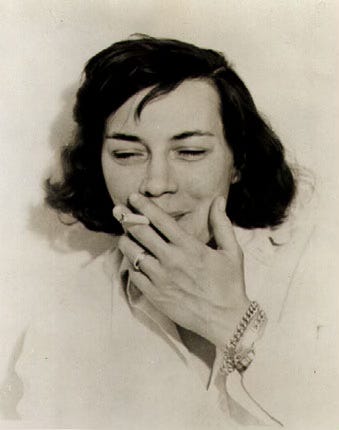
Better to think about people in my lane: writers. The authors Vladimir Nabakov and Thomas Mann were habitual nappers who managed to also write classic novels. Patricia Highsmith napped, but usually at 6 p.m., setting herself up after a day of writing to soldier on into the night.


Patricia Highsmith


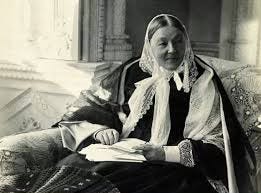
The Internet search calls up many more male writers as self-avowed nappers than it does female. I suppose women writers have often felt that stealing time to be able to write was a great privilege not to be squandered. As the mother of a one-year-old, when my baby napped, I wrote frantically—it was my only chance. I play out this idea to realize that in the 19thand much of the 20th century, women worked hard in the house, caring for children, and if someone got a moment to herself, and was working on a book—there was the focus. I bet that daytime sleeping was a privilege reserved for the elders among them—and was a sign of necessity for their health. Apparently, the legendary nurse Florence Nightingale made the discovery that rest was needed for recovery—though she typically spent less than five hours on sleep herself!


Florence Nightingale


Things are slowly changing. Tricia Hersey is a poet, nonfiction writer and activist famous for her books Rest is Resistance and We Will Rest in which she explains her practice of resting as an act of self-care and protest against the unrelenting, capitalistic grind. I’ve read about scientists proving that a fatigued brain has more trouble finding answers and creative solutions than a rested one. Though it’s not just sleep that does it—walking in nature works, say if you’re in a workplace or at school and don’t have a cozy bed in which to retreat.

Brain power also increases after taking a walk in nature.

My pattern used to be to regularly stroll with my dog after my own lunch. I did it because I know that if I move vigorously after lunch, my blood sugar curve doesn’t look like Mount Olympus. Blood sugar that’s too high is itself a reason for sudden fatigue.

There are plenty of ways to spend one’s time when not writing. I will continue to practice both walking and napping. I may have dreamed up a way to combine both. And this looks like sinking into a chair on my upstairs porch, or on a bench in the park, and letting my eyes ever-so-gently fall closed.

Setting my alarm now for 25 minutes.


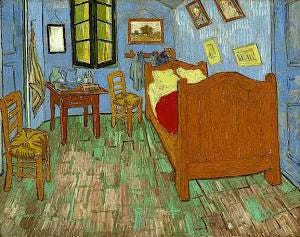
Vincent Van Gogh’s Bedroom in Arles 

Friday, March 20, 2026

The Star From Calcutta, Here At Last!

 Sujata Massey


At long last, THE STAR FROM CALCUTTA has arrived!


Three busy years of writing, editing and marketing have brought the wisps of my old film fantasies to life as the fifth Perveen Mistry historical mystery novel. Here’s my elevator pitch:


Perveen Mistry, Bombay’s first woman lawyer, gets her most glamorous client yet: Subhas Ghoshal, the director and founder of Champa Films, a silent film studio that features his wife, the beautiful daredevil actress Rochana, as headliner. The couple is threatened by a rival film company in Calcutta as well as the omnipresent British government censors. 


Perveen brings her best friend, Alice Hobson-Jones, to a preview party for the studio’s next film. Amid the drunken revelry, arguments and liaisons develop. The morning after brings death, a disappearance, and much more of a legal challenge for Perveen, especially since Alice seems to be holding secrets from her. Sailing, a menagerie of performing animals, romance and international intrigue mark the novel. It's onsale in the USA now, and the Indian edition will appear in all South Asian territories in the last week in March. Here's what the Penguin India edition will appear:


One of the challenges in writing about film was locating old Indian films to study and inspire the fictional film (a story within a story) that I dreamed up for Rochana and others from Champa Films. Due to the fragile nature of old film rolls, much of it is gone, although I found some clips online. It looks like many films were about women, and I found myself wondering quite often about the female-centric plots for films like Barrister's Wife. 


One film you can easily find on YouTube is Karma, an Indo-German-British production from 1933 starring Himanshu Rai and Devika Rani, the Bengali filmmaking couple that inspired my fictional characters of Subhas and Rochana Ghoshal. Karma is a fascinating film that features a 4-minute kissing scene, which served as the longest lip-lock world-wide for many decades.


I adored learning about old studios in India and traveled to Bombay, where I visited the very old Mehboob Film Studios and the vacant Imperial Theater as well as the National Museum of Indian Cinema, a fantastic group of buildings that house artifacts of many eras and screen old films as well. 


The old Imperial Cinema


In Mumbai with historians Amrit Gangar and Sifra Lentin


The museum’s founding curator, Amrit Gangar, graciously met with me and answered my obscure questions. One of the most interesting things I learned was that early Indian film audiences were crazy for action heroines whose physicality expressed rebellion against authority. These films showed stars like Durga Khote and The Fearless Nadia racing cars, swimming rivers and fighting with swords were very popular in the 1920s and ‘30s. Many actresses were of mixed South Asian-European ancestry or came from families who had immigrated from the Middle East, including those of Jewish heritage. 


The nation of Germany also plays a surprising role in the book. One of Bombay’s greatest studios, Bombay Talkies, had both a German director and a cinematographer, colleagues that Himanshu Rai and Devika Rani met at Emelka Films in Germany during the 20s and 30s. Being German in British-controlled India between the two wars was a discreet operation due to lingering resentments and suspicion. I had fun talking with Sneha Mathan, narrator of the  audiobook, as we worked out what the novel’s character Hans Becker might have sounded like. I myself am Indo-German, so it was very heartwarming for me to bring this aspect into the novel.


You can’t make a film without a team; and I certainly found the same was true in writing a book about film. I close with resounding applause to the off-camera real life crew and of course, my beloved fictional characters and old Bombay locations who will continue in upcoming Perveen Mistry productions.


Royal Bombay Yacht Club bar


Sujata has upcoming events to celebrate and sign The Star From Calcutta. Coming up soon are appearances at The Ivy Bookshop in Baltimore on 3/18; Politics and Prose in Washington DC on 3/22; Queen Takes Book in Columbia, MD on 3/27, and Backwater Books in Ellicott City on 4/10; and McIntryres Books, Pittsboro, NC, on 5/9.


Wednesday, September 3, 2025

How to Feed a Writer

Sujata Massey

I am coming off a pleasant five days in New Orleans where I celebrated Bouchercon with a few Murder is Everywhere writers past, present and future: namely by Cara Black, Jeff Siger and Karen Odden (the future!). If I missed seeing and recalling one of you friends, I am sorry! I thought I'd repost this oldie-but-goodie that explains how important cooking and writing are to me, together. It's timely because I haven't written that much this summer, but I spent quite a few extra hours baking pies. Oh, those pies were good, and my waistbands are a bit more snug. And I'm not even getting into the meals I had in New Orleans at Antoines, Copper Vine, Osterio Lupo and Sylvain. I'm slowly shifting back to my vegetables at home, knowing the healthier I eat, the easier it is to think and write.  

I love making my own food, just as I love making my own stories. Enjoy!

black coffee, blackberry jam, and a dark story


M.F.K. Fisher, the great American food writer, once stated:"A writing cook and a cooking writer must be bold at the desk as well as the stove."

In the 1930s and '40s, when Mary Frances began her concurrent explorations of cooking and writing, most writers did not cook, probably because these writers were primarily men. And the earliest published women writers who were lucky enough to have the space and time to do this work--Edith Wharton, Virginia Woolf and the like--were typically upper class and had household staff to feed them.

I love to write, and my escape from the stress of writing is cooking. if you follow my blogposts, you've seen me wax rhapsodic about mushrooms, about Parsi eggs dishes, and all kinds of food.

In my quest to spend more time on writing, I am striving to be more balanced in the kitchen--and to also explore whether certain food powers my brain to focus better. I've read several cookbooks with recipes promising better neurological health, but my goal is not to work with cookbooks as often as I've been doing.

This year I asked myself: what is the healthiest way to fill both the stomach and the imagination? How can a person too easily diverted by cooking avoid such temptation when she's alone at home?


pumpernickel is a powerful base for a breakfast sandwich


Plenty of writers have decided it makes sense to write outside of the house--and to eat there as well. In this era, they are mostly at Starbucks. I prefer to think of Dorothy Parker striding into the restaurant inside the Algonquin Hotel for breakfast and lunch with her friends. Not that she used a pen at the table! It was all about joking, drinking, and probably not getting much done in the afternoon.

Okay, let's return to the present. Have you ever tried going to a real restaurant with your laptop? While it's nice to have eggs and toast brought to me at the table, once I'm finished with my plate and continue to write, I feel like a barnacle on the side of the establishment. And how does the writer handle bathroom breaks in the restaurant? Do I leave the laptop containing my big project on the table, or carry it to the potty the way I'd bring my purse?

There's nothing wrong with dining at home on food prepared elsewhere. However, to undertake this needs a good deal of planning, and the food choices that look the most beautiful are often destructive. A sugar-dusted doughnut is tempting with morning coffee, but it will make me shaky and unable to concentrate within a few hours. Gourmet sandwiches from stores often stand six inches high and are made from such thick bread that they also put my insulin into overdrive. And don't get me started on full-sized entrees from proper restaurants. If you'd like to see me snoring through the afternoon, just serve me a delicious, heavy lunch.

This year, I am streamlining my dining at home. My goal is not to spend longer than 30 minutes cooking anything during my workday. Here's the M.O.

For breakfast I toast good brown bread from a local bakery, and I top it with a quality cheese or jam, and several times a week the toast topping is an egg scrambled with vegetables. I take vitamins and calcium on the side, and I try to drink a couple of glasses of water. I am seriously dehydrated, all the time.


Ahh, the antioxidants in cherries!


After that, I try to write at least two hours. Fresh or cooked fruit is the second energy shot that I take around 10 in the morning. After that, I break for some activity at the gym.

Lunch is always eagerly anticipated. Like breakfast, I eat it by myself, so I don't have to worry if anyone else likes what's going on the plate. A fridge full of leftovers means various cups of soup, beans, small cooked vegetables, kimchee, and rice. Sometimes there's even a half-serving of chicken or fish or a couple of meatballs. So, how is my meal different from tapas? I can imagine Dorothy Parker poking fun at my lunches, especially since they are washed down with a glass of water and a couple of Vitamin D gummy raspberry chews for dessert.


A simple homemade carrot soup


Chicken curry, rice and a melange of potatoes, yams and green beans


I work again. Around 4 p.m. I'm often craving salt. The standard snack to fill the void used to be crackers and cheese, but now that I am trying to reduce dairy, I dip raw vegetables or plantain chips in hummus or munch some almonds or cashews. If I have a sweet craving, I might slather peanut butter on a toasted waffle (I keep a few homemade ones in the freezer) or Nutella on a digestive biscuit.


A homemade waffle with almond butter, banana, and chia topping


The writing day is done by five and cooking is once again allowed! I I relish the chance to sway between the fridge and stove and bend to lift up pots and pans. I usually cook meat or fish with vegetables and some form of rice. Usually it's Asian or Mediterranean food--easy dishes flavored with spices and herbs--true friends with benefits.  I often use the InstantPot to pressure cook dried beans or to concoct a dal that can be eaten at a few different meals during the week. My husband likes this kind of food. My children do not.

You might have noticed something missing in my diet. It is coffee, the infamous element in a lot of writers' rituals.

I drink about one and a half-cups of locally roasted coffee made in a French press at breakfast. I might have another cup in the mid-afternoon if I'm dead-tired and have to go out and drive the carpool or drive to a faraway book signing. But chain-drinking coffee does not make me feel grounded and focused on work--it gives me the jitters. Some therapeutic drinks that work for me throughout the day are water, black tea, green tea, mint tea, and before bed, the venerable chamomile.

Writing a book is slow work, and in my experience, it can be detrimental to the body. There have been years when I would sneak downstairs from my study to snack as a way to escape the half-written page. I'm no saint--if I know there's chocolate in the cupboard, I may have an afternoon binge. But overall, I take a great deal of pleasure in eating this way.

Am I feeding my mind?

I don't know about that--but I do feel sated.


Wednesday, August 27, 2025

Mise en Place: How I Organize My Writing

Sujata Massey                


This year I moved my desk and laptop into the long skinny room running along the back of our third floor. And this has changed not only our house--but also my writing life. 

It’s always been a difficult room. An oddball zone with great windows, but nowhere to place a bed. Back in the 1890s, the room was an afterthought without serious interior function. Doors dominate three of its four walls. Two large windows allow for copious sun all day long, and an adjacent laundry room has its own wrap around windows adding more sun to the party. Our plan for this sunny but awkward room was for it to be the television place. That idea fell apart because we affixed the TV up high on a short wall—a truly terrible location. The couch fit on a wall adjacent to it, not facing, so any attempt to watch resulted in a cricked neck. So we didn’t watch TV there or do much of anything except store and wrap Christmas presents, because nobody would think to go there and snoop. 


I decluttered the room, which also became a catchall for storage, after ten years. I then consulted with Wesley Finnerty, a smart local decorator who knows these quirky old houses. We brainstormed ideas on how how we could turn this room into a writing place because there certainly was room for a desk (although not many bookshelves). I chose a blue and white floral wallpaper print based on Indian woodblocks appropriately called Jaipur. It’s bold and surrounds me in a way that supports focus. I brought up some furniture from downstairs: an old mahogany cabinet with three shelves that could hold supplies, as well as a console that could hold the printer and papers. At auction, I nabbed a mid-19thcentury settee that was narrow enough for the room. Someone before me had re-upholstered it in a funky blue velour, and it just fit. I also had an ottoman upholstered 25 years ago with a William Morris fabric that has traveled with me everywhere. Why not here? It means I can sit on the settee, put up my feet, prop a cushion on my lap and get to it on the laptop.


Yes, I have a modern office desk and a very comfortable chair. I am there less than half the time.

Moving into this room, though, and having just one cabinet and one console table, has forced me to be a little more organized. My typical style is to keep research materials for each book in a large cardboard box, and to stack pages on desks and any other surface I can find. Now, I’ve moved more into using folders…and keeping folders in cases. And I'm also recycling papers faster than I used to.

I truly wish I could adjust to digital storage. But my mind doesn’t remember things as well when I read them online. This is why I print out my pages as I go along to be able to see my repetitions of ideas and other errors. When writing a 110,000-word novel—as my books tend to average—I keep track of more than a dozen important characters, all of whom have their own physical and linguistic traits, their own schedules, and roles in the story. As a historical mystery writer, there’s the added necessity of research (aka the fun part). Every writer has their own methods, but this is what I’ve fallen into over my 30 year-career:

Boxes. They are not spread out willy-nilly like before, but I am keeping just one modest-sized box in this room. It's the place where I protect any information I’ll need to refer to while writing. I typically gather facts from old books and records housed at the Ames Library of South Asia at the University of Minnesota. It's 1100 miles away, and I get there just once or twice a year. The fastest way I can save pages from rare books for detailed reading later is by snapping photos on my phone that I read later. Some of these I’ve printed out to serve as a weird kind of photocopy. I also snap a shot of the book and author and publisher details in case I want to mention it in the acknowledgments or even try to buy a used copy from somewhere in the world, if it still exists. 


Folders. I keep folders within the boxes of subcategories of information. For example, I have a folder about Dadar Parsi Colony, where my character Perveen lives, with a rough map and articles about the history of the place. I also take photographs of this Parsi colony each time I visit Bombay, just as I take photos of preserved architecture in other historic areas, like Fort and Malabar Hill. Other much-used folders relate to British colonial government and police organizations, women in law, and sari fabrics. And food, naturally!


Character Sheets. I came across this concept when searching online, and there are a lot of PDFs of character sheets to play with. These worksheets ask the writer to record details about each character and are guides for keeping facts straight in the current book, and future books if you happen to be writing a series. I have made them for Perveen’s family members and her closest friends. The trickiest parts are remembering the date of a character’s birth, so the people have ages that are correct in relation to the series’ progression. For instance, Perveen was born in 1898, so for the book I’m writing now, set in 1923, she’s 25. The only character I wish I could age faster is the book’s resident infant: Khushy Mistry. I am frankly tired of a character who can’t walk or speak. In the current book, Khushy has made it to 14 months—hurray! 


Index cards and Timelines. I write mysteries, and once I’ve got to the point in the story where someone dies, timelines and who-was-where-when becomes very important. As I get into a second draft, I usually find I need to rearrange some scenes and also remember what happened at various stages: when people could know the facts that I say they know. I summarize each chapter on an index card and tape it along with a bunch more (my books are typically 32 chapters) to a 17-inch manilla envelope. That envelope serves as a flexible kind of bulletin board that I can lay down on the carpet and study.  I probably should put up a bulletin board on my fantastic wallpaper, but I’m a little fearful of getting the spot wrong. Besides, envelopes are good because the surface for the cards needs to be a long vertical space, rather than horizontal. 


Notebooks. Oh, how I love them. And I never turn down freebies. While on the road, you can carry a small notebook in your bag or pocket and take it out to jot down notes that people tell you—or details that you observe. The key is to mind your handwriting, going slow and carefully enough that you can read your own writing later. This is a genuine problem for me.   

A library of books. Most of the novels and nonfiction I keep about India can’t fit in the new study. However, I bought an antique brass expanding book rack on ebay that can be set on any desk or surface. It can be pulled wide enough to hold 20 books upright, or be collapsed to hold as few as five. I can imagine students of the early 20th century traveling to a dormitory or boarding house and setting up their row of necessary textbooks in such modest racks. 

Reviews. Not all writers want to read their reviews, especially on the internet. However, in the golden days when my career started, newspapers and magazines printed lots of book reviews, and wrote feature articles about authors, too. Even though I don’t read these things, it’s lovely to have a clipping about The Sleeping Dictionary from the Baltimore Sun of 2013, or a color photocopy of clipping about The Salaryman’s Wife from People Magazine “Page Turner of the Week" from1997. I also store marketing materials (like how to strategize Instagram, etc) in the same area.


How-Tos: I keep a section of craft books not for sewing, but for get-back-to-writing inspiration. I keep them together in the library, though I might allow one down in the study for times I get antsy. I am trying to get my hands on a paper copy of Virginia Woolf’s long essay, A Room of One’s Own, which bursts with indignation, activism, and amazing details of early 20th century English literary life. 

There you have it: the scaffolding that surrounds me as I embark on a new book. Protective walls, powerful sun streaming through the windows, and all the necessary aids. But it’s not until little Daisy the terrier jumps up on the ottoman, that this writer’s mise en place is complete. 


Saturday, March 11, 2023

Tucson, MIE's On Its Way.


Saturday–Jeff


Next Thursday I’ll be in Tucson for Left Coast Crime, a conference I love, and not just because it once honored me as a nominee for Best Mystery in a Foreign Setting.  As an aside, when you’re nominated in the same category as Louise Penny (or William Kent Krueger) you soon learn to appreciate just the honor of the nomination.


Left Coast Crime simply is one of those gems of a conference that always seems to pick just the right place to be, and the perfect folk to honor.  In this year selecting our own Sujata Massey as a Guest of Honor, LCC continues a tradition of conferring well-deserved praise upon our MIE contributors. In 2014 LCC Monterey chose Cara Black as a Guest of Honor, and in 2015 LCC Portland selected Tim Hallinan.


How can you not love a conference that shows such terrific taste in choosing its Guests of Honor?  By the way, each year’s LCC picks a catchy name for itself, and Tucson’s is “Trouble in Tucson.”  Here’s a link to all the info on next week’s conference.


I’m looking forward to breaking my three-year-long Covid induced absence from the US mystery conference circuit with this trip to Arizona––land of the Saguaro and other prickly things.


I’ll be participating in two panels, one as a panelist on Friday and the other as a moderator on Saturday, each kicks off at 9AM Pacific Time. I think I pulled that time slot because I’ll still be functioning on Eastern Time aka 12 noon.


Here are the details on my appearances:


Friday, March 17 @ 9:00AM

Left Coast Crime

Tucson, AZ – El Conquistador, Turquoise 1

Participating in Panel moderated by Alice Volpe titled, “Crimes Around the World,” with co-panelists Connie Berry, Juliet Grames, Carlene O’Connor.


Saturday, March 18 @ 9:00AM

Left Coast Crime

Tucson, AZ – El Conquistador, Presidio 1-2

Moderating Panel titled, “Both Sides of the Law,” with panelists Curtis Ippolito, Margaret Morse, Karen Odden, Michael Sears


And here are some photos from a past LCC conference in Hawaii.  I’ll have new ones for you next week.


––Jeff


The view from our hotel room of the complex hosting the conference:


Our Murder is Everywhere blogmates hard at work...on the right:

Sujata

Susan
Faces in the crowd:
Maryglenn McCombs, Ovida Yu, Dru Ann Love,  Anonymous Photobomber

Robert Rosenwald, Barbara Peters, Interloper

Ragnar Jonasson, Barry Lancet