Showing posts with label rhino poaching. Show all posts

Thursday, July 2, 2020

Bad news from Botswana


Michael - Thursday

Okavango delta in flood
Botswana is one of our favorite countries, so it’s sad to see all the issues they're grappling with at the moment. The tourist industry is devastated by the measures put in place to try to control the Covid 19 outbreak. Almost all tourism income (and associated jobs) comes from foreign tourists who can afford the upmarket prices. Quick, firm, action seemed to have nipped the virus in the bud, and the country was slowly opening up, when a sudden outbreak of cases last month forced the capital, Gaborone, back into strict lockdown. Botswana's confirmed cases are only in the hundreds with just a handful of deaths and they want to keep it that way, so they're jumping on any outbreak hard. Meanwhile, the economy is battling on almost all fronts.

Sad looking but safe
Unfortunately, rhino poachers don’t worry about laws or Covid. They’ve been driven towards Botswana by the dramatic changes that have taken place in South Africa over the last twelve months. 

Here, the national parks and private game reserves fought with everything they had to stop the poaching and illegal rhino horn trade. Although they managed to at least contain the poaching, it became clear that the anti-poaching teams were winning some battles but would eventually lose the war. It’s a complex issue that we explored through the eyes of investigative journalist Crystal Nguyen in Shoot the Bastards (Dead of Night outside north America) and she came to the conclusion that no wild rhino would be safe as long as it had a horn. That’s become pretty widely accepted now, and the game reserves have embarked on a massive program to dehorn rhinos. It’s expensive and has to be repeated every few years, but it’s working. So the poachers go further afield.

Illustration for Shoot to Kill,
our Kubu story on poaching in Botswana
Included in Detective Kubu Investigates 2
Artwork by Dylan Coleman

Okavango black rhino
Photo courtesy of Save the Rhino
The new target is Botswana’s wilderness gem – the Okavango Delta. The irony is that rare black rhinos were reintroduced there from more vulnerable parts of southern Africa to try to protect them. The area is remote, patrolled by game guides for the tourist camps as well as the national park wardens, and Botswana’s shoot-to-kill policy scared off even the most hardened poachers. At least as long as easier targets were available elsewhere. But now things have changed. South Africa has slender pickings with all the dehorning, and Covid has driven the tourists out of the Okavango and much of the patrolling with them. Also, the area – after a drought year – has been flooded making it impossible to traverse. There have been fifty poaching deaths already. The wildlife authorities are scrambling to find the black rhinos before the poachers do and move them to safety. Who knows where that is?


Then there are the elephants. There has been a sudden die off of elephants in northern Botswana - their major strong hold left in Africa. Four hundred have been found, many collapsed forward as if they were struck down by a sudden mortal blow. But it isn't that. They are not poached - poachers have been known to poison waterholes to subsequently chop off the tusks at leisure, but these have their tusks intact, and there is no sign of dead scavengers which usually indicate such an attack. Anthrax is the fear, but the authorities think not. Then again it may be something else, maybe something new and deadly. I hope they are handling the samples with extreme care.

As though all this wasn't enough, Botswana is engaged in a spat with South Africa that has crashed relations to the lowest level since South African freedom in 1994. The close relationship between President Mokgweetsi Masisi and his predecessor President Ian Khama unraveled almost immediately Masisi took over and started doing things his way. Eventually Khama left the ruling party and led the opposition in a failed attempt to unseat Masisi at the last election.

Bridgett Motsepe protests
Now Masisi has claimed that a coup was planned with billions of dollars of laundered money hidden in two South African banks. His target is Bridgette Motsepe who is supposedly a cosignatory on the accounts. The banks say the accounts don’t exist, and she denies everything. She also happens to be the South African president’s sister-in-law. A meeting between the two presidents has just been cancelled, and the South African government is outraged that the Botswana government has chosen Gerrie Nel (“The Pitbull”) to pursue the lady in question. 

The Pitbull
The Pitbull has a big reputation from his successful prosecution and successful appeal against the initial lenient sentence of Paralympic champion Oscar Pistorius for the murder of Reeva Steenkamp. Since then he's left the public service and now heads up the private prosecutions unit of Afriforum, a right wing group that represents the (mainly white) farmers who claim they're being systematically targeted by black terrorists who aim to drive them from their land – a conspiracy that the SA authorities says doesn't exist. Ominously, the South African minister of State Security has been dispatched to protest to President Masisi. Botswana claims that it did submit a request for official assistance from the SA authorities, but “this request has subsequently conveniently vanished.” 

There may be a book in this…

Meanwhile, Stan and I are keen to get to Botswana for research on the book we’re currently writing. At this rate, by the time the Covid tide recedes, South Africans won’t be welcome there anymore!

Thursday, April 18, 2019

Something had to change


Something had to change. About a year ago, the last Northern White Rhino died. By then it was clear that all the South African rhinos were going to follow him in the medium term.

On the way out?
In our stand-alone thriller Shoot the Bastards – out in the US in a couple of months – American reporter Crystal Nguyen tries to get to grips with the rhino poaching and horn smuggling scourge in South Africa. The reason we made her an American was so that she could look at the issues with new eyes albeit initially very naïve ones. As a committed conservationist, she deplores any interference with the rhinos in the wild and focuses on how to stop the poaching – “Shoot the bastards,” she’s told – and how to break the horn-smuggling mafia. She's happy to dismiss alternate strategies such as selling horn commercially to break the illegal market – “Legalizing a banned substance never reduces demand for it,” she’s told. I guess my views would have been about the same as hers ten years ago. We were all pretty naïve in those days.

The last Northern White. Dehorned for security.
One strategy is farming rhinos and harvesting the horn for sale. About seven years ago I was part of a group that looked at mathematical models to try to predict the effect of doing so. Rhino horn is basically keratin, like hair or finger nail. (All the scientific evidence indicates that its medicinal properties are about the same as biting your finger nails.) The horns can be removed without pain. The rhinos have to be darted with a knockout drug, and the horn carefully sawed off. There's now a wealth of experience with the use of these drugs, and although there are occasional injuries (from falling badly, for example), in the vast majority of instances the animal shows no ill effects. But the horns grow back so the process has to be repeated about every eighteen months to prevent the rhino carrying any significant amount of a material now worth more than gold.

Part of a confiscated cache of 150 horns.
Conservationists in general abhor interference with a species in the wild and rightly so. South African Nature Conservation has been agonizing over the issues for at least five years. Who will fit the hefty bill? What will be the long term effects of dehorning wild rhinos? Might we not be altering their social behaviour and so, in a sense, destroying the very structure of wild rhino dynamics that we want to preserve? As Crys put it, “Everything cried out that there must be a way – a way to leave the rhinos in peace, undisturbed, completely wild.”

But there isn’t. Followers of Murder is Everywhere know that Stan and I each have shares in private game reserves bordering the Kruger National Park. Stan’s place is quite far east from the main north-south road and so far has been spared the rhino poaching horror. Mine is closer to the getaway routes, and we’ve been losing rhinos for several years. Since 2012 the population has declined by 70%! We have a heavily armed anti-poaching patrol camped on the property, complete with tracker dogs. The poachers encroach as often as once a week. Most times they're driven off by the team and the dogs with helicopter support, but occasionally they get a rhino. Yes, we have tried high-tech tools – infrared cameras, drones. Some men in the anti-poaching team are incredibly dedicated, others not so much. Rumours persist that it’s sometimes the members of the anti-poaching team themselves who tip off the poachers about where to look. Crys encounters that too…

The war on poaching is a real war with people as well as rhinos being shot. And while most of the time we win, there aren’t enough rhinos left to support the times we don’t. And the emotional impact of finding a dead rhino with the horns hacked off is enormous. It weighs down the people trying to protect them. It demoralises them. It drives them into other lines of work.

Not pretty. But alive.
So in the end Nature Conservation has come down on the side of horn removal. What's planned is a massive project covering all rhinos in the national park as well as the surrounding private game reserves. I received a newsflash last week that all the rhinos in our area are now dehorned. My reaction was a huge sense of relief.

We’ve been asked to call in any information and particularly to report any rhinos still sporting horns.
We will still need the team for security. We will still need to carefully watch each rhino to ensure that it never carries enough horn to tempt the poachers, and the rhinos will have to be dehorned on a regular basis. There will be a huge cost. We’ll need to study them for longer term ill effects and societal changes.

But now there will be a longer term for the African rhinos.
_______________________________

Upcoming Events

A lot of familiar names in the panels below. Very lekker!

Crimefest, Bristol, England

FRIDAY, 10 MAY
17:10 – 18:00
Sunshine Noir
* Paul Hardisty
* Barbara Nadel
* Jeffrey Siger
* Robert Wilson
Participating Moderator: Stan Trollip


SATURDAY, 11 MAY
11:20 – 12:10
10 Year Stretch: The CrimeFest Anthology
* Peter Guttridge
* Caro Ramsay
* Zoë Sharp
* Michael Stanley (aka Stanley Trollip)
Participating Moderator: Kate Ellis


Once Upon a Crime, Minneapolis

Launch of SHOOT THE BASTARDS (This is the US title for DEAD OF NIGHT)

TUESDAY, 18 JUNE
18:30 - 22:00 
Stanley will be in conversation with Kent Krueger. 
Refreshments


Thursday, January 15, 2015

Last Chance?

I'm currently in Cape Town at a workshop called the Mathematics in Industry Study Group (MISG).  MISGs are held all over the world and the idea is to try to address real world problems by working on them with invited mathematicians, industry representatives, and graduate students for an intensive week.  Although only a week is set aside for the activity, the opportunity to focus on a single issue and the resulting brainstorming and enthusiasm is often surprisingly successful.  Everyone gives their time for free and research funds cover the other costs.  The problems must be proposed by industry, otherwise they often degenerate into problems mathematicians think are real world problems, and that usually means ones they can elegantly solve.  This year we have problems from the sugar industry, the mining industry, the glass industry, traffic planning in Johannesburg, and two ecological problems.  One of these is concerned with the plight of the rhino, and I was asked to moderate that one - as in herd cats - in order to keep things focused.  I think I was asked because the organizer believes I know about mathematical models and about rhino population dynamics.  I'm not sure why he thought that, but here I am.


Mathematical modeling is about trying to use mathematics and computers to mimic the behavior of real world systems.  The objective is usually better understanding of the way the particular system works, and often to make predictions of that behavior into the future.  The problems involved can be hugely complex requiring teams of scientists, reams of equations, and high performance computers – such as trying to estimate the effects of global warming – or they can be very small, simple models involving a few equations and estimates – such as modeling the growth of a large mammal population under ideal conditions.  Often the idea is to play “what if” games to obtain input for brainstorming sessions around an intractable issue.

A chunk in Vietnam
So back to rhinos.  Over the last few years the news about rhinos has not improved. The UN Convention on International Trade in Endangered Species (CITES) banned international trade in rhino horn in 1977, and since then three subspecies have become extinct in the wild and six species are critically endangered.  The biggest success story was with the Southern White Rhino (the northern subspecies is regarded as extinct).  Numbers grew from a virtual handful left in South Africa in the mid fifties to a population of twenty thousand spread all over southern Africa.  But the price per ounce for rhino horn on the black market in Asian consumer countries is now higher than that of gold.  With those types of numbers, poaching has rocketed and over 1000 rhinos were poached for their horns in South Africa last year.

The South African Government is giving serious consideration to making the sale of carefully controlled rhino horn legal.  Extensive population modelling work has already been done by a variety of groups here and overseas, and one thing seems to be clear.  If we do nothing more than at present, the rhinos are probably doomed.  A few will survive but the idea of sustainable wild rhino populations is probably a pipe dream.  But there is another scenario - farming rhinos.
.
Sad looking, but safe

No one is particularly enthusiastic about this option in principle.  Rhinos are wild animals and they look best and do best left to their own devices in the African veld.  But rhino horn does regrow.  It is, after all, just compacted hair and hair keeps growing.  So farming is possible as a sustainable activity involving harvesting the newly-grown rhino horn every few years.  Still,although the white rhino is fairly docile, it is not an easy process to immobilize a rhino to cut off a chunk of its horn!  The event is liable to upset the animal.  Also rhino ranches – with fairly tame animals concentrated in a relatively small area – will be a huge attractor for poachers.  So high security costs must be built into the farming scenario.

There's another issue.  If we increase the supply of rhino horn, won't the market just increase?  Well, maybe.  But could we drive the price down by dumping large amounts of currently stockpiled rhino horn on the market?  Well, maybe.  Would poaching pressure ease off if the price of horn drops.  Yes, but how much?  There are lots of poor people out there willing to risks their lives for this sort of money.  (A previous model suggested that a poacher values his life at just $3,000!)

So why go to the trouble?  Why not just eradicate the poaching and keep the blanket ban on the sale of rhino horn?  The problem is that the market seems to be growing – especially in Vietnam – and because the amounts used in traditional medicines are quite small, the price of a whole horn can be sky high.  The game is now so lucrative that ALL the resources of the nature conservation authorities probably couldn’t control it. The South African government, private donors, land owners and tourist bodies have poured money into foiling the poachers.  As an example of what private game reserves are doing, the place where I have a share in a bungalow has cameras and sensors strategically located, a paramilitary camp of armed anti-poaching personnel, tracker dogs, a helicopter on call...  You get the picture.  No one would take that on, right?  Wrong.  On Christmas day we had an incursion, but because we had a tip off, we actually caught one of the poachers but the others escaped.  No rhinos were molested.

It's been estimated that the cost needed just to contain the current threat is over $100 million per annum. That money just isn't there.  And the hot charity of today will be displaced by something more newsworthy in the future.  Where is that money going to come from on a sustainable basis?


So how do the numbers stack up?  Well, there are about 500 natural deaths in the bush per annum and most of the horn from these animals is recovered.  That’s about 5,000lbs alone. Then, an adult rhino grows about half a pound of horn a year.  If every one of the 20,000 white rhino in South Africa had the new growth harvested each year (a completely ridiculous scenario, of course), that would be another 10,000lbs. There is also an ill-determined amount of rhino horn (legally obtained) in stock right now and this could be used to bridge the period until the ranching gets up to speed  and also to drive down the price.  Let’s say a sustainable total of around 7,500lbs building up to about 10,000lbs could be produced from farming and natural mortality per year.  Would that satisfy the demand?  Maybe.  It depends how the supply and demand curve works.  One would want to get the price down so that rhinos would be less attractive to poachers, but not drop it enough to significantly increase demand.

Good looking and safe?
An interesting marketing strategy could be borrowed from the diamond industry.  Consumers like to be sure that the items they are buying are genuine and reliable.  A rhino horn “pedigree” (similar to the Kimberley Process one for diamonds) could go out with the merchandise guaranteeing that it is legally and humanely obtained as well as absolutely genuine rhino horn.

So we're trying to see how all these scenarios would play out, using computers rather than risking rhinos.  There's lots of uncertainty and lots to try.  Wish us luck.  It may turn out to be important for rhinos.

Michael – Thursday.

Thursday, January 5, 2012

More Trouble with Rhinos

 Apologies for missing my post two weeks ago, and thanks to Stan for posting the previous rhino story for me. The internet was very shaky where I was; I suppose that's part of the fun of being there. But I'm sorry I missed all the Christmas and New Year fun on MIE at the time, although I've enjoyed catching up. I just love Jeff's poem!

Now here's the follow-up piece I was trying to post two weeks ago:

My White Christmas Rhino - Photo by Aron Frankental
Somewhat over a year ago, I was at my place in in the African bush watching elephants bathing in the river and writing about rhinos. I’m there again today and an elephant is busy demolishing a tree at the back of the bungalow.

It’s in the high nineties. Not much chance of a white Christmas unless it’s a white rhino. And white rhinos aren’t white anyway. The common name is a corruption of the Dutch word wijd which means wide, and the name comes from the wide mouth as opposed to the more pointy mouth of the so-called black rhino, which isn’t really black. Let’s move on before this gets too confusing.
The point is that there haven’t been any black rhinos here for quite a while. They used to occur in this area and the habitat is ideal for them. That’s the case for much of the so-called lowveld (low-lying bush country) of the north-east of South Africa.

Black or Hook-lipped Rhino
So as a conservation initiative the World Wild Life Fund has relocated 20 black rhinos from a breeding programme elsewhere in South Africa to a suitable location somewhere in the lowveld.  No one’s saying where.  It’s a big gamble because the animals are very valuable, and if they decide to wonder out of the game conservation area, they’ll be prey for poachers who can get big money for their horns.  But the motivation is to have an additional group develop in a good habitat, hopefully providing a kernel for a new black rhino population.  Wherever they are, they’ll be protected by electric fences, armed anti-poaching guards and high-tech security surveillance.

The threat to the survival of the African rhinos is nothing new.  In the sixties, when I lived in Kenya, the population of black rhinos was around 100,000.  They were fun to see in the bush, but nothing special.  Thirty years later the population had dropped to just 2,500, but now the numbers have doubled.  So things looked up but the numbers were still very low.

Rolling hills of Zululand
The white rhino story was even more dramatic.  The population crashed to only 50 a century ago and the species was hanging onto survival in the wild in only a few isolated spots.  A group of twenty were in (what was then) Natal on the eastern side of South Africa, and two areas - Hluhluwe and Umfolozi -became the first proclaimed game reserves in Africa in an attempt to save the species.  A few other spots did the same but with less success. I remember seeing one of the last of the northern race in Uganda in the early sixties. The race now exists only in captivity.   But thanks to the efforts at Umfolozi, the southern white rhino did amazingly well – the population has climbed to around 20,000.  Umfolozi now has nearly 2,000 - the carrying capacity of the area - and has resettled thousands across southern Africa.  You see them quite frequently in the Kruger National Park now and all of that is due to the commitment of the people at Umfolozi.
White or Square-lipped Rhino at Umfolozi
In my previous post, I naively hoped that a spate of arrests and convictions might stop the poaching in South Africa at least.  But the stakes are too high.  Recently allafrica.com reported a shoot out between Kruger National Park officials and five Mozambique soldiers, one of whom was killed and another injured.  Even our small game reserve has been attached by rhino poachers - a shoot out resulted in no dead rhinos, one dead poacher and - wait for it - one of our game guards in jail on a culpable homicide charge.
Conservation officials now believe that the poaching of rhinos for their horns has reached the “tipping point”.  That is the point in population dynamics at which the death rate exceeds the birth rate and the species starts to decline in numbers.  If the poaching continues at the same pace, you don’t have to be a mathematician to see that the species is on the way to extinction.


So what I want for Christmas is a sighting of healthy, free rhinos.  That makes it a white Christmas for me.  And then I want to be able to see them again next Christmas.

Michael - Thursday

PS. At least I got the first part of my wish - see the first picture.

Thursday, December 22, 2011

The Trouble with Rhinos

Michael asked me to re-post this blog which first appeared in Sept 2010.  He wanted to update it, but since he is currently in the bush having trouble with the internet (and rhinos), he is unable to do so.  He promises to bring us up to date on the rhino issue when he extricates himself from the acacia's long thorns.  He reports, via drum, that he has been charged twice by elephants in the past few days - entirely without provocation.

Stan (for Michael) - Thursday

_____________

As I write this, I’m being distracted by an elephant having a bath in the river in front of me. He seems to have it all worked out. First a good long drink, then some splashing to cool off, then a generous wash behind the ears, some mud, and finally a good dusting. There’s still plenty of food about, and he looks pretty happy.
 The rhinos look pretty happy too, but they shouldn’t be. The trouble with rhinos is that they have horns which protrude in a way that’s very suggestive to humans (if not to other rhinos). The horn is, of course, actually solidly matted hair and a perfectly natural defense and offense tool. Unfortunately it has obtained a completely undeserved reputation – mainly in the East – not as an aphrodisiac as the shape might suggest, but as a constituent of various traditional medications. A cabinet minister in Vietnam recently claimed it was an ingredient of a medicine which supposedly cured him of cancer. No amount of horrified denials from the medical fraternity will sink advertising like that!

Apart from its design, the sheer rarity of rhino horn is likely to lend it mystique. Trading in it has been banned for many years – even recently in the very countries which are the major users. (An attaché at the Vietnamese embassy here was recalled after being photographed buying a small quantity of the substance.) With the inevitability of market economics, the price has shot up. A male rhino horn will now fetch a price of around $100,000. And the result of that sort of price rise is that rhino poaching is now big business, in the league of drug smuggling, gun running and human trading. One is no longer talking about a couple of poachers tracking and shooting a rhino in a remote area. One is talking about organized gangs using helicopters, spies and GPS to go almost anywhere there are rhinos and get the horns. One small game park, the Krugersdorp Game Reserve, that used to pride itself on a small herd of rhinos, is only about half and hour’s drive from where I live in suburban Johannesburg. All the adults have now been poached. One youngster – probably spared until its horn has grown – remains and has been relocated to another more secure environment. In the latest attack, a helicopter flew in, the rhino was darted with a sedative drug used when transporting large wild animals, the horns were cut off with a chain saw, and the animal left to bleed to death. The whole thing probably took no more than fifteen minutes.


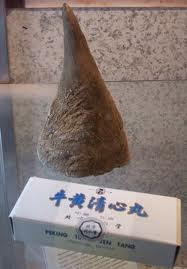
Horn with Medicine Box
 In total, more than 200 rhinos have been poached this year, more than double the figures for last year. Conservationists were at their wits end as to how to address this threat, which could easily drive the rhinos back to the verge of extinction from which they were rescued fifty years ago.


The Accused Arrive at Musina Magistrate's Court
 But the clues were there. For one thing, the economics don’t add up. Rhinos are sold at game auctions quite regularly because the White Rhino has been doing remarkably well, repopulating much of the Kruger National Park and the surrounding game reserves. You will pay between $20,000 and $40,000 for the animal. But the horn alone is worth $100,000 on the black market. Then there are the tranquilizing drugs. These are specialized and dangerous substances, certainly not available to members of the public. So where were they coming from? And the helicopters? People in the wildlife areas are now very alert to helicopters and report them whenever they’re seen. The police noticed that a helicopter with a similar description was seen in three of the areas where poaching took place. They managed to trace it to a small company. One of the directors was Sariette Groenewald. Her husband, Dawie Groenewald, owns a game farm on which 30 rhinos were found, all legitimately bought. Perhaps most shocking was the arrest of two vets in the swoop that followed. Such a hard and demanding profession. Why would you do it unless you care about animals? Obviously in this case the money was just too attractive. In all eleven people were arrested and charged on the 22nd of this month.

Is that the happy ending? Hardly. All the arrested are out on bail to the value of about two rhino horns. And if one ring is broken, another joins together. The stakes are too high.

What other options are there? One game reserve recruits paying visitors to help them dart their rhinos and cut off the horn – high enough so that there is no pain; it’s only hair after all. They accept that the rhinos are disadvantaged by the loss of their only weapon, they accept that their Big Five tourists will be disappointed by the look of their lopped rhinos. But they point out that some will still be safe and around when all the others may have gone.

Michael - Thursday