Showing posts with label Writing Research. Show all posts

Saturday, July 4, 2020

This is How It Used to Be

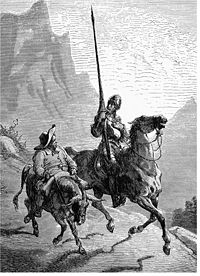
Woodcut print by Gustave Dore

Jeff—Saturday

Happy Fourth of July, US folks. And Happy Open for Tourist Season, Greece.

Not sure when Americans will be able to visit Greece or anywhere in the EU again, but I don’t want to talk about any of that, or anything else that makes us question what the hell’s going on in our world.  At least not this week.

There’s plenty of that everywhere you turn, whether you’re looking for it or not.

So, I’m going to talk about something crazy.  Not really crazy, but decidedly Greek and exemplative of how I’ve gone about writing my books based in Greece.  Admittedly, retelling the tale also shows how much I miss being there.  

Researching a new murder mystery can be fun.  Especially when it’s placed in Greece and you’re looking for the perfect spot to do the deed. Or find the corpse(s).   Deep blue seas, wispy white clouds, green-brown hills, blood-red blood.  Yes, finding the site is fun.   Mainly because it’s something you can do without confiding your purpose to a soul beyond your own. 

Saying, “Hi, can you suggest the perfect spot for a dismembering moment,” is not likely to get you the same sort of warm response as, “Your spanikopita are the best spinach pies I’ve ever tasted.”  [Note: On the off chance that it does, take a hint from Sweeney Todd and dine elsewhere.]

In that spirit, I’ve taken to fading in among the anonymous tourists driving and hiking about Greece until the moment I come across that spot my deep, dark mysterious mind always told me must be out there.  Then, voilà, let the mayhem begin.

Having said all that, some plot elements can take hold of your mind that by their nature necessitate a far more adventuresome sort of exploration.  Like when a little voice in your head says, “Hey, genius, why don’t you make the robbery of the millennium pivotal to your story.”

When will I ever learn that the most dangerous voices are the most flattering ones?   And of that lot, the worst by far are those blithering away inside your own head—even more so than that of an agent hot to represent you.

Don Quixote (Honore Daumier)
But the trouble with imagination is that once it takes hold the most difficult aspirations turn irresistible.  I’ve been told that Quixotic characteristic passes with maturity. 

To get to the point of all this, the novel I’m working on requires a detailed understanding of security surrounding one of the least know treasures in the world—if you’re not Greek—in order to make the leap from reality to the impossible not that far.

The Treasure of the Sierra Madre
To do that, I needed to speak to an insider, someone with intimate knowledge of the target.   And so, at the beginning of this week I set off on my quest with a friend (let’s call him Sancho) who knew such an insider (let’s call her Dulcinea).  My friend had read all of my books and knew I was working on a new murder mystery, but had no idea why I was interested in learning about the treasure.

Guy Fawkes Conspirators (Crispijn van de Passe)
“If Dulcinea wants to know the purpose of the meeting, tell her I’m an American writer working on a book about the hidden charms of Greece and could not possibly write such a book without including their priceless treasure.” 

I had my questions and my approach all prepared and worked out in advance. Sancho assured me that Dulcinea spoke perfect English because my Greek could not carry off the type of in-depth, subtle fishing expedition I had in mind.

“Perfect,” I once again learned, was an imperfect word.  Dulcinea’s English was as perfect for getting around an English language country as mine was for ordering a gyro in Greece.  Within thirty seconds Sancho was serving as interpreter.  I told him to translate my questions and her answers exactly as they were spoken.  He assured me he would.

I began with carefully phrased general questions of the type intended to make everyone comfortable.  They would run on for several sentences, Sancho would nod and say four words to Dulcinea who’d give him a two-word reply, followed a several-line editorialized answer from Sancho to me. 

I was getting nowhere fast.

Nope, not the Hope,
After ten minutes or so, Dulcinea suggested we leave her office to see the treasure that was the purpose of our visit.  Let’s make the image simple: think breathtaking, spiritual, priceless and very portable.

As we stood in front of the treasure, I tried a few more subtle questions, all with the same result.  So I switched to a different tack.

Nor Fort Knox
Me:  “Where do you keep the treasure when it’s not on display?”

Sancho to Dulcinea to Sancho to Me:  “In a safe over there.” She pointed to a two-meter tall, cloth-covered rectangle.

I walked to the cloth, pressed my hand against it, felt the steel, moved my fingers to the hinges and then the handle.  “Is it bolted to the floor?”

S to D to S to Me:  “Yes.”

I asked if I could take few photographs and Dulcinea said, “Yes,” a rare honor according to Sancho.  I nodded and smiled to Dulcinea then began photographing the skylights, windows, doors, and floor.

Dulcinea said something to Sancho, “She wants to know what you’re doing.   The treasure is over there.”

I said, “Sorry,” and quickly took a few of the treasure.

Sancho said, “Are you done yet?”

“There must be more security for the treasure than just that safe.  Ask her.”  Sancho hesitated.  “Just ask,” I said.

This time it was Dulcinea who gave the lengthy answer and Sancho four words back to me.  “A lot, plus guards.”

“What time do the guards change shifts?”

Sancho said to me in English, “Are you out of your mind.  Don’t you know what she’s thinking?”

“Just ask her.”

He did. Dulcinea’s answer was quick and guarded.  “It varies.”

Sancho and Dulcinea looked like two bank tellers waiting for the masked man to hand them the note.

I smiled, “Can they be bribed?”

This time it was Sancho who went on for a full minute.  Dulcinea smiled and held out her hand to me.  She was thanking me for my lavish praise of her kind assistance and wishing me the best of luck with my new cookbook.

I'm still laughing.

—Jeff

Sunday, July 29, 2018

In Full Retreat: Writing in France


I went to France at the beginning of July planning to get a start made on the new Charlie Fox book. I’m happy to report that the tentative 15,000 words I’d hoped for morphed into 20,000 once I got into the writing, and I’m even cautiously pleased with the way it’s going so far. I promised myself I’d have a break when I hit that point, and do some driving around to look at locations for later on in the story, but at the same time, I’m anxious not to lose too much momentum.

No chance of getting out of practise with the writing itself, though. I also had a last-minute Q&A to write for the #BlogTour I did at the start of the month for the launch of the new crime thriller standalone, Dancing On The Grave. Thank you so much to everyone who took part or supported me along the way.

And then I was reminded that I’d promised to provide a short story for a proposed anthology earlier in the year. The editor contacted me and asked for a brief sentence or two about the story, and particularly the setting of it. Within a week, if possible.

Argh!

My mind was a complete blank.

Me and fellow crime thriller author Libby Fischer Hellmann at
the American Cemetery, Omaha Beach in Normandy
When I came out to Aveyron in southern France, I had with me my author friend, Libby Fischer Hellmann. She needed to finish a book just as I needed to start one. Incredibly useful to have someone else along on the 1100km drive south, though, as trying to drive a UK-spec right-hand-drive car through a French toll péage, where all the payment booths are set up for left-hand-drive vehicles, can be a bit of a problem.

French toll péages can be tricky in a right-hand-drive UK car!
We did quite a bit of touring about in the afternoons, having spent the mornings dutifully scribbling. And when I picked up another visitor, who arrived the afternoon following Libby’s departure, I had already seen one or two of the nearest and most popular.

Chateau de Bournazel with medieval crane in evidence...
So, I found myself sitting with my notebook outside a fabulous French castle on a baking day, waiting for them to finish sightseeing, and suddenly a short story came floating by. Needless to say, I grabbed it with both hands. By the time my visitor returned, I had the main points mapped out, and I finished off fleshing it out sitting in the garden, with one of my feline muses for company.

Spatz, one of my muses
So, I’ve been trying to work out what it is about being here in in the Aveyron valley area that’s been so good for my inspiration. It can’t be the weather per se, as it’s been similar weather in the UK.

It can’t be the presence of the feline muses, either, as I have two on hand back in Derbyshire. (Who would be mortified if they knew I’d been unfaithful to them by sleeping with other cats on my bed here!) Perhaps it’s the lack of distraction. Good internet for research, but no TV. Friendly locals, but no close friends except on the end of a phone line or Skype call. And no other purpose than writing except to keep the place running—easier said than done after an ant invasion, near-miss lightning strike that knocked the power out in the house, and neighbouring dogs chasing the cats around the garden, at which point Inkypuss went and hid in the rafters of one of the outbuildings. We spent ages searching for her and fearing the worst.

Inkypuss, showing there is Something of the Night about her...
French road signs are entertaining to me as a Brit—particularly the fact the Stop signs have ‘Stop’ on them, rather than ‘Arrêt’, but are still the distinctive octagonal shape as at home and in the States, so they are instantly recognisable even if obscured by snow. And whoever designed the signs warning of the approach to a pedestrian crossing must have been a closet fan of The Beatles

Abbey Road, anyone?
 This area is very arable. It suddenly becomes understandable, if the French farmers object strongly to some aspect of government policy, why it creates a serious problem for their politicians. The chestnut-coloured and cream cattle are beautiful muscular animals in the fields. Every garden is full of hydrangeas.

Hydrangeas are everywhere in this part of France, both pink and
blue ones often growing alongside each other.
 By the time you read this, I will be on the way up-country heading for the ferry home from Calais on Monday. We have several side trips planned for the journey, so expect to hear more about that part of the trip very soon.

Me driving over the famous Millau Bridge (the Bridge in the Clouds)
Meanwhile, I exceeded my cautious target of 15,000 words by another 5000, I’m well into writing the short story. I plan on making lots of notes for both novel and story while on the road—or during the overnight stops, at least—so I can leap back into my August workload of writing as soon as I get back. Hopefully, still thoroughly invigorated by my time away.

Vive la France!

This week’s Word of the Week is deracinate, meaning to uproot (usually a person) from their natural social, cultural or geographical environment. It comes from the 16th Century French déraciner, from dé (removal) and racine, meaning ‘root’, from the Latin radix.

Saturday, April 21, 2018

A Lost in Translation Story Told An Athens Insider


Jeff—Saturday

If you’re interested in good news about what’s going on in Greece, and specifically in its capital city, Athens Insider Magazine is for you.  Slick—in the finest sense—and always on top of the City’s latest cultural and lifestyle happenings, it’s the perfect counterpoint to the many harsh things Greece endures and of which so many write and report, including yours truly.  

A while back, the Publisher-Editor of Athens Insider asked if I’d be willing to contribute to their magazine. Of course, I agreed, and in keeping with its tone, the first article I submitted dealt with the lighter side of murder mystery research in a foreign land.  That article appears in in the current issue of the magazine, and I thought you might enjoy it. If you don’t, please complain to me and leave Athens Insider out of it. :)


Researching a new murder mystery can be fun.  Especially when it’s placed in Greece and you’re looking for the perfect spot to do the deed. Or find the corpse(s).   Deep blue seas, wispy white clouds, green-brown hills, blood-red blood.  Yes, finding the site is fun.   Mainly because it’s something you can do without confiding your purpose to a soul beyond your own. 

Saying, “Hi, can you suggest the perfect spot for a dismembering moment,” is not likely to get you the same sort of warm response as, “Your spanikopita are the best spinach pies I’ve ever tasted.”  [Note: On the off chance that it does, take a hint from Sweeney Todd and dine elsewhere.]


In that spirit, I’ve taken to fading in among the anonymous tourists driving and hiking about Greece until the moment I come across that spot my deep, dark mysterious mind always told me must be out there.  Then, voilà, let the mayhem begin.

Having said all that, some plot elements can take hold of your mind that by their nature necessitate a far more adventuresome sort of exploration.  Like when a little voice in your head says, “Hey, genius, why don’t you make the robbery of the millennium pivotal to your story.”

When will I ever learn that the most dangerous voices are the most flattering ones?   And of that lot, the worst by far are those blithering away inside your own head—even more so than that of an agent hot to represent you.

But the trouble with imagination is that once it takes hold the most difficult aspirations turn irresistible.  I’ve been told that Quixotic characteristic passes with maturity. 

To get to the point of all this, my fourth Chief Inspector Andreas Kaldis novel, Target: Tinos, required a detailed understanding of security surrounding one of the least known treasures in the world—if you’re not Greek—in order to make the leap from reality to the impossible not that far.

To do that, I needed to speak to an insider, someone with intimate knowledge of the target.   And so, at the beginning of this week I set off on my quest with a friend (let’s call him Sancho) who knew such an insider (let’s call her Dulcinea).  My friend had read all of my books and knew I was working on a new murder mystery, but had no idea why I was interested in learning about the treasure.


“If Dulcinea wants to know the purpose of the meeting, tell her I’m an American writer working on a book about the hidden charms of Greece and could not possibly write such a book without including their priceless treasure.” 


I had my questions and my approach all prepared and worked out in advance. Sancho assured me that Dulcinea spoke perfect English because my Greek could not carry off the type of in-depth, subtle fishing expedition I had in mind.

“Perfect,” I once again learned, was an imperfect word.  Dulcinea’s English was as perfect for getting around an English language country as mine was for ordering a gyro in Greece.  Within thirty seconds Sancho was serving as interpreter.  I told him to translate my questions and her answers exactly as they were spoken.  He assured me he would.

I began with carefully phrased general questions of the type intended to make everyone comfortable.  They would run on for several sentences, Sancho would nod and say four words to Dulcinea who’d give him a two-word reply, followed a several-line editorialized answer from Sancho to me. 

I was getting nowhere fast.

After ten minutes or so, Dulcinea suggested we leave her office to see the treasure that was the purpose of our visit.  Let’s make the image simple: think breathtaking, spiritual, priceless and very portable.

As we stood in front of the treasure, I tried a few more subtle questions, all with the same result.  So I switched to a different tack.


Me:  “Where do you keep the treasure when it’s not on display?”

Sancho to Dulcinea to Sancho to Me:  “In a safe over there.” She pointed to a two-meter tall, cloth-covered rectangle.

I walked to the cloth, pressed my hand against it, felt the steel, moved my fingers to the hinges and then the handle.  “Is it bolted to the floor?”

S to D to S to Me:  “Yes.”

I asked if I could take few photographs and Dulcinea said, “Yes,” a rare honor according to Sancho.  I nodded and smiled to Dulcinea then began photographing the skylights, windows, doors, and floor.

Dulcinea said something to Sancho, “She wants to know what you’re doing.   The treasure is over there.”

I said, “Sorry,” and quickly took a few of the treasure.

Sancho said, “Are you done yet?”

“There must be more security for the treasure than just that safe.  Ask her.”  Sancho hesitated.  “Just ask,” I said.

This time it was Dulcinea who gave the lengthy answer and Sancho four words back to me.  “A lot, plus guards.”

“What time do the guards change shifts?”

Sancho said to me in English, “Are you out of your mind.  Don’t you know what she’s thinking?”

“Just ask her.”

He did. Dulcinea’s answer was quick and guarded.  “It varies.”

Sancho and Dulcinea looked like two bank tellers waiting for the masked man to hand them the note.

I smiled, “Can they be bribed?”

This time it was Sancho who went on for a full minute.  Dulcinea smiled and held out her hand to me.  She was thanking me for my lavish praise of her kind assistance and wishing me the best of luck with my new cookbook.

I’m still laughing.

—Jeffrey

Jeff’s Upcoming Events

Friday, May 18 @ 12:30 PM 
CrimeFest
Bristol, UK
Moderating Panel titled, “Power, Corruption and Greed—Just Another Day at the Office.”

Saturday, May 19 @ 2:50 PM
CrimeFest
Bristol, UK
Participating in Panel moderated by our Michael Sears titled, “Getting Personal—Private Lives of Characters”
