Showing posts with label covid 19. Show all posts

Saturday, July 22, 2023

Guess Who's Paid Me a Visit...Again


Jeff–Saturday


Nine months ago I posted a piece on how I’d come to pay the piper for overconfidently thinking I’d successfully negotiated Covid-laden national and international venues without so much as a sniffle—fully vaccinated and boostered, of course. 


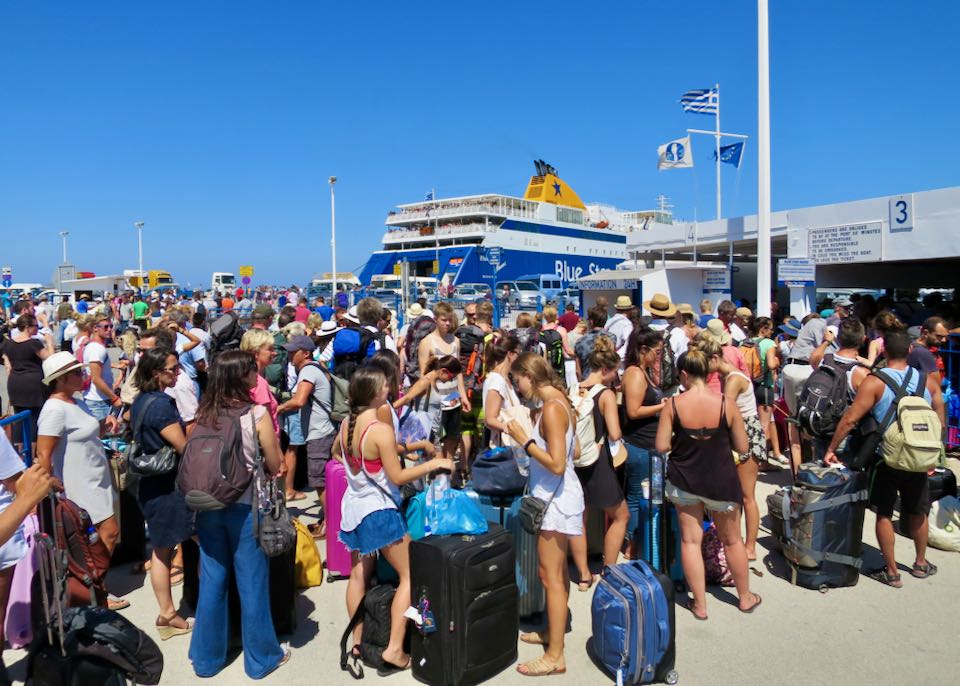
Deep within myself I’d come to believe that having survived two masked summers of packing into loaded Greek ferry boats, sitting aboard crowded ten-hour flights, and walking down countless cramped Manhattan and Mykonos streets unaffected by Covid, it was safe to act as if the threat had passed. My hubris was proven wrong, but thankfully I successfully endured its consequences through appropriate meds and care.


Fast forward to today. After two months of wide-open travel about Greece (fully masked on all planes and ferries—often only one) I returned to the US last week convinced there was nothing to fear but fear itself.  Days later I was diagnosed with Covid for a second time—and am now back in the middle of my five-day Paxlovid regimen.  I’m also still apologizing to my daughter for giving it to her along with other gifts from my travels.


Thankfully, I’m feeling fine, but the bottom-line lesson remains the same.  Covid is waiting for you to drop your guard.  Don’t take the bait, stay masked and socially distanced—including avoiding those highly tempting European embracing hellos.  If you still contract the disease, take Paxovid or whatever other drug medical science has blessedly made available to battle this scourge.  Including appropriate vitamins. And stay up to date with your vaccinations and boosters.


A final word: Sorry, KD.  Love Dad.


––Jeff


Jeff’s upcoming events:


Monday, August 17, 2020

Lessons from Living in Isolation


 Annamaria on Monday


I had been torn about what to write this week, which is not unheard of, but my argument with myself went on for much longer than usual over the past seven days.  I began the week determined to move away from my rather self-pitying post of last Monday and to get back to my more life-long optimistic point of view.

The US national news reports warred with me on this topic.  Never has the outlook for my country's beautiful democracy been more grim.  Desperate to hang on to my positivity, I minimized the time I spent listening to and reading current events.


The gloom that insisted I attend to it assaulted me on Sunday morning.  After a wonderful uplifting Saturday visit to my beloved mid-Hudson Valley and a sleep over a sweet Covidi-safe inn, I awoke to a rain storm that plagued my drive home with several tests of my ability to keep my car on the road while hydroplaning.  Still, by the time I left the car in the garage, I had made up my mind to tell you the positive side of the life I complained about last week.  So, here it is what I have learned from living largely in isolation for the past five-plus months.  New habits that will continue to make life nice no matter what .


Fate has brought me good luck worth cherishing.  My apartment in New York is a spacious and pleasant place.  Over the past months, minor improvements have made it even more so.  As have small indulgences.  Like fresh flowers from the open-air Union Square Market.  Bright bouquets bring sweet, small joys that can be savored all the day long.

I have learned to shop for food like an American.  My childhood, with first generation American parents and immigrant grandparents in the house, taught me to shop pretty much daily for my food. Living in a city where one walks groceries home contributed to continuing this habit.  Wanting  to minimize trips to the grocery store  and the availability of fabulously efficient delivery services in NYC compelled a change.  My freezer now stores more than homemade broth (kept for risotto!).  Nowadays if the spirit does not move me to go shopping, I can still give myself a nice home-cooked meal.


A major new indulgence is the quality of the wine to goes with those dinners.  Grateful that I can, I began to make that daily glass and half something really special.  Why not, NYC restaurants charge $12-20 for a glass of vino.  If circumstances prevent one from the joys of dinner out with friends, why not transfer that price to what will be consumed at home.  Lovely white Burgundies have become a staple chez moi.  Whatever else happens in the world at large, I am not going back to "okay" when it comes to le vin

Another new habit involves giving up an indulgence and adopting a new habit.  Though I hate shopping for clothing and never cared for fashion, I have enjoyed collecting stylish very plain clothing that makes me feel good when I go out.  Not going out has shown me that I have quite enough of the things I need for the life I lead.  I still get emails offering clothing I might not have resisted in the past.  No more. 

Instead, I have new habit that makes me feel very good indeed.  Very generous tipping.  The whole idea of tipping makes me nuts.  Employers should pay their workers a living wage.  They do in Italy, for example, a far less wealthy country than the US of A.  Italy also provides great healthcare and education through university to all its citizens.  In my backward country, far too many people depend on tips to make enough to pay the rent and put food on the table.  That must change, and will, I hope.  In the meanwhile, it makes sense--if one can--to give those service people more of boost than expected.

Wet stuff lugged home

On Sunday morning, when I left the garage and started to tote too many things home through the rain, I had on my mind what I would write above.  And I was  feeling lucky that I was well enough to have the kind of life I lead--Covid restrictions and all.  However.  A person wearing a mask has trouble seeing the ground just in front of her.  As I turned the corner on Broadway, a gust of wind turned my umbrella inside out just as the heel of my shoe hit an unseen patch of wet leaves on the sidewalk.   BOOM!  I went down.  Left knee and right hand hit the pavement.  Thanks to the rain and it being a Sunday morning, no other New Yorker was nearby, so I had pick myself up.


I was tempted, as I continued home shook up and getting wetter by the second, to jettison the whole idea of this blog.  Maybe go AWOL.  Maybe repost something from the past and make that tumble an excuse.


But a lesson from my childhood glowed strong in my mind.  To think of minor bad experiences as the lesser of two evils.  On the road, the hydroplaning could have led to anything between fatal and an accident that would have put me in a hospital.  If--in my state--the governor had not mandated masks and inspired to the populace bring down our transmission rate, rather than being caught off guard by a blind spot, I might be an at risk member of a population on the brink.  And on and on.

Lucky.  Sometimes it means getting the challenges one can deal with.  And having been carefully taught to count one's blessings.    


Wednesday, July 1, 2020

Chocolate, Sourdough, and Other Blessings


Sujata Massey

MFK Fisher in France


A few weeks into the pandemic, a big bang broke this stillness of a stay-at-home Saturday afternoon. 

An electric fuse had blown, which meant the third floor had no lights, and the wi-fi was down as well. 

When I say a fuse was blown, I don’t mean a modern one made of steel that’s neatly labeled. We have those fuses in the basement. The fuse that blew was antique, the kind of curiosity no contemporary electrician would have on hand. 


Our mercurial fuses


My husband called around to a couple of historic neighborhood hardware shops. The second store, Falkenhan’s Hardware, still had such early 20th century fuses in stock. Tony got six of them for ten dollars, and an hour later, he screwed in the new fuse while I kept my fingers crossed. Once again lights shone, fans whirred, and a wi-fi signal allowed us to keep going with our work.


The famous King Arthur pizza!

We are now solving problems with our own hands. In my neighborhood, several homeowners are up on their roofs, replacing shingles and painting the porch trim. And we are gardening like gangbusters. Seed companies and nurseries have an estimated 300-plus percentage rise in business. The green proof is visible in raised beds, garden boxes, and potted plants growing everywhere you look. 2020 is the best year for gardening, ever. 

My garden box with lettuces

And while I don't peer through people’s windows, I suspect many more people are cooking, some for the first time in their lives. Fortunately, newspaper websites abound with cheerful instruction, as do websites like Kitchn, Food52, and Bon Appetit, and King Arthur. Six times already I’ve baked King Arthur Flour’s Recipe of 2020, a deep dish cheese pizzaa that involves making pizza dough yourself and setting it up for a no-fail rise by using a cast iron frying pan. King Arthur is also the go-to spot for fledgling sourdough bakers, and those who use sourdough discards to thriftily make more food, like the sourdough-chocolate cake below. 


A sourdough chocolate cake!


I leave no stone unturned, when it comes to culinary thrift. Before I got my garden box going, I harvested dandelion leaves and wild onion from my garden. I freeze vegetable scraps, chicken bones, and shrimp shells to make dfferent stocks. In fact, I’ve become such an old-fashioned homemaker that I’m freezing cut-off pieces of fat to melt down into lard. 

I can stay out of the stores because I've found local farmers who sell to customers directly--not just at farmers markets, but by porch delivery, the US mail, or curbside pickup. And within the city, at least four restaurants I know are not just offering takeout, but regular  ingredients to home cooks. 

Here in Baltimore, curbside pickup from my local restaurant, La Cuchara, means signing up online a day ahead for what they can order in for us from their farmers and food distributors.  On the luxurious side, these curbside pickups have included fresh Chesapeake Bay oysters and diver scallops and rockfish. More goodies have been local strawberries and turnips, garlic ramps, and morels, oyster and porcini mushrooms: all priced at, or slightly below, regular grocery prices. I’ve adjusted to buying what the farmers and restaurants can provide—blocks of butter rather than sticks, and takeout containers of olive oil and canola that I funnel into clean, recycled bottles at home. 


Local kohlrabi and sugar snap peas


I wonder how long restaurants will keep going with the marketplace model. The truth of it is, I'd rather swing by a restaurant and open my trunk than enter the maelstrom of a grocery store, where I cannot count on all patrons being masked.  

I also experiment with foods that arrives weekly in a Community-Supported-Agriculture (CSA) bag: things like kohlrabi, tatsoi, and many kinds of lettuce. The CSA movement across the United States was started by small farmers who want to sell their harvest to customers who've committed at the season's beginning to paying them for four to six months worth of vegetables, fruits, and other products.


And what if the CSA throws more collards and kale into the bag than the Masseys can handle? It’s easy to drop off extra greens or asparagus or lettuce to someone who needs it . Food is so precious now. One of the stories I like best is that of Michelle Brenner, a furloughed worker in Washington. During this pandemic, she got a new name: The Lasagna Lady, after baking and donating more than 1200 large pans of lasagna. 


My mother was born in Germany during the war years. As long as I’ve known her, she has carried a small bar of good chocolate in her purse and kept an ever-changing assortment of chocolate bars and boxes in the house. All this chocolate--even though I rarely have seen her eat more than one square. The chocolate is for giving to others. She says having it in her bag is a legacy of growing up as a child of war. With the pandemic, I’m starting to understand this better. While chocolate’s sugar is an energy and mood boost—instant food that keeps well—it’s much more. Emotionally, holding onto something like chocolate is a reminder that we are safe, and we still have treats to enjoy.  


World War II food reminds me of the legendary Mary Frances Kennedy Fisher. Best known as MFK Fisher, Mary Frances was born in 1908 and became a legendary cook and writer during a time that gourmet food was a man's business.

My first taste of her writing was The Gastronomical Me, witty and wonderful essays about her life as a young bride discovering 1930s France through its food. Her adventures made me eager to start my own writing life overseas. And with the help of my husband, that wonderful amateur electrician, all that did come to pass in Japan in the early 1990s.

One of Mrs. Fisher's greatest works was written and published during World War II. It's a book of essays and recipes called How To Cook a Wolf. The grim title is a play on words referring to finishing off fear, and also satisfying one’s appetite when there’s little available to eat. Although my assumptions could be wrong;  has a graphic chapter on cooking small animals such as "hare" and pigeons.

Mrs. Fisher believed that while the war was terrible, it also shook people into the right frame of mind. Here’s a bit that amused me, especially because of the COVID-19 sourdough boom. 

“Lastly, perhaps because of the very propaganda that seems so contradictory, it has been easier to buy food with a little taste to it, once you have conquered your distrust of the thick neat slices and the transparent wrappings. You have even been able to get sourdough bread once a week in some groceries: a frail wisp of the old nose-tickling loaf, but at least an effort in the right direction . . . Sometimes, when you go past a factory in the “foreign” section of a town, and smell the honest exciting smell of real bread baking, you remember a part of your childhood, and feel a child’s helplessness before the fact of a whole nation’s cautious acceptance of its own simplicity.”

Wednesday, April 29, 2020

COVID CRIMES

Kwei Quartey

Crime in the US during the COVID-19 pandemic has followed a not altogether clear path. The general headline has been that crime rates have fallen because the stay-at-home orders has kept people from going out to commit crimes.

In Los Angeles, San Diego, San Francisco, and Oakland, the average weekly number of reported crimes in February to March dropped from about 6,150 to 3,620—a decrease of 41%. Most of the decrease was due to a fall in larceny, auto break-ins in particular.

What about violent crime (homicide, rape, robbery, and assault)? Overall, it dropped from a weekly average of about 1,880 in February to about 1,360 in the last week of March—a 28% decrease.
But a subset of violent crime that must be carved out for attention is domestic violence. Worldwide, domestic abuse hotlines are lighting up as staying at home fuels brutality. In the U.S, since March 16, 2020, the National Domestic Violence Hotline has received 2,345 calls in which COVID-19 was a tool of abuse.
Covid Crimes
Covid Crimes: Domestic abuse (Shutterstock/sdecoret)

The scenarios related in these calls illustrate just how manipulative these wretched abusers are; e.g. abusers preventing healthcare workers from going to work, because the victim is "purposely trying to infect them with COVID-19 by going to work."

For the abused, shelter-in-place restrictions can result in anything but safety because typical resources for victims may be less accessible: refuges may be closing or limiting their intake; in addition, there is little someone can do to physically escape their abuser.

People in close quarters in a home where tempers can flare may act as a powder keg. On April 27, 2020, a Milwaukee man shot five family members dead at home and made the 911 call himself. Officials stated that the shooting was "very much a family matter."

Covid Crimes: The Bizarre Stuff
Trust human beings to come up with the strangest things.
  • Wyndham Lathem is the former professor at Northwestern University’s Feinberg School of Medicine who was charged in the 2017 murder of his boyfriend. World-renowned in infectious disease, Lathem has asked a judge to free him from Cook County Jail on $1 million bail, because, Lathem says, his research skills could help save lives. Yeah, sure. Petition denied. 
  • Missouri cops arrested a man accused of filming himself licking deodorant in a Walmart. You can watch the video here.
  • A Wisconsin woman “protested” coronavirus by licking the door handles of a grocery store freezer, police say.
  • In Colorado, police say a woman who crashed into four cars spit on a cop and told him, “There’s some Corona for you, now all you need is a lime,” The Denver Post reported.
COVID Crimes: Corona and lime (Shutterstock/AlenKadr)


Thursday, March 12, 2020

The Week of the Virus


Michael - Thursday


This has been the Week of the Virus on MIE. Since Caro’s post last Friday, all but two blogs have been focused around it. Yesterday Sujata posted a timely and helpful piece about friendly “social distancing” as a way of reducing the spread of COVID-19 (or the novel coronavirus as the media still prefer to call it). Caro did a similarly valuable piece last Friday. So I thought I’d close out the seven days with my two cents worth.


I must admit that initially I was pretty sceptical about the fraught reactions and stock market panic, but now I accept that I was somewhat missing the point. I have to say that every health care professional I’ve spoken to tells me that they see no real hope of containing the virus. The way our modern world works, people move too quickly and too widely for a disease to die out of its own accord. Yesterday, Angela Merkel estimated that between 60% and 70% of Germans could contract the disease. Two members of the company I work with in Johannesburg just discovered that a big convention they attended in Toronto had (at least) one infected delegate. They are already in other parts of the world. I’m not sure if any countries remain free of the virus today, but unless they close their borders and allow no one in, they will have cases. 

In a way, it’s all very similar to the pandemic of the H1N1 strain of 2009. Although the initial infection was pinpointed to only a few people from Mexico, by the time their contacts were traced it was too late. The disease had spread widely. At the same stage of its career as COVID-19 is at now, there were less infections than we currently know of for COVID-19. After a while H1N1 started to climb rapidly and eventually it infected over 60 million people in the US, but the number of deaths was only some 12,500. However, across the world it’s estimated that over 500,000 people died from the 2009 flu epidemic. And that’s not out of line for annual flu deaths. So what’s different with COVID-19?

The main one is the seriousness of the disease. H1N1 wasn’t fun—I caught it from a road trip with a friend of mine who's a doctor—but it felt like a really bad case of flu. With COVID-19, especially older people may become very sick. Some of them die, but the death rate is still very low. The issue is not whether the disease will spread or not (it will), but how fast it spreads.

Projections of exponential growth in Europe

In a previous life, I worked as an applied mathematician and was involved with mathematical population modelling. By modelling we mean computer simulations and mathematical equations that try to explain the behaviour of how population size evolves. Such models are too general to give predictions of what will happen, but rather indicate how it will happen. For epidemics, the model is quite simple but surprisingly realistic. It assumes that the rate of increase of the disease is proportional to the number of contacts between susceptible and infectious people. (This is modelled as the number of currently sick people multiplied by the number who are not currently infected or have recovered or died. But we don’t need to worry about the details here.) The important thing is that this model leads to so called exponential spread of the disease. That means that it grows slowly at first and then faster, and then very, very, fast indeed until essentially everyone has been infected. The big concern is that when we reach the very, very, fast stage, the health care system won’t be able to cope. The problem is not that a huge number of people will die from COVID-19, but that the flood of additional patients will make it impossible for hospitals and doctors to deal with other serious emergencies properly. Here we’re thinking of first world countries; third world countries’ health systems will have no hope at all. So people will die of COVID-19, but more will die (unnecessarily) of pneumonia, heart attacks, complications of other flus, strokes, and so on. So slowing down the spread is really vital. As one commentator put it, "If you're really ill, would you rather be treated in the intensive care unit or the hospital parking lot?"

And, of course, the light at the end of the tunnel is a vaccine. (Yes, they do work. No, they don’t cause autism.) That’s more than a year out, but if we can keep the growth rate down, then most people never will contract COVID-19.

So take a look at what Caro and Sujata said we can all do. 

Excuse me now while I wash my hands...