Showing posts with label chocolate. Show all posts

Wednesday, July 1, 2020

Chocolate, Sourdough, and Other Blessings


Sujata Massey

MFK Fisher in France


A few weeks into the pandemic, a big bang broke this stillness of a stay-at-home Saturday afternoon. 

An electric fuse had blown, which meant the third floor had no lights, and the wi-fi was down as well. 

When I say a fuse was blown, I don’t mean a modern one made of steel that’s neatly labeled. We have those fuses in the basement. The fuse that blew was antique, the kind of curiosity no contemporary electrician would have on hand. 


Our mercurial fuses


My husband called around to a couple of historic neighborhood hardware shops. The second store, Falkenhan’s Hardware, still had such early 20th century fuses in stock. Tony got six of them for ten dollars, and an hour later, he screwed in the new fuse while I kept my fingers crossed. Once again lights shone, fans whirred, and a wi-fi signal allowed us to keep going with our work.


The famous King Arthur pizza!

We are now solving problems with our own hands. In my neighborhood, several homeowners are up on their roofs, replacing shingles and painting the porch trim. And we are gardening like gangbusters. Seed companies and nurseries have an estimated 300-plus percentage rise in business. The green proof is visible in raised beds, garden boxes, and potted plants growing everywhere you look. 2020 is the best year for gardening, ever. 

My garden box with lettuces

And while I don't peer through people’s windows, I suspect many more people are cooking, some for the first time in their lives. Fortunately, newspaper websites abound with cheerful instruction, as do websites like Kitchn, Food52, and Bon Appetit, and King Arthur. Six times already I’ve baked King Arthur Flour’s Recipe of 2020, a deep dish cheese pizzaa that involves making pizza dough yourself and setting it up for a no-fail rise by using a cast iron frying pan. King Arthur is also the go-to spot for fledgling sourdough bakers, and those who use sourdough discards to thriftily make more food, like the sourdough-chocolate cake below. 


A sourdough chocolate cake!


I leave no stone unturned, when it comes to culinary thrift. Before I got my garden box going, I harvested dandelion leaves and wild onion from my garden. I freeze vegetable scraps, chicken bones, and shrimp shells to make dfferent stocks. In fact, I’ve become such an old-fashioned homemaker that I’m freezing cut-off pieces of fat to melt down into lard. 

I can stay out of the stores because I've found local farmers who sell to customers directly--not just at farmers markets, but by porch delivery, the US mail, or curbside pickup. And within the city, at least four restaurants I know are not just offering takeout, but regular  ingredients to home cooks. 

Here in Baltimore, curbside pickup from my local restaurant, La Cuchara, means signing up online a day ahead for what they can order in for us from their farmers and food distributors.  On the luxurious side, these curbside pickups have included fresh Chesapeake Bay oysters and diver scallops and rockfish. More goodies have been local strawberries and turnips, garlic ramps, and morels, oyster and porcini mushrooms: all priced at, or slightly below, regular grocery prices. I’ve adjusted to buying what the farmers and restaurants can provide—blocks of butter rather than sticks, and takeout containers of olive oil and canola that I funnel into clean, recycled bottles at home. 


Local kohlrabi and sugar snap peas


I wonder how long restaurants will keep going with the marketplace model. The truth of it is, I'd rather swing by a restaurant and open my trunk than enter the maelstrom of a grocery store, where I cannot count on all patrons being masked.  

I also experiment with foods that arrives weekly in a Community-Supported-Agriculture (CSA) bag: things like kohlrabi, tatsoi, and many kinds of lettuce. The CSA movement across the United States was started by small farmers who want to sell their harvest to customers who've committed at the season's beginning to paying them for four to six months worth of vegetables, fruits, and other products.


And what if the CSA throws more collards and kale into the bag than the Masseys can handle? It’s easy to drop off extra greens or asparagus or lettuce to someone who needs it . Food is so precious now. One of the stories I like best is that of Michelle Brenner, a furloughed worker in Washington. During this pandemic, she got a new name: The Lasagna Lady, after baking and donating more than 1200 large pans of lasagna. 


My mother was born in Germany during the war years. As long as I’ve known her, she has carried a small bar of good chocolate in her purse and kept an ever-changing assortment of chocolate bars and boxes in the house. All this chocolate--even though I rarely have seen her eat more than one square. The chocolate is for giving to others. She says having it in her bag is a legacy of growing up as a child of war. With the pandemic, I’m starting to understand this better. While chocolate’s sugar is an energy and mood boost—instant food that keeps well—it’s much more. Emotionally, holding onto something like chocolate is a reminder that we are safe, and we still have treats to enjoy.  


World War II food reminds me of the legendary Mary Frances Kennedy Fisher. Best known as MFK Fisher, Mary Frances was born in 1908 and became a legendary cook and writer during a time that gourmet food was a man's business.

My first taste of her writing was The Gastronomical Me, witty and wonderful essays about her life as a young bride discovering 1930s France through its food. Her adventures made me eager to start my own writing life overseas. And with the help of my husband, that wonderful amateur electrician, all that did come to pass in Japan in the early 1990s.

One of Mrs. Fisher's greatest works was written and published during World War II. It's a book of essays and recipes called How To Cook a Wolf. The grim title is a play on words referring to finishing off fear, and also satisfying one’s appetite when there’s little available to eat. Although my assumptions could be wrong;  has a graphic chapter on cooking small animals such as "hare" and pigeons.

Mrs. Fisher believed that while the war was terrible, it also shook people into the right frame of mind. Here’s a bit that amused me, especially because of the COVID-19 sourdough boom. 

“Lastly, perhaps because of the very propaganda that seems so contradictory, it has been easier to buy food with a little taste to it, once you have conquered your distrust of the thick neat slices and the transparent wrappings. You have even been able to get sourdough bread once a week in some groceries: a frail wisp of the old nose-tickling loaf, but at least an effort in the right direction . . . Sometimes, when you go past a factory in the “foreign” section of a town, and smell the honest exciting smell of real bread baking, you remember a part of your childhood, and feel a child’s helplessness before the fact of a whole nation’s cautious acceptance of its own simplicity.”

Tuesday, January 12, 2016

some modern methods of murder for mystery writers

It's a little hard to read but here's a recap: poisoned by artisanal brioche, run over by self-driving car, organic, locally sourced cyanide, exploding e-cigarette, strangled with smart-phone charger cable, bludgeoned with sustainable firewood, scorpion hidden in Uggs, pushed off cliff while Instagramming. While my books are set in Paris in the 1990's I can definitely adapt several of these methods in an organic sustainable way. It reminds me of MacGuyver who was way ahead of all this using simple and at hand items for saving the world. MacGuyver would prevent an explosion etc by manipulating household items, remember? Even in France these items are easily obtainable at the quincaillerie, the hardware store or at the supermarket Franprix. Ingenious, sustainable and organic. Crooks, the smart and successful crooks, I was told by a French flic, keep it simple.
Here's two plots from the first season of MacGuyver: -MacGyver shorts out a missile timer with a bent paper clip causing the timer to stop, thus keeping the missile from detonating.
-MacGyver plugs a sulfuric acid leak with chocolate. He states that chocolate contains sucrose and glucose. The acid reacts with the sugars to form elemental carbon and a thick gummy residue (proved to be correct on Mythbusters). I can definitely do this with one of Patrick Roger's chocolate pencils, or his chocolate gorilla - he sculpts with chocolate.
.
How about you? Cara - Tuesday

Monday, November 25, 2013

Food of the Gods


My subject today is inspired by a comment on last Monday’s post by our reader—Kathy D.  She and I share a love for “the sacred food.”  For many years now, I have called chocolate my drug of choice.  When asked to take sides in discussions of religion, I claim to worship IxCacao, the Mayan goddess of chocolate.  With the holidays coming and the opportunities for chocolate consumption—not to say worship—increasing, it seems the right time to take up this subject.


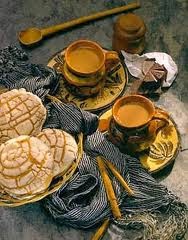
The beginnings of the human race’s relationship with chocolate are shrouded in prerecorded history.  There is evidence that our love affair with it began in Mesoamerica as early as 1900 B.C.  Mayan legend offers a prayer to the goddess: “O IxCacao, see my tears and come to my aid.”  Now that I know it, I am going to repeat it in times of need.  And then eat some of her favorite food as part of my rite.  Why not?  As we say in New York, it couldn’t hurt.


The ancients in Central America believed that chocolate has mystical and healing powers.  They drank it.  An Aztec myth says Questzalcoatl, their god of agriculture, brought them the cocoa tree from Paradise to give them wisdom and power.  They called it “bitter water” and evidently were also the first to combine it with honey and vanilla.  Both the Maya and the Aztecs used the drink as part of religious ceremonies.  The Maya prescribed chocolate for fevers, coughs, and discomfort during pregnancy.


The cacao bean grows on a tree that started out, in prehistoric times, growing wild in the forests, not only of Central America but also in South America, Africa, and parts of Asia.  Its botanical name, Theobroma cacao means “food of the gods.”


Chocolate is big business now, but so it also was in Mayan times.  Their cosmology included a god—Ychaua—who was the patron of the cocoa merchants.   The Aztecs used two precious forms of currency:  gold and cocoa beans.  Columbus brought the first beans to Europe, but he experienced them only as a medium of exchange.  Funny money!  No Europeans knew what to do with them until Moctezuma gave the sacred drink to Cortes.  The explorer brought back to Spain everything needed to prepare the drink, but the monks there thought the substance too powerful for the common person.  They kept it a secret in their monasteries and served it only to the nobility.


It took an Italian, Antonio Carletti, in the early 1600’s, to bring the drink to the common folk.  A century later, chocolate houses were the rage all over Europe, but then in 17th century England and 18th Century France, the places were condemned as hotbeds of sedition and the drink called a dangerous drug.


We owe its ubiquitous availability today to a Dutch chemist named Johannes Van Houten, who figured out how to use a hydraulic press to make cocoa powder, and to a Brit named John Cadbury who emulsified the powder into the first chocolate bars.  I love those guys!

Chocolate is now world wide.  These days, it is also grown outside Central America.  In fact, almost half of the current supply comes from Africa, from the Cote D’Ivoire.

I commune with the goddess by taking my chocolate in almost any form available, but I prefer creamy bittersweet bars.  I try to never run out, because I never know when the need for a “fix” might hit me.  Chocolate satisfaction can come in many forms.  For a short time, I found on sale a Haagen Dazs flavor called Mayan Chocolate, bitter-sweet with cinnamon.  I loved it.  But I never find it anymore.  I guess there were not enough of my coreligionists in the neighborhood to make it worth the while of nearby stores to stock it.  The chocolate truffles from our local Lilac Chocolates are a huge favorite.  On a recent trip to Philadelphia, my daughter and her husband brought me a box of chocolate figs—sweet dried figs stuffed with truffle cream and coated with dark, dark chocolate.  Taken in very small doses, they lifted my sprits for weeks!  I wonder if they are sold by mail order.  Having described them, I want some NOW!
  
Let’s end with a clip of a chocolate lover’s film—Chocolat.  I hope you have some of the sacred substance handy so you can enjoy it while watching this!


Annamaria - Monday

Tuesday, November 5, 2013

Chocolat chaud and a crumbling Rothschild mansion

Exploring in Paris required a stimulant and fortifier - in this morning's case 'chocolat chaud', a charged Navigo pass and then I was ready to hop the Metro. Technically this day took me outside Paris to Boulogne-Billaincourt, a suburb grabbing the southwest environs.  Reaching the suburb, Parisian as it comes with well-coiffed ladies leading their Westies on a leash, I got lost. Where was the Bois de Boulogne - the lungs of Paris and bigger than Central Park in NYC? How could I miss it? More important where was the old Rothschild mansion left abandoned here that I'd come determined to find? A helpful suburbanite, Franprix shopping bag on arm, pointed me to the right bus. Then the bus driver indicated the stop but a white mustached passenger shook his head 'Non, le chateau Rothschild c'est par la' - a jab of his cane outside the bus window to a warren of moisture stained 50's concrete buildings.  Not promising until I hiked the lane and saw the trees of the edge of Bois de Boulogne. A trio of gardeners jerked their thumbs towards a green expanse and bushes. Two minutes later I saw this.

 But a high wire gate grown over with vines surrounded the whole place.
Undaunted I walked the periphery until my shoes were all wet searching for a place to climb over. No luck so I retraced my steps. Waited until a couple engaged in an intense conversation also with a Westie turned the other way and climbed over the lowest part of the fence near the park's entrance.  Threading my way through the trees and overgrowth I found a gatehouse, maybe I'm not sure, but here was something.
 I kept going and found the rear or maybe it's the front of this Rothschild mansion. The windows cemented up and the roof rotting.
 Graffiti artists had discovered this place and any underground parties I'd heard about were long over since every access was boarded or cemented up.
 Edmond de Rothschild, born in 1845, inherited this mansion bought by his father in 1817 who'd hired an architect to remodel it along the lines of chateau de Clagny. For eighty years, during it's heyday, this chateau hosted memorable parties of financiers, politicians and demi-mondaines of the Second Empire, the belle Epoque. Edmond, active in the Rothschild banking branch, fought in the 1877 Franco-Prussian war and later pursued artistic and philanthropic causes. He donated thousands of engravings and some Rembrandts to the Louvre. Also he became a leader in Zionism and helped established what would become Israel. But in his efforts he stated that "the struggle to put an end to the Wandering Jew, could not have as its result, the creation of the Wandering Arab."
 Edmond died here in 1934 and his wife, a year later. At the beginning of the Second World War, the Rothschild family fled to England and left the Chateau. The Germans took it over for four years. At Liberation the Americans took their place using it also as an HQ and pillaged what was left. The mansion was given back to the Rothschilds after the war and submitted to the list of Historic Monuments. It was featured in some films but the upkeep led Baron Edmond to sell it in 1979 for a symbolic 'sou' to the Mairie of Boulogne.
 The Mairie, town hall, turned around and sold it to a Saudi Arabian for fifty million francs. But the Saudi seems to have let it rot and mildew away. More than thirty years later, under the same ownership, the house is still in ruins, with an estimated 30 million euro price tag for the renovation.
I climbed back over the fence - no gardeners around or couples with Westies - and quickfooted my way bypassing the bus to the Metro.
Cara - Tuesday