Thursday, September 7, 2017

Madagascar - Part 2: The dream

Stanley - Thursday

Last week I chronicled the disgraceful way our tour operator, Madagascar Natural Tours, handled Michael's birthday trip.

However, even in bad circumstances, in a place like Madagascar there will always be highlights.  So, putting the bad behind, let's take a look at the extraordinary offerings the country has.  The animals one dreams about.


I dream of a sifaka lemur (Photo: Jill Wilson)

First, some facts:

Name: Republic of Madagascar


Flag of Madagascar (it's white on the left)
Size: 587,041 km2 (226,658 sq mi) - nearly the size of France.  Fourth largest island.

Population: 24,400,000

Currency: Malagasy ariary (approximately 3,000 to the dollar.  Paying for things provided ongoing light relief as most places did not take credit cards.  It seemed that whenever we saw an ATM, there was a rush to draw cash.  At 3,000 ariary to the dollar, drawing three-hundred thousand to half-a-million ariary was the norm.  Large wads stuffed in pockets and too-small wallets.

Just over $3.  Biggest denomination is 20,000 ariary.  I never saw one.

Government:  Constitutional democracy

People: 18 sub-groups of African and south-east Asian origins.  The Malagasy people are very attractive, generally small, and look healthy.  I only saw a few fat people and no evidence of malnutrition. 


Languages:  Malagasy and French

Biodiversity: Madagascar is a biodiversity treasure.  Over 90% of its wildlife is found nowhere else, thanks to its isolation from both Africa and India.

Last week's teasers

I asked what you thought this was a photograph of.


When I saw this during a night walk, I immediately thought it was an owl of some sort - an owl with a frown.  But I was wrong.  It is actually two collared nightjars cozying up to each other.   The eye on the left is the left eye of the nightjar on the left; the eye on the right is the right eye of the nightjar on the right.  If you look carefully, you can see their beaks.

This was the second teaser:


Our guide stopped us at a tree and pointed to a length of the trunk, perhaps a metre long. He asked what animal we could see.  Ten of us looked blankly until he used a twig to raise the head of a mossy leaf-tailed gecko.  You can see its head pointed downward.  Here's another picture of this species of gecko, taken from the Mail Online.  Can you find it?  Unbelievable camouflage.


Lemurs - I prefer the French pronunciation - leMOOR, rather than the English LEEmer

The name is thought to originate from the Latin lemures, meaning ghosts.
Lemurs are probably what first comes to mind when Madagascar is mentioned.  There are over 100 species, ranging from the minute mouse lemur (weight 30 grams - just over an ounce) to the large indri, which weighs in at about 8 or 9 kilograms or 20 lbs.  Historically, there were even bigger ones, but they are now extinct.
Lemurs evolved independently from other primates, such as monkeys and baboons.  And it was the diversity of Madagascar's climate that gave rise to the extraordinary diversity among these animals.  Since the different types of lemurs are spread all over the country, one can only hope to see some, rather than all, of them.  I think we ended up seeing about 15 different types.

The experience of looking for lemurs was very different from what I expected.  I thought we would walk through forests, necks craned upward, searching for them.  We certainly did some of that, but generally the guides knew where the lemurs were.  In addition, in some places, the lemurs had become habituated to humans and, not only were comfortable around people, but often jumped on their heads and shoulders,  More like a zoo, in fact.

However we came to see them, the lemurs were wonderful to watch, not only for their looks, but also for their amazing facility in moving through the forest.
Here are some of the lemurs we saw.  I have to admit that I'm unsure that I've identified them all correctly.

Where we say a number of lemurs
The indri is the biggest of the lemurs and is the only one with virtually no tail.  It is called babakoto locally, which can mean ancestor.  It is highly regarded, almost worshiped.  It has a remarkable call that can be heard over great distances.  Click here to hear the call.  It often hangs upside down from a branch.  It is endangered.


Other species

Black lemur (I think)
Baby mouse lemur

Woolly lemur?

Dwarf lemur

Black and white ruffed lemur

Mongoose lemur (?)


Hybrid lemur
Hybrid lemur 

Hybrid and woolly(?) lemurs

Crowned lemur


Mette said she would die if a lemur jumped on her shoulder.  It did,  She didn't.

Sifaka lemur (which one I am not sure.)
Sifaka lemur
Sifaka lemurs are so well adapted for arboreal existence that they struggle on the ground.  To get around on the ground they have to hop, either forward or sideways.  This is amazing to watch.  Click here to see the sifaka moving on the ground.

Aye-aye

Unlike the indri, which is revered, the aye-aye is hated.  It is the sign of bad luck.   If it is seen in a village, it is believed that a villager will soon die.  It is often killed on sight.

It is quite big (1.5 to 2 kg) and body and tail can be a metre long.

It is quite remarkable in how it finds food.  It knocks on the bark of a tree.  If it hears an insect, it gnaws the bark away with its special incisors, then inserts a very long third finger in the hole to get its prey.  (I suspect the long middle finger is why locals don't like it.)

It is also amazingly mobile and can cover several kilometres a night in search of food.

Aye-aye

Aye-aye hand


Chameleons and frogs and other creepy crawlies

Madagascar is home to over half of the world's 200 species of chameleon.  Some are huge and some are tiny.  All are fascinating.

Tiny
Tiny

Medium
Medium

Medium

Big!  Parson's chameleon (Photo: Jill Wilson)

Stick insect
Tiny frog

Predators

Surprisingly, Madagascar has nothing like the predator population of Africa.  Lemurs have two natural enemies, fossa and birds of prey.  I would have thought that lemurs could have taken a page out of the chameleon's book and developed one eye that looked up and one down.

The difficult to photograph fossa

Well, I think that is enough for today.  Next time, I'll take a look at the amazing baobab trees and say a few words about the Malagasy culture.


Wednesday, September 6, 2017

Until the patriarchy which holds one sex superior and another inferior

Leye - Every other Wednesday

Photo by Soman


Until the patriarchy which holds one sex superior and another inferior is finally and permanently discredited and abandoned.

Until there are no longer first class and second class citizens of any nation.

Until the sex of a person's birth is of no more significance than the colour of their eyes.

Until the basic human rights are equally guaranteed to all without regard to gender.

Until that day, the dream of lasting peace and world citizenship and the rule of international morality will remain but a fleeting illusion, to be pursued but never attained.

And until the ignoble and unhappy regimes that hold our sisters in their homes, in offices and in countries in subhuman bondage have been toppled and destroyed.

Until bigotry and prejudice and malicious and inhuman self-interest have been replaced by understanding and tolerance and good-will.

Until all females stand and speak as free beings, equal in the eyes of all humans, as they are in the eyes of Heaven.

Until that day, the entire planet will not know peace. We feminists will fight, if necessary, and we know that we shall win, as we are confident in the victory of good over evil.


- Being paraphrased version of Haile Selassie's address to the United Nations in 1963, and later made into the song by Bob Marley.

Tuesday, September 5, 2017

last roses and la rentrée

We've had a meta heat wave and it's found me drooping like the last rose of summer.  In Paris, it's la Rentrée, that time when the energized, tanned and almost relaxed Parisians return to school and work and real life. So many people make rentrée resolutions because it's like a fresh new year - quiting smoking said a man on the radio, going on a regime =diet for a French woman. My friend's daughters have been in pencil case heaven because my friend, Anne, must purchase all the items from the Ministry of Education required list which includes les trousses = PENCIL CASES, the girls' absolute favorite things.
Not to get nerdy but did you ever have a pencil case like this wood one?
 Or the more chic one with the aphorism to play this is to live.
 Here are the required contents in case you forgot.

I'm excited that very soon I'll see the girls and see which trousse they picked out.

Right now, I'm finishing final edits to get off to my editor tomorrow, co-chairing the Book Passage Mystery conference this weekend and then it's non-stop on a direct flight to Paris.
More from the city of light, mes amies.
Cara - Tuesday


Monday, September 4, 2017

The Rains of East Africa

Annamaria on Monday


Author’s Note: I wrote the piece below just as it stands and collected the photos you see here the week before Hurricane Harvey began to threaten the Gulf Coast.  The forces behind the disasters I describe and the ones in Texas and Louisiana are the same.  Our planet needs more than prayer.  It needs us to behave as if we care about it.  And about one another!


Unlike the Fall/Winter/Spring/Summer weather pattern that most of are used to, Equatorial East Africa ordinarily has two seasons: wet and dry.


People going on safari and keen to see animals are ordinarily advised to go in a dry season.  This is when thirsty animals are guaranteed to visit water holes.  Most camps provide a water source so animals will come and put on show for their guests.  In this situation, the dry periods are considered optimum.


Back during the time I write about in my historical mysteries, attitudes were different.  Almost all the early European memoirists of British East Africa expressed longing for the rains.  Most of them were farmers, and farmers have always fussed over rainfall.  Those early Twentieth Century newcomers adopted the attitudes of their tribal neighbors—early and plentiful rains were a joyous event.  In Out of Africa, Isak Dinesen expresses a continual worry over failing rains, which would lead to failing crops, which would mean bankruptcy, forcing her to return to Denmark.  She characterizes the rains as a potential perpetrator of a fearsome crime.  A misery that eventually befell her.

My settler characters have a similar relationship with the weather.

In East Africa, from Somalia far down into South Africa, the vagaries of the rains were then and still are potentially life threatening.


The climate of the area is alternately dry and wet.  Two rainy periods are expected (actually, hoped and prayed for) every year: the Long Rains and the Short Rains.  The first ordinarily begin in March or April and end in May or June.  This is followed by a dusty period until October, when the short rains are supposed to begin and last into November, perhaps December.


A major factor in Mother Nature’s properly delivering the vital water is the temperature of the Indian Ocean, which—no surprise—has been rising.  This makes the rains even more unpredictable.  The warmer ocean is what climatologists call “anthropogenic”—caused by the activities of human beings.  It is a direct result of greenhouse gasses collecting in our sacred planet’s atmosphere.  We used to call it “global warming,” but that is too simple a moniker.  What’s really happening is that climate change ramps up the extremes: wet areas get wetter and dry ones get drier, bringing floods and droughts.  These phenomena are more pronounced in East Africa with its ordinarily alternating dry and wet seasons.  Sudden heavy rains on parched earth mean flash floods, when bridges and animals and people are carried away.  Drought conditions mean no food—not for the people and not for the animals.  Flooded fields mean rotted crops.


Tragedy has struck in these past few years.   Millions of people in the area are threatened with starvation.  They are not the people who have created the current situation.  But they the ones paying the price.

I end with a hymn—a prayer, for beautiful rain—in just the right amount—for the suffering animals and people of Africa.


Sunday, September 3, 2017

An Owling Good Time in Tokyo

-- Susan, every other Sunday

With the world in chaos, and stress levels rising, I face a choice when my Sundays here at MIE roll around: address the world's troubles or try to offer an island of peace. Admittedly, Jeff makes my decision easier - his willingess to dive into the breach on Saturdays allows me to retreat to the fluffier side of blogging.

And it doesn't get much fluffier than the place I'm taking you today.

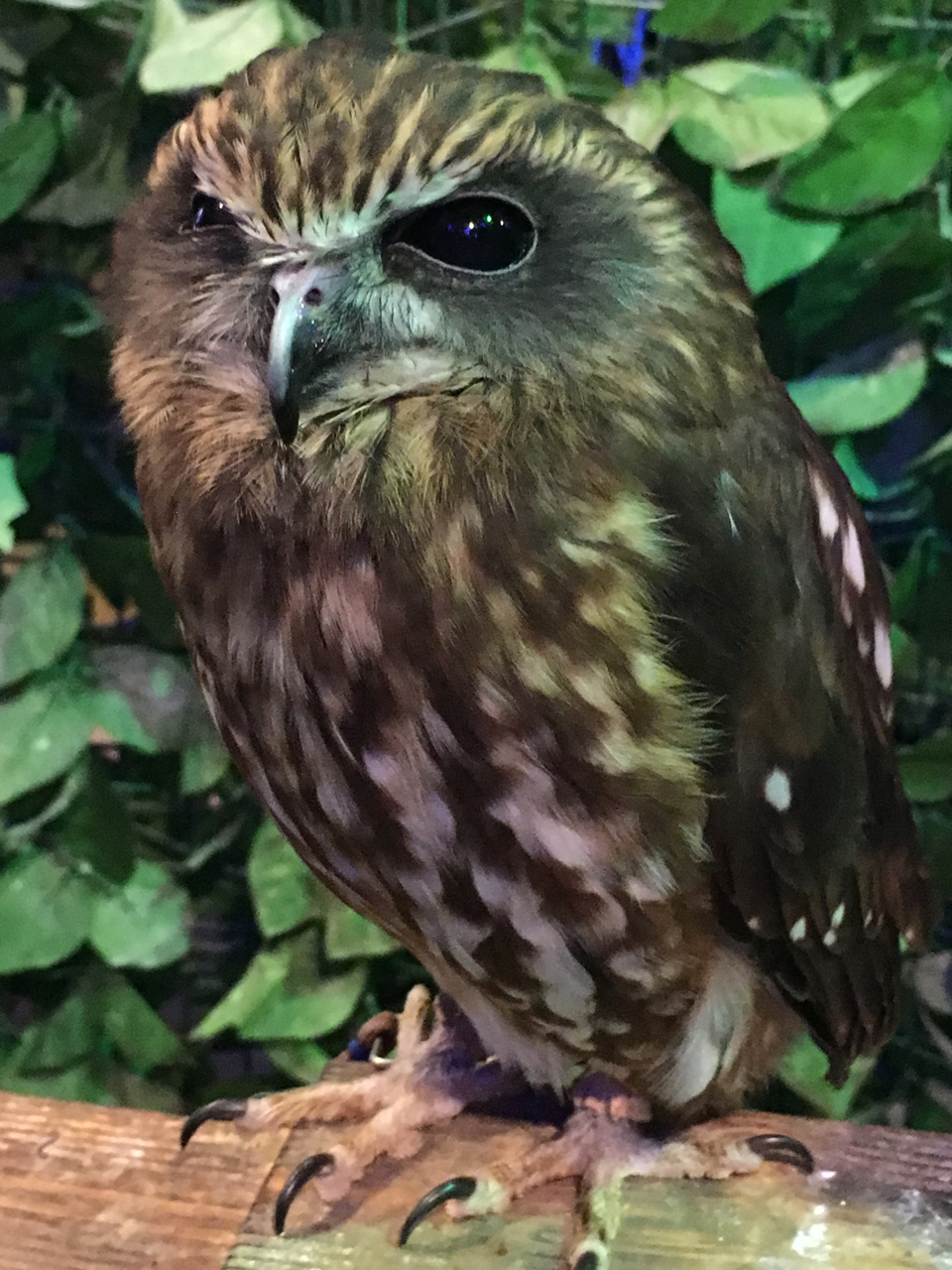
Her name is Holi Moli.

Most people have heard of Cat Cafes - coffee houses where cats roam freely so customers who like animals but can't own one can pet and play with cats while sipping lattes or iced tea.

But this Tokyo phenomenon has now given birth to an even stranger offspring: the OWL CAFE.

As the name suggests, it's a cafe where people go to pet and interact with owls.

Yes, live owls.


Much more fun than the dead kind.

I discovered the existence of Owl Cafes last spring, shortly before my last research trip to Japan, and since I've always wanted to touch a living owl, I hoped to pay one a visit.

As it happened, I stumbled across an owl cafe in Asakusa on the very first day of my trip, while doing research at Sensoji (Tokyo's oldest Buddhist temple, about which I've blogged here before). To escape from the rain, I wandered down a shopping arcade near the temple, and came across the most unusual--and compelling--barker I'd ever seen.

Tell me you wouldn't have gone inside too...


I didn't hesitate. I headed up the stairs, paid the cover charge (about $8.00, which entitles you to a drink and unlimited time with the owls), disinfected my hands (per the entry policy) and headed in.

Visitors are allowed to pet most of the owls -- the ones that don't like being touched have signs that say "Please look, but do not touch me" in both English and Japanese - but instructed to use the back of the hand (most likely to avoid harm to everyone).

Come at me, bro.

There were also other posted warnings.

Everybody poops. Sometimes, above you.


While some owl cafes are set up like standard coffee shops, with tables and wait staff who bring an owl to the customer's table for a time-limited visit, the owl cafe in Asakusa is built to resemble a jungle, with 12-15 owls sitting on perches and others roaming, flying, or wandering about on their own.

Barn owl!!

(Even more owls are in a resting room, away from the public - the owls are only "on" for a couple of hours at a time, and even then most of them can leave the public areas and fly into the rafters if they want to.)

The room is fairly dark - I suspect the owls are "time shifted" to think it's evening during operating hours, because most were alert and interested in the visitors.

Love the mustache.

Before visiting, I wondered whether the owls enjoyed being petted. Based on my experiences, both here and with other types of birds, they do. They leaned into my hand, fluffed up slightly the way birds do when happy, and didn't try to move away.

A happy owl.

For the record: petting an owl feels the way I believed that clouds must feel when I was very young. They're almost too soft to believe, and the amount of airspace beneath their feathers makes petting one feel like it almost disappears beneath your hand.  

I enjoyed my trip so much I went back a second time with my son, who also wanted to experience an owl cafe.

A boy and his owls.

He liked it as much as I did--and for the same reasons. Not only did we get to interact with owls, but the birds were clearly healthy, well-fed, alert, and not being forced to interact with us against their will. While some (the dozen or so that were actively "on duty") were tethered, the tethers were long enough to allow them to move around and to escape from visitors if they chose.

At least a dozen others were completely un-tethered, and most of them were still interacting with visitors. The ones that didn't want to be touched simply walked away or watched us from the parts of the cafe we could not enter.

On display, but not interested in being touched.

I loved it so much that I'll definitely go back, the next time I'm in Tokyo.

I finally found my own photobomber.

In fact, with no apologies . . . my son and I both had an 'owling good time.


Saturday, September 2, 2017

In Praise of American Values


Jeff—Saturday

What a week. I mean WHAT A WEEK.


Houston area rainfall in INCHES

Where to start?  Virtually all US news this week—at least that reaching us over here in Greece on US TV—focused on Southeast Texas flooding, plus of course, tantalizing Presidential touches like pardoning a partisan supporter, banning willing soldiers from serving in the military, and substantially cutting taxes for the yet to be determined. Oh yes, and North Korea.

Sort of makes you think everything is underwater.   


As some of you may know, my son is a chaplain with the Harris County Sheriff’s Department, which includes the city of Houston.  He was on site for the recovery of the six members of a single family (two great grandparents and four of their great grandchildren, ages 6 to 16) who perished when the van they were in was swept off the road into the water.  May God have mercy on their souls, and grant serenity of thought to the many torn apart by what this great storm has wrought.


But for the courage and perseverance of first responders, and an army of volunteers, each one risking his or her own life to save others, the death toll would be far greater.  Let us stop for a moment and look at the faces of these brave saviors.  They’re people of every color, gender, ethnicity, economic strata, religion, and sexual preference working together for a single purpose, to save another person’s life. 


That is not a Houston or Texas phenomenon in times of crisis. It is a tried and true, deeply engrained American trait. We saw the same courage in New Orleans during Katrina, and in New York and New Jersey with Sandy.  In trying times like these we see our true strength and values as a country come to the fore.


It is not a time for politics, polemics, or pettiness.

This is a time for reflecting on what brings us together, not to hammer away at what drives us apart.  Let us find a lesson in how individual Texans are pulling together to battle an unmitigated disaster, let us bring that sense of camaraderie into our hearts, allow it to fill our souls, and pray that it serves as an honest guide to what we all truly share as American values.

Amen.

And for those who wish to donate to American Red Cross Hurricane Harvey Disaster Relief, here is the link.


—Jeff

Friday, September 1, 2017

Confused. Me ?


 I confess to being quite confused now.  I think it might be an age thing.
 I can’t even speak the terminology  any more; it’s all too new to me.
It’s all about labels. And we all need a different label, which to me is divisive  rather than unifying.
So, here’s one thing. As far as I know there are two genders. XX and XY.
Two.
I have been told recently that this is wrong and that there are about 55 genders.
Nope. There are two.
I am told I am intolerant and sexist for saying so.
I might go for three. Occasionally there is  a XXY. They used to be very good at shot putting until we had the technology to find them out but are a genuine twist of nature so really it’s  two; XX and XY.
How you want to express those chromosomes in your private or personal life is no business of mine. It’s your personal stuff and unless I am in your personal circle, not my business. You can be binary, unilobular, tricyclic, quadrophenic, quintessential, hexagonal  I have no interest. As long as they are happy it’s fine.  My two best pals are gay. They have never told me they are gay, they just are what they are. And that’s fine. They do not label themselves as gay and they have never felt the need to.
                                           
                                                       I think this is a man in a skirt. I wouldn't argue
                                                          with him either way...

And now another celebrity has announced they are bringing their child up as non gender specific. Fair enough,  let the kid find it’s own way, I am all for that. But I suspect ‘it/ he/ she/them’ might be appearing in magazines with the parents discussing their/his/hers non gender status  to the ends of the earth as the XX or XY works  their  magic just as nature intended.
So when I get a bit of trouble with an employee for persistent lateness , I have to state to the lawyer if they are gay or not. Now the only answer to that should be, ‘I have no idea, it’s none of my business.’
Lawyer ‘Well you need to find out.’
Me       ‘Why, does being gay give you an inability to get to work on time?’
Lawyer  ‘No but..’
Me       ‘ Well why ask the bloody question then?’
Lawyer   ‘Yes, but they are a minority..’
Me    ‘Well if you look hard enough we are all a minority. I have green eyes, the last green eyed person will die in Finland in 2075 (I read that somewhere). I am so rare I could be persecuted. I am endangered.’

I think it might be my age.
Am I post feminist?  What does that mean? Ladies ( XX) fought very hard for the rights I have enjoyed, the equal rights I have enjoyed. I’ve never felt oppressed by men at work; I have a brain, I can speak and point out something that is unequal, hopefully without causing offence as often offence is not intended.

If a man stands up to let me sit down on the bus. I am not offended, but I’ll smile and say no thanks.
If an older man got on, I’d give them my seat. Same with a pregnant lady… or a pregnant man for that matter.  I’m not offended if a man holds a door open for me. I would also hold a door open for a XY coming through. It’s about people.

And equality. And the right to choose? Absolutely. And that goes both ways.
In my profession, I do believe that patients have a choice. They can see male or female practitioners as they do have to undress a little. Women not wanting to undress in front of men in the clinical sense, fair enough. Men not wanting treatment from a female because woman are not strong enough- well let’s hope they never phone up as an emergency on my shift!
Much more important is the protection of male practitioners from female patients who maybe have a different agenda than getting treatment for a sore back. And these women do exist and know how to work the system.
                                           

It’s about respect.
So I am now told  we are in an age where woman are expressing their sexuality freely. I thought that started in the 60’s but hey ho.  I was at an event recently where the women were dressed in knickers and suspenders, Basques and thigh length boots, in front of a male audience – which to me is right back where we started.
But that’s  err…. Something else.
I know it’s a deeper issue than that. Men paying women to take their clothes off is a win win for women, IF it’s her choice but it rarely is.  It’s normally an abuse of a vulnerable subject, and that abuse is not confined to women.
The event I am talking about so offended me - maybe that’s too strong a word- maybe I was struck by its incongruity and was uncomfortable with it. Any time I have witnessed a female stripper I have gone to the toilet so I don’t need to witness it. Anytime I have witnessed a male stripper I have gone to the toilet so I don’t need to witness that either. I see enough of that at work.
When I got my deal with Penguin, a male friend and writer (unpublished) said to me, ‘Well you would as you are young and blonde.’ I pointed out I was a lot older than him. He remains unpublished. He did not remain my friend.
                                                 
                                  A Scottish woman in art....but she maybe not be either.


And as I have mentioned before, we have a movement called the Women In Arts in Scotland. For the promotion of women in arts. Men are not allowed to join.
So I refused to join.


It  makes me uneasy. Equality is equality. Not just for some. I said that at an event recently and got a spontaneous round of applause so it’s not just me.
And then at work we got a letter from a lawyer, it started Dear Sirs (British polite from one company to another). My PA walked into the back office with our reply and got dogs abuse from a 35 (ish) member of staff. ‘It’s not right to put Dear Sirs, I mean that just means men, that’s demeaning to women. It’s not even legal so you should get that changed… ‘etc. etc., no doubt there was finger wagging. Then I said, loudly, ‘If they Dear Sirs us, we will Dear Sirs them.’
The finger waver scuttled to my door, all pouting and knickers in a twist. ‘We are all strong independent women; you should not be condoning that sort of language.’
‘Well I am the sort of strong independent woman who runs this company and you are the sort of strong independent woman who let her mum wash her socks until she was 33 so think on.’
And that just sums it up.
Just as I was writing this, a diversity survey from the Scottish Book Trust popped into my inbox. It has four questions, they want my age, they want to know how I would identify  myself. The word passport is not an option; male, female, other, prefer not to say.  But you can specify in a special box.. And then a question about my sexual orientation; 8 choices there. A question about disability   and then a question about my  ethnic origin;  11 options there, everyone has the word Scottish in it.
So I guess I am saying I am fed up with labels!
                                        

Caro Ramsay (XX ,Scot, Brit, European, osteopath, heterosexual, unionist, green eyed, vegan, runner, dog lover, cat slave, crime writer, MIE blogger.)