Showing posts with label Climate Change. Show all posts

Wednesday, January 3, 2024

A better year ahead?

 Michael – alternate Thursdays

The Washington Post closed last year with an article summarizing the effects of climate change in 2023: The climate future arrived in2023. It left scars across the planet. It documents the horrendous fires in Greece and elsewhere, the drought in South America shrinking the rain forest and disrupting waterways, and the temperatures that made records all over the world in 2023. 

Simon's Town mountains burn
Photo: Daily Maverick

I admit that I didn’t read it when it came out on 31st December. It seemed to me that there was enough doom and gloom going around with wars and deaths as we exited 2023, and maybe, just maybe, we could be a bit more optimistic for 2024. Besides which, Cape Town was battling its own raging fires and that seemed bad enough for the time being.

Aviation fuel goes green?

A lot of positive things happened in 2023 on the climate front and many of them were based on technology. Solar panels became more efficient and less costly. A Virgin airliner made a transcontinental flight on green fuel (mainly from used cooking oil). Electric cars became more accepted (although, of course, their greenness depends on how the electricity used to charge their batteries is made). Nuclear power started to look more hopeful, both from the viewpoint of fusion energy and on the recycling of waste fuel rods (90% can now be recycled). I believe that it's these technological advances that hold hope for the future.  

The world has discovered that even when people are convinced about climate change, most of them (the so-called third world) have little they can do about it, and the rest will take small steps but are unenthusiastic about big ones. So the new technologies have to be able to replace the existing polluting ones. People are going to travel by car and plane, they are going to warm their homes, they are going to have cattle farms and eat meat. Maybe these activities will be reduced. (It seemed likely after covid, but the airlines have bounced back with record profits.) Efforts have to be focused on supporting the change to, and development of, different technologies. I think the majority of people now believe that addressing climate change is very important, but in reality they won’t give up their lifestyles in order to do so.

South Africa's lone nuclear power station Koeberg. Needs friends?

South Africa had its longest period of uninterrupted power supply in 2023 over the recent holidays – about three weeks. That was a result of people being on their summer vacations, and that schools and many factories and businesses were closed. The rest of the year we had extended “load shedding” (periods of the day when the power utility shut off electricity on a rotating schedule to prevent the collapse of the grid). The country runs on coal and diesel, yet it has abundant hours of sunshine, windy areas, and one recently refurbished nuclear plant. South Africa needs a dramatic shift to more and cleaner power. Nuclear is surely in that category, at least while we transition to other green energy. I now have my own solar power system which supplies most of the electricity I need, but it was a stand-alone system for my house and expensive, especially as the power utility effectively forced everyone who could afford it to move in that direction at the same time. The point is that the large majority of South Africans can’t afford it. Without electricity, they burn wood and oil products for heating and light. That’s the case throughout the third world. (On the other hand, their carbon footprints are tiny in comparison to mine.)

Cop 28

Light at the end of the tunnel? I wrote a blog twelve years ago about the total failure of COP17, which was held in Durban in 2011. We’ve just had COP 28 in the UAE. While a set timetable for phasing out fossil fuels didn’t make it passed the hosts, it’s been agreed in principle, as have a lot of other targets and limits. The first world is on board, and the third world countries of the world are signing on provided they don’t carry all the pain for what the first world has done since the industrial revolution.

Start of a new generation

Back to those fires in the Cape. A friend watched while the fire reached a few hundred yards from his house before the wind changed and the crisis passed. We must expect more of this. However, we should keep in mind that these sorts of events have happened for millennia. The Protea species which are a key component of the Cape Feinbos, one of the world’s six floral kingdoms, actually need fire for their seeds to germinate successfully. They’ve evolved with fire. This isn’t something man is responsible for, and it will carry on whatever we do about climate change. Similarly, there have always been and will continue to be droughts and floods.

Climate change is here. We have to cope with it now. Prepare for worse fires, floods, and droughts. Make plans to evacuate low lying island nations over time. Support third world countries that are carrying the cost of technological change while still trying to develop. That can be where support for solar, wind, and nuclear power should come in.

2024 is a year of elections around the world - 60 countries with 4 billion citizens. That includes the US, UK, South Africa, India, Taiwan. Let's hope that not too many governments are elected that think these problems stop at their borders.

Thursday, August 3, 2023

Canary in the coal mine

 Michael - Alternate Thursdays

Like our protagonist, Kubu, I’m partial to good wine. Maybe this isn’t a coincidence since Stanley also has a taste for the fruit of the vine. Among all the possible negative outcomes of climate change, probably the demise of the current leading vineyards isn’t high up on the list of potential disasters. However, it’s interesting that while the debate about global warming was going on, some wineries were already thinking ahead.

Canary cage complete with oxygen cylinder
 to resuscitate the bird
Spanish wine master, Miguel Torres, said that wine is “the canary in the coal mine,” referring to the old practice of using a canary to predict carbon monoxide accumulation in a mine. When the canary stops singing, get out of there. The wine canary hasn’t stopped singing, but it’s definitely sounding a bit throaty right now.

So what can be done?

One option is just to harvest the grapes earlier, but the balance is often wrong. Alcohol is higher, tannins more bitter, acidity lower. Slow ripening is important, and it’s not only warmer summers that’s a problem. Warmer winters encourage early sprouting, and then a deep frost can damage the plants. 2021 was a particularly horrible year in France—a very mild winter was followed by several days of below freezing temperatures. The country’s total wine harvest was only about two thirds of the usual volume, disastrous for the growers. There are other problems as well. Drought conditions and wild fires have affected vineyards, particularly in South Africa and Australia, but Europe is having a turn now too. Even if the vineyard itself doesn't burn, ash settling on the grapes may later affect the taste of the wine.

Fire in the Cape winelands

Of course, it’s not all doom and gloom. Germany, known for cool climate, and often sweeter, whites is now extending white vineyards into regions that were previously too cold, and producing some satisfactory reds in the warmer areas. So is England where cold resistant cultivars are being replaced by the desirable cultivars that are struggling with the new climates in France. Pinot noir, chardonnay.
Cabernet pfeffer
Looks hardy enough...

A second approach is to plant new varietals, or old varietals that are out of fashion – basically anything that survives hot weather. Some of the winemaking fans of these grapes say they are more interested in preserving historical cultivars than addressing climate change, but I’d guess they have an eye on the thermometer as well. An example is California’s recent interest in cabernet pfeffer. I have no idea what it tastes like. Perhaps I’ll find out at Bouchercon.

Yet another strategy is to find cooler slopes, perhaps not facing the sun as directly, or higher terrain. Some of the larger Spanish wineries began planting at higher altitudes quite a few years before climate change became accepted as a problem in the industry. Now they have a head start. (They are also selecting cuttings from vines that seem more heat resistant. But only time will tell how the wine from that selection will taste.) Generally, moving to cooler areas is successful and it’s happening in Spain, France, and Argentina. But it’s not an easy option for South Africa or Australia, which are already growing grapes in their coolest climates.


In the meanwhile, you may want to stock up your cellars, particularly those pinot noirs and chardonnays. The future ones may not be as good and will be more expensive if they are.


After all, a nice, chilled, white in the shade may take the edge off the heat.

Wednesday, April 26, 2023

CLIMATE CHANGE AT A GLANCE

 Earth Day 2023 was on April 22. The earth faces tough challenges, especially global warming and climate change.

1.Definitions

Global warming: increase in Earth's average surface temperature due to the release of greenhouse gases.
Climate change: long-term changes in the climate system, including changes in weather patterns as a result of global warning

2. History

  • 1824: Joseph Fourier describes the greenhouse effect, the process by which gases like methane and carbon dioxide in the Earth's atmosphere trap and absorb heat, leading to warming of the planet's surface.


  • 1896: Svante Arrhenius calculates the effects of CO2 on global temperatures
  • 1938: Guy Stewart Callendar links CO2 emissions to rising temperatures
  • 1958: Charles David Keeling begins measuring CO2 concentrations
  • 1979: World Climate Conference acknowledges human influence on climate

3. The Present State of Climate Change

A. Impact of human activities on climate change
  • Fossil fuel combustion: major source of greenhouse gas emissions


  • Deforestation: loss of carbon sinks and biodiversity


  • Agriculture and livestock: methane emissions and land-use changes

B. Observed consequences
  • Global temperature increase: average of 1.2°C since preindustrial times
  • Extreme weather events: heatwaves, droughts, storms, and floods
  • Melting ice caps and glaciers: sea level rise and disruption to ecosystems
C. Current international efforts
  • 2015: Paris Agreement – global commitment to limit temperature rise
  • 2021: COP26 – renewed focus on climate finance and net-zero targets
  • Ongoing initiatives: renewable energy, reforestation, carbon capture

4. The Path Forward

  • Decarbonizing energy production: solar, wind, nuclear, and hydro
  • Electrifying transportation: electric vehicles and public transit
  • Enhancing energy efficiency: green buildings and smart grids

5. Conclusion:

  • The history of climate change research informs current understanding
  • Urgent need for collective global action to mitigate impacts
  • Continued innovation and collaboration necessary for a sustainable future

Monday, November 22, 2021

You Too Can Fight Climate Change


Annamaria on Monday


Climate change is everywhere.  


Clearly, governments and corporations absolutely must do the heavy lifting to save us all from this threat. We must pressure them to do so, in every way we can.


On the other hand, there are billions of human beings on this planet, and by collectively putting in some effort, we can certainly help.  Besides, by pitching in – changing our habits and the way we live in our homes—we will energize ourselves to fight the good fight politically.


Photo: Reuters 

Let’s begin with the art of the doable.  Here are some simple, easy ways we can reduce our individual carbon footprints:


We can switch our thinking about what feels comfortable for the season. I have been fuming about this for years. In my country, where the populous's fossil fuel consumption is 4-times the world average, people typically heat their homes to 74F (23C) in winter and cool them to 68F (20C) in summer.  This is the opposite of sense both economically and environmentally.   For heating, a one-degree temperature reduction means a 6% drop in energy consumed.  Since 68° feels comfortable in summer, why not set your thermostat to 68 in the winter.  You will reduce your environmental impact of heating your home by 48%. I think my math is right, so why not be sensible.  If you feel a little chilly, there is that marvelous invention—the sweater.  I know.  It’s low-tech.  But also nice and cozy.


In summer, given the fact that AC eats up even more power than heat, a 74°-degree indoor temp will really reduce your carbon footprint.


Our sacred planet comes with the wonderful convenience of evaporation. This means we never have to expend energy to dry things.  Left to themselves, wet socks will become dry socks. And, mirabile dictu, wet dishes will become dry dishes. Marvelous, ain’t it?  And, when it comes to clothing, cold-water washing will almost always do. Run the washing machine on the cold cycle.  Then put your clothing on a rack to dry.  This is not merely an environmentally friendly way to clean your clothes. These measures will also make them last longer, eliminating the environmental costs of producing and transporting replacements.


Run the washing machine when you have a full load.  Do the same with the dishwasher, if you have such a blessing in your life.  Put it in energy-saving mode.  You don’t need to consume fossil fuels to dry your forks and spoons. When the wash and rinse cycle is over, all you have to do is open the door a crack and let the stuff sit there for a while. E’ voila’—dry dishes!


Food is a huge issue when it comes to environmental impact.  By now you have heard that a plant-based diet is the most environmentally friendly.  As woman passionately concerned with this issue, I have the terrible challenge of also having more than a score of allergies and sensitivities to plant-based foods.  The best I can do is to eat meat, poultry, and fish in smaller amounts.  


BUT there are lots of other things to work on when it comes to food.  Most important is to buy locally. Dragging lettuce from Arizona to the Northeast or flying fresh asparagus from Chile to Chicago in January is environmentally nuts.  We Americans do far too much of this.  Also, by actual tonnage, in the US 40% of food is wasted.  This means also wasting all the energy it took to grow it, transport it, all the related packaging floating around in the oceans.  On top of that, wasted food puts carbon back into the atmosphere as it rots in landfills.  YUCK!  So, buy as much as you will actually consume and shop more often, so that less of what you tote home will go off and have to go into the trash.


LOCAL! AND NO PLASTIC

Also, be sensitive to the packaging your food comes in.  No matter how carefully you separate your trash, only 5-10% of plastic is actually recycled.  A loose head of local lettuce is a great deal more environmentally friendly than one in a plastic box that crossed a continent to get to you.  Yes, you’ll have to wash it yourself.  Swallow your pride and, if you are in a drought area, use the drained H2O to water your petunias.


Buying local will help, no matter what you are buying.  Need a screwdriver or want to buy a book?  You can go online and order it, or you can go to a local store and find it waiting for you.  This transaction has far less environmental impact, saving costs of individual transportation and packaging.  


Doing research for this post, I have caught myself in waste I had not thought of.  From now on, I will shut down my computer when I am going to be away from it for hours.  Even when it is snoozing, it is—in a manner of speaking—eating up fossil fuel.


From tonight on: Good night, room.   Good night, iMac and the man in the moon.


Sunday, February 9, 2020

Worzel Gummidge: A Scarecrow For Our Times

Zoƫ Sharp


Does the name Worzel Gummidge mean anything to you? Worzel was a scarecrow who could walk and talk, and who befriended two children who came to stay at Scatterbrook Farm, with resultant adventures.

If you were growing up in the 1970s and 1980s, you possibly remember the TV series with Jon Pertwee in the title role, and Una Stubbs playing life-size fairground attraction, Aunt Sally.


Far more recently, actor Mackenzie Crook—better known for his appearances in the UK version of The Office and the Pirates of the Caribbean franchise—took up the mantle. Two episodes were broadcast in the UK over last Christmas. And a pure delight they were, too.

I know everybody didn’t quite get on with the look they gave the scarecrow—some unkind references were made to Freddie Krueger. Claims were made that some younger viewers were ‘left terrified’ but that simply makes me wonder who allowed them to see the horror movies from which the Krueger character originates in the first place?


But the history of Worzel Gummidge goes back much further than you might think. The stories were written by Barbara Euphan Todd, with the first published in 1936. A couple of years later, the rights were acquired by Puffin Books and WORZEL GUMMIDGE: THE SCARECROW OF SCATTERBROOK became the first fiction title published by that imprint.


Ms Todd wrote ten Worzel Gummidge books in all, with the last—DETECTIVE WORZEL GUMMIDGE—published in 1963, and illustrated by a number of artists. She also collaborated on turning the stories into radio plays for children in the 1950s. Five of the stories were narrated by Gordon Rollings for the BBC children’s TV programme, Jackanory.

The first time Worzel appeared on television was in 1953 in Worzel Gummidge Turns Detective. Another series—with Pertwee and Stubbs—ran from 1978-1981. It was revived six years later, based in New Zealand, as Worzel Gummidge Down Under and ran for another two years.

Barbara Euphan Todd
Mackenzie Crook’s decision to revive the character now may seem strange but in fact it reflects a growing trend in TV drama to approach the subject of the climate crisis. The latest series of the long-running sci-fi drama, Dr Who, with Jodie Whittaker as the Doctor, has had catastrophic climate meltdown at the heart of several episodes.


And the first of the latest Worzel Gummidge incarnation saw the countryside stuck in the perpetual heatwave of summer, with crops refusing to ripen and the seasons unable to change without some otherworldly intervention. This involved getting two old adversaries to work together for the greater good. A moral lesson, for sure, but delivered with a light touch.

It seems that TV drama is slowly starting to move away from the bad guys wanting to dominate the world and instead focusing on the good guys trying to save the planet. Is this a trend we’re going to see more of in novels as well? I wonder what influence it might have? And will it all be too late anyway…?

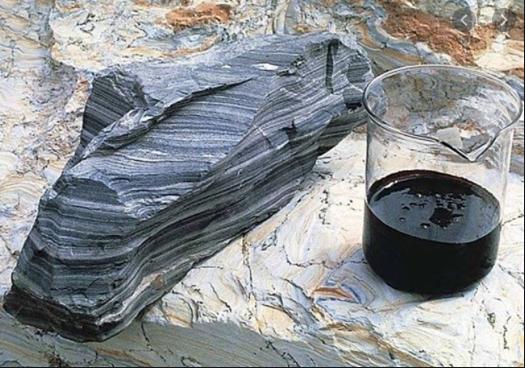
I’ve only had environmental issues as the focus of one of the Charlie Fox series so far—FOURTH DAY. At the time I wrote it, I wondered if anyone would believe that such a fuss might be made about the extraction of oil shale. And we know how that one has turned out!


This week’s Word of the Week is inchoate, which means something just begun and which is still rudimentary or not yet fully formed or developed. It is often confused with incoherent, meaning lacking in clarity. Only when the inchoate thing is completed can it be judged to be truly incoherent.

Upcoming Events:

May 1-3, Newcastle City Library, Newcastle upon Tyne.

June 4-7, Mercure Bristol Grand Hotel, Bristol.

Thursday, August 9, 2018

Worried


Michael - Thursday

I’m worried. I can hear Annamaria sighing in anticipation of another pessimistic rant. Actually, I’m worried about something that is more of a threat than a problem, and that shouldn’t be hard to fix (in principle).

I have to start off by stating categorically that
·         I am completely convinced that climate change is real, and that unless we take quite drastic action, it will lead over time to a planet much less favourable to human and most other animal life;
·         I am completely convinced about the efficacy of vaccines that have been developed by reputable drug companies and tested and approved by serious regulatory bodies like the FDA;
·         I am completely convinced that there is no difference on average between the human races – an ill-defined and possibly meaningless categorisation in any case – apart from completely trivial ones like skin colour.

What I’m worried about is that the people who don’t believe these things – of which there are many – are causing scientists working in these areas to veer away from investigating any aspects of these premises that might give the doubters comfort. Worse, there is peer pressure to not research such topics at all or at least to obscure the results from public view. This is not an atmosphere in which good science can be pursued.

The history of science is full of breakthroughs where individuals – Galileo, Newton, Einstein – came up with ideas that were contrary to the orthodoxy of the time, but were later shown to be much closer approximations to reality than what had gone before. Perhaps unfortunately, nowadays most scientific breakthroughs involve teams and serious funding. The gentlemen mentioned above probably wouldn’t have received that sort of support for their way-out ideas.

David Reich is a respected professor of genetics at Harvard. In a recent op-ed in the New York Times that you can read here, he raises the issue of research into genetic differences between races. He starts by pointing out that since the seventies it’s been known that most of the genetic differences (85% in the case of blood proteins, for example) are explained by variation within the population groups and very little is explained by so-called race. Reich also points out that the genetic differences between men and women are huge and way more than any within sex differences across any human population group you care to choose. His point is that geneticists shouldn’t veer away from studying the differences because they may be helpful in determining, for example, genetic traits related to diseases, and he cites important work of his own. The concern is, as he puts it:

“I am worried that well-meaning people who deny the possibility of substantial biological differences among human populations are digging themselves into an indefensible position, one that will not survive the onslaught of science. I am also worried that whatever discoveries are made — and we truly have no idea yet what they will be — will be cited as 'scientific proof' that racist prejudices and agendas have been correct all along, and that those well-meaning people will not understand the science well enough to push back against these claims.”

He goes on to suggest that scientists don’t like to even discuss genetic connections between behaviour and cognition. But by avoiding the research or the discussion of the outcomes in the public domain, they leave the floor open to people – some of whom are sufficiently knowledgeable to make convincing arguments – to claim that such research points to racial stereotypes. That’s the last thing any of us want.

In another article, which you can read here, Melinda Moyer, a science and health writer and contributing editor at Scientific American, explains how the anti-vaccine activists are cramping research in the area. The reason is that scientists in the area are now scared of any research or findings which might tend to support extreme views that vaccines are dangerous. She mentions one researcher who published a paper which indicated that the flu vaccine methodology of the day saved less elderly lives than one might expect. Although the research eventually was instrumental in the development of a better vaccine for seniors, the author was ostracised for many years and accused of aiding the anti-vaccine lobby.


The same sort of pressure is brought to bear on climatologists. Any study suggesting that the problem may not be as severe as thought is immediately pounced on by the denialists and treated with distain by the main stream science community. This is not helpful because the denialists can twist things to suit themselves and claim that it proves the complicity of the 'climate change clique'.

I think these three areas illustrate the problems that arise when scientists are unwilling to be out of step with a community defending itself from ill-informed, but powerful, attack. It’s not the right reaction. By using the scientific approach to investigate all sides of an issue, the expert community becomes more robust and is protected from accusations of bias.

To make real progress one has to ask inconvenient questions and consider the reality of unwelcome answers if you get them. As Dr Edward Belongia, director of the Center for Clinical Epidemiology, told Milinda Moyer, “If we get to the point where we don’t want to look anymore because we don’t want to know the answer, then we’re in trouble.”