Showing posts with label feminism. Show all posts

Monday, November 18, 2024

The Power of Small Acts of Love

Annamaria on Monday


More often than you might think, an act of love, even a seemingly small act of kindness will produce a marvelous outcome.  If all you do is unlock a door for someone, you might set them on a path to something wonderful.

My case in point today, is also my excuse for being late with my post.  I was too busy yesterday celebrating such an event.

All I did was give a stay in my apartment in Florence as a wedding gift to a couple I love and admire very much: Kate Hamill and Jason O'Connell.  Such an easy thing to do for two theater artists who have delivered so much joy to me.  Covid had messed with their wedding plans and temporarily brought to a halt their careers.  Who wouldn't want to give them something nice.

While Kate and Jason were in Florence, they visited the Uffizi Gallery, where Kate saw Artemisia Gentileschi's painting of Judith Slaying Holofernes:


That image grasped Kate's curiosity and her ensuing research inspired her to write a powerful play - The Light and the Dark.

The play was preformed in out-of-town trials at Chautauqua this past summer.  Here is what Chautauqua said about Gentileschi and Kate's play:

Artemisia Gentileschi, a trailblazing artist, was the most successful female painter of the 17th century. Her artistic legacy endures as one of the few Baroque-era female artists, with dozens of paintings exhibited globally alongside Rafael and Caravaggio. Artemisia, characterized by her irreverence and audacity, aspired to attain immortality through her groundbreaking work. However, her journey took an unexpected turn, marked by a series of brutal betrayals that forever altered her life and art. The resulting transformation kindled a fire within her, a flame that continues to astonish and resonate with audiences today. 

The Light and The Dark delves into the profound impact of art in assuaging trauma and explores the transformative power of female rage in reshaping societal paradigms. 

Yesterday I had the enormous pleasure of attending the New York opening performance.

Kate plays the role of Artemisia.  Jason plays supporting roles. If you are anywhere near New York, I urge you to see this riveting and powerful play.


Kate and Jason give me far too much credit for "inspiring" the work of art that Kate has created.  My point is this: unlocking a door for someone is a pleasure in itself.  And you never know what wonders that first small step might lead to.   

Wednesday, June 29, 2022

The "Wife's Help"; Writing about abortion in historical fiction

 Sujata Massey


About two years ago, I started work on a new book in the Perveen Mistry historical mystery series. The beginning is a lot of fun. Searching for historical events and themes to explore is typically a magical period of big dreaming. To coax out story ideas, I reach into the messy purse that is my brain, the spot where memories and idea fragments coexist like torn candy wrappers and soiled pennies. 


What I pulled out of the bag was the notion of reproductive rights. It didn't take long for me to realize I could become passionate about writing a story that illuminated these health and freedom challenges faced by women in 1920s India. How would their choices be different than a modern woman's? Especially if laws existed to punish those who tried not to bear children, either through contraception or abortion? 


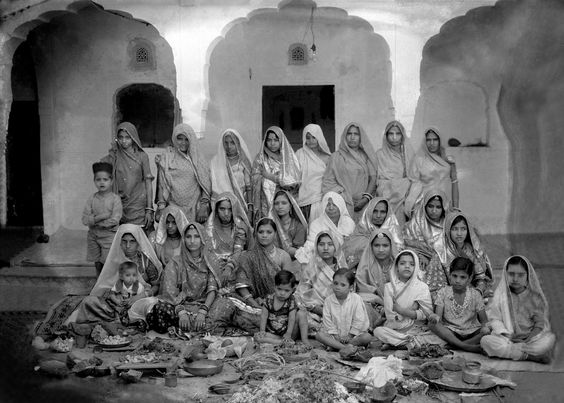
In the vintage photograph above, women of the Kurni (tilling) caste pose together for a colonial photographer. How many of the women are mothers, and how many children do this group collectively have? Surely some of them are mothers and daughters. And I wonder--do the small girls flanking the ends of the group already have husbands? 


I believe that abortion is an understandable part of reproductive life—just like menstruation, childbirth and contraception and venereal disease. I haven’t shied away from writing about these aspects of women's lives in my feminist mystery series set in 1920s Bombay. Therefore, the fourth novel in the series became the perfect entry point for my lawyer heroine, Perveen Mistry, to assist an illiterate ayah charged with the crime of abortion. Slated for publication in June 2023, tThe Mistress of Bhatia House also includes scenes with Perveen secretly reading a banned book about contraception, and deliberating over whether she should assist a contentious group of women volunteers trying to establish a maternity hospital. 


Abortion law in India was created along with the arrival of the British. In the early East India Company times, criminal courts administered by British officers were set up; however, prosecutions of abortion were rare. A chief reason was that life was defined as starting at quickening: the time in pregnancy, somewhere between the fourth and fifth month, that a baby’s movements can be felt. Colonial government had greater concern about criminal prosecutions of people committing infanticide on young babies, the burning of widows, and other "easy to see" crimes. This laissez faire attitude toward abortion matched the mood of judges in Britain and the United States during the same time period, who all regarded quickening as the start of human life.


For most of India’s history, the midwife (called a dai) was the one who performed gynecological care in humble villages and bustling towns. A woman who missed a period would go to the local dai to request a herbal tea known to lead to cramping and the onset of menses.  Many women regularly drank such teas, which were even nicknamed “Wife’s Help.” Women were taught that a husband’s desire had to be obeyed, even if the outcome meant too many children to care for, or physical damage to a woman’s body from unending pregnancies and deliveries. Mitra Sharif, a University of Wisconsin professor of law and an authority on the history of law in colonial India, dives deep into the medico-legal history of abortion in a lengthy, fascinating article that appeared in Modern Asian Studies. 


As Dr. Sharafi learned from researching hundreds of legal documents, newspaper articles, and books, on occasion the medicinal teas were unexpectedly poisonous, causing great suffering or even death. And sometimes, dais used sticks or other crude means to disrupt a pregnancy. Varied poisons including gunpowder and arsenic were sometimes administered to pregnant women by uneducated family members—with death as a consequence. And it wasn't only Indian women who sought to end pregnancies. British colonial women also had the same need, and when one such wife died following an illegal procedure performed by a medical doctor in the colonial system, the case went to court.


Rajasthani women in British Colonial India


In the second half of the nineteenth century, the British took formal control over half the subcontinent. This meant that by 1860, the Indian Penal Code was created, and it included a revised definition of the criminality of abortion (as well as homosexuality, but that's a long story for another day). 


Under the Indian Penal Code, quickening was no longer the defining factor in a baby's viability. An attempt to end a pregnancy at any stage was considered abortion, and midwives in India were now at risk of being prosecuted as abortionists. The stress was on convicting the 'perpetrators' of abortion rather than 'victims'; in fact, the law was presented as protecting India's women. In Britain and the United States, abortion was also redefined after 1860 as a more serious crime that could be prosecuted in cases where a pregnancy was terminated earlier than the fourth month.


N.S. Phadke


Why did these countries have a sudden interest in outlawing abortion? 


One idea floating around elite people were becoming interested in eugenics, a pseudo-scientific theory about the genetic superiority and inferiority of various races. In the US, doctors in the all-white American Medical Association advocated for the birth of more White children to form a protective block against what was perceived as a surge of immigrant and Black births—and abortion laws meant reducing numbers of Black midwives. The notion of sterilizing members of unsavory social classes in Britain was seriously considered by government officials.


In 1920s Bombay, philosophy professor N.S. Phadke lectured and wrote about some modern contraceptive methods of Europe, such as the diaphragm, arguing that bringing contraception to India would decrease the number of poor people bearing children at young ages and allow for the dominance of wealthy, higher caste people to reproduce (and successfully gain India’s freedom!). His 1927 reproductive education book, Sex Problem in India, has an introduction by Margaret Sanger. I ordered a replica edition to be made in India from a digital scan. After reading Phadke's provocative commentary, I decided to get it into Perveen's hands. 


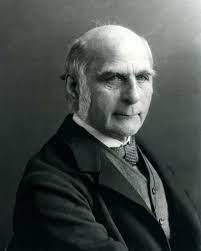
Francis Galton, definer of Eugenics 


Eugenics were about contraception and keeping birth rates down. Abortion laws in India served an adjacent purpose by making it more difficult for dais to practice. Also, the prohibition of abortion also made it a weapon for people to use against each other. For example, unscrupulous  in-laws wishing to expel a widow from their home could report to the police shed had an abortion. Such immorality would disqualify her from continued support, and if she had any assets left by her late husband, the family could seize them. Other villains using abortion as a weapon were constables shaking down women’s families for bribes in exchange for not accusing them. Enough corrupt cases came to court that laws were passed making it a crime to falsely accuse someone of abortion.


But accusations are real, and they are dangerous. Right now, there's an abortion vigilante law in Texas that offers cash bounties to anyone assisting the police with information leading to the arrest of a woman obtaining an abortion; not just in-state, where it's illegal, but out of state as well.  


The Texas nightmare arose two years after I started The Mistress of Bhatia House. However, I felt increasingly worried for women after Donald Trump was elected in 2016 with the support of many people wishing to outlaw abortion. In the past six years, many states passed laws that made it more difficult for women to obtain abortions in their states, and also for doctors and nurse practitioners to perform abortions. Thirteen states passed ‘trigger laws’ to ban abortions entirely within 30 days of a Supreme Court decision overturning 1973’s Roe versus Wade decision establishing abortion as a constitutional right. The Supreme Court’s new appointees, Neil Gorsuch, Brett Kavanaugh and Amy Coney Barrett, refused to admit that they would vote to take away the right to abortion. 


But last week, that's what they did.


Wednesday, February 24, 2021

Mithan Lam, a Powerful Advocate for India's Women

Sujata Massey with Parinaz Madan 


The barrister Mithan Jamshed Lam

True tales of women breaking barriers to forbidden places, and bettering the lives of others, are inspiring. Mithan Jamshed Lam is one of these legendary women. Recently I chatted about this illustrious lady (who passed away in 1981) with another woman who is doing important civil rights work in contemporary India, the Mumbai solicitor Parinaz Madan. In an interesting twist, Parinaz is married to Dinyar Patel, a professor and author of Naoroji: Pioneer of Indian Nationalism


I was fortunate enough to meet Parinaz and Dinyar in real life last January at the Royal Bombay Yacht Club in Mumbai. We dined on a delicious biryani and many other dishes as we discussed the history of the city and the freedom movement. They are both Parsis and have been kind enough to also answer my questions about the minutiae of the community's cultural life. Their assistance was key in creating realistic social situations in my forthcoming novel, The Bombay Prince.


Last year, Parinaz and Dinyar wrote an article for BBC News about Bombay’s first woman barrister, Mithan Ardeshir Tata, known after her marriage as Mithan Jamshed Lam. In 1924, Mithan became the first woman advocate permitted to argue cases at Bombay’s High Court. Mithan’s education, family background, and relentless struggle for women’s rights were influential in the development of my series protagonist, Perveen Mistry.


It was much harder for me to find scholarly material about Mithan than Cornelia Sorabji. In 2016, I bought a reprint of her autobiography, Autumn Leaves, at the K.R. Cama Oriental Institute, a center for Parsi scholarship. The autobiography is dominated by the stories of Mithan’s world travels. I wanted to know specifics about her life in India, so I’ve put some questions to Parinaz about her. 


Were Mithan’s parents encouraging of her career choice as a lawyer? Were there any other events in her youth that pushed her toward the field?


Mithan’s autobiography lends the impression that her family had very progressive leanings. 


She describes her father Ardeshir as a man of “liberal views” who wholeheartedly backed her academic pursuits. In fact, her father spurred his studious wife Herabai to complete her B.A. degree, by employing a number of tutors for her. 


Mithan also seems to have shared a very close and almost sororal bond with her mother, which is not surprising, considering that they were separated by only seventeen years in age! 


As a teenager, Mithan was clearly inspired by her mother’s social activism and commitment to securing equal voting rights for women and that likely set the stage for her active participation in the female suffragist movement subsequently. She was all of 21 when she was chosen, alongside her mother, to deliver evidence on the necessity of female suffrage in India to the British Parliament.


Mithan had a stellar academic track record even before studying law: she obtained her B.A. from Elphinstone College, Bombay and was the first woman to be awarded the Cobden Club Medal for securing the highest marks in Economics. She then went on to pursue an M.Sc. degree from the London School of Economics, while her mother was studying for a Social Service course at the same university.


Since Mithan’s childhood and early life were steeped in political and social activism, law may have seemed to be the most natural career choice for her. She probably recognised the potential of a legal career to create lasting and meaningful reform in areas that she deeply cared about, such as women and children rights, and was ably supported by her parents along the way.


Mithan, standing by her mother, Herabai, in 1919


Cornelia Sorabji is arguably the most renowned female lawyer from colonial India. Her career was divided between private practice in a firm with her brother in Allahabad, and many more years working throughout India as a legal investigator for the Indian Civil Service. She was almost 31 years older than Mithan, but was called to the Bar in Britain (i.e. admitted to practice in courts) after Mithan. Could you explain why that happened? 


Yes, Cornelia was the first woman to study law at Oxford in 1889 (nearly a decade before Mithan was even born). However, she could not be called to the Bar after finishing her law exams because women were prohibited from practicing law in Britain, until the passage of the Sex Disqualification (Removal) Act, 1919. 


This Act which opened the doors for women to be admitted to the Bar in the United Kingdom was passed only in 1919. Mithan who was fortuitously in London at the time was admitted to Lincoln’s Inn in 1920, followed by Cornelia who returned from India to Britain two years later. Mithan became the first woman to be called to the Bar at Lincoln’s Inn in January 1923 when she was 24. Cornelia was actually called to the Bar a few months later than Mithan in June, when she was 55. 


Providentially, the Indian government also abolished restrictions on women to practice law in 1923: the same year that Mithan set sail to India after finishing her studies in London. This enabled her to kickstart her legal career as the first female lawyer in the Bombay High Court in 1924. I think she sums all this up quite aptly in her autobiography: “I must have been born under a lucky star, for I always found myself in the right place at the right time”.


What was Mithan's life like when she started working as a barrister? Did you uncover any stories of success and struggles against discrimination?


Ironically, Mithan bagged her first legal case from a client who wanted to “inflict upon the opponent the humiliation of being defeated by a woman.” She recalls feeling like “a new animal at the zoo” while appearing in court, arousing the curiosity of men who peeped through its doorways to catch a glimpse of this unique species. Understandably, this made her feel extremely “self-conscious”. Such acts of discrimination notwithstanding, newspaper records reveal that Mithan practiced in court for about 15 years from her enrolment as a lawyer in 1924 in India.


Mithan was extremely outspoken on women’s rights. Tell us about some of her work in that area, and the legislation she proposed.


Apart from the female suffrage activities that Mithan is renowned for, she was a staunch advocate for amending marriage, divorce, inheritance and guardianship laws in India to make them fairer to women, often drawing upon international legislation. As a Zoroastrian herself, her legal expertise was sought in reforming the laws for marriage and divorce in the Parsi community.


One of the women’s organisations that she was most prominently associated with was the All-India Women’s Conference. As its President, she propounded a shift of focus from “sewing and cutting classes” for women to their more active participation in industries and emphasised on the need for family planning. She also encouraged women to take a more active role in civic engagement and public works in the country. After the partition of India in 1947, Mithan was tasked with being the Chairperson of a committee constituted for resettling refugee women and children in Bombay. 


But her activism was not restricted to only women’s issues. She also spearheaded hunger eradication programs, anti-child labour advocacy and slum improvement projects in India. In 1928, she joined protests with the Bombay Youths League about a proposed school fee hike for secondary education in India. The Bombay Chronicle noted “The ridiculous plea that higher education should be further taxed to find funds for primary education is aptly described by Miss Tata as the policy of robbing Peter to pay Paul.” These protests may have had a hand in the government backing down on the fee hike attempt for colleges and schools eventually.


Mithan married in 1933, probably at age 35. Do you know anything about her husband Jamshed Lam’s feelings about her continued activism and legal activities?


I will let Mithan’s autobiography do the talking for this question. She describes Jamshed, a lawyer himself, as “a wonderful and loving husband” who “was proud of my achievements and helped to advance me in every way….I have been greatly lucky in my menfolk--a liberal father of very advanced views, a loving and generous husband, and a fine son of whom any parent would be very proud.”


How do you describe Mithan’s legacy for women in India? 


Mithan left behind an invaluable legacy for women in the legal profession and beyond. Demolishing patriarchal stereotypes of what a woman can and cannot achieve, particularly in traditionally male-dominated fields, was the cornerstone of her career.


While Mithan was a woman of many firsts, she did not work in silos but mentored scores of other women. Prominent among them was Violet Alva who was a law student at Government Law College, Bombay when Mithan was a professor there. Violet subsequently went on to become the Deputy Home Minister of India and the first female Deputy Chair of the Rajya Sabha (the Upper House of Parliament). Examining the life stories of trailblazing women like Mithan makes us realise that a lot of rights that we, as Indian women, enjoy today, such as the right to vote or work, were achieved on the back of the unwavering efforts of such pioneers.


Parinaz Madan


As a solicitor in Bombay, you work hard as legal advisor at a prominent company, yet you make time for  pro bono work. Tell us about the pro bono organization you work with.  


In addition to the corporate law work I do, I am also a member of iProbonoIt is a global organization which connects lawyers with non-profits and social enterprises in need of pro bono legal assistance. Over the past few years of my association with iProbono, my work has involved advising schools, innovations labs, mental health professionals and organisations working for the underprivileged on a number of education, child rights, disabilities and medical laws in India.


Law is a very potent instrument for social change and I believe that in a developing country like India, especially, there is tremendous scope for lawyers to create systems and establish precedents from the ground up. 


You’ve said that India has some of the strongest child abuse laws in the world, but these laws aren’t often exercised properly. Can you give an example of how this could be changed?


In 2019, the Economist Intelligence Unit published a report evaluating the response of sixty countries, across the development spectrum, to the scourge of child abuse. Interestingly, India ranked the highest amongst all the surveyed countries in terms of the strength of its legal framework for protecting children from sexual abuse and exploitation. However, awareness of these laws remains low and their implementation remains challenging, given the high rates of child abuse in the country. 


Now, child abuse is a very pervasive and complex problem and its eradication needs resolute engagement from various stakeholders, both government and private. However, one of the ways in which organisations interacting with children (like schools, children’s shelters etc.) can mitigate child abuse is by developing effective child protection policies, as an article I've recently written demonstrates. Such policies typically contain a blend of preventive and remedial child protection measures. In the absence of such policies, organisations often deal with child abuse incidents arbitrarily and without regard to the law, causing grave prejudice to the interests of children under their care. Through iProbono, we assist various civil society organisations in drafting and implementing child protection policies, to foster a safe and child-friendly environment. 


The pandemic has many people working from home. Do you see this is an opportune time for more persons with disabilities (PWDs) to have a chance to enter the Indian workforce? What are the factors that make it difficult for PWDs to work? Is there a national law in existence for enabling disability inclusion in the workplace?


The employment rates of PWDs in the Indian corporate sector are abysmally low barring, of course, a few outliers. A study published by the Business Standard in 2019 noted that PWDs constitute less than 0.5 per cent of employees in India’s top companies. In India, the Rights of PWDs Act, 2016 is a national-level legislation that requires companies to develop equal opportunity policies and create an accessible environment for their employees, but its implementation remains patchy.


Historically, taboos associated with disabilities and low literacy levels have kept a lot of PWDs out of the workforce. Social isolation and a lack of employment opportunities, posed by the Covid-19 crisis, have hit PWDs further. 


But, some disability rights activists see a silver lining to this crisis: the pandemic has impelled companies to adopt remote working policies and technologies which certain groups of PWDs have long demanded as reasonable accommodations. Needless to say, it is imperative that such technologies are designed to be accessible to PWDs, to facilitate their meaningful participation in work.  In a 2020 piece I wrote for Business Standard, I’ve argued that there is a strong legal, business and moral case for disability inclusion in the Indian corporate sector, particularly in the light of the pandemic. I think the ILO’s Director-General summarizes the essence of this fittingly: “A disability-inclusive response means a better response for us all.”


Wednesday, February 12, 2020

Mary Higgins Clark, Speaking for Women


Sujata Massey

Mary Higgins Clark, Queen of Suspense

Literature became less suspenseful on Jan 31, the day that Mary Higgins Clark slipped out of the world. 

Often called the Queen of Suspense, the 92-year-old author published more than 66 books in a forty-four year career. She was in Naples, Florida, working on a book when she passed away from complications of old age.

Mary was a native New Yorker who grew up in the Depression and suffered the loss of her father to heart attack while a young girl, and her husband to the same disease while she was raising their five children. That loss, however, did not result in the expected situation of her living out the rest of her days in hardship. 

Mary's tragedy put into motion the creative writing career she'd always wanted--to move from short stories to novels. She started out writing between 5 and 7 in the morning, then got her kids out the door, and then went by train from New Jersey into Manhattan to her office job at a script-writing company. When I think about how busy these workdays must have been, and then add on the five children in morning and evening, my head spins!

A lot is being said about the exemplary fortitude of Mary, and of her genius in creating a signature genre of domestic suspense novel that has exploded in the last few years.  

But what I find most significant about Mary Higgins Clark is that she told secrets about women's lives  at a time that women were routinely silenced for their supposedly unimportant observations. Through her novels,Mary illustrated the wrongheadedness of the silencers, without seeming to be composing anything more than a vastly thrilling commercial novel. 

After the breakout of her second book, Where are the Children?, MHC was able to write full-time. From that point on, every book she wrote was a national bestseller.  Her longtime publisher, Simon&Schuster, estimates she’s sold more than 100 million books in the United States alone. 


The original book cover in 1975

I first caught sight of a Mary Higgins Clark book at my local B. Dalton bookstore in the mid-1970s. I should have been in the children's section, but had ventured over to adult mystery, because I had become a fan of Conan Doyle and Christie.Where are the Children? had a book jacket showing an isolated house in a windy field, and you could tell a bad storm was coming. I quickly discerned the story's premise was  that children had disappeared and might have been killed by their mother. It seemed too much to handle. Now that I'm older and wiser, I’m sure Mary would have approved of the eleven-year-old me walking away from her blockbuster novel.

Recently, I listened to the audiobook version of Where are the Children? Now that child abuse is not a huge cultural secret, there was a veiled child on the cover, making it even creepier. 


I found the most disturbing parts were the chapters narrated by the killer/kidnapper. I fast-forwarded during most of his narration. But there was a lot else that I took in to with fascination. She transported me back to my memories of the early 70s. It was a time that America was split between “squares” and “rebels.” You were either a Nixon fan or absolutely against everything he stood for. To say you supported equality for women meant you were a “women’s libber,” which was usually uttered as an epithet.

The novel’s flawed protagonist, Nancy Eldridge, is no "women's libber." She is a housewife admired by the Cape Cod community where she lived for her gentle ways with her children. Nancy is very private because she is mired in an earlier trauma. There is no talk of women's liberation; she's married to a dear man who wants nothing more to protect her, just as she believes her first husband did.

The trauma is shared with the reader early on. Nancy recalls her college-age marriage to a professor. When she had two young children, her health and memory began to fail and the children disappeared and were later found murdered.  Nancy’s first husband, Carl, drowns himself in apparent grief when Nancy is charged with the children’s murders. She knows she didn't kill them--but she doesn't remember much about the time, and a witness claims she spoke of killing them. Nancy is released from prison on a technicality and leaves the countryThen, seven years later, when she’s remarried and living quietly on Cape Cod with a second husband and their two young children, they suddenly disappear on the morning of her birthday—which is also the anniversary of the earlier abductions. Nancy is sure they’ve been kidnapped and will be killed just as her first children were. She collapses. The police, after learning her past, think she’s their killer.

Nancy presents as a hysterical woman at a time when women were often considered hysterical and incapable of speaking for themselves. A psychiatrist using a truth serum is the key to uncovering what happened before, and he insists to the police chief that this might have bearing on the present crisis. The novel is packed with many paternalistic males, some of whom conspire to help Nancy, and others who suspect her. And there are three other strong women characters in the book, including a real estate secretary, a housewife and a grocery store owner,  who are repeatedly shut down by the men around them. A very negative male character presented to the reader is a military deserter, a recognition of the country's divided feelings about the draft.

While Mary Higgins Clark had something very important to say about how society hushed up women and children, including those who are wounded by sexual abuse, she always did it through the lens of popular fiction. She wrote the kind of book that conservatives would pick up and consider just an other exciting book. The feminism goes down easy, like the cup of coffee or glass of wine her heroine enjoys when she is feeling relaxed and safe.

As decades passed, the books piled up and the heroines became career women. At their sides were good men who might be community members, although an attractive young one would usually serve as a love interest. There were always strong women characters close by the heroine. These ladies are often older relatives or secretaries, and presented by the author with glowing recognition of their attractiveness, compassion, and insight. These women know something's wrong--and they speak up. 

MHC had every book become a bestseller and was celebrated as a Grandmaster by the Mystery Writers of America. But she'd seen over the decades, how mysteries starring men racked up Edgar awards while those featuring women as anything other than victims, mothers or girlfriends were scarce. Mary asked her publisher to assist her in establishing an award for mysteries about women. She had strict criteria for the award winning book's protagonist. The character was to be a woman without professional crime fighting occupation, to be someone with mostly positive family relationships who becomes sucked into a threatening situation that she must overcome using her own courage. The book also had to be free of explicit violence and sex and harsh profanities. The award is not exclusively for women writers; a male writer, Bill Floyd, has won, and the mother-son writing team of Charles Todd also took the prize on year.


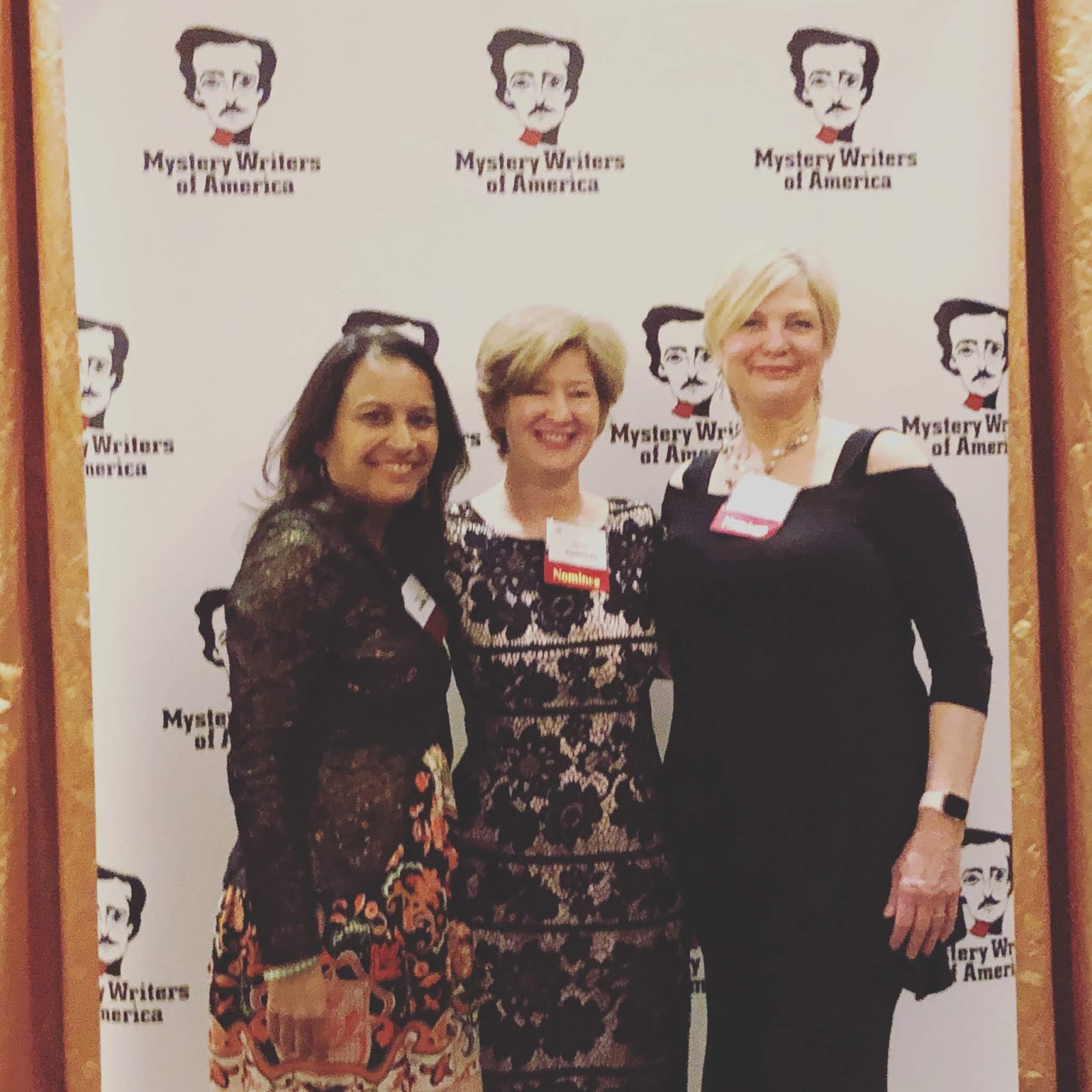
To my right are Mariah Fredericks and Paula Munier


To select the Mary Higgins Clark Award, a judging committee of MWA members reads hundreds of novels that are whittled down to an announced shortlist of usually five or six books. Out of these nominees, a winner is announced at the Edgars dinner.

I was stunned to be nominated for The Samurai’s Daughter in 2004. In 2019, I was again nominated for a book in my new series, The Widows of Malabar Hill, which shared the nomination with books by Mariah Fredericks, Dianne Freeman, Julia Keller and Paula Muncier. Widows turned out to win that night, and I experienced so much surprise and joy that my heroine, Bombay lawyer Perveen Mistry, was now part of the MHC tradition. Mary was not at the Edgar Awards Dinner that night. We missed her.

I wonder what she would have thought, if we'd met. I don’t see myself as being close to MHC in style of writing or structure--and certainly, I lag behind her in productivity and sales. But she might have liked my heroine. A long time ago, I decided to commit to writing books about intelligent women who support themselves and those around them. It just felt natural. 

This is how a lot of us go through life. We are sailing along minding our business, and something awful happens. Our crisis could be one of many terrible things: an incident of racism in the neighborhood, a family member’s pain, a financial setback or the news of a friend's serious illness. We throw ourselves into action and try our best, no matter the outcome. 

In the books of Mary Higgins Clark, we see ordinary women saving the universe. 

Ourselves amplified, everywhere.


Wednesday, September 26, 2018

The Monday Women Marched in Black

Sujata Massey


Wear all black,” the woman said over the phone.

Come at eight-thirty, and don't carry too much. 

Be prepared to go from the Supreme Court of the United States to the offices of senators.


Last Sunday, I learned the Women’s March organizers were a series of actions this week in Washington D.C. I wanted in. Over the last two years, I have been increasingly agitated by the attempts by male lawmakers to erase established civil rights, especially those of women and minorities. It feels like the final straw that the President’s nominee for an open seat on the U.S. Supreme Court is Brett Kavanaugh, a conservative judge alleged to have sexually assaulted a young woman during his high school days. Despite the fact that more claims have come about the judge’s sexually aggressive behavior, the President and most Republican senators don’t want an F.B.I. investigation or to postpone voting for Kavanaugh’s confirmation.


President Trump and his supporters insist Chrstine's report must be false, or else it would have been told to the police years ago.But I know that many women who do report rapes have their stories ignored or suffer repercussions for telling. 

Dr. Christine Blasey Ford is a psychologist now living in California. She says that when she was fifteen, a teenaged Kavanaugh and his friend, Mark Judge, forced her into a bedroom at a party. She claims Kavanaugh put his hand over her mouth so nobody could hear her cry out for help. The men fell off her, and Christine did escape being raped, but she suffered post traumatic stress disorder. Christine moved 3000 miles away to get away from her painful memories, which she had discussed with others over the years, but that became increasingly hard to ignore when Kavanaugh came onto the national stage. Some months ago, Christine wrote a letter about her experiences to her Senator, California Democrat Dianne Feinstein. Christine asked Feinstein to keep her identity confidential but to share Kavanagh's past actions with the F.B.I. However, information was made public, and now Christine has received death threats and left her home.


I am grateful to live close enough to Washington DC to reach it in an hour's train ride. I wanted to make a physical declaration that I believe women don't make up stories about rape. I followed the instructions the woman had given me to assemble in front of the US Supreme Court on a gray Monday morning. Rape survivors among the marchers spoke about who hurt them and how the trauma still affects them. Some of their voices were very low, because the emotion was strong, and it was the first they had told these painful histories. After each story, our voices swelled in answer. "We believe you."

The rally started out with a few hundred people, but as we marched to the Hart Senate Office Building, the numbers swelled. Long lines of cars had to stop to let us cross the intersection, and by the time we reached Hart, it seemed like close to one thousand were marching. There were so many marchers, we had to divide up to make it into the building through two different sides. Because we had no bullhorns, messages passed through the crowd by repetition. When people in the line began holding up a hand, it meant it was time to fall silent and listen for directions.


In the Hart and Dirkson Senate Office Buildings, the police were already waiting and had stiff plastic wrist bands, the modern version of handcuffs. While it is legal for people to enter a building to visit a senator, the police told us that it is against the law to protest inside government buildings. 


In the atrium, some people prayed and many others got to know each other. I met many students from Yale Law School, the alma mater of Kavanaugh, and women and men from all over America. The organizers divided us into smaller groups that lined the halls outside the offices of Republican Senators Susan Collins and Jeff Flake, as well as some others who might be swayed to vote against Kavanaugh. 

I was unable to get inside any of the senators' offices, but the people who did spoke to the senator’s staff about how the experience of rape impacted them. I did not know that during the same time, other rallies were being held around the country, that many women were wearing black as a sign of protest, and at 1 p.m.that Monday, many women would walk out of work for an hour to show they believed Christine.


At the Senate Buildings, 128 people were arrested in Dirkson and the Rotunda. The rest of us made it out.

As I walked through Capitol Hill, I caught sight of a protest sign about the nomination of Brett Kavanaugh on a food truck, making me realize that people are creatively speaking their voices.


It was still raining when I reached Union Station, and my thoughts went back to my own social history. Christine and I came of age at the same time, and there are several uncomfortable experiences with men I've pushed very far back into my memory. Three decades ago, I believed that if I got away from someone without being hurt, I should consider myself lucky. Why should there be a consequence for the perpetrator? 

In my Perveen Mistry series, I write about a woman solicitor battling for social justice for females constrained by the legal system in British colonial India. A century later, it is shocking that so much is still the same.