Showing posts with label Hakone. Show all posts

Sunday, March 13, 2022

A "New Normal" Japanese Rite of Spring

--Susan, every other Sunday

After living much of my life in California, where the changing seasons are observed primarily on the calendar, I never tire of watching the seasons change here in Japan.

Spring and Autumn are particular favorites, because their emergence tends to be both sudden and very welcome after the freezing or hot and humid (think "drinkable air") temperatures that went before.

This week, the temperatures in Tokyo once again changed on a dime--in the course of two days, we went from close-to-zero (C) to some of the most spectacular spring weather anyone could hope for. The cherry blossoms (which will be early this year) are a week or two from blooming, and people have begun to shed their winter hats and parkas for lighter clothes.

It's difficult to celebrate when the world as a whole is suffering, but I also think it's both possible and important to observe (and even enjoy) the changing seasons.

In Japan, the traditional hanami (flower viewing) parties that take place at cherry blossom time did not occur last year. In many places, towns and cities even put up orange cones and ropes beneath the trees, to prevent people from spreading out picnic blankets. An unprecedented suspension of a centuries-old tradition, in response to an equally unprecedented global situation.

As a result, it was necessary to find other ways to appreciate the blossoms. For me, that meant a trip to Lake Ashi (Ashinoko) in Hakone, for a hike that supposedly featured some blooming trees. 
A lovely day for a hike

The hike began on the shore of Ashinoko, near the pier where the sightseeing (aka "pirate") ships depart for their hourly trips across the lake. The swan boats had emerged from their winter storage, too.

The first sakura of the day

I'd picked up breakfast from a local bakery, hoping to find a place for a picnic meal along the trail. To my delight, I found not only blooming sakura trees but an empty, open-air gazebo atop a hill near the start of the hiking trail.
Blooming sakura

Sakura symbolize the arrival of spring, and the impermanence of both life and beauty; the flowers are lovely, but die and fall within a couple of days after opening. Even the smallest breeze can knock the petals from the trees by the thousands, creating a "rain" of pale pink petals.

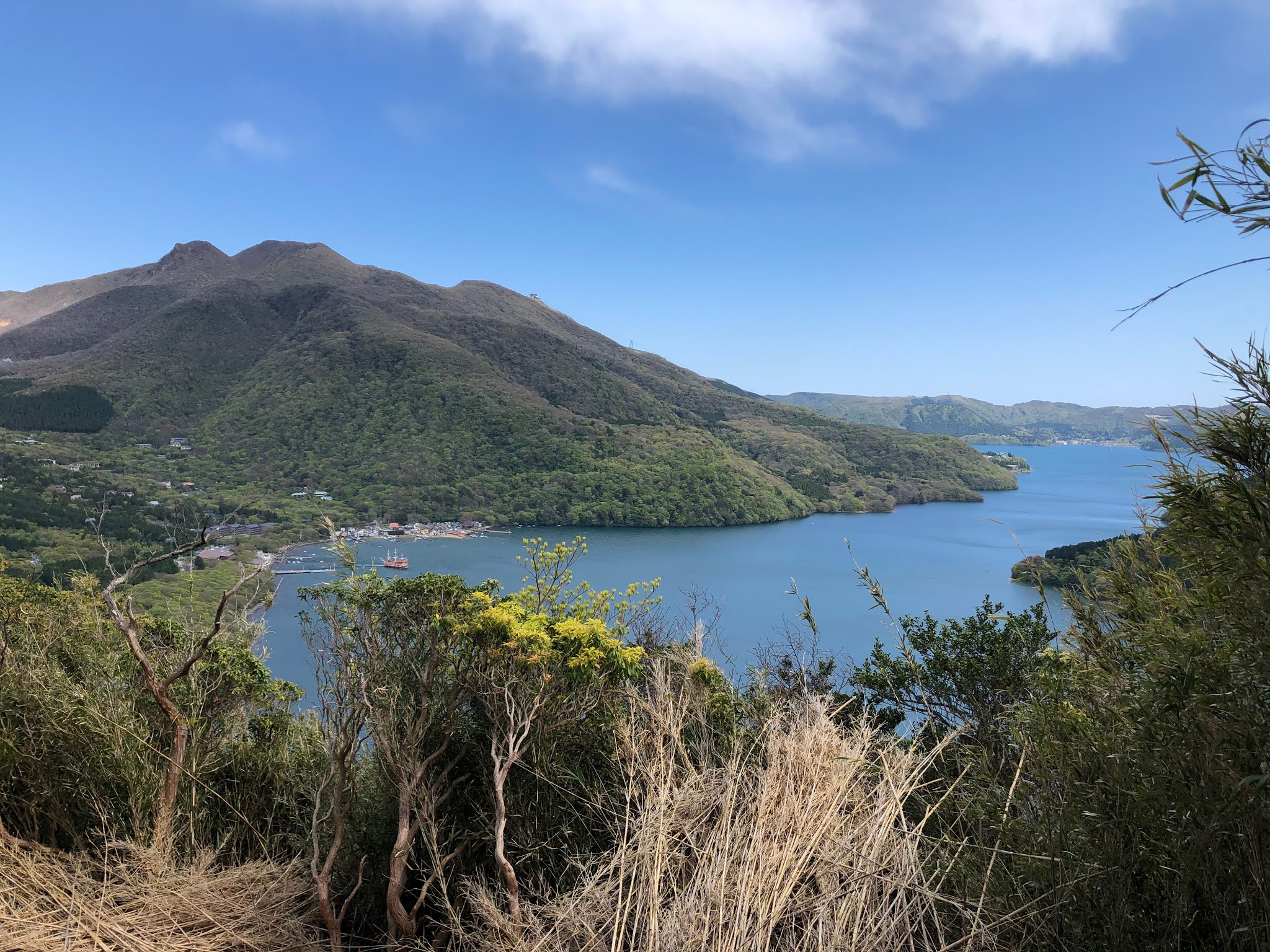
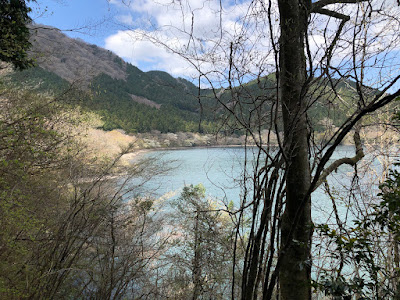
Lake Ashi from the hiking trail

This trail was new to me last year; I'd heard about it, but never hiked it myself. It runs halfway around the lake, and takes about 2 hours to hike from one end to the other.

A fisherman on the shore of Lake Ashi

The trail is also an access point for a number of secluded fishing spots along the lake. 


For the most part, the trail parallels the shore, passing through groves of pine, maple, and sakura trees, with ongoing views of the lake.


Monument in the trees.

One segment of the path moves away from the shore, presumably in order to pass this shrine and monument in the trees. Unfortunately, the sign was so weathered that it had become almost illegible. I could make out only that the site has been here for over a hundred years. 


A couple of times each hour, I saw the sightseeing ships pass by...


The trail was essentially empty--I saw only about half a dozen people the entire morning (most of them fishing rather than hiking)--which made it feel as if I'd somehow stumbled onto a world filled with blooming trees and secret coves. In the cove above, a family was playing with a little, remote-controlled speedboat. I think I enjoyed watching it almost as much as they did. 

Hidden treasure of the day

About two-thirds of the way around the lake, I came upon a cove entirely surrounded by blooming cherry trees. In a normal year, in most places in Japan, a grove like this would have been filled with people admiring the blooms or picnicking beneath the trees. But this wasn't a normal year, and I was the only person there.

(In truth, I suspect that even in normal years, this grove remains almost entirely empty--visible to people passing by on the sightseeing boats, but accessible only to those intrepid enough to make the two-hour hike to get there. In related news: I know where I plan to have my sakura picnic this year...)


Spring has sprung in Japan, so to speak, and although the sakura aren't yet in bloom, we're rapidly approaching our third sakura season since the start of the C-19 pandemic. Japan hadn't yet shut down at sakura time in 2020 (though it happened soon afterward), but people had to get creative to see the blooms last year. Discovering the "secret trail" in Hakone ended up being far more fun than jockeying for space in a crowded park, or looking up at the blossoms from a group. In fact, it's likely to become my "new normal"--and I have to admit, it's nice to reflect on the positive things the last two years have wrought, even as I hope and pray that the next two years are easier for all of us than the ones that came before.

How have your traditions changed in the last two years? Have you found any new ones you hope to continue even as the world opens up again?


Sunday, June 6, 2021

Amazake Chaya: Drinking in History on the Tokaido


-- Susan, every other Sunday


Last weekend, I hit the trail to re-walk a portion of the Hakone Old Road (parts of which were better known as the Hakone section of the Tōkaidō during the Edo Period (1603-1868), though much of the route predates the 16th century).

The entrance to the Hakone Old Road (Tokaido Section) near Lake Ashi

I had made the walk before--in 2016, while doing the initial research for Ghost of the Bamboo Road (Seventh Street, 2019), and again in 2018, when I hiked two different portions of the trail during my year in the mountains.

I even had the privilege of making one of those 2018 hikes with our own beloved Annamaria Alfieri, who bravely ascended three mountains with me in a single day while hiking the ancient Yusaka Michi travel road, which predates even the Tokaido by several hundred years.

With Annamaria atop Mt. Takanosu

That hike took us over trails much older than the one I hiked on Sunday, but the section of the Kyu Kaidō I hiked still dates to at least the 16th century, and while some portions have been reconstructed (mostly due to damage resulting from centuries' worth of earthquakes, landslides, and typhoons) other sections remain intact in their original form, down to the ishidatami (stone tatami) paving that lines the trail.


A reconstructed section of the Tokaido near Amazake Chaya

This section of the travel road runs between Lake Ashi and Hatajuku, a hamlet about halfway between the lake and the onsen town of Hakone-Yumoto.

A map showing several of the old travel roads, now preserved as hiking trails

And about halfway between Lake Ashi and Hatajuku stands a living monument to the history of the famous travel road: a teahouse known as Amazake Chaya.

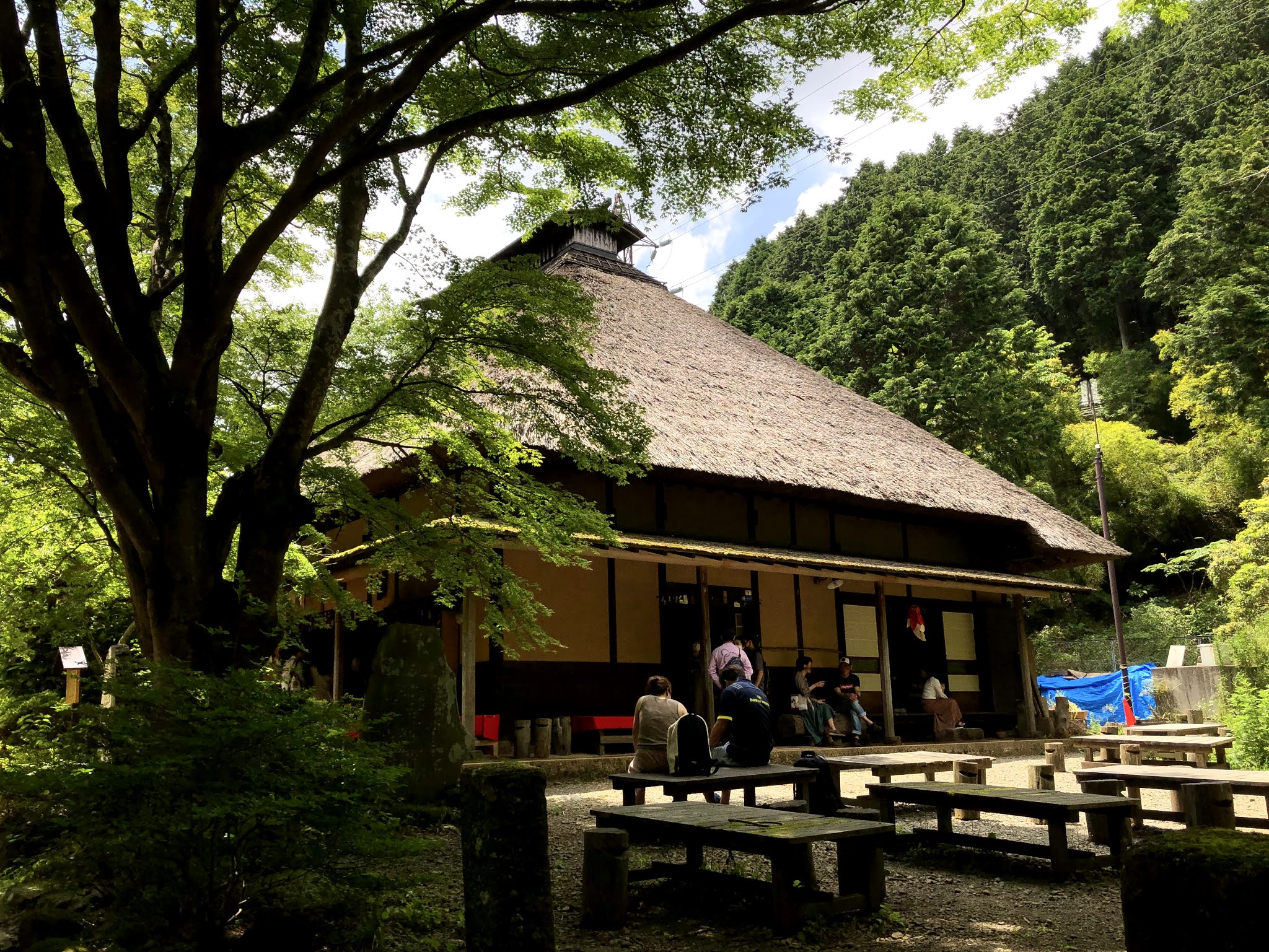
Amazake Chaya, from the trail

The teahouse was established during the 16th century, and has been in continuous operation--and has been owned and operated by the same family--since that time. The current owner is the 13th generation proprietor of the teahouse (an amazing thought).

Visitors enjoying the weather and refreshments outside the teahouse

The building was last renovated in 2009, using the original plans, methods, and materials. The lintel inside the teahouse still bears the stickers, signatures, and marks of 16th century visitors, who stopped here while traveling the Tōkaidō.


Chikara mochi: grilled (lower) and grilled with kinako (sweet roasted soybean powder - upper)

Amazake Chaya still serves some of the classic treats available to 16th century visitors, too. Chikara mochi are grilled cakes of mochi (pounded glutinous rice flour, which has a lovely, chewy consistency); they've been eaten in Japan since long before the Edo period, and were a favorite with travelers because they pack a dense energy punch. They're also delicious. Last week, I had a set of two: one grilled with nori (seaweed) and soy sauce, and the other grilled and coated with kinako. On past visits, I've also had them topped with sweet black sesame powder, though that offering may not be available in the summer. 


The star of the show: Amazake (left)

The teahouse's most famous offering, however, is the one for which it's named: the house-made amazake. Amazake is a fermented rice-based beverage; traditionally (and as made at Amazake-chaya), it contains only Japanese short-grain rice and koji, a type of mold used in pickling and fermentation. (If you've ever eaten miso, or miso soup, you've eaten koji--it's used in the miso-making process too.)

Amazake is non-alcoholic, and can be served either hot or cold. Since my previous visits all took place in the autumn, I hadn't tried it cold before last weekend. Unsurprisingly, it's delicious that way too. 

Amazake has a fairly thick consistency--not unlike a milkshake in some ways, although it contains no milk or dairy products. It tastes quite sweet, despite the lack of sugar, but because the sweetness comes only from the rice, it isn't strong or cloying. In fact, it's remarkably refreshing after a sweaty hike.


Amazake-chaya, nestled in the mountains along the Tokaido

This time I ate outside, to enjoy the weather and the view, but in the autumn and winter, I love sitting inside near the traditional hearth, where a wood fire blazes to drive away the chill. 


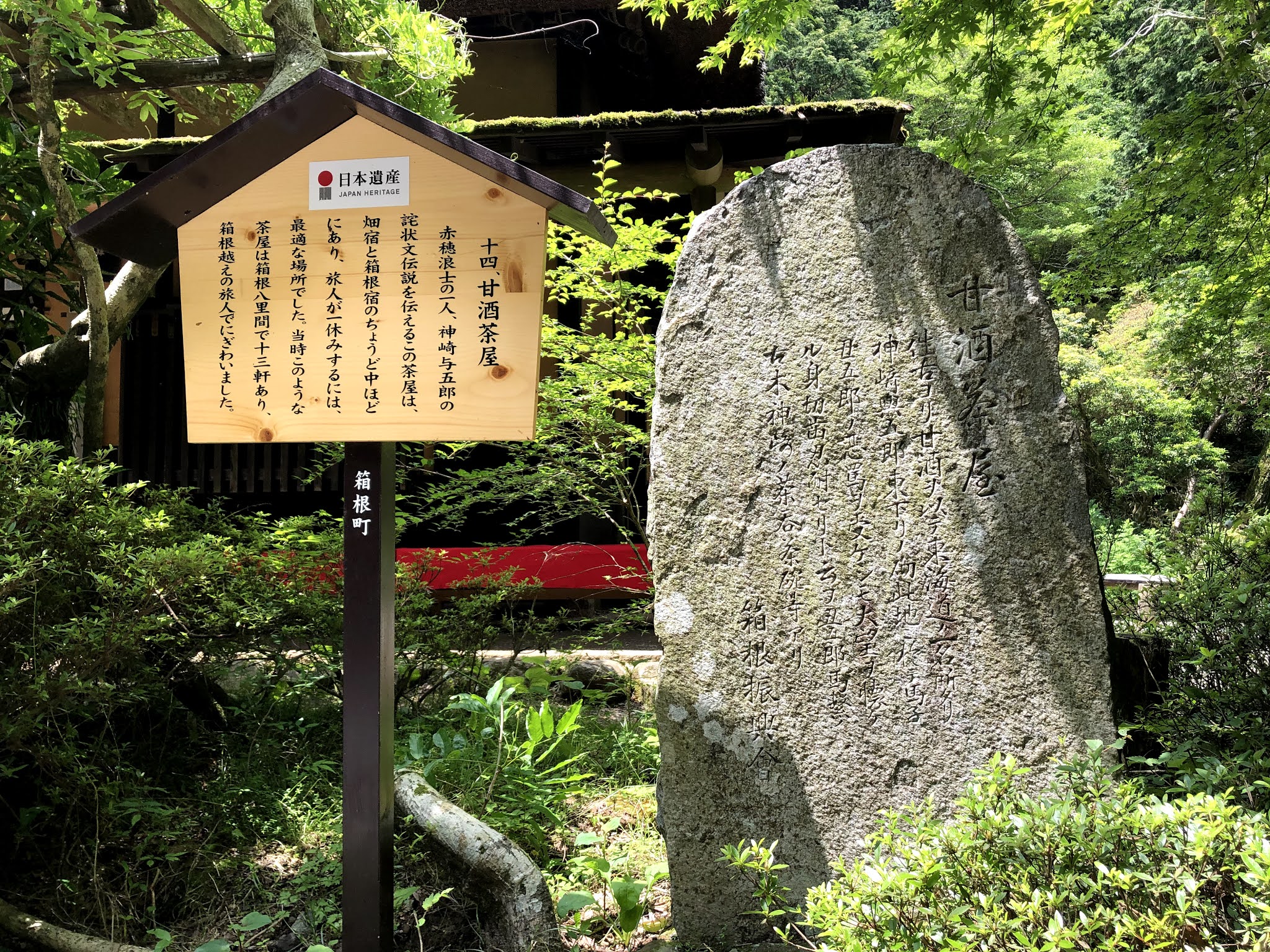
Commemorative Stone

A commemorative stone and plaque near the teahouse describe the history of the teahouse and its importance--it's the last remaining original teahouse on this section of the Tōkaidō, and one of only a few original teahouses that remain along the entire length of the travel road. 

The fact that it's still here, and still operational, after 400 years is indeed worth celebrating. 

So tell me: have you tried Amazake, and would you, if you had the chance?


Sunday, May 23, 2021

Yo Ho, Yo Ho, a (Hakone) Pirate's Life for Me

 --Susan, every other Sunday


I make no secret of my love for Hakone--a popular onsen (volcanic hot spring) area about an hour south of Tokyo. Its mountains played an enormous role in my 100 Summits year, and will play an even larger one in an upcoming project I'm just beginning to outline.

That said, the mountains aren't the only thing to love about Hakone, so today, I thought I'd wander past one of Hakone's more incongruous--and yet most beloved--features: the pirate ships that "sail" on Lake Ashi.

Officially, the ships are part of the "Hakone Sightseeing Cruise," which travels between the port of Togendai, on the north end of Lake Ashi, and the ports of Hakonemachi and Moto-Hakone on the southern end of the lake.

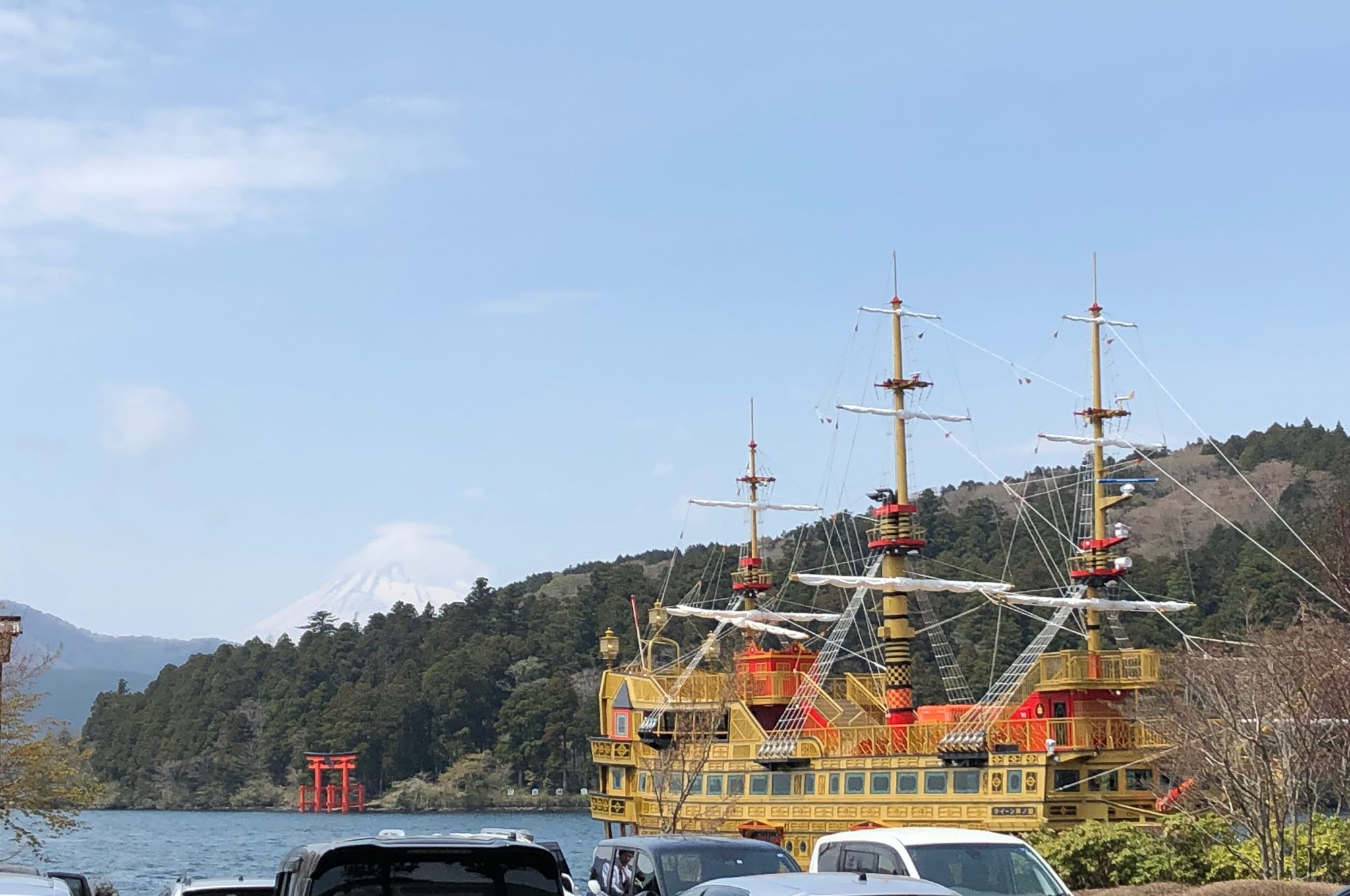
The Queen Ashinoko - the fleet's newest ship, in port at Moto-Hakone


On clear days, you can see Mt. Fuji from the ports on the south side of the lake - which is part of the reason why the one-hour round trip journey is called a sightseeing cruise.


Queen Ashinoko and Royal II, in port at Hakonemachi

Even on cloudy days, the sights from the ships (which are motor-powered, despite their sails) are well worth seeing--especially during foliage season.


Foliage on the shores of Lake Ashi, seen from the pirate ship

Some of the ships are modeled on famous historical vessels: the Royal II is a scale model of the 18th century French gunship Royal Louis (which served as the flagship of the French navy at that time), while the Victory, as its name suggests, is designed to look like the HMS Victory (Nelson's flagship at the Battle of Trafalgar). The newest ship, Queen Ashinoko, appears to be a unique design--although she doesn't differ all that much from the others in the fleet. 

The Victory, in port on a cloudy day

Technically, none of the ships is a "pirate ship"--they don't fly the skull and crossbones flag, and the decor inside is far more luxe than any pirate ship (plush benches, renaissance murals on the ceilings, and even crystal chandeliers). There's even a coffee bar, for those who prefer to sit by a window and watch the scenery pass by with a steaming cup of tea or coffee, rather than braving the sometimes-windy decks.


The Hakone Barrier and Mt. Byobu from the ship

The ships have sailed the lake over a dozen times a day for several decades, and have become a beloved part of the "Hakone Sightseeing Loop," which also involves a ride on one of Japan's oldest electric trains, a cable car, and a ropeway (gondola) over the mouth of a live volcano at Owakudani.

The Hakone Shrine water gate and Hakoneyama

Many visitors refer to the Sightseeing cruise as the "pirate ships," despite the lack of pirate paraphernalia--and the fact that Ashinoko is an entirely landlocked lake. The existence of any ships--much less enormous gunships--on a volcanic crater lake that can be circumambulated entirely on foot in a single day is a bit absurd. But I suspect that's precisely what makes them such excellent entertainment.

The View from the Royal II on a foggy day

On these ships, it's possible to shed the cloak of maturity we all must wear and become once again an explorer, sailing high seas in search of adventure. 

Minus the seasickness, heaving waves, and risk of scurvy.

Royal II and Victory in port at Hakonemachi


The ships are also fun in any weather, which is helpful in a country with a serious rainy season in the summer.

Royal II and Victory

In fact, after riding the ships in every weather, I must admit I'm a little bit partial to the days when the fog sets in, and the ship heading in the opposite direction appears from the fog like something out of a ghostly legend.


Sailing through the fog.


It doesn't matter that the "sails" are just for show, or that ships like these don't feature in Japanese history, except to the extent that they brought foreigners to the country's shores.

Beautiful, if odd.


Shores that, I'll remind you, are nowhere near, and don't connect to, Ashinoko...

Ships!!


And neither I, nor anyone else I've ever talked with, cares a whit about the historical (in)accuracy.

The Queen Ashinoko, the weekend of her launch in 2019


While traveling to and from Hakone for hikes in 2018-2019, I had the opportunity to watch the Queen Ashinoko being built in a slip constructed for that purpose at the edge of the lake near Togendai. They built her in situ, which makes sense, given that none of the winding mountain roads that connect Ashinoko with the rest of Japan is large enough or straight enough to transport a ship of her size. 

By coincidence, I happened to be in Hakone the weekend she was launched into service, too -- and as you can see from the photo above, the weather received her as warmly as the many adoring fans who came to ride.


Royal II and sakura

The Queen Ashinoko is the sixth generation of ships to cruise on Ashinoko. The first ship, christened Pioneer, set sail in 1964 and remained in service until 1991. The Victoria, which sported an enormous British flag on her hull, sailed from 1980 until the Victory replaced her in March of 2007.


Royal II "sailing" past the Hakone Shrine Peace Gate

The Royal II replaced the original Royal, which plied the waters of Ashinoko from 1987-2013--and, most recently, the Queen Ashinoko replaced the bright green Vasa, which retired in 2019 after 28 years of faithful service. 


Ship leaving Togendai to begin its voyage

Fortunately, the ships have become a beloved part of the Hakone area, so it's likely they'll continue to sail for many generations to come.


Which is great, because although I'm a big fan of history, and value authenticity, sometimes you just need to hop on a pirate ship and go for an adventure on the not-so-high-and-not-quite-seas.

Monday, October 22, 2018

Japan Sojourn

Annamaria in Japan, with Susan


Here is a more or less chronological pictorial account of my first couple of days with Susan, touring and climbing mountains in Japan.

The journey began with a couple of spectacular days in California.


Then it was on to Tokyo:


Need I say more?