Showing posts with label Sidai Resource Centre. Show all posts

Monday, August 19, 2024

At Last! The Blasphemers Gets a Turn

Annamaria on Monday

I thought about calling this post "Thank God," but since it is about a book called The Blasphemers, I thought I could be tempting fate by invoking the deity. This is especially chancy because I'm going to be bragging about that book.


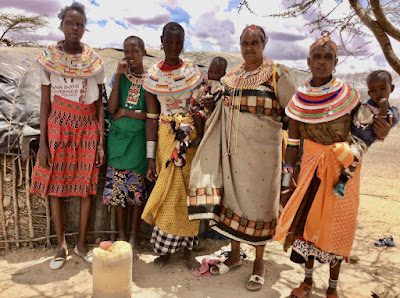
There have been ways in which the book brought blessings to me, the greatest of which began when I was just starting to write the book.  I met Sarah Lesiamito and learned, in a superficial way, of her efforts to "keep girls in school." Lover of school that I have always been, I wanted to help if I could.  "What do the girls need?" was my question.  Once Sarah explained, I undertoook an effort to supply her girls with something they needed and did not have. It took a while to find the right supplier, and once I did, a year and half or so later, I wrote a blog about that project here.

Two years later, back in Kenya, I was carrying two copes of the just-released third in my Africa series to give to friends in Tanzania.  Then, having just arrived in Nairobi, I learned the true focus of Sarah's work, which-by chance-happened to coincide exactly with the background theme of the book I was toting in my luggage.  I gave one of the copies to Sarahy.

And thanks to our discussion that evening, we became sister warriors against those retrogressive practices; she the general and I the quartermaster.  We are now up to 49 girls who are safely studying, as regular followers of MIE know well from my time-to-time updates. Here is the latest.    

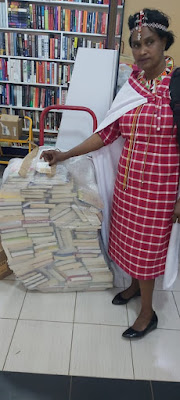
Little did I know, then, that the book you see above in Sarah's hands was an orphan.  As any author can tell you, before a book goes on sale, copies are sent out to publications and critics - copies called ARCs - Advance Review Copies.  This gives reviewers a chance to evaluate the book.  And if they say good things about it, to convince readers to order the book in advance of its publication date.  Publishers put a great deal of store by those "preorders."  It took me months to learn that The Blasphemers was, for all intents and purposes, invisible at birth because, by mistake, the ARCs were never distributed.


The book was traveling incognito.  the last thing any author would want.  Boohoo.

BUT not any more.  With the debut of the new edition last month and the anticipated arrival of its baby brother in a couple of weeks, The Blasphemers has gotten its first lovely review.  You can read the full review here.

Here are my favorite quips: "This mystery novel opens with vivid descriptions of the setting... II could not stop turning the pages...I found the ending of the novel to be multi-layered and heart pounding."
Fingers crossed that the launch of a Death on the Lord's Day, due out in ten days, will get such a nice reception, and a more timely one.

Monday, March 18, 2024

Making History in Kenya

Annamaria on Monday


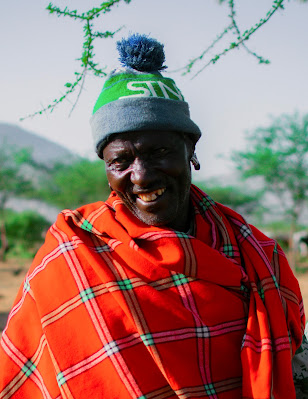
Ordinarily, when I write about here about the history of Kenya, I am harkening back to the early Twentieth Century, when it was still the Protectorate of British East Africa. Today, I am reporting on very recent history that I have had the enormous privilege to participate in. The picture above documents the moment when a pastoralist man gave a cow to a woman.


What’s the big deal, you might ask.  Well, I’ll tell you.  But the beginning of the story is hard to talk about.  Bear with me.  I promise you it has a very happy ending.


In the millennia-old culture of Samburu in Northern Kenya, girls have always been treated as chattel. They belong to their fathers.  Ordinarily, at the age of 9 or so, they are offered as toys to men of the warrior class (males of about 15 till mid-to-late 20s).  This practice is called beading.  Then, once the girls show signs of puberty, they are cut (subjected to FGM), and their fathers sell them into marriage, usually to a man 3, 4, or 5 times their age.  This was the fate of all the local girls until…


Enter Sarah Lesiamito, a Samburu girl who—years ago—emerged from that fate.  But then her best friend, a cousin, died in the aftermath of being cut.  Sarah, who was then still a child by current American standards, vowed to herself that she would change that part of her culture.  She grew up to be a teacher and in 2012 began by saving local girls from that awful fate by taking them into her home, keeping them in school, and supporting them through secondary  school and further training.


As you can imagine, the fathers of those girls often became enraged, demanded to have their daughters back so that they could “prepare them for marriage” and sell them for cows and goats.  One such father was this man: Lparasan Leparsha


His daughter Sonia went to live with Sarah so she could evade a girl’s typical fate.  He went to Sarah to complain about his loss.  Sarah calmly told him, “I am helping you raise your daughter.”  Since the traditional practices are against Kenyan law, he had no way of the seizing “his property.”  He went away mad.


But, eventually, just about a year and half ago, Sonia graduated first in her class from secondary school.  Sarah threw a party and feted her protégé.  At which point Lparasan Leparsha went to Sarah and admitted that she had indeed helped him raise his child.


In the interim, Sarah and I had met, and I had begun to support her efforts with advice and by raising donations to help her expand.


After the party celebartin Sonia,  Leparsha pointed to the dormitory, the small library, the kitchen from which the girls were fed.  “How are you doing all this,” he wanted to know. 


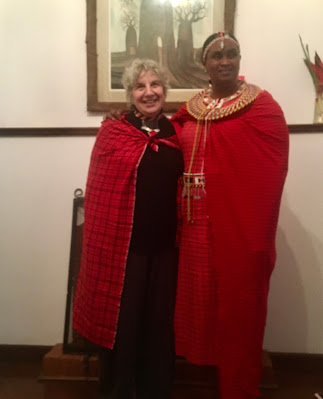
“There is this woman in New York,” Sarah said. 


“When that woman comes to Samburu,” Leparsha said  “I am going to give her a cow.”


And so we made history this past February 17th!  Lparasan Leparsha, Sarah Lesiamito, Michael Lenaimado (Sarah’s gold-star supportive husband), and I.  For the first time ever, a pastoralist man gave a cow to a woman.


Leparsha opened his mind and heart and saw the achievements of his brilliant young daughter as the greater good.  Remarkable!


The Sidai Resource Centre is now home to forty-eight girls who are safe from harm.  One of Sarah’s early recues, a girl name Shaa, has already come back to her community as registered nurse.  Sonia is in college and studying community medicine.


My cow is just a heifer at this point, but she is nearby to the Centre and will be bred one day soon.  After she gives birth to her calf, she will become a source of milk to nourish the Sidai girls as they pursue their dreams.


www.sidairesourcecentre.org


Sunday, February 25, 2024

From Kenya to Zanzibar

 Annamaria on Monday

I am being roasted in Zanzibar, a fascinating place nonetheless.  Here are some highlights of this past week  

Samburu:  


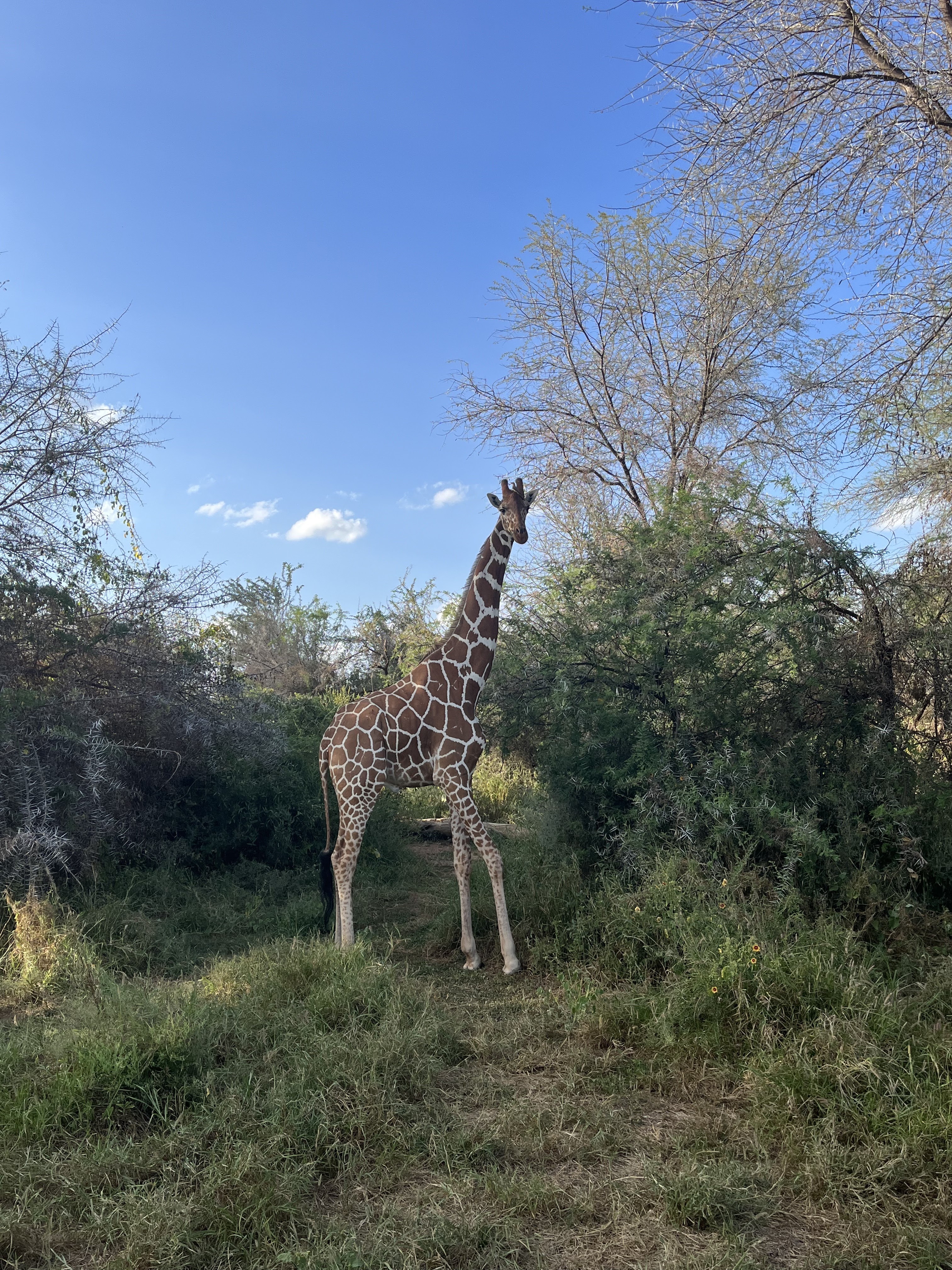
The airstrip as we were leaving


Zanzibar: Day one


Monday, October 2, 2023

The Latest from Samburu

Annamaria on Monday


It's been six months since I posted an update on what is going on with the efforts to save pastoralist girls in the most marginalized area of Kenya.  Our goal: to defend girls against beading, FGM, and forced marriage. A lot has happened since my last blog on this subject.  And it is all good.

(Aside:Regular readers of MIE know the background story.  if you want to learn about the beginnings of that effort you can find a post here)

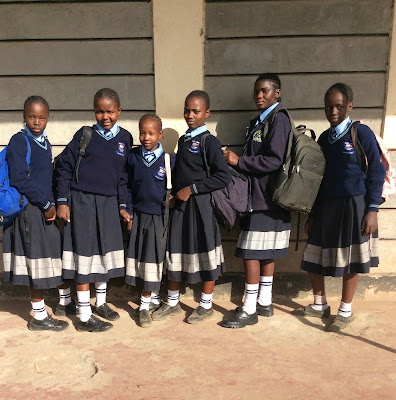
Six of our secondary school girls

The Sidai girls are thriving!  We are now up to 48, eight of whom are in secondary school and have a safe place to come home to during school holidays.  Of great importance is Sidai's progress in changing the hearts and minds of the elder men who have, until now, perpetuated the brutal treatment of girls.   They have done so, not because they are evil, but because the practices have been an integral part of their culture for millennia.  They knew no other way.

Years ago, Sarah Lesiamito, the teacher who began the effort, took girls into her home to protect them.  Two of the girls, Shar and Sonia, had fathers who demanded to have them back and were angrily vocal about their rights as fathers. As Sarah reports it, "I told them that I was helping them raise their children."  The fathers went away mad, but - thanks to the Kenyan laws against such treatment, they were unable to take the girls back.  Years later, Shar returned to her village as a registered nurse, the only professional healthcare giver in the area.  Her father is now so proud of her achievements that he gave Sarah a goat.  A pastoralist man gave an animal to a woman!

That's Shar on the right.

When Sonia graduated first in her class from secondary school, her father too repented his early angry rejection.  He asked Sarah how she was able to do what she is doing.  She told him, "There is this woman in New York.."  He said, "When that woman in New York comes to Samburu, I will give her a cow."  This declaration has led to a great deal of hilarious conjecture about how I will transport the cow to NYC and how it might be taken up to my seventh-floor apparent.  Cow or no cow, there is this to rejoice over: Sonia is now in college, studying to be a community Healthcare Specialist. On school holidays, she is assisting Shar in providing health care to a community that lacks even a basic clinic.

The culture of the Samburu people is a gerontocracy of men.  Their acceptance of Sidai's work has reached a point where, this past summer, the elders went to Sidai, carrying bowls a milk, their sacred liquid, and chanted and blessed the Sidai installation, the dormitory and the library (the only such thing in the county)!  Here they are:


This social progress has happened because the Sidai Method for saving girls is fundamentally different from how other efforts ordinarily keep girls safe - by taking them out of the community where they were born.  Sarah keeps the Sidai girls in the area, where all the people can watch them thrive and achieve.

Water seekers

Just in the past few weeks, a new possibility has arisen.  To both Sarah and me, this opportunity feels magical.  By a series of mind boggling coincidences, I learned about an American nonprofit called the Samburu Project, which for the past fifteen years has dug wells in Samburu County as a first step in improving the lives of women and girls in communities like that of Sidai.  The sequence of events that led to this connection between Sidai and the Samburu Project began with a decision of a thirteen year old girl in Los Angeles to make a charitable donation.  This led to  seven incredibly unlikely steps that put the head of the well-digging effort in Kenya in touch with Michael Lenaimado, Sarah's husband.  Erich, that well-digger chief, just happens to be a member of Michael's coming-of-age group - a relationship that makes them blood-brothers for life. Marvelous!

Sometime in the next week, Erich is going to test the substrate near the Sidai Center.  If there is water beneath the ground, Sidai will be on its way to having a well, in a climate so dry that the women and girls spend a great deal of their lives searching for and carrying water.  According to Sarah, relief from that burden would be the greatest thing that could happen to the women of the area.

My thoughts will be focused on that prayed-for outcome over the next few days. Join us a crossing our fingers.

www.sidairesourcecentre.org


Monday, April 10, 2023

Tidbits

 Annamaria on Monday

A lot is going on in my life, and I have many topics I might take up today, but I can't seem to get more than than half way through any topic I might write about.  The best I am capable of is a few peeks into what has been on my mind.

I've being doing the happy dance about the latest news from my favorite charity, the Sidai Resource Centre.  Eight of the Sidai girls are now in secondary school, an opportunity most girls in their culture can only dream of.  Here are six who are all now at the same boarding school:


In another part of my mental forrest, I have been binge watching the films of Stanley Kubrick. Last night's flick was the great Paths of Glory, which came with a bonus interview with the movie's star, Kirk Douglas.  In it, the interviewer referred to Douglas's childhood poverty and asked "Would you want to make a movie about your life?"  Right off the cuff, Kirk answered:


Not just a pretty face!


If you want to tell the truth, you write a novel.

If you really want to lie, you write a biography.


Topic 3: My efforts to rescue the rights to my own work have been taking up a LOT of my time and though I am seeing some progress, I still have not arrived at that magic moment when my back list can be published, and my new work can launch. The process is frustrating and daunting, but I am still determined.  I hope I will have good news about that one of these days.


WNYC, my local and addictive public radio station celebrates April as poetry month.  They typically invite listeners to submit a personal poem on a given topic.  This year they asked for poems - one to be aired each morning - on the subject of consequences.  I decided to try one on unintended consequences, a subject I have written about here, as have some of my blogmates, most notably here and here.  I took a stab at writing such a topic in verse, but given the many drains on my time and energy, as soon as I had something even passable, I decided to stop and submit it as it was.  I then wasted fifteen or twenty minutes trying to find the instructions on how to submit.  I despaired of that, but today I screw up my courage and offer it here:

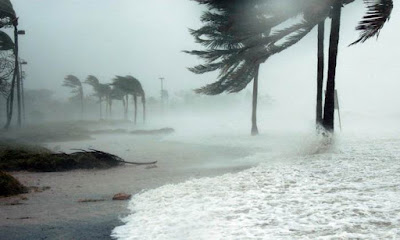
You prayed for rain 

and made a hurricane.

Be careful what you summon.

 What is coming may be grief, not relief.


By way of compensation for that little ditty, I offer a song guaranteed to lift your spirits.  I am working on this post on Friday this week because this past Sunday (yesterday by the time you read this) was Easter, and that means that I will have spent this Sunday with my family.  "Alleluia" was a word I sang on Easter as a child in the church choir.  Today I offer you a Hallelulia song of an entirely different sort: by two of the greatest geniuses of American music.  Can you listen to this and sit still?  I can't.


Monday, October 10, 2022

A Girl Child is in Danger

Annamaria on Monday


While researching the first two books of my Africa series, I never learned about female genital mutilation (FGM).  Those first stories dealt with colonialism’s general effects on the tribal populations. The plot of Book 3–The Blasphemers, however, deals specifically with the treatment of pastoralist peoples.  In studying them, I learned that in 1906 British missionaries had begun to fight against FGM.  They sought, over a hundred years ago, to make the practice illegal in British East Africa (now Kenya).  Such laws eventually passed. But – as with all crimes – having a law does not stop people from committing criminal acts. FGM continues to be practiced until this day.  For the girls between ages eleven and fourteen, it is almost immediately followed by forced marriage.


These cultural customs became background to the story of The Blasphemers.  Then, just as the book launched, I met Sarah Lesiamito, a proud Maasai woman from Samburu, Kenya, who at the time, had begun to rescue girls from these still-entrenched, retrogressive customs that robbed female children of freedom of any choice of how to live their lives.  I began doing what I could to support Sarah’s work.


When pastoralist girls refuse circumcision and want to continue with their education, they are almost always banished from their families.  Therefore, they need all the necessities of life–food, clothing, shelter, and moral support.


Sarah began by taking the girls into her own home, and for many years gave them all they needed to finish school and sometimes to go on to secondary school and higher education. One of those girls is now a nurse, who volunteers her services to the girls who have come after her.  When I met Sarah, she had ten girls in her care.


As her success grew, Sarah founded the Sidai Resource Center and attained non-profit community organization status in Kenya.  Sidai now has a dormitory building and cares for  forty-seven girls who have refused FGM and forced marriage and are now finishing school.  They are becoming full-fledged members of society.  Thanks to Sarah and Sidai.


Over the past couple of years, a group of friends have joined me in supporting this important work.  Our first goal was to gain tax-exempt status in the United States, so that we might invite others, who believe in education and freedom for girls everywhere, to join us.  We have persevered in this complicated process and are thrilled to announce, that under the auspices of CAFAmerica, we can now do so.


Today, I am inviting you!


Many of you, I am sure, believe in causes like ours.  Now, your donation can save a girl from pain and suffering that could last her lifetime.  Or from an infection that will rob her of her life.  Your generosity can free a twelve-year-old from being forced to marry a man many times her own age.  


A girl you support may become a teacher.  An accountant.  A seamstress.  A doctor.


A world of opportunity awaits those girls.


You can participate in their liberation.


Right here!  Right now!


DONATE   


SIDAI WEBSITE


Monday, August 8, 2022

Sidai Resource Centre Update

 Annamaria on Monday


Many of our MIE readers may have already read about my interest in helping the brilliant efforts of Sarah Lesiamito, founder of the Sidai Resource Center - to save the girls in Northern Kenya from FGM, forced marriage, and other retrogressive practices.  You can learn about the beginnings of this story here and here.

Great progress has been made since my latest report.  The grass-roots effort began with Sarah taking girls into her own home.  Ten girls was the maximum she could take in.  Expansion of the effort has been underway.  For a while, the over flow of rescued girls was housed in the make-shift building above.

Now, a larger, better structure is underway.  And the count of girls has risen over the past year to 36!

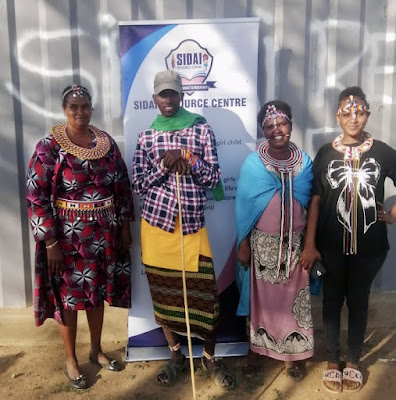
The girls now have more people helping to give them a life of their own, education, and freedom from abuse.  Those women with Sarah in the picture at the top of the blog, one of whom is a nurse, are some of the volunteers.

Sidai has a board of people in Kenya and in the USA to advise and help grow the effort.  One member is a young Samburu man Nick Lenaimado, who has a degree in computer science and is on his way to becoming a lawyer.  He is creating all the digital records the Centre needs to become a fully functioning nonprofit.

Earlier this year, Sarah and Nick traveled to Nairobi to select books for the Centre's library.


Now, instead of being chattel, the girls of Sidai are reading!


READING!!

Monday, May 18, 2020

Next Steps: It's Time to Stand Up

Annamaria on Monday


We all want to know what nobody knows.  My theme today is that we must not wait and see.  What happens next is up to us.  


Call me whatever name you like.  I am right about this. Don't believe me?  For one thing I have seen small fringe movements begin to work on what seemed like an unsolvable problem.   Little by little they won over those who doubted at first.  Eventually, they/we changed the course of history.  Actually, in my lifetime, it has happened more than once.


Here is an example from today, of one person who is determined to make a difference.  Regular readers of MIE may recall my friend Sarah Lesiamito, who fights against the cruel way her culture threats girls.  Right now, she is establishing her leadership in her area with a one-woman campaign against the coronavirus in Samburu in Northern Kenya.  She is not waiting for the government to tell her what to do.  She has informed herself and begun to supply the member of her little village with information and, as best she can in the remote place where she lives, give them the tools to keep themselves safe.


Here is Sarah (l.) instructing one of the men of
her village in proper hand washing 

Villagers discussing how to stay safe.  

As of now there no cases of Covid-19 in Sarah's area.  But if the beast shows up, Sarah and her neighbors are armed and ready.  

It is possible, but not certain that, in the aftermath of this pandemic the nations of the world will enact laws and practices that will correct the societal flaws that this crisis has so dramatically revealed.  The gross inequities in distribution of wealth and healthcare can be cured.  The world was in this same position in the early twentieth century and then it lead to two world wars with a pan-depression sandwiched in between.  BUT, fed up with themselves, the world's developed countries began to correct that situation in the decades following the Second World War.  Laws protecting workers rights and taxation aimed at development of the economy and improvement of infrastructure lead to decades of widespread prosperity.


All of that has been undone since the end of the twentieth and into the beginning of the twenty-first centuries.  And there is no guarantee that the current pandemic will right any of the wrongs.  In some countries around the world, dictators have used the disease as  an excuse to clamp down harder on anyone who opposes them.  Imagine if such a development turns into a trend.


Here in the world's first great democracy, the current president tried to seize upon the situation.  He declared that he alone had the sole power to reopen the slumping economy.  He had supporters who would rally round him if he tried that.  Cooler (and Constitutionally) better informed  heads prevailed, but that does not mean we are out of those dense woods. 

So if we want to emerge from lockdown into a better world than the one we had beforehand, we need to stay watchful and get active.  We need to be informed.


We need to be ready to stand up against any government that does not lead the populace away from dystopian widespread poverty and desperation. We want governments that protect the entire citizenry. And that means teachers, healthcare workers, firemen and policemen. The people who pick the vegetables and process the fish and the chickens. Who pick up the trash and clean the hospitals and the public spaces.  You know who they are by now. Those people the pandemic has revealed as essential.

I stole this photo from Stan's Facebook page.
And the journalists.  Be suspicious--VERY suspicious--of any politician who attacks the mainstream media, from the right or from the left.  It should be a human right to say whatever we want.  But no one has the right the hide from the truth.


One way we can use the power of the people is in chosing where we spend our money.  By supporting businesses that behave themselves, pay their workers well, treat the planet as sacred, not as a sewer.  Wealth come by honestly is one thing.  Greed is NOT good.

Every nation on earth will need to so some work on its economy once we are out of the corona-woods.  Which adjustments are made will be critical.

I have been hearing for years that the United States is a "consumer economy."  After 9/11, after the great crash of 2008/9, we were enjoined to help restore the economy by spending money.  We were supposed to go to stores and restaurants and buy, buy, buy.

Have you noticed?   Every time the latest consumer spending numbers are released, pundits express fear of recession if the numbers are down and optimism if they are up.

Years ago, many voters were sold a bill a goods by the Reagan presidency.  That if the wealthy were allowed to collect unconscionable amounts of money, the wealth would "trickle down" and lift all the little boats along with the big yachts.  This theory sounded like hooey at the time, and so it has proved to be.

So what would work?  Here's an idea.  Let's give the opposite a try.

We now know that when they amass enough money to last four or five thousand life times, what the billionaires do, mostly, is warehouse it.  I guess they enjoy watching it pile up.  But beyond a certain amount, it does not go into circulation to become the life's blood of the consumer economy.  

In the coming months, the economy is going to need a massive transfusion.  Forget trickle down.  Suppose we turn a firehose of buying power on the struggling poor and threatened middle class.  What will they do with cash in hand?  Spend it!  Of course.  They need all sorts of things.  They will buy clothes, furniture, cars, vacations.  Education for their children.  Restaurant meals.  Movie and theater tickets.  Flowers for their mothers.  Books!!!

They will buy the most run down houses in town and fix them up, causing a boom in the lumber and household fixture industry.  In myriad ways, they will feed the economy just at a time it needs it desperately.

The corporations that supply all those goods will thrive.  Hooray!

"Simply hoping that things will move in a progressive direction when the shutdowns end isn’t enough. Creating a fairer, more inclusive economy is hard work, and it will inevitably encounter resistance. Concentrations of economic power have to be confronted. Workers’ rights and bargaining power have to be extended. Democratic freedoms have to be protected. Demagogues have to be defeated, during pandemics more than ever.  –John Cassidy in The New Yorker"


No doubt there are trained economists out there who will be happy to point out the weakness in my suggestion.  I am ready to listen to them.  All I want to know is this.  If this is not the answer, what is?

You tell me what's next.