Showing posts with label Unintended consequences. Show all posts

Monday, April 10, 2023

Tidbits

 Annamaria on Monday

A lot is going on in my life, and I have many topics I might take up today, but I can't seem to get more than than half way through any topic I might write about.  The best I am capable of is a few peeks into what has been on my mind.

I've being doing the happy dance about the latest news from my favorite charity, the Sidai Resource Centre.  Eight of the Sidai girls are now in secondary school, an opportunity most girls in their culture can only dream of.  Here are six who are all now at the same boarding school:


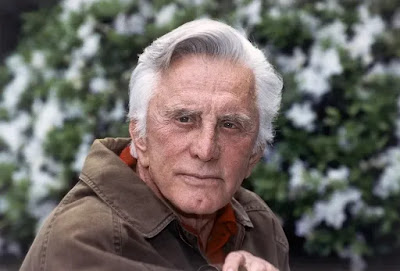
In another part of my mental forrest, I have been binge watching the films of Stanley Kubrick. Last night's flick was the great Paths of Glory, which came with a bonus interview with the movie's star, Kirk Douglas.  In it, the interviewer referred to Douglas's childhood poverty and asked "Would you want to make a movie about your life?"  Right off the cuff, Kirk answered:


Not just a pretty face!


If you want to tell the truth, you write a novel.

If you really want to lie, you write a biography.


Topic 3: My efforts to rescue the rights to my own work have been taking up a LOT of my time and though I am seeing some progress, I still have not arrived at that magic moment when my back list can be published, and my new work can launch. The process is frustrating and daunting, but I am still determined.  I hope I will have good news about that one of these days.


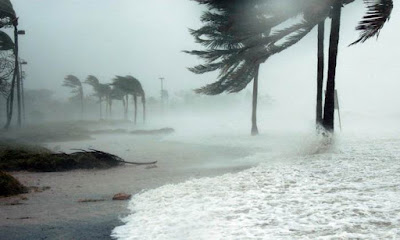
WNYC, my local and addictive public radio station celebrates April as poetry month.  They typically invite listeners to submit a personal poem on a given topic.  This year they asked for poems - one to be aired each morning - on the subject of consequences.  I decided to try one on unintended consequences, a subject I have written about here, as have some of my blogmates, most notably here and here.  I took a stab at writing such a topic in verse, but given the many drains on my time and energy, as soon as I had something even passable, I decided to stop and submit it as it was.  I then wasted fifteen or twenty minutes trying to find the instructions on how to submit.  I despaired of that, but today I screw up my courage and offer it here:

You prayed for rain 

and made a hurricane.

Be careful what you summon.

 What is coming may be grief, not relief.


By way of compensation for that little ditty, I offer a song guaranteed to lift your spirits.  I am working on this post on Friday this week because this past Sunday (yesterday by the time you read this) was Easter, and that means that I will have spent this Sunday with my family.  "Alleluia" was a word I sang on Easter as a child in the church choir.  Today I offer you a Hallelulia song of an entirely different sort: by two of the greatest geniuses of American music.  Can you listen to this and sit still?  I can't.


Thursday, December 9, 2021

Cocaine hippos and fox hunting

 Michael - Thursday

For reasons of their own, some people seem to be fascinated by keeping wild animals as pets. Generally, the cute (and in most places illegal) lion cubs grow into not so cute and not so tame adults who want lots of food and present a real danger to people. Nevertheless, these are “problem animals.” It’s another step altogether for them to become a problem species. When they do, it generates lots of issues.

A pod if hippos...in South America

Take the now famous cocaine hippos. In the seventies, Colombian drug king Pablo Escobar kept a private menagerie to amuse himself and his guests. It included four African hippos. Who knows why? Perhaps he just liked them. (Stan and I can appreciate that.) Of course it was illegal, but Escobar wasn’t exactly a stickler for the law.

However, when he died in a shootout 1993 and the zoo was dismantled, the hippos were too large and dangerous to move. So they just…left them there. They didn’t mind. They made themselves at home in the nearby Magdalena River. Now there are more than a hundred of them enjoying the warm weather and lush environment. They eat large quantities of vegetation and favour certain plants threatening biodiversity in the area. Their activities cause erosion on the river border. They are a danger to local farmers. (Thank heavens Escobar didn’t take a fancy to Nile crocodiles.) There are no natural predators. In a few generations there could be thousands of hippos.


The environmental authorities felt they had to stop the problem while they still could, and suggested killing all the hippos. But the local people like them. (Except, I would guess, for the farmer who was charged by one and badly injured.) This may be because hippos are lovable, but I suspect it was because an industry has grown up around them. Tourists take boat trips on the river to spot them, take lots of pictures, enjoy the environment, and spend money. An animal rights group in the US took the issue to court and persuaded a judge to declare the hippos “interested persons” with legal rights in the US. I have no idea what that means in practice since Colombia has no interest in the decisions of US courts. Could the country face blacklisting and sanctions for “human rights” violations?

To keep everyone happy, the local authorities have settled on a drug that renders the hippos infertile. Birth control for hippos. I wonder how that will work out.

At least the hippos were imported by one egotistical criminal with no regard for the consequences. (Although he’d probably point out that he wasn’t the one who left the hippos to run around loose.) History is littered with examples of people introducing species deliberately for a variety of reasons. At best the plan was badly thought through, at worst, no one cared anyway. Let’s not even talk about feral cats that cause environmental havoc throughout the world. 


Let’s take the example of Australia’s foxes. They devastate the local animals and birds who haven’t evolved with efficient, common, predators, and tend to look at the fox with curiosity before it pounces.

Old photo of fox hunting in South Australia

The foxes were brought to Australia in the middle of the nineteenth century for fox hunting. Apparently, the British gentry of the time couldn’t live in the colonies without their traditional sport. Perhaps they thought the hunts would control the population. Probably, they didn’t think at all. There are now more than seven million foxes throughout the Australian mainland.


Then there are the supposedly well-thought-out, ideas. Let’s move on to the twentieth century. Two species of beetle (natives of Australia) had developed a taste for sugar cane, which was becoming an important local crop. Cane toads have a taste for the beetles and have successfully controlled similar pests in their native Americas. Northern Queensland has a similar environment to the American tropical areas where the sugar cane is grown and plenty of juicy beetles, so they tried out the cane toads there. What could go wrong?


Now hordes of large, ugly, poisonous, toads are invading the rest of Australia. The best way to kill one is to put it in your freezer, but don’t get it mixed up with the roast. The natural predators are susceptible to the toads’ poison. Another environmental disaster is on the march…


I guess the moral of all this is complicated. Maybe it’s the Law of Unintended Consequences: the actions of people—and especially of government—always have effects that are unanticipated or unintended. Maybe it’s simply to be careful what you wish for.

Monday, December 14, 2015

The Cobra Effect

Annamaria on Monday

Last summer Michael posted a blog called UnintendedConsequences, in which he cited a new South African law that was supposed to cut down on trafficking of young children, which had the unintended result of slicing into South Africa’s share of international tourism.  I was intrigued.  And being the nerd I am, I researched.

Lots of times it seems, good intentioned people trying to fix a problem end up creating another one. 


But then there are the times when the curative action not only fails to solve the problem, but makes it worse.  The term for this variety of unintended consequence is The Cobra Effect.

The name comes from a story about British colonial rule in India.  During the Raj, the District Superintendent of Delhi was concerned about the number of venomous cobras in the city.   He had a good idea.  Put a bounty on them.  Pay ordinary citizens for bringing in dead snakes.  It worked.  For a while.


But then, to keep the dead-snake payments coming in and to make them easier to earn, folks on periphery of the city started breeding cobras, killing them, and presenting them for the reward.   Outraged at the “cheating,” the government cancelled the program.  The breeders no longer had a use for the baby cobras, so they released them.  In the end the number of cobras in Delhi was increased by several orders of magnitude.

Colonial governments seem to have been particularly guilty of this form of arrogance and superficial thinking.  The French did the same thing in Vietnam—with the twist that their actions created the problem in the first place:


They wanted to change Hanoi into the Paris of the Southeast Asia.  That meant more than broad boulevards, baguettes, and outdoor cafes.  It meant indoor plumbing and of course, sewers.  Those sewers became a fabulous breeding ground for rats.  All too soon, the city was being overrun with them.  They were coming up through the toilets in the European section of town.  And at a time when the white population was terrified of bubonic plague.  YIKES!

The government hired exterminators—employees whose job it was to go down into the sewers and kill rats.  But the critters were so out of hand, the civil servants could not put a dent in their population.  The rats were breeding like—well—rats.  I guess Monsieur Le Frenchman-in-charge had not heard about the cobras in Delhi.  He did what seemed logical to him—he put a bounty on rats.  Payment was made for rat tails.  You can guess I am sure what happened next—people were soon breeding rats.  On top of which, people were not bothering to kill the rats they caught.  They just cut off their tails.  Tail-less rats evidently still remained attractive to the opposite sex.  And reproduced.  And so it went.


And so it goes.  In 2007, the commandant of Fort Benning, Georgia had a different critter to deal with—wild pigs.  If only he had Googled “unintended consequences,” he would have known what not to do.

Fort Benning is a huge place—bigger in geographical area than Atlanta.  With lots of wooded areas where the piggies could hide out and breed.  How cute!  NOT!  Here’s the thing about wild pigs—they dig up everything, they eat almost anything, they will chew what they can’t really eat.  They were destroying government property for heaven’s sake.  Kill them!  Bring in their tails, and we will pay you $40 each for them.   It took a while and a wildlife biologist to figure out why the piggy population then began to increase.

Oh, there were a few miscreants who bought tails from the local game butcher and turned them in.  But that could not account for the ballooning numbers of pigs.  Observers of nature know that what makes a wild species increase in numbers is a bigger food supply.  Once they started looking for it, they found it.  The hunters were putting out slops—tons of it—to attract the pigs and make them easy to find and slaughter.   All that food not only made the local population more fecund. 
Word got out to the porkers in the surrounding counties.  There was free lunch at Fort Benning.

In addition to the Cobra Effect, there are some other fascinating and disgusting sub-categories of unintended consequences:


The worst example of a colonial governments’ stupidity is the brutish and heartbreaking Leopold II’s severed hand policy.  In the Congo, the colonial wealth came from rubber production.  Failure to meet quotas carried the death penalty.  To prove that those who “shorted” the government had been executed, the overseers were required to turn in their severed hands.  To prove how well they were complying, the soldiers went about randomly chopping off people’s hands, rather than working to increase production in a way that might actually work. 


Blowback occurs when a government arms an ally, who then switches sides and joins the enemy.  For example when the USA and Saudi Arabia supplied insurgents in Syria, only to have them join with Isis, taking the weaponry with them.


Campbell’s Law refers to using a social indicator to track progress, but then using the indicator makes progress worse.  For instance, in recent years in the USA, the federal and state governments have sought to use student test scores as a measure of teacher effectiveness, only have teachers begin to teach students to be better test takers, rather than better educated people.


Perverse Incentives can turn a government program on its head.  The US Endangered Species Act requires a study to be made to find out if a species is endangered by a project.  But the studies take years, during which time proponents of the project build as fast as they can before what they want to do becomes against the law.  My favorite example of this is how the prohibition of a substance drives up the price, making trade in whatever it is an extremely lucrative criminal activity.


On the lighter side, there is the Streisand Effect, named after Barbra, who became so incensed by people trying to photographs her house that she made everyone want to see a picture of it.  Or the fatwa on Salman Rushdie that made The Satanic Verses, a book hardly anyone would have bought, an international bestseller of biblical proportions.


My next book focuses on Islam in East Africa in 1912.  I may need you to prepare a priest hole for me.  I am not sure what I should hope for in that regard.