Showing posts with label Sarah Lesiamito. Show all posts

Monday, March 18, 2024

Making History in Kenya

Annamaria on Monday


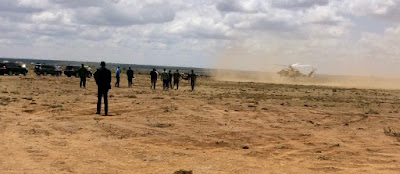
Ordinarily, when I write about here about the history of Kenya, I am harkening back to the early Twentieth Century, when it was still the Protectorate of British East Africa. Today, I am reporting on very recent history that I have had the enormous privilege to participate in. The picture above documents the moment when a pastoralist man gave a cow to a woman.


What’s the big deal, you might ask.  Well, I’ll tell you.  But the beginning of the story is hard to talk about.  Bear with me.  I promise you it has a very happy ending.


In the millennia-old culture of Samburu in Northern Kenya, girls have always been treated as chattel. They belong to their fathers.  Ordinarily, at the age of 9 or so, they are offered as toys to men of the warrior class (males of about 15 till mid-to-late 20s).  This practice is called beading.  Then, once the girls show signs of puberty, they are cut (subjected to FGM), and their fathers sell them into marriage, usually to a man 3, 4, or 5 times their age.  This was the fate of all the local girls until…


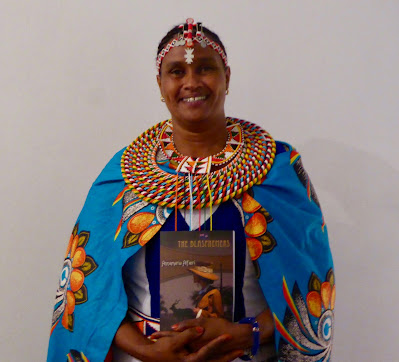
Enter Sarah Lesiamito, a Samburu girl who—years ago—emerged from that fate.  But then her best friend, a cousin, died in the aftermath of being cut.  Sarah, who was then still a child by current American standards, vowed to herself that she would change that part of her culture.  She grew up to be a teacher and in 2012 began by saving local girls from that awful fate by taking them into her home, keeping them in school, and supporting them through secondary  school and further training.


As you can imagine, the fathers of those girls often became enraged, demanded to have their daughters back so that they could “prepare them for marriage” and sell them for cows and goats.  One such father was this man: Lparasan Leparsha
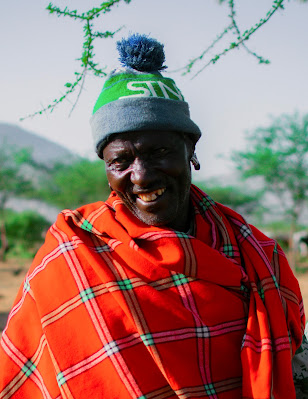


His daughter Sonia went to live with Sarah so she could evade a girl’s typical fate.  He went to Sarah to complain about his loss.  Sarah calmly told him, “I am helping you raise your daughter.”  Since the traditional practices are against Kenyan law, he had no way of the seizing “his property.”  He went away mad.


But, eventually, just about a year and half ago, Sonia graduated first in her class from secondary school.  Sarah threw a party and feted her protégé.  At which point Lparasan Leparsha went to Sarah and admitted that she had indeed helped him raise his child.


In the interim, Sarah and I had met, and I had begun to support her efforts with advice and by raising donations to help her expand.


After the party celebartin Sonia,  Leparsha pointed to the dormitory, the small library, the kitchen from which the girls were fed.  “How are you doing all this,” he wanted to know. 


“There is this woman in New York,” Sarah said. 


“When that woman comes to Samburu,” Leparsha said  “I am going to give her a cow.”


And so we made history this past February 17th!  Lparasan Leparsha, Sarah Lesiamito, Michael Lenaimado (Sarah’s gold-star supportive husband), and I.  For the first time ever, a pastoralist man gave a cow to a woman.


Leparsha opened his mind and heart and saw the achievements of his brilliant young daughter as the greater good.  Remarkable!


The Sidai Resource Centre is now home to forty-eight girls who are safe from harm.  One of Sarah’s early recues, a girl name Shaa, has already come back to her community as registered nurse.  Sonia is in college and studying community medicine.


My cow is just a heifer at this point, but she is nearby to the Centre and will be bred one day soon.  After she gives birth to her calf, she will become a source of milk to nourish the Sidai girls as they pursue their dreams.


www.sidairesourcecentre.org


Monday, March 15, 2021

Historic Moment for African Girls

Annamaria on Monday

In order to write the first two books in my Africa series, I had to spend countless hours over several years researching the cultures and history of Kenya.  But it was not until I started work on the third, The Blasphemers that I learned about the treatment of young girls.  It horrified me.  All the more so because, though British missionaries had been combatting it since 1906, among some groups, it was still common practice.

Then three years ago - just as The Blasphemers was launching, I met a grassroots warrior against FGM and forced marriage, a Samburu woman who is a teacher and gifted leader and organizer.  The Samburu are a branch of the Maasai tribe, which has clung to its old ways with remarkable tenacity.  In some ways this is a good thing, but its treatment of girls is criminal, and progress against these hideous practices has, until now, been spare.

But good news came in the past two weeks. Here is the text of an email that I received from Sarah on 22 February:


Declaration to End FGM in Samburu


Hi Patricia.

How are you and how are things the going?


We are doing well. The pandemic is slowing down and not many cases are reported.

Am still planning for a phone call or a skype with your friends soon when I get the appropriate signal area.


In June 2019 our president made a commitment to end FGM by 2022.

The coming Tuesday 2nd March the Samburu community—elders, women, girls, boys, leaders and Kenya’s President Kenyatta will make a historic Declaration to end FGM and Child marriage among the Samburu community.


Girls and women can help take the message of ending FGM to their fellow students and youth. I am looking into a future free FGM.


This event takes place at Kisima centre in Samburu 90km from where we live.

It will be officiated by President Kenyatta.


 I have mobilized 10 girls and 10 women to take them to the event. Am therefore requesting for some funds to enable me, the girls and the women to attend this historic event.


A message over the weekend corrected the date.  President Kenyatta had postponed the event to coincide with Kenya’s celebration of international Women’s Day over the following weekend.  The meeting would be on Friday, March 5. With strict instructions from me to send us LOTS of photos, Sarah went into high gear.  Here is her report on what happened at the event: 


Hello Patricia,

I am glad to report back that we made a successful trip to Lake Kisima to attend a historic declaration to end FGM and early child marriage among the Samburu community which was officiated by the President of Kenya.


Please find some of the attached pictures in the document. Thank you and may God bless you and your friends.


Lots of love,


Sarah Lesiamito


After breakfast, going to venue, awaiting president


The shuttles we hired for transportation


Elders who signed the Anti-FGM Agreement on behalf of the community


Local Administrators who attended the occasion with us


One of the surgeons that we took with us to the historic declaration to end FGM

(AA Comment: I believe this is an enkamuratani, a woman who performs FGM.  I think

 it was brilliant of Sarah to bring her along.)


With the school-going girls


Me and one of the local leaders talking to the girls


Women awaiting the President’s arrival


Arrival of the President


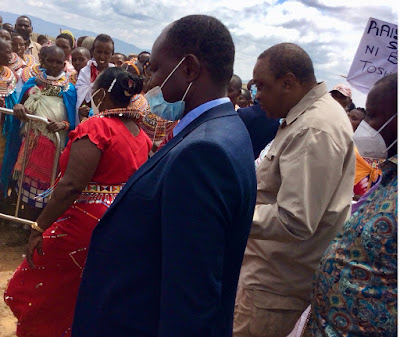
The President, local leaders, and the community (Kenyatta is in khaki)


Screen shot of Sarah’s final submission regarding the event


I am so proud of Sarah, of how she took advantage of the opportunity, of her leadership and organizational instincts.  The declaration of this month is a huge step forward, but its implementation will be a test and a challenge.  I will be conferring with Sarah on her progress and her needs, and will find ways to support her efforts. I have formed a group of highly capable women who will be joining in this work.


It is a privilege and a joy for me to have a small role in this effort.  The smiles on the faces of girls free to stay in school, to have their own dreams, and at least a chance at making them come true! They make me do the happy dance.  I was the first woman among my own female forebears who had an opportunity to follow such a path. I credit my mother with that change.  She was not allowed to dream for herself.  She dreamed for me.  


I don't know how much of the 21st Century I will see, but in this way and in many others, it seems to be bringing women out of the shadows, away from the second-class position we have so long occupied.  I believe I am looking at the Century of the Woman. All the world will be better off if I am right.  Of that I am certain.