Showing posts with label film locations. Show all posts

Thursday, March 7, 2024

Welcome to the Birthplace of the Oscars

Wendall--every other Thursday

Since the 96th Academy Awards are airing this weekend, I thought it might be a good time to post about the place they were born: The Biltmore Hotel (now the Millennium Biltmore) in downtown Los Angeles. 


The Galleria of the Millennium Biltmore Hotel
  
The Founding Banquet for the Academy of Motion Pictures Arts and Sciences, 1927.

Happily, since my journalist husband, James Bartlett, has often written about the hotel and is somewhat of an expert on its history, he’s allowed me to quote from some of his pieces, so the quotes in italics are his.


“The Biltmore was actually the first home of the Oscars. The Academy of Motion Picture Arts & Sciences was founded over lunch in the Crystal Ballroom in May 1927, and it’s said that MGM art director Cedric Gibbons sketched the design for the Oscar statue on a napkin.”


It's said the original design for the Oscar statuette was sketched on a napkin in the Biltmore's Crystal Ballroom.


“Eight Oscar ceremonies were held in the Biltmore Bowl room in the 1930s and early 1940s, and in 1977 Bob Hope hosted the Academy’s 50th Anniversary here.”


Oscar Banquet 1937. So many famous faces. Look for Henry Fonda and Walt Disney down front.

Oscar Banquet 1939.

Best Actor winner Clark Gable in the ballroom in 1935.

Spencer Tracy and Bette Davis winning in 1939.

The hotel opened its doors to the public on October 2, 1923 and was considered “as beautiful, as colorful, as vibrant as the city with which its destiny is linked.”  

Opening program from 1923.
The Crystal Ballroom, empty, in 1923.


“Visitors and guests still marvel at its murals, marble floors, wood paneling, frescoes, fountains, and chandeliers, and it is said you can find 1000 “Biltmore Angels” (representing the City of Angels) everywhere from the carpet to the ceilings.”


Angels, angels everywhere.

Including on the glass door.

Rendezvous Court from the stairs. It was the original lobby.


Looking the other way. I get to stand on the staircase Betty Draper came down in Mad Men.

The current lobby used to be a restaurant.


The original Gallery Bar. Gimlets, anyone?
 

You’ve seen glimpses of this amazing hotel in more films and television shows than you may realize. It’s appeared in the original Ghostbusters, Chinatown, Vertigo, Beverly Hills Cop, The Sting, Splash, Bugsy, Spider Man, and In the Line of Fire, and this year’s Oscar nominee Oppenheimer, to name a few. 


Peter Venkman has arrived!


They used the side of the hotel to shoot the scene where Evelyn Mulwray hires Jake Gittes in Chinatown.

Eddie Murphy checks out the scene in Beverly Hills Cop.

It’s also stood in for a myriad of locations in Mad Men, Bosch, The Catch, Glee, The West Wing, Columbo, and dozens of other shows. 

Mad Men shot all around the hotel.

 
Harry Bosch waiting for trouble in the Gallery Bar.

And, though I hesitate to give Taylor Swift more oxygen than she already has, her music video “Delicate” was shot in the hotel and offers great views of the lobby, ballrooms, and central hallway. (https://www.youtube.com/watch?v=tCXGJQYZ9JA). 

You can find a more complete list of Biltmore appearances by scrolling down on its Wiki page: (https://en.wikipedia.org/wiki/Millennium_Biltmore_Hotel)

It's also a part of Los Angeles history in many other ways. It dedicated its second floor for military personnel during WWII, hosted the Democratic National Convention in 1960—where John F. Kennedy was chosen as candidate—boasted a Beatles stay during their first US tour in 1964, and was headquarters for the Los Angeles Olympic committee in 1984.


JFK was nominated from here.

The hotel also has a crime—and crime fiction—connection, since it was here that the victim of Los Angeles's most famous unsolved murder, Elizabeth Short, was last seen alive on January 9, 1947. 


Elizabeth Short, the Black Dahlia.
 

Her gruesome murder a few days later became Hollywood’s most notorious after she was nicknamed the "Black Dahlia." The Gallery Bar, which until about five years ago still felt like a place you could drink a gimlet with Raymond Chandler, now has mounted television screens which kill the illusion a bit, but its design is still stunning-- and you can lift a Black Dahlia cocktail to Elizabeth Short and the LA that used to be. 

The Black Dahlia cocktail: Citrus Vodka, Chambord, and Kahlua.
 

We were beyond privileged to be invited to its 100th anniversary black tie celebration in the Crystal Ballroom last October, where, as noted above, the idea for the Oscars was born. 

The stage in the Crystal Ballroom awaits its Big Band.

Getting ready in our room!
 

This involved our finding a tux for James in the local store “It's a Wrap!,” which features second hand film and television costumes, and my digging out a 1920s beaded top. The hotel was kind enough to give us a room. 

Our table.

The ceiling!
 

In addition to cocktails, dinner, and a live big band, the event sought to recreate the famous black and white photo of the ballroom's opening in 1923. We can't believe we are in it!

Biltmore opening Gala, 1923

100th Anniversary Gala 2023 (see red arrow).


If you’re visiting Los Angeles, I highly recommend a drink or high tea in the hotel, or better yet, a stay in this part of movie history.

---Wendall


Thursday, November 2, 2023

Three Questions to Improve Your Scene Writing

Wendall -- every other Thursday

Since I’ve been much occupied with the launch of Cheap Trills, this week I'm offering an essay I wrote for my students on scene writing for film, in hopes it might be useful for fiction writing too, but mainly because it might remind you of some films worth watching and re-watching.

Marilyn Monroe's character, Sugar, makes an entrance for the ages in Some Like It Hot.
 

Screenwriting courses always stress the importance of film structure, but frequently ignore the very building blocks of that structure: the scene. Yet so often, it is one scene which we remember, which haunts us when the film is done—Sugar boarding the train in Some Like it Hot, Evelyn Mulwray's incest confession in Chinatown, Bertie’s first meeting with Lionel in The King’s Speech, the farewell in Casablanca. What is it that makes these scenes so unforgettable? I think asking yourself these three questions can put you on the road to memorable scenes of your own.
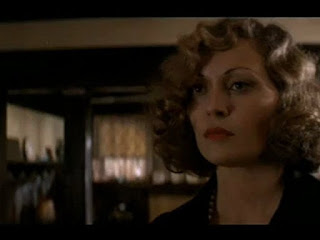
 

In Chinatown, Faye Dunaway gives us one of the most quoted scenes in film history.
 

1) WHY IS THE SCENE THERE – WHAT ARE ITS FUNCTIONS IN THE STORY?


Often we write scenes and we don’t really know why. Then we become attached to them and they stay when they don’t really have a purpose. When you’re looking back at your script, it’s important that you know EXACTLY what the scene is contributing to the story—what are its FUNCTIONS?


Scenes are both a short film in themselves, with a beginning, middle and end, but they must also always be looked at in terms of their purpose in the entire film—as part of a sequence, as part of an act, as part of the whole. So each scene has a specific goal both in and of itself and a goal in terms of the whole film.


THE POSSIBLE FUNCTIONS OF A SCENE:

to give plot exposition/new information

to give character development

to set up a world

to provide backstory

to express the theme

to create suspense

to create laughter

to set/maintain an atmosphere/tone

to provide transition(in time, place, story)

to set-up a later scene or situation

to pay-off an earlier scene or situation

to speed up or slow down the action

to turn the action in a different direction

to express the writer's POV

to change the way we feel about the story

to reference another film and evoke emotion that way

to resolve a conflict

to create rhythm


This opening shot from Fritz Lang's The Big Heat does a host of things, including starting the plot and mystery of the film and symbolizing the violence in domestic life that permeates the story.


SCENES SHOULD ALWAYS HAVE MORE THAN ONE FUNCTION. Usually, the best scenes have at least five. Often in a first draft, scenes only accomplish one or two objectives, but frequently, in rewriting, combining scenes will give you one powerful scene operating on several levels.


Beyond that, you have all the potential elements of a scene to consider and use. Believe it or not, the elements of the slug line itself can make a huge difference.


2)WHAT ARE THE PHYSICAL CIRCUMSTANCES OF THE SCENE? WHAT IS THE LOCATION? WILL THE SCENE BE MOST EFFECTIVE SET DURING THE DAY OR NIGHT? INSIDE OR OUTSIDE? PUBLIC OR PRIVATE?


The elements involved in when and where a scene takes place can add so much tension, irony, emotion, suspense, etc. to a scene, and it’s an area many writers take for granted or don’t consider seriously.


Think about how much more depressing a bowling alley is during the day and how that highlights Bad Blake’s downfall and creates empathy for him in Crazy Heart. 


Showing this bowling alley in the harsh light of day, rather than at "neon night," helps show Bad Blake's desperate situation.
 

Or how the place where Sandra Bullock hope will be safe, inside the capsule, becomes a kind of prison in Gravity, and how the cuts to the exterior— space—increase our concerns about her survival. The brothers in Hell or High Water talk around subjects indoors, but air the truth more easily outside.


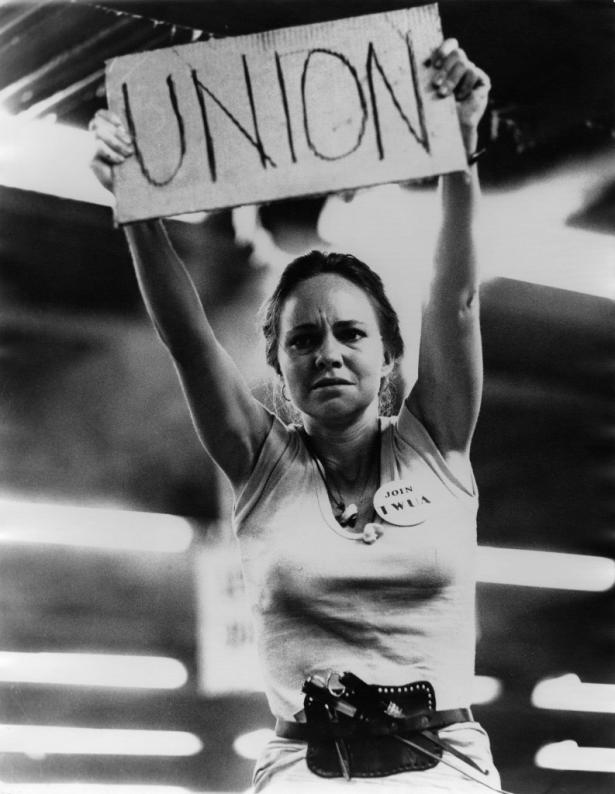
How does the actual location help to add conflict to the scene? Is it a recurring one in the story, and if so, does it gather meaning each time we return, as in Emily Blunt’s apartment in Sicario or the mill floor in Norma Rae? Do we worry that Martin Sheen’s mission in Apocalypse Now is “off the books” when it takes place at a private residence rather than an office?


So many crucial scenes that mark the emotional movement of Sally Fields's character happen in the mill, including this famous one.
 

Think about the contrast in the first act of The Godfather—what goes on in the Don’s office vs. what goes on outside at the wedding. This is the epitome of how to use contrast of public/private. Is a scene more or less intimidating if anyone else is there? Is it more or less romantic if it’s public vs. private?


3) ARE YOU USING ALL THE POTENTIAL ELEMENTS OF THE SCENE TO THEIR BEST ADVANTAGE?


Here are most of the elements which are available to use in any scene:


Primary Characters

Secondary Characters

Tertiary Characters

Landscape/Physical Setting/ Weather

Physical Details/Size of setting/Objects, etc.

Dialogue

Sound/Silence

Color

Primary Physical actions/events

Secondary Physical Actions/events

Background Physical Actions/events


Often as writers we fail to take advantage of all the elements that can elevate and dramatize the material.


It’s amazing how much an object—like the bag of bread in Michael Clayton or the spacesuit helmet and whiteboard in Arrival—can layer and deepen a scene. 


Tertiary characters can mean everything, too. Think of how much the “I’ll have what she’s having” line makes us remember the deli scene in When Harry Met Sally, or how the fact that Terry and Charlie forget there’s a driver in their cab leads to Charlie’s murder in On The Waterfront. Behaviors in the background can make scenes feel more dangerous, more claustrophobic, more exposed, more hilarious.
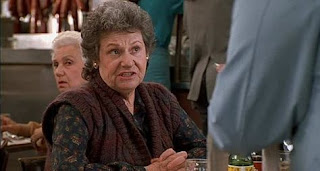
 

Rob Reiner's Mom steals this scene with her one and only line.
 

Weather can also work for you. Rain is often used for painful emotional scenes, but if the tone of your piece is ironic, then bright, painful sunshine may serve your purposes better. Obviously, the heat and humidity in Body Heat helped create the atmosphere of corruption in that film. Think of Fargo, where the weather is a character. The rain and mud in Don’t Look Now makes the inciting incident more horrible.


The "heat" is on and makes all the difference in Body Heat
 

And sounds can add immeasurably to a scene—think of the how the insistent warning signal in Alien and the iron lung in The Verdict create tension and emotional movement in the characters.


So, next time you are going back to your scenes, be sure you are making the most of them.


WENDALL’S upcoming Cheap Trills appearances:


READING AND SIGNING

Sunday November 5th at 2pm

BOOK CARNIVAL

348 S. Tustin St.

Orange, CA

https://www.annesbookcarnival.com/events/


INTERVIEW on Baron R. Birtcher’s WRITERS BAR PODCAST

available November 10 at https://www.facebook.com/WritersBarPodcast


Cheap Trills is now available here: https://amzn.to/3PVPuc1


--Wendall


Thursday, March 23, 2023

Trouble in Tucson -- Again


Wendall—every other Thursday


Like my blog mates, I’ve just returned from the Left Coast Crime conference in Tucson, where I was finally able to meet fellow MIE authors Annamaria, Kwei, and Guest of Honor Sujata in person, reconnect with Jeff and the wonderful Barbara Zilly, and see and speak to many other wonderful authors and readers.


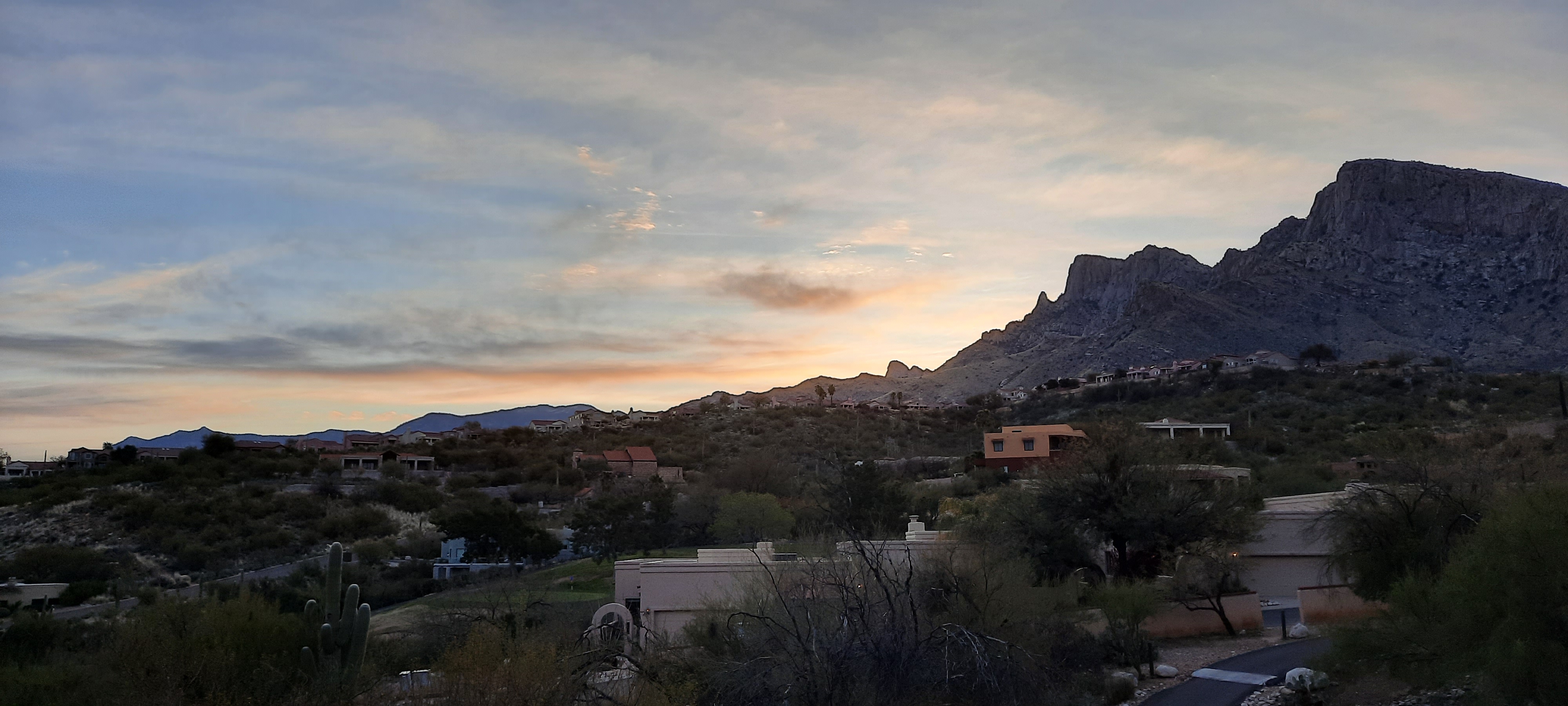
It took place at the El Conquistador resort, which was particularly gorgeous in the early morning and late afternoon.


My first morning walk.


The afternoon view from our balcony.

It made me think about how certain places, certain landscapes, circle back in our lives, gathering meaning each time. Tucson is one of those for me.


My grandfather had four sisters. My Great Aunt Dee was the adventurous one, leaving their Myrtle Beach, S.C. farm for Arizona when she was in her twenties. I would see pictures of her standing by saguaros and laughing. Her sisters would go to visit and come back with inappropriate pictures like this (!), taken in 1962, and tales of chiles and cacti and sky. 


My four great aunts on one of their Arizona/Mexico trips...
 

As a child, I ate those stories up and went to visit as soon as I could. It was my first real encounter with the West and the beginning of my love affair with skies like these.


Behind the El Conquistador
 

Years later, when I was working in the film business, my director boss took on a television movie called Wheels of Terror, with the tag line: “Evil waits. With the motor running.” I didn’t mind the content, because I got to live in a hotel in Tucson and spend every day and night out in the same stunning landscape that surrounds the conference hotel.


I also got per diem, most of which wound up in the cash registers of the extraordinary used and vintage stores on 4th Avenue. I would spend my days off going through racks and racks of 40s and 50s cocktail dresses and beaded sweaters, all available for around five dollars, and lugging dozens of treasures home. I still have this 40s dress from those days and always feel like Irene Dunne or Ginger Rogers when I wear it.


Dress snagged from Tucson vintage shop for a song.
 

A few years later, one of my dear friends asked if I wanted to meet her at the stunning, historic Arizona Inn. This oasis in the city boasts newspapers on wooden holders, ice cream socials, and quiet. It became my go-to writing retreat in the summers, where it was so hot the rooms went on sale. It is truly like taking a trip back in time and if you ever get the chance to visit, do.


Tichnor Brothers, Publisher, Public domain, via Wikimedia Commons
 

So, I arrived last week at the LCC conference already in love, and the grounds of the hotel only reinforced my passion for the place. 


Looking toward the entrance.

 
A view of the pool.

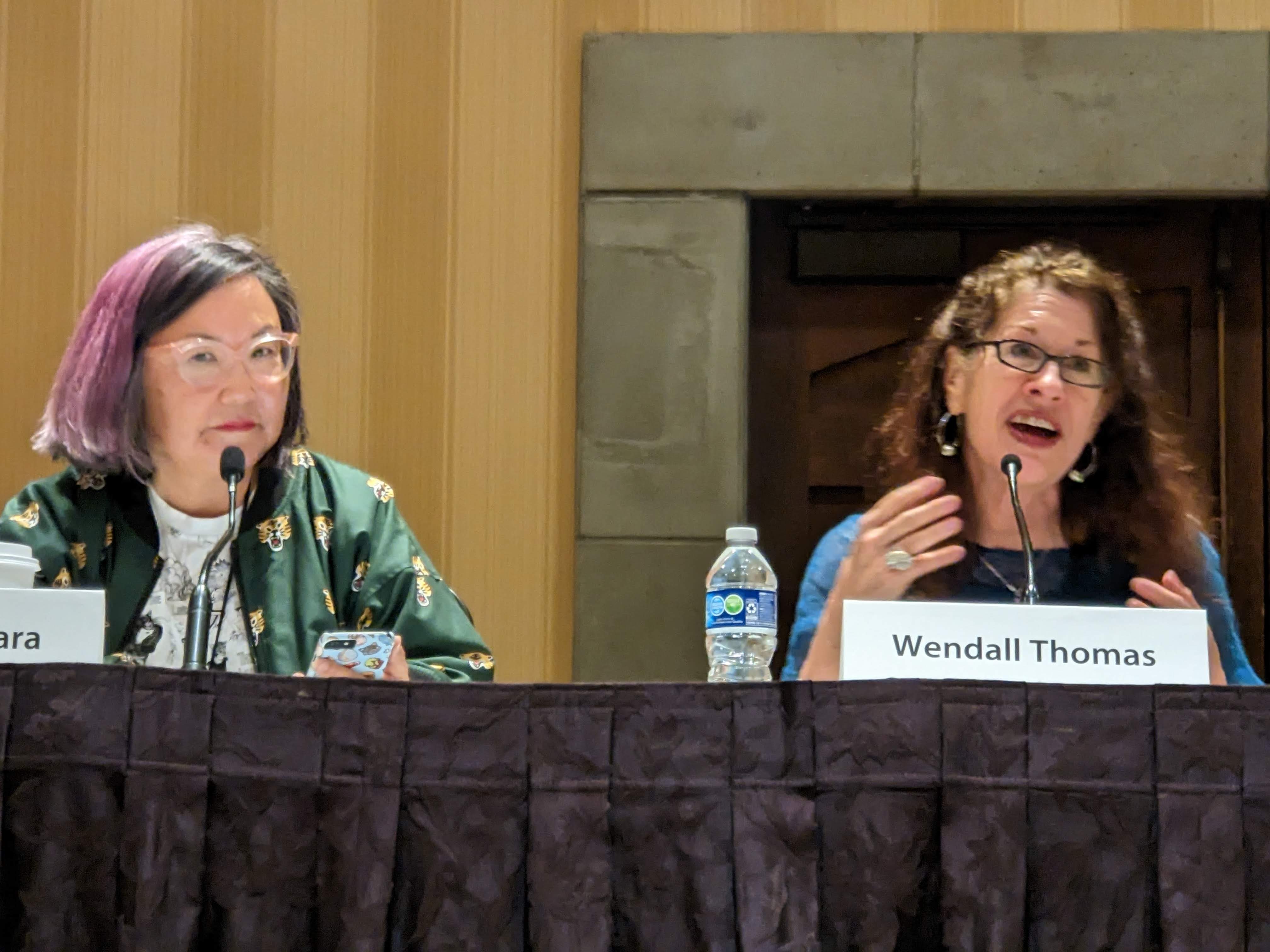
At the conference, I was lucky enough to be on a panel about “Creating Memorable Characters,” with authors Jamie Mason, D.M. Rowell, and Celeste Connally. Naomi Hirahara was a fabulous moderator, even though, as you can see in the second photo, I don't think she believed me.


The "Creating Memorable Characters" panel.

I don't think Naomi's buying it.

I'm sorry Annamaria didn’t get to see enough wildlife. We had a few encounters and it was definitely my first real life viewing of a javelina, as we spotted two at dawn beneath our balcony. We thought at first it might be dogs, but they were peccaries, all right.


Javelinas under our balcony.

Hard to see, but there!
 

Here's a National Parks photo so you can see what they actually look like.


From the National Parks cams.


We also chased a Vermillion flycatcher until it finally landed on this branch.


These gorgeous birds were all over the property.


Tucson. I can’t wait to come back.


-- Wendall


P.S. Annamaria, Kwei, Michael Stanley, and I all have articles in the new issue of Mystery Readers Journal, out today.