Showing posts with label Film Classics. Show all posts

Thursday, January 25, 2024

#Pals

 Wendall -- every other Thursday


This is the unlikely story of how I wound up being part of the “Special Features” on the 35th anniversary DVD re-release of what many call the “brat pack” western—Young Guns.


Imagine my surprise when my name turned up in a review of this re-release!
 

It was the 1980s. I’d been in Los Angeles about a year when I got a job as an assistant to Penny Perry, the legendary former head of casting for 20th Century Fox. By that time she’d cast a long list of films, including Ordinary People, All of Me, Cocoon, The Star Chamber, Dead Men Don’t Wear Plaid, The Jerk, and The NeverEnding Story, among others.


The late Gregory Hines was the loveliest.
 

I worked with her on two films: Tap, where I got to meet Gregory Hines and the Nicholas Brothers, and where the auditions took place in a dance studio (sigh!), and then on the film that every actor between the ages of 17 and 35 wanted to audition for—Young Guns


A drawing of Billy the Kid in the New Mexico History Museum
 

On my first day working on this retelling of the Billy the Kid story, I arrived at the casting office to find hundreds of headshots of every heartthrob of the 80s littered across the floor of two whole rooms. It was enough to give anyone a nosebleed.  


At that time, the film’s producers had an offer out to Sean Penn to play Billy, but it turned out he was in jail, so they moved to Emilio Estevez, who accepted. Most of the other “young guns” in the film were cast the old-fashioned way, through in-person meetings and auditions.


So, I embarked on this strange job where I would organize the headshots and discuss them with Penny, then set up the appointments. When the actors arrived, Penny, the director—Christopher Cain— and I would sit in a room and either Penny or I would read the “sides” with the actors. 


Neither Penny nor I had any dramatic skills, so I really felt for the performers, having to emote with us. Actors from Rob Lowe to Matthew Broderick, to Eric Stoltz, to Judd Nelson came and went, and eventually we had Billy the Kid's gang and the other parts cast, with actors including Charlie Sheen, Kiefer Sutherland, Lou Diamond Phillips, Dermot Mulroney, Casey Siemaszko, Geoffrey Blake, Terence Stamp, Jack Palance, and Brian Keith.


Scan of a Polaroid taken to check costumes


I, of course, was most excited about Terence Stamp. Here he is in the film.
 

At this point, Chris Cain asked Penny if he could steal me to be his assistant on the movie. She kindly agreed ,and so I headed off to New Mexico, driving one of the Ford Aerostar production vans, to spend the next five snowy months living (with my half-feral cat) in a hotel in Santa Fe. 


It was the Sheraton when we were there. Now it's "The Lodge"
 
Chris Cain kindly arranged for me to have my own director's chair!


It was really difficult to explain the job to my parents, since it involved such a strange mixture of duties. It ranged from taking notes during the initial location scouting with Chris, producer Joe Roth, writer John Fusco, and cinematographer Dean Semler, to keeping everyone abreast of script changes, to fielding and prioritizing questions for Chris from the crew, to ferrying him back and forth to the set, and, whenever I had a minute, to reading all the scripts his agent was sending for his next possible project. 


The production chose the small town of Los Cerrillos, NM for much of the shoot.
 

It also occasionally involved a bit of “actor wrangling.” Emilio was famous for occasionally getting a bit too enthusiastic with his on-set pranks, and Charlie Sheen once accidentally double-booked his female visitors and wound up on the balcony of my room, begging me to hide him for a few minutes. I also assisted when Tom Cruise visited the set, arranging for the Costume and Make-up Departments to disguise him, so he could be an extra in one of the shoot-out scenes.

Sometimes, I had to locate Kiefer Sutherland...
 

  With the exception of one of the leads, all of the cast and crew lived together in the same hotel. Many of the actors, even ones who’ve worked nonstop since— still remember that film set and the experience as a singular one. With the star power in the cast, there could have been conflicts and egos, but instead, there was an unusual sense of equality and camaraderie.

It might be hard for some of you to imagine what it was like in 1988, when the internet and cell phone cameras were not around, and no one was trying to get selfies with the actors or to upload something scandalous to TMZ. And because Santa Fe was a small place with a population used to film shoots, the actors were also able to be out and about, and be themselves, in a way that would be impossible now.


Pizza Night
 

I was lucky enough to go out to dinner often with the cast and with other crew members. There were also games and pizzas, and everyone wound up in the hotel bar at the end of the night, occasionally playing music. Hence the embarrassing pictures below. Ah, the 80s...


I was on the set for every single day and night of shooting, and the atmosphere was just as collegial there, with lots of laughs and spirited discussions, often while we were waiting for the "non-period" airplane con trails to dissipate.


Lou, John Fusco, and Emilio, hanging out


A gift from the production, still on our wall.
  

The upshot of all this was that I came home with Kiefer's coat, a movie poster, a lifelong passion for Santa Fe, and a handful of close friends, many that I still love and see today. Just last year, I participated in a Young Guns reunion fundraiser with Lou, Dermot, Geoffrey, and John. Lou, who is now also a director and novelist, contributed a blurb for Cheap Trills, and has been actively supportive of the Cyd Redondo books.


LDP, generous then, generous now.

When Lionsgate decided to include a documentary for the reissue, several of the actors suggested they bring me in to tell some of those behind the scenes stories. I balked at the idea at first, and certainly never dreamed they would actually use any of my interview but, hilariously, they did.


There’s a running bit in Young Guns about “Pals,” about how sharing an experience makes people stick together over time.


I’m grateful I still have a few of my pals, all these years later.


If you’d like to see the trailer for the 4K Young Guns re-release, you can watch it here:


https://www.youtube.com/watch?v=2OAF9_lUryk

Thursday, November 2, 2023

Three Questions to Improve Your Scene Writing

Wendall -- every other Thursday

Since I’ve been much occupied with the launch of Cheap Trills, this week I'm offering an essay I wrote for my students on scene writing for film, in hopes it might be useful for fiction writing too, but mainly because it might remind you of some films worth watching and re-watching.

Marilyn Monroe's character, Sugar, makes an entrance for the ages in Some Like It Hot.
 

Screenwriting courses always stress the importance of film structure, but frequently ignore the very building blocks of that structure: the scene. Yet so often, it is one scene which we remember, which haunts us when the film is done—Sugar boarding the train in Some Like it Hot, Evelyn Mulwray's incest confession in Chinatown, Bertie’s first meeting with Lionel in The King’s Speech, the farewell in Casablanca. What is it that makes these scenes so unforgettable? I think asking yourself these three questions can put you on the road to memorable scenes of your own.


In Chinatown, Faye Dunaway gives us one of the most quoted scenes in film history.
 

1) WHY IS THE SCENE THERE – WHAT ARE ITS FUNCTIONS IN THE STORY?


Often we write scenes and we don’t really know why. Then we become attached to them and they stay when they don’t really have a purpose. When you’re looking back at your script, it’s important that you know EXACTLY what the scene is contributing to the story—what are its FUNCTIONS?


Scenes are both a short film in themselves, with a beginning, middle and end, but they must also always be looked at in terms of their purpose in the entire film—as part of a sequence, as part of an act, as part of the whole. So each scene has a specific goal both in and of itself and a goal in terms of the whole film.


THE POSSIBLE FUNCTIONS OF A SCENE:

to give plot exposition/new information

to give character development

to set up a world

to provide backstory

to express the theme

to create suspense

to create laughter

to set/maintain an atmosphere/tone

to provide transition(in time, place, story)

to set-up a later scene or situation

to pay-off an earlier scene or situation

to speed up or slow down the action

to turn the action in a different direction

to express the writer's POV

to change the way we feel about the story

to reference another film and evoke emotion that way

to resolve a conflict

to create rhythm


This opening shot from Fritz Lang's The Big Heat does a host of things, including starting the plot and mystery of the film and symbolizing the violence in domestic life that permeates the story.


SCENES SHOULD ALWAYS HAVE MORE THAN ONE FUNCTION. Usually, the best scenes have at least five. Often in a first draft, scenes only accomplish one or two objectives, but frequently, in rewriting, combining scenes will give you one powerful scene operating on several levels.


Beyond that, you have all the potential elements of a scene to consider and use. Believe it or not, the elements of the slug line itself can make a huge difference.


2)WHAT ARE THE PHYSICAL CIRCUMSTANCES OF THE SCENE? WHAT IS THE LOCATION? WILL THE SCENE BE MOST EFFECTIVE SET DURING THE DAY OR NIGHT? INSIDE OR OUTSIDE? PUBLIC OR PRIVATE?


The elements involved in when and where a scene takes place can add so much tension, irony, emotion, suspense, etc. to a scene, and it’s an area many writers take for granted or don’t consider seriously.


Think about how much more depressing a bowling alley is during the day and how that highlights Bad Blake’s downfall and creates empathy for him in Crazy Heart


Showing this bowling alley in the harsh light of day, rather than at "neon night," helps show Bad Blake's desperate situation.
 

Or how the place where Sandra Bullock hope will be safe, inside the capsule, becomes a kind of prison in Gravity, and how the cuts to the exterior— space—increase our concerns about her survival. The brothers in Hell or High Water talk around subjects indoors, but air the truth more easily outside.


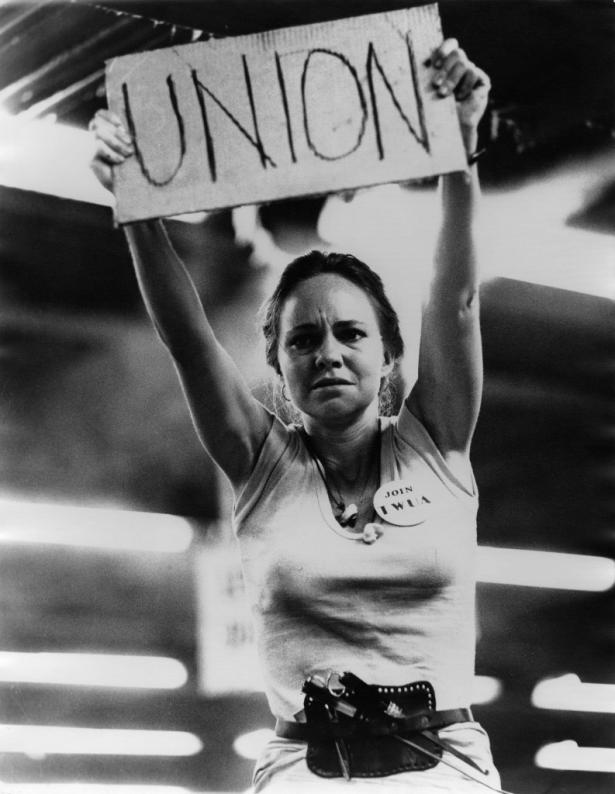
How does the actual location help to add conflict to the scene? Is it a recurring one in the story, and if so, does it gather meaning each time we return, as in Emily Blunt’s apartment in Sicario or the mill floor in Norma Rae? Do we worry that Martin Sheen’s mission in Apocalypse Now is “off the books” when it takes place at a private residence rather than an office?


So many crucial scenes that mark the emotional movement of Sally Fields's character happen in the mill, including this famous one.
 

Think about the contrast in the first act of The Godfather—what goes on in the Don’s office vs. what goes on outside at the wedding. This is the epitome of how to use contrast of public/private. Is a scene more or less intimidating if anyone else is there? Is it more or less romantic if it’s public vs. private?


3) ARE YOU USING ALL THE POTENTIAL ELEMENTS OF THE SCENE TO THEIR BEST ADVANTAGE?


Here are most of the elements which are available to use in any scene:


Primary Characters

Secondary Characters

Tertiary Characters

Landscape/Physical Setting/ Weather

Physical Details/Size of setting/Objects, etc.

Dialogue

Sound/Silence

Color

Primary Physical actions/events

Secondary Physical Actions/events

Background Physical Actions/events


Often as writers we fail to take advantage of all the elements that can elevate and dramatize the material.


It’s amazing how much an object—like the bag of bread in Michael Clayton or the spacesuit helmet and whiteboard in Arrival—can layer and deepen a scene. 


Tertiary characters can mean everything, too. Think of how much the “I’ll have what she’s having” line makes us remember the deli scene in When Harry Met Sally, or how the fact that Terry and Charlie forget there’s a driver in their cab leads to Charlie’s murder in On The Waterfront. Behaviors in the background can make scenes feel more dangerous, more claustrophobic, more exposed, more hilarious.


Rob Reiner's Mom steals this scene with her one and only line.
 

Weather can also work for you. Rain is often used for painful emotional scenes, but if the tone of your piece is ironic, then bright, painful sunshine may serve your purposes better. Obviously, the heat and humidity in Body Heat helped create the atmosphere of corruption in that film. Think of Fargo, where the weather is a character. The rain and mud in Don’t Look Now makes the inciting incident more horrible.


The "heat" is on and makes all the difference in Body Heat
 

And sounds can add immeasurably to a scene—think of the how the insistent warning signal in Alien and the iron lung in The Verdict create tension and emotional movement in the characters.


So, next time you are going back to your scenes, be sure you are making the most of them.


WENDALL’S upcoming Cheap Trills appearances:


READING AND SIGNING

Sunday November 5th at 2pm

BOOK CARNIVAL

348 S. Tustin St.

Orange, CA

https://www.annesbookcarnival.com/events/


INTERVIEW on Baron R. Birtcher’s WRITERS BAR PODCAST

available November 10 at https://www.facebook.com/WritersBarPodcast


Cheap Trills is now available here: https://amzn.to/3PVPuc1


--Wendall


Thursday, June 1, 2023

Stumbling Across the Tightrope of Disbelief

Wendall -- every other Thursday

As I was proofreading my latest book, I fell into the habit of listening to stand-up comedy specials in the background. It made me consider the boundaries of comedy in the modern  landscape. So, I decided to revisit some thoughts I wrote several years ago about pushing the limits of believability, and screwball comedy, in a mystery. 


Comedy - gliding or colliding in Charlie Chaplin's 1916 film, The Rink.
 

Suspending our disbelief has become a national pastime. While it can be alarming in real life, Coleridge’s concept is usually something fiction readers embrace. But where’s the line between delight and cognitive dissonance, between a gasp and a guffaw, or in my case, a loud, sarcastic “Pleeeease,” or “You’ve got to be kidding,” snorted across the living room?

On the surface, fantasy and sci-fi may be in more obvious need of our psychic largesse, but mystery novels require their share, particularly if they involve weekly corpses in a sleepy seaside town, sleuthing kittens, coffee roasters who put the FBI to shame, or for that matter, justice.


Is the justice served out in traditional mysteries something that belongs in a fantasy novel?

Despite its body count, I believe our genre is a hopeful one. Crime novels are a place where wrongs are occasionally righted and characters—however flawed—can win, or at least have a shot at redemption. So it’s more important than ever not to betray our readers by pulling them out of the story. Where is that line we can’t cross? How much leeway do we have?

My conclusion, which is certainly up for debate, is a lot.

Successful writers across the genre push the bounds of believability all the time. Take Lee Child’s Jack Reacher. Can he really keep a toothbrush in his pocket while obliterating eighteen bikers? Can he actually find clothes that fit perfectly in the middle of nowhere, every single time his are dirty/bloody, when I can barely do it with an entire mall and the internet at my disposal?

Of course he can, because Child made sure Reacher was larger than life from the start—in every novel he accomplishes things which would seem impossible for a normal person. And because his wardrobe, or lack thereof, brilliantly supports and illuminates his restlessness and the impermanence of his life, we don’t care that it’s unlikely every small town surplus store carries khakis for giants.


The immortal Rex.


Janet Evanovich offers us the world’s oldest hamster—Stephanie Plum’s Rex. What is he, thirty? Who cares? I hope he lives to be a hundred. Stephanie’s been through enough.

As a reader, I will put up with a certain amount of coincidence, a couple of “wait a minute, didn’t she’s?” and some leaps in logic, as long as I’m connected to the characters and the book feels emotionally truthful and consistent with the tone the writer established in the early pages.

As a writer, though, I’ve struggled to determine how much artistic license writing a “zany” mystery gives me, when it comes to the details of plot and character. I started out as a film writer, operating in a realm where nothing was expected to be realistic, but are the rules different for novelists? Do comedies get a pass hard-boiled books don’t? Or are the rules the same for any imaginary world?

In my particular case, my first novel, Lost Luggage, had an amateur sleuth in Cyd Redondo, but a zanier tone than most traditional or cozy mysteries. So I turned to my inspiration--screwball film comedies--for a working "logic threshold."


Is there a believable moment in this movie? Do we care?


How did the whole leopard thing really work in Bringing Up Baby? Did Katherine Hepburn’s Susan Vance have a leopard litter box the size of a bathtub, off screen? Would she really wear a floor-length chiffon peignoir with claws around? Did it matter? I embraced every silly moment of that film, because writers Hagar Wilde and Dudley Nichols set up Hepburn’s character to repel logic from her first line of dialogue. And because it’s the tension between what is happening on screen and what should reasonably be happening which makes the film a classic.


The Professors and the Showgirl. Ball of Fire (1941).


Would Garbo’s Russian bureaucrat in Ninotchka actually wear that ludicrous hat, or would eight bachelor scholars take in a gangster’s moll in Ball of Fire? If Billy Wilder and Charles Brackett were writing it, absolutely, because they gave us a beautifully crafted “suspension bridge” from the first moment of both films, making their characters believable in all their glorious unreality.

When Preston Sturges opens his script for Easy Living with a Fifth Avenue millionaire’s mink coat landing on broke heroine Jean Arthur’s head, we have no problem believing she will unwittingly meet and fall in love with the millionaire’s son. We know right away we’re in a world where no coincidence or happy accident is too great.


One of Preston Sturges's early scripts.

Still, as I’ve struggled throughout my series to maintain the tone one reviewer kindly called “enchantingly ridiculous,” I'm always wary of the line which might push it into the merely “ridiculous.”

In the end, it came down to listening to my character’s internal logic to make sure all my comic set pieces unfolded in a way that was believable for her and for the tone of the series. I found it also helped to try to keep up a relentless pace. That’s the true genius of the screwball comedies of the 1930s and 40s—their pace doesn’t leave the audience time to question or ponder. So that’s what I’ve tried to do in the series to date—write Cyd’s true, eccentric nature, as fast as I can.


Will readers believe Cyd, who can't swim, will survive this drop?

Whether readers buy her lowering herself on a rope—with her carry-ons—from a helicopter onto a cruise ship, preserving blood from a corpse in a travel nail polish bottle, rescuing endangered songbird eggs with her balconette bra, surviving a thirty foot drop from one infinity pool into another, or defeating the villain with her intimate knowledge of the way wheelchairs work, is always something I wonder, and worry, about.

How do you “cheat” logic or push believability in your novels and, as a reader, where do you draw the line? 


--Wendall