Showing posts with label Mystery Writing. Show all posts

Friday, April 17, 2026

Signing My Life Away


Sujata Massey 


Stacks of books, sharpie pens, a microphone. A sea of empty folding chairs—and a slight rush of nervous energy.

This scene is a cliché for any author who’s been fortunate enough to have a bookseller invite you sign books.

I count myself very lucky to see whatever number of seats the bookseller has set out filled with people. But a bookseller friend said to me that publicists for mega-selling authors sometimes require a bookseller to be able to offer seating for 200 or more. Hence, the Instagram reel of the 1500--person audience in Brooklyn Center, MN for Abby Jimenez, a popular romance author with a new book, The Night We Met. What I could see of the event was more akin to what I hear about Taylor Swift concerts, and I am going to bet the fans received books that had been signed in advance. How else could it be done? Three cheers for any author who can get that many people to assemble for a book launch! 


The first book signing I remember attending was back in elementary school—probably fifth or sixth grade. Susan Cooper, the seminal British author who wrote fantasy novels for children from the 1960s onward, was speaking at the College of St. Catherine in St. Paul during her national tour for one of her books—my likeliest guess is it was The Dark is Rising, her most famous book in the series that is still captivating readers today. During my childhood, Susan Cooper was my dream author, a woman from my birthplace of Great Britain who used legends and lore from Wales and King Arthur to develop her haunting series. We were reading this Newberry Award winning novel while under the age of 12, although I notice that her books are now classified as 'young adult.' In the crowd at the college, I recall only adults being there. I felt wise beyond my years and still am grateful to my elementary school librarian who thought I might like to go and asked the parents of me, and a few other friends, 

In the twenty-first century, faculty members are no longer allowed to take students in their own vehicle to off-campus events. But in the 1970s, people ha more freedom. And while I regret that the kind librarian's name is forgotten, I still remember her and am grateful for this early experience meeting a literary superstar. Susan Cooper, who was around forty at the time, spoke quite warmly to us. I don’t remember if we bought any books—probably not, because my paperback copy of the book (which I’ve carried to my adult home, after all these years!) is dog-eared and unsigned. We children didn’t know what a special opportunity this was—to have a signed book by a writer we loved, and who at the age of 90, is still a perennial in bookstores. 

My next experience with a fiction author came about ten years later. I studied as an undergraduate in the Johns Hopkins University writing seminars, a department different from English in that we Writing Sems majors did read novels, but we were also expected to learn from working authors of all sorts—poets, science writers, journalists, and yes, novelists. Martha Grimes, the celebrated American author based in Washington DC, came to the campus for as a visiting professor for the spring semesters of both my junior and senior year. 


Martha Grimes looked like this during my college years


Every Thursday afternoon, nine other students and I sat around a long table, not quite realizing she was on the New York Times bestseller list, right at that moment, and probably had a lot of choices of what to do with her time. learning from one of the masters. And at the end of the semester, she presented each of us with her latest book, signing it herself with a personal message. “I hope you get across the effing lake” she wrote to me, a reference to the implausible-sounding plot point in my mystery story submission that she critiqued for the class. Now I think how generous she was to sign and gift her reader copies with us. I treasure this signed book almost as much as what she taught me about the feasibility of crime fiction as a bona fide career. 

When I began struggling with the craft of my own mystery writing a decade later, one of the first signings that I recall was that of the late M.C. Beaton, when she visited Mystery Loves Company Books in Baltimore in the 1990s. Beaton is another British writer well known for her humorous Agatha Raisin and Hamish Macbeth series, as well as more than 100 romance novels, most of them under her real name, Marion Chesney. I attended with my friend and mystery maven (heck! she designed this website!) Susanne Trowbridge, who was close fwith the store owners, Paige Rose and Kathy Harig, who sadly are both deceased. I remember feeling shy at the event, but knowing that because I was an adult, I must say something to this author who had amazed me with her deft, humorous hand. It was a small but enthusiastic turnout, typical for the tiny store, one of those places where books are piled up everywhere and cats wind their way through your legs. Ms. Beaton was quite agreeable, and I remember thinking, I can’t fathom ever finishing my own manuscript-in-progress, selling it, and having people hear enough about it that they'd take the time to meet me. 


“You’ll have your first signing here,” both Kathy and Paige promised me, separately, so I knew it would be true--if Ionly I could finish and sell my book.  I kept going to book signings, I joined Sisters in Crime, and I kept writing. In 1996, I signed a contract for my first mystery, The Salaryman’s Wife. Kathy Harig read the galley that HarperCollins sent the store and told me it was good. What a relief it was—and from that point on, I was in the book signing world, receiving invites from stores I'd never heard of, and badgering the publicists to ask after ones in big cities, like New York and San Francisco, that I dreamed about. Fortunately, the 1990s was a time when female-centric mystery was booming, the economy was good, and tours were a possibility for writers once their books were coming out in hardcover editions.  Yet for many years I would go on tour, sitting in my economy seat on the plane with my throat closed, thinking the whole journey was unknown and could very well be disappointing. Who was I to have a signing when there were Martha Grimes and Susan Coopers in the world? These fears have subsided as I've built two series, and audiences also show up because booksellers themselves are increasingly sending email newsletters to their readers about upcoming events. 

Not all signings take place at independent bookstores. Sometimes events are scheduled in place where there’s a large captive audience. This includes mystery fiction conventions and conferences like the Association of Writers and Writing Programs, a giant writing extraganza where I was featured with my longtime mystery writer friend Laura Lippman, with our interview conducted by our new friend, the suspense novelist Angie Kim. 

During this last tour, I’ve spoken at stores with crowds as small as four and large as sixty-plus. I know that the store that might not get a lot of audience for me one night might simply choose to ask you to sign as many books as if there had been dozens--thus ensuring the books stay at the store, until they are sold, something quite generous to do in a business where profit margins are very tight. There are also a few stores that have voracious readers out of state who want signed books mailed to them. As I see it, each store visit is an incredible opportunity for a writer to connect with a reader—and if readers don’t show, you can demonstrate to the bookstore that you're a well-tempered and kind individual who appreciates their efforts. 

I’ve grown to feel I’m holding a serious responsibility at a signing. I’m not there to be promotional, despite a tour being a form of book promotion. Being a wee bit nervous can be helpful: it pushes me to remain sharper and more aware of what I hope to communicate. But truly--there's no need for a witty or profound speech. If I read a bit of the ew book, it allows people to know if they might want to read it. The coup de grace  is to allot plenty of time to receive questions. The most typical questions I hear are: why did you make your protagonist a Parsi, what’s your writing process, how do you do your research, and will any of your books ever be made into a movie? I hope is to satisfy the queries candidly without revealing spoilers. I also aim to share my particular experience of becoming (and staying) a writer, because I know that amongst the folding chairs, there always sits an individual who is quietly working away at their own manuscript. 

And isn't it wonderful they--the readers, writers, and the curious--have a place to come? The act of bookstores opening themselves to hosting events is akin to creating a literary picnic gathering in a town green. Whether or not an attendee buys a book, they're taking part in an impromptu community meeting that is about . . . imagination.A writer's, and their own. 


I came to Laurie R King's book signing in California


When I moved to Minneapolis in 2005, I was lonely the first few years. I really missed my friends from Maryland, DC, Virginia and Pennsylvania. I had felt so connected--and now I was living in a city that was so different from my childhood experience. The only solution to my social boredom that I came up with was visiting the city’s famed mystery bookstore, Once Upon a Crime and introduced myself to its owners at the time, Pat Frovarp and Gary Shulze. They already had my books on the shelf and became fast friends. I kept shopping at the store and attending events they hosted like the monthly Twin Cities chapter of Sisters in Crime meetings. My circle slowly widened, and I became part of a writing group (hello, Stan Trollip, one of the members!

I also attended signings for out-of-state authors coming to sign their latest books. Cara Black and Libby Hellman are both mystery authors who I didn’t know very well during my early Baltimore years--but I went to their signing to hear them talk about their work, and to buy their books to ensure Pat and Gary made some money that night. The bookstore seats were completely filled, making the authors happy. Cara and Libby then invited me to join them for dinner at a nearby pub, and the three of us formed an ongoing creative and supportive relationship that endures. After I moved away from Minnesota and transformed back into a Maryland author, Minnesota became a very important book tour stop. So in 2019, when I toured to St. Paul, the great mystery novelist William Kent Krueger showed up to 'welcome me back to St. Paul.' Things had come full circle.


William Kent Krueger's St. Paul welcome


Speaking of writer friends, it's now becoming a bookstore strategy. Many booksellers like to promote signings in which one writer (a local fixture who's not on tour) interviews an author who is on tour. This tandem work takes away the pressure of a tired writer repeating a stump speech, but rather answering surprising questions and going on spontaneous tangents with their interviewer. Readers are thrilled by natural conversations featuring real, unscripted moments between people. When I'm in this role, I read the book ahead of time, prep questions, and ask the writer if there’s anything in particular they love to talk about. During The Star From Calcutta book tour, I was quite grateful for the interlocution assistance from writers Vera Kurian in Washington, DC, Dan Fesperman in Baltimore and Ritu Mukherjee in San Francisco. Doing it all by myself, every night, when my day typically started with an early morning flight can be wearying. The antidote is  knowing one's night has been organized by the interviewer, and all I have to do is answer questions. 


Readers at the Raven Book Store in Kansas


Barbara Peters, owner of Poisoned Pen, and Naomi Hirahara


It seems a shame, but inevitable, that most publishers are curtailing authors book tours. I understand that sending authors to places that involve plane travel, road transportation and hotels is quite expensive, and the return on that investment is uncertain. I am so grateful that my publisher, Soho Press, listened to me when I spoke about the importance of Minnesota and Wisconsin, and the West Coast, as well as all the spots I can easily drive to in my area. And during this last tour—as I grasped the hands of customers who had demonstrated a real sense of caring about the characters in my books-I also felt their care for me as a person. 

Although we'd never met before, they knew me. 

And that is quite a gift for someone whose best friends in childhood were her books. 


Sujata has a few U.S. signings left for The Star From Calcutta. She'll share the stage with author Amin Ahmad on Saturday, May 9 at 11 a.m. at McIntyre's Books in Fearrington Village, NC. After that, she'll appear alongside author Kate Hilton in a discussion at the Gaithersburg Book Festival in Maryland at 1:15 p.m. on May 16.


Wednesday, May 7, 2025

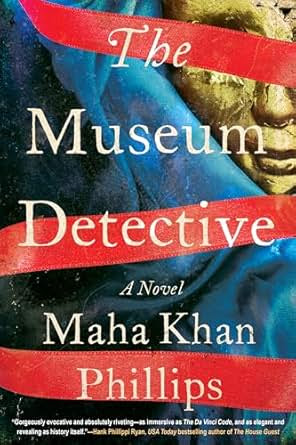
An Interview with the Museum Detective, Maha Khan Phillips

 Sujata Massey and MAHA KHAN PHILLIPS

Maha and Sujata (Jumana Dalal)


Maha Khan Phillips is a seasoned journalist and novelist based in London. She's just been published for the first time in the US with her remarkable mystery novel,  The Museum Detective. This is a suspenseful story set in Karachi, Pakistan, where Maha was raised,  and features a young woman archaeologist, a mysterious female mummy, and a city gone wild with suspense over the find. Karachi comes to pulsating life in this book, which presents a nuanced picture of how women are soldiering forward in the professions and in their own hopes and dreams for good lives. The book's subplot is an incredible story about a missing teenager, and the power of individual courage, and compassionate friends. Maha answered my questions about her book in front of a rapt audience at The Ivy Bookshop in Baltimore a few weeks ago. Here is how our conversation continued! 


Onstage at Ivy Bookshop in Baltimore (Jumana Dalal)


When did your interest in archaeology begin—was it with the news story about the mysterious mummy found in Pakistan, or much earlier?

Oh it was much earlier. I can actually pinpoint it exactly to the 5th grade, when we went on a school field trip to the ancient Indus Valley Civilisation site of Mohenjodaro, dating back to approximately 2500BC. I remember the journey to the site vividly – we flew from Karachi in a tiny plane and landed at an airport built especially for the site. We spent the entire day roaming around and exploring. I stood inside the Great Bath, which was probably used for ritualistic bathing, and I closed my eyes and thought of people swimming there thousands of years before. You are not allowed to step in it anymore but back then, it was magical. I often wonder why I didn’t consider archaeology as a career but it took me years to realise how deeply I loved immersing myself in the ancient world. Today I am an enthusiastic amateur who has been lucky enough to visit some really fascinating places.


Maha on-site (Adnan Noon)


Where else in the world, besides Egypt, are mummies found?

All over the world, though notably, the Indian sub-continent is one of the few regions where mummies don’t generally tend to exist.  As far as I’m aware the Chinchorro mummies of Chile are the oldest known deliberately mummified bodies. Their process involved peeling the skin off a body like a sock, treating the bones, and then reconstructing it with clay, ash and sticks. The skin would then be reattached and painted. Gruesome, but fascinating! In Japan, certain Buddhist monks actually self-mummified through extreme fasting and mediation. The Guanche people of the Canary Islands buried their mummies sitting upright under the ground or in caves. There are mummies in China, in Europe, Siberia, and various parts of Africa.


What is the most interesting mummy fact you found out while researching this novel?

The Victorian obsession with mummies was absolutely bonkers. Despite their horror of cannibalism they were busy grinding up mummy bones into all kinds of potions and lotions and tinctures. From the Middle Ages to the 19th century a substance called ‘mumia’ – derived from mummified bodies - was used across Europe for its healing properties. One detail that really stuck with me was that since the time of the pre-Raphaelites, mummies were used for making pigments. The paint colour ‘mummy brown’ was really popular, particularly during the Victorian era, and it was made from the bones and juices of Egyptian mummies. Amazingly enough it was available for purchase until 1964, when the last manufacturer, C Robertson and Co, announced that it could no longer offer it because it had run out of the body parts.


The Persian Mummy (science.org)


There’s a true story that inspired the Museum Detective. Can you tell us about it?

In the year 2000 police in Karachi arrested two men attempting to sell a mummified body that they claimed was an ancient Persian princess named Rhodugune, a daughter of King Xerxes, one of Persia’s greatest rulers. They wanted $11 million for her. Police confiscated the body, and it eventually made its way to the National Museum of Karachi. Its discovery caused a sensation. If genuine, it would have re-written history, and the mummy would have been priceless. 

A geopolitical tug of war began as a result. Iran demanded her repatriation, and even the Taliban tried to claim that the body was stolen from their land. The international archaeological community got involved as well.

And then Dr Asma Ibrahim, a Karachi-based archaeologist and museologist, proved that the mummy was a fake. She could also have been a murder victim, as evidenced by her broken neck and the blunt force trauma to her body. Once the mummy was exposed as a forgery, global interest vanished. The woman’s body was stripped of its value, and she was eventually buried in an unmarked grave with the help of Asma and the Edhi Foundation. To me that was the most haunting part of the story, how her worth eroded when her body could no longer be commodified. She became yet another unknown victim.


Asma Ibrahim and Maha (MKP)


Who is your heroine, Gul Delani? 

I loved writing the character of Dr Gul Delani. She’s 36, whip smart and unafraid to speak her mind. She is a museum curator in Karachi with multiple university degrees from around the world, and a background in Egyptology, though she knows many different ancient languages. She has returned to Pakistan for personal reasons and she doesn’t suffer fools gladly - she’s got very little time for showboating or museum politics in particular. Gul is intellectually curious and she believes in justice. She also carries the emotional weight of her niece’s disappearance three years earlier, a mystery that haunts her. Gul is more or less estranged from her family, having rejected the life they expected her to lead. Instead she surrounds herself with a quirky, deeply loyal group of chosen family who support her emotionally and help with her investigative pursuits.


fishing boats in Karachi (Kashif Afridi on Unsplash)


You show us life inside a conservative Islamic nation that shows its citizens enjoying trendy styles, modern music and ostentatious wealth. Is this typical of Karachi? How is Karachi different from Islamabad and Lahore? 

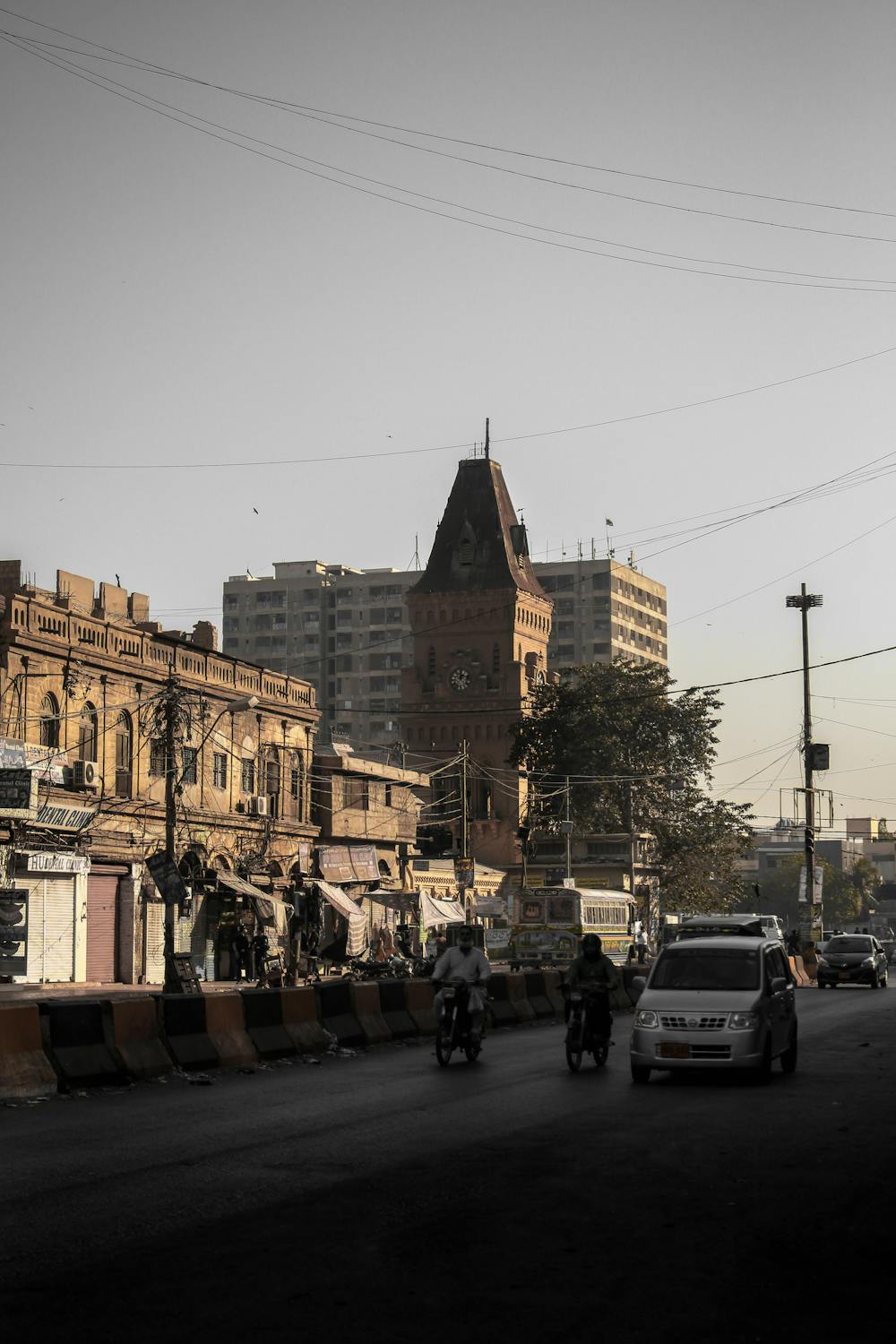
Karachi is incredibly complex. It is a sprawling, diverse port city and economic hub with over 20 million people from all walks of life. In the case of The Museum Detective, many of the characters from Gul’s family are from a wealthy elite - modern, flashy and global in outlook. But Karachi also has a rising middle class that engages with both Eastern and Western cultures and values, and communities that are deeply conservative and even extremist. It is a city of contradictions. I haven’t lived in Lahore or Islamabad but from the few times I’ve visited Islamabad, it’s always felt more orderly and bureaucratic – and, personally, a little boring in comparison! Lahore is much more of a cultural heartland and glorious to visit but less of a melting pot. In Gul’s case, her found family – especially her Goan Christian secretary Mrs Fernandes - reflect Karachi’s multi-culturalism.


Empress Market (Naweeb Khan on Pexels)


You name a fundamentalist political party and have its followers threatening action against the heroine, Gul. How do you keep yourself safe when traveling and doing research?

Well, it’s one of those situations where you’re perfectly safe most of the time, but it can never hurt to be careful. There are some things I just wouldn’t do on my own, for example I would never visit some areas that are quite remote in Balochistan or in the interior of Sindh without a convoy of other people, even though that’s where some of the most fascinating archaeological sites are. But I’ve travelled with friends and with family, with and without security, and honestly, I’ve found the bureaucracy to be more frustrating than any actual danger.

There’s a point in the book where scholars of different nations all try to claim a right to the mummy. Is this something that typically happens when there’s an archaeological finding in Asia?

I think it happens any place where there is a cultural, ethnic or historical overlap, or colonial history or looting of stolen heritage. I live in London now, for example, and I often visit The British Museum and stare at the Parthenon Marbles, wondering how their continued possession by the UK can still be justified. In terms of the Indian sub-continent, I think what’s happened to the narrative around the Indus Valley Civilisation is really interesting -who gets to claim ownership of history. There are modern political narratives in both India and Pakistan that try to take a shared multi-ethnic, multi-regional civilisation and fold it into the idea of a single nation state. Clearly, that’s not reality.


Saddar Karachi (Arfat Jabbar on Unsplash)


Which countries are publishing this book?

To date it’s been published by Soho Crime in the US and is being published this summer by Westland in India and Liberty Books in Pakistan. It will also be published by Shueisha in Japan.

What’s your next book project?

Gul is back! She’s investigating another murder, one that is tied to mythologies around reincarnation, which I’m really excited about. I’m also exploring some elements of faith and superstition, as well as feudalism in Pakistan, and trying to spend some time portraying the younger, edgier side of Karachi as well. I’m not sure how it’s all going to shake out yet but I’m eager to find out!


Maha (Lulu Nana)


Wednesday, July 26, 2023

Nev March's Writing Secrets

It's my pleasure to introduce my good friend, the writer Nev March. We first in the spring of 2018 at the MWA Edgar Week Symposium when Nev was being announced as the winner of the Minotaur Books/Mystery Writers of America Award/ When I blurbed Nev's first book, MURDER IN OLD BOMBAY, I commented on her facility at creating extraordinary historical dialogue and weaving history seamlessly into her exciting story. I highly recommend Nev's books, which deal with issues of identity, race, and moral boundaries. Today, she agreed to share some of her writing secrets. Enjoy!----from Sujata


By Nev March

The hardest thing about writing a novel? For me, it’s keeping faith that it will come out well, that I still possess the ingenuity to craft an irresistible tale. This belief fuels everything. 

If I believe, then I can commit to the narrative, see the story evolve, write characters with depth and spin story twists that astonish and delight. Outlining and research help me prepare, but it’s that belief which propels me on. And some days it’s tattered by doubts. 

After writing three books (plus four unpublished manuscripts) I’m at the opening of novel #4. Along with family moments, travel commitments and promotions, I also “fill the well” by reading fiction and non-fiction, mysteries and biographies. Some days, this feels like I’ve done nothing productive. Writers need to trust in the process, but it’s not easy. In fact, having a great first book means the bar is already pretty high. 


So, what can we do about it?

Journaling gets me started each day with the rhythm of writing. It begins in fits and starts, jerky spurts of forward movement, ideas in bits and pieces, disconnected, tantalizing… That’s the point. In this noisy world of voices, we need to hear our own. And that means stopping, for a while, to listen--within. My first book, MURDER IN OLD BOMBAY, was inspired by the true story of two young Parsi women falling to their deaths from the University of Bombay's clocktower in 1891. The story was told as a warning for us children to be careful, but I always wondered who did it--and why.


As children we are trained to “pay attention.” Our entire academic career of about twenty years is spent listening, absorbing, regurgitating, and sometimes, problem solving. However, pursuing a framework to understand the world does not teach us self-belief. Younger writers may lack world experiences to fuel their writing, but they may also have escaped the damaging criticisms of officious judgement. Perhaps this might explain the wonderful inventiveness of younger writers in the fantasy genre. They can pay attention to their own wild creative imagination because it is uncritiqued by a noisy world. There’s something to be learned from this! How can we “catch the wave” of the unfolding story and apply it to a historical setting?


The narrator of MURDER IN OLD BOMBAY is my character Captain Jim Agnihotri. Invaliding out of the army, he wanted a civilian job. He knew it would be difficult to “find a wife” because of his mixed race, which made him something of a social pariah in 1892 colonial Bombay. As the book opens, he’s reading in his hospital bed: “I turned thirty in hospital, in a quiet carbolic scented ward with little to read but newspapers.” Then he reads a letter to the editor by a young widower. It contains a phrase this soldier empathizes with: “They are gone, but I remain.”


I remain. Nineteenth century letters between friends often ended, “your humble servant,” or “I remain your humble servant,” etc. In the twentieth century we closed letters with “Yours truly,’ and “sincerely.” These are abbreviations of “I remain, yours, truly,” or “With sincere affection, etc.” A century later we omit (and have forgotten) the missing salutations, “I remain” and much more.

Writing in a formal “antique” voice came easily because Captain Jim is a Victorian gentleman, proper, earnest and educated in a time when one’s family name and manners opened doors to society or slammed them shut. Reading classics by Conan-Doyle, Orwell, or Jim Corbett can imbue our language with delicious old-fashioned prose, as well an understanding of the peculiar attitudes of the times!

I find inspiration in curious family lore too. As family historian, I’ve just worked through a dusty box of handwritten letters from 1940s and 1950s. In this time capsule, my father (now 92) is a young man, asking for a few rupees to go on a school trip, and later telling his papa about his first job; my grandpa is a young father writing to his brothers—his carefully reworded drafts (he saved them!) show a diligent, caring and careful man. Some things don’t change—a father worrying over his sons; sisters writing to brothers, mothers sending foodstuffs across cities to their kids. And then I found some mysterious allusions, things I don’t quite understand  . . .  so will their troubles make it into my future book? 

Ha, yes indeed, it’s entirely possible!


Nev March is the first Indian-born author to receive the Minotaur Books/Mystery Writers of America Award. Her debut novel, MURDER IN OLD BOMBAY, was a finalist for six national awards including the Edgar and Anthony, and was an Amazon Editor's Pick and one of the New York Times' "Best Crime Novels of 2020." During July 2023 only, the e-book version is discounted to $2.99. 

The series' second book, PERIL AT THE EXPOSITION, is just released in paperback. It's a mystery set during Chicago's 1893 Worlds Fair, an event occurring during an era she believes planted the seeds for today's political divisions. Her third series book, THE SPANISH DIPLOMAT'S SECRET, is available for pre-order and will be published in Sept. 2023.

More of Nev's articles can be found in back issues of Mystery Tribune, Mystery Scene Magazine, and CrimeReads.


Thursday, March 23, 2023

Trouble in Tucson -- Again


Wendall—every other Thursday


Like my blog mates, I’ve just returned from the Left Coast Crime conference in Tucson, where I was finally able to meet fellow MIE authors Annamaria, Kwei, and Guest of Honor Sujata in person, reconnect with Jeff and the wonderful Barbara Zilly, and see and speak to many other wonderful authors and readers.


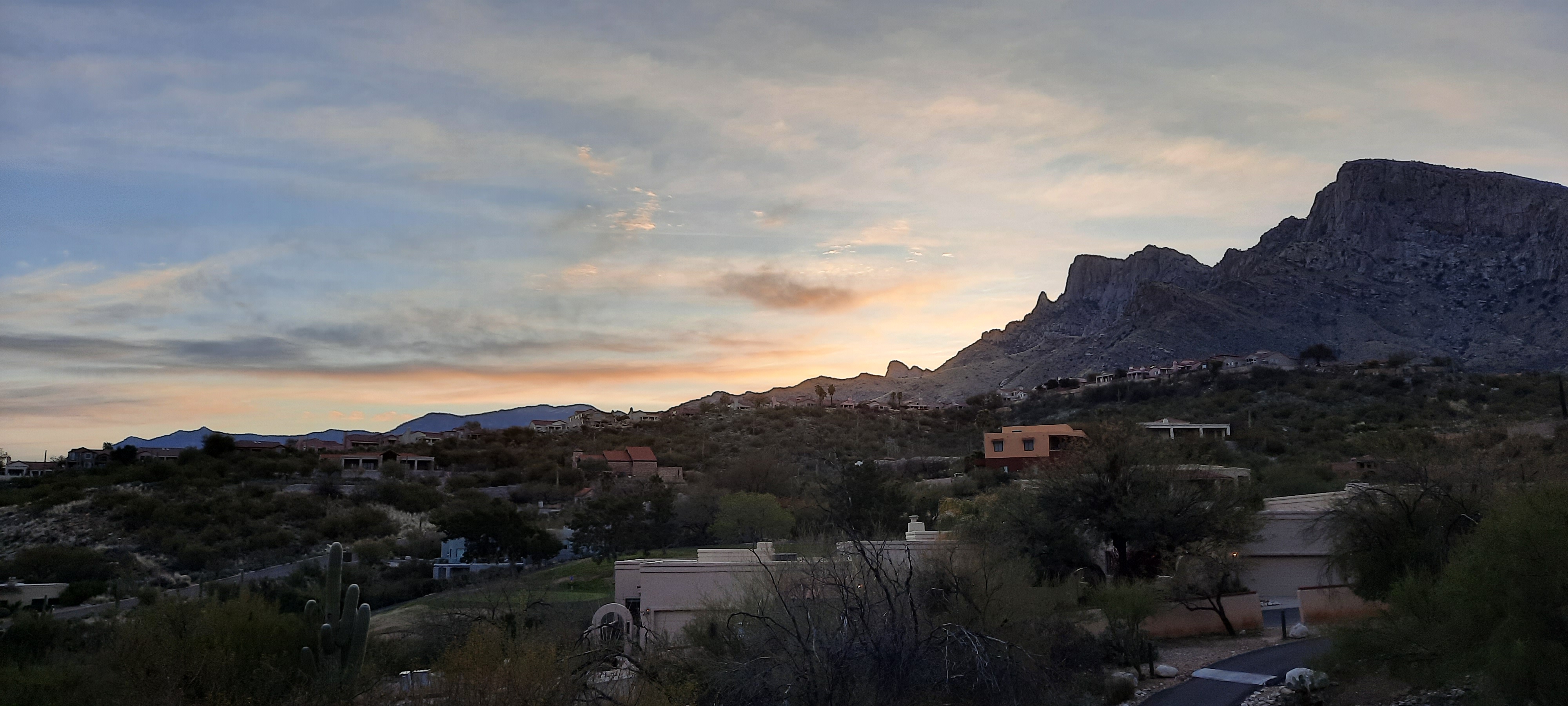
It took place at the El Conquistador resort, which was particularly gorgeous in the early morning and late afternoon.


My first morning walk.


The afternoon view from our balcony.

It made me think about how certain places, certain landscapes, circle back in our lives, gathering meaning each time. Tucson is one of those for me.


My grandfather had four sisters. My Great Aunt Dee was the adventurous one, leaving their Myrtle Beach, S.C. farm for Arizona when she was in her twenties. I would see pictures of her standing by saguaros and laughing. Her sisters would go to visit and come back with inappropriate pictures like this (!), taken in 1962, and tales of chiles and cacti and sky. 


My four great aunts on one of their Arizona/Mexico trips...
 

As a child, I ate those stories up and went to visit as soon as I could. It was my first real encounter with the West and the beginning of my love affair with skies like these.


Behind the El Conquistador
 

Years later, when I was working in the film business, my director boss took on a television movie called Wheels of Terror, with the tag line: “Evil waits. With the motor running.” I didn’t mind the content, because I got to live in a hotel in Tucson and spend every day and night out in the same stunning landscape that surrounds the conference hotel.


I also got per diem, most of which wound up in the cash registers of the extraordinary used and vintage stores on 4th Avenue. I would spend my days off going through racks and racks of 40s and 50s cocktail dresses and beaded sweaters, all available for around five dollars, and lugging dozens of treasures home. I still have this 40s dress from those days and always feel like Irene Dunne or Ginger Rogers when I wear it.


Dress snagged from Tucson vintage shop for a song.
 

A few years later, one of my dear friends asked if I wanted to meet her at the stunning, historic Arizona Inn. This oasis in the city boasts newspapers on wooden holders, ice cream socials, and quiet. It became my go-to writing retreat in the summers, where it was so hot the rooms went on sale. It is truly like taking a trip back in time and if you ever get the chance to visit, do.


Tichnor Brothers, Publisher, Public domain, via Wikimedia Commons
 

So, I arrived last week at the LCC conference already in love, and the grounds of the hotel only reinforced my passion for the place. 


Looking toward the entrance.

 
A view of the pool.

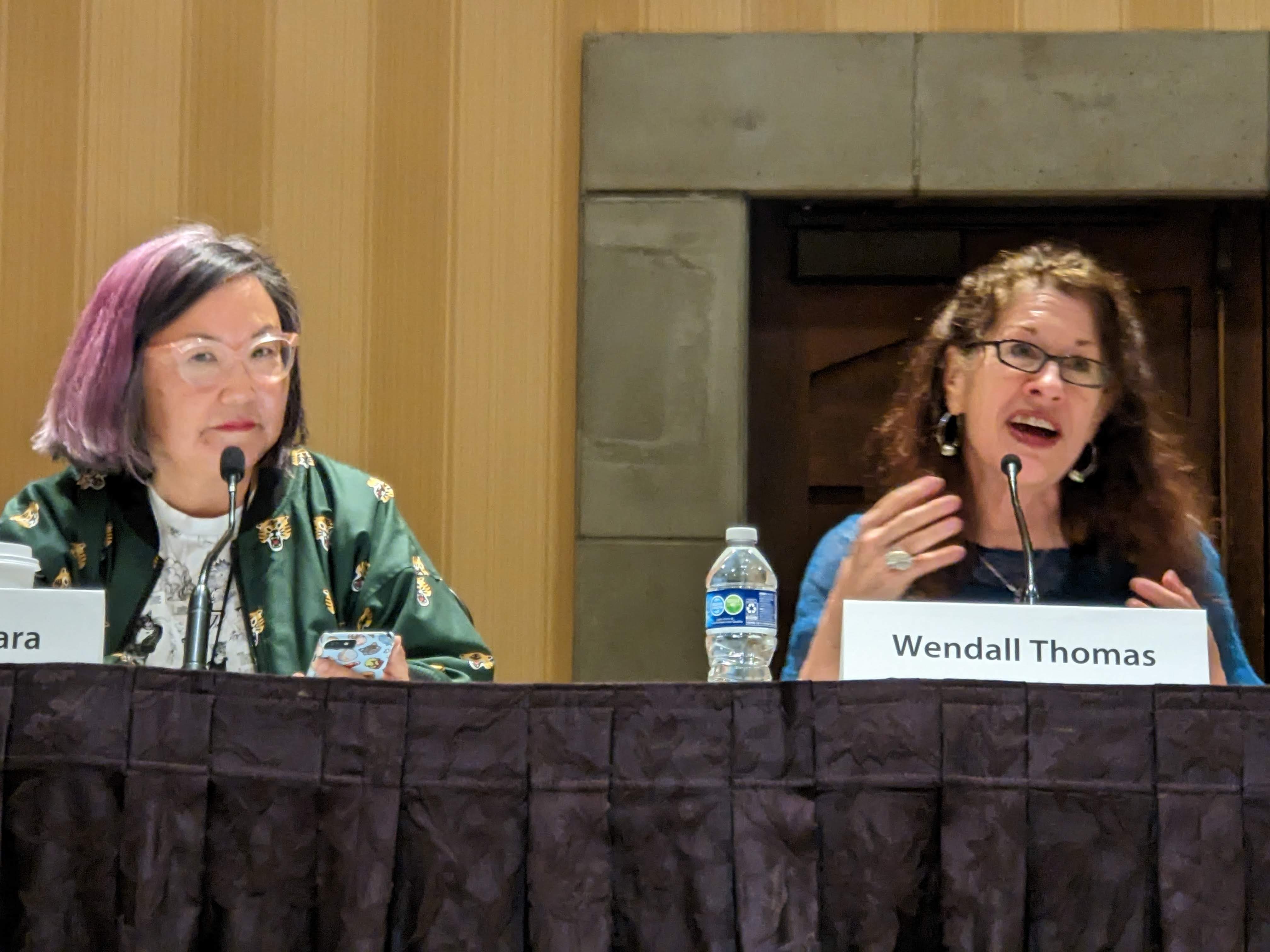
At the conference, I was lucky enough to be on a panel about “Creating Memorable Characters,” with authors Jamie Mason, D.M. Rowell, and Celeste Connally. Naomi Hirahara was a fabulous moderator, even though, as you can see in the second photo, I don't think she believed me.


The "Creating Memorable Characters" panel.

I don't think Naomi's buying it.

I'm sorry Annamaria didn’t get to see enough wildlife. We had a few encounters and it was definitely my first real life viewing of a javelina, as we spotted two at dawn beneath our balcony. We thought at first it might be dogs, but they were peccaries, all right.


Javelinas under our balcony.

Hard to see, but there!
 

Here's a National Parks photo so you can see what they actually look like.


From the National Parks cams.


We also chased a Vermillion flycatcher until it finally landed on this branch.


These gorgeous birds were all over the property.


Tucson. I can’t wait to come back.


-- Wendall


P.S. Annamaria, Kwei, Michael Stanley, and I all have articles in the new issue of Mystery Readers Journal, out today.