Showing posts with label Zambia. Show all posts

Monday, July 1, 2024

My Thirty-Year Love Affair With "Shithole" Countries

 Annamaria on Monday

Here below is my post from January 2018, when then President Trump had bemoaned the immigration "only of people from shithole countries.".  This past Saturday, I commented on Jeff's post, which was a nasty indictment of President Joe Biden's presidential candidacy, based on about 23 seconds of confusion during a debate last week.  In my comment to Jeff, I referred to the post below from January 2018 and characterized it as "funny."  I brought it up because, I thought it was amusing in comparison to the tone of Saturday's blast on Biden,  I harkened back to what Jeff had said of  the words below when they were first posted. He asked me then to take down these words, because what I wrote was too "political" for MIE.  Citing my first amendment rights, I refused to do so.  Fast forward to this past Saturday.  When I compared my past "amusing" post to Jeff's long and critical one, he responded with: "You, humorous? Come-on , Sis, get real."

So here is that post of mine again.  I leave it up to you, MIE readers to decide.  Do you think this six-year-old sketch lacks humour.  Or is it amusing compared that dreadful rant from last Saturday?  Do I have to "get real" and stop trying to be funny?        


Norway is renaming itself in solidarity with the shithole countries


Stan calls him The SCROTUS.  Just this week my friend Ann Daniels gave him a new moniker: His Shitholiness--in honor of this past week's new low in Trump's presidential pronunciamentos: a declaration that some countries are shitholes.  (He would, he declared, rather that we bring in people of better countries, like Norway.)  Thereby, he vilified many of my favorite places.  And he inspired me to show you how happy it has made me, over the past thirty years or so, to visit sixteen of our sacred planet's marvelous, splendid "shitholes."

Take a look a these photos, arranged by continent.  Here they are--my favorite places that are NOT Norway:

Argentina


Bolivia


Brazil


Cuba


Ecuador


Paraguay

Jordan


Turkey


Botswana


Egypt


Two of the smiling men in this photo are of Norwegian descent.  Neither one is
wishing he had gone to Oslo instead of Cairo


Kenya


Morocco


Namibia


South Africa


Tanzania


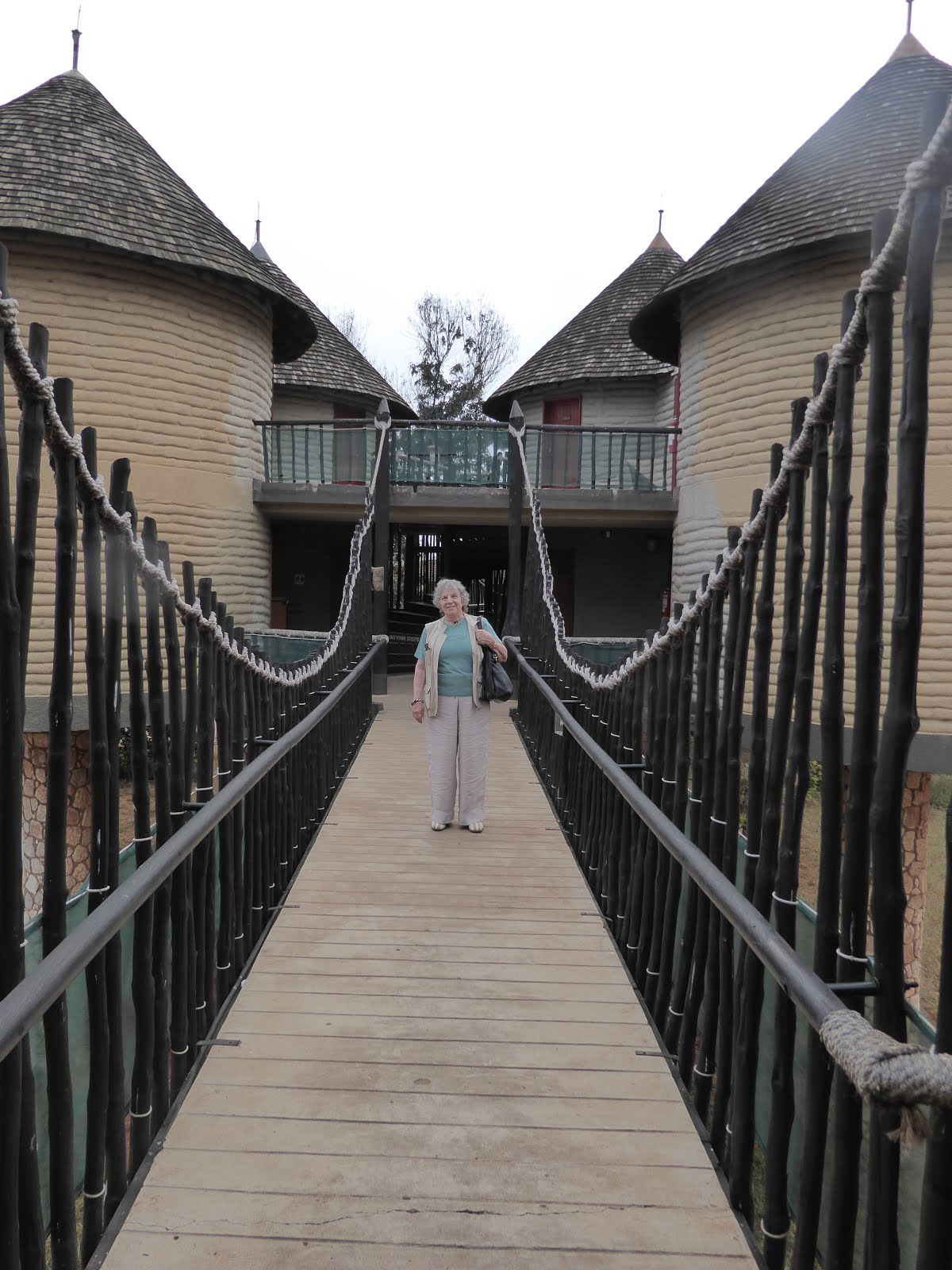
Zambia


I set out here. not to try, with my photos, to prove how wonderful these countries are.  Many photos better than mine are readily viewable on the Internet.  I want to show you how happy these places have made me and my friends.  All those smiles come from being in beautiful places where we found fabulous sites and great people.  True the citizens of the shithole countries are not all tall and pale like Norwegians, but I found the them to be fun, funny, warm, welcoming, and brilliant.

His Shitholiness is famous for not stopping to think.  But if we do, we will remember that Norwegians were the most dangerous, violent, destructive immigrants in human history.  In fact, one might conclude that they invented terrorism.


Just sayin'


Wednesday, February 16, 2022

Is China Colonizing Africa?

Wed--Kwei 


In 2013, I wrote a column in FPIF called Ghana’s Chinese Gold Rush. I was fascinated and alarmed by the migration of thousands of Chinese people to Ghana to illegally engage in small-scale gold mining. Researching for my novel GOLD OF OUR FATHERS (GOOF). Incidentally, in GOOF, a Chinese miner is found dead buried in gold ore.  

I was in Ghana to witness first-hand the destruction of the environment that invariably accompanies any kind of extractive industry, whether it be oil, gold, coal, or something else. Large Chinese excavators dig up the earth to uncover, hopefully, gold ore, which is washed and processed for the glittery metal. On their departure from the sites, none of these miners ever back-filled the pits they had dug.


Woman and child walk past mine abandoned by illegal Chinese miners in Ghana
Woman, child, and dog, walk past an abandoned alluvial mine (Photo: Kwei Quartey)

Small-scale mining (SSM), also called alluvial mining, is different from the large-scale mining of multinational companies like AngloGold Ashanti, and is technically illegal for foreigners to practice. But leaving aside SSM, China now plays a major role in the building vital infrastructure in Africa On my last visit to Accra, the capital of Ghana, I noted a China-backed port-construction project in its early stages at the beachfront.

An arch marking the beginning of a new port in Accra Ghana with the ocean in background
Site of future Chinese-built mega-port in Accra (Photo: Kwei Quartey) 

Chinese companies also built Ghana’s rather impressive gray stone edifice that houses the Ministry of Defense.

Whether China is Africa’s new colonizer is the subject of quite some debate. The NYT Magazine took up the topic in 2017, but there are scores of other pieces on the topic. Howard W. French’s influential book, China’s Second Continent, which I’ve read from cover to cover, examines the role of China in multiple African countries. But nothing demonstrates the influence better than the graphic representation of China’s influence in Africa and the indebtedness of the respective nations to China. Some of the countries most heavily invested in are the same nations with heaviest debt to China. One important example of that is Zambia.

Chinese investments in Africa and indebtedness of African countries (Source: @samramani


The case of Zambia
The country of Zambia, marked with a star on the map, is at the crossroads of Central, Eastern, and Southern Africa. Significant Chinese investment began in Zambia in the 1990s after the privatization of the copper mining industry. Not only is Zambia rich in copper, which the Chinese really need, but it has cobalt and lithium. The Chinese enjoy advantages in Zambia that would be impossible to attain in China, like cheap labor and a whole lot of land.

Zambia’s Chinese presence is unmistakable and even jarring in a large city like the capital, Lusaka, where Chinese signage on buildings often dwarf the English equivalent, where hotels and stores have Chinese names, and where some stores cater specifically to Chinese tastes. It’s reminiscent of the postcolonial era in Ghana when Europeans and Americans shopped only at certain stores.

China famously doesn’t let a silly thing like environment get in the way of their digging up or building up. Just take a look at the picture above--destruction of the landscape is not an issue, nor is pollution of rivers with toxic runoff from mining sites. In Zambia, a Chinese development company called Kingsland is building a massive retail and housing estate on a forest reserve that was previously protected by law. The law seems to have magically evaporated. Also on that “protected land,” the Chinese have constructed housing for the Zambian Air Force. Do I hear the words, “an offer we couldn’t refuse?”

But no Environmental Impact Assessment was done before construction of the housing estates, and now, sewage from the development has been dumping into the nearby Chalimbana River.


Chinese v the West
A colony is a territory belonging to or under the control of a distant nation. Is this the case with China in Zambia? Two stories repeatedly denied by the Chinese is that they have seized Uganda’s Entebbe Airport and Zambia’s Kenneth Kaunda Airport because the respective countries defaulted on their loans. If these rumors are true (the governments deny them), then this is a sort of tyranny and domination that smacks of colonization.

Arguments go back and forth about whether the “old” colonizers like the British and French were any better, or worse, than the Chinese. But the answers are not that clear-cut. It’s usually said that China goes into African countries without making demands on Africans to reform human rights the way the West does. The Chinese are mostly interested in relative political stability of the “colony” but only in regard to whether erratic politics may hamper the commercial endeavors, not because of some lofty ideal.

But in all colonization, modern or ancient, there is a lopsided codependence between the colonizers and the colonized, or owners and workers. The former depends on the latter to do the actual work of production, and the latter depends on the former to have a job and get paid. China often builds much-needed structures in rural areas that would otherwise never have received them. In Ghana, for instance, a village chief admitted to me, sure, the Chinese did come and bulldoze some of our farmland, but they also built us a functioning borehole. That made a big difference for villagers, who up until that time had had to take a 2-mile walk to and from a water source, sometimes a river. Now the village has clean water.

The Chinese also build schools and hospitals. Still, though, they remain firmly in the executive and owner position over subordinate Africans. This is a very colony-like situation where the classes are sharply drawn. But so what? some Africans say. We never had jobs until the Chinese arrived. The ultimate question for the Africans is, how much are you willing to lose?

In a YouTube video, a Chinese man asks a Congolese, “You were governed by the Belgians for so long. You should’ve learned how things work.” There, I agree with the Chinese man, but possibly for different reasons. Africans should have learned by now that when invaders arrive and start taking your s**t, no matter what the invaders assure you, the African side will never come out on top.

The bottom line
Whether China is a “colonizer" might be a semantic issue. The term seems to be slightly off the mark and I’m hard-pressed to find a suitable replacement. Settlers? Invaders? Infiltrators? Transplants? Ctrl-Cmd-Del? One term I think comes close is “uber-exploiters.” Watch this video by France 24 about the Chinese in Zambia, and you’ll see you how apt that characterization is. At the end of the day, the Chinese in Africa are very much there to stay.

                                                                            ~~~

Thursday, February 18, 2021

More food from Africa

Thursday - Stanley

Kwei made me very hungry yesterday as I read his blog about West African food. Maybe I can whet his appetite and yours with morsels from Southern Africa.

Southern Africa, from a gastronomic perspective, has benefitted from being on the major trade route from Europe to the Far East and back. Over the years, citizens of many European countries decided to make the area their home. During the colonial era, Southern Africa had colonies controlled by Portugal (Angola and Mozambique); Germany (Southwest Africa, now Namibia); The Netherlands (now parts of South Africa); and Great Britain (parts of South Africa, Lesotho, Botswana, Eswatini (used to be Swaziland), Zimbabwe, and Zambia). 


There was also a large-scale influx of people from India, Malay, and China, usually as cheap labour or slaves.

The Black population of Southern Africa originally came from the rest of the continent, mainly West Africa. These peoples have their own cuisines, although not as diverse as the other influences. 

When I grew up under apartheid, my family's meals were mainly British in origin: roast chicken, beef, and lamb, fish on Fridays, savoury mince meat, bubble and squeak, over-cooked vegetables, lots of potatoes. The only nod to other cuisines was an occasional curry, usually chicken. 

Today, there is a truly Southern African cuisine that reflects the diversity of all the people who live there. I think the country has the best value for money of anywhere when it comes to eating and drinking. It's worth a visit just for that. (Excellent wines can be bought at restaurants for less than $20 a bottle; and most restaurants allow you to bring your own bottle, sometimes charging an exorbitant $3-$5 corkage.)

Our Detective Kubu loves to eat, and we put together a KUkBUk with some of his favourite recipes. I'll share some of them here, as well as some others that he doesn't know about. I've appended some of the recipes at the end of the blog.


Drinks

In addition to the full range of alcoholic and non-alcoholic drinks found in most places, there are three I haven't seen elsewhere.

Brown cow: half/half Coca-Cola and milk. It is very refreshing.

Steelworks: shot of kola tonic, shot of lime juice, topped off with ginger beer and a dash of bitters. Kubu's favourite drink (non-alcoholic).

Catemba: half/half red wine and Coca-Cola - from the Portuguese. No thank you!


Main courses:


PAP (pronounced PUP) is made from ground maize (corn). When part of a main course, it is usually cooked so that it is stiff (called stywe pap) and should be eaten with your fingers. It is eaten with meat from a braaivleis (barbeque), dipped into a nyama (meat) stew, chakalaka, or a tomato and onion ratatouille. 

Pap with chakalaka and boerewors (farmer's sausage)


CHAKALAKA is is another very common dish in Southern Africa, which may have originated in the Black townships. It is very much a whatever-you-have-available recipe. One version is at the end.

Chakalaka


BOBOTIE is probably South Africa’s best-known dish. It is a slightly sweet, mildly curried meat casserole. It has its origins in the East and was brought to South Africa in some form by slaves from Malaya three hundred years ago. Even if you do not normally like curries, you will enjoy this delicious dish. It is so easy to make that even Michael can make a delicious meal from it. It also is a versatile dish and one recipe is at the end.

Bobotie


RUMP STEAK WITH MONKEY GLAND SAUCE. Kubu loves steak of all kinds, but his particular favourite is rump. He thinks it is the most tasty and must be cooked medium-rare. He often douses it with monkey gland sauce. 

Steak with monkey gland sauce

Do not be alarmed! It is not made from monkeys. 

There are several stories about how monkey gland sauce got its name. The one that holds the greatest credibility is that it started in the Savoy Hotel in London and was named in honour of a Russian-born French scientist, Dr. Abrahamovitch Serge Voronoff. Voronoff became famous for his treatment to reverse the ageing process in humans – by grafting monkey testicle tissue onto human testicles. He became so successful that he became famous worldwide. Songs recognized his achievement (Monkey Doodle-Do by Irving Berlin); it featured in the Marx Brothers film The Coconut; and even Sir Arthur Conan Doyle had a professor in one of his Sherlock Holmes stories inject himself with monkey-gland extract. 

One of the staff at the Savoy Hotel, Cavaliere Fiorino Luigi Bagatta, went to do further training at the Old Carlton Hotel in Johannesburg and introduced it there. It became a hit and has remained popular in South Africa ever since. Of course, I'v included the recipe.

BUNNY CHOW is South Africa's contribution to the fast-food world. The country has a large Indian population, mainly centred around Durban, whose ancestors were brought there by the British to work on the sugar-cane fields. Of course, they brought their taste of curries with them. Originally sold by sidewalk vendors, it is now available in many restaurants as well. Take half a loaf of white bread and hollow out the middle. Fill with curry. That's it. Eat with your fingers. Originally the bread served as the plate so there were no left-overs, no waste. Today it has become more upscale in many places. If you are in Durban, just order a bunny. It's only outsiders that use the full name.

Bunny chow

Dessert

And to end the meal, try a MALVA PUDDING, a dessert that has its origins on South African farms. 

Malva pudding with ice cream


Actually, after dessert, I like to really end the meal with cheese and crackers and something to settle my tummy.

Recipes

CHAKALAKA 

3 tablespoons (45 mls) cooking oil 
2 tablespoons (30 gms) chopped fresh ginger 
2 tablespoons (30 gms) chopped fresh garlic 
4 teaspoons (20 gms) chopped chili peppers 
1 cup (225 gms) chopped onions 
2 cups (450 gms) tomatoes, roughly chopped 
½ cup (125 gms) green peppers, roughly chopped 
½ cup (125 gms) red peppers, roughly chopped 
2 tablespoons (30 gms) garam masala (or curry powder) 
14 ounces (400 gms) baked beans 
2 teaspoons (10 ml) fresh coriander 

1. Fry the ginger, chilis, onions, and garlic in the oil. 
2. Add the garam masala or curry powder. 
3. Add the tomatoes and cook for 10 minutes. 
4. Add peppers and cook for 10 minutes. 
5. Add baked beans and cook for 5 minutes. 
6. Remove from heat and add coriander. Stir. 

Serve with whatever you want, hot or cold. Goes well with pap, stews, or curries.

BOBOTIE

2 pounds (900 gms) ground lamb or beef 
1 slice bread 
3 cups (700 mls) milk 
4 eggs 
1 medium yellow or white onion chopped 
1 – 2 tablespoons (15 – 30 gms) curry powder 
1 tablespoon (15 gms) brown sugar 
1 teaspoon (5 mls) salt 
½ teaspoon (2.5 mls) ground pepper 
¼ cup (60 mls) lemon juice 
1 tart apple grated 
1 cup (225 gms) seedless raisins 
½ cup (120 gms) slivered almonds 
Several bay leaves 

1. Put the bread into a bowl containing all the milk. Let stand. 
2. Lightly brown the meat in a skillet, breaking up any chunks. Transfer to a large container with a slotted spoon. 
3. Cook the onion in the remaining fat in the skillet until translucent. Don’t burn! 
4. Add the curry powder, salt, sugar, and pepper. Cook for 2 minutes. Add the lemon juice. Cook for 3 minutes. Pour the mixture over the meat. 
5. Take the bread out of the milk and squeeze out the milk back into the bowl. Put the bread with the meat. 
6. Add raisins, almonds, apple, and 2 eggs to the meat. Combine. (If you use your hands to do this, it feels great and you can lick your fingers afterwards!) 
7. Pack the mixture into a casserole dish. 
8. Combine the remaining two eggs with the milk and pour over meat. 
9. Push a few bay leaves into the meat. 10. Cook for 45 minutes at 300 F (150 C). 

Serve hot over yellow rice, with sweet mango chutney on the side. A side dish of thinly sliced cucumbers in yoghurt (a cucumber raita) works well. 

Leftovers are great hot or cold. Kubu likes to put them in pita bread with sour cream or have them as a filling in an omelet. Yummy.

MONKEY GLAND SAUCE

2 tablespoons (30 mls) cooking oil 
½ cup (120 mls) water 
1 cup (240 mls) tomato sauce (ketchup) 
½ cup (120 mls) Worcestershire sauce 
1 cup (225 gms) sweet mango chutney 
4 cloves garlic 
½ cup (120 mls) brown sugar 
3 tablespoons (45 mls) vinegar 
1 teaspoon (5 mls) Tabasco sauce 

1. In a heavy skillet, heat oil. SautĆ© onions and garlic until soft. 
2. Add remaining ingredients, mix well, and simmer for a few minutes. 

Smother the steak with the sauce. Serve with rice or chips (pommes frites). Kubu prefers chips.

MALVA PUDDING

For the pudding: 

1 cup (225 gms) caster sugar 
2 eggs 
1 tablespoon (15 mls) apricot jam 
1¼ cups (285 gms) cake flour 
1 teaspoon (5 mls) bicarbonate of soda 
2 tablespoons (30 gms) butter 
1 tablespoon (15 mls) vinegar 
½ cup (120 mls) milk 

For the sauce: 

1 cup (240 mls) cream 
4 ounces (120 gms) butter 
¼ to ½ cup (30 - 60 mls) sugar 
½ cup (60 mls) brandy, water, or orange juice (brandy is best!) 

To make the pudding: 

1. Preheat the oven to 350° F (180° C). 
2. Sift the flour and bicarbonate of soda into a bowl. 
3. Beat the caster sugar and eggs until fluffy, then beat in the jam until creamy. 
4. Melt the butter in a frying pan. Add the vinegar and milk. 
5. Add the dry ingredients to the egg mixture, alternating with the milk mixture. Mix thoroughly. 
6. Pour into an ovenproof dish and bake for 30 minutes. 

To make the sauce: 

1. Melt all the sauce ingredients together and pour over the pudding when it comes out of the oven.

I like to add a dollop of whipped cream on top.