Showing posts with label Tanzania. Show all posts

Thursday, October 17, 2024

In Praise of Reptiles, Rodents, and things that go Squawk in the Night

Wendall -- every other Thursday

Everyone loves pandas. Everyone loves dolphins. But what about the Visayan warty pig, the numbat, or the long lost gastric brooding frog? 


Numbats are losing their habitat in Australia.
 

Not all of the fifty most endangered animals on the planet are cute –well, numbats are pretty cute—but they’re all vital to their individual ecosystems and to the planet overall and they’re disappearing, if I may misquote Annie Lamott, “frog by frog.”


The gastric brooding frog, who delivered their young through their mouths and held them there, has been extinct since the mid-80s.

 
41% of amphibians are endangered. This one, Leptopeles spiritusnoctis, is threatened in Ghana.

At present, it’s hard to know exactly how many species we are losing. Conservation sites like the World Wildlife Fund, or CITES, The Convention on International Trade of Endangered Species, hazard a guess of 2000 extinctions a year—due largely to poaching, loss of habitat, and climate change—but they admit those estimates may be much higher.


When I first considered focusing on the world of endangered animal smuggling and the broader issue of wildlife extinction in the Cyd Redondo series, I was still woefully ignorant on this issue and a bit embarrassed about taking on such a serious topic, especially in what was essentially a beach book.


Sgt. Ian Knox of Scotland Yard’s Wildlife Crime Prevention Unit put my mind at rest. He was a big fan of the “spoonful of sugar” approach to education, saying a book like mine might make someone ignorant about these issues think twice about buying python boots or real tortoise shell barrettes, or inspire them to join the World Wildlife Fund. 


An evidence room full of confiscated endangered animal parts and products.
 

So he and his team took me through their horrifying evidence room, told me a million stories, put me in touch with the U.S. Fish and Wildlife Service and the various conservation agencies, and the theme for my series was born. I’d never imagined myself writing animals as characters, but remembering the beloved books of my youth like Black Beauty, The Yearling, or The Jungle Book gave me the courage to try.


After spending time with the wildlife agents, I was determined to focus on animals that didn’t normally get attention, animals that might make Cyd, or us, uncomfortable. The other requirement was that the creatures needed to fit in her bottomless Balenciaga bag. 


Cyd carries a vintage Balenciaga bag on her travels.
 

Like my character, I am utterly freaked out by most reptiles, so in Lost Luggage I went for maximum conflict and a real learning curve for Cyd by creating Barry the Madagascan chameleon as her first sidekick. 


Barry, the chameleon.
 

The market for reptiles (as well as many other creatures and their parts) smuggled from and through Africa, from the spurred tortoise to the Madagascan boa to Kasmer’s dwarf burrowing skink, is massive and growing, so I wanted to shine a light on that. As soon as I imagined Barry taking out Cyd’s false eyelashes with his tongue, I was off.


There are so many ways to smuggle reptiles, and not just in their luggage.
 

The choice for Drowned Under was easy, as Tasmania has one of the most famous “functionally extinct” species ever—the thylacine or Tasmanian tiger. The last verified thylacine died in the Beaumaris Zoo in Hobart, Tasmania, in 1936, but there are still “sightings” and groups like the Thylacine Awareness Group of Australia, who are sure there are still Tasmanian tigers in the wild.


The "last" Tasmanian tiger and his keeper.

James and I visited the former site of the Beaumaris Zoo this summer.
 

Even as babies, they’re fierce creatures with very sharp teeth and a strange, keening bark, so I knew keeping Howard the tiger safe, especially in her purse, would make things more complicated and funnier for Cyd, while still offering insight into the world of wildlife crime.


Once I decided to set the third mystery, Fogged Off, in London, I thought it might be time to turn to another misunderstood species—rodents, especially when I happened upon one that was irresistible—the highly endangered hazel dormouse. 


The species had its “fifteen minutes of fame” in Alice in Wonderland, but my eco-enthusiast character, Grey Hazelnut, insists these creatures are underappreciated. “When he’s motivated in mating season, that little guy can jump ten meters. . . They sing to the females at night with this trilling kind of sound. And their pheromones are so strong that humans can smell them.” 


This is how the hazel dormouse sleeps. . .
 

They also sleep curled up with their tails held over their faces and make a distinctive, snuffling snore which is unbearably cute— unless it’s coming out of your purse. Bruce, the dormouse, allowed me to highlight how loss of habitat contributes to wildlife extinction, and how important it is to use Tupperware when you travel.


When I decided on Bali as my setting for Cheap Trills, my choice was easy. Not only is the Bali starling “rock star” gorgeous, but even today, where there has been some conservation progress, they remain the most endangered birds on the island. In 2007, when the book is set, there were only 7 of them documented still in the wild. The more research I did, the more evidence I found of a huge network of poachers, smugglers, and corrupt officials involved the Indonesian songbird trade, so in that book, I tried to shine a light on that problem.


The highly endangered Bali starling.
 

If you are interested in this issue you can go to sites for both of the organizations above, to the Monitor Conservation Research Society, or to TRAFFIC to read more about what you can do to help these astounding and under-appreciated creatures.


--Wendall

Thursday, July 11, 2024

We'll Always Have Paris

Wendall -- every other Thursday

It seems to be a week when everyone is writing about “place,” so here’s an update to a blog I wrote several years ago about the spark of inspiration that starts each Cyd Redondo novel--location.

 I fell in love with palm trees while visiting Florida as a kid.

Travel has always been my passion. And as someone who writes about a travel agent, now it’s also my business.

As a kid, I traveled vicariously through books like Lost Horizons, David Copperfield, Mrs. Mike, The Three Musketeers, The Jungle Book, and my parents’ copies of Dorothy Gilmour’s Mrs. Pollifax novels. As my reading became a bit more sophisticated, I headed to China in The Good Earth, Russia in Dr. Zhivago, and Southeast Asia with Grahame Green. 


I loved traveling with Mrs. Pollifax when I was a kid.

Our family vacations were domestic, but still thrilling to me—Silver Springs and St. Augustine, the Smithsonian, Myrtle Beach, the Smoky Mountains. So, by the time I finished high school, I was ready to hit the road and go as far, and as often, as I could. During my college summers, I waited tables and sang in bars on Nantucket, in Estes Park, Colorado, in Berkeley, in the Florida Keys, and, once I graduated, I headed to Montreal, London, Paris, Ireland, Holland, Italy, and eventually, Australia and New Zealand. 


Me on an early screenplay research trip to London.

Every one of those books and all of those places moved me and influenced the way I look at the world. So, when I thought I might try writing a mystery series, I figured it would be great if the research involved travel—preferably international. When I created Cyd Redondo, a travel agent who'd never been farther than New Jersey, it let me relive the wonder and panic of everything involved in navigating a different culture in an unfamiliar place.


As a writing teacher I’ve always been fascinated by where my students’ stories start. Is it with a concept, with a character’s voice, with a theme, with a scene? I think it depends on the writer and the project and personally, as a screenwriter, my projects had usually started with a character or concept. This time, I had the skeleton for my “fish out of water” protagonist—but before I could really start developing her character and working out the story/mystery, I had to pick her destination.


I wanted the series to be an homage to films like Romancing the Stone, Charade, or Bringing Up Baby, where the characters were off-balance and completely out of their comfort zones. Since Joan Wilder had already been to South America, I needed someplace new. I thought about Cyd’s home in Brooklyn and what might be the most extreme opposite, a place she’d have the biggest learning curve. 


When she was growing up, Cyd uncle made her promise never to let the Verrazzano-Narrows Bridge out of her sight.

 
When the books start, many of her nights are spent at her favorite Bay Ridge restaurant, Chadwick's.
 

I suddenly had an image of her in the middle of a jungle clearing, in four-inch heels. She was wearing multi-colored bracelets from her wrist to her elbow, and, when a man with a gun appeared, she disarmed him with a whack from her bangled forearm while a leopard looked on. It felt like Africa. 


I chose the Selous Game Reserve in Tanzania for Cyd's first safari.


And because she's the Queen of bartering, Karikoo in Dar Es Salaam as her first international market.

I started to research crimes on the continent and was shocked by the extent and horror of the endangered animal smuggling and poaching trade. Cyd, with her snakeskin shoes and tortoise shell barrettes, was not concerned about this issue—yet—so it allowed her an environmental learning curve, and let me place a Madagascan chameleon in her purse. So, once I had a location, everything in the book sprang from there. 


Barry from LOST LUGGAGE.

Now that the series is up and running and I have a handle on Cyd, her family, and her natural habitat, the “where” is always where I start. Until I know where she’s going, I can’t really decide on the crimes, the specific endangered species she encounters, the secondary characters, the ways her character will be challenged, or what she has in her background—and her purse—that might help her survive. Location is everything.


I was lucky in the Australian setting for Drowned Under—I’ve written at length about how I’ve been to and loved Tasmania, the home of the “functionally extinct” Tasmanian tiger. So, it was easy to find the “endangered” piece of the adventure. Once I decided it would be a cruise ship book, that gave me my world and inspired my secondary characters, and I was off.


DROWNED UNDER's Howard the Tasmanian tiger cub.
 

Cyd experiences the Salamanca Market in Tasmania, of course.
 

For my third book, Fogged Off, I got lucky again. By the time Covid hit, I’d already decided to set the book in London, where I’d been a frequent visitor over the years. I’m also married to an Englishman I met on one of my trips, so I could see, taste, smell—and discuss—the city from the desk in my bedroom. 


I'd been to the Savoy Hotel, where Cyd stays in FOGGED OFF, and had a drink in the American Bar there, where a few important things happen. . .

 
And to the Tower Bridge, where Cyd encounters a series of Jack the Ripper guides.

As always, the place generated the content. That book is set in the world of London Walking Tours where Cyd’s client—a Jack the Ripper expert—winds up dead. I had been lucky enough to know two RSC actors who were also London Walking Tour guides and who had often talked about the backbiting behind the scenes which informs that world. Then I researched endangered animals in the UK and, since Carl Hiassen had already taken voles, my first choice, I settled on the hilarious hazel dormouse as the animal in danger of extinction. Everything else came from there.


Me with my favorite London Walks guide, Emily Richard.

 
Of course, Covent Garden Market was a must for Cyd.

Since travel was still dodgy when I began Cyd’s fourth adventure, I wanted to choose a location where at least a few friends of mine had lived and visited. Because I’m lucky yet again, that happened to be Bali. When I realized the timing of the novel (the Cyd Redondo Mysteries begin in late 2006 and are now up to spring 2007) coincided with the huge popularity of Elizabeth Gilbert’s Eat, Pray, Love, I figured most travel agents had requests for Bali trips. 


Cyd's mother falls for the book, and goes behind her daughter's back to book a trip to Bali.


Cyd has an adventure in the Monkey Forest outside Ubud.


Bali Starlings are still highly endangered, but there are more now than there were when CHEAP TRILLS is set, in 2007.

And when I found out it could take at 51 hours and three or four plane changes to get there from Brooklyn, and that the Bali Starling population was down to only seven birds still in the wild in that year, I knew I had the right location for Cheap Trills.


Cyd meets Starling protector, Stu Capistranis, in the Denpasar Bird Market.
 

Travel is back, but when we can’t afford it or find the time, I’m glad there are books to take us to all the places we dream of.


PODCAST APPEARANCE:

I joined host Chad Sutton on his music podcast/YouTube show Aural Mess on July 10, where he and I both made a Cyd Redondo playlist. You can find the YouTube version here: https://bit.ly/3LiSOMp or listen to the podcast version here:  https://bit.ly/3S3WzJv


 --Wendall

Monday, July 1, 2024

My Thirty-Year Love Affair With "Shithole" Countries

 Annamaria on Monday

Here below is my post from January 2018, when then President Trump had bemoaned the immigration "only of people from shithole countries.".  This past Saturday, I commented on Jeff's post, which was a nasty indictment of President Joe Biden's presidential candidacy, based on about 23 seconds of confusion during a debate last week.  In my comment to Jeff, I referred to the post below from January 2018 and characterized it as "funny."  I brought it up because, I thought it was amusing in comparison to the tone of Saturday's blast on Biden,  I harkened back to what Jeff had said of  the words below when they were first posted. He asked me then to take down these words, because what I wrote was too "political" for MIE.  Citing my first amendment rights, I refused to do so.  Fast forward to this past Saturday.  When I compared my past "amusing" post to Jeff's long and critical one, he responded with: "You, humorous? Come-on , Sis, get real."

So here is that post of mine again.  I leave it up to you, MIE readers to decide.  Do you think this six-year-old sketch lacks humour.  Or is it amusing compared that dreadful rant from last Saturday?  Do I have to "get real" and stop trying to be funny?        


Norway is renaming itself in solidarity with the shithole countries


Stan calls him The SCROTUS.  Just this week my friend Ann Daniels gave him a new moniker: His Shitholiness--in honor of this past week's new low in Trump's presidential pronunciamentos: a declaration that some countries are shitholes.  (He would, he declared, rather that we bring in people of better countries, like Norway.)  Thereby, he vilified many of my favorite places.  And he inspired me to show you how happy it has made me, over the past thirty years or so, to visit sixteen of our sacred planet's marvelous, splendid "shitholes."

Take a look a these photos, arranged by continent.  Here they are--my favorite places that are NOT Norway:

Argentina


Bolivia


Brazil


Cuba


Ecuador


Paraguay

Jordan


Turkey


Botswana


Egypt


Two of the smiling men in this photo are of Norwegian descent.  Neither one is
wishing he had gone to Oslo instead of Cairo


Kenya


Morocco


Namibia


South Africa


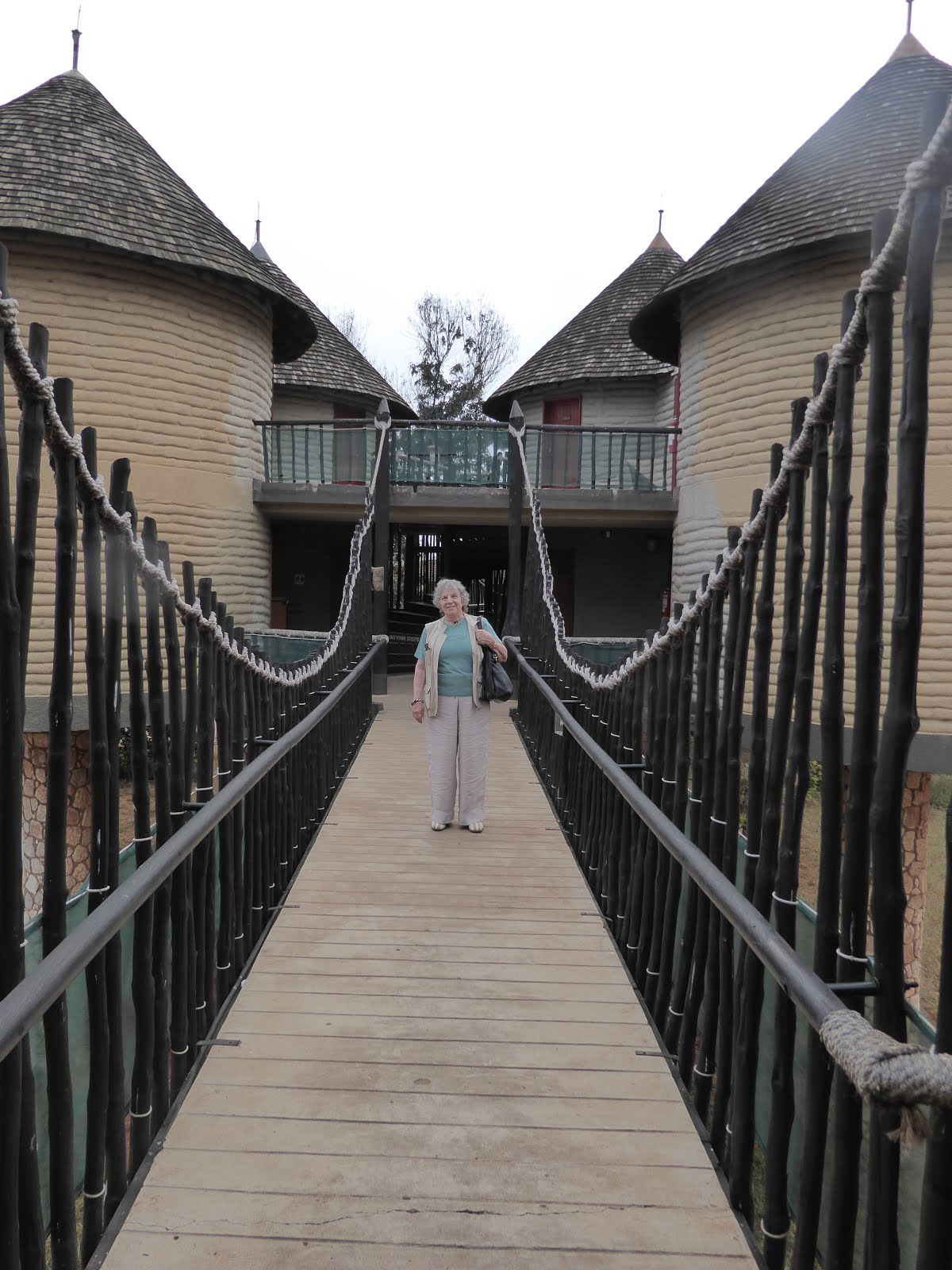
Tanzania


Zambia


I set out here. not to try, with my photos, to prove how wonderful these countries are.  Many photos better than mine are readily viewable on the Internet.  I want to show you how happy these places have made me and my friends.  All those smiles come from being in beautiful places where we found fabulous sites and great people.  True the citizens of the shithole countries are not all tall and pale like Norwegians, but I found the them to be fun, funny, warm, welcoming, and brilliant.

His Shitholiness is famous for not stopping to think.  But if we do, we will remember that Norwegians were the most dangerous, violent, destructive immigrants in human history.  In fact, one might conclude that they invented terrorism.


Just sayin'