Showing posts with label Victoria Falls. Show all posts

Thursday, January 30, 2025

A Big Hand for the Spirits - Interview with Jen Stern

 Michael - Alternate Thursdays

Jen Stern is one of South Africa's best known travel writers, but she takes on a wide variety of topics - food, culture, you name it. A Big Hand for the Spirits is her first foray into fiction. Not surprisingly, it draws heavily on her travel experiences, and she's visited every place mentioned in the narrative, and partaken of most of the activities – white-water rafting at Victoria Falls, game viewing in Luangwa, diving in Lake Malawi, driving the Great East Road, catching local buses in Malawi, and walking long distances between tiny towns. That provides an exciting backdrop to an adventure thriller involving a murder. Here's our chat about her novel.

Lake Malawi National Park

Jen, you’re well known as a travel writer in South Africa. A Big Hand for the Spirits is your first excursion into fiction. What persuaded you to write a novel?


Watching a performance of the Gule Wamkulu dancers at a hotel in Malawi, I was intrigued by the way they were introduced. The MC claimed that they were not actors, but were real spirits. And then he continued to say that, if an uninitiated person were to see the spirits, even to see one on the road – dramatic pause – they would DIE! So then he went through a quick pseudo-initiation so that we could all safely watch the dancers. I turned to my friend and said, ‘So what would happen if someone were to see the spirits on the road?’ And it sort of just took on a life of its own from there.

A Big Hand for the Spirits has been described as a “genre-blender” and that’s spot on. It’s a southern Africa adventure story, there’s a philosophical as well as a metaphysical side to it, and it has some pretty violent deaths and bad guys thrown in. Did you set out to write something like that, or did it all develop from the characters and the story?

I didn’t have a genre in mind when I wrote it, so – yes – it just developed. I knew the ending, so I had to work it out from there. Once I had my characters and had set them off on their journey, they sort of took over and started having really interesting conversations about life, the universe and everything. And then the story ended up taking on new life to mirror the concepts about life, quantum physics, magic, religion, and the nature of truth. If I had to label it, I’d call it African magical realism. One book seller in Cape Town has called it literary fiction, but I think that might be a tad pretentious.

White water rafting at Vic Falls

Would you tell us about the characters in the book, where they came from, and what roles you wanted each one to play?

You are a writer, Michael, so you know that almost all your characters reflect a bit of yourself and/or someone you know, but that they also somehow get a life of their own and sometimes just refuse to stay in the box you put them in. I don’t really remember how they happened – they were conceived in my head, then they were born, and then they dictated their own lives.
I knew where I wanted to go, and Casey and Wuthering were there from the beginning. Casey is slightly ADHD and – since the inciting incident – somewhat PTSD but her paranoia is well-founded because there is a hitman tailing her. She was initially based on a friend called Tracey but her name morphed into Casey for reasons that are obvious in the book. Also the real Tracey is not nearly as bad-tempered as Casey.
Wuthering is quite a gentle soul despite being intellectually formidable. Culturally, he is a bit of an enigma. In the novel, he refers to himself once as ‘a simple village boy’, which he was until about 12, but thereafter his life took an interesting trajectory. He was awarded a scholarship to an elite, boarding school where he was educated like an upper-class Brit, and he’s lived in California since leaving school. Initially, the only thing I was sure about was that he was tall, Black, and dreadlocked because the plot demanded that. The rest just happened.
Rachel is probably the only remotely normal person in the group of five, and she had to be there as a foil for Casey, and to bring another perspective into the discussions.
While writing the first draft, I woke up one morning and went straight to my desk and wrote ‘There are only 3,000 people in the world’, and created a whole (almost certainly not true) hypothesis. I liked it, and wanted to include it so Jeremy had to be born. I also needed a drug addict.
I’ve no idea how I ended up including Vic Falls but, once I’d decided on the rafting, Gavin just sort of developed. Here’s a confession: Many years ago in Vic Falls, a tall, muscular man with a blond ponytail overtook me walking down the road. I followed him into a shop, and got chatting but he turned out to be not nearly as interesting as he looked. Gavin is also loosely inspired by a person I once knew who was physically impressive and worked in an outdoor adventure industry (not river rafting) but could somehow never stand up for himself.
The two baddies are quite fun, too. Claudia I just made up – she’s your classic beautiful, heartless bitch – but Marco is based on a real person who once ripped me off. So – while in real life I am totally against violence of any sort – it’s kind of satisfying to give him a horrible death in fiction. It’s not obvious but, if and when he reads this, he’ll know it’s him.

Staying dry is not in the job description...

The story ranges across southern Africa, and much of the enjoyment of the book is in learning about adventures in places like the Victoria Falls. However, the climax takes place in Malawi. Is Lake Malawi a favourite destination for you?

I love Malawi. It is such a beautiful country and the lake is spectacular. Sadly, though, like many beautiful places, it is struggling with poverty, drought, and famine.
But I also love Vic Falls and Luangwa. Readers who’ve visited the places featured in the book will recognise them with fond memories and – I’m willing to bet – those who haven’t yet visited will be looking up flights to Vic Falls or Malawi.


South Luangwa National Park, Zambia

As part of the plot you invent a new recreational drug – Sweet Sixteen. Where did that come from?

The plot needed a baddie, and they needed to be a drug dealer. And I don’t really have much experience with drugs, so I figured if I make one up, I will know as much about it as anyone else. It also gave me the freedom to invent a whole theory about there only being 3,000 people in the world.

Who is doing the chasing?

There are some pretty mind-bending discussions of life and the universe along the way. How did that integrate with the novel?

The book can be read just as a rollicking adventure with lots of drugs, sex and whitewater rafting, but you can – if you want – dig deeper. The discussions about life, the universe, and the nature of truth happened because those are the sorts of conversations I tend to get into – and did even more when I was a student.
What I like about fiction, of course, is that I can create a world that mirrors the discussions. And some of the discussions are about how we create our own reality – the world isn’t just sitting out there waiting for us to perceive it, it’s created as we perceive it – a bit like we don’t know if sub-atomic particles exist until we observe them. But then we don’t know whether they only exist because we observed them. So, our lives unfold because we think about them. It’s the way that spells and curses work, and the way that high-powered achievers ‘visualise’ success and victory and thereby manifest that success.

I can’t see a sequel to A Big Hand for the Spirits, but I can easily see you writing another fiction adventure. Anything on the drawing board?

Yup. I’m gestating a vampire detective story and a creative non-fiction book about the history of the world. Let’s see which is born first.

Hmm. African vampires...?


Thursday, May 30, 2019

Botswana revisited - Part 1


Michael - Thursday

Michael and Peter enjoying bush time
We’re just back from a wonderful trip to Botswana. It was a belated seventieth birthday celebration for Pat, and since she had never been to the Okavango delta, that was the centrepiece of the trip. But there were lots of other places to go and see, and one of the great things about Botswana is the friends one meets there. And, of course, there is always the opportunity for a little research…

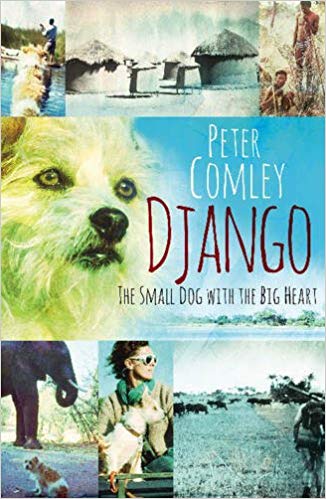
The one disadvantage of living on the Cape south coast is that it’s a long way to the places we love in the bush and from Botswana. Our first destination was Kazungula and that's about 1,400 miles by road, but we took it easy stopping at in Lobatse and doing some research at Otse on the way up. (Otse features in our new Kubu mystery.) Kazungula has busy border posts with both Zambia and Zimbabwe, and is situated close to the point where the four countries meet—Botswana, Zambia, Zimbabwe and Namibia. (The actual point is somewhere in the middle of the Zambezi river.) More important, it’s the home of our great friend Peter Comley. He, and his late wife Salome, have been tremendously helpful over the years with local information for our books and with suggesting venues for the next murder. Peter is also the author of a number of guides to the wildlife of Botswana and Namibia, and he has written an autobiographical book about his early years in Botswana focused around his amazing dog, Django. If you want a moving and delightfully written view of what Botswana used to be like in the old days, get hold of a copy of Django. (It will have to be an ebook, though.)

Elephants at Chobe
Apart from the delightful time with Peter, we had the opportunity to stay at his brand new camp in the Chobe Forest Reserve. This is definitely my idea of camping! And since work on the swimming pool, for example, was incomplete, we had the place to ourselves—with elephants, buck, and birds joining us at the waterhole from time to time. One early morning there was an altercation between some lions and a pack of hyenas over a kill. We couldn't see it, but we certainly heard it!

It was a wonderful base to explore the Chobe national park and the stunning Victoria Falls.
I think someone invented the word "glamping" for this sort of tent!

The case rests
Bath or shower? Hot and cold running water, of course
Or just relax ...
... overlooking the waterhole

Fortunately the only croc who made it onto the viewing deck
It's an easy day trip to the Victoria falls across the border in Zimbabwe. But take hard currency with you to buy a visa as you enter, and expect to spend a couple of hours achieving that. However, it's worth it.
Rainbow from the lip of the Devil's cataract
Main falls
Rainbow over the Boiling Pot
Falls through the rain forest
Devil's cataract
Railway bridge over the gorge. Popular with bungee jumpers
After that it was south to the Okavango...

_______________________
Upcoming events

June 11: release of Shoot the Bastards(Poisoned Pen Press, an imprint of SourceBooks)

June 18: 1830 for 1900
Once Upon a Crime bookstore in Minneapolis
Launch of Shoot the Bastards, in conversation with Kent Krueger
Refreshments

Thursday, August 29, 2013

Is it any wonder why Africa is called the Dark Continent?

I want to start off today with a little quiz.  Nobody is going to see your answers, except yourself, so you can cheat.  Seriously, take a few minutes to write down your answers.

First, the difficult ones:

1.  How many countries are in Africa?

2.  What are they?  Which is the biggest; which is the smallest?

3.  What is the population of Africa?

4.  What is the predominant religion in Africa?

5.  Which country in Africa has a biggest industrial output?

Now some easy ones:

6.  If the southern tip of Africa has a latitude of X degrees south, what city on the west coast of north America (Mexico, USA, Canada) would be X degrees north?  What city in Europe is X degrees north?

7.  What city in south America is about X degrees south?

8.  How many miles (kms) is it from southern most point in Africa to the northern most point?

9.  How many miles (kms) is it from the western most point in Africa to the eastern most point?

And two interesting ones:

10.  What percentage of Africa is covered by desert?

11.  What animal kills the most people in Africa?

12.  Other than Wilbur Smith and Nelson Mandela, name 5 black African authors and 5 non-black African authors.

Of course I thought of giving you the answers next week, but I won’t.  Where appropriate, they are given below the photos from Africa.

Pyramids at Giza

Tutenkhamen

Temple of Karnak

100-tonne obelisk at Karnak

Sankore Mosque in Timbuktu

Ruins of the Greater Zimbabwe in Zimbabwe
Kilimanjaro


The Smoke that Thunders - Victoria Falls

Mozambique beach

Table Mountain - soon to be my backyard

African rainforest

Lanzerac Wine Estate near Cape Town
Wildebeest migration in Serengeti

Mongoose Lemur
Ring-tailed Lemur (National Geographic)


Baby Cheetah (Stan Trollip)

Giraffe (Stan Trollip)

Zebra  (Stan Trollip)

A Kubu  (Aron Frankental)

Another Kubu (Aron Frankental)

African Fish Eagle  (Stan Trollip)

Lilac Breasted Roller  (Stan Trollip)

Lion resting after sex  (Stan Trollip)

Leopard on Impala kill (Stan Trollip)

I'm keeping my eye on you
Elephant in Chobe National Park, Botswana (Stan Trollip)

So here are the answers:

1.  There are 54 independent countries in Africa.

2.  It is easier for you to go to the following URL to see what the countries are: http://en.wikipedia.org/wiki/List_of_sovereign_states_and_dependent_territories_in_Africa.  The biggest is Algeria (barely beating out The Democratic Republic of the Congo) at 2,381,740 sq. kms.  The smallest are the island countries of the Seychelles at 451 sq. kms and the Democratic Republic of SĆ£o TomĆ© and PrĆ­ncipe at 964 sq. kms.  The smallest country on the mainland of Africa is The Gambia at a little over 10,000 sq. kms. 

Note 1: 1 sq. mile = 2.6 sq. kms.

Note 2:  The USA is about 9,827,000 sq. kms.

3.  1.03 billion people live in Africa (2011)

4.  Islam is the largest religion with 47% of Africa’s population being believers.  Christianity is second.

5.  I couldn’t find convincing data as to which country has a biggest industrial output, but I think it is South Africa.

6.  Los Angeles is as far north as Cape Town is south ( 34 degrees).  The only European country that is 34 degrees north is Greece, and then only just.  The Island of Crete is about that far north, so Heraklion would have to be the answer.

7.  Buenos Aires is about 34 degrees south.  The tip of south America is about 55 degrees south, or about 1,500 miles (about 2,500 kms) south of the southern tip of Africa.

8.  Africa as about 5,000 miles (8,000 kms) north to south.

9. Africa is about 4,600 miles (7,400 kms) east to west.

10.  About a third of Africa is desert.  The Sahara is about the size of the USA.

11.  The mosquito is the most dangerous animal in Africa.  The hippo is the most dangerous mammal.  But be careful of the Nile crocodile.

12.  I am going to leave it to you to explore Africa’s rich literary talent.

Most westerners have little knowledge of Africa.  I hope this helped to lighten the Dark Continent a bit. 

Of course, I think that Africa is seen as dark because westerners try to look at it with their eyes shut.


Stan - Thursday

Thursday, February 21, 2013

“Dr. Livingstone, I presume?” Stanley asked. Or maybe not.


Posthumous portrait of David Livingstone

David Livingstone was one of the most well-known explorers of his time, and even today many people at least have heard of the legendary exchange when Sir Henry Morton Stanley  supposedly met him at the Victoria Falls.  Here is the report at the time from The Herald:

Preserving a calmness of exterior before the Arabs which was hard to simulate as he reached the group, Mr. Stanley said: – "Doctor Livingstone, I presume?" A smile lit up the features of the hale white man as he answered: "Yes, and I feel thankful that I am here to welcome you."

The meeting at Ujiji
Well, yes.  Except that it wasn’t anywhere near the Victoria Falls but at Ujiji near Lake Tanganyika.  Certainly the meeting took place, but Stanley tore the pages containing those famous words out of his notebook afterwards.  But they made good copy, and, after all, Stanley was a journalist as well as an explorer.

The two men went on to explore the region together, and established that there was no connection between the huge lake and the Nile River.  It was the source of the Nile that Livingstone sought at the time.  But more on that next week.

So what brought Stanley and Livingstone to this spot in the middle of Africa, and why was there enough public interest to justify two US newspapers financing Stanley’s trip to find Livingstone after he'd disappeared and been reported dead?  It is hard for us to visualize today what excitement the “opening up” of the unknown world generated.  It was also the dawn of the scramble for Africa by the European powers, so national pride was at stake.  Today, if we want to explore somewhere in Africa (or anywhere else for that matter) a couple of hours with GoogleEarth is probably all it takes.  Then, the explorers faced gruelling trips through uncharted terrain with hostile local people.  (They had every right to be hostile; it was, after all, their land, the area was crawling with slave traders, and one of Stanley’s contemporaries commented that he “shoots negroes as if they were monkeys.”)  

Livingstone was one of the most popular national heroes of Victorian Britain.  He had all the right credentials – a Protestant missionary from a working-class background with an inspirational story, an intrepid explorer, anti-slavery crusader, and supporter of the British Empire.  And he died in Africa.  Posthumous heroes are always the best; their feet –  whatever they’re made of - are safely buried with the rest of them.  Although it didn’t work out quite that way for Livingstone.

Statue of Livingstone in Zimbabwe at the Victoria Falls
David Livingstone was born in 1813 in Scotland to devout parents and decided on a calling as a medical missionary.  He hoped to go to China, but politics intervened and he landed up in the northern Cape in South Africa.  Once he’d had a taste of Africa, he was addicted.  (Stanley and I warn all our visitors of this problem, but I suppose no one warned Livingstone.)

In 1854 he crossed Africa from West to East ending at the mouth of the Zambezi River.  This was a mammoth undertaking given the terrain, tropical diseases and unfriendly inhabitants.  But Livingstone had the ability to travel with just a few companions and light supplies, and he approached the local chiefs with respect, asking for their permission, which was usually granted.


Yet things didn’t continue well for him.  He sold the British government on opening up Africa by navigating the Zambezi from the mouth into the interior.  A huge expedition set out under his leadership.  Even before he reached the impassable rapids (that he'd missed on his previous trip), the expedition fell apart.  The opposite of his previous small exploration parties, it soon became clear that the management of a large one was way beyond him. It was summed up by his physician, John Kirk, writing in 1862, "I can come to no other conclusion than that Dr. Livingstone is out of his mind and a most unsafe leader."  Given the British penchant for understatement, this was hardly a rave review!

In 1866 he returned to Africa in search of the source of the Nile.  This expedition was also a disaster as his porters deserted him and his health deteriorated.  After many adventures, he was forced to accept the help of the hated slave traders to get him to Ujiji.

Henry Morton Stanley
Livingstone had no contact with the outside world for six years.  It was falsely reported that he had died.  But his reputation was now so wide, that two US newspapers were willing to fund explorer and journalist Stanley to search for him.  Stanley reported that they told him: "Draw £1,000 now, and when you have gone through that, draw another £1,000, and when that is spent, draw another £1,000, and when you have finished that, draw another £1,000, and so on— BUT FIND LIVINGSTONE!"  In fact he had been touting the trip for two years and finally got agreement.  But his version makes better press, right?  All the same he did find Livingstone, although the explorer was probably not all that ‘hale’.

Memorial near the Mvula tree
David Livingstone died of malaria and dysentery  in the area of present day Zambia on 1 May 1873. Britain wanted the body to give it a proper ceremony, but the tribe there would not give it to them, claiming that he was an African hero and deserved to remain in Africa.  Finally they relented, but cut the heart out and put a note on the body that said, "You can have his body, but his heart belongs in Africa!"  His porters then carried the body “home” on a horrendous journey of over a thousand miles.   But his heart was buried under a Mvula tree near the spot where he died.

Livingstone faced awful ordeals alone and never lost faith, passion, or the need to go further.  Certainly, he had serious flaws and the outcomes of his expeditions had mixed results both for him and his family, and for the local peoples he met and who befriended him.  But, by any standards, he was a truly extraordinary man.

Michael – Thursday.