Showing posts with label Spring. Show all posts

Sunday, February 28, 2021

Making History . . . One Day at a Time

 -- Susan, every other Sunday


It probably comes as no surprise to anyone that I love history. I love to learn about how other people have lived, loved, fought, slept, dreamed, and engaged with one another and the world around them. I find the topic endlessly fascinating--which is good, because depending on how deeply you dive and how specifically you investigate, there's a nearly-endless supply of fascinating topics to go around.

For the most part, I view "history" as things that happened in the past. (Again, no surprise: the dictionary defines the term as "the study of past events, particularly with regard to human affairs.") However, things get fuzzy when you start to ask how far in the past you need to go to consider something "history"--and the rabbit hole gets deeper still when you turn the lens around and look at the way your own life and times may contribute to history as the days and years go by.

Case in point: COVID-19.

Never before has the entire world experienced a connected event on this scale in real time. There have been pandemics--including some on a global (or nearly global) scale, but 2020/2021 marks the first time that we could all experience these events together (if apart). We are living history alone together--separated, and yet connected by the technology that now binds us. 

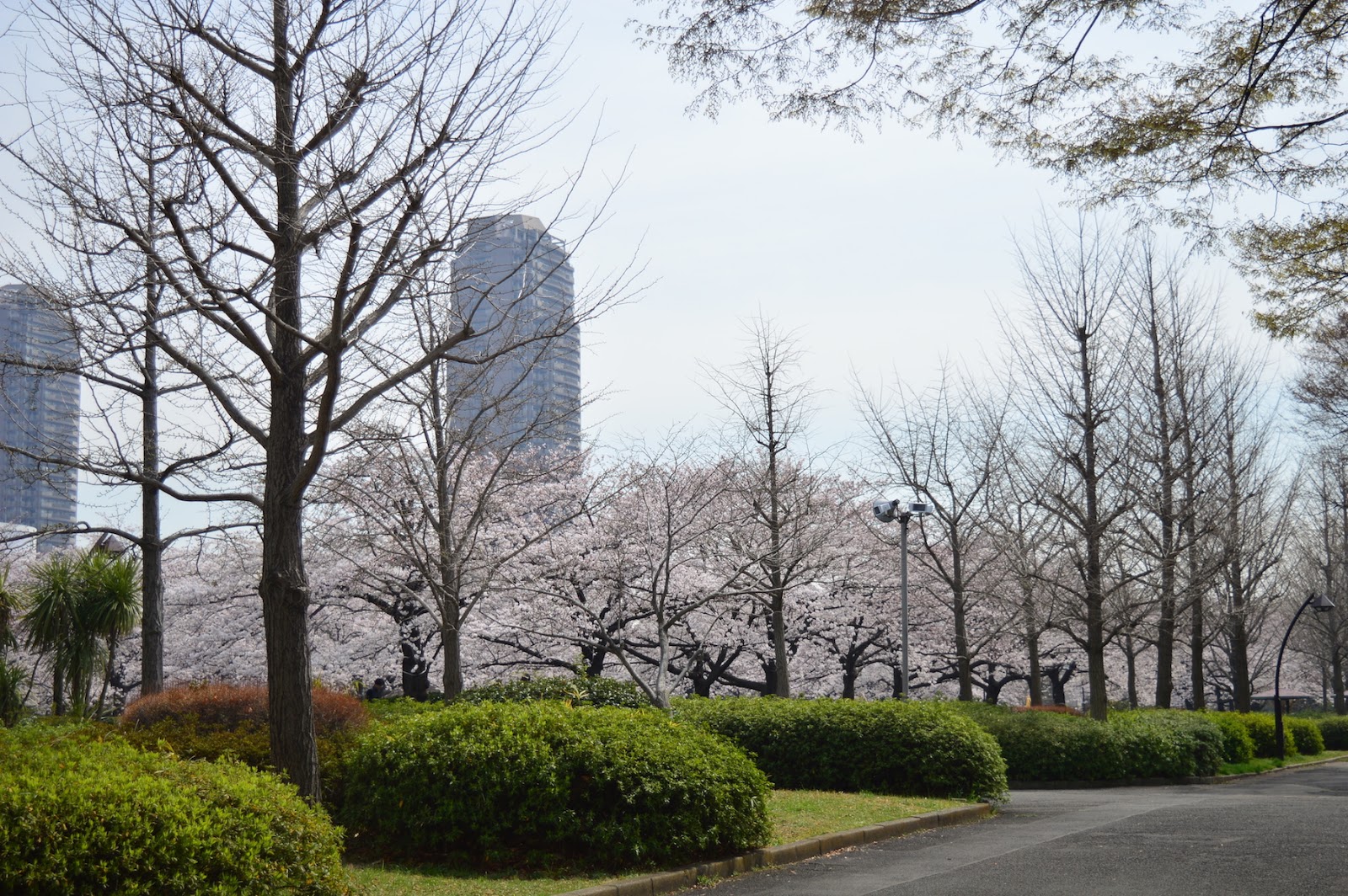
Meguro River, Tokyo, February 28, 2021

This thought came home to me with particular clarity this afternoon, as I took my daily walk in Meguro--one of Tokyo's southern wards, which I call home. The sun was shining, and although the wind was cold, it was a delightful day to get outside for some exercise. Everyone along the river wore a mask--an unusual sight, and one I will remember long after this difficult time in our lives passes into history.

The halfway point - 3 miles from home

As I stepped out the door to walk, I picked up the phone and called my dear friend, Annamaria Alfieri, in New York City. It was almost noon on Sunday in Tokyo, and just about 10pm on Saturday night in NYC. We talked as I walked by the river, catching up on life, writing, and all of the other little details that friends share with one another--all the history we've lived since last we spoke.  


In another month, this cherry tree will bloom.

I walked down the bank of the Meguro River, as I often do. This early in the year, the cherry trees that line the banks are bare, but pushing buds that, in another month, will burst into glorious bloom. These trees, too, are living history. For centuries, Japanese painters, poets, and calligraphers have praised and admired the delicate blooms, which die almost the moment they reach their peak. 

To see them bloom is to experience history also.

One more month, and the river will both reflect and be covered in pale pink petals.

Each moment of our lives is one we will never live again. Each experience, one that will someday become history--joining a deep, never-ending flow of human events and experiences that run through time as the river runs through Meguro.

The Meguro river from one of the many bridges that line the path.

It's easy to discount our personal, lived experiences as "unworthy" of being called history. For most of us, most of the time, life consists of "merely living"--the messy, dirty parts of life that don't feel as if they deserve more than a footnote in our personal memoirs, let alone the grand tome of human events.

The Hotel Emperor, Meguro. Looks like a castle. I've no idea why--but I like it.

As I walked home this afternoon after my talk with Annamaria, it occurred to me that most of the people who made history probably felt the same. The Napoleon Bonapartes and George Washingtons of the world no doubt had an inkling (she said, tongue firmly in cheek) that their actions would be written about, and spoken of, for centuries to come. But what of the person who made George Washington's breakfast, or the soldiers who marched under Napoleon's command? What about the person who cleaned the stalls where the horses slept, or sewed the blankets that sat beneath their saddles?

Those people lived history too--and although we may not know their names or read about them in history books, their lives and their experiences are no less a part of history for that omission.


Ume (plum) blossoms: traditional harbingers of spring in Japan

Neither is Annamaria's. Or mine.

Or yours.


Sidewalk art on the Meguro River Walk

All of us around the world are struggling through history, making our way through an unprecedented period day by day--each of us alone and all of us, alone together. The realization that we are living history does very little to make it better--the days are still difficult, even though each one remains a beautiful, precious gift.

When the call connected, Annamaria asked how I was doing. I barely paused before answering "my life is wonderful"--because, despite everything, I realize that is true. It's also messy, difficult, and challenging--but at the end of the day, life--like history itself--isn't about avoiding challenges. It's about doing the best we can with what we have at any given time.


"Coffee Stand - Stay Safe, Stay Sane"

I'm signing off with the sign above, which stood at the edge of the path by the Meguro River, pointing the way to a nearby coffee stand. The words beneath the arrow read: "Stay Safe, Stay Sane"--which is just about the best advice, and the very best wish, I can offer you.

Stay safe, stay sane, and keep living your history . . . one day at a time.

Sunday, March 1, 2020

Welcome, Spring!

--Susan, Every other Sunday


In Japan, Spring officially begins on February 4--the day after Setsubun. Also known as Risshun (立春), Japan celebrates Setsubun as part of the Spring Festival.

The traditional observances includes a “bean-scattering” ritual designed to expel bad luck, which has taken place since the Muromachi Era (1336-1573).

The ritual involves scattering roasted soybeans--or throwing them at the oldest male in the family (who is usually wearing a demon mask)--while saying “鬼は外! 福は内!” (Demons out! Luck in!). Many temples also have special ceremonies involving the scattering or tossing of roasted soybeans.

After Setsubun, it's time to watch the trees for ume (Japanese plum/apricot) blossoms, the traditional harbingers of spring.

Early Ume in Tokyo, near a 17th century water wheel

Outside Japan, most people are less familiar with ume than with their more famous, later-blooming cousins, the sakura (cherry blossoms). Both trees are beloved in Japan, but the hardier, February-blooming ume have long been considered the earliest sign of spring's return.

Weeping ume (plum) - often mistaken for sakura (cherry blossoms)


During the Heian period (794-1195), a golden age of Japanese poetry and literature, the ume were actually more famous than the sakura, and the delicate blossoms featured in many classical poems about the return of spring.

Last week, with a friend in town from the United States, I decided to act on one of these ancient poems:

我が背子に見せむと思ひし梅の花それとも見えず雪の降れれば -

"I thought I would show my good friend the plum blossoms, now lost to sight amidst the falling snow."

Snowy-looking weeping ume at Tenryu-ji in Kyoto


With that in mind, we left the winter behind in Tokyo and headed two hours south by bullet train to Kyoto in search of spring.

To my delight, the former Imperial Capital did not disappoint. We found the ume in full bloom at Tenryuji (one of Kyoto's oldest and most famous Buddhist temples):

Ume at Tenryuji


As well as in Gion, the former geisha district:

Ume in Gion


We even found the promised springtime snow at Hieizan Enryakuji, a Buddhist temple in the mountains northwest of Kyoto.

Snow on the temple mountain


When the ume bloom, the sakura are seldom far behind--as is the warmth of spring. In Japan, the blossoms are not only heralds of the world's return to light and life, but a strong reminder that both beauty and life are fleeting, precious, and worthy of celebration.

The first sakura of 2020, blooming in Ueno Park, Tokyo


Welcome, spring! Let's celebrate!

Wednesday, June 5, 2019

A Writer's Garden

Sujata Massey


I was home for a short week between book tour traveling, and the main thing I realized was how delicious it felt to be home for spring.

The more common wish in America is to be "home for Christmas." But Maryland's shining moment is spring. It is a long, fruitful, blossoming season. It starts in February with crocuses, continues with daffodils and forsythia and hellebores in March, rises to tulips, azaleas, plum and cherry trees in April, and rioting roses everywhere in May and June. Maryland is not one of those places that suddenly switches to summer--it's a very slow, enjoyable process, whether the plants are native or adopted.

It is fun for a garden enthusiast to spot gardens in  Arizona, California, Wisconsin and Washington, but I feel an urgency to get back to my ragged garden, which is only growing more outspoken every day. My husband only has so many hours in his day, so I sent out an SOS for help. I was very lucky to find a local gardener to take care of the six or so old rose bushes in the back and also attack the weeds. So when I come home, I feel pleased, rather than defeated.


During my time home I also did a lot of daily writing. It's inevitable that these two loves, garden and book, coincide in the spring.

I believe a lot of writers like to garden. Tending flowers and writing books are quiet, meditative processes that each involve creation and reshaping. Both are hard and take years to get results. And often, an interest in gardens can begin no matter what kind of place you grew up in, because of books.

Did you read The Secret Garden by Frances Hodgson Burnett? I read this famous 1910 serial-turned-novel set in Yorkshire when I was a third grader living in snowy Minnesota. My mother had not yet started her odyssey into passionate gardening, so I knew nothing about gardens except for being charmed by the wildflowers that edged our paths, and climbing the sprawling old apple tree with bird-pecked fruit to read a book. I probably read The Secret Garden in that tree.


Many years later, I live in my own old house on almost an acre, which is a big lot for a house inside the city. In a few ways, it is similar to the garden experience of the fictional Mary Lennox. One certainly has to chop, tear and pull what is overgrown, but then come surprising discoveries.

Here's one. Under a rectangular expanse of weeds that rise to happy heights every summer, there is an actual cement floor about twenty feet long by ten feet wide. It's likely that it once was the foundation for a garage. And there are neatly paved paths throughout the garden, mostly covered by a thin layer of earth and lovely moss.


I love the moss and plants that belong to Maryland. The native plant garden I put in three years ago in the front of the house is growing so vigorously that birds have decided to secret themselves in a thicket of four-foot-high black-eyed Susans (which won't flower until August). Daisy, the little Yorkie-Cairn terrier who lives with us, realizes the birds like to go there, so the rudbeckia forest has become her number one spot for exploration every time she goes out. As Daisy charges in, there is an explosion of feathery action. So far, nobody's been caught!


During the brief time I was home, I worked on Perveen 3 in fresh air with the sun on my face. This is entirely possible because we have an outdoor sort of room on two sides of our houses: screened porches attached to bedrooms, in the event it is too hot to sleep inside.

I have seen photos of old sleeping porches fitted out with enough cots so the whole family could sleep in air that finally turned cool. I imagine all the story telling that went on, finally quieting down so the go-to-bed soundtrack would be left to the crickets. In those days, there might have been a nighttime call from a train, not drag-racing cars. And the wake-up alarm would have been birds.

Writing on our second floor porch is a sacrosanct ritual starting every May that lasts through September. I've set my porch with a vintage wicker chaise for reading and sleeping, a table for eating and writing, and a cheap old desk that faces tall trees where I stare at squirrels when I'm bored.The dogs stay with me, looking down two stories to the lane behind the house. They enjoy the power that comes with being high up and feel invincible from the wrath of those they bark at.

When I first moved into my Baltimore home, a few people suggested glassing in the sleeping porches in order to have more bathrooms. The suggestion was never taken seriously. I would never want to lose the joy of being outside-in that the porch provides. I hope whoever takes over the house after I'm gone feels the same.


Sunday, March 3, 2019

Ume . . . 'd Me Love You

--Susan, every other Sunday

Last weekend, I went mountain climbing in Gunma and Tochigi, a pair of adjacent Prefectures about three hours from Tokyo by express train (you can get much farther in that time by shinkansen, but many of the bullet-train-reachable mountains currently pose high avalanche risks, so I'm climbing a little closer to home for another month or two).

Mt. Ryogai, Tochigi Prefecture, Japan


I looked forward to Sunday's climb, in particular, because I planned to end it at an orchard where Buddhist priests had planted over a thousand ume (Japanese plum - a little like a cross between a standard plum and an apricot) trees, which--weather permitting--would be in bloom.

In Japan, ume blossoms are beloved harbingers of spring. Outside Japan, most people have heard of the more famous sakura (cherry blossoms), which are also iconic, and highly loved, but in Japan, we look for the ume first.

The day started out as the best days in the mountains do: with sunshine, pleasant temperatures (unexpectedly pleasant for February, especially given the bitter temperatures I faced during Saturday's climb in Gunma) and thousands of Buddhas lining the mountain trail.

Buddha on Gyodosan


As I climbed to the summit of Gyodosan, my first peak of the day, I searched the hills for ume trees, but saw only pines and Buddhas.

Lots of Buddhas.

Buddhas overlooking Ashikaga City

(Many of the Buddhas on this particular mountain lost their heads during a portion of the Meiji Period (1868-1912), when Emperor Meiji declared Buddhism a "dangerous foreign religion" in an attempt to restore the power of the indigenous Shintō faith. Since then, Buddhism's status in Japan has been restored, and many of the missing heads have been replaced with stones.)   

From Mt. Gyodo, I continued along the trail, descending and re-ascending to the summits of Mt. Oiwa and Mt. Ryogai - where I saw a sign that indicated that the trail to the Ume garden would soon branch off the primary route. (You see what I did there . . .)


I continued along the trail, which rose and fell along a series of increasingly smaller mountains until I reached a sign indicating that I had reached the Ashikaga City Park.

At sea level.

Without ever seeing the branch trail to the ume trees.

I turned around and looked back up the trail, considering my options--none of which looked good.

If I wanted to see the plum trees, I would have to climb back up and over at least two mountains (possibly three) to try and find the trail.

I considered giving up and going home. I had already hiked almost ten kilometers that day, and reached the summits of four mountains--three of which were high enough to count toward my 100 Summits goal. (And taking the current mountain count to 80.)

On the other hand, I really wanted to see those blooming plum trees.

If they were blooming. (They might not be.)

And if I could find them. (Which I'd failed to do the first time down the route.)

According to my GPS, I could also get to the plum trees via surface roads--four miles of surface roads--which I'd then have to retrace, on foot, to get to the train that would take me back to Tokyo.

Eight more miles of walking wasn't happening, so I heaved a heavy sigh and started back up the trail.

Half an hour and two retraced-mountains later, I came upon a tiny narrow trail branching off the side of the main hiking route. Heading down in the other direction, I had missed it due to the trees that grew on either side and the fact that the "sign" indicating the ume grove measured less than two inches wide by approximately four inches high.

A well-marked trail . . .

"There had better be ume blossoms down here," I grumbled as I started down the trail.

Two minutes of steep descending later, I found myself in a grove of twisted, gnarled fruit trees.

Entering the ume grove.

Thirty seconds after that, I realized I had found my destination.

Delicate ivory blossoms hung from the branches, almost glowing in the afternoon sun. A delicate scent of apricots and the buzzing of bees filled the air. Branches arched across the path, creating a natural tunnel. I walked through it, mouth agape in awe at the beauty of the ume blossoms against the brilliant, cloudless sky.

Harbingers of spring

A few minutes later, other hikers arrived to view the blossoms, too. Like me, they wandered among the trees, enjoying the delicate blossoms and the cool, clear day that felt like spring, even though the calendar doesn't quite agree.

Under the Ume Trees

I'm glad I returned to look for the grove, even though it added an extra hour and a half (in total) to my day and a few extra kilometers to the climb. As I walked through the grove, I truly understood (for the first time) just how welcome these beautiful blossoms are after the long, cold winter. My spirit felt light, anticipating spring.

The ume bloom when the rest of the earth seems barren

I've always loved sakura blossoms, and have been looking forward to my first spring here in Japan, but ume always ran a distant second (if not farther back) among Japanese flowers in my mind and heart. That is, they did until last weekend.

And now?

I can say, with all sincerity, to the beautiful plum trees . . .

Spring is coming.


 Ume'd me love you.


Sunday, April 1, 2018

A Fond Farewell From MIE

--Susan, every other Sunday

 It's my sad duty, and honor, to write the very last post here at Murder is Everywhere.

We've had a good run, and appreciate everyone who's read and commented on this wonderful blog for so many years - but, like everything else in the world, all good things must come to . . .

APRIL FOOL.

(My apologies to my blog brothers and sisters, with whom I did not share this joke in advance - but at the risk of their wrath, it had to be done. It was that or an Easter-based April Fool that would have gotten me in much hotter water with an even bigger brother . . .)

This is NOT the last post (though it might be mine, if the joke went over badly enough!) - but it is a farewell of sorts . . . to the sakura (cherry blossom) season in Japan, which began about two weeks ago, and has just about ended for another year.

They bloom and die so quickly. Just like us. (Photo credit: Xyrenth)


In light of which, I thought I'd blog about a traditional Japanese custom: hanami, or "flower viewing,"   the practice of enjoying the fleeting beauty of flowers.

The Tokyo Skytree rises above the blossoms (Credit: Xyrenth)

A note: the photos in this post are not mine. They were taken last week by a friend of my son's who goes by the online handle Xyrenth and gave me permission to use them. 

Although hanami is possible with any flowers, the term is most commonly used for the viewing parties that take place at cherry blossom season, to appreciate the brief period when sakura are at their peak.

Sakura in Tokyo (Credit: Xyrenth)

Cherry blossoms last only a couple of days, and fall from the tree at the height of their lovely blooms.

Blossoms in the hand -worth two on the tree? (Credit: Xyrenth)

People flock to parks, rivers, and other places to see the blossoms. Often, they take picnics and set out their blankets under the blooming trees. Sometimes, people take musical instruments and games as well as food, and make a day of it - as my son and his friends did last week.

Hanami parties at a Tokyo park. (credit: Xyrenth)

Japan's cuisine is highly seasonal, and sakura is a common flavoring element in spring desserts. Big producers like Haagen Dazs get in on the action:

Sakura mochi flavor - cherry blossom mochi (pounded rice cake) over vanilla ice cream. (credit: Xyrenth)

As do local and specialty confectioners:

Another sakura mochi ... without ice cream. (credit: Xyrenth)

In fact, there's a Japanese proverb: hana yori dango (花より団子) which translates "dango (a type of pounded mochi dumpling) rather than flowers" which suggests people now prefer the tasty seasonal treats to the flowers. However, I think the two are inseparable - without the flowers, there would be no reason for either the parties or the treats!

Sakura blossoms against the sky. (credit: Xyrenth)

The custom of hanami, and flower viewing parties, dates to the 8th century, when members of the Japanese court and the noble classes often composed poems inspired by and dedicated to lovely blossoms - except that the blossoms appreciated during those earliest hanami parties were ume (plum), not cherry.

During the century that followed, however, sakura replaced ume as the blossoms of choice for hanami, to the point that the term is now almost exclusively used for sakura viewing.

Parks filled with blossoming cherry trees. (credit: Xyrenth)

It took several centuries for the custom to spread to the common classes, but by the end of the Edo period (1603-1868), if not before, the springtime custom of hanami parties - complete with music, food, and plenty of beautiful, blossoming trees - had become firmly a part of Japanese culture.

Hanami can continue into the night - in many parks the trees are illuminated to better show the blooms. (credit: Xyrenth)

The tradition shows no signs of fading. If anything, the parties have become larger, with foreign tourists and Japanese people of every age flooding into the parks and along the riverbanks during the brief sakura season, to enjoy the food and festival atmosphere that surrounds the lovely blooms.

And now you know a little more about hanami.

Have any interest in hanging out under the cherry trees next spring? I know I do!


Sunday, March 26, 2017

Emerging Into The Light

Zoë Sharp

This week, Spring officially sprang. In the Northern Hemisphere it was on March 20th at 10:28 in the morning. I never knew they could pinpoint it so precisely.


It feels quite appropriate, that I have just emerged, blinking, into the light of a new season. I've been holed up, head down, with a miner's lamp on my head, chipping away at the word-face.

But I have finally finished the new Charlie Fox book. Hurrah!

There have been times, I don't mind admitting it, when I didn't think that light at the end of the tunnel was ever going to get any closer.


Of course, as I write this I have yet to receive my publisher's and editor's feedback, but it feels good to have typed the last word of the epilogue and think that it all makes sense -- more or less, anyway.

So now I have to try to catch up with all the emails I should have responded to but have pushed aside because any time spent with fingers on keys should be adding more words to the book. And it also gives me time, however briefly, to catch up with friends I also have felt unable to go and see.

And that, as it turned out, was a big mistake on my part. A week or so ago I travelled north to attend the funeral of a very dear friend, someone I've known for probably forty years. Her daughter is a week different in age to me, and in the past I've had the privilege of sailing and skiing with the family. I used to be at their house so often when I was younger I think they felt either they should adopt me, or charge me rent.

Listening to the eulogy, I was in awe, as always of how much she packed into her life. She may have been taken from us early, but nobody could possibly say she squandered a moment while she was here.

It's made me realised that I, too, do not want to squander time. So, anybody who's ever airily made the offer, "Come and stay!" may soon have cause to regret their generosity. On the plus side, I'm quite handy to have around the home. I called in on a friend locally a couple of days ago, and ended up dismantling and reassembling their sticking front door lock over a cup of tea.

Finishing the book also seems to have kick-started my brain into plotting. I have two short stories with deadlines that are rapidly approaching. They were really quite generous deadlines when I first agreed to them, but with the overrun of the latest book, they're now starting to loom just a teensy bit. I vaguely looked at them while I was still working on the book, and nothing occurred, but as soon as I'd hit 'Send' on the email with manuscript attached, the bit of my brain that was obviously churning things over woke up and spat out a couple of workable ideas. I love the subconscious mind!

I also have a garden to sort, which I held at bay over the winter by covering the weeds with bits of old carpet. I now have to uncover the earth and actually plant things in there which I hope might flourish. Any suggestions for plants that someone with the opposite of green fingers can look after -- and that might have a reasonable life expectancy under those circumstances -- gratefully received.

I've been thinking of putting in some form of small ornamental bamboo, just for the wonderful calming rustling noise it makes in the breeze. But I confess that when it comes to plants I am no expert!


I also love aliums, but am not sure if I have the right sort of soil to grow them:


And any kind of interestingly shaped greenery, like box:


As well as a pair of bay trees for either side of the front door in planters:


Although, of course, first I would need to build some wooden planters! Basically, I want to put together a quiet little space where I can sit out and make notes, or tap away at my keyboard, without feeling I should be weeding constantly. What's not to like about that?

And with British Summer Time -- or Daylight Saving Time, if you prefer -- officially starting at 1am on Sunday, March 26th, the time for sitting out in the garden is nearly upon us.

This week's Word of the Week is Ostara, which as well as being the Germanic goddess of Spring, fertility and new life, is also a holiday. Her symbols include eggs, rabbits and others that denote fertility and it is after Ostara that the Easter holiday is named. Hot cross buns were originally offerings to this goddess.

Saturday, April 14, 2012

Eastertime on Mykonos Passes Over into Spring


Tomorrow is Greek Orthodox Easter. If you remember what I wrote a year ago (don’t worry, there won’t be a quiz), the simple answer for the difference in the date used by Greeks and others of the Eastern Orthodox faith from that followed by Protestants and Catholics is that the former calculate their Easter based upon the Julian calendar while the latter use the modern Gregorian calendar.  If you want to know precisely how the date is determined, check out this link to my post last year around this time.  Things are confusing enough these days without my adding to them.

It’s still wintry here on Mykonos, which means rain at times and temperatures dipping into the 40’s at night. But we’re starting to have far more sunny days than not, with a few creeping into the 70’s.  A taste of what’s soon to come, no doubt.   When I arrived ten days ago, the old town was still in hibernation, with only a few open bars and restaurants catering to locals and early bird tourists. But by Thursday of Easter week restaurants, bars, and shops were popping open everywhere, pumped up and ready for business.

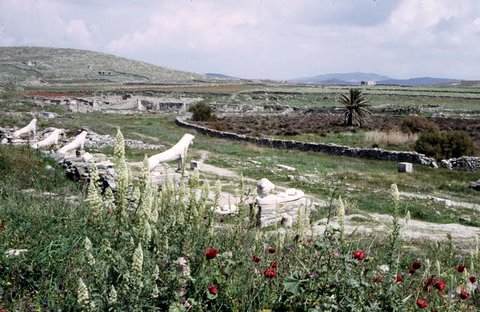
Nature, too, is in full bloom, giving the island a blanket of green covered in red, yellow and purple wildflowers.  But it will all be gone by the advent of tourist season.  It’s a picture of the island few tourists ever see.

Although the religious rituals and local traditions practiced during Easter Week on Mykonos are something special to behold, I also covered that in the same post last year, and so I thought I’d share with you this Springtime pictorial view of Mykonos and its neighboring island of Delos.  The photographs are from the files of the master collector of all things visual Mykonian, Dimitris Koutsoukas.  Enjoy.

The harbor and windmills.

The Countryside.


Delos.

Kalo paska.

Jeff—Saturday