Showing posts with label Plotting. Show all posts

Monday, October 24, 2016

Panster vs Plotter: the Definitive Answer

Annamaria on Monday


“No one can write a book without an outline,” the New York Times #1 Bestselling author said to the assembled audience of mystery/thriller novelists, aspiring writers, and fans.  There was not the slightest provisional hint in his tone.  He was speaking ex cathedra.  This was the first line of his papal encyclical on how to write a novel.

The interviewer tended to agree with him.   Said that one could never get anywhere unless he (sic) knew his destination. 

“And had a map to get there,” Mr. Smug Bestseller added.


I have seventeen years of Catholic school education and an upbringing of excellent lessons in politeness from my parents and grandparents.  I flew in the face of it all.  I could not stay in my seat.  From the last row in the auditorium, I stood, looking as good natured as ever, and striking a jocular, arms-akimbo pose,  I called out the names E. L. Doctorow and John Fowles. And retook my seat.


That little red gizmo says "John Fowles."


Mr. Bestseller looked confused.  Mr. Interviewer offered that E. L. Doctorow had said something about writing being like driving at night.   I held my tongue while they continued to insist that no one could write a novel without a very detailed outline.  They both accused “pantsers” of secretly writing outlines and just not admitting it. 

That’s what inspired my crusading blog today.  How dare they accuse us pantsers of being either incapable or lying about not using outlines?


For those of you who don’t know the terms:  In mystery writing circles, a plotter is an author who writes an outline of the story before beginning to draft the scenes of the book.  A pantser starts with a few ideas or characters and jumps right into telling the story without knowing exactly what is going to happen.


Outliners, not always with the above self-satisfied attitude, often say that their way is the right way.  I have never heard a pantser say such a thing.  At that conference, I did not shout out more than the two author names above.  But I have been ruminating about this off and on ever since.  Here is what I would have said had I been in a position to do so.


Okay, Mr. Interviewer and Mr. Smug Bestseller.  You plotters need a map.  We pantsers are the explorers, the mapmakers.  We journey forth and draw the map as we go along.  We trust that some of those dark alleys we wind up in have the potential of leading us to the most creative ideas we ever have.


Here is how I think we can put this subject to rest forever.  The overriding most basic fact: Unless an author is telling the same old story, all novelists are pantsers when they start a book.  How else could the plotters write an outline, except by pantsing their way to the end of the story?  Answer me that!    Plotters begin by writing down, in shorthand, the story they are pantsing.  When they are done, they use the result of their pantsing as an outline for fleshing out the story and making it into a book.  Pansters do the same thing, except that we write in longhand from the beginning, so that when we are done, so is the book.  One way is NOT better than the other.  All writers have to find their own way to a process that yields a good book.


AMEN!


Saturday, November 21, 2015

A New Plot Point.


Jeff—Saturday

I think I’m becoming even more Greek in my thinking. Why?  Because conspiracy theories are the life’s blood of the blame game in Greece, and I’m just about convinced there’s a vast one out there armed against me.  Armed in the sense of land-mining my path toward completing my new book and exploding my plot points into realities faster than I can write them.


All of which is driving me toward searching out “far-fetched” scenarios, ones that may not come to pass for at least a year—after the new book comes out.

But, then again, who knows what shape our world will be in by then?  Rhetoric will be white hot in the US because of our Presidential election, and Congressional inaction even more so for the same reason.  Most significant, though, will be how the world has come around to dealing with its rapidly metastasizing terrorist cancers.


The horrors in Paris of a week ago Friday seem to have galvanized thought into action. But we’ve seen that before, and seen, too, how governments can quickly waste such a unifying opportunity through myopic self-interest and capitulating to internal political pressures.

That is precisely how our enemies have come to rely upon us to behave, while they stay focused their long view game for achieving their global goals.  For example, I hear a lot of commentators saying these days that ISIS is a gang, recruiting members the same as do US street gangs by making the marginalized in their neighborhoods feel they are part of something that will embrace and protect them. But for ISIS that neighborhood is the worldwide social media network.


It makes sense, but the question is what is the world going to do about it? Simply determining the root cause of a problem does not mean it will be resolved.  Not by a long shot.  Someone has to step up and do something about it.

And while on the subject of “doing something about it,” since the whole world has apparently long known that ISIS finances much of its operations via its “tanker pipeline” trucking across Syria into Iraq and Turkey, why did it take until now (the Russians) to make those tankers and ISIS’s other oil assets a primary target of air strikes?


There are a lot of questions out there to be answered.  And, hopefully, lessons learned.

Sensibly, none of the questions appear to be blaming Greece for whatever part transit across its borders may have played in terrorists reaching Paris.  No sane thinking person could have missed that possibility when Europe left a bankrupt country to fend virtually for itself managing a historically unprecedented flood of migrants to its shores.


My guess is Greece is about to get a lot more assistance on that score.  In the week before 11/13, a lot of tough talk came out of Europe accompanying demands upon Greece to adopt Europe’s strict terms as a condition for securing promised bailout funds for itself and recapitalizing its banks. This week European resistance evaporated, and Greece and its banks will get their money.  Sadly, it looks like it took the horrors of Paris and Beirut to remind Europe of just how important it is to have a stabile Greece in its very shaky Mediterranean basin neighborhood.

But that’s another plot point.


—Jeff

Thursday, July 17, 2014

The Instant Experts

Last week Stan wrote a summary of how we started writing together (indeed, how we started writing fiction at all), where it went, and where – hopefully – it’s going.  Apart from getting published in the first place, three things really surprised us when our first book was published.  Here we were, two academics, neither of us in the arts let alone experts in creative writing, who had somehow put together a book that some people seemed to enjoy and find worth reading, and even pay for.

The first surprise was that we were suddenly instant experts.  Clearly we had discovered the secret of writing successful fiction, getting big advances from publishers, and gathering award nominations.  A few prospective writers felt it would be reasonable for us to share this secret so that they too could become successful scribes.  Yet the only advice I felt I could offer with any confidence was “You have to be really lucky" and "Don’t give up your day job.”  This wasn’t what they wanted to hear, and many drifted off with the attitude that we were meanly keeping our secrets to ourselves.

The second surprise was the reaction we had from other mystery writers.  Surely people who had been writing for twenty years, learning the trade, and hammering out rejected manuscripts as they honed their skills, would hardly welcome two Johnny-come-latelies who admitted that their formal training in writing was obtained from a few books recommended by writer friends.  Instead, we found positive interest and generous support.  The established writers were keen to help, supporting us and our books, making introductions, offering blog spots.  We’ve been told that not every genre behaves that way, but in the mystery circle the attitude almost universally seems to be one that the whole is bigger than the sum of the parts i.e. that one more successful mystery book or successful mystery writer improves the chances for everyone. This is how one would like the world to work, but, in practice, it seldom does.

The third surprise was that our mystery writer colleagues also came from diverse backgrounds and seemed to have been drawn to mystery writing by the love of storytelling and the genre rather than by any academic route.  That’s not to say that they hadn’t worked their way up, learning the ropes, earning their stripes.  Quite the contrary.  Most had done exactly that, but few had followed an academic route.  (Take a look at the backgrounds of the other writers on this blog and you’ll get the point.)  They worked to improve what they did anyway – write fiction.  The issue was to write it better.  It’s almost a tautology to say that the best way of learning something is to do it.  I can’t think of any area where this is not true to some extent – usually a large extent.  I often do presentations to my classes in image processing and watch the students making notes and – not infrequently – drifting off.  I don’t care as long as they go to the computer labs afterwards and see how it all fits together.  Then they will go back to the notes and study what they can find to help them with what they want to do.

Stan and I didn’t know anything about writing fiction when we started.  A CARRION DEATH took us three years to write mainly because of that.  Most of what we wrote was thrown away.  Most of it was just learning not writing.  Hopefully what was left was worth something.  We had no idea.  We didn’t even know enough about writing fiction to know that the conventional wisdom was that two people shouldn’t do it together.  Most of our writing colleagues are amazed that we do just that and that it works for us.  When we learned a lot more, we discovered that there are quite a few successful fiction writing teams, but that most of them write – like us – under a single name.  Another thing we believed was that our rather random development of the plot from a premise, a few ideas, and some characters was another symptom of our lack of knowledge and experience.  We were smugly pleased that our second book, THE SECOND DEATH OF GOODLUCK TINUBU, was planned and plotted and followed the synopsis.  More or less when we finished it, we discovered that more often than not, mystery writers use a premise, a few ideas, and some characters and let them drive the story – pantsing not plotting.  So much for the instant experts!

Still, we are teachers.  There we do have experience although teaching at college level involves about as much formal training as we have in writing fiction.  So last year we found ourselves giving a couple of sessions at a mystery writing workshop in Minneapolis.  The topics were collaborative writing, and dialog in foreign cultures.  Maybe we’ve learned something about these areas.  Certainly we enjoyed the workshop and Kent Krueger’s plenary talk gave us the kernel of an idea which led to our new Kubu novel.  We were happy to join the gang, try to help aspiring writers as others have helped us.  We met a great group of people and enjoyed their ideas, their questions, their thoughts.  One of them – Dr. Tom Combs - let us give him input on his first novel, NERVE DAMAGE – a tight medical thriller with a really original premise and some great characters.  In return, he’s helped us with medical issues related to our books.

It’s a great community of people – the writers, readers, editors, developing writers.  We’re grateful to be a part of it.


Michael – Thursday.

Saturday, July 9, 2011

Safely Lost in Translation

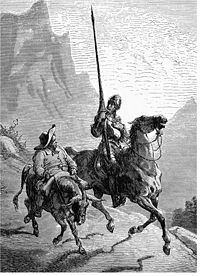
Woodcut print by Gustave Dore
Researching a new murder mystery can be fun.  Especially when it’s placed in Greece and you’re looking for the perfect spot to do the deed. Or find the corpse(s).   Deep blue seas, wispy white clouds, green-brown hills, blood-red blood.  Yes, finding the site is fun.   Mainly because it’s something you can do without confiding your purpose to a soul beyond your own. 

Saying, “Hi, can you suggest the perfect spot for a dismembering moment,” is not likely to get you the same sort of warm response as, “Your spanikopita are the best spinach pies I’ve ever tasted.”  [Note: On the off chance that it does, take a hint from Sweeney Todd and dine elsewhere.]

In that spirit, I’ve taken to fading in among the anonymous tourists driving and hiking about Greece until the moment I come across that spot my deep, dark mysterious mind always told me must be out there.  Then, voilà, let the mayhem begin.

Having said all that, some plot elements can take hold of your mind that by their nature necessitate a far more adventuresome sort of exploration.  Like when a little voice in your head says, “Hey, genius, why don’t you make the robbery of the millennium pivotal to your story.”

When will I ever learn that the most dangerous voices are the most flattering ones?   And of that lot, the worst by far are those blithering away inside your own head—even more so than that of an agent hot to represent you.

Don Quixote (Honore Daumier)
But the trouble with imagination is that once it takes hold the most difficult aspirations turn irresistible.  I’ve been told that Quixotic characteristic passes with maturity. 

To get to the point of all this, the novel I’m working on requires a detailed understanding of security surrounding one of the least know treasures in the world—if you’re not Greek—in order to make the leap from reality to the impossible not that far.

The Treasure of the Sierra Madre
To do that, I needed to speak to an insider, someone with intimate knowledge of the target.   And so, at the beginning of this week I set off on my quest with a friend (let’s call him Sancho) who knew such an insider (let’s call her Dulcinea).  My friend had read all of my books and knew I was working on a new murder mystery, but had no idea why I was interested in learning about the treasure.

Guy Fawkes Conspirators (Crispijn van de Passe)
“If Dulcinea wants to know the purpose of the meeting, tell her I’m an American writer working on a book about the hidden charms of Greece and could not possibly write such a book without including their priceless treasure.” 

I had my questions and my approach all prepared and worked out in advance. Sancho assured me that Dulcinea spoke perfect English because my Greek could not carry off the type of in-depth, subtle fishing expedition I had in mind.

“Perfect,” I once again learned, was an imperfect word.  Dulcinea’s English was as perfect for getting around an English language country as mine was for ordering a gyro in Greece.  Within thirty seconds Sancho was serving as interpreter.  I told him to translate my questions and her answers exactly as they were spoken.  He assured me he would.

I began with carefully phrased general questions of the type intended to make everyone comfortable.  They would run on for several sentences, Sancho would nod and say four words to Dulcinea who’d give him a two-word reply, followed a several-line editorialized answer from Sancho to me. 

I was getting nowhere fast.

Nope, not the Hope,
After ten minutes or so, Dulcinea suggested we leave her office to see the treasure that was the purpose of our visit.  Let’s make the image simple: think breathtaking, spiritual, priceless and very portable.

As we stood in front of the treasure, I tried a few more subtle questions, all with the same result.  So I switched to a different tack.

Nor Fort Knox
Me:  “Where do you keep the treasure when it’s not on display?”

Sancho to Dulcinea to Sancho to Me:  “In a safe over there.” She pointed to a two-meter tall, cloth-covered rectangle.

I walked to the cloth, pressed my hand against it, felt the steel, moved my fingers to the hinges and then the handle.  “Is it bolted to the floor?”

S to D to S to Me:  “Yes.”

I asked if I could take few photographs and Dulcinea said, “Yes,” a rare honor according to Sancho.  I nodded and smiled to Dulcinea then began photographing the skylights, windows, doors, and floor.

Dulcinea said something to Sancho, “She wants to know what you’re doing.   The treasure is over there.”

I said, “Sorry,” and quickly took a few of the treasure.

Sancho said, “Are you done yet?”

“There must be more security for the treasure than just that safe.  Ask her.”  Sancho hesitated.  “Just ask,” I said.

This time it was Dulcinea who gave the lengthy answer and Sancho four words back to me.  “A lot, plus guards.”

“What time do the guards change shifts?”

Sancho said to me in English, “Are you out of your mind.  Don’t you know what she’s thinking?”

“Just ask her.”

He did. Dulcinea’s answer was quick and guarded.  “It varies.”

Sancho and Dulcinea looked like two bank tellers waiting for the masked man to hand them the note.

I smiled, “Can they be bribed?”

This time it was Sancho who went on for a full minute.  Dulcinea smiled and held out her hand to me.  She was thanking me for my lavish praise of her kind assistance and wishing me the best of luck with my new cookbook.

I'm still laughing.

Jeff—Saturday