Showing posts with label Mumbai. Show all posts

Tuesday, February 20, 2024

India Underfoot: A Rerun

Sujata Massey

I'm still in India but packing up to go from the Kerala backwaters to another region. Therefore, I am sharing a post from 2018, when I traveled throughout India and found myself mesmerized by the beauty of floors. 


It’s too easy to twist your ankle while walking through India. Streets and sidewalks have irregular surfaces, and there are many distractions, ranging from speeding cars and motorcyclists creating their own laws to horses and goats.

So I only feel like my footing is truly firm indoors, and I am always glad about the safety of a smooth tile floor.

In Fort Cochin, Kerala, I stayed in the historic Brunton Boatyard, a hotel built on the grounds of a Victorian shipyard. The narrow red clay tiles on the first floor appear to be strictly business. These tiles have an industrial look and are still holding up after centuries of heavy rolling carts—and now, suitcases.


Nineteenth century Indian royals, on the other hand, used tiles in a grand manner that they’d seen themselves on European tours. Palace tile that I’ve seen is typically giant blocks of pure black and white marble. Not especially original—but very silky underfoot. When I checked into a guest room in Shiv Nivas, a hotel housed in the old guest wing of Udaipur’s City Palace Hotel, the floors felt cleaner than anything I’d ever stepped on, and probably a lot of it had to do with the contrast in air temperature and marble’s natural chill. Before the days of air conditioning, floors were an important cooling element.


In Calcutta, zamindars (landowners) had magnificent homes in North Calcutta built throughout the eighteenth and nineteenth centuries. When I visited a friend who lived in such an aging treasure, I marveled at the veining in the fine marble tiles in the bedrooms.


The most joyful tiles that I’ve seen to date are the encaustic (hand-made cement) tiles from the late 19th and early 20th century in Western India. The first encaustic tiles used in India were Minton Company tiles exported from England.  The British government wanted Indians to buy their tile (as well as most other products) from England. Wanting to suit freedom-minded Indians who still wanted modern tile floors, a Parsi businessman, Pherozeshah Sidhwa, started Bharat Flooring Tile Company in Maharashtra in the early 1920s. These tiles had tremendous patterns crafted to exacting standards, and the backs of the tiles had a map of undivided India stamped on them.


Bharat Tiles are firmly cemented in some of the favorite places I’ve stayed in India, like the Royal Bombay Yacht Club, above.


Wilson College in South Bombay, pictured above, is full of original detail. The school was founded by a missionary, and I don’t know if the tiles are Indian or English.

I’ll make an educated guess that these encaustic tiles in Mahatma Gandhi’s Bombay residence are Bharat Tiles. After all, Gandhiji was the founder of the Swadeshi movement encouraging Indians to buy Indian-made products.


When I recently traveled to Ahmedabad, in the western state of Gujarat, I stayed at the House of MG, a boutique hotel carved out of a grand old residence of the textile merchant, Mangaldas Girdhardas. Mr. Girdhardas expanded his original 1924 residence to have two large wings for his sons and their families. The original wing has black and white marble tile floors; the sons’ sides have brilliant, geometric-patterned encaustic tiles.


When I toured Ahmedabad, I visited more historic havelis, such as the one above, and saw plenty of vibrant cement tile. By now I’d noticed that the prominent colors for all these tiles were golds, reds, and blacks. Yet that color scheme did not determine decorating. Indians decorate in many color schemes atop the harvest-colored floors.

It’s heartening that Bharat Flooring Tile Company managed to create such an industry disruption in 1920s Bombay that the British themselves paid to have many public buildings fitted out with Bharat tiles. And the company lives on today under the same name. They have reissued old patterns and seen them go into old buildings undergoing restoration and new restaurants.

From the British colonial days through independence, Indian tile floors are too tough to show evidence of all who’ve stepped on them. Yet I feel that history surround me every time I go through a door into a hotel or school with a patterned tile floor. 


Wednesday, January 29, 2020

From India with love

Sujata Massey


I’m filing this on my last day of a wonderful three weeks in Mumbai.
I was taking a walk through a shady, old-fashioned passageway in a typical 19th century shop building in the Colaba neighborhood. It was a delightful meander just steps from the historic Royal Bombay Yacht Club, where I spent my las few days.

With any trip, there are ups and downs. Over this trip, I haven’t had a moment of stomach trouble. However, I had a laptop fall very ill (and then recover, thanks to the geniuses at Maple Shop, as India’s Apple licensee is called. I switched the places and neighborhoods I was staying in three times and never really had a quiet night. Well, I guess it’s Mumbai, right?

lovely old flat building in Bandra


I managed 20-plus interviews over this trip; I saw a new film, a popular play about a legendary actress and a dress rehearsal of another play with a Bollywood connection (more on this one in another post). I attended an Odissi dance debut of a teenage artist. I shopped at a modern art show and filled my eyes with masterpieces of at the Bhau Daji Lad Museum of decorative arts and the Asiatic Society of Mumbai. I attended to a university lecture and was able to chat with students. I visited a historic Parsi colony and several courts of law—one of them the former coroner’s court, which I expected had been swept away since this legal process is no longer a necessity in Bombay. What a thrill to find the high-ceilinged room where cause of death was determined by a jury still exists, albeit filled with cubicles.


The Bhau Daji Lad museum offers a doll-sized view of history


The one thing I could have done but missed out on was being on set for a Bollywood film shoot. Do I regret not going because it was starting close to midnight? 

As I sit in the airport, I admit I should have blinked away my fatigue and gone.

Therefore, I don’t have star photos for you, but in upcoming posts I aim to share what I loved so much about this trip to Mumbai.

And that even in 2020, it’s such a joy to be able to tread through the passageways of the city back to the Indo-Victorian world of my fiction.  

Historic Wilson College is an inspiration for the next Perveen book


Whilst in India, I received the great surprise of a nomination for the 2020 Bruce Alexander award for historical fiction, and the 2020 Sue Grafton Memorial Award for a mystery featuring a female protagonist. The Lefty historical winner will be chosen by conventioneers voting at the Left Coast Crime convention in San Diego this March, and the Grafton award has been chosen by a judging committee and will be announced at the Edgars Dinner in New York in April. I am very excited and grateful that The Satapur Moonstone was enjoyed by both fans at LCC and a committee of professional writers serving as judges for the Edgars. I encourage you to check out the whole Lefty List and the Edgars List for books you might enjoy.


Wednesday, October 24, 2018

The Taj's Triumph

Sujata Massey


On a hot Saturday afternoon in early October, I was in the Mumbai Harbour, taking the slow tourist boat back from the cave temples on Elephanta Island. The water journey had been almost two hours, and I had only a few drops of water left in my bottle. I was overjoyed to spot a tall rounded red tower appear over the waves. I knew that if I could see part of the Taj Mahal Palace Hotel, I wasn't so far away.

The Taj is a city hotel, but it was designed with its turreted front facing the sea, which was very unusual for 1903.  The hotel's sea-facing facade also offered its earliest guests a wonderful view from their bedroom windows. This philosophy of focusing on a guest's views--rather than a hotel's prestigious appearance on a cityscape--was a new way of thinking.

The Into-Saracenic showpiece was conceived of and built at a cost of 500,000 Pounds Sterling. Not by the British, who ruled India at the time; by an Indian.

Jamshedji Tata, a brilliant Parsi entrepreneur, had the idea of building the Taj after a devastating bubonic plague epidemic in the 1890s caused many to lose faith in the city. He also created a nondiscriminatory policy of admission to all races, although some of the city's best hotels and private clubs in the city prohibited Indian entry. He named his hotel after the spectacular historical tomb in Agra, the Taj Mahal, knowing it conjured exquisite beauty in the minds of tourists.


A bust of Jamshedji Tata oversees the hotel's historic staircase


An early Taj menu cooked by French chefs


The rooms, restaurants, halls and Turkish bath were spectacular. The hotel was the first building in Bombay to have electricity in the rooms and electric lifts imported from Germany. The Taj Hotel became the icon of fine hospitality in a country already world-famous for its hospitality. Interestingly, the chefs were French because even though the hotel's owner was Indian, local dishes weren't considered sophisticated enough. He also made sure to hire butlers and desk clerks who were European.

When India became independent in 1947, a Christmas Eve menu cover showed a maharaja atop an elephant, with a groom holding the green, white and saffron flag of the new democracy. It's a strategic image that recognizes the importance of the hotel's past royal customers who had agreed to join with the new nation rather than keep their former princely states separate.


For people who live in Mumbai, the Taj is mainly about meeting for meals, attending weddings, and shopping in the arcades. I've met more than one married couple who got engaged in the hotel's Sea Lounge. My stepfather fondly remembers delicious lunches with friends at the hotel during school holidays. My mother, who's been traveling on vacation Mumbai with him for thirteen years, has a friendship with a charming elderly jeweler in the Taj's shopping arcade...it's impossible for her to leave the Taj Hotel without something sparking in a small velvet bag.


The Taj's glory was almost its downfall. When ten Lashkar-e-Taiba terrorists from rural Pakistan targeted 12 sites in Mumbai on November 26, 2008, four its young men raided the Taj intent on killing international guests, Indians, and staff. This mass attack also included the Trident-Oberoi Hotel, the Chhatrapati Shivaji train terminus, Cafe Leopard and Chabad House. The terror in Mumbai lasted 68 hours and resulted in 164 civilian and police deaths, with more than 300 people wounded. Nine of the terrorists were killed during the police response, and the one man caught alive was hung a few years ago in an Indian prison.


The siege of The Taj was the longest of all the battles during the 26/11 attacks. Twenty-two staff perished, as well as fourteen guests. Yet more than 300 guests were saved by the Taj staff, who stayed rather than evacuated.

I think there are a number of reasons for this. The motto for the hotel is "Guest is God;" I've heard it when I stayed at another Taj property. Also, the Taj training for staff is reputed to be quite intense, with people taking great pride in their relationship with the hotel, many of them hoping for lifetime employment. And these employees know the huge hotel's layout. It is a a complex labyrinth with many interior elevators and storerooms added over the years. There is even a private club, Chambers, that was not marked on tourist maps. This is where many of the guests led by staff from public spaces waited until police arrived. Other guests who had been relaxing in their rooms hid in place for days until firemen could put ladders to the windows and bring them down. This was a complicated process, because not only does the hotel have a six-story historic mains structure, but there is also a modern high-rise tower.

The Taj was secured by the police on November 29, utterly devastated by gunfire, with many areas burnt from grenade explosions and fires. Yet less than a month after the attack, the hotel re-opened for business.

In January 2009, I was in Mumbai on vacation with some family members. It was six weeks after 26/11. We stayed at our usual home-away-from-home, the Royal Bombay Yacht Club, just around the corner from the Taj. On the last night of this wonderful trip, we had a light dinner at the Taj's Shamiana coffee shop, which sits near the hotel's main entrance. Looking around, we saw the Taj's rebuilding had been swift and was immaculate. A monument with the names of the hotel's martyred employees was already erected in the lobby. We learned that the Tata Company, the original family business that still owns this hotel, pledged to pay college costs for all the slain employees' children and would give their family members who'd lost breadwinner support jobs. The hotel had also paid for damages suffered by many freelance souvenir sellers in the area who lost business for months after the attack.

The goal of Lashkar-e-Taiba might have been to kill the Taj Hotel and other places that invoke the spirit of Mumbai--but that did not happen.


As the ten year anniversary of the Taj's triumph over terror approaches, I've been revisiting the Taj long distance. One way is through a suspenseful true crime book published in 2013, The Siege: 68 Hours Inside the Taj Hotel by Cathy Scott-Clark and Adrian Levy. I'm also delving into the Taj's happier, older history in the form of a 415-page anniversary magazine, The Centenary Taj: 100 Years of Glory. This magazine, published in 2003, is the source of the charming photographs of old advertisements and Taj interiors that I've shared in this blogpost. Look for the whole magazine at antiquarian booksites, if you want a picture of Bombay history, art, food and culture.


My connection to the Taj Mahal Palace continues through my books. In my 1920s Bombay series, protagonist Perveen Mistry is a young woman lawyer whose grandfather was friendswith Jamsetji Mistry when the two old Parsi businessmen were alive. Perveen's family's pre-engagement meeting with a groom's family is at the Taj Mahal Palace Hotel!

I won't tell you how that engagement turned out, but Perveen must return to the Taj again in Book 3, when dangerous riots make travel home impossible. Who knows, maybe I'll sleep over one night, too.

Sujata takes part in a multi-mystery author event at the Miller Branch of the Howard County Public Library in Ellicott City, MD, at 1 p.m. on Saturday, Nov. 3. From there she goes to Italy! On December 4-5 she will speak on panels at Noir In Festival in Milano. Ciao!

Wednesday, May 9, 2018

Badri Narayan, the Story Artist

Sujata Massey

Theme of Public Health V, 2008 Badri Narayan, at Gallery 7


A couple of years ago, I spent a thrilling day shopping for art in galleries the Kala Ghoda district of Mumbai. The upshot is I came home with a gorgeous modern abstract painting found in a an old British Raj building on Rampart Row in Mumbai, very close to the Bombay Dock that I've written about in my Perveen Mistry series. Gallery 7 is owned by a sophisticated yet friendly mother-son team, Chandra and Nicholai Sachdev.


They showed me their full canon of famous paintings and offered me tea and a savory Pad Bhaji sandwich during the hours we spent together. Newton, their manager, oversaw the wrapping of the Amrish Malvankar abstract oil painting and added my email to the Gallery 7 Art Catalog list.
The occasional emailed catalog is haunting reminder for me that I am no longer walking through the sunshine of Mumbai with art on my mind.

How can possibly I gaze at art when I have bills to pay for serious things such as my children's summer classes in Baltimore and plumbing repairs?


Untitled, 2008, Badri Narayan, at Gallery 7

But I'll admit it--I open up these emails and look at every picture and sculpture. It can be utterly distracting to spend an hour looking at dozens of paintings by artists who are tops in India but not well known in my part of the world. I can pretend I have a budget to buy art. I can divide all those lakhs by 60 to try to figure out what the cost is in dollars, always hoping that it will be more reasonable than it turns out to be.

Art is the kind of thing that you don't really need...but when you see something interesting, it might become an obsession.


Theme of Public Health II, 2008, Badri Narayan, at Gallery 7

My attention is now focused on Badri Narayan, a painter born in Secunderabad in 1929, when it was part of a princely kingdom under control of the Nizam of Hyderabad. Badri, who died in 2013 of frail health, taught himself to paint, and worked in watercolors, ink and pastels. When I think of Secunderabad--where I spent one marvelous winter as a little girl--I see the city in the same soft earth tones as Badri's work.

The Theme of Public Health III, 2008, Badri Narayan, at Gallery 7

As an adult, he moved to Bombay, and some critics have said that his paintings, which celebrate mythology from ancient India, are a counter to the hustle-bustle overcrowded world that developed after independence. Badri Narayan was a renaissance man; he worked as an author-illustrator, storyteller and painter, just like Rabindranath Tagore did a century earlier.

Some of the activities and stylized tableaus in the Narayan watercolors remind me of the miniature paintings that were popular in both Muslim and Hindu courts. There are winged visitors in many of his paintings who may be angels; monks, doctors, and husbands and wives. I was particularly moved by the many images of a sick man being comforted by various people in his life, with the winged angel standing nearby. The Public Health series was painted about seven years before his death at the age of 84. Badri Narayan was clearly at the top of his game and taking a look at what he had in his life and what lay ahead of him.

Gallery 7 has the works featured above in its "New Year Sale" that runs until June 1. No, it's not a 6 month sale! The Hindu lunar calendar starts on different days each year, and this time it began March 18.


Sujata will be give an illustrated talk about how she researches her books in India at 2 p.m. Saturday, May 12 at the Roland Park branch of the Enoch Pratt Free Library in Baltimore, MD.


Wednesday, November 23, 2016

Into the Rainy Jungle

Sujata Massey


It's been raining for a week solid in Baltimore. First we got the side-effects from Hurricane Ian, and now we are in the windy grip of a Nor' Easter. A constant deluge can be annoying, but I know that my wet socks are nothing compared to the situations suffered by those farther south in the US, and in Pakistan, where thirty percent of the landmass has been swallowed by water. At the same time I cannot forget the drought in East Africa so poignantly described by Annamaria Alfieri last Monday. Global warming is a literal disaster, and some people still don't believe in it!  I'm sharing a blogpost dating 2016, when I visited India late in the rainy season to research THE SATAPUR MOONSTONE.


Even though it's raining all the time, monkeys are on it.
Specifically, they are on the job, watching the comings and goings of people like me to the hill towns of Lonavala and Matheran, hill stations in the Sahyadri mountains southeast of Mumbai. Slowly, I eat a piece of the local peanut brittle, taking note of how these bonnet macaques seem to be working in teams to keep the local stray dogs from getting close to me--and my food. A friend warned me that monkeys who think you're teasing them can get mad enough to grab things out of your hand--even non-edible things, like camera and cell phones.


Even though it can still be rainy in October, the fall is a great time to visit India; there are plenty of seats on the plane, and while the weather isn't winter-wonderful as in winter, it isn't insanely hot. Therefore, I have slipped out of my ordinary life in Baltimore and traveled solo to India for some necessary book research.

I based my research in Maharashtra, the beautiful southwestern state with mountains and sea and the country's artistic heart. during British rule, Maharashtra was part of Bombay Presidency, a collection of several provinces overseen by a British governor based in  Bombay. My next book features a young woman lawyer leaving her hometown of Bombay for special assignment into these hills. She likes monkeys all right--but she's not interested in getting close to leopards and tigers.

The Sahyadri Mountain range isn't a difficult journey I planned out a visit to include the hill towns of Lonavala, Khandala, and staying for a few nights at a historic hotel in Matheran, a hill station that had never built actual roads. I'd heard it would be a five-kilometer trek from the car park to my lodgings.   Because of it being uphill, going on horseback was recommended.  


At  Lonavala, and the sky cleared enough to show some detail of the striation of the hills. 


 I'd planned to take a regular train from Mumbai and switch to the historic narrow-gauge railway that ran up the steep hill to Matheran, a famous old British hill station. Fortunately, I checked in with a travel agent before getting on the train. A few months earlier, the toy train had been washed off the tracks during rainy season and was still out of commission.  However, the driver I'd hired to help me in Mumbai said he'd bring me as far as his car was allowed, and he would meet me on the day I was ready to leave. 


Once my driver, Namdev, brought me up the steep misty roads to Matheran, I realized it could be very easy to get lost among the thousands of twisty trees and thick mists. It resembled the set for a horror film. Still, I kept going. This was a part of India not ruined by tourism. But I decided not to walk or ride alone to the inn. I would get there, paying for local assistance. 

My driver and interpreter, Namdev was a good sport about riding a horse

The horseback ride was slow and waterlogged, but Namdev went with me as well, due to my nerves. A male guide lead the party and two teenage boys held the horse's reins--either to reassure us, or because the horses really didn't want to make the trip. It was over an hour of slow, careful plodding until we reached a place called Verandah in the Forest,  heritage hotel occupying the home of Captain Harry Barr. He's the Englishman who built the second bungalow in Matheran. The house, which features a thirty-foot ceiling in the sitting room, is a period model of elegance and function.

My hope had been to explore Matheran and see gorgeous hill views from specific points. And according to everything I'd read, October was not rainy season anymore; it was supposed to be a shoulder season between rain and winter. Yet during the time in  October that I traveled, Matheran was still gripped in late monsoon season. Perfectly normal, everyone said. After my first twenty-four hours in Matheran, the rain fell so hard and constantly that it soon became the most irritating noise. But at least I could while away the hours in the old hotel, drawing out an architectural layout that would become the plan for Circuit House, the place where Perveen first stays when she's visiting Satapur.


Waterfalls are everywhere in these mountains that spill over with rains.  


The historic gates to Verandah in the Forest


Another view of the bungalow amid constant rain 


Hundreds of different kinds of trees and reptiles in the Maharashtran forest. There was a delightful rain forest feeling everywhere.


The actual verandah where one can sit and watch the rains


Verandah in the Forest is furnished with Victorian and Edwardian Indian furniture with a Parsi aesthetic based on its many years of ownership by a Parsi family. This was the tallest bench I ever encountered--and with such a grand mirror and top to it. In the end, I thought the piece was a carpenter's desire to try to live up to the scale of the place.


The rain stopped for only about 2 hours during my three day stay in Matheran. To take advantage, I rushed out with another woman staying at the bungalow. Still, the mists did not left--and because of the plateau-like structure of the hill station, you can't really roam around without danger of slipping, or maybe even  falling over the edge into a dam. 


A friendly local  man explained that stones are taken out of the dam wall during rainy season to allow water to spill into the lake and not flood the land. Because rainy season was drawing to an end, he was tightening up the wall with missing stones. He was happy about the change of season.

And I was melancholy. What do you do at a romantic historic resort, when you are one person and it is keeps raining? The only other guests were couples on anniversaries who were lost in their planned event.

The hotel had no wifi or telephone. The sum total of reading material were three books on a table in the sitting room--and they were books of photographs, not novels or memoirs or histories. I felt sincere regret I hadn't brought some books to leave for others. And the only book I had with me was the one I was editing on my laptop. 

So: I wrote. I took overly long naps where I fell asleep listening to the relentless rain and would be jarred awake by thunder. I understood what it might mean to be confined to a place to months on end because rain meant that the paths down the mountain were washed out. 

I got an excellent sense of my next book.


Wednesday, April 20, 2016

Booking India

Sujata Massey


Chiki Sarkar, co-founder of Juggernaut Publishing/photo by Vogue India


This post is a tribute to a young democracy that has brought the world great writers--and a fantastical amount of readers.

India's population of 1.2 billion boasts a literacy rate of 86% in cities and 71% in rural areas.
Inside India, twenty major languages are spoken and read, and a few hundred more languages are used in rural communities. About 125 million Indians speak and read English, making it the second largest English-speaking country in the world.

Indian kids selling pirated books to car passengers
Yet despite the vast numbers of Indians educated in  schools, book sales are paltry--out of proportion for a nation with the largest middle class in the world and a plethora of talented writers in those twenty-plus languages. Why is this?

Many urban people are exposed to pirated books every day. An estimated 25% of books sold in India are proferred by slum dwellers who work under the supervision of gang bosses who distribute reprinted versions of Indian bestsellers on paper thin as tissue. During recent travels in Kolkata and Mumbai, I kept running into kids selling pirated Slumdog Millionare books...such an irony! If you got stuck on a street for a half-hour every day, and the same friendly youth offered you a bestseller for less than half of its cover cost, why wouldn't you buy--especially if you thought it would help the child?


College Street bookseller/photo by Rishi Bandopadhyay


Another blow against literary commerce are  time-honored, used-book stalls in all cities. Used book shopping at book corners loaded with thousands of traded-in books is one of the joys of visiting Kolkata's College Street. However, these places don't earn a rupee for the author or publisher.


The efforts of India's biggest publishers tosell e-books haven't helped. I have a novel published in India, City of Palaces. The beautifully designed trade paperback has a list price of 499 rupees, but the reality is that the trade paperback is sold at Amazon for 310 rupees, while the ebook is 299. We are talking about $4.68 US versus $4.51. Many Indians buy e-reader devices are sucked into the free ebook and get so much content loaded up they have no interest in adding books that aren't free.


A young woman publisher, Chiki Sarkar, is trying to change that. (Full disclosure: Chiki bought and published my book, City of Palaces, during her time at Penguin). I was stunned that shortly after her promotion to becoming publisher for the newly joined PenguinIndia/Random House, she departed to create her own start-up venture. Juggernaut launched this month with an amazing author list.

In several articles I've read, Chiki has mentioned that publishers can't expect distributors to pay them on time, and there aren't a lot of great independent and chain bookstores in India investing in new authors. She joined hands with with Durga Raghunath, a tech entrepreneur. They are launching Juggernaut, a publishing house unlike anything India's ever experienced.

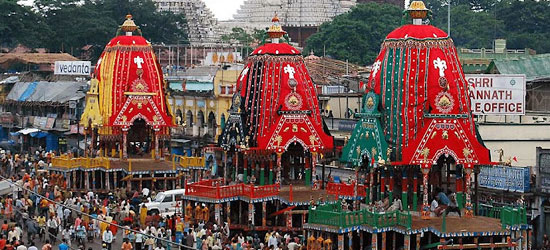
Jagannath celebration in Puri

 Juggernaut is a very old, yet modern-sounding word. British administrators during the colonial era were stunned by the energy of the Rath Yatra Hindu festival held in Puri, Orissa every year in honor of the god Jagganath. To them, the Jagannath gathering was a wild melee of people and massive, heavy carts--the 18th-century precursor of rush hour traffic. Frequently, religious pilgrims were crushed in the throngs of Jagannath--yet the carts and people pressed on. The British colonials began using the term "Juggernaut" to describe  a powerful force or institution that cannot be halted.

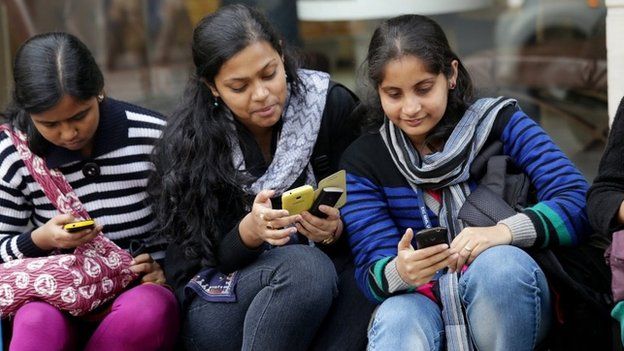
 Juggernaut Publishing's push is embracing the shift of reading on mobiles phone. The publisher plans to release more books as digital exclusives, although about 50  books per year will also be released in paper. The lynchpin of the publisher's debut will be the memoir of Rajat Gupta, a business scion who was convicted of insider trading and jailed. More details are here in some interviews Chiki Sarkar did at the recent  London Book Fair and with Vogue India.


Mobile users in India/photo by BBC


Many people worldwide read novels on our phones and tablets, using apps from Amazon and Apple. I do it to keep myself busy when I'm waiting somewhere. I own a Nook e-reader and a Kindle Fire, but I confess both need to be charged, because I use them only on the treadmill or when traveling.

Here's the other side of the story. Remember how I mentioned people speaking so many languages in India?

Penguin/Random House has decided to go big guns and  translate quality regional language fiction into English. One example of this new pubs is one of the most powerful thrillers I'd ever read, Hangwoman, by KR Meera and translated by J. Devika.


I would not have ever known about this haunting novel, originally written in Malayalam, if it hadn't been for this publishing risk taken. The past and the future, interwoven. That's why I love India.