Showing posts with label India. Show all posts

Wednesday, March 12, 2025

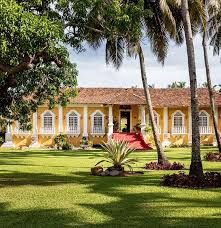
Where is this?

SUJATA MASSEY 


I traveled in India this winter. Have you been to this same place?


Relax! The tigers are stone


Very large medallions around the lights


Sweet children, one of whom got this house


Commemoration of British and Indian trooping celebration


Nets over the sky keep out birds


So many grand performances happened here


Somebody's got to polish the throne

So, can you guess where I visited?


Wednesday, January 29, 2025

The Sun Also Rises

Sujata Massey 

Sunrise in Coorg, India

I'd planned to write in detail about my travels in India, but it's been a hard day for me to concentrate. In Washington D.C. , the new administration appears to want to shut down many of the services the Federal Government provides to the people. An erasure of historical achievements by women and people of color; an attempt to rewrite the rules of who can be a citizen. All of it too staggering to follow. I wonder if you feel the same? ,

So my desire to write turned into a wish to share few moments of peace and beauty that I found on my trip. I found myself close to the founts of life on earth, the sun and the water.  


Greeters of the sunrise on Marine Drive, Mumbai

In a city as busy as Mumbai, hundreds of people turn out every morning to watch the sun rise over the Arabian Sea.  


View from the train between Karnataka and Goa

This view of agricultural fields and water, seen from the train as I traveled along the Konkan Coast, had no people around. 


The train journey from Mumbai to Margao, Goa, continued with hundreds of miles of tranquil views. Watching the landscape was so mesmerizing that a 9 hour journey felt much shorter.


Every color in the rainbow melted into this melange at Benaulim Beach in South Goa. And it feels good to know that sunrise and sunset are daily events that cannot be made redundant.


Wednesday, January 1, 2025

A Fashionable New Year: Carry-on Tips for India

 Sujata Massey


Happy New Year’s Day! And think of me right now, rolling along the streets of Bengalaru with my carryon suitcase. 

Hopefully, all that I’ve crammed into the hardshell for a 2-week trip will actually get worn. Packing is an acquired wisdom, and every trip I take teaches me something. The white lace blouse that summons fantasies of sweet lime drinks on the veranda never left the hanger. The flat, platinum-colored leatherTaos sandals—oh, my gosh, yes, tromping everywhere from fancy restaurants to the museum and beach.


The most useful travel wardrobes are not organized at the last minute; it's a matter of laying clothes out and writing it down, to see redundancies and omissions. A lot like editing a book, isn't it?  But the reality is that as much as I enjoy packing, I still sometimes don't wear one or two items and yearn for something left at home. What will I really use over 14 days that when I’m in city and country, cool hill stations and hot beaches, churches and restaurants, unpaved village roads and Apollo Bunder in Mumbai?  


The Bangalore Palace


Over the next two weeks I’ll arrive in Bengaluru, once known as Bangalore. After a couple of days' acclimation, we will  take a car ride through Karnataka to the old royal enclave of Mysore, and then climb into a misty cool hill station named Coorg.


Coorg Wilderness Resort Hotel


Then it's back in the car  to the Bengaluru Airport to fly to Mumbai, where it's two nights of research and visiting friends before taking a train to Goa for almost a week's stay. On day 14 we fly Goa-Bengalaru-Washington DC. 


The trip was originally intended for some India train research, including a 5-night ride on the Golden Chariot, a tourist train with overnight compartments. However, this plan derailed (haha!) due to a low number of reservations. Because Indian Railways was the one that cancelled, I got the deposit back and had to figure out another way to use my scheduled time in India.


Silva Heritage, a Goa 300-year-old dwelling turned hotel


I’ been reading Around India in 80 Trains, a delightful travel memoir by Monisha Rajesh. Through the many train rides Monisha describes, I got the idea of taking a regular train from Mumbai to Goa, which is a particularly scenic route. There’s an express train taking this route with a special passenger car that has all-glass walls and ceiling, for maximum viewing of the Konkan coast. So the Vistadome car  will be the first train ride of this trip. I’m hoping for a few more excursions on regular trains once we reach Goa. 


I try to travel to India every 10-15 months., and typically I’ve used a larger checked suitcase because I’m carrying about 10 books as gifts. This year, I didn’t have a new book to carry—so that means less weight and room to worry about. Also fueling the bring-less mindset were a few videos on YouTube about a so-called “three-day-method” and “5-4-3-2-1 method” that encourage people to really pare down their clothing choices. That’s the way I’m going: with one carry-on and a personal item. Here's what I'm bringing in terms of tech, clothing, and extras.


TECH PLAN: Hooray! The personal item tote-bag  will be a lot lighter on my shoulder because I’m not bringing a laptop. I’d like to be more unplugged and thus am bringing an iPhone and charger only (my husband will have an iPad he promises to share). My phone carrier, ATT, charges $10 a day to use my phone abroad. This might seem pricey, but I’ve had really bad experiences over the last 20 years spending hours and days trying to buy local phones in India that inevitably are very hard to use. The other thing I've tried was bringing one of my old cell phones and buying a SIM card at the airport that turns out to work very poorly if at all. So, I'm sticking to ATT. This will be the third time I’m using my phone this way, and I've found the trick to it working seamlessly is to go to settings and set the roaming feature to default to the strongest network, which for me has been JIO. if you don’t set a default, phone will keep scanning for random networks. Be sure your number is shared with your India contacts through Whats App, so they can call you without incurring charges. 


Charging phones and tech is also tricky because of India’s 230 voltage versus USA's 110. Supposedly Apple devices have universal plugs, but I’ve had a MacAir laptop motherboard fried and needing a full replacement in India. My husband and I have also blown out the circuits at multiple hotel rooms trying to charge laptops and iPads. If anything bad happens to your Apple tech, don’t attempt a repair without going to an Apple Store to keep your repair warranty safe. However, this process could take days, as authorized Apple retailers even in locations like Mumbai may need to get the part sent from Delhi. To avoid emergencies like this, use converter plugs meant for India’s current AND charge your power bank on these plugs, so the risk of something adverse is limited. You can safely charge your electronic items using powerbanks only. I’ve been OK charging my phones straight into the converter (fingers crossed, always). Finally, you might want to add a VPN app to your phone to protect your data from being swiped. Tony and I are sharing a VPN for one months's time that covers 5 devices for just $15 total.


CLOTHING


A favorite airy travel top from Ritu Kumar

Clothes are certainly not as complicated to plan as tech. My mantra is to always be yourself and stay comfortable. That said: unless you're an Indian male, if you wear a backpack, a ballcap and athletic shoes on the streets, you'll likely be identified as an American or British tourist and receive a particular kind of attention. I don't like having an entourage so I dress as well traveling as I would at home. For instance, I always wear loose blouses, skirts and trousers out in town, although I’m very comfortable in shorts and a bathing suit at the hotel (with a cover-up over the bathing suit when not in the water or the pool chair). 


While saris have made a comeback with some fashionistas, typically Indian women wear flowing trousers with longer tops, or skirts and dresses made in India from beautiful silks, cottons, and next-level synthetic textiles. To buy something while there, look at stores like Fab India, Cottons or Ritu Kumar. Every city will have a few boutiques like this and big malls have better quality options than street stalls. Many of these garments are embroidered and stitched by textile artists in villages, so you can be fashionable and local at the same time. 


salwar kameez in Kolkata years ago


Years ago, I wore salwar kameez (tunic, stole and pajama trousers) outfits quite a lot in India. But street style has changed and these days, I keep traditional ensembles for important social events. I’ll always bring a beautiful long silk dupatta to work as an outfit accessory, providing extra style as well as comfort in air-conditioned places. Aside from this, my general choices are wide-legged pants, whether cotton from India or quality denim from the US; loose fitting tops that aren’t low cut, and skirts that cover the knee. I bring one pair of clean, colorful sneakers for travel, fitness walking and sightseeing, but a pair of worn-in Taos flat sandals in a metallic leather works just as well. 


Please do wear jewelry in India; I’ve made the mistake of forgetting to pack any earrings and necklaces and felt like I was partly dressed in comparison to local women who always have something pretty at the neck, ears, wrist, and sometimes the nose. Jewelry and scarves are wonderful things to buy in India; I particularly recommend going to cottage industry stores representing the state you visit, and the reasonably priced modern fine jewelry chain store called Tanishq. I’ve even impulsively bought fine jewelry at the airport shops on my way out of India. You should not leave India without buying at least a little jewelry! 


For the plane I’m wearing the same outfit I usually bring for a winter trip to India: my red Taos Carousel canvas sneakers, Anthropologie’s Maeve wide-leg jeans, a long sleeve red-coral-white silk blouse from Johnny Was, and a gray cashmere ruana from Quince to also serve as a blanket.  


Here is the rest of my packing list. I really did get all of this into a small carryon because I use compression cubes (hardshell carryon case and compression cubes from Quince, if you are the market for something new). Almost all the tops and bottoms can be mixed.


Loose cream straight-leg polyester pleated pants 

Grey cotton capri pants

Brown tech poly jogger pants

Black-white patterned shorts

Ankle-grazing dark blue-print polyester skirt

Blue and coral printed wrap skirt, knee-length

Mid-calf burgundy silk skirt

Casual Blue cotton gauze dress/swimwear coverup


White crinkle poly blouse, sleeveless

White button-down shirt, sleeveless

Black T-shirt (borrowed from spouse)

Coral cotton broadcloth button up blouse with mid-length sleeves

Navy blue silk short-sleeved top

Navy blue cardigan


1 Bathing Suit

Underwear for 6 days (will use laundry and detergent packages) 3 pairs socks

Flat packing hat

Two scarves: one short chiffon square, one very long rectangular dupatta


Coach Whitley Mary Janes

Taos Trophy sandal 


Toiletries galore, small sizes in a waterproof carrying case! Be sure to include mosquito repellant wipes


EXTRAS SUCH AS GIFTS

If you’re going to someone’s home or meeting someone professionally, it’s very nice to bring them a gift from the U.S. Signed books by you or others are enthusiastically received. Other items I’ve liked to bring are packaged nonperishables from Trader Joe’s or similar yummy specialty stores. Warning: chocolate always seems to melt. This year I’m bringing a special American biscuit baking mix, two candles, and some specialty nuts. Just three gift books will be making the journey…and because of my packed carry-on, I’ll have to ask my husband to be responsible for them. 


May the new year bring everyone happiness, and perhaps a special trip! If the packing's done over the course of three days, the hardest part of leaving will be saying goodbye to your pet.


Wednesday, September 25, 2024

Part 2 of What Makes a Series: Setting

Sujata Massey


My family settled in Minnesota when I was seven. You’d think the Laura Ingalls Wilder books set in the prairies around the state would be the perfect fit for a book-loving, history fanatic. I liked them because they were set in the past, but I was obsessed with books that were both set in the past and in Britain


England, the land of my birth where I spent my first five years eating Smarties, going to Infants School, and hearing grownups grumble about Mrs. Thatcher. Then suddenly we moved stateside, first to California, then to Pennsylvania, and finally Minnesota. Life was becoming confusing and frightening, and I felt like an outsider.  My parents had emigrated for a number of great reasons, but I wasn’t fitting. It was all to easy to build up the lost home in Newcastle-Upon-Tyne as superior to my everyday existence in snowy St. Paul. How grateful I was to escape to elegant London streets and wild Yorkshire moors in books by Noel Streatfield, Joan Aiken, Nina Bawden, and many more!


I kept up the reading habit, and gradually, my terrain grew. I came to take special pleasure in settings I don’t know at all, like the Singapore of Ovida Yu, the New York City Chinatown of S.J. Rozan, the Bangalore of Harini Nagendra. I got to India for the first time when I was nine, shown above at Golconda Fort--and my mind was now alight to read books about India. I like Elin Hilderbrand’s Nantucket and Alafair Burke’s Long Island. Interestingly enough, as a grown person, I’m eager to read books set in Minnesota.  


When I decided to try writing a first novel, I was living in Japan: an hour south of Tokyo, is how I like to describe it, kind of the way people in New Jersey talk about their relationship to New York. Tony and I rented a typical middle-class house without central heat, but with some very interesting traditional features, like a cut out space in the floor meant for fermenting foods; a very hot bath; and tatami matted floors that required you to sleep on a futon and have no furniture with legs. Shoji screens and a lower-level entry area were other features to which I became accustomed and wove into my fictional setting. But I wasn’t home much.


Every day of the two years I lived in Japan felt like adventure. There I was, riding trains with a frieze of funny advertisements in every compartment. I walked streets that smelled of roasting sweet potatoes and mixed towering skyscrapers with tiny old shrines. Chic young ladies with Chanel bags hurried to their office jobs, passing tiny old men bicycling to the temple. Setting was easy to draw when you saw it coming to life in front of you. 


When I came home two years later, the memories were rich enough for me to finish the book and write ten more after it. But it wasn’t as easy as in the beginning. I had to keep returning to Japan in order to refill my imagination tank, and I couldn’t afford to do it both financially and because of my responsibilities co-parenting two very young children. 


My second series was supposed to be easier for me to manage, yet I set it even farther away, in India. What the hell was I doing? 


I had been to India several times in company of my Indian father, but I’d never been a resident settled into a home and neighborhood. Yet I had so many Indian family resources—my friends, my parents and step-parents, and their generously welcoming families still living in India. So I took four years to learn more about India, including studying Hindi and reading a lot; dancing and cooking with my friends was part of it, too. With our children growing up and liking travel, it became easier to make return visits to India, sometimes with family members in tow. 


In hindsight, I think I chose to set both my mystery series abroad because that’s the way my imagination comes alive. But it’s not an essential rule for everyone. People may love their homes and be able to explain them better than anyone else. The one wise thing I think a series writer should do is dive deep into one geographic setting, whether a region, town, or neighborhood. Readers do get attached—and the writer gets certain benefits.


The first is a buildup of intellectual capital. If you’ve dragged yourself through one novel, you have done lots of investigations of street names, buildings, and have put characters into cafes and police stations and homes. You will probably write even more richly about these places the second time around—because now you know them. 


And that brings up the point; should a series setting be an actual village, town, or city—or is it wise to fictionalize? Do you want to write about a fictional in rural Canada or the actual U.S. city of Chicago? 


A lot of writers feel emotionally more free and creative writing about a fictitious place. Obviously, there’s less of a chance of some person thinking they are being described in your novel, or you making an accidental geographic or historical error. However, if Whispering Woods (your fictional village) is entirely being built from your imagination, you probably have to work harder for story ideas, because all of it will be self-generated.


If I choose to write about Chicago, I can send characters into well-known ethnic neighborhoods, watching a basketball game at Northwestern, and eating Latin pastries at an up-and-coming restaurant in River North. Readers will love this! And ideas for plots involving the setting’s key features will bubble like seltzer from the tap. 


Brilliant Laura Lippman writes books set in Baltimore and other real towns in Maryland. Laura's said that if an actual Baltimore restaurant is good, she will mention it by name if it seems like a good place to put in a book. Yet she wouldn’t put in a real restaurant that isn’t so good and talk trash about it. Below is a hotel restaurant in India that looks like an old-fashioned Irani place in Bombay, but is actually in Fort Cochin, Kerala.


I mixed reality and fantasy in my work by using actual restaurant’s name for a fictional restaurant in The Widows of Malabar Hill, my first Perveen Mistry novel. I decided to use Yazdani's name on a very good, fictional cafĆ© of my choice on Bruce Street (now renamed Homi Modi Lane). The real Yazdani’s Bakery and Cafe lies about a block away from Homi Modi Lane. It is an adorable corner store bought by an Irani family in the 1940s, not the 1920s of my book’s setting. Still, Yazdani’s the oldest Irani cafĆ© in the area with an amazingly charming elderly owner, and I imagine my readers going in might wonder if the white haired, voluble elderly owner once was the 30-something friendly and undeniably macho restaurateur, Firoze, in my book. 


There are so many challenges of trying to recreate cities as they were a hundred years ago. It can never be done perfectly; and in my case, nobody’s still living who could make that judgment. 


I’ve found Mumbai and Kolkata to be goldmines of gorgeous atmosphere that I can learn about through literature, maps photography, and best of all, in person. I’m working on a train journey for my character, and while I remember a long train journey as a child in India, I’m taking a 5-night trip in Karnataka early next year in a historically furnished train as a way to understand the experience.


Of course, there are those who have sold a lot of books set in countries where they haven’t visited. The late HRF Keating, who lived in Britain, depicted India in his novels, based on his own encounters with Indian people in England, and on his reading. John LeCarre traveled to a lot of countries in his lifetime—but he didn’t go to Panama for The Tailor of Panama and perhaps some other books. LeCarre was aging and at the top of bestseller lists, but instead of traveling to Panama, he sent a researcher. Now, I liked this book—but I imagine it would have been even better if he’d laid his own eyes on the place. When a writer regards a location thinking ‘a city or country is sooo like this’ it means they are working from other writers’ opinions. That puts the writer at risk for trafficking in cliches and ethnic stereotypes—the problem with H.R.F. Keating. He eventually started a second series with a British protagonist. Yet his affection for his first character never ended and resulted in just a few more Inspector Ghote books. 


HRF Keating truly loved his characters and milieu. But he was living in a fictional India, because he wrote dozens of books without visiting. He finally traveled only because Air India sent him a free ticket, and his first words upon landing were about his shock at the heat. One hears that India is hot, but there’s a Dry-New-Delhi-in-July hot that’s different from Humid-Kerala-in-February hot. He was feeling that, for the first time.


And physical sensation brings a final question: how comfortable are you in it? It may seem gripping to readers for you to write about a very tough city and give your protagonist a shabby apartment on its meanest street. But if you don’t love a setting and feel comfortable staying there, it could be hard to sustain a series there. Another option is for your protagonist to be a traveler, a Jack Reacher or James Bond type, and have constant changing scenery and people. The reader experiences settings from the eye of a protagonist who doesn’t know it well…which can be an ongoing theme.


I write about Mumbai (named Bombay before independence) because I truly enjoy the people I know in the city. I have real friends here, built up over years of visiting and research. They always tell me the next place to go. I have a fondness and familiarity with a few buildings and neighborhoods that enriches my imagination. I’m writing about an era roughly 100 years ago, another reason I chose this place versus another city in India. Mumbai’s preservation laws will keep the faƧade of the central train station and its windows the same as before, which is crucial if I want to describe things accurately. 


Finally, I feel a level of physical freedom and safety working in Mumbai that’s the same as in my home. I’m glad to come back there, in my books and in person. Traveling so regularly to India is a financial expense that eats up a lot of my book advance. 


It’s ironic that the England I thought was perfect heaven in my childhood days now is an antagonistic idea to heroine of my series. How times change! And sometimes I think, maybe one day I will get away from the travels and write a book or even a series set in my neighborhood. But I suspect that I’m hard-wired to venture outside of the familiar, because I’m on the same journey that many readers are. 


Tuesday, February 20, 2024

India Underfoot: A Rerun

Sujata Massey

I'm still in India but packing up to go from the Kerala backwaters to another region. Therefore, I am sharing a post from 2018, when I traveled throughout India and found myself mesmerized by the beauty of floors. 


It’s too easy to twist your ankle while walking through India. Streets and sidewalks have irregular surfaces, and there are many distractions, ranging from speeding cars and motorcyclists creating their own laws to horses and goats.

So I only feel like my footing is truly firm indoors, and I am always glad about the safety of a smooth tile floor.

In Fort Cochin, Kerala, I stayed in the historic Brunton Boatyard, a hotel built on the grounds of a Victorian shipyard. The narrow red clay tiles on the first floor appear to be strictly business. These tiles have an industrial look and are still holding up after centuries of heavy rolling carts—and now, suitcases.


Nineteenth century Indian royals, on the other hand, used tiles in a grand manner that they’d seen themselves on European tours. Palace tile that I’ve seen is typically giant blocks of pure black and white marble. Not especially original—but very silky underfoot. When I checked into a guest room in Shiv Nivas, a hotel housed in the old guest wing of Udaipur’s City Palace Hotel, the floors felt cleaner than anything I’d ever stepped on, and probably a lot of it had to do with the contrast in air temperature and marble’s natural chill. Before the days of air conditioning, floors were an important cooling element.


In Calcutta, zamindars (landowners) had magnificent homes in North Calcutta built throughout the eighteenth and nineteenth centuries. When I visited a friend who lived in such an aging treasure, I marveled at the veining in the fine marble tiles in the bedrooms.


The most joyful tiles that I’ve seen to date are the encaustic (hand-made cement) tiles from the late 19th and early 20th century in Western India. The first encaustic tiles used in India were Minton Company tiles exported from England.  The British government wanted Indians to buy their tile (as well as most other products) from England. Wanting to suit freedom-minded Indians who still wanted modern tile floors, a Parsi businessman, Pherozeshah Sidhwa, started Bharat Flooring Tile Company in Maharashtra in the early 1920s. These tiles had tremendous patterns crafted to exacting standards, and the backs of the tiles had a map of undivided India stamped on them.


Bharat Tiles are firmly cemented in some of the favorite places I’ve stayed in India, like the Royal Bombay Yacht Club, above.


Wilson College in South Bombay, pictured above, is full of original detail. The school was founded by a missionary, and I don’t know if the tiles are Indian or English.

I’ll make an educated guess that these encaustic tiles in Mahatma Gandhi’s Bombay residence are Bharat Tiles. After all, Gandhiji was the founder of the Swadeshi movement encouraging Indians to buy Indian-made products.


When I recently traveled to Ahmedabad, in the western state of Gujarat, I stayed at the House of MG, a boutique hotel carved out of a grand old residence of the textile merchant, Mangaldas Girdhardas. Mr. Girdhardas expanded his original 1924 residence to have two large wings for his sons and their families. The original wing has black and white marble tile floors; the sons’ sides have brilliant, geometric-patterned encaustic tiles.


When I toured Ahmedabad, I visited more historic havelis, such as the one above, and saw plenty of vibrant cement tile. By now I’d noticed that the prominent colors for all these tiles were golds, reds, and blacks. Yet that color scheme did not determine decorating. Indians decorate in many color schemes atop the harvest-colored floors.

It’s heartening that Bharat Flooring Tile Company managed to create such an industry disruption in 1920s Bombay that the British themselves paid to have many public buildings fitted out with Bharat tiles. And the company lives on today under the same name. They have reissued old patterns and seen them go into old buildings undergoing restoration and new restaurants.

From the British colonial days through independence, Indian tile floors are too tough to show evidence of all who’ve stepped on them. Yet I feel that history surround me every time I go through a door into a hotel or school with a patterned tile floor. 


Wednesday, February 7, 2024

Eating My Way Through Kerala Half-Cup Portion Only

Sujata Massey 


Friends, I am back in India. It turned out that my wonderful October-November visit to India was  not fulfilling enough. During that two-week journey, I’d gathered the information to finish one Perveen mystery; but now I was itching to learn more about Kerala for a subsequent book. I'd also luxuriated in a few Ayurvedic massages that reduced my chronic neck pain and made me contemplate whether three weeks of daily treatment might cause the entire problem to go away.  


I was still jet lagged when an ad arrived in my inbox for a Black Friday airfare sale at Etihad Airways. Etihad is my favorite carrier to fly to India because it’s a straight flight from Washington's Dulles airport to Abu Dhabi, and then less than 4 hours to a variety of cities in India: not just Delhi or Mumbai. I thought about it for a few days. And the morning after the turkey was roasted, I'd bought myself a round trip ticket for a 28-day visit  to Kerala.


I arrived last Friday on a hot, sunny morning. I rode two hours in an air conditioned van to a village in the Alepuzzha district called Manannchery. Here lies Amal Tamara, a 5-star hotel that is also an accredited Ayurvedic hospital with a medical faculty, physical therapists, and its own pharmacy department. 


view from my balcony


The entry to the facility


Kerala sits at the southern tip of India, where the monsoon arrives first. This state gets the most rainfall of any location in India and is famous for its green fields, massive mountains, and a network of rivers and lakes known as the Backwaters. Perhaps because of the very high temperatures most months of the year, the people of Kerala developed a pattern of refreshing, oil-free cooking. Ayurveda, the ancient medical system of India, began in the north, but it's said that eight saints traveled south and brought their wisdom to Kerala, where Ayurveda took root more deeply. Throughout the state, hundreds of public and private hospitals and hotel resorts offer massages with medicated oils and powders and special herbal prescriptions. The safest places are certified by a national board of Ayurvedic medicine.


Another aspect to Ayurveda treatment is following a daily diet based on one's grouping in three general body/constitution types: Vata, Pitta and Kappa. Food can be used to support one's personal affinities and also vulnerabilities. Many people follow these food principles at home using books and advice from their Ayurved, as the doctors are called. However, staying at Ayurvedic facility gives people a chance to taste a whole lot of interesting and healthy Indian food and not to have to worry about cooking. Everything is customized and served; unlike a regular hotel, one doesn't make choices about portion or type of food. After all, food is medicine. 


A lunch


Another Lunch


Some samples of my personal prescribed menus are above. Each time I come to my table (dining in silence without use of devices is encouraged), a cup of warm water arrives in a copper cup along with my menu. A serving of two vazhakoomvu tikka, perfectly crispy banana-flower fritters, is "rich in fibre and protein, effective in treating infection and shows down the aging process." Idichu thalichathu, stir-fried yam with crackled mustard seed and curry leaves, "enhances brain function and helps in weight loss." Cheera Mappas, sautƩed red spinach in coconut coriander gravy, "restores energy, improves vitality and blood count." Promises, promises! If I live here forever, does it mean I'll always be alive?


The food served is so varied that it's quite likely a person is eating 40 different plant foods a day. Maybe more. And I appreciate the novelty of the ingredients which are rarely seen at upscale Indian restaurants. Yams, Ivy gourd, and drumsticks might not sound exciting--but these popular home-grown Kerala vegetables are when shared in traditional and fusion recipes.  You wash all this deliciousness down with glasses of warm water flavored with a different beneficial spice every day. I've had cumin, coriander, dry ginger and cardamom water so far, and the taste is quite subtle.


So what's off the table? Meat, fish, salt, oil, refined sugar, white rice and white flour, caffeinated tea and coffee, and alcohol. Even though I know I'll taste these foods again some time, I'm not craving them. These Ayurvedic dishes are so prettily presented and tasty, that one forgets. And while portion sizes are petite, the fiber content is high enough that I'm only hungry before breakfast.  There are no machines with snacks if you get hungry in the wee hours or have that restless boredom that leads to thinking about a quick bite. But I confess to stockpiling some of the delicious peanut burfi and sesame jaggery balls that Amal Tamara provided for me in the car that came to Kochi International Airport. My four remaining "Healthy Bites" were devoured the first time I woke up at 3:30 am. I'm still awakening far too early, so the doctor kindly allowed me to have apples and bananas in the room. We take our prescribed medicines at 7:30, after sunrise yoga, and we eat breakfast at 8, lunch at 1, and dinner at 7. There are only about a dozen guests here--it's a small hotel--so we are getting to know each other well during this moment of pursed lips and grimaces.


Food as medicine is a much happier moment of the day.


Chef Ardesh and food and beverage manager Tony 


The breakfast culinary and service team


Breakfast always starts with fruit and continues with some protein, often a South Indian favorite like dosa or uppma.


First course for a breakfast: steamed bananas 


Breakfast course two: ragi dosa, sambar, beet chutney


Another breakfast: uppma and turmeric chutney


Lunch is always the biggest meal; it comes with a starter and dessert. 


Sweet potato and fruit chaat appetizer


Pumpkin-leaf thoren, lauki kofta, dal with beet and coconut rice


Yam, veggie jalfrezi, paneer in cashew gravy, and mushroom methi paratha


A tiny sweet dessert: Pineapple kesari and a grape


Lentil soup and banana blossom fritters with coriander chutney


Papaya-coconut curry with a whole wheat chapati


Dinner is often a pureed soup followed by a vegetable dish, a flatbread and ... no dessert. 


And speaking of sweets, one of my massage therapists, Nithu, chatted about her young son's birthday celebration a few days earlier. His school has a rule forbidding the kids' families to bring a cake or candy to school. Instead, parents are encouraged to send a bag of vegetables. These vegetables are cooked by a school chef into a healthy curry served to the class for the birthday celebration.


A clever idea, at least from the grownups' point of view.