Showing posts with label Jr.. Show all posts

Wednesday, March 19, 2025

 Wed--Kwei


The Measles Resurgence: What’s Happening?

 Measles is making a dangerous comeback in the U.S. As of March 2025, over 200 cases (likely an undercount) have been reported across 12 states, with the highest numbers in Texas and New Mexico. According to a March 7 release by the Centers for Disease Control and Prevention (CDC), most of the cases “are among children who had not received the MMR vaccine,” which protects against measles, mumps, and rubella. The CDC warns that cases have increased 17-fold compared to previous years, putting young children, pregnant women, and immunocompromised individuals at serious risk. Most infections are occurring in unvaccinated children, demonstrating how even tiny drops in vaccination rates can cause rapid outbreaks.


What Is Measles, and Why Is It So Contagious?

Measles is a highly infectious viral disease that spreads through airborne droplets when an infected person coughs or sneezes. The virus can linger in the air for up to two hours, making transmission almost inevitable for unvaccinated individuals. Measles is more contagious than Ebola, influenza, or COVID-19. A single infected person can quickly expose 18 unvaccinated individuals around them. Early symptoms include high fever, cough, runny nose, red eyes, and small white spots in the mouth called Koplik spots, followed by a spreading rash. 


Severe measles rash (Medscape.org)


Measles conjunctivitis (Medscape.com)


Koplik spots are specific to measles (Wikipedia/CDC)


A Brief History Of The Measles Vaccine

Before the measles vaccine was introduced, the U.S. saw 3–4 million cases annually, with 48,000 hospitalizations, 1,000 cases of encephalitis, and 400–500 deaths each year. In 1954, Dr. Thomas Peebles and Dr. John Endersisolated the virus, leading to the development of the first effective vaccine in 1963

Following widespread vaccination, measles cases plummeted. By the 1980s, incidence dropped to 13 cases per million people, and in 2000, measles was declared eliminated in the U.S., meaning no sustained outbreaks for over a year. However, measles remains a global threat, and imported cases can still spark outbreaks in under-vaccinated communities. Keeping high vaccination rates is crucial to prevent its return.

My First And Only Measles Case: A Harrowing Reality

I encountered my first measles case while working in an urgent care clinic years ago. A panicked mother brought in her 2-year-old boy, who was feverish, lethargic, and covered in a rash. Mom admitted they had delayed the MMR vaccine due to misinformation. The toddler was breathing rapidly and had a runny nose, harsh cough, and conjuntivitis (see above), classic measles symptoms. Not only was the poor boy in utter misery, his life was at stake, and so we admitted him immediately to Children's Hospital of Los Angeles.

It struck me then how many younger doctors like me had never seen a case before due to high vaccination rates. Now, many more physicians are witnessing it firsthand. One hallmark of an advanced society is the way it takes care for its children, and yet, we have gone backward. Meanwhile Brazil and East Timor elminated measles in 2018.


The Deadly Complications of Measles

Measles is not a harmless childhood illness. It can cause severe complications, including:

·       Pneumonia (leading cause of measles-related death in children)

[Quick x-ray tutorial: The lungs show dark because they contain air. Pnemonia shows up as white. This severe level of pneumonia could put a patient on the ventilator.]


Normal chest x-ray (Case courtesy of Bruno Di Muzio, Radiopaedia.org)


Meases pneumonia in both lungs of a 6-month old infant 
(Sultan Qaboos University Medical Journal [SQUMJ]. 22. 10.18295/squmj.4.2021.063)

·       Ear infections leading to deafness 

.    Brain Swelling (causing seizures or permanent damage)

·       Subacute sclerosing panencephalitis (SSPE)—a 100% fatal, long-term brain disease occurring years after infection

These photos are from a heartbreaking but must-read story by Ruediger Schoenbohm whose son Max died of SSPE in 2014.


                                        Max vibrant and healthy at 13 years old (Image by Ruediger Schoenbohm)


Max at 18 years old barely responsive due to SSPE (Image by Ruediger Schoenbohm)

The Measles Vaccine: Safe, Effective, and Lifesaving

The MMR vaccine (measles, mumps, rubella) has been 97% effective since its introduction in 1963. Thanks to vaccination, measles was eliminated in the U.S. by 2000. However, declining vaccine uptake has allowed outbreaks to return. The vaccine has an outstanding safety record, with no credible link to autism or other significant side effects. Over 60 million lives have been saved globally due to measles vaccination.

Misinformation and Dangerous ‘Alternatives’

Misinformation is fueling the measles resurgence. Some prominent figures, notably HHS Secretary Robert F Kennedy (RFK) Jr., have de-emphasized vaccines in favor of diet, exercise, and treatments like cod liver oil and budesonide. 

Vitamin A is recommended around the world for measles because there is evidence it can help if someone is deficient, which some patients in developing countries might be, but the benefit to patients in the U.S. is unclear. Vitamin A, which may be administered to infants and children in the United States with measles as part of supportive management and under the strict supervision of a healthcare provider, is not a substitute for vaccination. 

Says Summer Davies, a pediatric hospitalist in Lubbock, Texas, who has cared for nearly a dozen measles patients, ‘Yeah, this is . . . not a wonder drug . . . it may prevent some complications, but we’re not giving it to every child in the hospital because the evidence just isn’t there.” Overuse of Vitamin A can lead to toxicity and cause damage to the liver, bones, central nervous system, and skin.

In a Fox News interview, Kennedy minimized the risks of measles while dimissively declaring, “It used to be… everybody got measles," and that it is “very, very difficult for measles to kill a healthy person. He claimed that deaths from the disease are linked to poor health and diet. This is not true. The disease kills between one to three out of every thousand people infected in the United States.

An environmental lawyer and activist with zero medical or epidemiological training, RFK Jr. claims that when he had measles as a child, he took cod liver oil. Unfortunately, personal anecdotes are not science, and we can't chart our public health action plans based on one misguided man's childhood experience. Budesonide (a steroid inhaler), is not a recognized treatment for measles. The best—and only reliable—protection is vaccination.

In his powerful, influential position in the Trump regime, RFK Jr.'s wilfull blindness is reckless and morally bankrupt. He is a five-alarm-fire existential threat to the wellbeing of the American people.

Why Risk Your Child’s Life? Get Vaccinated

Measles is a preventable disease with life-threatening consequences. The MMR vaccine protects your child and safeguards vulnerable individuals who cannot be vaccinated. Every parent wants the best for their child—choosing vaccination is choosing safety.

Let’s not wait until we see more children suffering. Talk to your doctor and ensure your family is up to date on vaccinations. Stopping this outbreak is in our hands.


Saturday, October 12, 2024

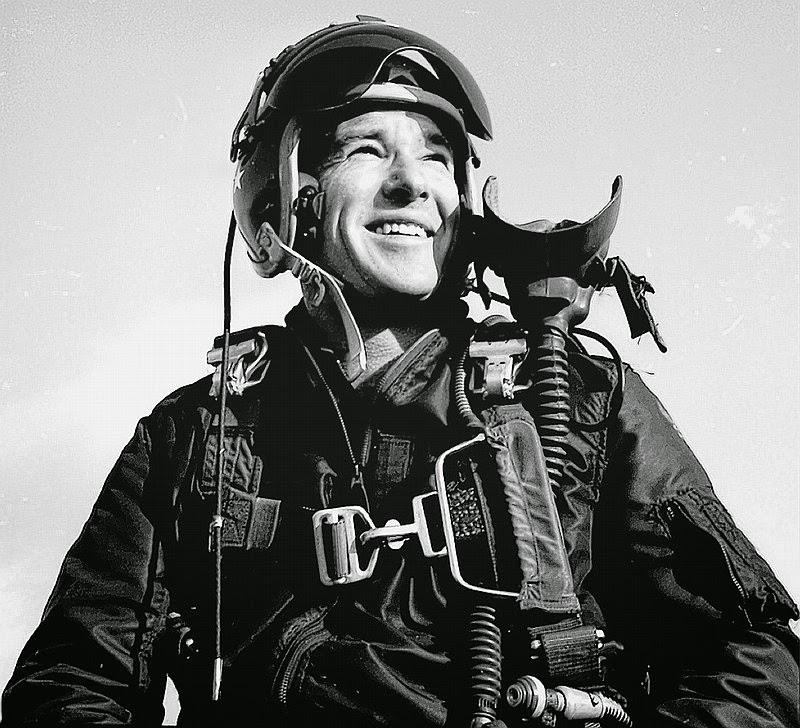
In Memory of a Great One's Passing


As Barbara's and my time on Mykonos winds down to little more than week, I thought to write about how it feels to be leaving our island home and family.  But then I realized we're departing on a date possessed of far more meaning than our return to the US, and requires few words to express.

It’s a well deserved salute to a man, husband, father, and warrior.  One of the best of The Greatest Generation, living a life few writers could ever hope to capture, no matter how hard they might try.


A second generation American of German Irish roots, born on New Year’s Eve 1919 in NYC’S poor Lower East Side, his factory worker father finally made enough to move the family up to the Bronx into another polyglot neighborhood of hard working men and women.

His athleticism and good nature earned him a position as a batboy at Yankee Stadium in the days of Babe Ruth—and later an offer to try out for the Babe’s former team, the Boston Red Sox.   After graduating high school he attended St. John’s University, working two jobs to pay for it, leaving no time to sleep.

Then came World War II, and he made his choice to leave school and go fight for his country.

He trained as a fighter-bomber pilot, flew 133 missions over Germany, never knowing each time he went up if he’d come back.  Many of his friends did not.  He received many decorations—including the unique honor of receiving both the United States and British Distinguished Flying Crosses.  But he never made a big deal of them. He just did his job.


And thought about the love of his life, Virginia.  The young woman he’d met on a one-day pass in flight school, in Sarasota.  And how they’d been inseparable until he left a month later, knowing he could not ask her to marry a soldier going off to war.


Four years later he returned, found her, and they married. 


He started a business. A very good one.  But it ended with the Korean War when he was called back to active duty to serve for twelve years as base commander of the Air National Guard’s 139th Fighter Squadron and 109thAirlift Wing in upstate New York.


There they had three daughters.


And there he buried his wife in 1970. His life was never the same, though he lived it through his daughters, his grandchildren, and reminiscences of a life respected and admired by all who knew him.


A memorial service with full military honors took place ten years ago this week as he was interred next to his beloved Virginia.


God rest your blessed soul, Colonel Frederick Joseph Zilly, Jr. (1919-2014).

Jeff––Saturday

Wednesday, April 14, 2021

MISDIRECTION IN THE CHAUVIN TRIAL

Kwei--Wednesday

Shutterstock/Rena Schild


The Trial of Derek Chauvin

I have been closely following the trial of ex-police officer Derek Chauvin. I've missed very little of it. A couple of days ago I had one of those weird "parallel universe" experiences when the absurdity of what we are witnessing hit me in the face. The jury is being asked to accept that Chauvin kneeling on Floyd's neck with as much force as possible (calculated by pulmonary expert witness Martin Tobin to be some 90 pounds in total) did not cause Floyd's death. 

The case is historic in many ways, one of them being that it has an extraordinary amount of documentation from multiple types of cameras from different perspectives. So powerful are the videos that the only way Chauvin's lawyer, Eric Nelson, can defend his client is persuade the jury that something else was going on--the well-known "look-over-there" trick. 

Merriam Webster defines misdirection as

1. a wrong direction

2. a: the act or an instance of misdirecting or diverting
    b: the state of being misdirected

What Eric Nelson is engaging in is definition 2a in order to lure the jury into definition 2b. (Funnily  enough, that's what mystery writers do as well.)


Defense lawyer Eric Nelson (screenshot)


Planting seeds of doubt

If only one jury member dissents from the others, it will result in a mistrial, which in some ways is the worst possible outcome. At any rate, Nelson's task is arguably both difficult because of the video and easy because he only needs one jury member to "look over there." Much as we'd like to deny it, all jury members will bring along their belief systems and prejudices, and one of them may have just the right frame of mind for Nelson to wedge his way in and raise a doubt: Maybe, just maybe, if Mr. Floyd didn't have all those things "going on," he wouldn't have died:
  1. Drug use: that Fentanyl stuff can be pretty lethal. Floyd might have had an overdose. Plus, the methamphetamine could have combined with the Fentanyl to produce a deadly combination.
  2. Heart disease: Floyd had those bad coronary arteries. In fact, one of them was almost completely occluded. That could definitely kill someone. Plus, his heart was enlarged, so that sounds like something pretty bad.
  3. Covid-19: Floyd had the disease some months before, and that could have made his lungs less compliant, which would make it harder for him to breathe.
What makes these ideas so farcical is that if Mr. Floyd had a perfect cardiopulmonary system, pristine coronary arteries, a drug-free analysis, and no previous Covid-19, he still would have died because someone was kneeling on his neck for more than nine minutes. But what is logically simple and clear to one person may be cloudy to another. I call this confused thinking. 

An example of confused thinking is the idea that Sandy Hook was a fabricated event, or that Covid-19 is a hoax. In the latter case, this would mean all the countries of the world; every government; every doctor and nurse in every ICU across the globe who claim to have taken care of Covid-19 patients; all the media reporters from the US to New Zealand to South Africa to Nigeria to Morocco to Italy to Sweden; all the hospitals and clinics in the world; all the EMS personnel who answered calls to Covid-stricken homes, and all the families who claim to have lost their loved ones to Covid--yes, all of these people got together and agreed to make up a disease that actually doesn't exist. Confused thinking.

Ugly undertones in the trial

Black people recognize when a racist slur is being raised, whether blatantly or subtly. For example, when cross-examining the black MMA witness, Nelson was bent on getting the man to admit that he (the witness), had been angry at the defendant, which was the reason for all the derogatory names the witness called Chauvin. In fact, it was outrage, not anger, but still, anger over someone being killed right in front of you would be a perfectly defensible reaction. But that wasn't the point. The point was to paint a picture of an "angry Black man" who was "distracting" Chauvin from his duties, somehow causing Chauvin to sustain the assault for more than nine minutes.

There were other racist-based notions put forward that were designed to engender negative feelings toward Floyd, even though it is not Floyd on trial, it is Chauvin. For example, the idea that Floyd was one of these worthless, inner city, criminal drug addicts. Nelson even suggested Floyd might have taken drugs intra-rectally, a baseless and rather offensive idea. Several jurors might have been repulsed by such an image, and once such an insinuation worms its way into the brain, it's hard to get it out. There's a double standard applied to drugs: when people of color use drugs, it's a crime (remember the 1980s?). When white people use drugs, it's an epidemic.

What the defense is trying to do is generate such a negative picture of Mr. Floyd that his murder somehow becomes justified. It represents the attempt to make the blameless become the blamed. "Yeah, I know it was kind of bad Floyd was killed . . . but you know he was a drug addict, right?" Confused thinking.

Anticipatory fear

Some may not see George Floyd's death in the same way African Americans do: a lynching. The only substantial difference between the old-style lynching by hanging and Floyd's killing is that he was horizontal on the ground instead of upright swinging from a tree by the neck. Michael Donald, currently featured in the CNN series The People Vs. The Klan, was hanged, but lynching is of course not restricted to hanging. Emmett Till's murderers beat him almost to death, gouged out his eye, shot him in the head, and then threw is body into the Tallahatchie River. Mack Charles Parker was treated in much the same way by a white mob. James Byrd, Jr., was dragged to death after being tied to the back of a vehicle.

Lynching is by definition extra-judicial, but African Americans cannot but help conflating lynchings with killings by police officers, because we are all aware that in the United States South, police forces were originally designed to preserve the practice of slavery. Slave patrols were created to hunt down runaways and prevent revolts. So, the killing of George Floyd, Sandra Bland, Eric Garner, Breonna Taylor, Ahmaud Arbery and a host of other victims hearken back to those days, and generate a particular kind of anguish and despair among African Americans that others might find difficult to grasp. The reality remains to this day: it's nigh impossible to get a white police officer convicted for killing a black person. 

The anticipation or even the contemplation of a Derek Chauvin acquittal sets up incredible dread and apprehension in the minds of African Americans. It's the fear of reliving the profound psychological pain that will result if that scenario comes to pass and reliving the resulting demonstrations and unrest. And all the while, African Americans go back to that fundamental question: "Why, exactly, do they hate us so much?" 


Monday, March 30, 2015

Dateline: New Orleans


The Big Easy, they call this fabulous city.  But it is certainly not easy to describe.  It is a place of paradox:  Musical, yet cacophonous.  Old, yet edgy.  Sunny and warm, but dark and eerie.  Exciting and lethargic.  Religious and at the same time debauched.  Bohemian AND touristy.  Exotic and familiar.  Seductive, but also off-putting.  An island of tolerance and openness, surrounded by some of the most intransigent small-mindedness imaginable.

I have walked around many places on this planet, and none of them is like New Orleans.  No place I know looks like it or feels like it.  It is American, but it possesses an Old Worldliness unparalleled anywhere else in the US.

It, and the state of Louisiana, used to be frequent destinations for me in what I used to call my career and what I now describe as my former day job.  Business took me here and along the Gulf Coast multiple times every year.  Louisiana has always proved the best state in the US for food, and I mean statewide.  Many American cities have great restaurants, but try to find anything but chains and drek outside the urban centers.  In Louisiana, the dining is great even in the small towns and just off the highways--some of the best anywhere.


My last visit to NOLA before this one was the year before Katrina.  I have wanted to come back but never had an excuse until my mystery writing buddy Greg Herren sent me a delightful invitation to present on a panel at the Tennessee Williams Literary Festival.


The Festival has been a delight.  This year for the first time it was held in conjunction with the Saints and Sinners Literary Festival, the only LGBTQ festival in the country.  Attendance at one got participants access to the other, and I found panels at both enlightening and entertaining.

My panel at TWNO--Ladies With an Attitude, also included Rebecca Chance, British author of wildly popular sexy thrillers.  Our moderator was the award-winning mystery writer Greg Herren, who has over thirty books, both adult and YA novels.  Greg is a thoughtful man and gifted speaker.  He did what no moderator I have ever worked with had done before.  He, Rebecca, and I talked about books we love, authors in our genre and out of it that we admire, and who influence us.  The audience was energized by the discussion, full of questions and opinions of their own, and were attracted to us as writers because they love the authors we love.  (Future moderators take note.  I know I certainly will make this part of any literary panel I ever moderate in the future.)

Greg holding forth on writing YA.

I attended Greg's  Saints and Sinners panel on writing YA.  I don't write YA or LGBTQ (unless you count a brief reference to the sex-life of Sor Eustasia  in City of Silver), but I found the discussion interesting and useful, much more about the topic philosophically and from a business perspective than the usual "my book" --"my book"-- "my book" discussions that I have sat through at other conferences.

I also got permission to crash the S&S party and heard great readings by talented short story writers.

Co-winners of the Saints & Sinners's best debut novel award:
La Shanda Katrice Barnett and Saeed Jones.  I heard her interviewed on
WNYC about her book "Jam on the Vine," which is getting great reviews.

A favorite event for me, and for many others, was the TWNO panel called And Then We Laughed, featuring humorists Roy Blount, Jr, Rick Bragg, and Amy Dickinson.  As a fan of the radio show "Wait, Wait, Don't Tell Me," I was familiar with the hilarious Blount and Dickinson.  Bragg was up to their standard and often did them one better.  I will arrive at the next big MIE meet-up armed with a couple of very funny jokes from that crowd.

Amy Dickenson
Roy Blount, Jr.
Rick Bragg

Their happy audience

Other than that, I have taken some nice walks around the Quarter and give you here some snaps of what I saw--in one case what I ate and drank.

My first breakfast of beignets and chicory-coffee in eleven years.  Delish!

Many ancient magnolias survived the storm.

Some buildings are all spruced up now.

Some are left showing some signs of damage.


Cat and dogs!


Bourbon Street--the most famous and to my way of thinking
the least interesting street in New Orleans.  I spared you a
photo of the drunk, lying in the street at 3 PM, surrounded
by police officers. 


As you read this on Monday, I will be touring around the city more extensively.  I'll post some more pictures on my Facebook page.  Meet me there if you want to see them.  Otherwise, I'll "see" you here next week.  Who knows where we'll go then.

Annamaria - Monday

Saturday, October 18, 2014

In Memoriam of a Great One.


I was going to write something else today, not quite sure what but something else.  Then I had a bit of unexpected finger surgery and was told to ease up on the keyboard for a couple of days. So you’re getting a reprieve. Of sorts. 

Instead, I’m going to peck out something meaningful that requires few words.

It’s a final salute to a man, husband, father, and warrior.  One of the best of The Greatest Generation, living a life few writers could ever hope to capture, no matter how hard they might try.


A second generation American of German Irish roots, born on New Year’s Eve 1919 in NYC’S poor Lower East Side, his factory worker father finally made enough to move the family up to the Bronx into another polyglot neighborhood of hard working men and women.

His athleticism and good nature earned him a position as a batboy at Yankee Stadium in the days of Babe Ruth—and later an offer to try out for the Babe’s former team, the Boston Red Sox.   After graduating high school he attended St. John’s University, working two jobs to pay for it, leaving no time to sleep.

Then came World War II, and he made his choice to leave school and go fight for his country.

He trained as a fighter-bomber pilot, flew 133 missions over Germany, never knowing each time he went up if he’d come back.  Many of his friends did not.  He received many decorations—including the unique honor of receiving both the United States and British Distinguished Flying Crosses.  But he never made a big deal of them. He just did his job.


And thought about the love of his life, Virginia.  The young woman he’d met on a one-day pass in flight school, in Sarasota.  And how they’d been inseparable until he left a month later, knowing he could not ask her to marry a soldier going off to war.


Four years later he returned, found her, and they married. 


He started a business. A very good one.  But it ended with the Korean War when he was called back to active duty to serve for twelve years as base commander of the Air National Guard’s 139th Fighter Squadron and 109thAirlift Wing in upstate New York.


There they had three daughters.


And there he buried his wife in 1970. His life was never the same, though he lived it through his daughters, his grandchildren, and reminiscences of a life respected and admired by all who knew him.


A memorial service with full military honors takes place today as he is interred next to his beloved Virginia.


God rest your blessed soul, Colonel Frederick Joseph Zilly, Jr. (1919-2014).

Jeff––Saturday