Showing posts with label Japanese food. Show all posts

Sunday, February 12, 2023

A Berry Nice Day at Ichigo-no-Ie

--Susan, every other Sunday

Last weekend, I hopped a shinkansen north to Jomo Kogen, in Gunma Prefecture--an area perhaps best known for excellent skiing--for an experience of a somewhat different flavor.

A snowstorm the previous night left the area frosted in chilly white - and made for a beautiful, sparkling walk to Ichigo-no-ie - Strawberry House - where I'd made reservations for strawberry picking.

The greenhouses at Ichigo-no-Ie

Signs and banners told me I'd reached the right place - and that they also have a dessert shop (eat in or take away) in case the "all-you-can-eat" berry picking wasn't enough...

Welcome to strawberry house!

Strawberries are a winter, greenhouse crop in Japan - and rarely are seen in stores outside of the short December-to-March strawberry season. Strawberries are also highly prized, with the origin and species written prominently on the packaging. 

Many people (present company included) not only recognize multiple varieties, but have a favorite. (Mine are tochiotome, akihime, and Tochigi skyberries - although I really like strawberries from Kumamoto too.) I'd never eaten strawberries from Gunma - and learned why when the staff explained that the species they grow at this location are delicate and don't travel well, so they only sell them as part of the picking experience or via their on-site shop. 

Inside the greenhouse. Rows and rows of deliciousness.

The staff walked me (and the other group that also had reservations at 11) to the greenhouse and explained the process. You can't pick strawberries to take home, but the $18 fee gives you unlimited pick-and-eat privileges for 30 minutes, starting "at the moment you pick your first berry."

Numbered rows

Every person was assigned a numbered row (Mine was D3) that was his or hers alone for the 30-minute picking time, although we were told "if you pick all you like from that row before the time is up, just tell us and we'll give you another row too."

Spoiler alert: I did not, in fact, eat all of the delicious, ripe berries in my row, despite a magnificent best-effort.

Berries, with sweetened condensed milk for dipping

We were given trays with a little well for sweetened, condensed milk and given a quick but very effective lesson on how to pick the strawberries (one-handed!) in a way that didn't hurt the plants.

I raised strawberries for years in the States, and I dearly wish someone had shown me this technique decades ago. 


Ready...set...

Each aisle had two different species of strawberry - one on the left and the other on the right. As you can see, the bushes grow at chest height, meaning you don't even have to bend over to pick the fruit. We were shown tables where we could sit (if we wished) and places to wash our hands or the berries (if we wanted or needed to - though we were told the berries were clean and safe to eat without additional washing), as well as a station with coffee and tea prepared, and available for free if we wanted it.

With that, we were asked if we were ready, and allowed to go into the aisles and look around before we started if we wanted to. (I suppose some people might want to establish a strategy. I was planning to go with "EAT EVERYTHING RED.")

Magnificent fruit

The strawberries easily averaged the size of golf balls - with many up to twice that size. Back in the states, I used to avoid larger berries, because they tended to be watery and less flavorful; that was not the case with these beauties. They were the perfect blend of sweet and sour, not mushy or mealy, and absolutely delicious. 

GO!

When we said we were ready, the staff member watched us one at a time as we reached for our berries, and plucked the first one from the stem, so everyone had an individual timer.

Some people ate the berries right in the aisles. I picked a cupful and took it back to the table to enjoy, and then returned for more when I'd emptied the cup.

A berryful bounty

I like my berries just slightly underripe, because I prefer them slightly sour, so picking them off the plant myself was great, because I could take only the ones I wanted.

BIG berries. Hand for scale

Several of my friends asked how many berries I managed to pick and eat in thirty minutes. I'll preface my answer by saying I deliberately didn't eat breakfast, and arrived at the greenhouse very hungry. Then, I'll admit that I lost count after two dozen--though I don't think I ate (many) more than thirty.

This much I can report: In thirty minutes, I am capable of eating a sufficient volume of strawberries to thoroughly spoil not only lunch, but dinner as well.


You want these strawberries.

I REGRET NOTHING.


My aisle after my time was through - I tried my best, but there were just too many of them...

The berries were so delicious that I bought a box to take home from the shop when my picking time was over. After that, I waddled back through the snowy fields to the train . . . already planning my return. In fact, I might head back before the 2023 strawberry season ends, and I'll definitely be taking friends back with me when they come to town during strawberry time.

I didn't like strawberries all that much before moving to Japan, but the size and quality of the fruit that's grown here has made me an unrepentant convert - and the ones at Ichigo-no-Ie were particularly splendid.


Heading back to the station

 All in all, a berry, berry nice way to spend a winter afternoon.

Sunday, January 16, 2022

Sashimi, From Another Point of View

 --Susan, every other Sunday


While many people outside Japan (and some who live here, too) use the terms sushi and sashimi interchangeably, they're actually quite different. Sashimi (刺身) translates "pierced body," and refers to sliced meat or fish presented over or beside a garnish. 

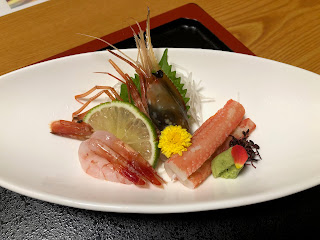
Sashimi at Marukoma Ryokan, Hokkaido

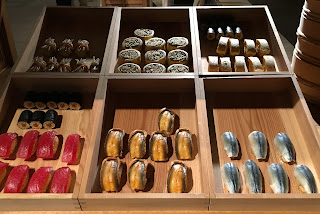
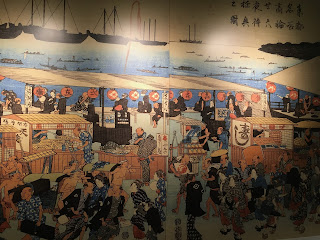
By contrast, sushi refers to vinegared rice served with (often topped by) other ingredients, which can (and often does) include raw fish. Traditionally, sushi was much larger than it is today, and was sold from carts as a quick, mobile meal for workers.

A display of traditional Edo-period sushi (Edo-Tokyo Museum)

Edo-period woodblock print of sushi stands near Edo harbor

Since I'm allergic to fish, most sushi is problematic--not only because the rice is often topped with fish, but because some restaurants use bonito-based dashi (soup stock) when preparing the vinegared rice.

That said, and as counterintuitive as it might seem, I usually can eat sashimi--which is good, because it's one of the most important courses in a traditional Japanese kaiseki meal.

Because the identifying characteristics of sashimi are (1) thinly-sliced food, served raw and cold, and (2)  a beautiful garnish, Japanese chefs riff widely on the theme, even when they're not accommodating an allergy. 

The offerings range from the highly traditional:

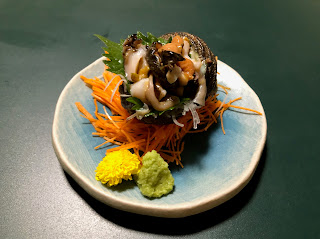
Turbo Snail Sashimi (Wakayama Prefecture)

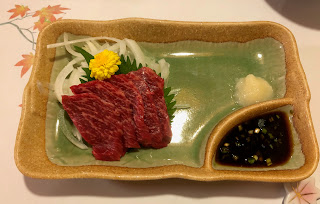
Basashi (horsemeat sashimi - Kaida Plateau, Kiso, Nagano Prefecture)

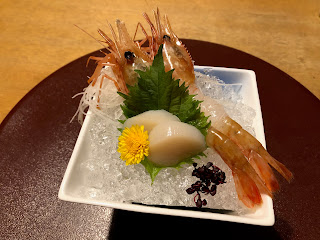
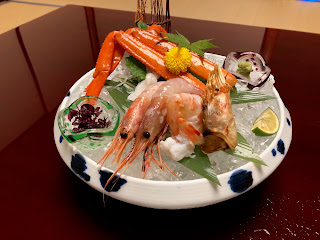
Prawn and scallop sashimi (Iwate Prefecture)

To modern:


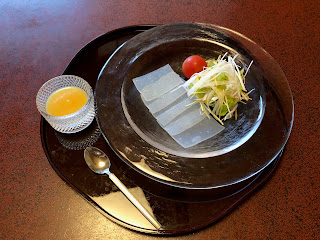
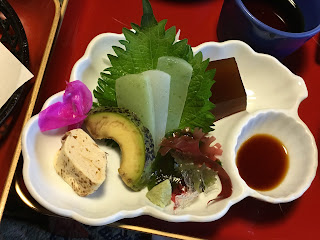
Konjac vegetarian sashimi, Ryokan Iwaso (Miyajima, Hiroshima Prefecture)

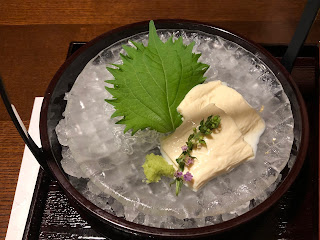
Yuba Sashimi - KAI Kinugawa (Kinugawa Onsen, Tochigi Prefecture)

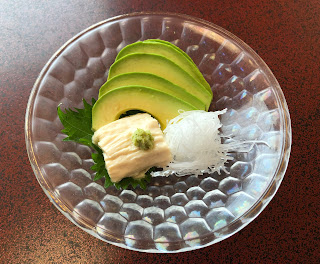
Avocado and Yuba (tofu skin) sashimi, Ryokan Iwaso (Miyajima, Hiroshima Prefecture)

Vegetarian sashimi--like the versions shown above, is not uncommon; in fact, Buddhist temples have been serving vegan versions of sashimi as part of shojin ryori (Buddhist temple cuisine) for thousands of years: 


Konjac sashimi - Ekoin Temple, Koyasan

Mixed sashimi - Ekoin temple, Koyasan (Wakayama Prefecture)

Despite knowing that sashimi had deep roots in Japanese culinary history, I'd never eaten it before coming to Japan, in part because the varieties available in the United States generally involve raw fish. The range of sashimi available in Japan makes it far easier to taste and enjoy--not only for allergy reasons but also because it's more approachable for people who might not be quite ready to dive in and eat the fish-based kinds.

That said, I'll admit the snail was more than a little challenging (and doesn't get better, at least for me, even though I've eaten it more than once), and the idea of eating horses is off-putting for many people too (there's a story behind why I like it, which I'll share at a different time). I haven't met anyone yet who objected to vegetables, though, and yuba sashimi has even converted some non-tofu eaters I know into yuba fans.

Taste aside, sashimi is food elevated to an art, in terms of execution and presentation as well as taste--and usually as beautiful to behold as it is to eat.

Celebration sashimi, Nishimuraya Honkan, Kinosaki Onsen, Hyogo Prefecture


To answer a couple of last, unspoken questions: Yes, I did take all of the pictures and eat all of the dishes pictured in this post--and No, I don't have a favorite among them. With the exception of the snail (for which "challenging" is putting it mildly) I enjoyed them all immensely.

Now I'd like to know: which one would you most like to try?


Sunday, July 18, 2021

Beating the Heat With Japanese Summer Treats

 -- Susan, every other Sunday


Two weeks ago, I took you to dinner in Iwate Prefecture (in northern Honshu's lovely Tohoku region). And since every good dinner needs a dessert, today, I thought I'd share a few of the sweeter treats we use to beat the sweltering heat of a Japanese summer. 

In July, Tokyo temperatures soar into the 30s (or 90s, depending how you measure your degrees) and the humidity rises to a point that will make you sweat in places you didn't even think had pores. By August, we've reached what a friend of mine refers to as the "drinkable air portion of the summer"--and although things cool off almost overnight (and the much of the humidity dissipates) in the first or second week of September, frozen desserts take center stage during the "mushi-atsui" (humid and hot) weeks of summer.

No frozen dessert list is complete without ice cream, and though it's popular in Japan year-round, it's a particular favorite in the summertime.

Matcha (green tea) ice cream at WITHOUT BORDERS digital art exhibition, Tokyo/Odaiba

Ice cream isn't just for dishes, though. You can also find it in creative floats, like this "Winter Fuji" delight available only in the city of Fujinomiya, near the base of Mt. Fuji, in Shizuoka Prefecture. "Winter Fuji" is ramune (soda) flavored--and not nearly as sweet as the color makes it look. The restaurant also offers a melon-flavored, bright green "summer Fuji" for those who want dessert to match the current season.

Winter Fuji ramune soda float


If you want to get your "summer blues" on without the ice cream, the Izu Peninsula has you covered with this very strange concoction called "Blue Hawaii Popping Ice Rocks." Yes, it tastes like a non-alcoholic version of a Blue Hawaii. Yes, the cubes are ice. And yes, it has somehow been infused with something that makes it fizz and pop in your mouth. I won't lie...this one was weird.

Popping Ice Rocks. Verdict: Really, really weird.

For those who prefer desserts in a color that isn't blue, may I present the Owakudani Volcano Coffee Float--served with pride in the restaurant that sits at the top of the Hakone Ropeway, with a view of the smoking volcanic crater of Owakudani. As promised, it's a delicious cup of ice-cold iced coffee topped with vanilla bean ice cream and garnished with a ruby chocolate heart.

Coffee. Ice Cream. What's not to love?

Moving on--but still within the coffee family--may I present the beloved "honey coffee jelly," a slightly sweet (but mostly cool and bitter) cup of coffee jelly, topped with unsweetened whipped cream and a drizzle of Japanese honey. The jelly has the consistency of very solid Jell-o, but is made with agar (a tasteless, vegetarian gelling agent derived from algae) rather than gelatin. This is one of my personal favorites, and coffee jelly (sometimes with, and often without the honey) can be found at many, many places in Japan. You can get this year-round, but it's particularly refreshing in the summertime.


Coffee jelly....mmmmmmm

All of the desserts above are popular ways to beat the heat of summer in Japan, but if you ask most Japanese people to name the most summery dessert of all, the nearly universal answer will be kakigori.


Traditional kakigori with a view

"Kakigori" (かき氷) is finely-shaved ice topped with natural or artificially flavored syrup and fruit or other toppings. Sometimes, it's also finished with a drizzle of condensed milk. Fruit flavors are popular, and most places that serve house-made fruit syrups (as opposed to the carnivalesque pre-packaged syrups, which come in a variety of neon colors) also top the shaved ice with actual fruit, to let you know that you're eating "genuine" syrup too.


"mixed berry" kakigori

Traditional Japanese toppings like Azuki beans and Matcha (powdered green tea) are popular, as are mixtures, like the fresh strawberry and powdered matcha kakigori shown below:
 
Strawberry-matcha Kakigori at KAI Nikko Resort


One of my favorite places to get kakigori is a little specialty coffee shop near my house in Meguro, which only sells shaved ice desserts in the summer (usually from July 1 until September 10). My son likes the tiramisu shaved ice, but I always go for the fresh strawberry - which features an enormous mound of fluffy shaved ice, fresh strawberry coulis, rich strawberry syrup, and condensed milk--all served on the side, so you can doctor your ice mound any way you please.

Before...


And after

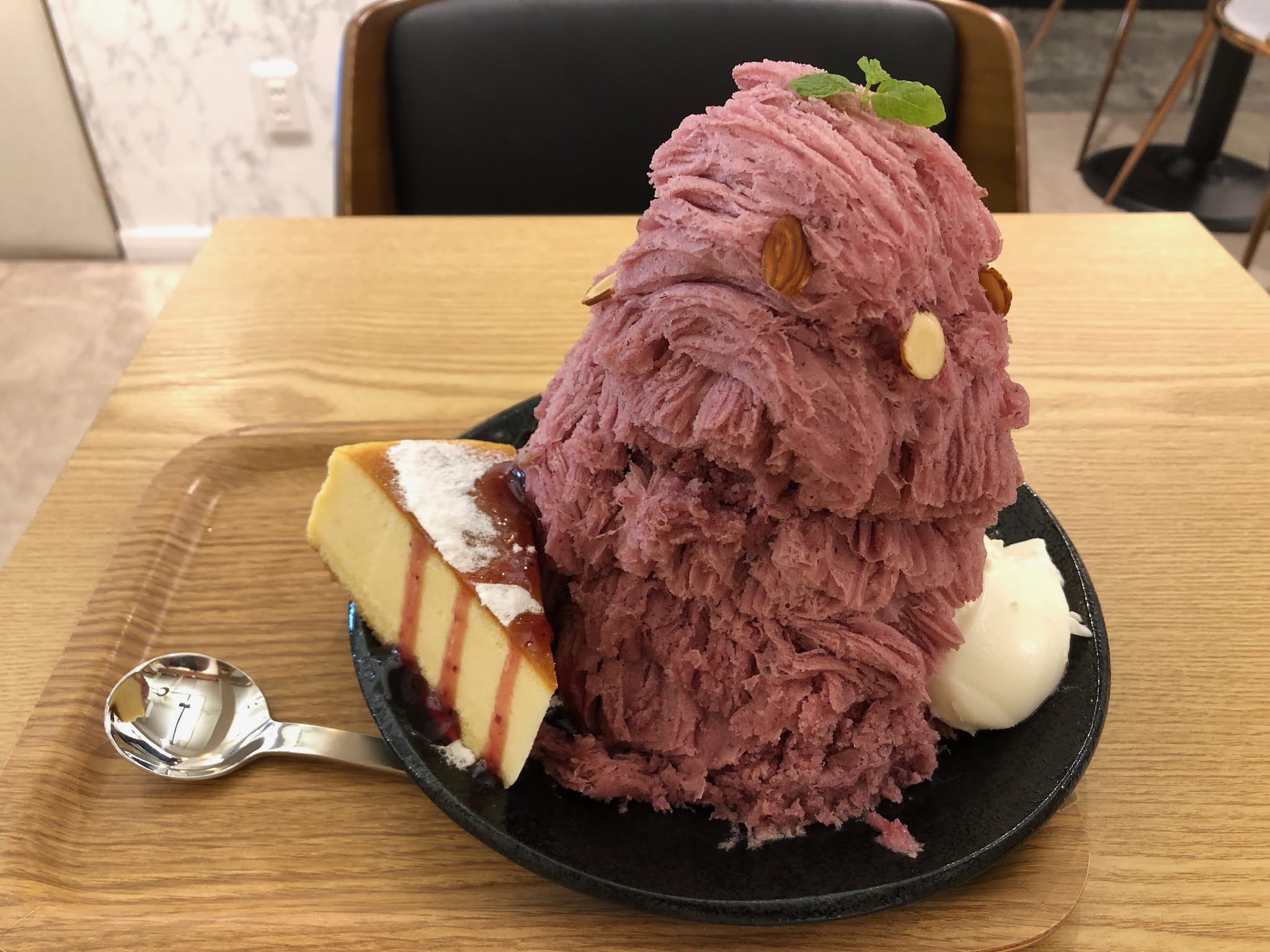
And while we're on the subject of "heaping mounds of ice"--allow me to introduce the bingsu--a Korean form of shaved ice that is gaining popularity in Japan. 

While Japanese shaved ice is typically made from pure, frozen water (yes, I know, that's how most of us make ice), bingsu is often made from blocks of frozen juice, which are shaved and piled high in a way that looks disturbingly like a murdered muppet. (Though also a delicious muppet, to be certain.)


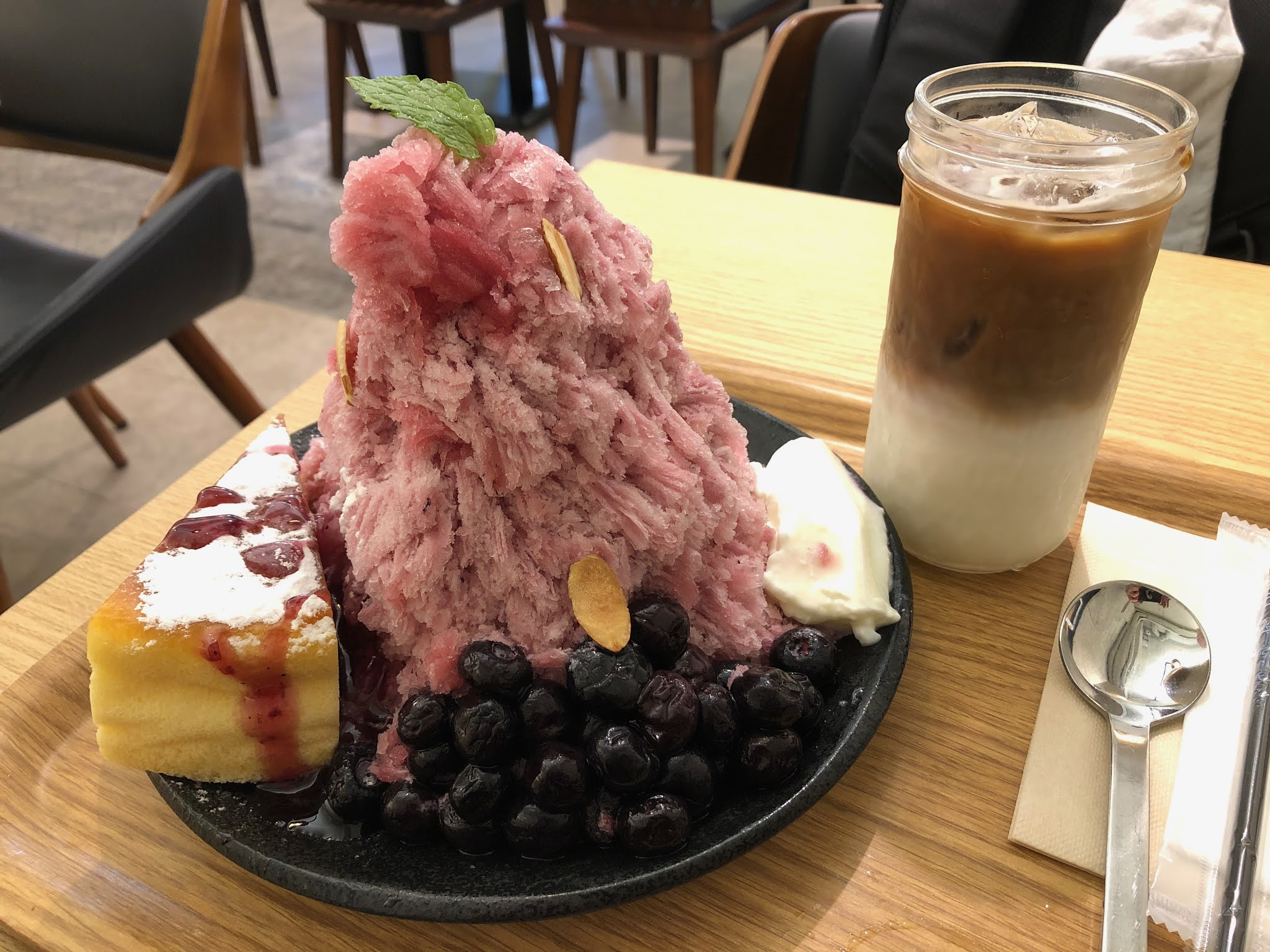
Mt. Homibing...

Most bingsu come with a variety of toppings or sides, like the blueberry bingsu shown above and below (from Homibing, in Tokyo's Omote-sando neighborhood). This one comes with panna cotta, cheesecake, and a massive helping of fresh blueberries, as well as some almonds scattered across the top. 

The far side of Homibing Mountain

And there you have it...a few of the most popular ways to beat the Japanese summer heat! 

How do you manage the rising temperatures in your part of the world?


Sunday, July 4, 2021

A Kaiseki Dinner in Iwate, Japan

 -- Susan, every other Sunday


Japanese food has become so popular around the world that words like "sushi," "yakitori," and "bento" have entered the popular lexicon (and not only in American English, but elsewhere too).

That said, one of the oldest and most culturally significant Japanese cooking styles--the formal, seasonal, coursed cuisine known as Kaiseki Ryori ("kaiseki" for short), is far less familiar outside Japan. It's a pity, too, because a proper kaiseki meal is a feast for all five senses, and an experience I wish everyone could experience at least once.


Private dining room for kaiseki, Yusen Shidate

I won't go into kaiseki's pedigree and history in depth (if you're interested, I'll have a post on it on my blog in the next few weeks); for now, it's sufficient to explain that it evolved over centuries, starting with shojin ryori (temple cuisine), developing further as part of Kyoto's ancient tea ceremony culture, and finally becoming an art and a discipline in and of itself. 

TL;DR: kaiseki is a centuries-old form of serving a seasonal meal in small courses, each of which complements the others, which aims to tell a unique, sensory story in food, celebrating both the season and the local ingredients from the area where the meal is prepared and served.   

Regrettably, I can't take all of you physically to Japan to eat kaiseki, but I can share a spectacular kaiseki meal I experienced last winter at Yusen Shidate, a traditional onsen ryokan (hot spring inn) in Iwate Prefecture, five hours north of Tokyo in Honshu's Tohoku region.

Setting is an important part of kaiseki meal, and traditional ryokan serve kaiseki course by course, either in the visitor's guest room or in a private dining room, in both cases at a table that has a view of a garden or other natural setting.  Yusen Shidate uses private, one-table dining rooms with a view of the river and forest beyond:

Dinner View, Yusen Shidate

Courses are brought to the table one or two at a time, with the pace set by the guest--but not discussed. A skilled kaiseki server will gauge the guest's progress and bring the courses at precisely the pace required to ensure the guest always has a course to enjoy, but slow enough to ensure that the diner is not rushed through the experience. (For this reason, a kaiseki meal can often take 90 minutes or longer--the meal I'm sharing here took almost two hours from start to finish.)

I should mention, before we start, that Yusen Shidate kindly adjusted the menu to accommodate my allergy to fish. (Technically, to fish oil, which is why I can eat shellfish, but not finned fish.) The traditional version of this meal would have included at least one fish course, and the sashimi dish would likely have included raw fish as well as shrimp and scallops.

That said...let's begin our meal.

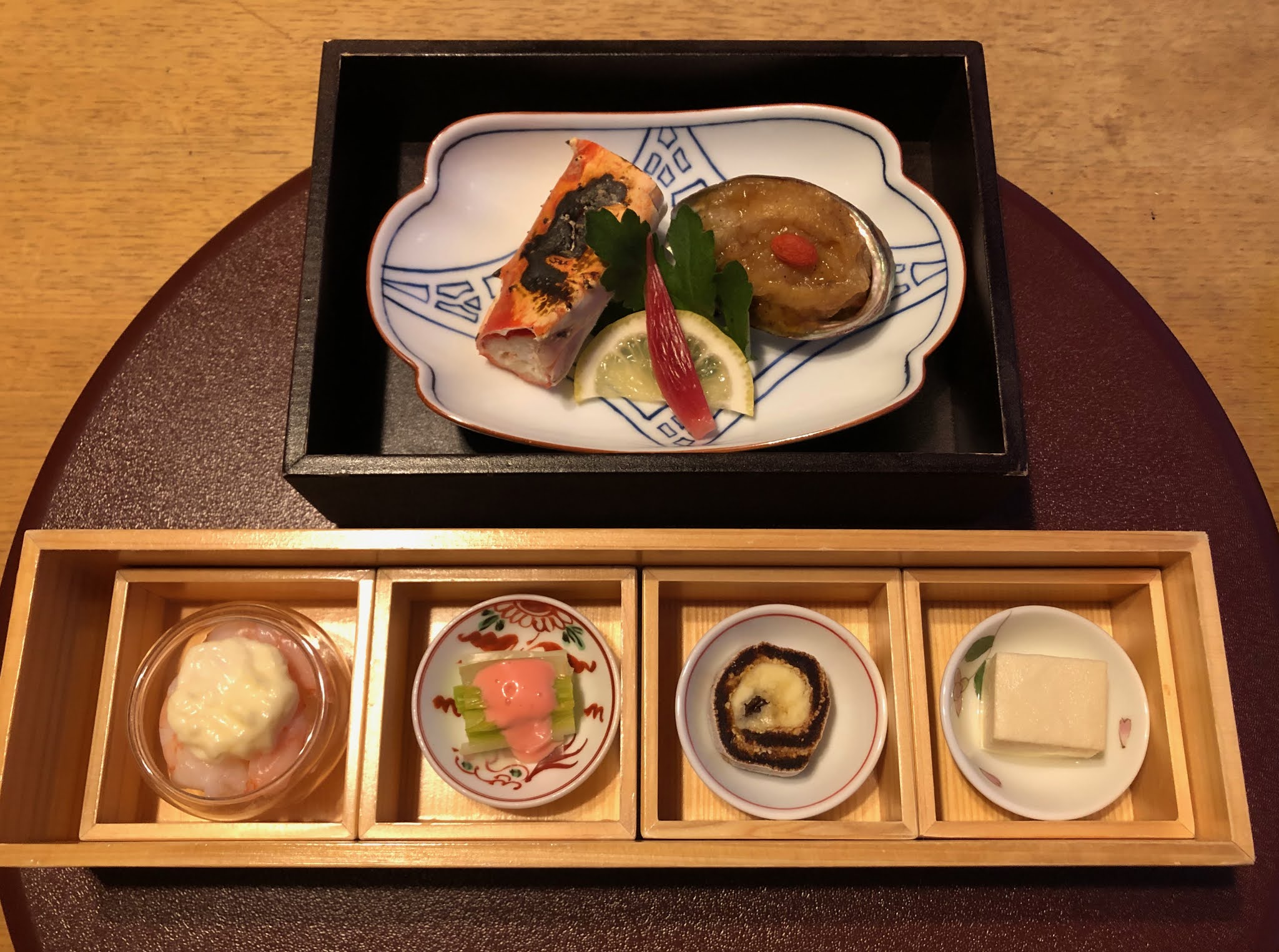
Kaiseki always begins with an appetizer course, known as zensai or sakizuke. At Yusen Shidate, the appetizer course was served simultaneously with the second course, known as hassun, which customarily evokes and pays homage to the season in which the meal is served. 

zensai and hassun

You can already see why I called kaiseki a feast for all five senses. Zensai traditionally consist of no more than a single bite, and are served in groupings that range from three to nine different dishes, each of which will showcase different colors, textures, and flavors. Each one is also an individual work of art.

Below, from left to right: Iwate shrimp with house-made mayonnaise, asparagus with house dressing, butter-fig roll, and house-made tofu.
 
zensai

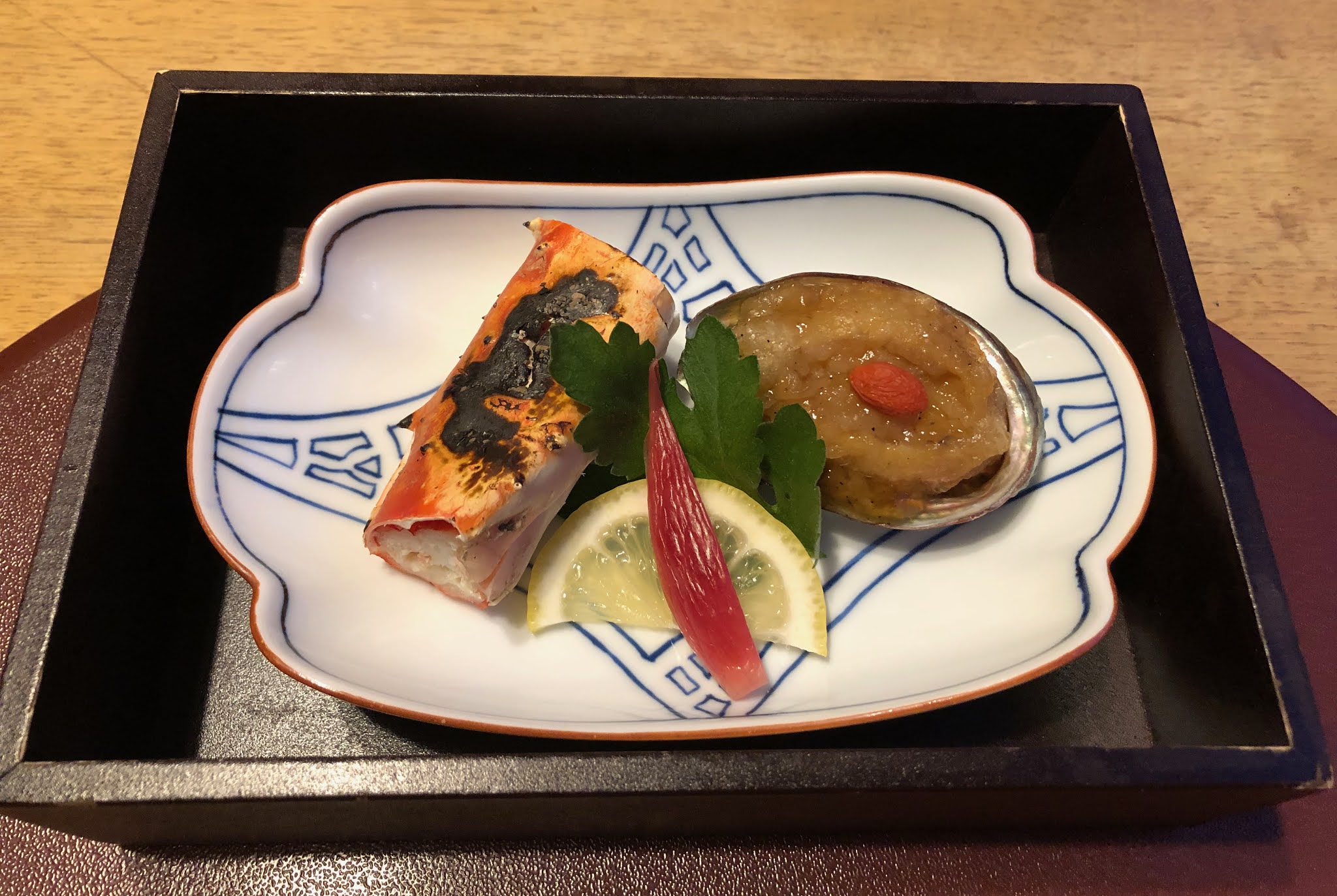
Hassun is an important dish, because it sets the stage for the meal to come. I ate this meal last February, so it carried a strongly winter theme--as well as a reminder that Iwate, which borders the Pacific Ocean, is known for its fresh, delicious seafood. The dish below is snow crab grilled over locally-produced Iwate charcoal (with no sauce or seasoning other than salt, to ensure the flavor and texture of the crab shines through) and a whole grilled abalone topped with miso. 

hassun - winter in Iwate

The dish below was a fifth zensai, served separately: a tofu mousse topped with a gelee of seasonal vegetables.
bonus zensai...

Most Japanese dishes are exceptionally flavorful, but not heavily seasoned--and most traditional ryokan do not put salt or pepper on the table. Conceptually, the chef is supposed to have seasoned each dish perfectly before it is brought to the table, making condiments unnecessary--and during my years in Japan, I've found that's true. I have never needed or wanted to season any dish while eating a kaiseki meal.

The one exception to this is wasabi--a Japanese root similar to horseradish, which is used to season certain dishes (most notably, sushi and sashimi, but it's used for beef and other courses too). Most of the time, we see wasabi in pre-grated form (and when you do, note that it's not 100% real wasabi, but rather wasabi mixed with horseradish, because true wasabi loses its heat within minutes of being grated). The most traditional kaiseki service often includes the wasabi root itself, so the diner can grate it immediately before use.

Wasabi and a traditional ceramic grater

The next course to arrive will be sashimi--more accurately, mukouzuke, or seasonal sashimi. (A note: in the West, it's common to use the term "sushi" as a catch-all for raw fish dishes, but strictly speaking, "sushi" involves raw fish or other ingredients served on rice, whereas sashimi involves raw meat, usually thinly sliced, but not served on or with rice. Kaiseki meals sometimes incorporate both, but the most traditional forms are served with sashimi rather than sushi.)

That evening at Yusen Shidate, my sashimi course involved a pair of perfect prawns and sliced raw scallops. Sometimes people flinch at the idea of raw shrimp, but I adore them. The good ones (like these) practically melt in your mouth, and taste very sweet, without any "shrimpy" or fishy taste, and no aftertaste at all.


prawn and scallop sashimi


Nimono comes next--a course consisting of vegetables simmered in broth with meat or tofu. On this night, the nimono course involved a purely fish-based dish, so the ryokan substituted a non-simmered, non-fish option: a crab claw salad, Iwate style.

not kimono, but delicious anyway

The simmered course is traditionally followed by a soup course--and this one, I could eat. The dish below contains a shrimp and lobster broth with fresh snow crab and a variety of seasonal vegetables.

the soup course

Getting full? Hopefully not, because we're still only about halfway done.

After the soup, the diner receives the centerpiece(s) of the kaiseki meal--a grilled dish and/or a specialty dish like a hot pot or other "cooked at the table" specialty. Depending on the number of courses being served, these may or may not be separate dishes. In my case, the shiizakana (specialty dish) was grilled Iwate beef (a specialty form of wagyu beef produced from Japanese shorthorn cattle--and one of the only forms of wagyu that doesn't come from Japanese black cattle). It came to the table sizzling on the scorching hot rock beneath it.

Beef. It's what's for dinner.

At this point, the meal begins to wind down. The dishes get smaller and lighter (though no less flavorful or beautiful) as we head toward the end of the meal. The next traditional course, mushimono, translates "steamed dish"--and the most traditional steamed dish is chawanmushi--shown below--an egg-based savory steamed custard filled with vegetables or seafood. On this night, the chawanmushi featured mushrooms and leeks.


mushroom and leek chawanmushi

Wanmono, or the "lidded/covered dish" comes next--in this case, a beautiful soup-like stew filled with locally-grown soba, local pork, and vegetables:


stewed soba

In the most extravagant kaiseki meals, the lidded dish is followed by a vinegar-based vegetable dish called sunomono. However, on this night, the meal did not include that course, and proceeded directly to the very traditional soup-rice-pickles combination shown below. Steamed white rice (which is not topped with soy sauce, or anything else, in a traditional Japanese meal, as the rice itself is of such high quality that it tastes delicious plain), miso soup (at Yusen Shidate, enhanced with yet more snow crab, as a reminder of the fact that I was in Iwate), and house-made tsukemono, or pickles--three dishes customarily served together, along with tea, to close out a sumptuous feast.

The almost-last three courses

But no feast would be complete without dessert, and kaiseki ryori does not disappoint. Kaiseki desserts customarily feature fruit--which in a snowy Iwate winter means winter melon, a strawberry (they're a winter fruit in Japan--a fact that surprised me when I first moved here), a bite-sized matcha mousse cake, and a tiny scoop of delicately-flavored sherbet.

Dessert

By the time the meal was finished, the sun had set, but the view remained spectacular.


The pictures above don't do justice to the wide variety of lovely aromas, diverse textures, and truly special tastes the meal contains, but I hope they do make you eager to come to Japan and experience kaiseki for yourself. 

Incidentally, a lot of people see photos like this and comment on the amount of food involved in a traditional kaiseki meal. However, the portion sizes are much smaller than those commonly served in Western restaurants. If you look closely, you'll see that most of the dishes actually contain somewhere between one and five bites of food--much less than an entree in a Western restaurant.

That said, I won't lie: it can be quite a challenge to eat it all. (This is another reason for the leisurely pace of service--to allow the diner the time to enjoy and appreciate the food at a slower pace.)

So...yes or no? Is a kaiseki experience on your to-do list?