Showing posts with label Japanese festivals. Show all posts

Sunday, June 11, 2023

Another Classic From Susan Spann: From Tohoku With Love...and Horses.

[Five years ago yesterday, Susan announced her self-imposed challenge to scale 100 Japanese peaks over the next 12 months. Another challenge she met and overcame.]

Sunday--Susan 

 
June is here, and with it the official start of my hyakumeizan odyssey--over the next twelve months, I'll be attempting to climb all 100 of the nihon hyakumeizan (100 Famous Mountains of Japan). It's a hefty task, considering that the Japanese climbing season starts in June and ends when mid-to-late November snow shuts off the peaks.

For the mathematically inclined, that basically means I need to climb a mountain every other day from now until the snow flies.

The summit of Mount Iwaki - hyakumeizan #2
Did I mention the rainy season starts in June?

With little time to spare, I kicked off the climbs with a trip to Tohoku, a region located in the northernmost part of Japan's largest island (Honshu).
Looks a little like Mordor, if you didn't know better...

To test my fitness, I planned for a pair of back-to-back climbs with a single rest day in between.

Half way to the summit - and pointing where I need to go.
Fortunately, the weather and my knees held out, and I summited all four peaks.

The summit of Mount Hakkoda (this is where the previous photo pointed).

I planned to spend my rest day in Morioka--a city I knew little about, aside from the fact that it's known for the Chagu Chagu Umakko Matsuri (Festival) that takes place the second weekend in June (this weekend, in case you're counting).

A horse decked out for Chagu Chagu Umakko

The festival originated centuries ago, when farmers in the Morioka area festooned their horses with elaborate costumes and bells ("chagu chagu" is the sound the bells on a trotting horse make in Japanese) and paraded the horses to the local Shintō shrines for special blessings. Horses were exceptionally valuable, and their labor was critical to the farmers' survival, so the farmers hoped the festival would ensure the horses' health and continuing welfare.

Today, the festival still involves parading the jingling horses to the shrine in Morioka. Children in traditional costumes ride on the horses' backs--hence the last word, "Umakko," which means "horse children."

I couldn't afford to delay my first Tohoku climbs by a week to see the festival, but it bummed me out that I'd miss the horses. (I've loved them all my life, and rode competitively in high school.)

Imagine my surprise when I reached Morioka for my rest day . . . and discovered it coincided with a matsuri (festival) celebrating all of the festivals of the Morioka region--including Chagu Chagu Umakko!

Hooray! A festival!

I watched a parade with dancers from several of the regional matsuri:

The name of this one basically translates "flower hat festival"
Ate festival food near the site of the Morioka Castle ruins, and spent a delightful almost-hour at the "Chagu Chagu Umakko Horse Encounter" park, getting up close and personal with some of the hundred horses that would participate in this weekend's matsuri.

The regalia looks heavy, but these draft horses can bear the weight.
Including one very sleepy little foal:

At one point he was actually snoring.

The lesson here--and it's not a new one--is that travel often provides us with amazing opportunities if we don't over-schedule and leave ourselves open to the adventure that presents itself. Whether you want to attribute it to God, the Universe, Karma, or just turtles all the way down, it's impossible to deny that there's a larger force than us at work out there, and that it's pretty darn amazing at planning really cool surprises, if we leave ourselves open to them.

A lovely surprise indeed.


I came to Japan in search of adventure and, as always, it does not disappoint. I'm looking forward to seeing what the rest of this adventure has in store.

 --Susan

Sunday, December 22, 2019

Hatsumode: A New Year Tradition in Japan

--Susan, every other Sunday

For my last post of the year, and my last in the 20-teens, I'm taking you into the future  . . . for a look at two of my (many) favorite Japanese traditions:

Kamado Jinja, in Kyushu, just after New Year 2019

Joya no Kane (除夜の鐘) and Hatsumode (初詣)

In Japan, New Year's Eve is not customarily celebrated with Bacchanalian revels and confetti. Instead, most people spend the evening at home (or eating out) with family, preparing to welcome the New Year--and all the potential promises it holds.

Sensoji, Tokyo's oldest Buddhist temple

As midnight approaches, people flood into the grounds of Buddhist temples across Japan. Precisely at midnight, the priests begin to run the enormous bronze bell(s) on the temple grounds. Each bell is run 108 times - one for each of the passions and desires that Buddhists believe bind people to this world, and prevent us from reaching enlightenment. The ringing also creates a bridge between the old year and the new.

Attending joya no kane is said to bring good fortune, and good health, in the year to come. It is also one of the many sacred rituals that mark the passage of time, the seasons, and life here in Japan.

One of many bells that will welcome the new year

On New Year's morning, Japanese families flock to Shinto shrines (and Buddhist temples) for hatsumode, the first shrine visit of the New Year.  Since January 1, 2, and 3 are holidays here in Japan, some people also visit on January 2 or 3 (and people actually make hatsumode visits to shrines and temples throughout the month of January, though traditionally you're supposed to do it during the first few days of the new year.)

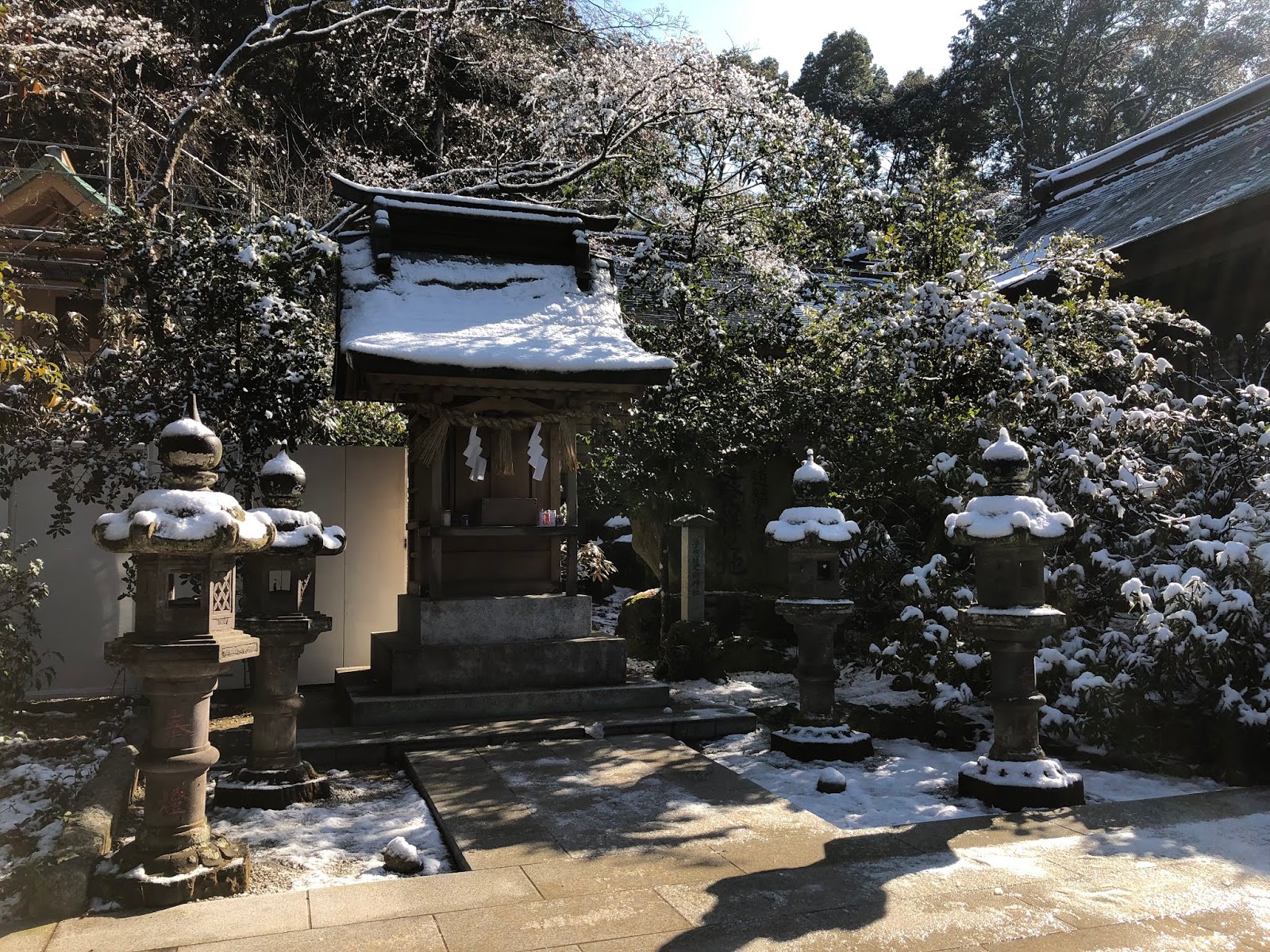
Kamado Jinja, dressed in a fresh coat of snow for New Year

Most shrines offer special goshuin--stamps and calligraphy, placed in a special book called a goshuincho--on New Year's day, as well as hamaya, or "demon breaking arrows."

My hamaya from 2019 - the year of the Boar

Purchasing a hamaya, and displaying it in your home, is supposed to provide protection for your house and family during the year to come. The following January, you return the arrow to the shrine, where it is burned in a sacred fire.

Many shrines are located at the base of mountains; in most cases, there is also a shrine on the mountaintop.

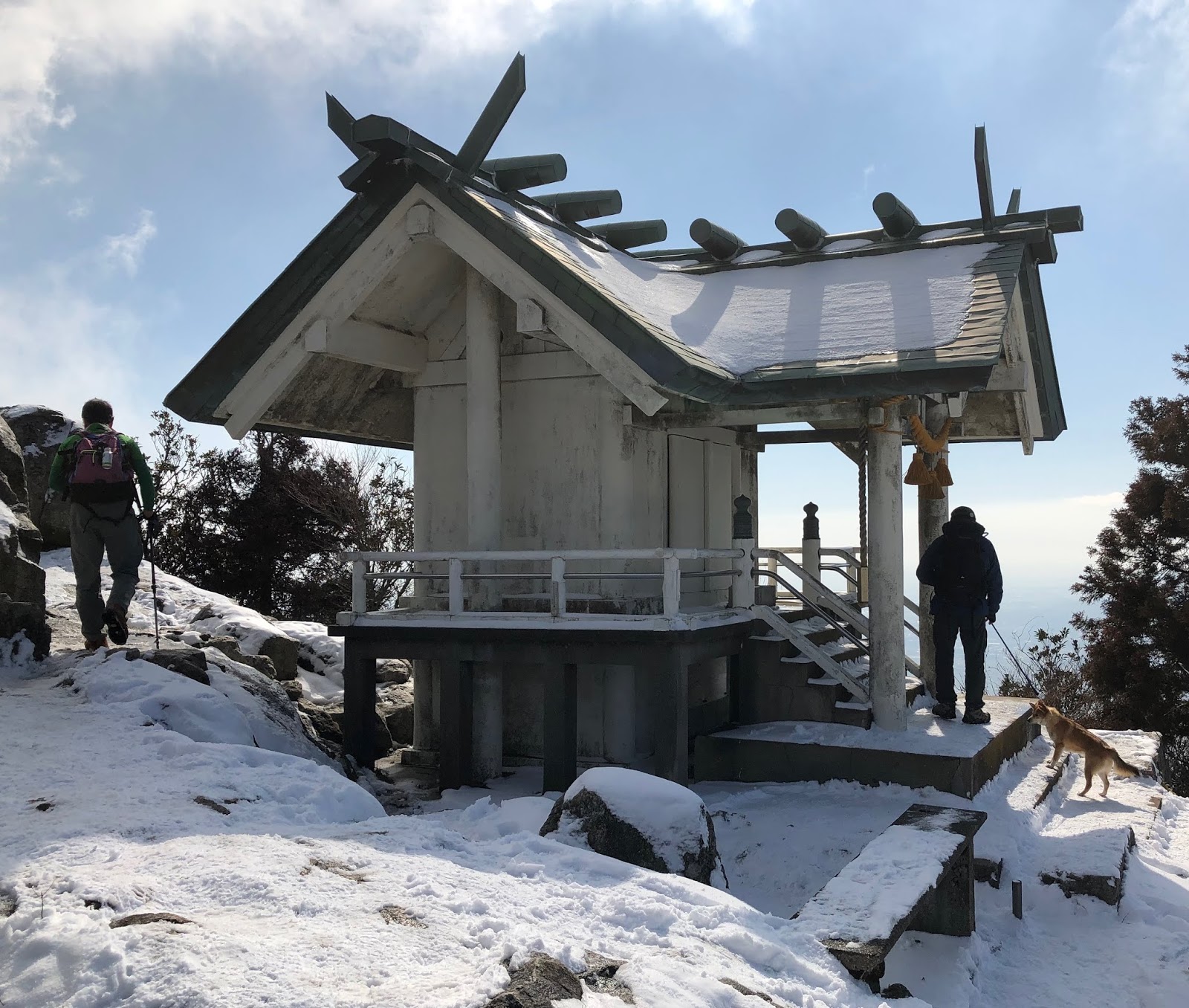
Kamado Jinja, atop Mt. Homanzan

Those of us who like to climb will often make our hatsumode visit to a mountain shrine, and climb to the top before getting our goshuin and hamaya. 

A beautiful January morning on Mt. Homanzan


(There are a lot more people on the mountains in winter than you might think, though the vast majority do stay at the bottom.)

Happy New Year 2019!

This year's joya no kane and hatsumode will be particularly meaningful, as we send out 2019 and welcome 2020--the start of a whole new decade.

Ready to welcome 2020 - the year of the Mouse!

As it happens, they will have particular meaning for my family, because my parents, as well as my brother and his wife, are coming to spend the holidays in Japan, which means that--in accordance with Japanese tradition--I will have my entire extended family with me to welcome the New Year.

(Me, waiting for my family...)

I wish each and every one of you a happy, blessed and bright New Year, wherever you are and whatever your traditions.

What are your plans to welcome 2020?

Sunday, June 10, 2018

From Tohoku With Love . . . and Horses

--Susan, every other Sunday

June is here, and with it the official start of my hyakumeizan odyssey--over the next twelve months, I'll be attempting to climb all 100 of the nihon hyakumeizan (100 Famous Mountains of Japan). It's a hefty task, considering that the Japanese climbing season starts in June and ends when mid-to-late November snow shuts off the peaks.

For the mathematically inclined, that basically means I need to climb a mountain every other day from now until the snow flies.

The summit of Mount Iwaki - hyakumeizan #2
Did I mention the rainy season starts in June?

With little time to spare, I kicked off the climbs with a trip to Tohoku, a region located in the northernmost part of Japan's largest island (Honshu).
Looks a little like Mordor, if you didn't know better...

To test my fitness, I planned for a pair of back-to-back climbs with a single rest day in between.

Half way to the summit - and pointing where I need to go.
Fortunately, the weather and my knees held out, and I summited all four peaks.

The summit of Mount Hakkoda (this is where the previous photo pointed).

I planned to spend my rest day in Morioka--a city I knew little about, aside from the fact that it's known for the Chagu Chagu Umakko Matsuri (Festival) that takes place the second weekend in June (this weekend, in case you're counting).

A horse decked out for Chagu Chagu Umakko

The festival originated centuries ago, when farmers in the Morioka area festooned their horses with elaborate costumes and bells ("chagu chagu" is the sound the bells on a trotting horse make in Japanese) and paraded the horses to the local Shintō shrines for special blessings. Horses were exceptionally valuable, and their labor was critical to the farmers' survival, so the farmers hoped the festival would ensure the horses' health and continuing welfare.

Today, the festival still involves parading the jingling horses to the shrine in Morioka. Children in traditional costumes ride on the horses' backs--hence the last word, "Umakko," which means "horse children."

I couldn't afford to delay my first Tohoku climbs by a week to see the festival, but it bummed me out that I'd miss the horses. (I've loved them all my life, and rode competitively in high school.)

Imagine my surprise when I reached Morioka for my rest day . . . and discovered it coincided with a matsuri (festival) celebrating all of the festivals of the Morioka region--including Chagu Chagu Umakko!

Hooray! A festival!

I watched a parade with dancers from several of the regional matsuri:

The name of this one basically translates "flower hat festival"
Ate festival food near the site of the Morioka Castle ruins, and spent a delightful almost-hour at the "Chagu Chagu Umakko Horse Encounter" park, getting up close and personal with some of the hundred horses that would participate in this weekend's matsuri.

The regalia looks heavy, but these draft horses can bear the weight.
Including one very sleepy little foal:

At one point he was actually snoring.

The lesson here--and it's not a new one--is that travel often provides us with amazing opportunities if we don't over-schedule and leave ourselves open to the adventure that presents itself. Whether you want to attribute it to God, the Universe, Karma, or just turtles all the way down, it's impossible to deny that there's a larger force than us at work out there, and that it's pretty darn amazing at planning really cool surprises, if we leave ourselves open to them.

A lovely surprise indeed.

I came to Japan in search of adventure and, as always, it does not disappoint. I'm looking forward to seeing what the rest of this adventure has in store.