Showing posts with label Travel. Show all posts

Wednesday, October 22, 2025

From London With Love

 Sujata Massey


Reporting live from the UK! I left Baltimore in mid-October for a little more than a month of travel, experiencing autumn season through a few countries in Europe. First stop: London, England. Tony and I stayed in an inner-ring neighborhood called Marylebone (pronounced Marly-bone). The neighborhood began as a medieval village and slowly developed into an urban Georgian community with streets laid out in a grid and terraced houses. 


Halloween anticipated in Marylebone


Everywhere is classical architecture


Marylebone Road was laid out in the late 1700s as a direct route into the heart of the city. Later, handsome Victorian mansion flats were built up, a train station followed, and in the 1930s BBC opened its broadcasting house here. London’s top physicians set up practices on Harley Street, further establishing its importance. But a large number of vacancies along the Marylebone High Street was troubling; not until the 1990s did the community activively recruit retailers to come in—and blessedly, this was done for quality, not the ability to rent. Hence, it’s a neighborhood of bookshops (even carrying my work, hooray!) small restaurants and coffee shops, and lovely household goods and clothing. We plenty of embassies and an international school, so the air rang with the soft accents of many nations.


Daunt specializes in travel and foreign-set books


I’m a huge fan of neighborhoods where one can walk to everything, including three nearby tube stops (Baker St, Edgware and Marylebone). We were near Holland Park, another posh neighborhood that has a significant history of artists. In the late Victorian period, and estimated 1500 artists had studio/residences in London, a fact that seemed staggering given what we generally think about artist earnings, and the high price of terrace houses in London.


Leighton House


I’ve longed to visit Leighton House, the home of Frederic, Lord Leighton (1830-1896), an artist who painted portraits of many nobles and was on faculty at the Royal Academy of Arts. The artist grew up on the Continent, a fact that engendered lifelong suspicion of his nationality and religion. He ignored the snobs and threw himself into frequent travel to the Middle East and North Africa, where he gathered inspiration for painting and his home. Leighton, a lifelong bachelor, collected tiles, antiquities and textiles, mostly from Syria and Algeria, and also had British craftsmen replicate designs when he began furnishing his extroardinary, custom-built residence in the 1870s. 


The home’s stunning center is called Arab Hall, a vibrant, turquoise room covered in medieval tiles from Damascus although the original inspiration was a 12th-century Sicilian palace room. Leighton’s friends and fellow artists working on his interior included the potter William DeMorgan and artist-illustrator Randolph Caldecott.  This cross-pollination of friends and cultures is an idea that has fueled my own writing so I felt at home as I slowly toured the grand residence, which also features an addition holding modern art from the Near East and North Africa donated or loaned recently. In the original house rooms we can admire paintings by Leighton and his friends, who included John Singer Sargent, John Everett Millais and Lawrence Alma-Tadema.


Frederick Leighton was held in high esteem by Queen Victoria, who awarded him a baronetcy the day before his death. Having seen his work, read some words and experienced his house, I feel as if I’ve been in the lost world of a high Victorian aesthete who played a formative role introducing the arts of the East into Western society.


Sambourne House


A few minutes’ walk away lay Sambourne House, another Holland Park artist home that had the benefit of original furniture and artwork by its former owner, Edward Linley Sambourne, a cartoonist for Punch Magazine. The house in the midst of a terrace group was part of a respectable middle class neighborhood, a step down from the grandeur of Leighton House, but all the more interesting to me because of its original wallpapers, pens, dishes, and every sort of bric-a-brac imaginable.


Eddward Linley Sambourne’s drawings


The artist, who went by the name Linley, was born in 1844 and was an apprentice marine engineer who made caricatures and studied art for pleasure. He was discovered by an editor at Punch in the 1860s and thereafter had a booming career making finely detailed, satirical illustrations. His wife, Mary Ann, and two children, lived a happy and creative life. 


It was elating to travel through this house of a commercial artist and feel a kinship in design style. Both Mary Ann and Linley passionately decorated, occasionally having differing views of wallpaper and a room’s best use: who doesn’t live this way? Sambourne House is an epic example of the Aesthetic and Arts&Crafts movements. The home displays rich, deep colors that speak of cozy autumn and has timeless William Morris wallpapers in so many rooms, even that of the home’s maidservant. I loved seeing Sambourne’s drawing table and the photographs he’d made of friends poised in dramatic positions that he’d then work with to make his dynamic cartoons with charming Victorian flourishes.


London has always been a place of fashion—from the Regency architects making houses with grand rooms, to today’s international stylemakers wearing the perfect flowing raincoats and barrel jeans as they tread along Marylebone High Street. In just five days, I had adjusted not only to Greenwich time, but tippled down a historic rabbit hole. In fact, we went for the Alice in Wonderland tea at Sanderson’s Hotel the very next day.


Alice of Wonderland tea at Sanderson’s Hotel


Wednesday, July 30, 2025

To Be . . . or not to Airbnb?

 Sujata Massey


I recently finished writing an honest 5-star review for the charming cottage in East Nashville. As you probably guessed, I booked it through the business website, Airbnb. Isn’t that the first place one consults when looking for an overnight stay far from home? And while I was grateful for a smooth, uneventful stay in an air-conditioned house in what seemed like the hottest city in America, I didn’t feel 100 percent about it. 

I am trying to kick the Airbnb habit. But it’s hard. Looking at the photo above, shot from the porch of a Victorian home Airbnb in Bayfield, Wisconsin, you can see how much good luck I've had with Airbnb.

Still, I’ve heard a lot of negative chatter about Airbnb this summer. In June and July 2025, local people came together to mount mass demonstrations throughout Europe protesting the rampant and unregulated short-term rental culture in their cities and towns. It happens like this. Tourists and digital nomads blow into town during good weather—which in Southern Europe, can run most of the year. They book themselves into apartments for anywhere from a few days to six months. These mostly-millennial and Gen Z folk can pay rents that are sometimes quadruple the regular rate for long-term local renting. 


We stayed in the tall house just beyond car


This desperate situation has arisen because landlords are commonly evicting long-term tenants to turn ordinary flats into souped-up temporary rentals. Local people on salaries that might have allowed for 500 euros rent per month maximum are out in the cold. Now they may have to move from their hometowns to cheaper places, live in cars, or stay with their parents forever. In Crete and on other Greek islands favored by tourists, locals often can only find apartment rentals for 8 or 9 months of the year—the non-tourist months. I’ve seen news reports where Greek and Spanish working people have become homeless and live in their cars. A similar housing crisis is playing out in Dublin, Ireland, not only for reasons of tourism and nomadic workers, but because of mass permanent migration of wealthy foreigners taking advantage of low taxes.


Especially in Barcelona, the summer protests have involved firing flares and water guns at hotels, tourist vehicles and even some cafes where tourists are sitting. Less in-your-face protests in the Netherlands, Greece, Italy and Portugal. This is a spread from similar tourist protests in Spain in 2024.  Many tourists staying in countries during the protests have expressed an uncaring attitude, usually reciting the old cliche that foreign dollars make these countries prosper. Some people prosper, to be sure. But not the everyday Joe.


Our historic St Paul duplex lodging is on right


In the US, short term rental housing companies include the company VRBO (Vacation Rental By Owner), and others in addition to Airbnb. And this tourism option has impacted lots of cities including my childhood hometown of St. Paul, Minnesota. In St. Paul, downtown hotels are losing business, because businesspeople travel less frequently, and the parents visiting the area's college kids have the chance to stay a few blocks away in historic houses like the one pictured above, where I stayed in 2022 during a chilly weekend. In a variation of this concerned college-parent theme, I booked the Nashville cottage in order to have four or five days to help my college-bound son find and lease his first apartment. I liked staying in a quiet place with free parking and no buses full of drunken bridesmaids. 


Neel and Tony and I found him an apartment, but it was expensive than I expected. In Nashville, most apartments seemed to be in the $1800 to $3000 price range. Wistfully, Tony and I recalled an era when rental prices didn’t  rival house mortgages. In the mid-1990s, we rented a 2 BR, 2 BA apartment in a large 1920s Baltimore building for $1000 a month plus utilities, with just two washers and dryers for everyone to use in the haunted basement. We rose early to find a free machine to wash clothes, but we did manage to save money and buy our first house six years later.


We really liked our apartment, but we absolutely loved our first house, and the two that have since followed. Houses have personalies and quirks that feed into the allure of staying overnight somewhere, in privacy. 


There’s a bit of a gamble with each Airbnb. I punch in a code, turn a knob and hope that the place matches the pretty website photos. I feel lucky when the place is lovely, filled with comfy sofas, tasteful art, and more than one bed and bathroom.  There also have been times when the place I booked reeks or has uncomfortable bedding, anemic plumbing and no more than a two plates and two glasses in the cabinet. And what about the always-recording Alexa device left plugged in? Warning: if you leave a critical review about any of this on Airbnb—the owner might get their revenge by grading you as a terrible guest. 


During our recent two-week-long trip to Greece, Tony and I traveled widely. We stayed in three small hotels, but we started off with four nights in an Airbnb in Chania, Crete. Our abode was a tiny, traditional house just one room wide with a steep, winding staircase that went up three stories. It was a blessing to have a separate floor to tiptoe down to during restless nights with jetlag. More recently, in the East Nashville Airbnb, we enjoyed morning coffee on the back porch overlooking a yard and forested area. A good house, stocked by a caring person for guests, is a haven.


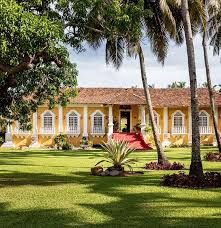
Silva Heritage is called "Home Stay" hotel in Goa, India


Silva's 300-year-old farmland seen from room's balcony


Airbnb meant “air bed and breakfast” originally. The first Airbnbs I heard about were spare rooms in someone’s apartment. This type of arrangement is similar to being a “Paying Guest” in someone’s bungalow in India, or pensione in Italy, or domatia in Greece. And speaking of domatia, I remember fondly staying in several during travels to the Cyclades back in the late 1980s. In the pre-internet days, the only method the owners could attract you was by coming in person to the port, calling out, and holding up signs with photos of the lodging.


I find the advantage to a true homestay is the cultural connection with its owners who can help you in so many ways. We were saved by the kindness of our Airbnb owner in Chania, who did live next door and communicated in Greek with the local airport to deliver our lost luggage. It seemed to me that the little house we stayed in was probably family property, rather than investment, because she told me that her electrician husband had done all the complex lighting in the house. However, a faraway management company had come to handle the bookings and billings in recent years. 


Here I am, pondering whether there is any chance for change--or if this is an inevitable, permanent reshaping of who gets to live where. Can governments fix this for the better? And what would shift things to send more tourists into hotels and thus save lodging for year-round people? 


Hilton and Marriott have been offering for years all-suite hotels that are budget- and family-smart, but rather short on charm. Different hotels could reshape their existing infrastructure to include more genuine, two- and three-room suites with homey features—including coffeemakers and microwaves, which seem to vanish the more a room costs. And why can't a good hotel have some washers and dryers, now that same-day laundry valet isn't always offered? 


Airbnb Victorian cottage in Lewes, DE 


Inevitably, travelers press on. We can dare to make our journeys with the intent to speak at least a few words of the local language, and to perhaps stay in towns where there aren't too many of us. I acknowledge there are some countries and towns where Airbnbs aren’t such a drain on the local housing market, and renting one’s house might be important income for someone who doesn’t have paying work. It's just that when a particular town becomes too famous and too popular, that the problems begin.


Right now, I am in the slow--planning stage of various trips to  the United Kingdom, Greece, and Spain. This time, I’m researching smaller hotels and actual bed-and-breakfasts. Do b&bs still exist? If you know a good one, tell me.

Wednesday, March 12, 2025

Where is this?

SUJATA MASSEY 


I traveled in India this winter. Have you been to this same place?


Relax! The tigers are stone


Very large medallions around the lights


Sweet children, one of whom got this house


Commemoration of British and Indian trooping celebration


Nets over the sky keep out birds


So many grand performances happened here


Somebody's got to polish the throne

So, can you guess where I visited?


Wednesday, January 1, 2025

A Fashionable New Year: Carry-on Tips for India

 Sujata Massey


Happy New Year’s Day! And think of me right now, rolling along the streets of Bengalaru with my carryon suitcase. 

Hopefully, all that I’ve crammed into the hardshell for a 2-week trip will actually get worn. Packing is an acquired wisdom, and every trip I take teaches me something. The white lace blouse that summons fantasies of sweet lime drinks on the veranda never left the hanger. The flat, platinum-colored leatherTaos sandals—oh, my gosh, yes, tromping everywhere from fancy restaurants to the museum and beach.


The most useful travel wardrobes are not organized at the last minute; it's a matter of laying clothes out and writing it down, to see redundancies and omissions. A lot like editing a book, isn't it?  But the reality is that as much as I enjoy packing, I still sometimes don't wear one or two items and yearn for something left at home. What will I really use over 14 days that when I’m in city and country, cool hill stations and hot beaches, churches and restaurants, unpaved village roads and Apollo Bunder in Mumbai?  


The Bangalore Palace


Over the next two weeks I’ll arrive in Bengaluru, once known as Bangalore. After a couple of days' acclimation, we will  take a car ride through Karnataka to the old royal enclave of Mysore, and then climb into a misty cool hill station named Coorg.


Coorg Wilderness Resort Hotel


Then it's back in the car  to the Bengaluru Airport to fly to Mumbai, where it's two nights of research and visiting friends before taking a train to Goa for almost a week's stay. On day 14 we fly Goa-Bengalaru-Washington DC. 


The trip was originally intended for some India train research, including a 5-night ride on the Golden Chariot, a tourist train with overnight compartments. However, this plan derailed (haha!) due to a low number of reservations. Because Indian Railways was the one that cancelled, I got the deposit back and had to figure out another way to use my scheduled time in India.


Silva Heritage, a Goa 300-year-old dwelling turned hotel


I’ been reading Around India in 80 Trains, a delightful travel memoir by Monisha Rajesh. Through the many train rides Monisha describes, I got the idea of taking a regular train from Mumbai to Goa, which is a particularly scenic route. There’s an express train taking this route with a special passenger car that has all-glass walls and ceiling, for maximum viewing of the Konkan coast. So the Vistadome car  will be the first train ride of this trip. I’m hoping for a few more excursions on regular trains once we reach Goa. 


I try to travel to India every 10-15 months., and typically I’ve used a larger checked suitcase because I’m carrying about 10 books as gifts. This year, I didn’t have a new book to carry—so that means less weight and room to worry about. Also fueling the bring-less mindset were a few videos on YouTube about a so-called “three-day-method” and “5-4-3-2-1 method” that encourage people to really pare down their clothing choices. That’s the way I’m going: with one carry-on and a personal item. Here's what I'm bringing in terms of tech, clothing, and extras.


TECH PLAN: Hooray! The personal item tote-bag  will be a lot lighter on my shoulder because I’m not bringing a laptop. I’d like to be more unplugged and thus am bringing an iPhone and charger only (my husband will have an iPad he promises to share). My phone carrier, ATT, charges $10 a day to use my phone abroad. This might seem pricey, but I’ve had really bad experiences over the last 20 years spending hours and days trying to buy local phones in India that inevitably are very hard to use. The other thing I've tried was bringing one of my old cell phones and buying a SIM card at the airport that turns out to work very poorly if at all. So, I'm sticking to ATT. This will be the third time I’m using my phone this way, and I've found the trick to it working seamlessly is to go to settings and set the roaming feature to default to the strongest network, which for me has been JIO. if you don’t set a default, phone will keep scanning for random networks. Be sure your number is shared with your India contacts through Whats App, so they can call you without incurring charges. 


Charging phones and tech is also tricky because of India’s 230 voltage versus USA's 110. Supposedly Apple devices have universal plugs, but I’ve had a MacAir laptop motherboard fried and needing a full replacement in India. My husband and I have also blown out the circuits at multiple hotel rooms trying to charge laptops and iPads. If anything bad happens to your Apple tech, don’t attempt a repair without going to an Apple Store to keep your repair warranty safe. However, this process could take days, as authorized Apple retailers even in locations like Mumbai may need to get the part sent from Delhi. To avoid emergencies like this, use converter plugs meant for India’s current AND charge your power bank on these plugs, so the risk of something adverse is limited. You can safely charge your electronic items using powerbanks only. I’ve been OK charging my phones straight into the converter (fingers crossed, always). Finally, you might want to add a VPN app to your phone to protect your data from being swiped. Tony and I are sharing a VPN for one months's time that covers 5 devices for just $15 total.


CLOTHING


A favorite airy travel top from Ritu Kumar

Clothes are certainly not as complicated to plan as tech. My mantra is to always be yourself and stay comfortable. That said: unless you're an Indian male, if you wear a backpack, a ballcap and athletic shoes on the streets, you'll likely be identified as an American or British tourist and receive a particular kind of attention. I don't like having an entourage so I dress as well traveling as I would at home. For instance, I always wear loose blouses, skirts and trousers out in town, although I’m very comfortable in shorts and a bathing suit at the hotel (with a cover-up over the bathing suit when not in the water or the pool chair). 


While saris have made a comeback with some fashionistas, typically Indian women wear flowing trousers with longer tops, or skirts and dresses made in India from beautiful silks, cottons, and next-level synthetic textiles. To buy something while there, look at stores like Fab India, Cottons or Ritu Kumar. Every city will have a few boutiques like this and big malls have better quality options than street stalls. Many of these garments are embroidered and stitched by textile artists in villages, so you can be fashionable and local at the same time. 


salwar kameez in Kolkata years ago


Years ago, I wore salwar kameez (tunic, stole and pajama trousers) outfits quite a lot in India. But street style has changed and these days, I keep traditional ensembles for important social events. I’ll always bring a beautiful long silk dupatta to work as an outfit accessory, providing extra style as well as comfort in air-conditioned places. Aside from this, my general choices are wide-legged pants, whether cotton from India or quality denim from the US; loose fitting tops that aren’t low cut, and skirts that cover the knee. I bring one pair of clean, colorful sneakers for travel, fitness walking and sightseeing, but a pair of worn-in Taos flat sandals in a metallic leather works just as well. 


Please do wear jewelry in India; I’ve made the mistake of forgetting to pack any earrings and necklaces and felt like I was partly dressed in comparison to local women who always have something pretty at the neck, ears, wrist, and sometimes the nose. Jewelry and scarves are wonderful things to buy in India; I particularly recommend going to cottage industry stores representing the state you visit, and the reasonably priced modern fine jewelry chain store called Tanishq. I’ve even impulsively bought fine jewelry at the airport shops on my way out of India. You should not leave India without buying at least a little jewelry! 


For the plane I’m wearing the same outfit I usually bring for a winter trip to India: my red Taos Carousel canvas sneakers, Anthropologie’s Maeve wide-leg jeans, a long sleeve red-coral-white silk blouse from Johnny Was, and a gray cashmere ruana from Quince to also serve as a blanket.  


Here is the rest of my packing list. I really did get all of this into a small carryon because I use compression cubes (hardshell carryon case and compression cubes from Quince, if you are the market for something new). Almost all the tops and bottoms can be mixed.


Loose cream straight-leg polyester pleated pants 

Grey cotton capri pants

Brown tech poly jogger pants

Black-white patterned shorts

Ankle-grazing dark blue-print polyester skirt

Blue and coral printed wrap skirt, knee-length

Mid-calf burgundy silk skirt

Casual Blue cotton gauze dress/swimwear coverup


White crinkle poly blouse, sleeveless

White button-down shirt, sleeveless

Black T-shirt (borrowed from spouse)

Coral cotton broadcloth button up blouse with mid-length sleeves

Navy blue silk short-sleeved top

Navy blue cardigan


1 Bathing Suit

Underwear for 6 days (will use laundry and detergent packages) 3 pairs socks

Flat packing hat

Two scarves: one short chiffon square, one very long rectangular dupatta


Coach Whitley Mary Janes

Taos Trophy sandal 


Toiletries galore, small sizes in a waterproof carrying case! Be sure to include mosquito repellant wipes


EXTRAS SUCH AS GIFTS

If you’re going to someone’s home or meeting someone professionally, it’s very nice to bring them a gift from the U.S. Signed books by you or others are enthusiastically received. Other items I’ve liked to bring are packaged nonperishables from Trader Joe’s or similar yummy specialty stores. Warning: chocolate always seems to melt. This year I’m bringing a special American biscuit baking mix, two candles, and some specialty nuts. Just three gift books will be making the journey…and because of my packed carry-on, I’ll have to ask my husband to be responsible for them. 


May the new year bring everyone happiness, and perhaps a special trip! If the packing's done over the course of three days, the hardest part of leaving will be saying goodbye to your pet.


Wednesday, October 9, 2024

The Delaware River's Almost-Twin Sisters: Lambertville and New Hope

 Sujata Massey


I walked all the way from New Jersey to Pennsylvania this morning.


It was a breeze--taking just about 10 minutes to stroll across the historic 1000-foot bridge between two charming small towns: Lambertville on the Jersey side, and New Hope in Pennsylvania. 


Even though I've always lived in cities, my heart melts when I explore small towns. I feel myself go back into the books I loved in childhood when I walk narrow streets, peering over old iron fences into pocket-sized gardens. It all tends to work when there's money involved; when people have a profitable reason to preserve their buildings, and interesting tenants move in to serve meals, sell antiques, and display adorable items in the windows. 


Not every old town gets such a chance. Very likely the special bridge linking two places was a factor. Lambertville is a little more shopping heavy, and New Hope has a few more water views and cultural meccas--but both make a wonderful day or even an outing for a few hours. And what a magnificent view for a walker from the bridge's center!


Ten thousand years ago, this gorgeous area was home for the Lenni-Lenape Native Americans. Lambertville became a Western settlement around 1703, when agents for the council of West Jersey bought the land from the Delaware Indians. The Europeans then subdivided the land to farmers and developers. Ferries, taverns, and shops sprung up here and in the town across the water, which were then called Coryell's Ferry. The area that I casually explored was an important outpost and crossing point for George Washington's troops in the War for Independence.


New Hope was founded in 1710 with a land-grant from William Penn. It was the halfway point between Philadelphia and New York City and an important location for train and boat travel. Mills harnessed the strength of the Delaware River, and trains running goods from here throughout the country. Lots of 19th century buildings of brick and stucco add their own grand flourishes to the housing landscape. 

Here's a peek at the 1840s Amwell Masonic Lodge, now shops, on Bridge Street in Lambertville.


My heart was stolen by the cute Halloween displays in this vintage business--and in at the windows of almost every Lambertville shop.


This old mill building close to the river on the Pennsylvania side made me swoon. I expected someone to emerge wearing a long dress and bonnet and carrying a pail, but at least I saw ducks.


Parryville Mansion, home of New Hope's founder, is a place to explore.


Too many choices of charming ways to go!


There is nothing more gorgeous on an old stone building than a brilliantly edged window.


I remain at the water's edge, contemplating the prospect of my next visit!