Showing posts with label Immigration. Show all posts

Wednesday, December 4, 2024

Happy Early (Hmong) New Year!

Sujata Massey 


Last week, I drove from Baltimore to St. Paul, Minnesota to be with family for Thanksgiving. 

To my surprise, I got a bonus holiday: Hmong New Year. And what a gift it seems to live in a country where people have arrived from so many different parts of the world to share their traditional food, music, art, and other gifts. Public admission was just $12—how could I miss the party?


The traditional lunar calendar observed by Hmong people marked Saturday Nov 30 as the last day in 2024, and Dec 1 as actually New Year’s Day. Hmong New Year’s beliefs are tied to ancestor remembrance and the renewal of shamanistic energy. Yet the Hmong New Year I experienced with my outsider eyes was a very jolly celebration with upwards of 40,000 people streaming into River Centre, a huge convention hall in Saint Paul, MN. I was dazzled by the colors and complex embroidery of clothing worn by women, men and kids. The jingling of thousands of silver coins and strands of pearls on people’s clothes filled my ears. I marveled at the complexity of different hats and the festive high heeled shoes many wore to set off their finery. It seemed the most popular color was pink--often accented with green and black. Brilliant!


St. Paul happens to be of the largest population bases for Hmong in the United States; Fresno, California, is the other location. The largest New Year’s celebrations are housed in these cities, and the one in St. Paul was billed as United Hmong Family Reunion, a coming together of members of many different tribes. The Hmong people have traveled far over the centuries from their original Hmong kingdom in North China to different parts of Southeast Asia, most famously Laos. Some Hmong people still do live in China—but because of past persecutions including the suppression of language, many fled to start new lives in independent agrarian tribal communities elsewhere. 


A second exodus occurred in the 1970s and 1980s. During the Vietnam war, the American military enlisted thousands of Hmong men to help fight a shadow war to suppress communism in Laos. When the Americans withdrew from that unwindable war, the Hmong remaining in Laos were in mortal danger. The first groups of Hmong military families were airlifted in the 1970s, and many other Hmong families swam, floated or boated across the water to a refugee camp in Thailand, where they lived for years until refugee visas were finally issued by the United States. The first refugees were settled in a scattershot approach in several states. In the 1980s, Lutheran Social Services and Catholic Charities in Minnesota accepted government contracts to oversee resettling Hmong families here. After that, Hmong living in other parts of the US chose to relocate to be near family members and because the city of St. Paul has largely been a friendly place to settle.


In the 1980s and 1990s, I met Hmong people selling beautiful vegetables and gorgeous embroidery at Twin Cities farmers’ markets. Some very special ornaments on my Christmas tree are fabric embroidered in famous Hmong reverse applique patterns. It was exciting to see so much bright clothing for sale at the RiverCentre and to be gifted a free book about Hmong Textile Art when I stopped to chat at the Hmong Cultural Center, a group that supports traditional culture and also helps people secure citizenship. I also met young Hmong-Americans running an early childhood education program that aims to make young children feel good about their heritage, and helps the adults involved in their education learn about Hmong family life. Several tables were staffed by the St. Paul police and similar agencies looking to hire. I learned this was the 44th Hmong New Year celebration in Minnesota—and that the anniversary of Hmong resettlement in the United States is 50 years as of 2025.


The deepest current I sensed was that of playful socialization with old and new friends. People lined up to toss colorful fabric balls back and forth to each other. Turns out this is a popular game at New Year’s that’s also a way for young men and women to signify romantic interest. An American-style beauty pageant for Hmong women took place on one stage, while youth dancers in fantastic costumes and makeup performed traditional dances on another. A food hall sold Hmong favorites like sesame balls, stuffed chicken wings, pork sausage, and a vermicelli-beef noodle soup fragrant with lemongrass and mint. 


I lingered outside traditional thatched bamboo Hmong house where families posed for new year’s photographs. It seemed that under this roof, a traditional way of life was proudly remembered; an experience that many of us share during the holiday season.

Sunday, August 4, 2024

Setting Can Kill


I'm thrilled to welcome the wonderful crime writer, James L'Etoile, as our guest today. As you'll read below, his Anthony and Lefty nominated and PSWA Winning Detective Nathan Parker novels are grounded in his personal experience, even as they explore new territories and crimes at the U.S./ Mexico border. He also writes the Lefty, Anthony, and Killer Nashville nominated--and PSWA winning--Detective Emily Hunter series and don't forget his back list, including Silver Falchion winner, Black Label, his Detective John Penley novels, as well as his short fiction. Jim also hosts his own show on the Authors on the Air network and is a generous supporter of other writers. Plus, he's a great person to have a drink with at any conference. You can find his bio and website informatio below. Welcome, Jim!   -- Wendall

Author James L'Etoile

Thank you for leaving the back door unlocked and allowing me to guest post here on Murder is Everywhere.

In my former career, working in maximum security prisons, I was witness to murder—and it was everywhere. Life in prison was cheap and expendable, often coming after the slightest infraction, or imagined disrespect. That exposure has influenced my writing. It has to, right? But probably not in the way you’d think.


I don’t write dark, noir-ish prison stories brimming with unrequited redemption and spontaneous violence. I had enough of that in real life, but some of those characters and events never completely vanish. I write crime fiction and some stories have a tie to real-life events.


The Detective Nathan Parker series is set in the unforgiving Sonoran Desert. The terrain is hostile, as are coyotes who traffic undocumented migrants over the border. Eager to cross for a chance at a better life, the migrants are vulnerable to extortion and unthinkable violence.


The series idea came from a time when I worked in the California prison system. I was conducting a security audit of the prison in San Diego—it's so close to the border that you can see it from the prison yard. The prison couldn't clear their count—which means the number of inmates they were supposed to have didn't match the number they found in the facility's beds. Everyone's mind went to escape. But, in this case, there was one more inmate than they were supposed to have.


The border wall.
 

When it all unfolded, an undocumented migrant snuck into the minimum facility because he was tired and hungry from the border crossing. It got me thinking about what that trip must have been like to make breaking into prison the best option.


The news reports of over fifty migrants dying in the back of a tractor trailer during the 2022 record heat wave in Texas sparked the third, and most recent book in the series, Served Cold. It was gruesome and spawned from greed, bringing cheap labor over the border. My twist to that tragic story is to figure out why they were in the cargo container in the first place. It might not be for the reasons you'd think.


Texas migrant deaths spark Served Cold.
 

Translating those experiences to the page can prove tricky. I want to show the risk migrants face when they attempt a crossing. To me, it’s more about the people caught between the cartels and government policies. It’s an emotionally charged and politically hot-button-worthy issue. Elections are won and lost over the topic—but so are lives. I try not to preach my particular slant to the story. I give the readers my observations and let them make up their minds. Readers are pretty savvy.


The new Nathan Parker thriller.
 

In both events I mentioned, the harsh desert setting becomes more than a backdrop. It’s as vicious and uncaring as any serial killer. Serpents and equally venomous humans wait for the weak and vulnerable. Always changing and adapting, this killer survives. Setting can be a killer.


James L’Etoile uses his twenty-nine years behind bars as an influence in his award-winning novels, short stories, and screenplays. He is a former associate warden in a maximum-security prison, a hostage negotiator, and director of California’s state parole system. His novels have been shortlisted or awarded the Lefty, Anthony, Silver Falchion, and the Public Safety Writers Award. Face of Greed and Served Cold are his most recent novels. Look for River of Lies and Sins of the Father, coming in 2025. You can find out more at www.jamesletoile.com


--Wendall


Wednesday, March 27, 2024

When A Bridge Falls

 SUJATA MASSEY


                                                    Photo courtesy PBS


Like so many Baltimoreans, I spent yesterday on the phone telling friends and relatives that I was alive. No, I hadn’t been anywhere near the Francis Scott Key Bridge early Tuesday morning. But I was following the news from before sunrise, because my email carried an emergency bulletin from the city. A bridge had collapsed—not just any bridge, but one bearing the name of The Star Spangled Banner’s author—a man who had witnessed the British attack on the Baltimore Harbor during the War of 1812 and written the song in honor of the defending Americans at Fort McHenry.


One of the first matters raised in the press and private conversation was whether this shocking collision had been an attack. A falling bridge reminded me of falling towers. And ships are supposed to be protected with backup systems should power be lost--so what happened?


The Dali, a cargo ship carrying containers bound for Sri Lanka, reportedly had its lights flicker off before they came back on, leading to speculation that a generator did kick in. Still, the crew realized they could not control the ship’s propulsion and issued a May Day signal. Fortunately, the alert was received and communicated instantly by the Maryland Department of Transportation. Police closed vehicle entry to the bridge just before the Dali hit one of the bridge’s major supports. 


That was too late for a small group of construction workers atop the bridge, because after the collision, the bridge collapsed in forty seconds. Two men were rescued from the water, and the Coast Guard has announced that it’s unlikely the remaining six workers could have survived the cold waters this long. Of course, some cars might have already been on the bridge when it was closed; so there may be more cars and bodies submerged in the water.  


According to a colleague who knew the crew, they were immigrants from El Salvador, Mexico, Honduras, and Guatemala. The workers were employed by a Baltimore County contractor who supplied labor for bridge repair and construction. Baltimore is the country’s largest point of entry for foreign cars, and overall, its third largest industrial port. And it’s one of the nation’s oldest ports, dating from the beginning of the 17th century, when tobacco was the chief imported product. The early locations were Fells Point, a beautifully preserved waterfront district, and then and Inner Harbor that edges our downtown area. The original owners of the 1897 house I live in had a saloon on Water Street near that harbor, which was a bustling, rowdy locale. As decades passed, more areas to receive cargo were built further out from the city itself. The northwest areas of the Patapsco River are the location of side of the Helen Delich Bentley Port of Baltimore, the chief industrial port. 


The Dali was built by Hyundai in South Korea in 2016. After the Dali had an accident involving propulsion at the Antwerp, Belgium Harbor, its first owner sold it to a Singapore Company, Grace Ocean Pte Limited. The ship’s technical state was managed by a company called Synergy that reportedly has a history of three worker deaths on their vessels since 2018. The 22 crew members of the Dali are Indian, and they are still on the boat, along with many of the 4600 20-foot containers of cargo. It seems miraculous that the whole crew survived the bridge collapse. 


Civil engineers, boat experts, and veteran seafarers will be busy explaining the cause of the accident—ship company, bridge design, and perhaps something else--for months to come. 


Yet I imagine that the construction workers on the bridge were in the wrong place at the wrong time only because they’d had to leave dangerous homelands. Upon arrival in Baltimore, they found jobs that ensured American comfort: raking leaves, cleaning bathrooms, digging up and repaving roads.  For the Dali’s Indian crew, the motivation was likely similar. The promise of a decent paycheck sends many young Indians abroad to jobs where they work overly long hours under difficult conditions. 


Until the bridge accident is cleaned up, Baltimore’s port will be closed to traffic. The cost of the lost business, and rebuilding the bridge, are huge; even if the latter is paid for by U.S. taxpayers and shipping insurance. But it’s also a very great cost to our humanity, if we forget that those most hurt by the bridge crash are the folks do the invisible work of making our life easier. And we will likely never know their names. 

Wednesday, September 23, 2015

The new Germany


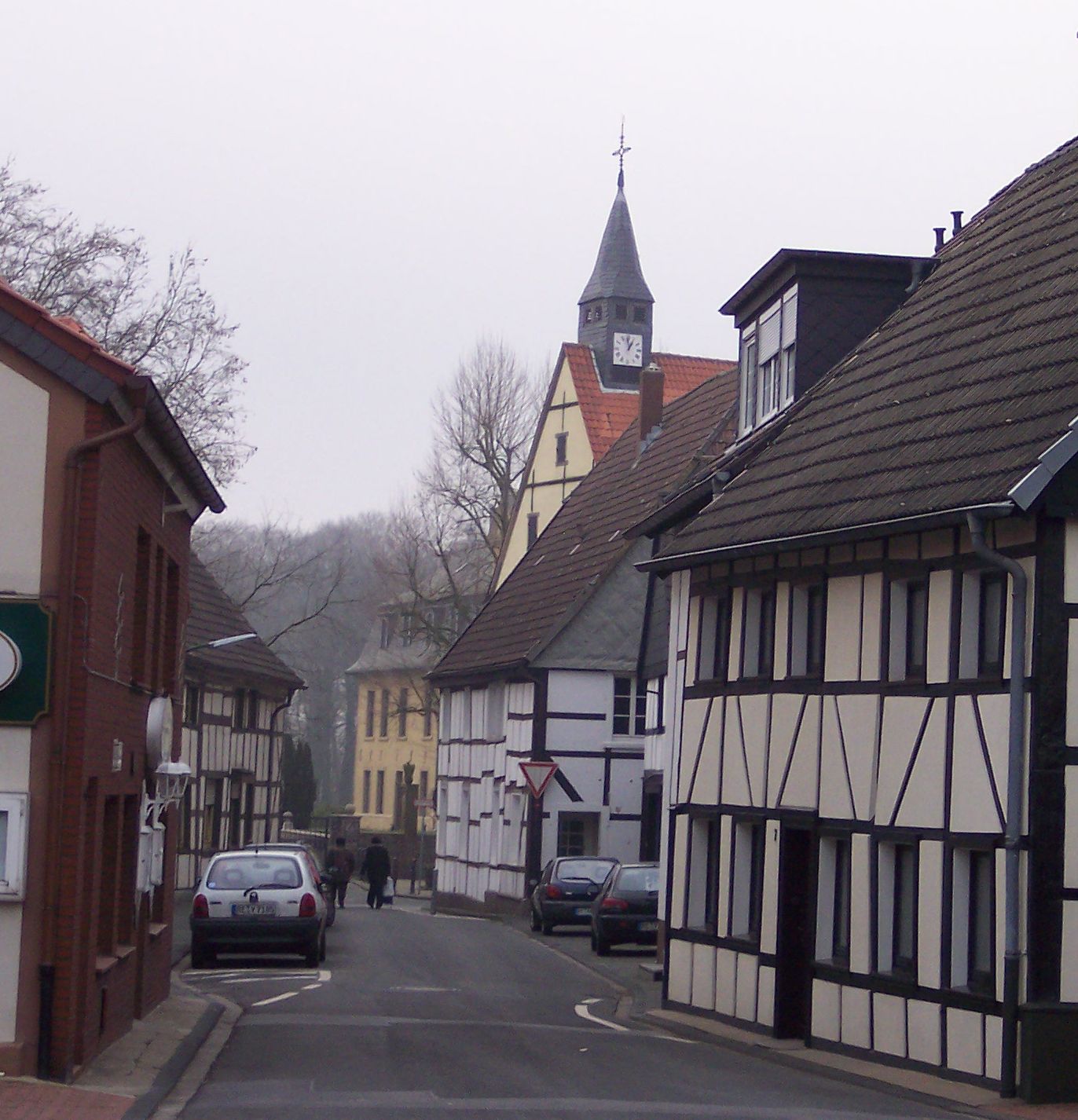
With an Indian name and appearance, not many people know that I’m half-German. But it's an important part of my identity. My mother, who emigrated in 1960, comes from a small town, Datteln, in the Recklinghausen district within the Ruhr area. I visited Germany often as a child and still speak German, though I'm a poor conversationalist compared to the chatterbox I was in my teens. 

Naturally, I've been following the news that Germany's chancellor Angela Merkel announced that Germany would offer asylum to the Syrian and other refugees: up to 800,000 this year alone. Only after her announcement, did England, France, and Finland all chime in they would help. Now the US has agreed take a small number of Syrian refugees--perhaps 10,000--next year. It's no surprise Germany was the leader for this; they take more refugees than any other nation worldwide. And of course, Ms. Merkel is leader of the European Union, a group that was panicked about the Syrian exodus. 

Refugees arrive in Croatia/Jodi Hilton for the Washington Post
Some have faulted Germany for encouraging more refugees, not all of whom are Syrians escaping ISIS and the brutal civil war. ISIS apparently is encouraging its terrorists to take advantage of the opportunity to emigrate. When asked about the danger in accepting asylum seekers, Ms. Merkel responded: "Fear has never been a good advisor, neither in our personal lives nor in our society. Cultures and societies that are shaped by fear, will, without a doubt, not get a grip on the future."

Her words sent me back to the last century, and I wondered if she was thinking about the kind of fear that led ordinary Germans to fault to scapegoating German Jews for economic woes. A distrust of outsiders led too many nations, including the United States, to turn away many thousands of Jewish asylum seekers in the 1930s and '40s. Fear is the current buzzword for Hungary, the country threatening imprisonment of the refugees who only wish to pass through to more welcoming countries. For the refugees, figuring out a route that avoids hostile nations has become a kind of roulette.


The situation of Germany welcoming Syrians reminds me of my visits to Germany in the 1970s and 1980s, when the only other brown people besides ourselves were guest workers from Turkey who'd been invited by the German government to fill manufacturing jobs. Their presence built Germany's economic miracles, filled houses, and kept schools and businesses thriving.  Germany's population growth is even lower now than when I was a kid. The Syrians can save Germany--as well as other low birthrate European countries---by providing labor and building a healthy population for the future.  

Thousands of Germans have come forward with donations of food, clothing and housing for the Syrians. This smiling young man did not even have to put a translation on his sign.


photo by Jens Mejer/Associated Press


Last weekend I checked up with my mother, who has lived in the midwestern state of Minnesota for 44 years.  She was happy and proud of Germany's leadership on behalf of the Syrians. I was heartened to hear that her relatives were in the same mental place. My 74-year-old uncle, a lifelong resident of Datteln, makes it a habit to greet every non-German he sees in the streets. My 18-year-old teenaged second cousin is going to refugee camps to teach the German language to the new arrivals. These actions are not rare; they are the new normal in Germany. And I believe forthright behavior of  everyday Germans will surpass any violent actions coming from a minority of haters. 


Horneburg Side Street, Datteln/Stahlkocher


Mama Merkel poses for a selfie with an asylee to Germany/Reuters: Fabrizio Bensch

Immigration is not a fairy tale. I know this from my parents, who emigrated from their homelands twice over--not because of persecution, but because of a deep personal desire to lead lives true to themselves. Fortunately, they made it and now can't imagine leaving where they've built their homes.

Here's hoping the rest of the world will see the same opportunity as Germany does.

Sujata in Baltimore, Maryland - Wednesday


Saturday, August 11, 2012

Greece Cannot Allow That To Happen


I wanted to write something light.  Something that would get my mind off my race to finish the new Andreas Kaldis novel by the end of August, and forget that for the first time in a decade I won’t be on Mykonos in September and October.  But I’ve delayed my US book tour for Target: Tinos long enough. 

I shall miss those months in Greece, they are the best of times.  But perhaps this fall the next six words of A Tale of Two Cities will prove more appropriate.   I hope not.

On that note, let’s take a test.  What was the first thing that came to mind when you saw the photograph at the top of today’s blog?  The Greek Meander or the Nazi Swastika?

How about both—A Greek Nazi Symbol? 

It is the symbol of Chrysi Avgi (Golden Dawn), a far right party that until this year was a fringe group dismissed by all.  It now has eighteen members in the Greek Parliament (of 300) representing 7% of the popular vote. 

Chrysi Avgi Magazine cover boy, Rudolph Hess
Although the party officially disclaims any intended resemblance to the Nazi symbol and colors, its leaders have used the Nazi salute, expressed public admiration for Adolph Hitler and others leaders of The Third Reich, shown undisguised, unvarnished hatred of immigrants (along with others who don’t fit their image of pure Greek), and demonstrated an uncanny ability for manipulating public opinion that would make Joseph Goebbels, proud—Adolph Hitler’s Minister of Public Enlightenment and Propaganda. 

I greatly admire the Greek journalists condemning the dark side of civilization represented by Golden Dawn, but I’m appalled by how many of prominence and authority in and out of Greece are still quick to dismiss them as nuts.  They should know better.

They are not nuts or crazies.  They are, as their Leader declared after being elected to Parliament in the first of two Parliamentary elections in 2012, something else:  Golden Dawn is a movement of which to “Be afraid.”  

Chrysi Avgi leader, Nikolaos Michaloliakos
It took three parliamentary elections in Germany in 1932 before Hitler became Chancellor in 1933.  Greece has five months to go in 2012 and Golden Dawn is relentlessly pressing its agenda in brilliant exploitation of the anger and frustration of a populace suffering through its equivalent of The Great Depression.  So successful is Golden Dawn in their public relations efforts, that the three parties comprising Greece’s governing coalition are rocked back on their respective heels trying to show that they, too, can be “tough on immigrants.”

The problem is that governments forced to deal with serious problems on a macro level can never effectively compete in a show of “toughness” where all its competitor need do is “small” things that appeal to the bile of so many, especially when it’s known there is nothing to fear from a government utterly afraid to hold them accountable.
Free Food in exchange for IDs in Athens' Constitution Square

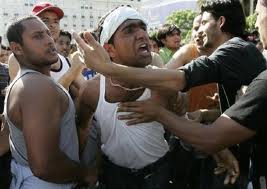
How can an organized government compete against this sort of public relations driven shows of “toughness”:  Packs of men beating individuals of color nearly to death…threatening non-Greek shop owners to leave a community “or else”... using Athens’ parliament square in open (and unpunished) defiance of the Mayor’s order denying them the right to do so for their purpose of passing out free food only to Greeks prepared to demonstrate the purity of their ethnicity by submitting identity cards and blood types to Golden Dawn’s representatives for recording and use in who knows what fuhrer purposes (no typo)…forming a lynch mob to storm a police van transporting a 19 year-old Pakistani man accursed of a horrific crime against a 15 year-old Greek girl as part of their show of how they would protect Greek women against the immigrant hordes (forgetting for the moment that their party’s spokesman (and former special forces soldier) had recently repeatedly punched a female opposition party member in the face during a nationally televised election debate).

Those “little” media driven demonstrations of vigilante toughness will always be more appealing to the masses than the true private toughness required to address the root problems of illegal immigration ignored for so long by so many past governments for any number of politically expedient reasons.

The homogeneous Greek society of a few decades ago is no longer.  At least ten percent of its population is now immigrants.  Accept it.  There is no going back. And trying to mimic the methods of Golden Dawn with “programs” of immigrant round-ups and deportations that are universally condemned by groups such as Amnesty International only lends credence to the vigilantes and their own Final Solution for the immigrant problem.

What confronts Greece is not new to Greece or indeed the rest of the world.  What is needed though, is new: fearless thinking.

And if none is forthcoming, permit me to be so presumptuous as to present a warning right out of the pages of TARGET: TINOS.  It is a segment that served as the frame of reference for all that followed (and for which Marilyn Stasio of The New York Times made Target: Tinos one of her picks of the summer, he said in BSP):

“There are serious people in the E.U. looking for any justification for ending financial aid to Greece.  So far the arguments against us are purely financial.  That we don’t work hard enough, we’re corrupt, we don’t want to pay taxes.  You know the routine…

We don’t want to do anything that might give our enemies different ammunition.”

“What sort of ammunition?”…

“[O]ur adversaries would love to switch the focus of the debate from our country’s financial problems to our national character.  Paint us as indifferent to the plight of non-Greeks, an intolerant place where only Greeks are treated as deserving of protection, and all others be damned.  It’s a volatile, irrational, and emotional argument but one that could turn world opinion against us if it found traction in the press.  And then it would no longer be just a question of denying us further bailout funds, but whether or not to drum us out of the E.U.”…

And the longer this case remains open the greater the chance of some foreign reporter seeing glory in a story that shocks the world into action against us by linking Greece to words like ‘intolerance’ and  ‘genocide.’  We cannot allow that to happen.”

I'm likely to see more of this after today.
I’ve blogged about this before (I Will Not Be Silent) and no doubt will again for one simple reason:  Greece cannot allow that to happen!

Jeff—Saturday

Saturday, May 12, 2012

What's Going On In Greece?


I’m getting this question a lot these days from outside of Greece.  It shows understandable concern.  The place seems in meltdown.  Conventional political wisdom has bitten the predominant political parties on far more vital parts than their collective asses.  Fringe parties are now mainstream members of Parliament, and if no cohesive coalition is formed by Sunday, new elections by mid-June seem inevitable.

It’s hard to imagine how the once dominant New Democratic and PASOK parties can better their positions through new elections without offering the electorate fresh leadership and new ideas.  Then again, there’s always the chance that before new elections leaders of the emergent parties will demonstrate to voters that they are no better (or potentially worse) than the heads of the parties they seek to replace in power.  

On the other hand, new elections could very well make things worse. 

Greek political parties in order of number of newly elected members of Parliament:
New Democratic

SYRIZA
PASOK
Independent Greeks
Communist Party of Greece
Golden Dawn
Democratic Left
 I’m not offering my opinion on the subject.  I’ll leave that to others, notably two distinguished Greek journalists who expressed their views this week in commentaries for Greece’s most prominent daily newspaper, Kathimerini: Nick Makloutzis wrote “One swing of the wrecking ball,” in which he reviews the decline and likely ruin of the two main Greek political parties, and Nikos Konstandaras, in “Yesterday strikes back,” discusses a potential “cycle of conflict that will only end in catastrophe.”   They are well worth reading.

Nick Malkoutzis

Nikos Konstandaras
There is another bit of writing out there that is pertinent to the sudden rise of extreme fringe groups who’ve successfully exploited anger against Greece’s sizable immigrant population into parliamentary seats for themselves, and raised articulated E.U. concern at the development. 


This observation, though, was written two years ago as part of a new mystery due out in a little more than three weeks:

“Every country in Europe has its own sort of immigrant issues.  Ethnic stereotypes are a convenient, irresistible scapegoat for political failings, especially in hard times, and no one wants to be the first to point a serious finger at another country’s shortcomings in dealing with its immigrants.

“But [Greece’s] adversaries would love to switch the focus of the debate from our country’s financial problems to our national character.  Paint us as indifferent to the plight of non-Greeks, an intolerant place where only Greeks are treated as deserving of protection, and all others be damned.  It’s a volatile, irrational, and emotional argument but one that could turn world opinion against us if it found traction in the press.  And then it would no longer be just a question of denying us further bailout funds, but whether or not to drum us out of the E.U.”

***

There had always been refugees fleeing despots and turmoil in Greece’s region of the world, but when Greece joined the E.U. in 1981 it was essentially a homogeneous land of less than ten million.  With financial prosperity came Filipinos to serve in domestic jobs no longer done by Greeks and the fall of the Soviet Union in 1989 brought a wave of Eastern European immigrants seeking better lives, but it was after 2002 and the confluence of the euro currency launch, America’s wars in Iraq and Afghanistan, and Greece’s all-out building boom for the 2004 Athens Olympics, that the floodgates opened. 

Romanians, Bulgarians, Albanians, and Poles came to put their much needed construction skills to work for pay far greater than any they could dream of back home, and Greece’s porous island and mainland borders became an irresistible magnet for those fleeing Turkey, Iraq, Afghanistan, Pakistan, Bangladesh, and what at times seemed all of struggling Africa.  They were the metanastes—the foreigners who came to work or simply escape a life in chaos elsewhere.

Greece’s population was now almost eleven and a half million of which ten percent were estimated to be immigrants.   No one knew exactly how many more were living hidden lives within the country, but with the abrupt change in Greece’s financial fortunes virtually every lost job or criminal act now seemed somehow blamed on the [foreigners].  No one had to tell Andreas how ugly the anger was brewing—on all sides.

Yes, that’s my own Chief Inspector Andreas Kaldis amid ruminations on what’s behind the horrific murders of immigrants and gypsies in TARGET: TINOS.

As a postscript, I’m happy to say that all of the parties charged with trying to form a new government have refused to include the most vitriolic element of the fringe that’s made it into Parliament as any part of a coalition government; journalists have aggressively challenged that party’s efforts to intimidate the press; and the mayor of Greece’s second largest city has publically called for Greece to copy Germany’s law and ban any “Nazi parties.”

We shall see... 

Jeff—Saturday

Saturday, January 14, 2012

What's it All About?

New Years is bye-bye.  The eight days of Chanukah, gone.  The Twelve Days of Christmas, poof!  All there is to look forward to in the US is Valentine’s Day, exactly one month away.  Whoopee.  Yes, in the US there’s MLK Day on Monday but it’s the kind of holiday that bounces from one Monday to the next depending on the year.  Like Presidents’ Day (this year that one’s on February 20th); the kind that doesn’t fit into your internal, since childhood celebratory calendar.  They’re more like a grown-up’s day off from the office sort of holiday.

By the way, for those of you wondering what is MLK and which Presidents have their own day I’ll tell you, but if you have to ask I doubt you’re celebrating either.  MLK stands for Martin Luther King, Jr. and Presidents’ Day replaces George Washington’s birthday, but it’s never celebrated on his actual birthday of February 22nd, although some places still call it Washington’s Birthday and in others it also replaces the celebration of Abraham Lincoln’s birthday (on February 12).  Confused?  That’s only fitting; after all it ended up this way because Congress couldn’t agree on what to call it.  Frankly, I think it’s largely called Presidents’ Day because other Presidents felt left out.  Sort of like the US electorate does the day after the Presidential Elections.
Two celebrating Presidents (Washington & Jefferson College)

But this isn’t about the state of US politics. It’s about … well, frankly I’m not sure what it’s about.

I’m on a plane out of Houston after a weeklong visit with my grandkids.  They each had colds, but being the well-mannered four- and two-year olds that they are they shared what they had with their parents.  So far not with their grandfather but their big, wet, sneezy, goodbye kisses at the airport have yet to report in to my immune system. 

So, here I am on a flight back to New York.  Wish it were back to Greece.  But not yet.  Sigh.  

 Then again, most of my Mykonian buddies are away on off-island holidays this time of the year.  Those who can afford it.  If you haven’t heard, there is a financial crisis in Greece.  But this isn’t about that either.  It’s about…

Interesting people on this plane.  A true mix of skin colors and ethnicities.  They look to be from Africa, Asia, Europe, India, Latin America, South America, The Middle East, you name it, and at least one (the fella next to me) is definitely from some yet to be discovered distant galaxy.  Yet, when they speak, it’s usually in perfect English (FYI Dan, Michael, and Stanley, that’s American English.).   

It seems to be that way almost everywhere I fly in the US these days, and I don’t think that’s because of the routes I choose.  More likely it’s because Americans all look as if they’re from somewhere else—and they are.  Even the Indians.  All 312,851,346 of US and counting.
Flag of Faces at Ellis Island Immigration Museum, New York

But this is not about immigration policy… 

Or American football.  Although from the way Houstonians are carrying on about their team you’d think they believe every single American is rooting for the Houston Texans to beat the New England Patriots in this weekend’s Super Bowl playoff game.  Yes, Beth, I was tempted to tell them that the other team does have its loyal fans, but as practically everyone in Texas is allowed to carry a gun, I decided it wiser to wait and twitter them the news once I’m back in gun-free (ha-ha) NYC.

So, what is it all about?

It’s about this….

And this…

I love and miss ya’ll very much.

Jeff—Saturday