
Showing posts with label Amazon. Show all posts

Wednesday, December 7, 2016

Sparks of Hope

Sujata Massey


 Speaking to supporters for his presidential in Iowa in 2008, Barack Obama said: "Hope is not blind optimism. It's not ignoring the enormity of the task ahead, or the roadblocks that stand in our path. It's not sitting on the sidelines or shoring from the fight. Hope is that thing inside us that insists, despite all evidence to the contrary, that something better awaits us if we have the courage to reach for it, and to work for it, and to fight for it."

30 days after our election, I can see a number of things that give me hope.

First is 'Old Friends,' an Amazon Prime commercial that began running in the UK, Germany and the US last week to mark the holiday season. The advertisement features an Episcopal priest and a Muslim cleric in Britain who are faith leaders, rather than actors. This fact probably explains how beautiful the men's connection is. I could watch this ad time and again and still tear up. Jeff Bezos, who owns Amazon, made a powerful, quiet statement of hope to all. This commercial may be the first ever to feature a Muslim cleric. The risks taken by running 'Old Friends' closes the deal for me regarding Amazon. I am happy to shop from Amazon--just as I'm really pleased Bezos has owned and expanded the subscriber base of the Washington Post. 


Teamwork and forgiveness have also turned around the dire situation at the Standing Rock Reservation. To summarize a very complicated situation, the US government was planning to run part of the Dakota Access Pipeline for natural gas through a burial ground on a Sioux reservation in North Dakota. Hundreds of Indians and their friends stayed present at Standing Rock in bitter cold to keep the digging from beginning. They were abused by the police. Some military veterans pledged to come to the reservation to protect the protestors from the police, and but a serious confrontation was averted. Last Sunday night, the Army Corps of Engineers announced it will not approve an easement allowing the DAP to run through the reservation. The leader of the Sioux community was asking protestors to return home with the hope that the situation will continue toward peaceful resolution. A moving forgiveness ceremony in which military veterans acknowledged their past role in oppressing Indians and taking land took place this past Monday, with Chief Leonard Crow Dog telling Wesley Clark Jr., "We do not own the land. The land owns us."
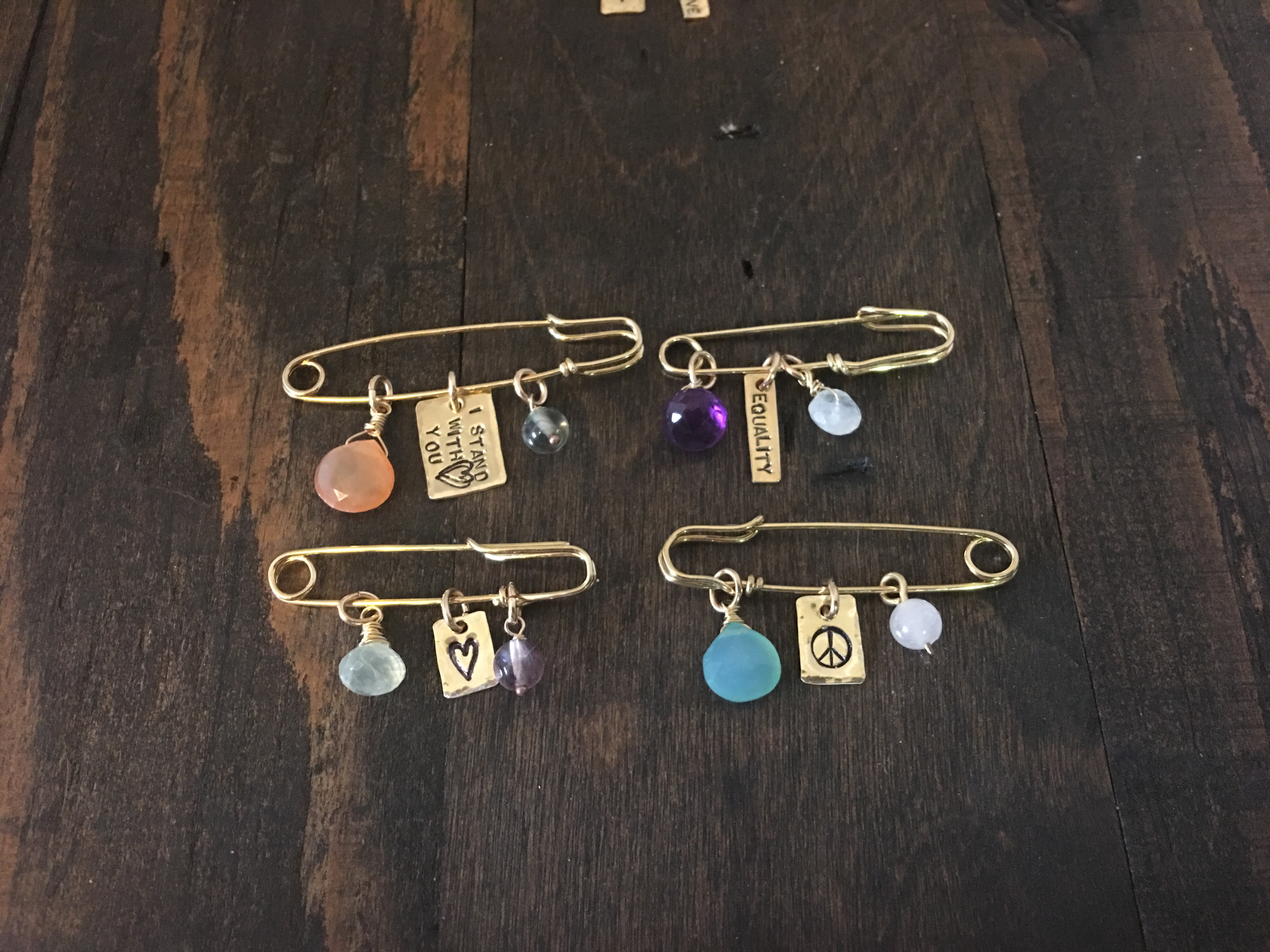
tru2u design on Etsy is giving 25% of profits to Amnesty International

Without a word, but a sign, people can show solidarity. The Safety Pin Solidarity Movement began a few months ago, following the U.K's vote to leave the European Union. Since then, violent acts against immigrants and people of color have risen. British people spread the tradition of wearing safety pins on their coats or sweaters to publicly signify that they are "safe" people who will support anyone being marginalized. I loved the idea, and to make my symbol stand out, I bought my own colorful safety pins on Amazon Prime (of course, given the 'Old Friends' commerical.) However, artistic safety pin jewelry is popping up everywhere, including in wonderful jewelry form from Etsy artists such as  tru2u jewelry, sometimes with some portion of proceeds going to a human rights organization.



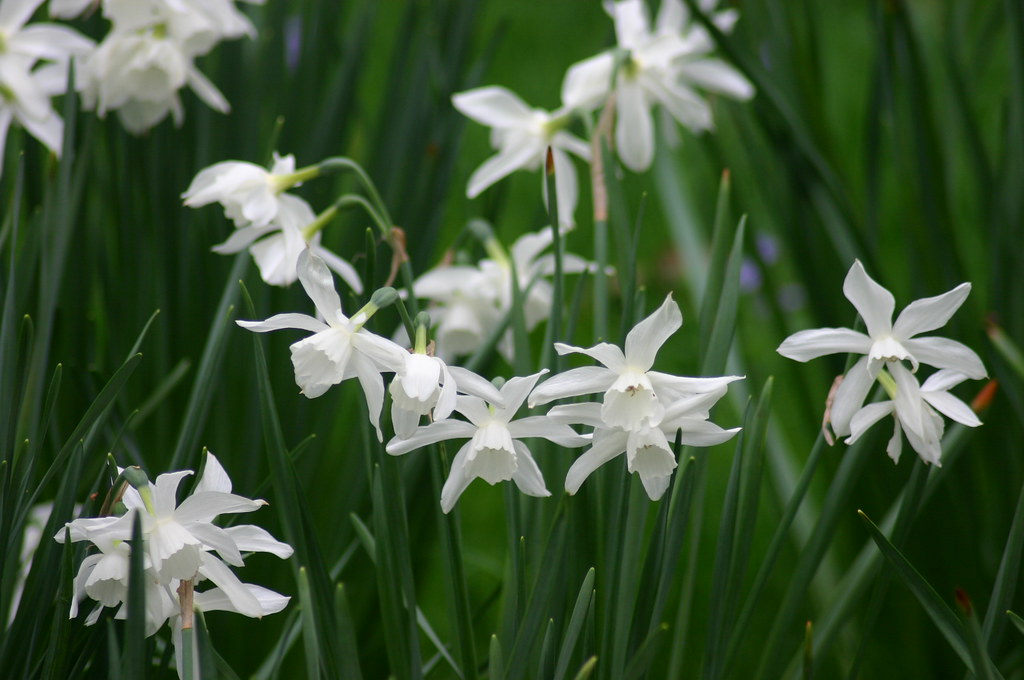
The last thing bringing me hope is the sun. Autumn really has not ended in Maryland. The weather is warm,  the crimson maples are holding their leaves, and the earth is still soft enough for planting. So I finally got down to business. I never get around to planting bulbs in the fall, but since Thanksgiving, I've planted 100 daffodils, 100 Narcissus Thalia, and 100  muscari latifolium. No matter what happens this winter, I'm sure I'll see some flowers in the spring. The cycle of nature is the strongest proof that hope has a reward.


Monday, December 28, 2015

Ain't That a Kick in the Head


Annamaria on Monday

I know.  It’s the holidays, and I am supposed to be writing something amusing and upbeat.   But just yesterday, I made the mistake of belatedly reading this Fall’s bulletin from The Authors Guild.  It left me mulling over a thorny issue.  Stick with me on this.  I promise not to drone on with the subject for very long.  Besides, beginning next week, I will be traveling for a couple of months, and I promise to take you with me via photos.  For now, I need your thoughts on an issue that startled me when I read it.  Maybe everyone knows about this, but I didn’t, until yesterday.


In the Short Takes column that starts off every AG Bulletin, there is a three-paragraph piece entitled “Amazon Book Review Policy.”   Here are the first few sentences:

“Amazon has begun blocking users from reviewing books written by friends and family—with those relationships determined by the bookseller, based on social media activity.  If you follow an author on Twitter, for example, Amazon will consider the author to be your friend or family and send you this message if you try to post a review of the author’s book on its website:  ‘We removed your Customer Reviews (sic) because you know the author personally.  Due to the proprietary nature of our business, we do not provide detailed information on how we determine that accounts are related.’”


WHAT???? my mind screamed when I read this much.  Every writer I know, including New York Times and otherwise bestselling ones, spends a great deal of time on social media in contact with readers.  I enjoy much my time doing that.  Many of my otherwise unknown Facebook friends and Twitter and Instagram followers are interesting and amusing e-conversationalists.   The overwhelming majority of them contacted me, presumably because they have read and enjoyed my books. The Amazon practice described above could very well preclude them from commenting on my books on the Amazon site.  Does Amazon have the right to block those people from expressing an opinion about my books on their website—based on the bookseller’s assumption that they are not “objective” (whatever that means)?


Stuff I think I ought to say before going further:  My books have very few reviews on Amazon; most of them highly complimentary.  I have never asked anyone to post a review for me.  Leighton once wrote me a splendid one.   As did one of my college classmates.  As did Stan.  The rest are written by strangers to me.

Most important to note, the policy described above seems to have first emerged last summer.  I tried to find out what’s happening with this Amazon practice right now, but nothing more current showed up in my Google search.


I am not sure how I feel about counting those Amazon stars anyway.  I have been on or attended panel discussions where one of the funnier and snarkier topics involved the writers reporting on the most laughable one-star reviews they have received, many of which seemed to have come from readers of highly questionable intelligence or sanity.  My answer, by the way, was about the person on Goodreads who gave City of Silver one star and as her reason: She read the names of the characters in the front matter and found out that she did not like their names, so she never bought the book.

Given the paucity of current information on this Amazon review practice I decided to see what would happen if I posted a review of a book by a real friend (Michael Stanley).  I wanted also to see what would happen if I then reviewed a book of a writer of whom I am just a fan.  But my ability to do that is complicated because I buy on Amazon as Patricia King, but I am friends with other writers as Annamaria Alfieri.  So I ask those of you who have only one name to help me test the policy.  Go on Amazon and write of review of a book by someone that you don’t really know in person, but whom you are friends with on Facebook or follow on Twitter.  And tell us what happens.  In this way we might get some insight into the functioning of the Amazon policy.

By the way, Zoe and Caro, just so you know.  The Author’s Guild piece noted that this Amazon policy applies to readers of authors both in the USA and the UK. 


Thursday, March 14, 2013

Michael Stanley Investigates...ePublishing


Last month I engaged in a learning exercise.  With our new Kubu novel – DEADLY HARVEST – out in May, we thought it would be fun to put together a small ebook of our Kubu short stories.  The idea was to give it away as a teaser for readers who might not have met Detective Kubu before, as well as to provide a Kubu ‘fix’ for enthusiastic readers complaining about the delay between books, the non-existence of audiobooks, and any other Kubu related grievance.  How hard could it be?  From the dizzy height of ignorance I was sure that anyone with a computer and a few hours could put it together.


We expected the only potential snags to be finding a good title and getting permission from the editors where the stories first appeared.  While we waited for the latter, we wrote a new short story to throw into the collection; as for the former, we started calling the collection DETECTIVE KUBU INVESTIGATES while we came up with something catchy.  The editors all responded quickly and positively, fortunately, but we'd used the temporary title enough times between ourselves that it became the permanent one.

The first problem was giving the ebook away.  I suppose it’s not rocket science that since distributors take a percentage of the sale, they’re not too keen on the idea of the sale being zero.  There are rumors that if you sell it somewhere for nothing (e.g. on your website) then your friends can alert Amazon to the fact that their price is higher and they’ll reduce it.  Well, we don’t sell things on our website (even for nothing) and don’t want to start.  Also, we were told that people believe they get what they pay for.  So if it’s free…  Eventually we compromised.  We would make the book available free to download from our latest newsletter; everyone else could fork out $0.99 – the lowest price Amazon allows.

Now came the fun part.  Stan consulted the Sisters.  No, not a witches’ coven but the Sisters in Crime (SIC), the great national organization of women crime writers.  Not sexist, though.  Stan is a member.  The reaction was muted.  Terms like "Smashwords", "Draft2Digital", "KDP", "EPUB", "Kindle Select" and "Good Luck" were tossed around.  I started to feel a bit daunted.

Now, if you have a Kindle, you probably know that you can send Amazon an email with a PDF attached and get the document back in Kindle format by return of mail so to speak.  I took a look at what came back when I sent them DETECTIVE KUBU INVESTIGATES and started feeling more daunted. 

As the old saying goes, when all else fails read the manual.  One of the Sisters had suggested that.  I downloaded the manual with trepidation.  (You can find it for free HERE.)

Well, here’s the good news.  It’s short and comprehensive.  When it asks you to do something unusual in Word, for example, it tells you exactly how to do that.  It tells you what not to do.  If you follow it carefully, pretty soon you have something.  You upload it and it lets you pretend to be any Kindle of your choice.  What does your masterpiece look like on a Fire?  How about a DX? (I don’t know; I never discovered what a DX was.)  What I did discover was that our atmospheric red-tinged cover just looked a mess in black and white, and was illegible as a thumbnail.  So back to the earlier, plainer version.  And there were things wrong.  But really not a lot.  Pretty soon I was proudly looking at the advert on Amazon for DETECTIVE KUBU INVESTIGATES complete with cover picture, blurb, about the author and so on. 

But our $0.99 book was $2.99 in South Africa!  Hell, it’s the cost of all those extra electrons it takes to deliver it here.  What’s more I had no access to a file that we could deliver to our loyal newsletter readers for free.

I took a look at epub for Nook.  They invited me to download the manual and noted that I had to have a US tax number.  I gave up round about there.

I took a look at Smashwords.  It’s website was long and detailed and invited me to download the manual.  I was getting desperate.  I tried Draft2Digital (D2D), and suddenly everything was simple!  Why hadn’t I come here first?  Just send us more or less a book and we’ll set it all up and publish it for you.  For 15%.  

Now at this point we have a book for $2.99.  The electrons take 2 bucks. Of the 99c left, Amazon has 70% which leaves 29c.  Hell, if D2D wants a nickel of that for setting up the book, they’re welcome!

There had to be a catch.  Actually there were three.  The first one was that when, bubbling with enthusiasm, I clicked YES SIGN ME UP! I got a polite message telling me D2D was in beta testing.  If I had an invitation code, I was welcome to continue.  Otherwise they would let me know when a slot opened up.  I gritted my teeth and prepared to download the multimegabyte Smashwords manual.  But almost instantly my email pinged and there was the code!  Apparently a slot had just opened up in D2D’s testing program for DETECTIVE KUBU INVESTIGATES.

So I sent them the book.  That’s when I hit the second catch.  They didn’t expect me to have done all the good things in the Kindle manual.  They expected me to have thrown together a mess of pages and let them make it pretty.  Making pretty twice produces a mess.  I had to back off and send them a vanilla version.  Then I could see what that would look like on Kindle, Nook, PDF, KOBO, Apple and so on.  (Actually not Apple.  They wanted money for their free simulator.  But Stan could test that one on his iPad.)  DETECTIVE KUBU INVESTIGATES was released not only to Amazon but to the world!  And we had our own freely distributable copies. Life was good.

All was well until we tried to offer the books for free in the Newsletter.  To cut a long story short, our website host doesn’t recognize the file types and won’t deliver them.  We were eventually saved by one of my students who put them up on his server.  (If you wondered what Trained Monkeys have to do with Detective Kubu, now you know.)  Then add a bit of finger trouble and the first lot of newsletters went out without the links active.

I’d like to say there was a flood of complaints, but there wasn’t.  I think anyone interested in DETECTIVE KUBU INVESTIGATES decided it was much more convenient to pay the 99c and get it comfortably delivered to their Kindle, Nook, whatever.  And give us some money.  Thanks, everyone.  We really appreciate that 24 cents!

Oh, the third catch with D2D?  They never asked me for any details of what to do with the money they received from sales.  Maybe that’s why it’s still in beta testing.  Maybe we achieved giving the book away for nothing after all!

Michael –Thursday.

*If you still have the courage to try, you are welcome to download a free version of DETECTIVE KUBU INVESTIGATES by going to our latest Newsletter HERE (page 3)*

Saturday, March 10, 2012

Free at Last, Free at Last. At Least Some Are.


Catchy title, huh?  Almost as catchy as The Bone Polisher, which is Timothy Hallinan’s classic Simeon Grist novel that is available this weekend on Amazon for FREE!  Actually Saturday (today), Sunday, and Monday.

I honestly can’t believe any book by Tim would ever be offered for free. I mean, why? Who on earth wouldn’t know to read his stuff?  Let’s be real here, Tim’s an Edgar and Macavity nominee who can’t seem to write anything that doesn’t sparkle.  And it’s not as if this one’s the runt of any litter.  It’s the capstone of his LA private detective series, one that has Grist chasing through 1995 gay West Hollywood after the most dangerous adversary of his career, a man who kills his victims not once, but twice: once physically and once in spirit.  And in classic Hallinan fashion, there’s a giant plot twist surprise to come.   

Don’t ask, just download it and decide for yourself.  After all, it’s free!!

Which brings me back to the question, why offer a book for free?

Practically everywhere you look these days on author Internet groups there’s a discussion raging over “setting the right price for your e-book.”  And of course there are tales of phenomenal success achieved by some who offered their books for free, only to reap small fortunes once they were restored to “full price” from the rush of folks who missed out on the opportunity to get in on the freebie deal but still decided to buy the books.

To normal folks (non-writers) that marketing practice may seem counterintuitive, but if it works, who are we to question?  Besides, it certainly gives the author the opportunity of reaching more readers, and hopefully selling other books to those who liked what they saw of the author’s work. 

I know that whenever I go to NYC’s legendary Strand Bookstore I always scour the dollar table for a “deal.”   It’s just our nature I suspect.  And when my publisher, Poisoned Pen Press, last weekend reduced to $0.99 the e-book price for the first book in some of its authors’ series (including my Murder in Mykonos, which is also available for $0.99 on Amazon—how could I not sneak that in here), I actually took the opportunity to buy the works of some colleagues I had not read.

So, I guess that’s the answer, the proof of the pudding is in the reading.

All I know for sure is what I said at the top of this piece: take advantage of this offer on Tim’s book, The Bone Polisher.  Besides, if you don’t like it I personally promise to refund your purchase price.


And just so you don’t think this is all about hawking books, here is a public service announcement: Daylight Savings Time starts tomorrow in the United States at 2AM, so set your clocks ahead one hour  (Spring forward, Fall back). 
  
Jeff—Saturday

Saturday, October 15, 2011

Oh Lord, Won't You Buy Me a Big-Screen TV...


And a HD-3D-Internet one at that.  I feel so guilty. 

All these years I’ve hummed that classic Janis Joplin’s melody as a sort of subconscious sub rosa protest at what I saw as obsessive, conspicuous consumption all about me.  Of course I’m not including in that the absolute necessity for my having a top of the line new MacBook Air to hammer out words, because one should always have access to a portable computer capable of countering Iranian launch codes or engaging galactic evil in warfare to save our planet. Sorry, that example is a bit redundant.
 
But I have an admission to make.  This week in NYC, I took the plunge and bought a new TV (make that two).  It’s been almost fifteen years since I purchased my last one.  And I couldn’t tell you the make of that old TV if you water-boarded me to a loop of The Absolutely Positively Real Wives of Orange County.  

All I know is that when I described what I had been calling my TV to a salesman at one of those big appliance stores he called it an “Annie Log,” or something like that.  Then he said I didn’t have a flat, which I didn’t take as all that perceptive since I don’t even own a car here. 

Considering my propensity for mating with appliances for well beyond their useful lives, I decided it probably best that I learn a bit more about the available field before taking the big step.  So, I turned to the good book for guidance.

No, not the one so many American political groups are battling to claim as their own personal publication; the other one, Consumer Reports.  When I am in need it delivers me.  Or rather tells me who will deliver what I need. 

Since the next time I buy a TV (or two) there’s a good chance Heaven Can Wait will be available for viewing on the original Cloud Network, I decided to opt for one(s) with cutting edge features.  I figured that should keep me relatively current with technology for at least a month, maybe two.

But where to buy it?  Thank God for my zillion megahertz portable computer.  It whizzed me across the Internet to a virtual purchasers’ heaven.  Deals were everywhere.  So guess where I bought it (and its little brother)?  From the American bricks and mortar retailers’ number one nemesis, Amazon.  That place has extraordinary prices on everything, including massages and out-on-the-town nights (delivered separately I presume). 

Okay, so maybe the rest of the planet already knew that, but what do you expect from someone who’s been living under a rock on a Greek island all these years?  Let’s show a little compassion, imagine how I suffered for my ignorance.  Forced to find massages and party nights on my own, think of all the Greek television I missed.  Those innumerable soccer games, C-grade movie reruns, screaming matches by uninformed political commentators, and Turkish-based soap operas showing what life is all about in the minds of their producers. 

Now, thanks to Amazon, I’ll not only have a new TV (plus one) but the time to watch American Football, insightful cable TV news programs, classic films, and serialized sagas based on life in foreign places (See, ­Id., Orange County).  Who needs Greek television, we’ve got it all here!

There is a caveat to this Amazon love fest.  If you order a really big TV (or two) and are not equipped or proficient enough to install it yourself, the cost of hiring someone to do it for you may chew up whatever you saved over that bricks and mortar, installation included, price.  I’m only saying that to alert you, not to suggest that I would have made such a stupid miscalculation (twice).

Now, if you’ll excuse me, I must figure out how to program my remote(s).  Hmm, any six-year-olds out there available to lend me a hand with that?

Jeff—Saturday

Monday, January 25, 2010

The Amazon


Father Gaspar de Carvajal was a Catholic priest who visited the coast of South America in the middle years of the sixteenth century and wrote a book about it. It begins in a perfectly believable fashion. They were, he said, following the coast, keeping it on their starboard (right-hand) side. One day it turned from south to west. The water around their ship went from blue to brown and a current began to push against the bow, both signs that seemed to indicate they’d entered an estuary. Five days of steady sailing ensued, still with no sign of an opposing shore. The sailors began to have doubts. If they were on a river, it was huge, larger than any in Europe.
Then, on the morning of the sixth day, their ships were suddenly and viciously attacked. The assailants were a host of natives in canoes, natives who (according to Gaspar ) were all women, set on capturing our men for the purpose of procreation.

Mind you, the crew had been at sea, without women, for many months by then. They might have welcomed some feminine company, had not Gaspar, wise man that he was, claimed to have been in possession of superior knowledge, i.e. that the ladies weren’t after a lifetime of connubial bliss. They were after a date and dinner – with the seamen as the dinner.
Fear of cannibalism strengthened the crew’s resolve. The attack was beaten off. The women disappeared into the jungle, never to be seen again. And not one member of the crew accused Father Gaspar of being a mean-spirited Baron Munchausen of sexual angst for inventing the story. (Okay, I made that last part up.)


Gasper, too, made something up: a name for the place where it all happened, He called it the Great River of the Amazons, later (shortened and Anglicized) to become the Amazon River.
He was, of course, inspired by the legend of a similar tribe of warlike women in the mythology of the Greeks. But who needs tall tales, and myths, when it comes to the Amazon? I sure as hell don’t. For me, the truth is impressive enough.

The Amazon is the oldest river in the world. Ten of its branches are larger than the Mississippi. Its length, from source to mouth, is almost equal to the distance between New York and Berlin. The total volume of the main river, and its tributaries, far exceeds that of the next five largest rivers on earth. The amount of water that it dumps into the sea could fill Lake Ontario in three hours. That amount of water exceeds, daily, the total volume of what flows out of the mouth of the Thames in an entire year. Almost one-fifth of all the river water in the world flows past the Amazon’s banks. As it pours into the ocean, fresh water pushes salt water back a hundred miles into the open sea. A thousand kilometers upriver, the depths in mid-channel continue to exceed 115 meters (350 feet), more than enough to completely submerge the Statue of Liberty. If every person alive in the world today were to dump a four-hundred pound bag of dirt into the ocean, the total would not add-up to the amount of silt the Amazon carries into the South Atlantic each year. When the river rises, the resulting flood inundates an area twice the size of Austria.

There are more species of fish in the Amazon River than there are in the Atlantic Ocean,


bigger fish than can be found in any other river, fifteen times as many species as can be found in all the rivers of Europe. Twice a year, between the months of February and March, the Atlantic Ocean waters roll up the Amazon in a great tidal bore (http://en.wikipedia.org/wiki/Tidal_bore) that the Brazilians call the Pororoca. It generates the longest waves on earth, sweeping along everything from piranhas to tree trunks. One Brazilian surfer, Picuruta Salazar, managed to ride one of those waves for 37 minutes. It carried him for 12 kilometers.


Most of the river is lined by jungle, a primeval rainforest hardly changed from Father Gaspar’s day. Within it are to be found more varieties of butterflies than anywhere else,

half the world’s bird species, one-third of all the types of living creatures on earth. And almost three hundred varieties of mosquitoes.


One word of advice: Should you add The Amazon to your bucket list, center your visit around Santarem, not Manaus.

Santarem is a rather pleasant place as far as isolated jungle cities go. Manaus…isn’t.

Sunday, January 3, 2010

The Man Who Brought Down Manaus


In the years before the First World War, Manaus was one of the richest places in the Americas – North or South. It was the first city in South America to install an electric grid; the first to have a telegraph link with Europe; the women wore French fashions; the children were sent to France to be educated; the per-capita consumption of champagne was higher than anywhere else in South America.

The opera house (above) was built with marble from Carrara and hand-painted tiles from Portugal. It featured chandeliers of Baccarat crystal and huge decorative vases from SĆØvres. The rafters rang with the great voices of the age, Sarah Bernhardt and Jenny Lind among many others. All of which is pretty surprising when you consider where Manaus is located. It’s nine hundred miles from the sea, smack in the middle of the Amazon jungle.  Even today, there are no roads that will take you there from Brasilia, or Rio de Janeiro, or SĆ£o Paulo. You have to fly, or you have to take a boat.
So how come Manaus was so rich?
Rubber.
Back in those days Brazil had a monopoly on all the rubber in the world.


Rubber trees were native to the Amazon rainforest - and existed nowhere else. Naturally, the Brazilians wanted to keep it that way, To that end, they made it illegal to export the seeds or the seedlings of the rubber tree, and made it clear they’d classify anyone who did it as a thief.
Enter this man, Henry Wickham:


Wickam, in defiance of Brazilian law, stole 70,000 seeds and bore them off to the Royal Botanical Garden at Kew. They were planted the day after their arrival. Over two thousand of them germinated.
The descendants of those seedlings were sent to Sri Lanka, to Singapore and to India. With them, the English established their own rubber trade, a trade that ended up being far more successful and lucrative than the Brazilian one.
And that for one reason: every other place in the world the trees could be planted in groves; but not in Brazil. The Amazon rainforest, you see, harbors a blight that exists nowhere else in the world, a blight that attacks rubber trees. If one tree is infected, the blight kills all the other trees in the neighborhood. The Brazilian trees, therefore, are always spaced throughout the jungle. The harvest of their latex is an expensive proposition, too expensive to compete with the plantations, and low labor costs, of the East.
Brazil’s loss.
England’s gain.
Henry Wickham got a knighthood.
Manaus got shafted. These days, it's no more than a backwater.


And is known for little more than the “meeting of the waters”, the place where muddy brown of the Rio SolimƵes meets the black of the Rio Negro and forms the beginning of the Rio Amazonas, the true Amazon.


And yet...and yet...there's a very good reason to go there: to see the place where most of the action takes place in my latest book, Dying Gasp, just now beginning to appear in bookstores and libraries across the United States.

Leighton - Monday
