

Within minutes of learning there was such a creature I was
touching one! I was visiting a game
reserve in South Africa, when our ranger got a call on his walkie-talkie. Another group out and about late that afternoon
had spotted what he described as the most difficult of African creatures to
find. (My further research has confirmed
that it really is an unusual sighting.)
Our guide drove our Land Rover like a bat out of hell to
reach it before it disappeared into the evening gloom.

And there it was. It
looked like pinecone lying in the grass, but as soon as the ranger touched it,
it rolled into a ball.

Pangolins are found throughout the tropical regions of Asia
and Africa. There are eight species
left; a number of others are already extinct.
Like you and me, the pangolin is a mammal. Its name derives from a Malay word meaning
“it rolls up,” which is what this fascinating critter does when it is
threatened. It tucks its face under its
tail and makes itself safe from say a lion who might want to take a bite.

The pangolin’s body is covered with large, overlapping
scales that form a nearly impenetrable armor once it is in a tight ball. The scales are keratin, like your fingernails,
but they are thick and overlap very like the leaves of an artichoke. They’re sharp, further discouraging any
animal with big teeth and yum on its mind.
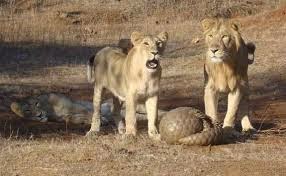
Further defense comes in the form of a nasty-smelling oil, a little like
the spray of a skunk. But the pangolin
doesn’t spray the stuff—probably because it doesn’t need to. It’s pretty well defended as it is. Watch this to see its defenses in action:
(You can turn the sound down if the voice of the TV
announcer has the same effect on you that it had on me—nails on the blackboard.)
Pangolins are insectivores.
They sport long claws to help them dig their meals out of termite
burrows and anthills. They go about at
night and find their food with a keen sense of smell. Like a lot of anteaters they have long
tongues (up to 16 inches, 40 cm) for scooping the goodies. Some live in trees; others dig burrows, like
groundhog tunnels. They don’t look it,
but they are good swimmers. Their
front claws are large and ungainly for walking, so on land they move on their
hind legs, using their tails for extra balance.
They are solitary and meet up only to mate, typically but
once a year, when the males mark their territory with feces and urine. Unlikely as it seems given the nature of the
come on, the females seek out the males, mate, and leave. If two males are approached by the same
female, they fight it out, using their tails as clubs, to get the girl. African pangolins give birth to one offspring
at a time. These are all behaviors often
found in endangered species. Pangolins
were labeled as such in 2010.
Sad to say, despite the international ban, there is growing illegal
trafficking in pangolin scales. It does
not surprise me that most of the illegal sales are to China. Here is a quote from a web magazine for
massage therapists.
“In
traditional Chinese medicine, pangolin scales are associated with the Liver and
Stomach meridians, and are considered to have salty and slightly cold
properties. The scales of the pangolin are used in conjunction with herbs to
treat a host of conditions, including masses in the abdomen, amenorrhea,
rheumatism, arthralgia, postpartum galactostasis, skin and external diseases,
and scrofula (tuberculosis of lymph nodes, especially in the neck). Pangolin
scales are also used to invigorate the blood and promote menstruation, promote
lactation, reduce swelling and dispel pus.
How much pangolin scale should I take?
The
typical dose of pangolin scale is between 3 and 10 grams, taken as a decoction
or 1-1.5 grams when ground into powder for oral administration.
What forms of pangolin scales are available?
Pangolin
scales typically come dried and whole, and can be ground into a powder. They
are extremely difficult to obtain.”

You can go here to find out more about the
trafficking:
Before you go, turn up your computer sound and take a look at
this brief National Geographic film on pangolin basics, where you will see one
in action—something we safari-goers never got to experience that day. We stayed with the creature only a few
minutes, took our pictures and retreated, leaving it to go its way in safety.
https://www.youtube.com/watch?v=gz4HXyxcess
Annamaria - Monday





