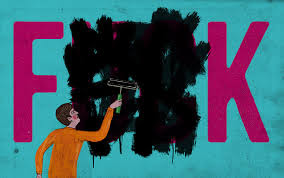
Saturday, May 27, 2023

Mykonos Comes to Life


Jeff–Saturday


The past couple of weeks have not been particularly kind to Mykonos. I’m not just talking about the weather—which is now heading back to the sunny seventies (Fahrenheit; low 20s Celsius).


I’m referring to the rash of media attention it’s received from the Greek and international press. None of that should come as a surprise because fame attracts attention, and Mykonos’ fame as the world’s Number One celebrity draw and Mediterranean party island screams out for attention of every imaginable sort.


It’s even made the front page of the business section of The New York Times, with the headline “Mykonos, a Sinister Side To a Luxury Building Boom.” The story line reminds me of a book I wrote a few years back, titled, “The Mykonos Mob” (published in trade paperback as “Island of Secrets.”) – and of another I wrote five years before that, “Mykonos After Midnight.”


But I’ve no interest in getting into any of that today—or the optimism I sense among many Greeks at the results of this past Sunday’s Parliamentary elections.  I’ll leave those topics for another time…perhaps after Greece’s concluding round of Parliamentary elections set for June 25th. Instead, I’m offering up a selection of photos taken this week largely around old Mykonos town… plus some shots of (for now) deserted beaches. It’s meant to give you a sense of what things are like before the season begins in earnest.


So, here we go…welcome to the place I call home.


On the harbor-front old town beach


In the old harbor

On the new path from the Windmills to Little Venice


Little Venice


The Windmills as seen from Little Venice


Tourist Fashion Shop

Discerning Tourist Shop

Supermarket Wine Section

Yes, you saw correctly... 19,900€/$21,000

 A far better value


View of the new harbor

View of the True Mykonos Spirit that keeps me coming back

Friday, May 26, 2023

Taking the elephant in the room for a walk

Here's my report from Crimefest 2023 written from high up a very lovely mountain.


There's something very wrong with this picture.
I suspect there's more than a few things wrong with the people in it.

We missed Michael's sanity.
We missed Annamaria's chatter.
We missed Jeff's jokes  ( well we didn't, we missed Jeff but the jokes.....)


Stan in charge

Two people not to be trusted. Both of them will be joining me on the window ledge later in the year.
Don't tell them as they don't know it yet.
And as indie authors, they had Sum Up machines with no internet signal.
That was beyond me.

                                                           Stan looking glad that it was over.

Stan, to our right, has just told a joke.

The Fun Girl Three

Team Orenda


Cara has just realised there's only water in that bottle.


But they are both tasting it to make sure.

This was an event I did in Glasgow the weekend after Crimefest.
It was 9.30 am
Wine and whisky in the green room.

And it falls to me to tackle the elephant in the room. I've no real idea what's going on and some of it I can't repeat as that was part of a quiet conversation, more of a confidential chit chat.

I wasn't at the infamous speech at the dinner on Saturday night so I can't comment on what was said either.

But it would seem, somebody felt  threatened. And took to twitter.  

As Catriona MacPherson once said just because you feel threatened, it doesn't mean to say you are being threatened. Those are two quite seperate things.  

I can report on the subject of chit chat at the dinner before (Friday) and the dinner afterwords (Sunday). 

The talk before was about those in charge of the Bond catalogue and those in charge of the Christie catalogue saying that they are happy to remove words that are now deemed offensive but, the sexism, the drinking and the smoking will stay. The very British sense of class in the Agatha Christie books is correct for its time. 

I'm not sure what was said at the speech but the writer of colour that I was talking to on Sunday was not offended by the speech in any way. She just said the speaker just let the elephant in the room walk about a bit, as he was only saying what most people were thinking. More than that its difficult to say. 

But I did have to snigger when I saw on twitter that the man who made the speech with the 'offending comments' was ' being outed', he was named and shamed. 

Doesn't take much detective work to look at the front of the program as that would have told you. 

Anyway, I think I'll side with the Canadian University who published a survey which was then banned because the results might have been seen as offensive. So they published another survey that showed the biggest block to serious debate in an attempt to move a difficult situation forward is the inability to have serious debate without somebody getting offended. And being banned.

I'm away up a mountain! I might stay there.

Cheers

Caro


Wednesday, May 24, 2023

7 WAYS TO RECOVER FROM SURGERY

 Five days ago, I had surgery for a right rotator cuff complete tear. For that reason this essay will be a little short because typing with my right hand is somewhat restricted. The rotator cuff is the set of four muscles that attach to the humerus to rotate it in different directions.

A fresh rotator cuff tear can be very painful


I had heard various horror stories about how excruciating rotator cuff surgery can be post-op from those who have experienced it. A relative of mine recently went through it and had a rough time of it, including finding it tough to get to sleep and stay asleep. 

I’m happy to say that my post-op course has been rather uneventful, including on the first day after surgery when I found the pain quite manageable. Here are seven of my secrets from my perspective as a doctor patient--some physical, some psychological-- to having a successful surgery and recovery .

1. Outlook

Stay positive and think of the surgery as being done for you rather than to you . Your body, your mind, and your surgeon are combining forces to correct, improve, or restore, rather than you being a victim of an assault. Keep a sense of perspective: e.g. rotator cuff surgery isn’t a quadruple bypass.

2. Prepare your physical space

If you will have your post-op resting place in a certain section of your home, e.g. confining yourself downstairs because of a knee operation, or sleeping with your head higher than your body with a wedge pillow, get it all set up beforehand so that when you return home, you don’t have to deal with moving things around. Also have appropriate clothing ready. If it’s a head and neck procedure, you should wear a front-button shirt.

Wedge pillow (Shutterstock)


3. Have your medications ready to go

Pick up your medications like analgesics and antibiotics a day or more before surgery. Stopping at the pharmacy on the way home from the hospital is not a good idea. There are also pre-op and post-op recovery vitamins and minerals OTC I might recommend. 

Keep your medications within easy reach. If you have narcotic-type pain meds, it’s better to take them regularly on schedule as long as you’re experiencing pain in the first hours and days post-op. Don’t wait for the pain to become severe to treat it, because now it has a head start on you. No, you won’t become addicted. In fact, quite the opposite. 

Image: Kwei Quartey


3. Gadgets

If you won’t be able to reach up to shelves or down to the ground because of the procedure, equip yourself with gadgets like a reaching tool, sock donner, and long shoe-horn.

A “grabber” or “reacher” (Shutterstock)


4. Immediate post-op

If the surgery is an elective procedure, it will take place during the day sometime. If you return home early on and don’t feel severely groggy, I recommend you stay up till your normal bedtime to maintain your circadian cycle. This signals your body, “Hey, buddy, we’re going to keep everything as normal as possible.” It might also prevent you from insomnia when your normal bedtime comes around.

5. Feeding 

If you aren’t nauseous after surgery and have an eager appetite like I did, go ahead and eat. They might tell you to eat jello, but no need to restrict yourself to that if you can have more. Don’t forget you need protein to repair yourself. Keep well hydrated to help your kidneys flush out the remaining compounds from anesthesia.

6. Define your level of care

You may need a lot of assistance, very little, or everything in between, and that should be communicated with your caretaker. I personally don’t like being hovered over or fussed about. In this context, it’s advisable to start mobilizing as soon as possible, because while rest is beneficial, it can also demineralize bones if over-prolonged.

7. Psychological status

It helps to understand that post-op depression is common and normal, but you will likely begin to feel better as your recovery progresses. In the time being, stay in touch with family and friends if you need to. If you’re worried that something is wrong at the surgery site or that you have a fever, contact your surgeon. Most of the time, it’s not as bad as you think and a little of reassurance from your doctor can go a long way.

While you’re resting, you might catch up with some mindless TV or streaming. Reading is fine, but pick something light and cheery. Leave novels by Toni Morrison till another time.

One simple measure that can make you feel a lot better is to take a refreshing shower as soon as you can.


Tuesday, May 23, 2023

My Time in Crime(fest)

 Ovidia--every other Tuesday

Given the 14 1/2 hour flight and 7 hour time difference between the UK and Singapore and because I haven't yet come down from the high of traveling again, this is going to be all about Crimefest and my time in the UK--

and look who I met there even before the conference started!


From left: Caro Ramsay, Cara Black, Stan Trollip and Zoe Sharp

Cara and Stan are two of the founding members and guiding lights of the Murder Is Everywhere blog and along with Caro and Zoe are people I've only known on the page and on screen up till now. But it felt like--no, not like meeting up with old friends--but like discovering long lost relatives, almost. 

I've noticed it before: you may not love (may not even have read) everything they've written, might not agree with some of the ways they commit murder, yet you instantly feel like you're accepted, because you're part of the same tribe.

There's something to be said for spilling all your blood on the page--in real life you can stick with coffee and vino and book talk...

...Though I'm not sure about Cara--who turned up at the gala dinner trying to disguise the fact she'd been painfully injured in what was probably a confrontation worthy of Kate Rees or AimƩe Leduc by saying something about falling into an open crypt in a closed church... and the next day all the roads around our area were closed off by the police. They said it was the AJ Bell Great Bristol Run but what would you rather believe?

Cara and I were both on the Dark Times WW2 history panel, along with Chris Lloyd and Mark Ellis (far right), moderated by Luke McCallin (far left). 


That dark time feels very close now, given the worst ravages of WW2 and Covid covered roughly the same amount of time and territory on this planet. Just like there were toddlers at the end of the war who didn't know a world without air raid sirens, there are pre-schoolers now who've never known a world without masks.

I enjoyed the chance to meet some of my writing heroes at the humour too--


From left: Mike Ripley, me, Simon Brett (moderator), T.E. Kinsey and Peter Guttridge.

It was a special thrill to meet Simon Brett since his Mrs Pargeter and Charles Paris are two big reasons why I love mystery fiction! And the Mike Ripley (even more entertaining in real life than on the page) who, as an archaeologist, is 'one of the few crime writers who regularly turns up real bodies'!

It was a wonderful experience. The best part was knowing that pretty much everyone you meet is interested in the same things you are. Given how much of our time is spent solitary, staring at a page or screen, it was super to talk it over with others who spend their time pretty much the same way.

I got to talk (mostly, given how little I know) listen to talk about agents, ChatGPT, writer strikes in America, translations, indie publishing, political correctness and social norms, food and drink and books, books, books, books!

And I got to fangirl stalk and get physical books signed by Vaseem Khan and Martin Edwards, never mind I already had ebook versions of those same books on my reader!

Then it was over and I was back in London.

This is me with my lovely editor Krystyna Green on top of the Hachette Building (Carmelite House) on the Victoria Embankment--with some of the most incredible views of London. 

I was gleefully picking out landmarks but felt vaguely that something was off... and realised it was because there was no soundtrack. Because most of what I've seen of London has been on screen, there's always been a soundtrack when Buckingham Palace or the Tower Bridge or Westminster Abbey come into view. 

But reality is both quieter on the surface and much more vibrant beneath. 


Thank you, Krystyna, for making all this possible!

And finally, taking a little step towards a future project I'm keeping my fingers crossed will happen--a meeting with Christopher and Emma who introduced me to sticky toffee pudding.


Yes, the sticky toffee pudding was super. I definitely want more of that and I so definitely hope to be back in England again soon. 

Is anyone up for Crimefest 2024?


Monday, May 22, 2023

Should the Characters in a Novel Swear

Annamaria on Monday


A few days ago, a commentator on a favorite podcast of mine introduced an episode by using the word "inshitification."  What a great word, I thought.  It perfectly describes, if you ask me, a lot of trends worldwide.

Funny enough, the subject of swearing had been on my mind, because a few weeks before I had seen the brilliant new opera The Champion at the Metropolitan Opera House in NYC.  It tells the story of a gay man who, in the early 1960s, becomes a World Champion boxer. The performance was wonderful, and the entire production marvelous.  I could not help but think, on top of its many firsts, that it had to have been the first opera in which performers on the Met stage sang the word "f*ck."  Entirely appropriate for men discoursing in the hyper macho world of such a sport at such a time.


A few days later, it so happened that another favorite podcast did an in-depth report on swearing. It seems it is the topic of the week.  I am climbing on board that train of thought. 

In my novels so far, there are a few words, some of which are not considered so terribly bad today, but that were horrifying and totally banned in impolite company in early 20 century East Africa. “Bloody,” For instance.  Then, however, what we now call the N-word was common and constant. As a writer of historical fiction, I have to be aware of how language was used then and also sensitive to what is considered offensive today. 

As it happens, another one of my favorite podcasts this past week did an episode on this very topic. Swearing, I learned, has changed a great deal overtime, and there is evidence right now that people are doing more of it. Studies also show that doing it more often is good for us. I’ll let you decide whether you agree or not.


Professors who study this sort of thing (a job, I think I would like doing) say that historically what is considered a swearword has changed over time. In fact, the word "swear" comes from the original meaning: words invoking the deity. During the Middle Ages, people swore before God when they needed to prove they were telling the truth. But using the name of God in other contexts, that is "in vain," when you're not actually attesting to the veracity of what you were saying, was considered an awful sin. Swearing before God became less and less the norm (except in courts of law and when assuming public office).  And it gradually became acceptable in many cultures for a person to say "Oh God" about even trivial things.


As with all forbidden words, euphemisms were invented to take the place of "bad" ones. As in "jeez" or "Jeewhitakers."  These remnants of past attitudes live on.

But in Medieval times, saying f*ck was perfectly acceptable. 

With the Renaissance, as customs and circumstances changed, especially because human living conditions made personal privacy the norm, words about bodily functions  became taboo: sh*t, for instance.  And of course the f-word.

In the ultra uptight Victorian times, the list of proscribed words burgeoned. it was absolutely intolerable for anyone to say “trousers" in polite company.  

More and more, of late, I am happy to say, it is words vilifying a social group, that we must not use.  In some cases, it is still considered a bit too precious to say "unhoused" instead  of "homeless" here in the USA, but I think it will catch on.  As a person who was called nasty names as a child, I want to see the end of such pain for folks of any age, creed, color, or religion.

A few years ago, when I was drafting a scene for Vera and Tolliver 2, my character used the n-word.  By the place in the story when he thought it, he was already shown to be a villain with many miserable traits.  He thinks the word,  and it reveals his attitude about the African tribal people around him.  In this regard, he is like a lot of guys in Mombasa in 1912.  It is historically appropriate that a man such as he should think such a thought, and I hope it is the right word to use in a novel about that time and that place. I haven’t gotten any complaints. People understand, I think, that I want them to hate him. 


Saturday, May 20, 2023

Top Ten Best Short Story Mysteries of All Time


Jeff–Saturday

I cannot think of a quicker way to start an argument than with a “Top Ten” anything list.  And when you dare to do so in a field peppered with friends whose work undoubtedly deserves mention, you’re guaranteed to find yourself crossed off a lot of holiday greeting card lists.

Yet, as a former adjunct professor of English teaching mystery writing at a college that’s decades older than the modern detective novel, how could I refuse the honor of such a request from the 2023 Mystery Writers of America Ellery Queen Award winning The Strand Magazine?  Though, I must admit to prayerfully falling back upon my one-time lawyerly skills to ameliorate the potential fallout by offering up, in roughly chronological order, this ten best list of seminal short stories penned by writers no longer with us.

So here's my article as published by The Strand Magazine, courtesy of the online posting skills of Talia Tydall.


“Murders in the Rue Morgue,” by Edgar Allan Poe (Graham’s Magazine, 1841)

It’s only appropriate that the first story on my list is considered the first modern detective story. In Poe’s tale, he introduces his brilliantly analytical detective, C. Auguste Dupin, and Dupin’s trusted friend who acts as the story’s narrator.  Their relationship and Dupin’s methods and cool demeanor have come to serve as inspiration for legions of mystery writers,

On Paris’ Rue Morgue at 3AM, a mother and daughter are brutally and inhumanely slaughtered in their heavily locked-down fourth-floor apartment. Neighbors heard their shrieks but also two additional voices coming from within the apartment, one identified as male and French, the other as shrill and foreign. When the neighbors break into the apartment, they find only the daughter inside, dead and stuffed feet-first up the chimney in a show of superhuman strength, while her mother lay decapitated on the ground, four unscalable stories below a still locked window. Though newspapers call it an impossible crime to solve, and the police remain baffled, a man known to Dupin is accused of the murders.  Through the application of his “ratiocination” investigatory methods that do not ask “what has occurred,” but rather, “what has occurred that has never occurred before,” Dupin determines what transpired and frees an innocent man; establishing in the process an enduring classic formula for mystery writing.


“The Red-Headed League,” by Arthur Conan Doyle (The Strand Magazine, 1891)
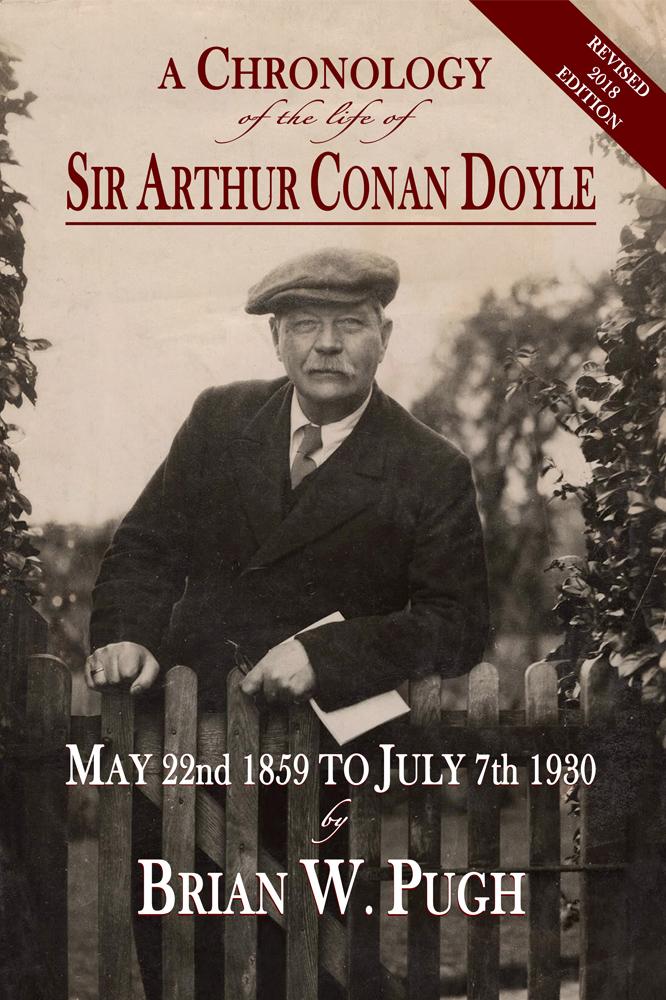
A Chronology of the Life of Sir Arthur Conan Doyle – Revised 2018 Edition by Brian PughI trace my interest in writing mysteries to my early years as a lawyer when I found an unexpected opportunity to read The Complete Sherlock Holmes straight through from cover to cover.  By the end of that exercise, I was thinking like Holmes, loving Conan Doyle’s beautiful Victorian prose, and enthralled at the thought that since Sherlock’s father’s first name is “Siger” we were related…if not as kin, at least as kindred spirits. From the perpetual flow of new Sherlock Holmes-themed projects coming to market, I’d call him a true cultural phenomenon.

It’s hard to pick a favorite Holmes story. In “The Red-Headed League,” experts see themes of man-to-man confrontation and greed, plus Holmes’ high opinion of himself and distain for lesser minds. To me, there’s an added lesson: know your setting well, because from that knowledge you may find your answer. The assistant to a red-headed pawnbroker shows his boss an ad offering a busy-work office job paying male red-heads exorbitant wages and convinces him to take the job.  Eight weeks later the pawnbroker finds the office suddenly closed and that the landlord never heard of the League, He turns to Holmes, who visits the pawnshop with Watson and concludes he knows the answer to the mystery. Conan Doyle considered this story his second favorite. “The Speckled Band” was his first.



“Locked Doors,” by Mary Roberts Rinehart (1914)

Born in my hometown of Pittsburgh in 1876, she is buried at Arlington National Cemetery and identified there as: “America’s first woman war correspondent during World War I for the Saturday Evening Post; wrote mystery novels, including The Circular Staircase and The Bat; in 1921 was referred to as ‘America’s Mistress of Mystery.”  A fearless woman, also called “America’s Agatha Christie,” she’s credited as the inventor of the “Had-I-But-Known” mystery novel, and for the phrase “the butler did it.” Her best-selling books and plays were often adapted for film and one novel was among the earliest “talking book” recordings.

In much of Rinehart’s work the challenge is discovering what’s hidden from view, because the “hidden situation” looms more important than whodunit. An accomplished mystery writer trained in nursing, Rinehart combined those talents in her series featuring nurse Hilda Adams a/k/a Miss Pinkerton, who at times works undercover for the police.  In “Locked Doors,” she’s recruited to replace a badly shaken nurse who came to the police after four days of living in a large eerie house, working for a peculiar family with no servants, no working telephone, two young children confined to their room, and doors barred shut at night. Its spine chilling, not-your-normal-mystery sort of “Gothic thrills” plotting, might just keep you from guessing the “perfectly macabre solution to this mystery.”


“The Adventure of the Egyptian Tomb,” Agatha Christie (The Sketch Magazine, 1923)

DVD Review– The Little Murders of Agatha Christie 


What more can I possibly tell you than you already know about Dame Agatha Christie, the undisputed Queen of Crime and creator of Hercule Poirot, Miss Marple, and the world’s longest running play, “Mousetrap.” Hmm, perhaps you didn’t know that this best-selling fiction writer of all time with more than two billion novels sold (trailing only the Bible and the works of William Shakespeare) loved surfing? That was news to me, so I took it as a suggestion on how to find a favorite among her more than 150 short stories.  I went surfing through her work and came up with this Poirot and Captain Hastings gem that’s celebrating its one-hundredth anniversary.

The widow of a famous Egyptologist asks Poirot to journey to the excavation site of a Pharaoh’s tomb where her husband died by heart attack, the wealthy backer of the dig died from blood poisoning, and from which the backer’s nephew left for New York only to commit suicide soon after arriving there.  The widow fears for the life of her son who intends on continuing his father’s work. Poirot cables New York for information on the nephew, and leaves for the dig. By the time he and Hastings arrive, another American has died, this one from tetanus, and talk of an Egyptian Curse fills the papers. Tension builds as Poirot suddenly begins choking on tea he’s been served.  It’s a tour de force example of how Christie’s least likely characters so often turn out to be the guilty, and of Poirot’s penchant for gathering the guilty together for their unmasking.


“Blackmailers Don’t Shoot,” by Raymond Chandler (Black Mask, 1933)

Raymond Chandler and the Trauma of WarChandler is considered a founder of the hard-boiled school of detective fiction. Mention his name and private detective Philip Marlowe immediately springs to mind.  Chandler coined the phrase “down these mean streets” and Marlowe lives on them.  It’s a rough place for a compassionate guy with a more noble sense of purpose than accumulating wealth and power. Marlowe’s compassion makes him vulnerable, and so he plays a tough guy to the world, using wise cracks as his defense to whatever that world throws at him.

“Blackmailers Don’t Shoot” is Chandler’s first mystery story, written when he was 44. Ī‘ll the dames, guns, gangsters, shady dealings, lies, deceptions, crooked cops, fights, tough guy talk, and elements of the mythical quests knight Marlowe feels compelled to pursue are there. But not yet the Marlowe name. That change doesn’t happen until 1939 in “The Big Sleep.”  In 1933 he’s Mallory and at center stage in a swanky club attempting to blackmail a beautiful movie star over love letters she’d long ago sent to a gangster. She dismisses the attempt, leaves the club, and is kidnapped.  Mallory leaves later, only to be strong-armed into the middle of a falling out among gangsters over her kidnapping. He turns the situation to his advantage, leading to the Star’s ultimate rescue, the death of her gangster ex-boyfriend, and the return of her letters.  But Mallory has more left to do. Chandler likes it that way.


“Death Threats,” by Georges Simenon (cir. 1936-42)
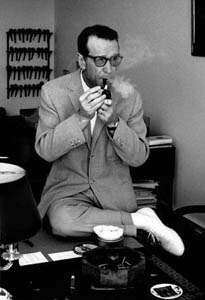
SIMENON, Georges, 1963, Ecrivain (F) © ERLING MANDELMANN ©

Belgian writer Georges Simenon is one of the most prolific authors of the 20th Century, estimated to have written over 400 novels, plus as many as 1200 stories under his own name and more than a dozen pen names. His sales total more than 500 million copies, and his highly popular Inspector Jules Maigret appears in 78 novels and 28 short stories, often confronting serious themes rarely touched upon by more traditional detectives. Maigret does not adhere to the genre’s conventional approach of searching for clues and using deductive reasoning to solve a case. Rather, he immerses himself in the surroundings and life of those who interest him, much as would a therapist or professor looking for psychological insights to help better understand the human condition and criminal mind.

“Death Threats” has Maigret dispatched to spend the weekend at the country villa of the senior member of a wealthy merchant family. The merchant received an anonymous note threatening his death before 6PM on Sunday. His twin brother reaches out to Maigret trying to convince him that his brother is paranoid and the threat must be a joke.  At the villa, Maigret discovers a family of ambitious, self-absorbed, greedy narcissists wracked by mutual hatred for each other, who despite all their advantages, utterly fail to appreciate life. Things get exciting around 6, but don’t go quite as Maigret had expected even though he knew from the outset who’d sent the note.


“Kiss Me Again, Stranger,” by Daphne du Maurier (Gollancz, 1952)

Du Maurier’s work rarely has a happy ending, yet she’s often described as a romantic novelist, a characterization she rejected and despised. Fantasy and mystery were descriptions she might have found more to her liking. Whatever one’s opinion on that debate, her short stories are certainly dark, if not noir, hovering close to the paranormal and often haunting the reader long after the final sentence is read.

“Kiss Me Again, Stranger” is neither a ghost story nor a supernatural tale, but rather a classic example of du Maurier’s uncanny ability to keep the reader thinking it just might end up being one of those. A nameless young man narrates the story of his evening at the cinema where he’s irresistibly taken by a beautiful usherette.  He follows her onto a bus, sits beside her, pulls her close to him, and rests her head on his shoulder. I shall not tell you what happens when they later go off together into a cemetery, except to quote what another has written about the usherette: “it is hard to think of any female character in British fiction, before this husky siren, who does what she does and with such cool aplomb: an unexpectedly powerful proto-feminist role model.”


“The Oblong Room,” by Edward D. Hoch (The Saint Magazine, 1967)



Edward Hoch is the author of close to 1000 classic detective stories, a record holder with Ellery Queen’s Mystery Magazine for having published a short story in every one of its issues over a thirty-four-year span, and the first short story writer to be named a “Grand Master” by Mystery Writers of America.  His work emphasizes mystery and deduction over other forms, but seldom are they simple police procedurals, and at times they’re locked rooms and impossible crimes scenarios. His small town, Connecticut police Captain Jules Leopold has weathered close to fifty-years and one hundred stories, including the Edgar award winning, “The Oblong Room” – an homage of sorts to Poe’s “The Oblong Box.”

In “The Oblong Room,” Captain Leopold is called to investigate what seems an open and shut case of murder on a college campus. A man is found stabbed to death, locked in a room for 24 hours with his roommate. All that is needed to convict is the roommate’s motive, but the roommate will not make a statement.  The ensuing investigation establishes, (a) the victim possessed an uncanny ability to manipulate anyone into obeying him, (b) no one was more devoted to and protective of the victim than his roommate, and (c) the two were known to use LSD. But why did the roommate kill someone he’d die to protect? And why a 24-hour vigil after the slaying? Our answers arrive in a do-not-see-it-coming solution.


“The Last Bottle in the World,” by Stanley Ellin (Ellery Queen’s Mystery Magazine 1968)
This three-time Edgar award winner and Mystery Writers of America Grand Master is said to have focused so intently on perfection that it would take him a year to complete each short story he submitted to Ellery Queen’s Mystery Magazine.   His ingenious imagination, precision plotting, strong characters, chosen locales, and deft ability to fool and surprise the reader from a psychological point of view, all served to focus attention on his protagonist’s crisis at hand.

In this story about the last bottle of a famed vintage that a mega-rich man is determined to buy from the narrator-wine merchant, the merchant unexpectedly comes across the rich man’s wife in a cafĆ©, and there’s a flashback to when the two first met. She’s now in a difficult marriage and showing interest in another man.  The tension rises, until the plot unexpectedly twists in a most satisfying yet realistic of ways.


“Blood Lines,” by Ruth Rendell (Hutchinson (UK), Crown (US), 1995)

Writing also as Barbara Vine, Ruth Rendell is a literary giant of the 20th Century, possessing an uncanny knack for weaving the strangest of tales out of the joys and pains of ordinary family life.  Rendell offers up her themes on multiple penetrating levels, drawing upon ancient tragedy, quixotic dark humor, poignant intellect, and piercing insights into the darkest regions of the human psyche to reveal the disturbed family relationships unearthed in her works.  In the process, often shocking the reader at how fragile the separation between life on the page and off.

“Blood Lines” features her popular Inspector Reginald “Rex” Wexford investigating a murder that’s shattered the tranquility of a small bucolic community.  A young woman discovers her stepfather’s brutally beaten body.  She firmly denies knowing the identity of the murderer, but Wexford is convinced his primary suspects include the victim’s extended family. Wexford’s patient investigation reveals evidence of spousal abuse, infidelity, avarice, and betrayal, reminding him that the criminal impulse may be present in even the most routine or intimate of situations. It is vintage Rendell.

© 2023 Jeffrey Siger

JEFFREY SIGER fled his career as a name partner in his own New York City law firm to live and write mystery thrillers on the Greek island of Mykonos. The New York Times picked him as Greece’s thriller novelist of record, and Reader’s Digest Select Editions described him as one of its “new favorite authors.” He’s received Lefty and Barry “Best Novel” nominations, been Chair of Bouchercon, and served as adjunct professor of English at Washington & Jefferson College teaching mystery writing.  Jeff blogs Saturdays on murderiseverywhere.blogspot.com and the 13th book in his Chief Inspector Andreas Kaldis series will be published by SEVERN HOUSE in February 2024. Visit him at www.jeffreysiger.com

--Jeff