Annamaria on Monday
A few days ago, a commentator on a favorite podcast of mine introduced an episode by using the word "inshitification." What a great word, I thought. It perfectly describes, if you ask me, a lot of trends worldwide.
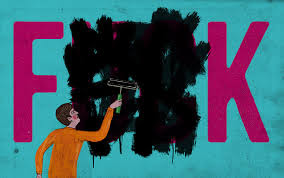
Funny enough, the subject of swearing had been on my mind, because a few weeks before I had seen the brilliant new opera The Champion at the Metropolitan Opera House in NYC. It tells the story of a gay man who, in the early 1960s, becomes a World Champion boxer. The performance was wonderful, and the entire production marvelous. I could not help but think, on top of its many firsts, that it had to have been the first opera in which performers on the Met stage sang the word "f*ck." Entirely appropriate for men discoursing in the hyper macho world of such a sport at such a time.
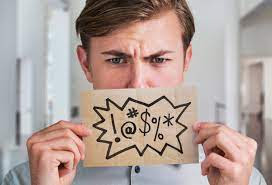
A few days later, it so happened that another favorite podcast did an in-depth report on swearing. It seems it is the topic of the week. I am climbing on board that train of thought.
In my novels so far, there are a few words, some of which are not considered so terribly bad today, but that were horrifying and totally banned in impolite company in early 20 century East Africa. “Bloody,” For instance. Then, however, what we now call the N-word was common and constant. As a writer of historical fiction, I have to be aware of how language was used then and also sensitive to what is considered offensive today.
As it happens, another one of my favorite podcasts this past week did an episode on this very topic. Swearing, I learned, has changed a great deal overtime, and there is evidence right now that people are doing more of it. Studies also show that doing it more often is good for us. I’ll let you decide whether you agree or not.
Professors who study this sort of thing (a job, I think I would like doing) say that historically what is considered a swearword has changed over time. In fact, the word "swear" comes from the original meaning: words invoking the deity. During the Middle Ages, people swore before God when they needed to prove they were telling the truth. But using the name of God in other contexts, that is "in vain," when you're not actually attesting to the veracity of what you were saying, was considered an awful sin. Swearing before God became less and less the norm (except in courts of law and when assuming public office). And it gradually became acceptable in many cultures for a person to say "Oh God" about even trivial things.
As with all forbidden words, euphemisms were invented to take the place of "bad" ones. As in "jeez" or "Jeewhitakers." These remnants of past attitudes live on.
But in Medieval times, saying f*ck was perfectly acceptable.
With the Renaissance, as customs and circumstances changed, especially because human living conditions made personal privacy the norm, words about bodily functions became taboo: sh*t, for instance. And of course the f-word.
In the ultra uptight Victorian times, the list of proscribed words burgeoned. it was absolutely intolerable for anyone to say “trousers" in polite company.
More and more, of late, I am happy to say, it is words vilifying a social group, that we must not use. In some cases, it is still considered a bit too precious to say "unhoused" instead of "homeless" here in the USA, but I think it will catch on. As a person who was called nasty names as a child, I want to see the end of such pain for folks of any age, creed, color, or religion.
A few years ago, when I was drafting a scene for Vera and Tolliver 2, my character used the n-word. By the place in the story when he thought it, he was already shown to be a villain with many miserable traits. He thinks the word, and it reveals his attitude about the African tribal people around him. In this regard, he is like a lot of guys in Mombasa in 1912. It is historically appropriate that a man such as he should think such a thought, and I hope it is the right word to use in a novel about that time and that place. I haven’t gotten any complaints. People understand, I think, that I want them to hate him.