Sunday, February 19, 2023

Ciao Firenze, For Now

Annamaria on Monday

This coming Wednesday, my two months in Florence will be coming to a close.  I will then head to Madrid for a few days of sightseeing and spending time with dear friends. 

With a long to-do list of last minute chores, today I share a collection of my favorite photos of this sojourn.  They are in date order, starting with Christmas.


To hang on my tree for Christmas, a model of my
 little buggy in NYC.

On weekends, there is a changing of the
guard, complete with trumpets and drums

A night-time visit to Piazzale Michelangelo, with
a dazzling view of the Church of Santa Croce

A moment to be savoured

The north view from place at dawn,
with the dome of San Lorenzo

The view of the Ponte Vecchio
from Ponte Santa Trinita

Evening view of the grocery store
on my block

Sunset from my living room window

No matter how many times I see it,
I have to take yet another photo
of the duomo.

Speaking of irresistible photos!
A friend asked if I was sure this was the
full moon and not a Chinese balloon.


Interior of San Lorenzo

Another shot of the same!

Graffiti of an Italian integrationist: Italy 
is becoming more and more diverse country.
 I found this tiny, elegant statement on a corner
in back street very moving.
 

A view from the hills around
San Miniato al Monte

Another of the same

A view I had never seen before--the 
Duomo with trees in the foreground,
taken from the terrace of an apartment
in the historic center.

Stand by.  Next week a locale we seldom ever see on MIE: Madrid.


On The Edge of Your Seat

How to create suspense in crime fiction

Zoë Sharp


A few tips for crime fiction, which I was asked to provide for a writing event recently. They were sparked by the question of what you do to keep your reader on the edge of their seat, turning the pages as fast as they can manage.


And, having written these tips down, it seemed a shame not to share them here. Your own pearls of wisdom gratefully received!


Write the jacket copy first.

When I am putting together the idea for a crime thriller or mystery, the first thing I usually do is write my own jacket copy. Sometimes also called the flap copy, this is the brief outline of the type you’d find on the back of a paperback, or the inside flap of a hardback. (Occasionally, people refer to this as the blurb, but to me those are the quotes on the cover.)


Writing your own jacket copy forces you to focus on the theme of the book, and the conflict at its heart. The stronger the idea, generally, the more simply it can be expressed. I try to hone and modify the jacket copy as I go along. It helps to remind me what I set out to achieve in the beginning.


It may well not make it onto the finished cover, but it’s more for your own benefit than anyone else’s. It also comes in very handy during the writing process, when somebody asks, “So, what’s your latest book about?” if you have a short, snappy and intriguing bit of copy to quote from. Always leave ’em wanting more.


Keep a summary as you go.

Regardless of whether you plot carefully before you begin, or you write by the seat of your pants, I’d always advise keeping a summary as you go along. When I’ve finished a chapter or scene, I jot down the main points and the gist of the dialogue, together with any story threads I’ve laid in that I’ll need to remember to tie up later. After once managing to include a nine-day week in an early book, I also mark time changes—Day 3, late morning, rain, for example. And I keep a note of how closely the opening of this scene follows the end of the last one.


Doing all this not only allows me to keep track of the timescale of my book, but also when I need to interweave different things happening in different places at the same time without my head exploding. In the latest book, I have time jumps as well as quick location changes. This leads to lots of opportunities for things to go Horribly Wrong.


But the biggest help in having a summary comes at the editing stage. In the case of the last book, the editor and I could work out most of the structural alterations on the 33-page summary, without having to wade through 300 pages of typescript. It made everyone’s life so much easier.


What’s in a name?

I have always found names hugely important in establishing character in the shortest time with the least effort. A William is a different person to a Will, or a Billy. Just as an Elizabeth is a different person to a Liz, or a Betty. In my last book, I had two women called Virginia and Pauline. One was the local lady of the manor, while the other was the cleaner at the pub. It probably would have worked to reverse the names, but not without some kind of explanation, I feel.


When I start to make notes for a new book, I usually jot an alphabet across the page, with a mark above a letter for a character with a first name beginning with that letter, and a mark below for last names beginning with that letter.


This lets me see, at a glance, if I’ve accidentally given characters names that are too similar, and which letters of the alphabet are free to use for new or minor characters. I also keep a cast list in my notes, which I add to as new people arrive. An added bonus is that, when I’m in contact with the producer of the audiobook, I already have a complete character list to hand, which I can go through to make notes for accents, etc.


Make every character count.

Unlike writing for TV, where scripted dialogue for minor characters ups the production cost, in the pages of a book everyone has a chance to speak. I try to make every character into a real person rather than a cipher for the plot. Several characters in my latest book have only one scene, but I try to make it count, and to make them memorable—a female truck driver called Big Frankie; a housebound elderly Russian émigré who uses the BBC Radio 3 classical playlist to pinpoint times and dates; an expert witness cheerfully discussing murder over lunch. They all deserve the best I can give them.


Dressing and driving.

Likewise, the clothes your character wears can say a lot about them very quickly. Are they cheap or expensive? Are they too tight, or hanging off, and what does that tell you about that person’s recent circumstances? Are they suitable for the occasion, or hopelessly under or over-dressed? Raymond Chandler opened The Big Sleep by describing PI Philip Marlowe down to the motif on his socks. Normally, I don’t feel the urge to go quite that far.


Likewise, the kind of car the character drives—and the way they drive it—is indicative of who they are, or who they want to be perceived to be. A particular character in the last book appeared in one scene trying to keep a low profile, so he arrived in a battered old Japanese saloon car. Later, when he was aiming to intimidate, he turned up in a Bentley. This raised immediate questions about how he earned enough money to afford it. (Or, these days, to afford to fill it with fuel.)


Use all your senses.

We tend to describe what we can see and hear when we write, but not always what we can feel or smell. I had one of my main protagonists wake sweating in the early hours of the morning because he was plagued by nightmares, for example, not because it’s high summer. Indeed, that book took place in winter, with cold temperatures to match. In another scene, a handful of bay leaves scattered onto a wood-burning stove released the scent of their perfumed oil into a room to create a warm and comforting air.


Get into a scene late, get out of it early.

My final tip for writing a crime novel would be to get into a scene as late as you can, and get out of it early. Sometimes it’s tempting to work your way into a scene by showing your characters travelling and arriving. Unless that journey serves a purpose, it’s almost always better to begin with them already in a location, talking to someone they need information from—sometimes even in mid-conversation. I love to hit the ground running with my stories, and grab the reader right from the start.


This week’s Word of the Week is bystanderism, which is the phenomenon where we do not help someone we’ve come across who apparently needs help. We may be less likely to help when there are other people present—passive bystanders—who we may feel should do so. We may tell ourselves, If they’re not helping, perhaps we’re mistaken and nothing is wrong. So, the more people around who could help, the less likely that any will help.


Events

In March, Zoë Sharp will be one of the Derbyshire authors taking part in Author Assemble. “This is a literary event, showcasing the work of authors who are local to the High Peak or who have supported and worked with the Buxton Crescent Heritage Trust. The aim is to bring writers from a variety of genres together under one roof, to shine a light on the former use of the Assembly Rooms as Buxton’s town library from 1972 to 1992—a time which many local residents remember fondly. We aim to give authors the opportunity to share their work with new audiences, gives talks about their writing and of course sell their products. Attendees will also be introduced to the work of the Buxton Crescent Heritage Trust and enjoy some time inside the splendour of the Crescent’s Assembly Rooms.” Time and date: Friday, March 17 2023, 10:00 – 17:00 at The Assembly Rooms, The Crescent, Buxton, SK17 6BH. Speakers, signing, and stalls. More details to follow.


In April, Zoë Sharp will be appearing with Caro Ramsay and Sarah Ward at Ceredigion Museum in Aberystwyth as part of the Gŵyl Crime Cymru Festival. Their panel will be Event 6: Trade Secrets, 10:15 – 11:15 on Saturday, April 22 2023. “Writing a long series, has its own difficulties, as does writing under two names in two different directions. How do you keep track? What are the things you know from your other lives that you bring to your writing? Learn a few trade secrets from three of the best. Panellists: Caro Ramsay, Zoë Sharp. Chair: Sarah Ward. Close Up Reader: Nigel Williams.”


Saturday, February 18, 2023

A Darwinian Bit of Distraction for Our Times


Jeff––Saturday


In a world where every day our planet seems to fall victim to new horrific tragedies––some man-made, some not, but all egregiously destructive to body, mind, and spirit––I think we all can use a bit of humorous distraction, even of the Schadenfreude sort.


I choose to fall back on the Darwin Awards for consolation. As described on the Online Masters College website—from which I borrowed liberally for this post––“The Darwin Awards are a satirical way of honoring individuals who have supposedly contributed to human evolution by selecting themselves out of the gene pool by dying by their stupid actions.”


The first awards began informally on a computer forum in 1985, evolved into a website by 1993, book form by 2000, and a movie in 2006.  Though largely awarded to idiots of all sorts, some awardees came from what would otherwise be regarded as among society’s so-called intelligentsia.


Here are ten “winners:”


Home-made bungee jumping cords don’t work as well


First, the brave young fellow used tape to fix two different bungee cords together, and then he cut them to measure the exact height of the bridge he wanted to jump from. He tied a cord to his car and jumped into the abyss, forgetting that bungee cords are designed to stretch.


Man tries to fight a lion

 
An Australian kung-fu master told his class in 1996 that they were good enough to ‘take on lions.’ This encouragement was not supposed to be taken literally. One student took the words to heart and headed to his local zoo. Many shocked zoo visitors reportedly saw the ensuing ‘fight,’ but we’ll leave the details up to your imagination.


Terrorist opens his letter bomb


Iraqi terrorist Khay Rahnajet decided to send out a letter bomb in 2000. Not being the brightest of sparks, he forgot to put enough postage stamps on the letter, meaning it came back to the ‘return to sender’ address. Khay was so happy to receive some post that he ripped it open. His career in terrorism ended there.


Bullet-proof glass isn’t idiot-proof


This one is a classic case of ‘check this out, guys!’: High-flying lawyer Garry Hoy loved telling his buddies that the windows in his Toronto office were bullet-proof and unbreakable. One day he decided to prove his theory by running into one at full pace. The shocked clients could only watch as Gary crashed through the ‘unbreakable’ windows and ended up on the pavement 24 floors below.


More balloons over California


Larry Walters didn’t die during the stunt, but the Darwin Awards still gave him an ‘honorable mention.’ After attaching 45 weather balloons to an armchair, Larry cut himself loose, thinking he would float 30ft above his garden in California. He miscalculated and rose to an elevation of 10,000ft. Luckily, he brought an air rifle along for the ride and started shooting the balloons, reducing his altitude. He eventually came down over LAX, where he was promptly arrested.


Revenge of the STOP signs

 
In 2006, A patrol officer from Wisconsin came to speak to a Drivers’ Education class about safety, and told this cautionary tale: In a nearby town, seven college kids decided to raise a little ruckus after a party. They all piled into a pickup, one in the cab and the rest in the back, and they drove down deserted backroads pulling stop signs out of the dirt. The goal
was to get as many as possible into the truck. Speeding back to the party, they were struck by a delivery vehicle at–you guessed it–an intersection which had, until recently, sported a safety marker. The six in the back of the truck were killed, and the driver was badly injured. The patrol officer said he would never forget the sight of the dead students sprawled at the wreck, surrounded by twenty-seven stop signs.


An electrifying thought


John, a Los Angeles real estate attorney, was skimming leaves from his pool when he noticed a palm frond caught in the power lines. His education had equipped him with sufficient understanding to become a successful litigator. Yet, he was not wise enough to avoid becoming a toasty critter when he reached up with the long metal pole and poked at the palm frond. Did I mention the power lines? John was, for once, the path of least resistance.


Wife Tossing


During a heated marital dispute, a 25-year-old man picked up his 20-year-old wife and threw her off their eighth-floor apartment balcony only to see her become entangled in the power lines below.  He immediately leapt from the balcony and fell toward his wife, but missed the power lines completely and plunged to his death.  His wife managed to swing over to a nearby balcony and was saved.


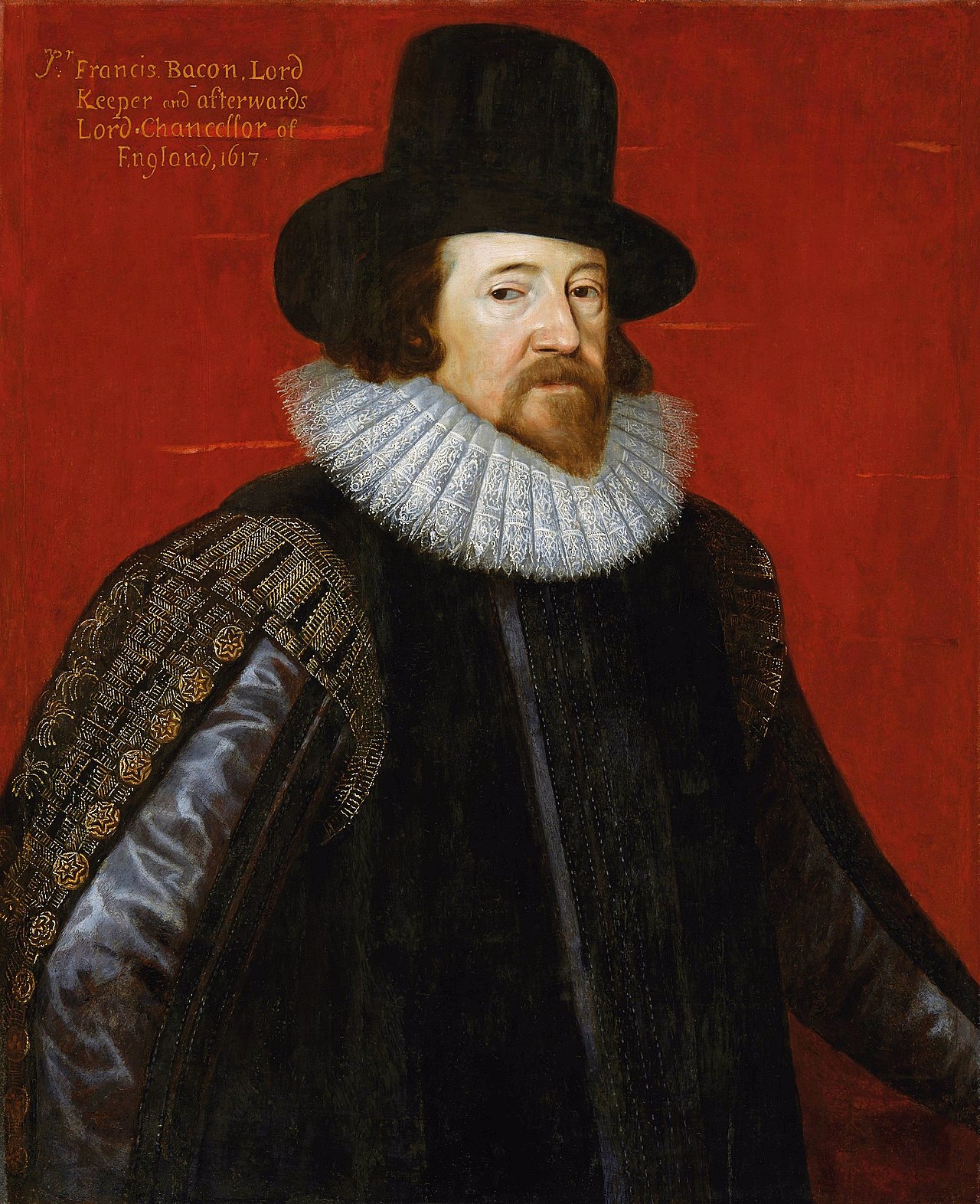
Perils of Bacon stuffed chicken


Francis Bacon was an influential statesman, philosopher, writer, and scientist in the sixteenth century. He died while stuffing snow into a chicken. He had been struck by the notion that snow instead of salt might be used to preserve meat. To test his theory, he stood outside in the snow and attempted to stuff the bird. The chicken didn’t freeze, but Bacon did.


The motorcycle helmet protest


Protesting motorcycle helmet laws, an Onondaga, NY man was participating in a helmetless protest ride when he was killed after flipping over the handlebars and fatally hitting his head.


For those of you who can’t believe such idiocy could possibly be as widespread as these award winners’ stories imply, I respectfully suggest taking a hard look at the sort of behaviors we’ve come to accept as tolerable in those we empower to govern us.


–Jeff


Jeff’s Appearance Schedule


Friday, March 17 @ 9:00AM

Left Coast Crime

Tucson, AZ – El Conquistador, Turquoise 1

Participating in Panel moderated by Alice Volpe titled, “Crimes Around the World,” with co-panelists Connie Berry, Juliet Grames, Carlene O’Connor.


Saturday, March 18 @ 9:00AM

Left Coast Crime

Tucson, AZ –  El Conquistador, Presidio 1-2

Moderating Panel titled, “Both Sides of the Law,” with panelists Curtis Ippolito, Margaret Morse, Karen Odden, Michael Sears


Thursday, February 16, 2023

Animal minds

 Michael – every other Thursday


The Thinker
I’ve often wondered about how animals think, how they process the data from their senses, and what consciousness they have (and what that even means). Animal senses are similar to ours but may have different meanings to the animal. For example, dogs have a much better sense of smell than we do and we all know what interest and attention they focus on it. Clearly they obtain much more information from it than we do. So could they take the scents and build an image of the past from them? Do they see what is there now and visualize how it was in the recent past? Alternatively, scent could be kept completely separate from sight. Your eyes tell you what is here right now, your nose what was here in the recent or older past. Is there a conscious decision to follow a scent based on “I will find such and such if I follow this trail”, or is it an instinctive reaction?

The Dow Jones did WHAT?


African hunting dogs - standoff with hyena

I once watched a pack of African hunting dogs going after impala. They rushed the herd and then chased individuals. One impala managed to outrun a dog, but was apparently too exhausted to run further. It dropped into some longish grass and lay absolutely still. We could easily see it from the vehicle, but evidently it was hidden at dog height. A dog arrived, also panting, and the endgame seemed inevitable. It stopped and sniffed, looking around for the prey. Then it moved in circles, apparently trying to spot the impala or to get a clear scent. Perhaps the problem was that the herd had been all over the area, the impala scents were everywhere. Eventually, the dog gave up, moved off to rejoin the pack, and the impala lived to flee another day.

I’m certainly not the first person to think about these things. Maybe everyone has considered the difference between human and animal minds in some context.

Of course, anthropomorphism is dangerous and almost impossible to avoid. How do we interpret the world if not by comparison to our own behaviors? It’s natural to interpret a dog’s cocked head as curiosity or puzzlement, but perhaps it’s just trying to get a better fix on the sound. (Try Googling it to find out what people think. No hits on what dogs think.)

No one really believes that Paul Gallico’s charming Jennie was “translated from the original feline”, nor that cats solve murder mysteries (or even that they care about them), but in many other ways we assume animal reactions match the corresponding human ones. No doubt sometimes we are right, and other times we are wrong in surprising ways.
Nothing to say all animal minds are the same...

A lot of philosophy has been written on the subject of animal minds (Descartes had an early go at it). Interestingly, the argument often reduces to one of language. Many writers see a high-level language as an indispensable requirement for meaningful thought and consciousness. Others attack that point of view, but it is hard to conceive of any type of abstract reasoning without a language in which to express it. Nevertheless, some experimental protocols have been tried with monkeys, apes, and dolphins that suggest that at least some conscious decision making takes place. Other researchers have queried those protocols. We don’t have the capability to “read” animal thoughts (or human ones for that matter although Elon Musk is working on that), and if it comes to it, we’re not 100% sure what human consciousness actually is or how to define it.


No wonder that so-called artificial intelligence is such an issue…


Wednesday, February 15, 2023

LAST SEEN IN LAPAZ

 LAST SEEN IN LAPAZ hit shelves on Feb 7, 2023. Originally, it was slated for June 2022 pub date, but another year of Covid severely delayed my trip to West Africa for research.

In LSIL, Ngozi, the daughter of the Nigerian ambassador Ojukwu, runs awaywith her formerly imprisoned convict boyfriend, Femi. After someone spots her in a large suburb of Accra called Lapaz, Ojukwu appeals to Emma and her colleagues at the Sowah PI Agency to find her. Femi’s subsequent and surprising murder raises a crucial question: what’s the connection, if any, between Ngozi’s disappearance and Femi’s death? 

Research for LSIL was very wide-ranging and involved some challenges. The novel takes place in these five different countries, in West Africa, involving Nigeria, Niger, Libya, and Ghana, making the plot and sub-plots somewhat complex. For the first time, Emma will travel outside of Ghana to Nigeria, a brand new experience for her (including flying, of which she’s terrified). She will visit Benin City, an ancient city with history that goes back centuries and which is known for brass and bronze sculptures.

Rather than boring you with long descriptions, here are a few annotated, highlight photos for your viewing pleasure.

           16th-century, well-preserved Arusha church,
           Benin City, Nigeria

        How do you fit three grown boys on one motorbike?
        Be African. In Africa, nothing is impossible.


With tour guide brothers Evans and Confidence 
in front of the National Museum of Benin City, Nigeria

       Benin City bronze sculpture, some of which were
       looted by the British and Germans. 


       At the Obasanjo Library. Obasanjo 
       is an ex-president of Nigeria and one
          of the richest men in Africa.


  With Evans, Confidence, and Edjin I, a true royal
    descendant

 
But like many cities that are impressive on the service (e.g. Florence, Italy), Benin City has a hidden, dark side. It's arguably Nigeria's ground zero for human and sex trafficking. As Emma investigates, she comes face to face with the brutality of sex work and sex trafficking, both locally and internationally. This is a tough case.

Now, on to Niger. Emma did not go to this country, but it has prominent scenes in the novel. The French government and the US Department of State state that one should not visit Niger unless absolutely necessary because of armed robberies, sectarian fighting, kidnappings, etc. This is an unfair and broad-brush characterization of Niger. Although there are skirmishes with extremists on the borders with Mali and Nigeria, it’s not as if the entire country is engulfed in war. There’s no one on the street with guns, so in that sense, it’s safer than in the US where I could get shot anywhere at all. It’s hypocritical for western countries to lecture developing countries.

Alhassane Ibrahim, my tour guide in Agadez


Hotel Auberge d’Azel--many buildings are constructed
from natural sand and stone, so the scenery can seem 
a bit monochromatic                           
Making friends at the Agadez livestock market--
sheep, cows, camels, donkeys


At the southern edge of the Sahara Desert, Ibrahim prepares
my cot for a very warm night under the stars. I love this pic
for the Pink Panther blanket alone

Ghana was more familiar territory. Here I have two PI friends who guide me to the places featured in the novel. For example, the infamous Alligator “rest-house,” really a brothel

      The infamous Alligator Hotel (brothel),
featured in LAST SEEN IN LAPAZ


                                        Lapaz, all-night trade including the sex trade

East Legon, an exclusive suburb of Accra where
far less than the 1% live, houses going for up to $1M. 
Major location in LAST SEEN IN LAPAZ


At the Legon (Accra) Botanical Gardens, a childhood 
haunt of mine, but the site has changed so much
I couldn’t recognize any landmarks

                                                                        ~~~