Saturday, March 26, 2022

It's Time For a Laugh


Jeff–Saturday


Over the past few weeks my posts have drifted toward the serious, but I sense folks are looking for something else. After all, who can blame them considering the state of our world. So, I’ve turned to the source of humor from another age, Reader’s Digest, and thanks to its Editors I’m offering a selection of “short jokes anyone can remember.” If you want to see all 101, and a lot of other humor lists, here’s the link. https://www.rd.com/list/short-jokes/


Warning, some do require bit of thought. 


So, without further ado, permit me to simply say, as the kindly farmer did when holding out a fistful of carrots to his favorite female baby goat, “These are for ewe kid.”


*What’s the best thing about Switzerland?


I don’t know, but the flag is a big plus.


*I invented a new word!

Plagiarism!

*Did you hear about the mathematician who’s afraid of negative numbers?

He’ll stop at nothing to avoid them.

*Why do we tell actors to “break a leg?”

Because every play has a cast.

*Helvetica and Times New Roman walk into a bar.

“Get out of here!” shouts the bartender. “We don’t serve your type.”


*Yesterday I saw a guy spill all his Scrabble letters on the road.
 

I asked him, “What’s the word on the street?”

*Hear about the new restaurant called Karma?

There’s no menu: You get what you deserve.

*A woman in labor suddenly shouted, “Shouldn’t! Wouldn’t! Couldn’t! Didn’t! Can’t!”

“Don’t worry,” said the doc. “Those are just contractions.”

*A bear walks into a bar and says, “Give me a whiskey and … cola.”

“Why the big pause?” asks the bartender. The bear shrugged. “I’m not sure; I was born with them.”


*Did you hear about the actor who fell through the floorboards?

He was just going through a stage.

*Did you hear about the claustrophobic astronaut?

He just needed a little space.

*Why don’t scientists trust atoms?

Because they make up everything.

*Why did the chicken go to the séance?

To get to the other side.


*Where are average things manufactured?

The satisfactory.

*How do you drown a hipster?

Throw him in the mainstream.

*What sits at the bottom of the sea and twitches?

A nervous wreck.

*How does Moses make tea?

He brews.


*Why can’t you explain puns to kleptomaniacs?

They always take things literally. 

*How do you keep a bagel from getting away?

Put lox on it.

*A man tells his doctor, “Doc, help me. I’m addicted to Twitter!”

The doctor replies, “Sorry, I don’t follow you …”

*Why don’t Calculus majors throw house parties?

Because you should never drink and derive.


*What do you call a parade of rabbits hopping backwards?

A receding hare-line.

*What does Charles Dickens keep in his spice rack?

The best of thymes, the worst of thymes. 

*What’s the different between a cat and a comma?

A cat has claws at the end of paws; A comma is a pause at the end of a clause.


*Why should the number 288 never be mentioned?

It’s two gross.

*What did the Tin Man say when he got run over by a steamroller?

“Curses! Foil again!”


THAT’S ALL FOLKS.  For now.


–Jeff


Monday, April 4, 7:30 p.m. ET
The Poisoned Pen Bookstore
Scottsdale, AZ
Virtual event

Tuesday, April 5, 7:00 p.m. ET
Mystery Lovers Bookshop
Pittsburgh, PA
Virtual event, register here!

Thursday, April 7, 8:00 p.m. ET
Book Carnival
Orange, CA
Virtual event, join here!

Friday, April 22, 9:00 p.m. ET
Third Place Books
Lake Forest Park, WA
Virtual event, register here!

Saturday, May 14
Greater Pittsburgh Festival of Books
Pittsburgh, PA
In-person event

Friday, March 25, 2022

Scotland the whatsit?


Scotland is obviously rather fabulous as I’m sure you all know so I have challenged myself to blog about the darker aspects of the Land of the Thistles. I googled the topic – “the worst things about Scotland” and an awful lot came up.

Here are the edited highlights, in no particular order.

Music;

The Proclaimers and bagpipes. There really is nothing else to say apart from a Scottish gentleman is somebody who knows how to play the bagpipes but doesn’t.


Midges;

We don’t have poisonous things, we just have clouds of these intensely irritating little beasties with their incredibly itchy bite. In some places at dusk in summer with no wind the midges can be Biblical.


The weather;

I would say the rain, but scientifically this is not the worst thing – it’s a lack of sunlight that does the damage. The west coast manages to have sunshine with massive cloud cover simultaneously which sounds impossible but I’m looking out the window right now and I can see it.  We all have borderline rickets.


Education;

When we were in the EU, the Scottish University and Further Education system was free to Scots and members of the EU with the exception of the English, the Welsh and the Irish. They had to pay.  I’d like to know how many fights that caused in the Student Union bar. And when I say free, free for the student. Obviously somebody pays. And there had to be a balance of rest of UK/rest of the world to balance out the non fee paying Scots and Europeans which sometimes meant your kids couldn’t go to the University they wanted despite having all the right qualifications.  Sometimes they had to go South of the border. And pay.


Infrastructure;

No much beyond the central belt, roads are too narrow and full of potholes. For a small country it can take an amazingly long length of time to get anywhere which is a pity as the ….


…. Life expectancy:

Is not very good overall. However in some parts of Glasgow life expectancy is 12.5 years below the national average. This takes us to medieval death rates. We are the heart attack kings of the world per capita head. Don’t eat the deep fried haggis.


Braveheart;

There is a nasty insidious undercurrent that’s generally known as the Braveheart factor. This is due to Mel Gibson. The statue of William Wallace at Stirling has been heavily criticised as it bares no resemblance to the Australian actor at all.  Some folk think the film was a documentary.


Edinburgh;

On the list of the worst things about Scotland was Edinburgh, I’ll just leave that there. It is a weird place though, everything about Edinburgh is difficult.


Internet:

When the broadband provider says that the signal is available over 96.5% of the country, the other 3.5% is in Scotland. Mobile phone signals are the same. This is a boon to us crime writers.


Issues;

While our xenophobia is very specifically targeted at Englandshire, our sectarianism really knows no bounds. Martin Luther’s protestant reformation still resonates in all levels of society especially education, sport and often your career choice. Sad but true. Always be wary of the question what school did you go to? At a job interview or, the more personable, what foot do you kick with? It’s not uncommon to hear “You can tell – they look like a protestant” or “they look like a catholic”. Which leads us on to the fact that protestants tend to be unionists whereas Catholics tend to be republicans. Which leads to 14% of Scottish people detest the SNP, thinking that they are a breeding ground of Nationalism, xenophobia and incompetent government.

Another 10% think the worst thing about Scotland is being under the control of Westminster, for exactly the same reasons.


Caro

Thursday, March 24, 2022

A miracle a long time in coming

 Stanley - Thursday

On Monday this week, a miracle happened to me - I hit my first hole in one after over sixty years of trying. I had long ago given up hope that it would happen. I had come close several times, twice within 20 cms (8 inches), but there was no cigar to be had.

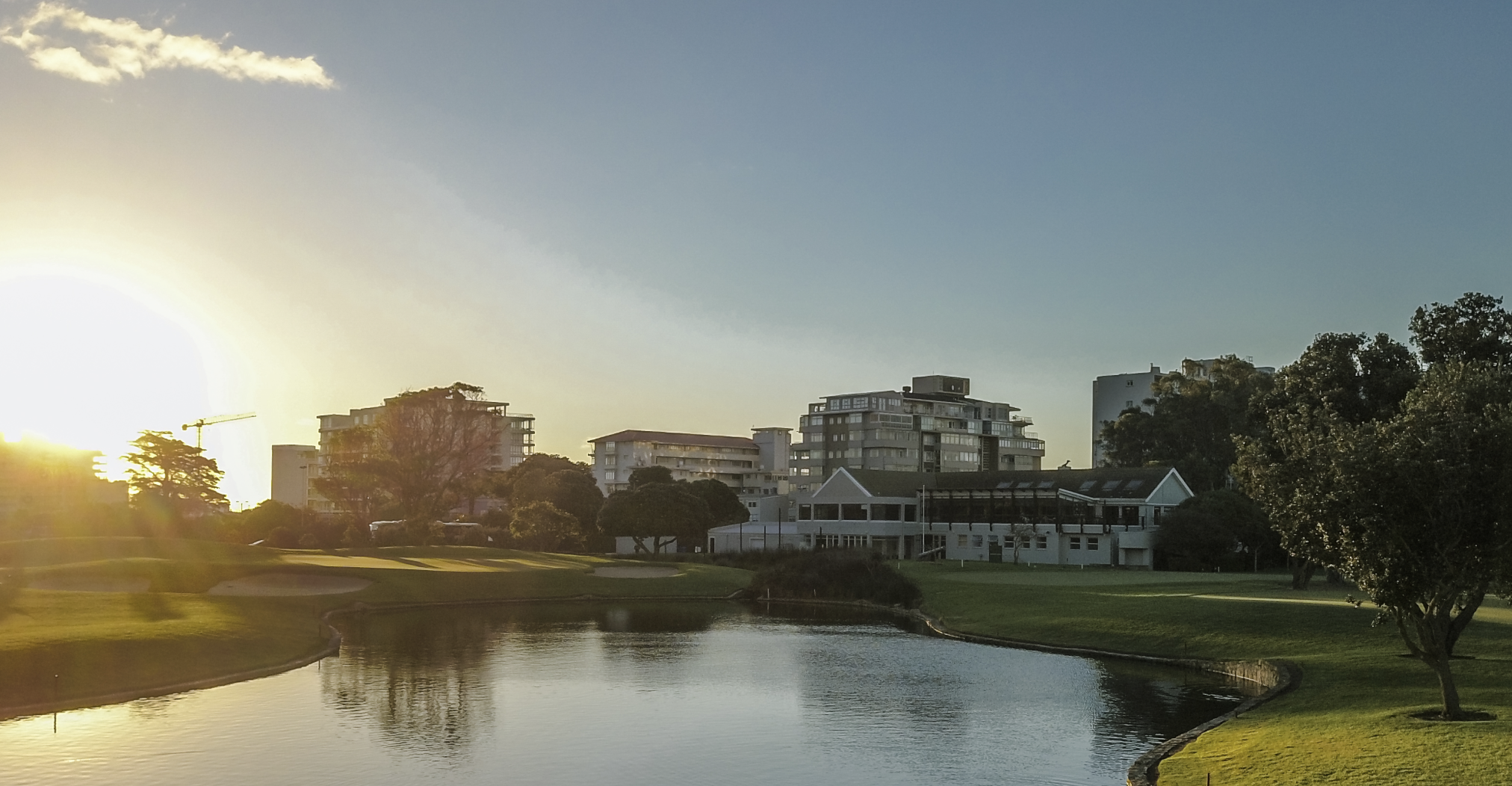
On Monday I was playing the 18th hole at the Metropolitan Golf Course in Cape Town. It is a fine finishing hole - a par 3 over water, out of bounds to the right and bunkers protecting the green on the left. Depending on where the tee markers are placed it can be as short as 110 metres and as long as 190 metres. On Monday it was 167 metres (183 yards) into a slight breeze.

Metropolitan 18th hole, with soccer stadium and Devil's Peak in background

The view from the tee

For the readers who golf, I hit a 4 hybrid. My natural shot shape is a draw (right to left), so I had to start it out towards the out of bounds. I knew I had hit it well and saw it start to curve towards the green. Then I lost sight of it - bad eyes! 

Since there had been a hold up on the last hole, the four ball behind mine was also at the tee. As I lost sight of the ball, one of them said "It's going in the hole!" followed by "It's in the hole!" I shrugged it off, thinking it was a typical golf joke. As we walked away, he said again, "I'm sure it's in."

As I walked up to the green, I looked round and couldn't see it. That raised my hopes a little, because I knew it had been a good shot. I looked at the rough behind the green. Nothing to be seen. Eventually, I decided I had to inspect the hole, so I walked over - unknowingly being filmed by one of my playing companions.

And there it was.

You can see my elation here.


A good shot augmented enormously by good luck. After all, the hole is only 10.79 cms (4.25 inches) wide.

And that ticked off one of three golf goals I had had when I stepped onto the course that day: a hole in one; an albatross (scoring 3 shots less that par; a hole in one on a par 4, or a 2 on a par 5); and finishing a round with a score the same or less than my age.

So here are some facts:

The odds of getting a hole in one are 1 in 12,500. So obviously, the more you play, the greater the change of success. Also, the better golfer you are, the better the chances. My research indicates that 20% of all golfers have at least one hole in one in their life times. For professional golfers, the odds are 1 in 1,250, ten times better.

For an albatross, the odds are even worse. I could find no definitive facts, but is seems the odds are 1 in between 1 and 6 million. I wrote this one off a long time ago, even though I once came within 50 cms (about 19 inches). It was in Johannesburg (high altitude); winter (rock hard fairways); probably a tailwind; and two good shots. I did sink the put for an eagle (2 under par).

With respect to shooting my age, as we say, I am more optimistic. In January I scored 75, one over my age at the time. Had I waited six weeks, I would have been able to check off the second golfing goal. This is an interesting goal because it changes every year - one more shot allowed to be successful; one more year of fading strength.

For a hole in one to be recognised, it has to be witnessed by two people. A friend has had one witnessed hole in one, and two accomplished when playing by himself. 

The traditional is also for the lucky golfer to buy everyone a round of drinks after the round. There were 44 players in the competition last Monday, so the bill was quite steep. Fortunately in South Africa, at least, the club carries some insurance, as does my homeowner's insurance, so I shouldn't be out of pocket. However, I wouldn't have cared if I had to pay for the whole lot.


I've been grinning all week.

___________________________________

Upcoming events:

Crimefest in Bristol:

THURSDAY, 12 MAY, 15.50 – 16.40
A CHANGE IS AS GOOD AS A REST: WRITING MORE THAN ONE SERIES
* M.J. Lee
* Douglas Lindsay
* Michael Stanley
* Robert Wilson 
Participating Moderator: Michael Ridpath

FRIDAY, 13 MAY, 12:30 - 13:20
DIVIDED SOCIETY: HATE CRIMES AND SOCIAL FACTORS
* Kia Abdullah
* Antony Dunford
* Sarah Sultoon
* Holly Watt
Participating Moderator: Michael Stanley

FRIDAY, 13 MAY, 16:00 – 16:50
ITW: THRILLING FOR A LIVING
* Alison Bruce 
* Dugald Bruce-Lockhart
* Alex Shaw
* Michael Stanley
Participating Moderator: Zoë Sharp (authorzoesharp@gmail.com) 


Wednesday, March 23, 2022

Happy Navroze--Spring is Here!

 Sujata Massey


Farida's extended family at 2022 Navroze in Kolkata


Jamshedi Navroz Mubarak!


 According to the old Persian calendar, March 20 or 21 is the day that the new year named Navroze, Navroz, Nawrooz, and various other spellings is welcomed. This observance mostly celebrated by Zoroastrians—the group inside known as Parsi; Bahai worshippers; and most Muslims with roots in Iran. 


I “crashed” Navroze when I was twenty-five and visiting India with my father.


It was a hot March afternoon, and I was strolling the grounds of the Indian International Center in New Delhi I noticed a long tent set up on the grounds and the guests going in, all dressed in finery and having animated conversations. I edged closer. A stately gentleman with a tall white feta approached me and said, “Do come in! It’s our new year. We are celebrating Navroze, and there’s plenty of food.”


I sampled the buffet, tasting rich and sweet, tangy and spicy dishes that were different from the Bengali and Punjabi dishes with which I’d grown up. Parsi food seemed sweeter and savory and spicy—all at once!  I briefly exited to find my father and tell him about the wonderful New Year’s party taking place on the lawn. He came with me and tasted the delights. We had many conversations with people of all ages. I felt honored that this community would reach out to strangers and share food with them; as I learned more, it seemed that this was a casual example of the “good thoughts, good words, and good actions” that are the pillars which Zoroastrians aspire to uphold. 


Ladies of Farida's family in Kolkata


Before we continue with food, a little history seems in order. The Zoroastrian faith is thought by most scholars to have started in Central Asia and spread south toward Iran in the 6th century BCE, or perhaps even earlier. The religion is named by followers of the prophet and social reformer Zarathustra (also known as Zoroaster) who established a monotheistic belief system. Zoroastrianism stressed reverence for all elements of nature, but worship was to be focused on a single God. Zarathustra introduced the concept of an opposing devil, helpful angels, and heaven and hell. There's a lot more to the faith--but as an outsider, I will leave it up to the experts to provide more, and of course--there are followers who are very orthodox, and others more liberal in their interpetrations.


Zoroastrianism was practiced by citizens and rulers of the Sassanian Empire and thrived until Arab conquerors bested the Sassanians. 


As the Islamic faith was adopted by most of the local people, a number of Zoroastrians wanted to keep their religion. Some Zoroastrians stayed and quietly maintained their ways. Others went searching for a new home, with a number sailing to the southwestern side of the Indian subcontinent. These Zoroastrians had landed in Gujarat, where they had to convince the ruling maharaja that they would be peaceful immigrants, not seizing land or converting the resident Hindus. And so, Zoroastrians continued fleeing to India up through the late 19th century—with that latest group labelled as “Iranis” by the earlier immigrants who called themselves Parsis, or “people of Pars,” an area within Perisa. (I’ve also heard that Parsi literally means “person from Persia”. The truth is hard to pin down, just as it’s impossible to date the arrival of the first Zoroastrian settlers in India.) 


Parsi families grew roots throughout India, but they are in largest numbers today in Mumbai, followed by the state of Gujarat, Kolkata, and Karachi, Pakistan. The total Parsi population, worldwide, is now believed to be under 50,000. 


My father, Subir Banerjee, is a Bengali Hindu. He experienced most of his childhood years growing up in a very unusual, Parsi-built city: Jamshedpur, which stands in a province called Bihar during British rule and is now renamed Jharkand. Dad remembers his childhood days fondly, and that his neighbors were Muslim and Hindu who played and socialized together. Parsi people in Jamshedpur typically held very high jobs at Tata Steel, so he doesn't remember socializing with Parsi children, although his school was named Ratanji Tata High School.


I remain intrigued by the idea of a Hindu growing up in a planned community built by a Parsi, without very many Parsi people in immediate contact.


Jamsetji N. Tata, the namesake of Jamshedpur, created many successful businesses, including the Taj Mahal Hotel, India’s first luxury hotel that admitted Indians, and he also was very philanthropic. Carefully considering people's needs also made good business sense. When Mr. Tata desired to build the largest and most advanced steel plant in Asia, he knew that thousands of people would be involved. This meant he needed undeveloped land outside of his home base in Bombay in order to house the steelworks and the workers’ families. He directed the city planners to allow ample space for Muslim mosques, Hindu temples, and Christian churches. He insisted on generous planting of trees and establishment of parks for leisure and playing sports. 


The tremendous output of steel from Tata Steel was essential to the British Army during World War I. In 1919, a grateful colonial government formally named the area Jamshedpur in his honor. 


J.N. Tata is second from right in family photograph


Despite his fame and wealth, Jamsetji Tata did not hold himself aloof from commoners. My dad tells the story of his dear schoolfriend’s father. As a young man, this Mr. Roy tried to get a job as a musician. When he wasn't chosen, he sadly took a train home and walked through the station in Jamshedpur, dragging his feet. He was almost too dejected to say hello when a fair-skinned Indian man fell into step with him. But the kindly older man asked him a few questions, and the story about the ill-fated job search unfolded. At the end, the gentleman revealed himself as Jamsetji Tata and offered Mr. Roy a job inside Tata Steel. Mr. Roy wound up rising to work as an engineer at Tata Steel, even though he didn’t have a college education. 


Niloufer holds a bouquet along with her brother at their Navjote in 1971 Karachi


Niloufer Mavalvala is a Parsi cookbook author who grew up in Pakistan and now lives in Canada. Niloufer remembers a joyful childhood celebrating with Parsi family and friends in Karachi and traveling to see the family branch in Bombay (now Mumbai). Niloufer preserves Parsi heritage through her cooking; she has a website, Niloufers Kitchen, and has authored several cookbooks. Last week during an online program sponsored by Howard County of Maryland Libraries, Niloufer demonstrated Parsi cooking, and discussed with me her craftiness with Parsi food, and I shared some ways I use cooking to illustrate social issues within my novels. In my favorite food scene in The Widows of Malabar Hill, Perveen Mistry, my Parsi heroine living in 1917 Bombay, fries shoestring potatoes for an important Parsi dish and recklessly tosses the golden potatoes out onto paper to drain off the oil. The trouble is she’s grabbed a newspaper. The potatoes become smudged with ink and her mother-in-law is shocked at her act.


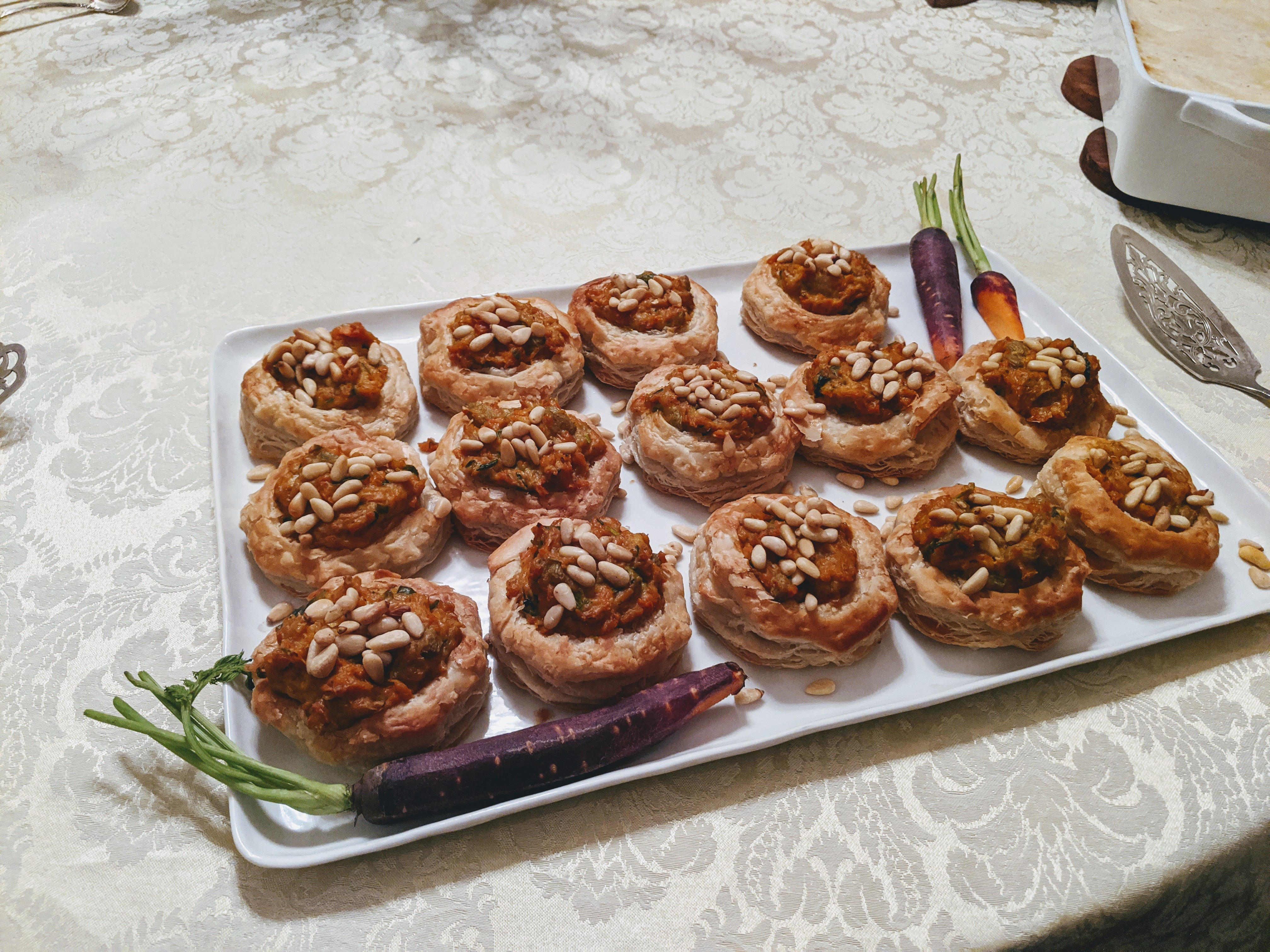
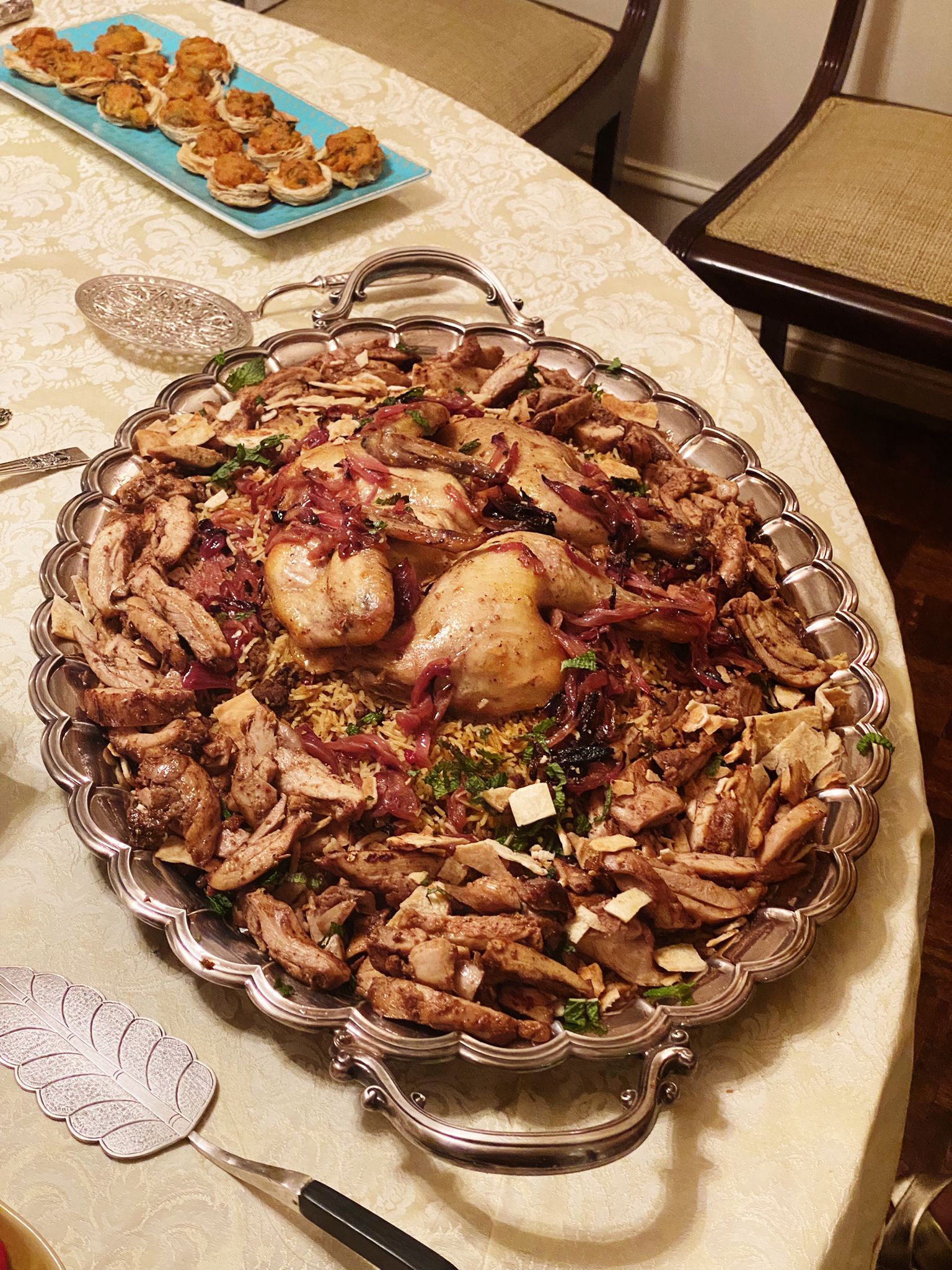
Niloufer's Navroze dishes, ready for 20 guests


Carrot Bhachuri vol au vents


Patra ni Machi steamed in banana leaf


Chicken palau with warm spices


Walnut halwa sweets


I can’t imagine Niloufer ever being so ruffled in the kitchen that such a thing could happen. For the library program, she taught us to make a Parsi-style dal and patri ni machi, the chutney-garnished steamed fish I’d tasted at my first Navroze party. Niloufer also displayed a beautiful hafseen table, a New Year’s welcome table that precedes the dining table. It’s pristine, covered in a white cloth and  decorated with religious and natural objects that play a role in a good new year. Guests arriving must look at themselves in a mirror placed over the table to be blessed with good luck. Niloufer talks more about Navroze and the history of Parsi people in her article for Parsi Khaber


vegetables, fish patio, a special dal and rice from Farida's family


Niloufer and I share a common friend, Farida Guzdar. Farida was the first person to pose a question  at a live book talk outdoors near Lake Kittamaqundi in Columbia, Maryland in 2019. When she revealed herself as a Parsi, I became excited to know such a friendly information source lived nearby. Our friendship grew, with sharing of books and family stories.


Farida has lived in the US for 43 years. She holds dear the memories of her 1960s childhood in Kolkata with a large extended Parsi family who owned Elphinstone’s Restaurant, the city’s only Parsi restaurant. For Navroze, everyone got new clothes. Her mother would cook ravo, a semolina pudding. A festive lunch was served at her grandparents’ home including dishes like a slowly simmered, spicy lamb dhansak; a savory dal; sweet-and-sour fish dishes called Patio; a baked custard called Lagan Nu;and a pink milkshake with tapioca pearls delightfully called Falooda. Many of these exact dishes are mentioned in my books without my having tasted them really good versions of them, due to the lack of Parsi restaurants in the Delmarva area. Herein lies the value of using my recent purchase, an excellent cookbook by Niloufer Mavalvala. 


And to put a cherry on top, today I’m heading out to have a post-Navroze lunch at Farida’s house.

Tuesday, March 22, 2022

Kia ora Kōanga (gidday Spring)!

Cherry blossoms herald a new season

Craig every second Tuesday

Kia ora and gidday everyone.

Well, Spring has sprung here in London and across the northern hemisphere, and Miss Seven and my daily nature walks are becoming increasingly flower-filled,. I've always quite liked winter - growing up playing soccer (football) in New Zealand, I have many fond memories of wintry days with friends and teammates - but it's also always lovely to see the turning of the seasons towards summer. The whole idea of Spring as a time of renewal and new growth ain't bad either, for the old headspace, even as we all keep trudging through some strange old times globally. 

Take time to stop and smell the ... crocuses...

Back home in Aotearoa (New Zealand), Kōanga is the Māori word for Spring. Though of course, being southern hemisphere it occurs at a different time of year (September to November). After a few years in the UK, as well as several summers in the States, I'm now used to the seasons being opposite to what I grew up with. But as a kid, the start of Spring was always a special time on a few fronts. The first day of Spring for us was my sister's birthday, Father's Day in New Zealand is in early Spring, and I had several other mates' have early Spring birthdays. 

We always used to joke about all the 'Spring lambs', though as I got older I realised that September minus nine months was around the time of a lot of Christmas parties and holiday/summer cheer! 


Daffodils provide a splash of colour as winter wanes

Spring is also a time of planting, so we've started putting some things in the ground in our wee allotment for an autumn harvest. This year along with various vegetables, we put in a flower bed (summer/autumn flowers) for the bees. Part of the Māori word for Spring, Kōanga is the word ‘kō’, which means a digging implement: Spring is the time to dig the soil. It felt good to get out the hoe, garden fork and trowel last week and get my hands in the soil. 

There's something about gardens. My parents were big gardeners, and I didn't really get it as a kid - though I liked the greenery and plants, but I didn't understand why they enjoyed spending so much time in the garden, tending to it, and tweaking things throughout the seasons. I think I understand more now. During the COVID pandemic, having our wee garden has - along with our daily nature walks - been something that has helped keep us (somewhat) sane. The connection to nature, while living in a big city. The physical work. Seeing things grow and change. 

Plant seeds, pull weeds. 

A gardening idea that applies more broadly to life in general. 

Back home, the Māori have a saying, "Takē Kōanga, whakapiri Ngahuru" (absent at planting time, close by at harvest) referring to people who disappear during the hard work of planting in Spring, but show up when food is abundant at the Autumn harvest. None of us really want to be like that, do we? 

So what seeds are you going to plant this Spring? Not just in your garden ... 

What can we do now, that will have positive effects later? 

While the New Year is a cliched time for reflection and new beginnings, new goals etc, why not start something now that you've wanted to be doing for a while? Spring clean your life. 

I have a few things on my agenda - writing and otherwise. I guess we'll have to see how well I do with the planting and tending and then we'll see whether there's a good harvest or not in a few months time, or more. 

In the meantime, Spring also seems to be a good time for new crime novels, with some really terrific books hitting the shelves in March and April. I've been blessed to read several in advance, and others have caught my eye because of the author or strong recommendations from people I trust. So if you like crime fiction, as I'm sure most of you reading this blog do, here are a few March recommendations to add to your reading pile for the warmer months. 

Out today, a fabulous rural noir novel from a fresh new voice, Eli Cranor. Blending the small-town high school football setting, ala Friday Night Lights, with a gritty tale of an abused young man struggling to keep his violence on the field and a coach seeking redemption, this is powerful stuff. 

New Zealand author Vanda Symon's Detective Sam Shephard books are among my favourite series, with a headstrong heroine battling who's just wonderful to follow. But Symon may have raised her very high bar even further with this dark standalone where the lives of three overlooked people - an office worker, a teenage sex worker, and a homeless man - collide. An exceptional, tense thriller that delves into issues of homelessness, misogyny, loyalty, grief and loss, and how we can be surrounded by people we don’t really ‘see’.

Like Symon, Crime Writers of Color co-founder Kellye Garrett swerves from an engaging series heroine to a darker standalone. In LIKE A SISTER, she brings an urban, single black woman's take on psychological thrillers and 'domestic noir', as grad student Lena Scott tries to unravel the death of reality TV star Desiree Pierce, her half-sister. A masterful tale that pulses with rich veins of sarcastic humour and explores ideas around race and celebrity.

The fourth and (sadly) final - for now - tale in Melbourne author Emma Viskic's superb series starring profoundly deaf private eye Caleb Zelic. Now an expectant father, Caleb is back putting himself and his most precious relationships at risk when an anonymous text alerts him to the whereabouts of his missing drug addict brother Ant. Shots are fired, a body is found. A rehab community on an isolated island. Viskic delivers a taut tale that doesn’t scrimp on character and place. Twisty storytelling pulsing with humanity; a novel carried on prose that sings.

Here's one I'm about to dive into, and is very highly anticipated. I've enjoyed several of Cuban-American author Segura's past crime tales, and have been hearing so many GREAT things about SECRET IDENTITY from lots of American authors and readers I trust. Ian Rankin also raved about it recently. Touted as "a rollicking literary mystery set in the world of comic books", SECRET IDENTITY takes readers into a story of secrets, lies, and murder in the 1970s comic book scene. Tantalising, eh?

Following on from a tense, London-set hostage thriller (THE SECRETS OF STRANGERS) shortlisted for multiple awards, Ugandan-born author Charity Norman now ‘returns home’, taking readers deep into the small towns and wild landscapes of central Hawke’s Bay, New Zealand - where she's lived for much of the past 20 years. REMEMBER ME is an eloquent, heart-breaking tale that meshes family drama with rural suspense as a middle-aged woman returns from overseas to care for her ailing father, only for past secrets and tragedies to come horribly to light. 

Scotland-based storyteller DV Bishop (himself a former comics editor) takes readers back to Renaissance Florence in this very good sequel to last year's CITY OF VENGEANCE, the first in his historical mystery series starring the fascinating Cesare Aldo, an officer of the feared Otto di Guardia e Balia court who is keeping his own dangerous secrets. This time Aldo must investigate a violent death in a convent. Bishop soaks readers into the atmosphere of 16th century Florence while delivering a captivating mystery.

So there you have it - seven Spring reads to help your TBR pile grow, along with a few flower photos to brighten up your scrolling. However you are spending your Spring, I hope you have a good few months. 

Until next time, ka kita ano. 

Whakataukī of the fortnight: 
Inspired by Zoe and her 'word of the week', I've been ending my fortnightly posts by sharing a whakataukī (Māori proverb), a pithy and poetic thought to mull on as we go through life.

Nāu te rourou, nāku te rourou, ka ora ai te iwi

(With your food basket and my food basket the people will thrive)


Monday, March 21, 2022

Dear EvKa: An Open Letter

Annamaria on Monday

Prologue


To readers other than the one addressed: As a regular visitor, Everett Kaser has been a part of Murder is Everywhere for many years. His frequent comments and responses on this blog contribute insight, humor, often wicked humor, and a deep understanding of what the authors who are regulars here are trying to do, both in their books and in their weekly or biweekly posts. I address him as EvKa because he long ago began addressing me as AmA. Though I know him only in this virtual world, his presence is always a plus for me. In fact, a few weeks back he made a comment on Zoe’s post that, to me anyway, requires more than a few sentences in response:


Dear EvKa, In your comment on Zoe's Post - "Diving into the Story" - you described storytelling techniques that you despise: prologues, flashbacks, and multiple points of view. I was nonplussed at the vehemence with which you described your dislikes, since I use all of these techniques when I tell a story. Not all of my novels have prologues, but some of them do. And all of them contain flashbacks and all of them are written from multiple points of view, never in the first person which you so passionately expressed as the only kind of story you really enjoy.  In this billet-doux, (and it is a love letter of sorts) I want to tell you that your comment made me think about the pitfalls of the techniques you ordinarily reject.

So I set out today, not to change your mind about what you like. De gustibus non disputandum est, after all.  I hope to demonstrate today what I gleaned from thinking more analytically about the fiction writing tools that often ruin a story for you.  The examples I will give are ones that I can easily illustrate. They very likely involve stories you have experienced.  True my examples are not on the page but on the screen. I still think they can be instructive.

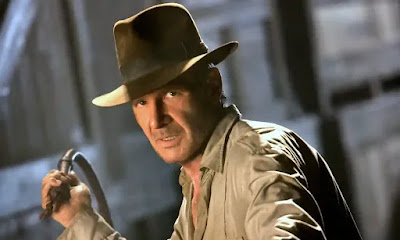
Regarding prologues: here is an example of a story that starts with one. In the film, it lasted twelve minutes. Think of it as the first 12 pages of a novel, which would make it a lot longer than the average prologue in print, but you will get the idea.


As "Raiders of the Lost Ark" goes on from this beginning, it echoes things dramatized in this first scene, which portrays Indy in action and enhances not only a viewers' suspension of disbelief and understanding of his character, but also their enjoyment of the arc of the story.  We really get it when Indy encounters those snakes in Egypt. And believe it when he disarms a Nazi with his whip!

Lesson for me: if the prologue doesn't do these things it's probably superfluous. In addition to which, it must be engaging and entertaining. The best prologues, like this one, read like a short story.

Regarding multiple points of view: The second scene of "Raiders" stays with Indy's point of view. But the third one switches to Marian's, in her bar in Nepal. Even when Indy enters the bar, the focus is on Marian's point of you.  And so it goes.  The arc of the story switches points of view throughout the rest of the film, sometimes to the villains', and for a while, the camera actually follows a monkey. Why? Because the monkey's point viewpoint keeps the action fast-moving, clear, and entertaining.

Lesson for me: the point of view character needs to be the one whose actions move the story along, make the most difference in the outcome of the tale, or whose emotions are most strongly engaged.

Regarding flashbacks: They can intensify the emotions the story elicits. "Casablanca" begins with a prologue needed to engage the audience.  If it started with Rick and Ilsa in Paris, would there as much suspense?  Instead the beginning sets the scene: refugees from the war are desperate and the Nazis make their situation all the more dangerous and painful.  By the time we meet the mysterious main character, Rick, we care about the people around him and are wondering what role he will play in solving their problems.  We immediately see that he is a cynical and bitter man.  And soon we find out that his worst enemy is a love song:

At this point the audience is ready, desperate to know what really happened.  The flashback does a lot more than answer a burning question.  It sets up the suspense and greatly intensifies the emotions evoked by the rest of the story.


The lesson here I think is crystal clear.  The flashback's job is to answer questions critical to the story and to deliver those answers when they are most wanted and will have the greatest impact.


Here's lookin' at you, EvKa.  Thank you for this inspiration. In so many ways, you bring out the best in us.

Sunday, March 20, 2022

AFTER AGATHA: WOMEN WRITE CRIME by Sally Cline

A noted academic’s take on why women read and write crime


Zoë Sharp


It’s my pleasure to introduce Sally Cline to the blog. Sally is the author of 14 books, is an award-winning biographer and fiction writer. She is Fellow of the Royal Society of Arts, Research Fellow at Anglia Ruskin University, Cambridge, and former Advisory Fellow of the Royal Literary Fund. Her biography on Radclyffe Hall, now a classic, was shortlisted for the LAMBDA prize; Lifting the Taboo: Women, Death and Dying won the Arts Council Prize for non-fiction; and her landmark biographies on Zelda Fitzgerald and Dashiell Hammett were bestsellers in the UK and US. She is co-Series Editor for Bloomsbury’s nine-volume Writers and Artists Companions. Formerly lecturing at Cambridge University, she has degrees and masters from Durham and Lancaster Universities and was awarded a D.Litt in International Writing.


Is crime fiction different when it is authored by women writers? How? In which ways?

And will female penned crime novels and short stories translate easily across cultures? Will Americans and Canadians read into British crime fiction the same ideas that the British author meant?


The answer according to the five years of research I have done for my new book “After Agatha: Women Write Crime” (Oldcastle Books) is yes. As long as the fiction is written by a woman.


The best starting point is the enduring and fascinating contradiction that women face both in Great Britain and also in the United States and Canada. This curious paradox is that women in all three countries who spend much of their real lives being terrorised by and afraid of male violence are nevertheless drawn to stories that luridly and frighteningly bring those fears to life.


Most women report that they are conditioned from their childhood to accept that there are men in the world, and what is worse there are men in THEIR world who want to beat them, batter them, hurt and damage them. Yet many of these same women whom I talked to not only persist but seem to enjoy reading novels in which other women are stalked, tortured, raped and even murdered often in such brutal detail it seems to be worse than lurid, it appears almost pornographic.


Not only did many mild mannered women tell me they read books like these but a separate segment of them said they enjoyed writing them.


These books are hugely popular. In the UK thriller and crime fiction has become our most popular literary genre accounting for one in three of all books sold. In 2017 according to the data company Nielsen Bookscan 18.7 million units of crime fiction were sold and today 2022 that figure is believed to be around 21 million. The output of crime books written by women rose during Covid and lockdown.


In the US the sales of crime and thriller fiction are second only to those of romance and erotica. In Canada mystery and crime books combined account for more than one hundred million dollars in sales each year. In each country women are driving the boom accounting for as much as 80 per cent of the market.


So why are women reading what they fear most?


My top theory is The Reassurance Theory. Women who are desperately afraid in their real lives most of the time are drawn to reading explicitly about those fears (and also writing about them) because it is one way of addressing those fears in a safe environment ie the world of fiction.


Also in many crime novels there is the next theory, the Safe Ending Thesis. In many crime novels the ending is very satisfactory as crimes are resolved, perpetrators are punished. Justice is generally done.


Women who are both vulnerable in fact but also feel vulnerable can then feel strengthened.


Readers can feel horror, tension, fear all the way through the book but somewhere in their minds is the knowledge that some part of the ending will feel ok.


Women readers could turn to books that are equally tense, sometimes more so, written by men but they don’t. They seek out books written by women.


Why do they do this? What is it in female authored crime books that sets them apart?


The most important element in women’s crime writing that makes them distinct and different from men’s writing is that these books show greater understanding and stronger insight into the minds of potential victims. There is also a greater desire in women to understand crime and the psychology behind it. In psychological thrillers it is often women who avenge the crimes and turn the tables swiftly even savagely on the perpetrators.


I asked all the crime writers I interviewed why they chose that particular genre to call their own.


Obviously one answer they all gave was the commercial one. Crime sells. It is either immediately published in paperback or goes into paperback soon after hardback publication. Crime fiction often whizzes to the top of the best seller lists so more and more people hear about it. These are the books on the front tables of Waterstones, Heffers and Blackwells so people who are not remotely interested in mysteries or thrillers see them and pick them up.


Mainly crime writers said that as possible crimes added to their own daily fears one way of coming to grips with these was to fictionalise them.


Interestingly several new women writers come from other professional groups such as the criminal justice system, where police officers, forensic scientists, probation officers and lawyers are also writing best selling crime books and finding their professional expertise can be employed skilfully in their new creative industry.


Many women writers from all three countries told me they have taken to crime in order to reflect on and make comments about the social and political landscapes they see around them.  Finally many writers on this side of the pond and the other side have decided that crime fiction is a wonderful way to explore the significant issues facing all women today.


After Agatha: Women Write Crime

From Agatha Christie and Patricia Highsmith to Val McDermid and JK Rowling, After Agatha is an indispensable guide to women's crime writing over the last century and an exploration of why women read crime.


Spanning the 1930s to present day, After Agatha charts the explosion in women's crime writing and examines key developments on both sides of the Atlantic: from the women writers at the helm of the UK Golden Age and their American and Canadian counterparts fighting to be heard, to the 1980s experimental trio, Marcia Muller, Sara Paretsky and Sue Grafton, who created the first female PIs, and the more recent emergence of forensic crime writing and domestic noir thrillers such as Gone Girl and Apple Tree Yard.


After Agatha examines the diversification of crime writing and highlights landmark women's novels which featured the marginalised in society as centralised characters.


Cline also explores why women readers are drawn to the genre and seek out justice in crime fiction, in a world where violent crimes against women rarely have such resolution.


The book includes interviews with dozens of contemporary authors such as Ann Cleeves, Sophie Hannah, Tess Gerritsen and Kathy Reichs and features the work of hundreds of women crime and mystery writers. It is an essential read for crime fiction lovers.


‘Having read After Agatha, I found it a fascinating work of extraordinary breadth and scope, covering authors from the Golden Age to present day. Sally’s enthusiasm for her subject matter shines through. The conclusions she draws—supported by numerous interviewees—of women as crime writers, as the main protagonists of books written by women, and as the victims within crime fiction, make this compelling reading. This book richly deserves a place on the bookshelves of anyone interested in the genre. My only minor complaint was that it would have been very useful to have a key to identify some of the famous signatures on the cover!’ ZS