Wednesday, May 4, 2022

From Solitude to Left Coast, Malice, and Edgars

 Sujata Massey

Walter Mosley, near left, lunching with us at Malice


One hundred years ago, only a science fiction writer could have dreamed that being a writer would involve much more than a pen, typewriter, and some paper. Bookstores would take care of selling one’s work, and there would be the occasional exciting invitation to lecture at a private club or educational institution. And of course, written correspondence with admirers.


Imagine telling Mary Roberts Rhinehart and Georgette Heyer that they’d need to add on sharing photographs and short messages about their lives to FaceBook, Instagram, Twitter and TikTok. And how would they like to hear that sitting in front of an electric machine that saved your words, had a camera to focus unsparingly on your face, a microphone to pick up your ums, would become the way you shared yourself with others? And would the writers of yore have delighted at the idea of mystery conventions, or thought them an abomination? 


Is that a photobomber or Ghost of Honor at Malice?


Although I write in a room alone, I've had a quarter century to slowly learn the skills needed to be a modern mystery writer. During the pandemic, I found community in booktalks sponsored by stores and libraries and bookclubs. I even got my own zoom account so I could sponsor some interviews with writers and historians. But I got zoom fatigue, like a lot of people. I didn’t want to connect with a screen in the evening. I longed for the equivalent of an outdoor porch meeting with writing friends. 


This spring, I got a fourth booster shot and prepared to go out into the world to two mystery conventions and the Edgars dinner. I tested myself for Covid before and after each outing, and was blessed to remain healthy. Some of my peers did catch the virus, and I'm relieved that they are either recovered or feeling much better. In my case, the trip was worth it, and I'm sharing a few highlights. 


LCC Lineup: With John Copenhaver, Susanna Calkins and Catriona Macpherson


Malice Lineup: with Lori Rader-Day, Gabriel Valjan


Firstly, I was going as a nominee. I had the thrill of seeing my 2021 book, THE BOMBAY PRINCE, receiving nominations for the Best Historical Award categories at both Malice Domestic Convention in North Bethesda, MD, and Left Coast Crime in Albuquerque, NM. This meant panels to talk about the book and lots of picture taking.


The actual Agatha award (given at Malice) and Bill Gottfried Memorial award (given at LCC) went to talented and kind author friends who'd written exceptionally original and well-researched historical mystery novels. 


 Lori Rader-Day’s Agatha award winner, DEATH AT GREENAWAY, is a brilliantly researched mystery set at Agatha Christie’s country house during World War II, when the famed author gave up her property to the government to be a temporary home for London children who’d been sent to the countryside for their protection. 


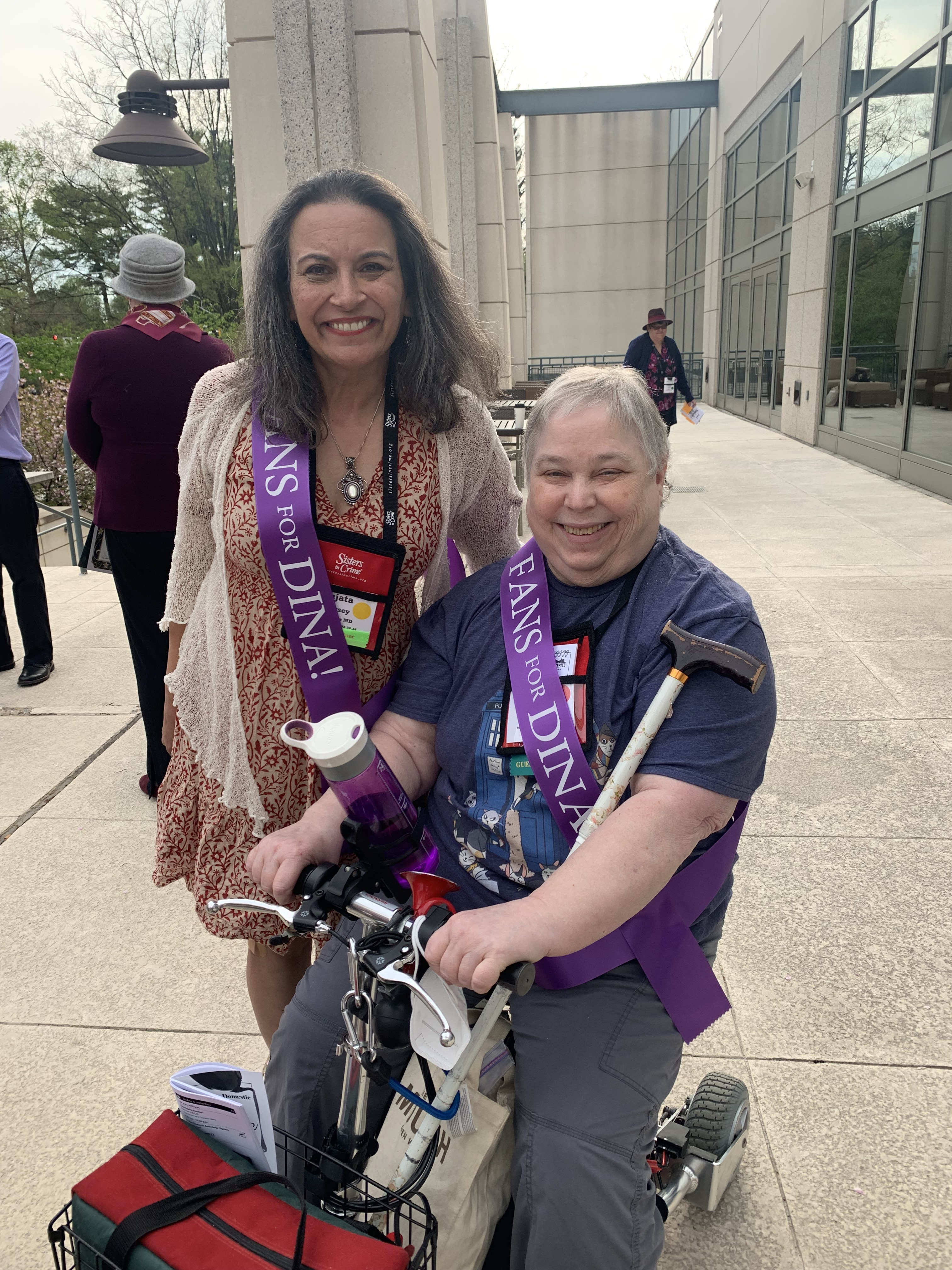
The rest of the convention was all about people for me. Malice also honored my longtime reader-friend, Dina Willner, as Fan Guest of Honor. Throughout the convention, a group of her friends wore sashes reading Fans for Dina, a big surprise for her. The Fan Guest of Honor for Malice's 2021 convention (which wasn't held in person) was Dru Ann Love, a wonderfully talented blogger who also came to the convention and was delightful to spend time with.This was a pattern with all the spring gatherings I attended: people who'd won while everyone was stuck at home were belatedly celebrated in person. 


I also had time with friends who are longtime readers, and with my terrific literary agent, Vicky Bijur. Whether a cup of tea or conversation at lunch or dinner, or even in the car, these conversations we had built trust and understanding of how to move forward in a career and keep publishing a happy experience. 


Team Blue: Frankie Y Bailey and Lori Rader-Day


With Dina Willner


At Malice Domestic, some of us had time in our schedules to get to lunch with the convention’s Lifetime Guest of Honor, Walter Mosley, who cofounded the organization Crime Writers of Color with a younger writer, Kellye Garrett, whose latest book, LIKE A SISTER, is making a big splash. 


Kellye Garrett and Mick Herron


A week earlier, I saw Kellye take on the toastmaster role at Left Coast Crime; in the shot above, she's giving an award to the convention's international guest of honor, Mick Herron, whose Slough House spy thriller series is now on AppleTV with a first season, SLOW HORSES. LCC was in Albuquerque, New Mexico, this time. This convention moves locations usually around the left side of  the US (although it’s once been on England’s western coast and the same for Canada). 


I was delighted to reunite with my California-based writer friend Naomi Hirahara at Left Coast Crime. We both started out writing mystery series connected with Japan, and as we have added different series to our bibliographies, we've also become members of an advocacy group, Crime Writers of Color. It was thrilling to see so many of CWOC members win!


LCC award winners Raquel V Reyes, Wanda Morris and Naomi Hirahara


This was especially a banner year for Naomi, with her first historical mystery.  CLARK AND DIVISION is set in a world not much explored in mystery fiction. It deals with the hardships that Japanese-American citizens faced after the War, when they couldn’t return to their homes on the West Coast, often due to the economic and real estate losses caused by their imprisonment in concentration camps. A large number of went to Chicago to start over with entry level jobs in an unfamiliar, cold place. The mystery in Naomi’s book revolves around the supposed suicide of a young Japanese-American woman on the eve of her family’s arrival. Just as in Kellye Garrett's book, it's a sister who finds justice for the one who perished. 


At Left Coast Crime, I made the choice to stay a block’s distance from the main hotel in a small historic place, Hotel Andaluz. I found the atmosphere of the historic, Pueblo Revival hotel fed my soul and offered me intriguing places to write--not only my spacious room with thick, stucco walls, but these ike these little nooks behind the tiled fountain in the lobby. 


I got to have a lots of nice walks, including through a residential neighborhood, to little restaurants, and The Man's Hat Shop, where I got a marvelous new topper to protect me from the Albuquerque's strong sun. 


The hat shop dates from 1947


My last spring trip was short but especially vibrant. In late April, I went to New York City to celebrate the Edgar Awards, a gala presentation conducted by Mystery Writers of America members to honor the best books of the year, as decided by reading committees made up of authors in the organization. It was relaxing to sit near Vicky and other friends, close to the table where two fellow Soho authors award nominations: Naomi Hirahara (winner of the Mary Higgins Clark award) and Kwei Quartey finalist for the Sue Grafton Memorial Award). 


Edgars Dinner: Frankie Bailey, Kim and Shawn Cosby, and Chris Chambers 


I was honored to go onstage and introduce my editor, Juliet Grames, who was receiving the Ellery Queen Award for her accomplishments as a mystery editor and an associate publisher of Soho Crime. I struggled to find the words to introduce my dear friend—because so, so much could be said. In the end, I spoke for about a minute, and I was thrilled that Juliet’s award—and a few of my words about her—made it into Publishers Weekly


The morning after, we were all business. I went to Soho's light-filled offices in a historic building in Chelsea and met with Juliet and my new editor, Yezanira Venecia, to discuss their thoughts on my manuscript for the fourth Perveen Mistry novel. Chiefly, we brainstormed about how to make each character’s motivation more realistic--and how to tweak events to match up better with revelations of the plot. A few lost pieces began matching up in the gigantic puzzle that will be titled THE MISTRESS OF BHATIA HOUSE (Yeza’s title idea!)


My editor, Juliet Grames, EQ award winner at Edgars


Riding home from New York on the train, I was tired but happy for the resumed connections in publishing. Yes, a writer’s life is more complex now. And mysteries are similarly more complicated, especially if they're part of an ongoing series. Sometimes, spending time with a few more plotters is just what's needed. 
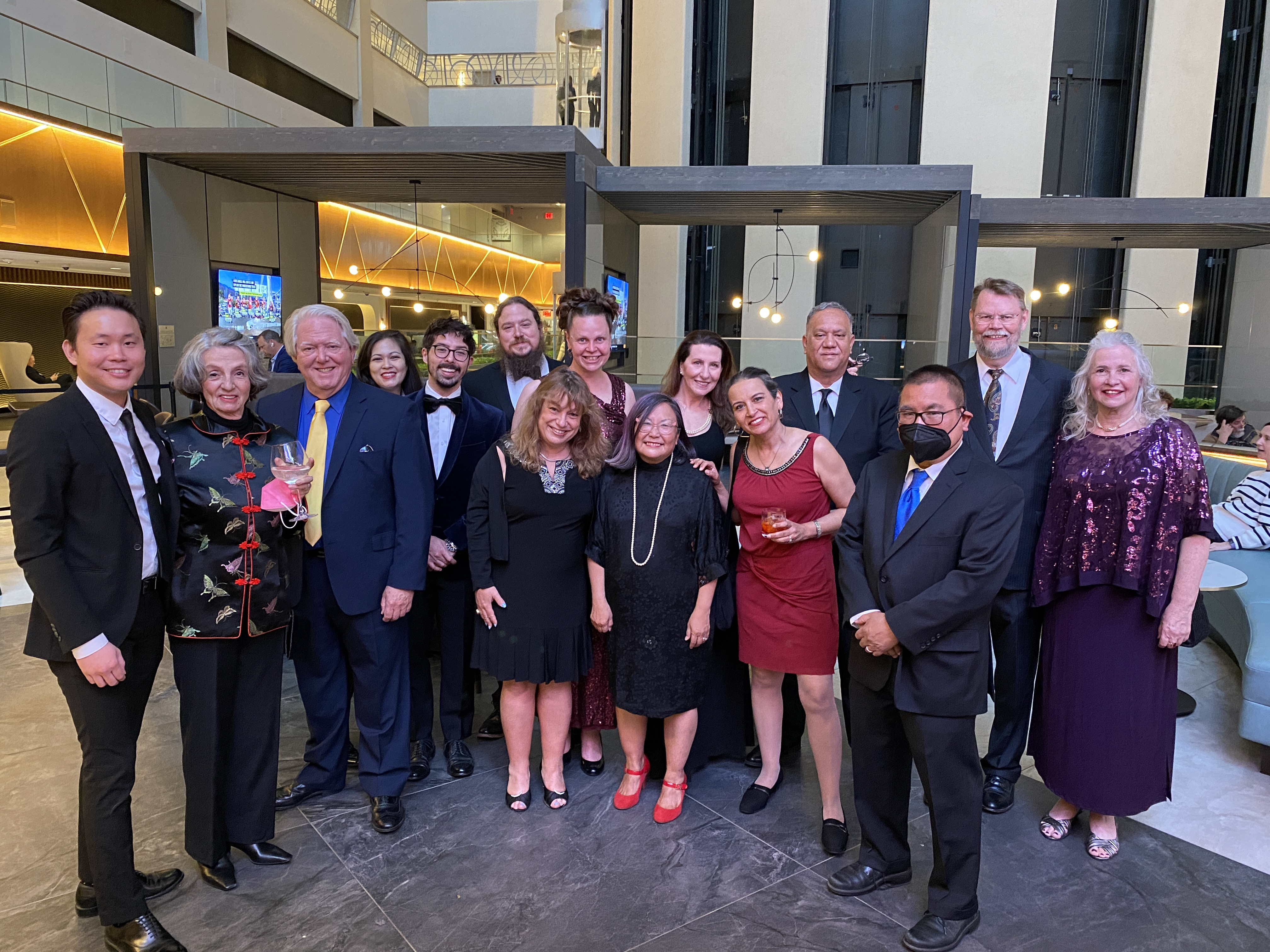


Soho staff, authors and friends 


Tuesday, May 3, 2022

"Take a good look around, this is your hometown"

The conjoining of the Wairoa and Wai-iti Rivers near Brightwater, as they become the Waimea River in the Tasman District at the Top of the South Island of New Zealand 

"I was eight years old
And running with a dime in my hand
To the bus stop to pick
Up a paper for my old man 
I'd sit on his lap in that big old Buick 
And steer as we drove through town 
He'd tousle my hair 
And say, 'son, take a good look around,
This is your hometown' ..."

from "My Hometown" by Bruce Springsteen 


Craig every second Tuesday

Kia ora and gidday everyone. 

I hope you've all been well lately, even as our world continues to bump along through plenty of tumult and crises. Today, for the first time in over a month, I woke up in London. While the capital city of the United Kingdom has been my home for several years now, the UK isn't my homeland. That is and always will be Aotearoa New Zealand, an island nation at the far end of the world (the antipodes) from here. 

For the first forty years of my life, I spent all or some of each calendar year in New Zealand. For most of my life I lived there, and at other times when I was travelling extensively or even based overseas, I returned each year for several weeks to see friends and family. 

That all stopped with the onset of the COVID pandemic: travel restrictions meant that 2020 and 2021 were the first years I never spent any time in New Zealand. In fact, by March this year it was more than three years since I'd last been 'home'. Given it was a once-a-century pandemic and many people have suffered greatly, far more than me, I just accepted this - although it was pretty difficult at times. 

Dawn over the Waimea Inlet on our last full day in the Top of the South

Given all the above, and all that's happened, I wasn't sure how I would feel to be back in New Zealand, when we decided on short notice in mid March to head back for the month of April. Like the narrator character in Springsteen's song, my hometown has noticeably changed over the years - each year I'm back some things are quite different, eg an orchard from my childhood has become a new housing subdivision, shops and restaurants have changed, while some things stay the same, or at least close to what they were. 

Would it be more jarring this time, having been a lot longer? 

While I don't have a son to now put on my knee in a car and say 'take a good look around', I do have a daughter. London is her birthplace and her hometown, but Aotearoa New Zealand and my home region of Tasman in the Top of the South Island of New Zealand is her whakapapa (genealogy). An important part of who she is. She'd visited six times in the first five years of her life, but not the past two and a bit; which means that despite the many visits in her first years, she doesn't have a lot of real memories of it.

Guess who's back? On 31 March it was so lovely to see the tomokanga (carved entranceway) welcoming international arrivals to Auckland airport

After three and a bit years, walking through the impressive tomokanga (an entranceway decorated with impressive toi whakairo, Māori wood carvings) at Auckland airport in the early hours of 31 March - the last to disembark from the plane as Miss Seven belatedly needed the bathroom - was a surreal feeling. 

Not as jarring as I expected. 

It felt completely natural, and the COVID years and forced distance just melted away as we saw and spent lots of time with family and old friends that first day and every day of the following month. Some things had changed of course, but overall it just felt like we'd just been back last year, as usual, rather than three years ago. Frankly, we revelled in this trip, filling our days with nature walks, catch ups with important people in our lives, and showing Miss Seven a fair bit of the country where almost all her relatives come from. Now she has lots of great memories that I'm sure will linger for a long time. 

Paddling a 12-person waka in the Abel Tasman National Park

Before COVID, I regularly wrote international travel articles for several magazines, for many years. Just a side gig among my other writings - I loved regularly travelling to new places, experiencing new things and then maybe writing about it later (rather than going on scheduled travel writer trips etc). 

There's so much to do in Aotearoa New Zealand that even with a month there and plenty of inside knowledge of cool things 'off the beaten track', we barely scratched the surface. But it was a month filled with moments large and small, on a daily basis, that replenished my soul and filled my heart. 

Cheesy? Yeah, but true. 

A bit of photography magic as the sun lowers at Tahunanui beach

Now we're back in London, and I'm re-energised for the year ahead. I'm looking forward to hopefully seeing lots more old friends, and meeting new people, at a variety of crime fiction festivals over the spring, summer, and autumn, from Harrogate to Bute Noir and Bloody Scotland, and maybe a few more. I realise now that those festivals, pre-COVID, like our regular trips back to New Zealand, helped me 'fill my cup' each year. Being surrounded by creative people who love storytelling and get things done in an industry that can be oh-so-fickle, not always fair, but oh-so-fantastic at the same time.

I even did a few video interviews with crime writers (some upcoming articles in NZ and US magazines) and read a few books while in New Zealand. A bit of 'work', enjoyably so, during our vacation. 

The life of a freelancer. 

And of course, while our NZ trip was largely about family and old friends and experiencing some of the Kiwi outdoors with Miss Seven, I couldn't help but catch up with a few fabulous Kiwi crime writers and other bookish folks while travelling around the country. In fact a six-day road-trip from Auckland to Otago became unexpectedly crime fiction focused as I visited with not only a few authors and festival directors in their hometowns, but at quite short notice caught up with some fellow Kiwis-abroad who were also back visiting (the beauty of social media - "are you back in NZ? I am too", more than once).

So, while I could fill up this post 100x over with scenic New Zealand shots, from our many dawn or sunset walks to national park visits and lots of time spent in postcard scenery that has no particular designation, instead since this is a 'Murder is Everywhere' blog, here's a final few snaps showing crime fiction all over my home country. Check out some of their books; lots of treasures to discover. 


Auckland
: catching up on my first weekend 'back home' with award-winning Māori screenwriter and director Michael Bennett (Ngati Pikiao, Ngati Whakaue), whose excellent first crime novel BETTER THE BLOOD comes out in the UK, Australia, and New Zealand in August. and the USA in early 2023 (with several translations to follow). A couple of days before Michael had just received the news that he'd been invited to appear onstage at this year's Theakston Old Peculier Crime Writing Festival in Harrogate, with his debut having been handpicked by Val McDermid for the New Blood panel. 


Waikato: just down the road from the city of Hamilton, the smaller town of Cambridge is known as 'the town of trees and champions' thanks to its leafy streets, heritage buildings and thoroughbred horse racing stud farms. In more recent years when I think of Cambridge I also think of talented author Nikki Crutchley, a multiple Ngaio Marsh Awards finalist whose latest thriller, TO THE SEA came out in Australia and New Zealand just before Christmas and has been getting great reviews


Rotorua: driving across the 'volcanic plateau' of New Zealand's central North Island, I had an unexpected catch-up with the brilliant JP Pomare, a Māori novelist who now lives in Melbourne but launched his debut, CALL ME EVIE, at Rotorua Noir (he grew up locally) in January 2019. His debut and subsequent psychological thrillers have gone on to win or be shortlisted for several awards. 


Hawke's Bay: heading southeast across the North Island, I had an author double feature after driving through heavy rain in the Tararua Ranges, emerging to brilliant sunshine in the lovely Hawke's Bay and stopping for an afternoon (non-alcoholic) drink with Tina Clough, before staying overnight at the rural property of Charity Norman. Born in Uganda, raised in British vicarages, barrister turned novelist Charity has lived in New Zealand for two decades now, and been shortlisted for numerous awards. Her new book, REMEMBER ME, is a real cracker, set near her home in the wild countryside.

At Cuba Press with Ngaios winner Jennifer Lane, debut author Anne Harre, Wellington librarian Neil Johnstone, and publisher Mary McCallum

Wellington: continuing south to New Zealand's capital, which is home to several terrific crime writers, I caught up with the team at Cuba Press, who published Renee's Ngaios longlisted crime debut THE WILD CARD, before COVID upturned all our lives. (Renee is a legendary New Zealand playwright, authors, and rights activist in New Zealand who in 2018 received the prestigious Prime Minister's Award for Literary Achievement, and decided to write her first crime novel as she entered her tenth decade. At the Cuba Press drinks I caught up with past Ngaios winner Jennifer Lane (ALL OUR SECRETS) and met Anne Harre, whose debut THE LEANING MAN is in 2022 Ngaios mix.


Christchurch: while I didn't have time to visit the legendary Dame Ngaio Marsh's house while passing through Christchurch on the way to Otago, I did get the opportunity to visit with contemporary Kiwi crime royalty: three-time Ngaios winner and international bestseller Paul Cleave. It was in fact a review of one of Paul's books, CEMETERY LAKE (alongside a review of Vanda Symon's CONTAINMENT) that kickstarted my unexpected journey in the crime writing world, from reviewer to features writer, event chair to awards judge to part-time agent, and now awards-listed (non-fiction) author myself. Paul's 12th crime novel, THE QUIET PEOPLE, is out now in the northern hemisphere and is terrific. 

With founding members of the Dunedin Detective Club, Vanda Symon and Liam McIlvanneyk

Dunedin: while I've never lived in Dunedin, it's always been an important wee city to me: my mother and sister were born there, my grandma and several aunts, uncles, and cousins live/d there, and lots of my school friends went to university there. And while Christchurch can claim strong Kiwi crime roots with Dame Ngaio, Dunedin's arguably stretch back even further, to the bestselling detective novel of the nineteenth century: A MYSTERY OF A HANSOM CAB was set in Melbourne, but it was written by an aspiring playwright, Fergus Hume, who'd grown up and done all his schooling and law degree in Dunedin. The city is now also home to a cadre of cool crime writers, including the fabulous Vanda Symon (Sam Shephard series, FACELESS) and Professor Liam McIlvanney (THE QUAKER, etc). 


Central Otago: a really terrific crime series that's launched in recent years stars 'the Nancys', an amateur detective crew made up of adolescent Tippy Chan, a Chinese New Zealander grieving the death of her father, and her uncle Pike, a gay hairdresser usually living in Sydney, and his fashionista boyfriend Devon. The first two books, THE NANCYS and NANCY BUSINESS are raucous and charming and just great reads. I was lucky while passing through Queenstown to cap my road trip to get a chance to meet the author, RWR McDonald, who is himself usually based in Melbourne. 


Nelson: while I didn't manage to catch up with any crime writers while visiting my home region for a couple of weeks, I did have one of my coolest bookish moments, maybe ever (see above). Miss Seven was delighted to see 'Daddy's book' in a real-life bookshop in New Zealand. I was surprised and thrilled to discover my local Paper Plus had several copies, face fronted in the NZ Non-Fiction section. 

A very cool moment for me, especially as my book came out during the height of COVID when all events and festivals were cancelled and many bookshops were shut, it had to be sea freighted to Australia and New Zealand, it's been difficult for Kiwi bookshops to restock after the initial supply, and that my book frankly is for 'book nerds' who really love the genre and attend festivals and events etc, so isn't going to be heavily stocked in every bricks and mortar bookshop anyway (unlike some of the authors I discuss or interview in SOUTHERN CROSS CRIME). 

I also managed to visit with an old and influential school teacher, who helped inspire my love of reading, writing, and research. She's mentioned in the credits of SOUTHERN CROSS CRIME, so it was very cool to catch up with her. She even asked me to sign her copy of my book, which she'd bought (I had one to give her anyway, but she'd already bought one herself, which was pretty cool.)

So there you go, just a few wee snippets of what I've been up to the past few weeks. It was 'bloody marvellous', as we say Downunder, to get to go home for a while and share time with people I love and places that fill the soul that I haven't seen for far too long. 

I'm full of gratitude and raring to go for the rest of the year. Hope to see some of you at some of the crime writing festivals happening during the northern Spring, Summer, and Autumn/Fall. 

Until next time, ka kita ano. 

Whakataukī of the fortnight: 
Inspired by Zoe and her 'word of the week', I've been ending my fortnightly posts by sharing a whakataukī (Māori proverb), a pithy and poetic thought to mull on as we go through life.

E hoa ma, ina te ora o te tangata

(My friends, this is the essence of life)


Monday, May 2, 2022

Seeing With Your Eyes Closed

 Annamaria on Monday


After I got my second covid shot, I felt a number of changes in my body, the strangest of which was that, quite frequently now, when I close my eyes, I see falling snow.  The image is very like the gif above.  This is a whole new experience for me. And, so far, it has not gone away.

Ordinarily, almost all the time, when I close my eyes, I see a soothing purple light.  It looks a lot like the image above, but it moves gently.  I always see this when I close my eyes to mediate or to relax into acupuncture treatment.  

When I was a young child, around three or four, I saw moving machines, gears and flywheels.  Only a few times did they reappear in my adult life and not for many decades now.  But, I have always wondered why we see things when we close out eyes. 

Here is what I have learned.  The phenomenon is called phosphenes, and scientists believe they are caused by the fact that the retina has no "off" switch.  It continues to send signals to the brain, even in the absence of light. Some people see wispy clouds, or color flashes, or geometric shapes.  Some people see what doctors think might be white blood cells in capillaries inside their eyes.  Imagine that!


Certain mental conditions and drug use can cause people to have hallucinations, even with their eyes open. These can result in insomnia and anxiety.  But typically. the patterns and shapes one sees are just what one ophthalmologist called "visual noise."

I write this on the first of May.  Regardless of what I might see when I close my eyes, here are some images I have enjoyed today with my eyes wide open.  NYC in spring looks like this:


Sunday, May 1, 2022

Conventional Behaviour

Getting Back Out There Again


by Zoë Sharp


May is here, and with it rapidly approaches my first crime writing festival since the pandemic.


CrimeFest in Bristol was first organised in 2008 and has become a fixture on the crime writing calendar. This year I am lucky enough to be the Toastrix for the gala dinner and awards ceremony on Saturday evening, as well as moderating the Thriller panel on Friday afternoon, and the Indie Alternative panel on Sunday morning.


I confess to being a little nervous this time around, and not just because I’m the first female toastmaster they’ve ever had – no pressure, then. It will be my first attendance at a large-scale gathering since lockdown began in 2020. I rather think I’m out of the habit of being in crowds.


I’ve just come back from a trip to London, where I got through half my bodyweight in hand sanitiser, and wore a respirator mask on the Underground – to the obvious bemusement of most of the other passengers. But, just because the daily infection and death rates are no longer at the top of the headlines, it doesn’t actually mean Covid-19 has entirely gone away.


That aside, I am cautiously looking forward to getting out there again. I do actually enjoy going to conventions and festivals, and I know not everybody does.


My first ever convention experience

I went to my first one, in the US, almost by accident. This was way back when I was still working as a photojournalist. I had some car photoshoots lined up in Daytona Beach, Florida around Spring Break, and discovered an event called Sleuthfest was the weekend after. It seemed rude not to go. I sought advice from Brit author Stephen Booth, who’d been to a lot of these things. He was encouraging, and got in touch with ex-pat author Meg Chittenden – once a Geordie (from the Northeast of England) who moved to Seattle, WA.


I arrived at Sleuthfest not quite knowing what to expect, only to be pounced on by Meg who said Stephen had asked her to look after me. What a welcome. I can’t think of a nicer person to have holding your hand at such a time. And for some years after this first meeting – as a sign of mutual affection – Meg and I would attempt to stab and strangle each other at other conventions all around the country. (Long story.)


Apart from Meg, and Rhys Bowen, I was the only Brit author at Sleuthfest that year. (And both those delightful ladies were US residents, so I’m not entirely sure they qualified.) It was pretty clear that I was a bit of a novelty item as far as the organisers were concerned. I can’t think of any other reason why they put me on probably the best panel of the event, alongside guest of honour, Robert B Parker, and SJ Rozan, Jonathan King, and the PJ Parrishes – top quality, award-winning, best-selling authors every last one of them.


And me.


I didn’t even have a US publisher at that point, and I realised part way through the introductions that nobody with any sense was going to be remotely interested in anything I had to say. So I did the only thing I could short of setting fire to the curtains. I kept it brief and made people laugh. And afterwards, I met the person who was to become my US editor.


So, since then I’ve been to many such festivals and conventions, and the subject of which ones my fellow authors were going to attend is a regular topic of discussion via Skype or Zoom calls.


The lure of the great outdoors

I remember the first time the annual ThrillerFest event was held in NYC. Some writers I knew at the time announced that they were keen to go because of its location, on the grounds that they could always slip out and explore the city while not actually taking part in a panel or a signing.


Now, a part of me could understand this completely. I love New York. But if you’re going to bother registering for a convention and staying in the expensive Midtown hotel in the middle of the high season, what’s the point in not being there half the time? And it’s not just NYC that exerts this pull. I remember asking one very well-known author at a Bouchercon what he’d been doing all day, only to discover he’d spent most of it off in a bowling alley, away from the convention hotel. Similarly, at a Left Coast Crime, one author I spoke to had spent the afternoon on his own at the cinema.


Am I missing something here?


It’s not like the best of the big players don’t hang out in the bar and chat. Lee Child is always approachable at these events, so is Jeffery Deaver, Harlan Coben, and Val McDermid. And surely, if you’re just starting out, then spending some time around the lobby, the book room, the bar, is a golden opportunity to mix and mingle not just with other authors, editors and reviewers, but readers and potential readers as well. The people who go to conventions are, almost by definition, the most enthusiastic. If they like your books they will buy lots of them and recommend them vociferously to all who cross their path. Why would you not want to meet and talk to them?


I remember meeting a best-selling Brit author at one of my first conventions who looked down his nose at me and asked if I was "just a reader?" At the time, of course, I smarted just a little bit that he didn’t recognise my name, but afterwards I thought, how can you phrase it like that? All those ‘just’ readers are the ones who’ve given you your success. And disappearing for half the convention when people may well have paid to attend solely because they saw your name on the program is cheating yourself as well as them.


Dos and Don'ts

Some years ago, I put together a list of Dos and Don’ts for convention-going for authors. As we haven’t been going to much of anything for a while, I thought I’d dust it off and go through it again. Here it is:


1. DO spend as much time as you can in the public areas – you never know who you might bump into. If you want to play the Greta Garbo card, stay at home. Or if you really want to see the host city, add a day or two onto the end. At least that way you don’t have to bother checking-out on Sunday morning.


2. DO have a cover-all greeting just in case you’re introduced to someone whose name you don’t recognise and you don’t want to cause offence. My personal favourite is to ask, "So, what are you working on at the moment?" This is equally appropriate whether the answer is, "Oh, Spielberg’s asked me to put together the screenplay of my latest gazillion best-seller." Or, "Oh, no, no, I’m just a reader …"


3. DON’T, if someone asks the above question, give them a blow-by-blow account of your entire plot. The elevator pitch should be enough. If you’ve come up with something genuinely interesting, they’ll ask you to expand. If not, then simply telling them more about it will probably not help.


4. DON’T get totally rat-arsed in the bar every night. Yes, I know you’re there to enjoy yourself, but there are limits. This is a small industry. If you say or do something unforgivable, then being drunk is a very poor excuse.


5. DO make an effort to turn out for the early morning panels. Often the authors on them feel they’ve been handed the graveyard shift and it’s nice to give them a boost. And they don’t mind if you bring coffee and pastries!


6. DON’T, if you’ve been given one of the above panels, go out and do point #4, and then publicly complain that you’re not at your best. Those of us who’ve made the effort to come and hear you speak will feel insulted that you didn’t think we were worth staying sober for. And we’ll take our pastries away…


7. DO keep it short and sweet when you’re on a panel. Hogging the microphone, however witty you are, will not win you friends in the long run. Neither will starting every sentence with, "Well, my character does this…"


8. DON’T ask for a panel assignment if you don’t enjoy public speaking. If you’re better one-to-one, then just follow point #1 instead. You’ll probably make a better impression that way.


9. DON’T, if you’re asked to moderate a panel, have any contact at all with your fellow panellists before the event. Don’t learn how to pronounce their names if there’s any doubt about it. Don’t forewarn them of any questions you intend to ask. Don’t meet up more than five minutes before the panel start time to discuss tactics, that would make it far too easy for them. Don’t run the biogs you intend to read out to the audience past the panellists beforehand – after all, all the info on their websites will be bang up to date, won’t it? Don’t forget it’s essential to ask at least one highly embarrassing question, one totally irrelevant question – such as a piece of mental arithmetic – read out the most inappropriate out-of-context segment of a sex scene, pretend to take a phone call, or bring members of the audience out for a bit of a chat on an unrelated subject.


Oh, hang on, have I got that wrong…? Not sure, because I’ve either been on, or been watching, panels where everything in point #9 has happened.


Any convention bloopers you’ve witnessed that you’d care to relate? Or any advice for those of us getting back out there?


My latest Word of the Week is hüzün. A Turkish word that expresses the gloomy feeling that things are in decline and will probably get only worse. Often used to describe a political situation. Nevertheless, perhaps we can take some comfort from the fact that if this occurs often enough for someone to have come up with a word for it, then we are not alone in our time of trouble.

Upcoming Events

CrimeFest, Mercure Bristol Grand Hotel, Broad Street, Bristol BS1 2EL

May 12 – 15 2022 


Friday, May 13, 16:00 – 16:50

ITW: Thrilling For A Living

Alison Bruce

Dugald Bruce-Lockhart

Alex Shaw

Michael Stanley (Stanley Trollip)

Participating Moderator: Zoë Sharp


Saturday, May 14, 19:30

CrimeFest Awards Dinner

Toastrix: Zoë Sharp


Sunday, May 15, 09:30 – 10:20

The Indie Alternative

Dawn Brookes

Stephen Collier

Caroline Goldsworthy

Elizabeth Hill

James Mortain

Participating Moderator: Zoë Sharp


Sunday, May 15, 10:40 – 11:30

Toastrix: Zoë Sharp

Interviewer: Peter Guttridge