Sunday, November 4, 2018

Death In A Cold Climate: Sarah Ward Writing About The Peak District


It’s my pleasure to welcome Derbyshire crime writer and blogger, Sarah Ward to Murder Is Everywhere this week. The first novel in Sarah’s DC Connie Childs series, IN BITTER CHILL, was published in 2015 to widespread acclaim. The fourth and latest instalment, THE SHROUDED PATH, came out in September 2018. As well as being a regular blogger and reviewer on the www.Crimepieces.com website, Sarah is one of the judges for the Petrona Award for translated Scandinavian crime fiction. 


My books are set in the Derbyshire Peak District, an area of breath-taking beauty which lies between the cities of Manchester, Sheffield and Nottingham in the UK. It’s proximity to urban centres means that it’s Britain’s most visited national park with over ten million visitors every year although, during the winter, we largely have the place to ourselves. It’s an inspirational landscape and, for me, it’s a joy to describe the changing seasons of the Derbyshire Peaks. 

My books are a mix of police procedural and domestic noir. They have the same series detectives who tell the story in alternate chapters and a different female protagonist in each novel who narrates the investigation from an outsider’s point of view. I’m particularly interested in showing the impact of a crime on a small community and a non-police character is perfectly placed to reflect this.

Bakewell town centre
I created a fictional town of Bampton for my setting. I did this partly because crime fiction has a great precedent of the use of fictional places from Agatha Christie’s St Mary’s Mead to Ruth Rendell’s Kingsmarkham and Sophie Hannah’s Culver Valley. The reader comes to these locations without any fixed preconceptions and it is up the writer to bring these places to life. I also didn’t want to be bound geographically by a real-life town.

It was important, however, to ensure that my fictional town had the feel of a Peak District community and I drew inspiration from three places. Bampton is partly based on Bakewell, chocolate-box pretty town which makes it a magnet for tourists with an array of gift shops, delicatessens and tea rooms. It has an elegant square that I use for the opening of In Bitter Chill and a strong sense of community that I imbue in my books.


Up the A6 towards Manchester, Buxton is my second inspiration. It was a thriving spa resort in the nineteenth century and the elegant Georgian buildings remain. The current state of the town is a far cry from its heyday but the famous crescent is being regenerated and the sense of a town aware of its own importance remains.

Derbyshire has plenty of industrial architecture
We also have a strong industrial heritage in the Peaks with mills that, although no longer being used for their original purpose, have been regenerated into shopping areas, housing and museums such as in Cromford. I love industrial architecture and incorporate it into my books. For my latest novel, The Shrouded Path, the crime takes place inside a former railway line inspired by the Headstone Tunnel on the Monsal Trail. These places are a tangible reminder of the past.

Headstone Tunnel
 When you live in a landscape that you depict in your fiction, you often worry that you’re not getting something right. However, my neighbours and those who know Derbyshire well say that Bampton has the feel of a Peak town which is a great relief and I also hope that I inspire those who have never visited the area to come and take a look for themselves.


Saturday, November 3, 2018

What Does It Mean to be a Pittsburgh Jew?


Jeff—Saturday

I’ve thought about that question quite a bit this week in the wake of last Saturday’s massacre of eleven elderly and disabled Jews in the Squirrel Hill neighborhood of Pittsburgh, Pennsylvania.  


Each of my grandparents immigrated to the US from Europe around the turn of the twentieth century and settled in Pittsburgh. My parents grew up there, and my two brothers and I were raised in its neighborhoods

My mother came from the predominantly non-Jewish neighborhood of Dormont, my father was a product of Pittsburgh’s vibrant equivalent of New York City’s Lower East Side.  His neighborhood is where August Wilson set his plays and the building in which he placed them sat behind my great aunt Bella Siger’s grocery store on Bedford Avenue in the Hill District.


The Hill District is a distinctly different neighborhood from Squirrel Hill, but I think few would disagree that descendants of the Jewish immigrants who once called the Hill District home consider Squirrel Hill its spiritual successor.  I know that I always have.

I was raised in another part of town, away from those neighborhoods, amid a community so dominated by Catholics and Protestants that my brothers and I were virtually the only Jewish boys within a quarter-mile radius of our home. We observed Orthodox traditions and were the only Jews who played in neighborhood pickup games, the only Jews in our local Boy Scout troop, and the only Jews I knew of who were reminded by our non-Jewish buddies that we weren’t allowed to eat their Easter candy, because it wasn’t Kosher for Passover.

Morningside is at top framed in red, Squirrel Hill is four neighborhood to its south, and The Hill District is between them off to the west.

It was a gloriously ecumenical way to grow up.

In that Morningside neighborhood of Pittsburgh’s East End, I acquired my values, learned how to interact with people of different faiths and backgrounds, to see folk for what they are as human beings, and to go with my instincts.


Yes, I had my share of fistfights in the neighborhood. Some would say more than my share, but they always had a purpose, and with two exceptions, not one had to do with my faith.  My first anti-Semitic experience was when I was nine or so heading home from school for lunch.  I took the same alley I always did, but this time I was jumped by a gang of older boys from a sectarian school who dragged me into a garage, and held me down as they burned my chin with matches, calling me a “Christ Killer.”

Have I forgotten that experience? Never, but not for the reason you might think.

Later that day I told some older friends who went to the same sectarian school as my attackers what had happened.  The next thing I knew they’d swept me along in a wave toward where they knew my attackers hung out.  We found them and promptly beat the hell out of them.

My elementary school

As politically incorrect as that response may be viewed today, my friends taught me a lesson that’s shaped who I am: It’s not hateful principles of faith that attacked me, but hateful people. Never confuse the two.

The second experience was more complex.  I was twelve and playing baseball on the neighborhood’s ball field when out of nowhere a learning-disabled, powerful man twice my age came at me shouting similar anti-Semitic slogans.  This time, too, my friends came to my assistance and helped me to escape.  Later I learned that an older boy had fired up the man to attack me through a raging diatribe of anti-Semitic canards and worse.

That day I learned another lesson about hate: words matter, for they spawn action.

I spent much of my life in and around Squirrel Hill, and two of my nephews celebrated their Bar Mitzvahs in the Tree of Life Synagogue, the place of Saturday’s slaughter. My brother once taught there. In other words, it’s personal.  

I know Pittsburgh. I bleed the black and gold of its sports teams, as does much of this nation.


And, yes, I get the Trump rallies.  It’s Pittsburgh 101…at least from the perspective of the neighborhood of my youth.

For virtually everyone attending one of his rallies, it’s a The Rocky Horror Picture Show-type fan experience.  It’s all about having a good time, where folk get to be part of the show. They come in their expected costumes, and know when to laugh, when to boo, and when it’s time to shout out their lines.
 

And when it’s all over they go back home, have a good laugh about what they did, and return to living their everyday lives.

BUT, for some it’s more than that. They don’t see it for the performance art it is, but as a passionate call to action. They take it seriously, and the results can be catastrophic. 

Just ask any Pittsburgher.  Jew or not.

Yes, words matter.


—Jeff

Friday, November 2, 2018

A Placid Place


Meanwhile, in a sunny but very cold Scotland, I have a deadline for 17th November, the world premier of Carry On Sleuthing 3 tomorrow night and a pantomime horse to groom.

Here's few pics of Indian Rocks.

                                          Stan?   A happy wee birdie?


Being an overweight driver makes vehicle slide to the left?

The swing bridge on it's way up.
This was over some water.
This bridge was manatee viewing heaven.

Here broken animals and broken people meet to see if they can help each other.
The animals were injured wildlife.
The people were vets with PTSD.

Bird nests or bat holes

A one eyed owl with a female ex serviceperson.
She explained she needed to be calm, to keep the bird calm. They walk around the reserve together, talking to visitors, gaining confidence and a sense of peace

A white one...

and a non white one.

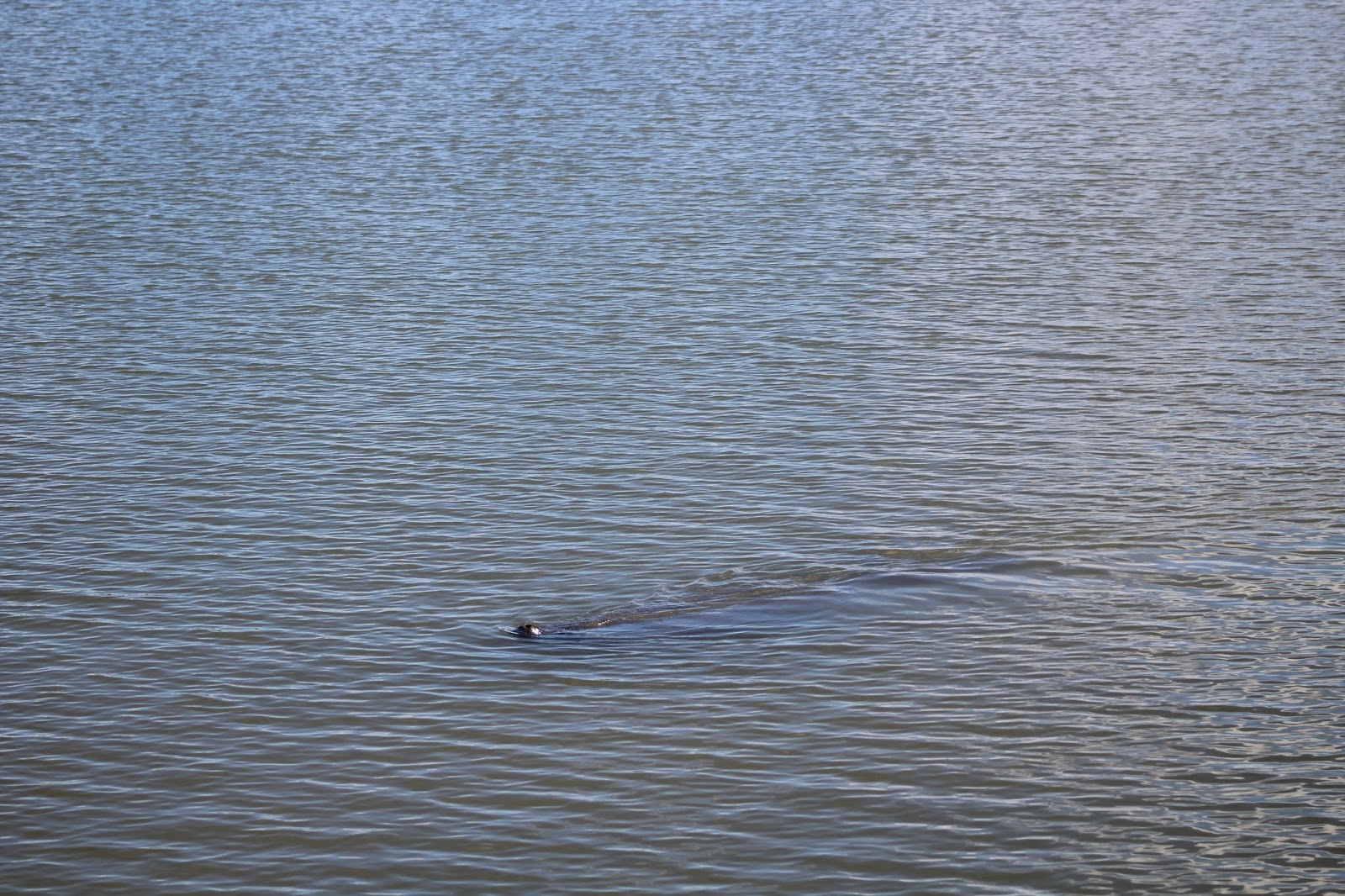
A huge thing under the water

sticking his nostrils up

and swimming away...

very slowly indeed....


This was on the arm of a vet who had served navy time at the Holy Loch- the location of my next novel. The US navy had a huge base there. He spoke of it fondly and told us he had Irn Bru for breakfast that day as he got a real taste for it while stationed here. He buys it on the net.

A wet thing in the water.

Boats not in the water.

Scary hanging down weedy thingies.


                                                           Are these called beauty berries?


One of these tortoises escaped and I had to gopher it! It was trying to cross the highway, so we carried it back and we 'got it telt.'

turtle pond

Stan?  Green and shiny, stayed very. very still.

Mathilda ( yes it was called Mathilda) has a broken wing.


A nice flower to finish with.

Caro Ramsay 02 11 2018

Thursday, November 1, 2018

A must-see place


Miss Denmark had never seen the Grand Canyon, so when she was in Minneapolis last month, I jumped at the chance to take her there. I have to admit to being a little devious about it all because I wasn’t particularly interested in seeing it again. I had my eyes on a bigger prize – one of the five places on the planet that everyone should visit.

Certainly, the Grand Canyon is grand, but it is really just an enormous hole in the ground – beautiful and awe-inspiring certainly – but still a hole in the ground. And there are others that are bigger and deeper, such as the Yarlung Tsangpo in China, which is three-times deeper and longer; and the Colca Canyon in Peru, which is twice as deep, but shorter. Other canyons are grand too, such as the Copper Canyon in Mexico and the Fish River Canyon in my southern hemisphere neck of the woods.


Yarlung Tsangpo

Colca Canyon
I have a list of five places that I think everyone should visit – not necessarily because they are beautiful, but rather because they are extraordinary in their own way. They are the Okavango Delta in Botswana, where the Kavango River forms a wildlife paradise before it disappears into the Kalahari Desert sands; Luxor on the Nile, because of the temples of Karnak and Luxor and the valley of the Kings; Jerusalem, because of its enormous religious impact on the world; Ankor Wat, because . . . . (it is astonishing); and Las Vegas. Yes, Las Vegas. Because it truly is a monument to one part of the human condition.

And Vegas was a good airport to fly into to visit the canyon.

Needless to say, Miss Denmark was blown away by the (put your noun here) of Las Vegas – the lights, the fakeness, the mindless gambling, the way people tried to live out some of their fantasies. And by the sheer number of casinos, each containing unbelievable numbers of ways to take your money. (A bottle of water in our Mandalay Bay room cost $18).


The Vegas of today is certainly different from the Vegas when I first visited it in the 70s. Then it lived up to its nickname – Sin City. Today, for the most part, it is relatively tame.

I learnt something too this time – about Miss Denmark. Actually a couple of things.

First, she likes to hobnob with celebrities.


Second, she's no profligate Nordic socialist. After getting over her amazement at the sheer size of The Golden Nugget, where we stayed first, she said she had to try one of ‘those’ machines. A slot machine. I found the new ones very disappointing – all electronic, with even the wonderful sound of money pouring into the receptacle below now simulated electronically. And instead of gleefully grabbing handsful of cash, you now take a little paper voucher to a cashier. Yuck.

Anyway, Miss Denmark sat down at a machine we could both understand. She put in a dollar, ‘borrowed’ from me and pressed the button. Since she had absolutely no idea of what she was doing or what to look for, she didn’t get excited when three 7s aligned. Since the simulated cash pouring into the receptacle was not convincing, she didn’t realise she had won. One button-press equaled fifty dollars. FIFTY DOLLARS. Her eyes widened, and I thought ‘oh dear – the worst thing to happen – a win on the first pull – addicted for life.’

But no, she stood up and said ‘That’s enough!’ Better still she handed me the fifty dollars! And we left Vegas as winners.

'What do those 7s mean?'

No longer a fistful of dollar coins

And then to the Grand Canyon. As I said - a big hole in the ground.  


So we were told.