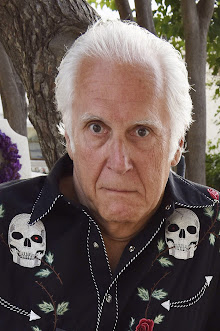
Jeff—Saturday
I’ve thought about that question quite a bit this week in the wake of last Saturday’s massacre of eleven elderly and disabled Jews in the Squirrel Hill neighborhood of Pittsburgh, Pennsylvania.

Each of my grandparents immigrated to the US
from Europe around the turn of the twentieth century and settled in Pittsburgh.
My parents grew up there, and my two brothers and I were raised in its neighborhoods
My mother came from the predominantly non-Jewish neighborhood of Dormont, my father was a product of Pittsburgh’s vibrant equivalent of New York City’s Lower East Side. His neighborhood is where August Wilson set his plays and the building in which he placed them sat behind my great aunt Bella Siger’s grocery store on Bedford Avenue in the Hill District.

The Hill District is a distinctly different neighborhood
from Squirrel Hill, but I think few would disagree that descendants of the
Jewish immigrants who once called the Hill District home consider Squirrel Hill
its spiritual successor. I know that I
always have.
I was raised in another part of town, away from those
neighborhoods, amid a community so dominated by Catholics and Protestants that
my brothers and I were virtually the only Jewish boys within a quarter-mile
radius of our home. We observed Orthodox traditions and were the only Jews who
played in neighborhood pickup games, the only Jews in our local Boy Scout
troop, and the only Jews I knew of who were reminded by our non-Jewish buddies
that we weren’t allowed to eat their Easter candy, because it wasn’t Kosher for
Passover.
 |
| Morningside is at top framed in red, Squirrel Hill is four neighborhood to its south, and The Hill District is between them off to the west. |
It was a gloriously ecumenical way to grow up.
In that Morningside neighborhood of Pittsburgh’s East End, I acquired my values, learned how to interact with people of different faiths and backgrounds, to see folk for what they are as human beings, and to go with my instincts.
In that Morningside neighborhood of Pittsburgh’s East End, I acquired my values, learned how to interact with people of different faiths and backgrounds, to see folk for what they are as human beings, and to go with my instincts.

Yes, I had my share of fistfights in the neighborhood. Some
would say more than my share, but they always had a purpose, and with two
exceptions, not one had to do with my faith.
My first anti-Semitic experience was when I was nine or so heading home
from school for lunch. I took the same
alley I always did, but this time I was jumped by a gang of older boys from a
sectarian school who dragged me into a garage, and held me down as they burned
my chin with matches, calling me a “Christ Killer.”
Have I forgotten that experience? Never, but not for the
reason you might think.
Later that day I told some older friends who went to the
same sectarian school as my attackers what had happened. The next thing I knew they’d swept me along
in a wave toward where they knew my attackers hung out. We found them and promptly beat the hell out
of them.
 |
| My elementary school |
As politically incorrect as that response may be viewed
today, my friends taught me a lesson that’s shaped who I am: It’s not hateful principles
of faith that attacked me, but hateful people. Never confuse the two.
The second experience was more complex. I was twelve and playing baseball on the
neighborhood’s ball field when out of nowhere a learning-disabled, powerful man
twice my age came at me shouting similar anti-Semitic slogans. This time, too, my friends came to my
assistance and helped me to escape.
Later I learned that an older boy had fired up the man to attack me through
a raging diatribe of anti-Semitic canards and worse.
That day I learned another lesson about hate: words matter, for they spawn action.
I spent much of my life in and around Squirrel Hill, and two
of my nephews celebrated their Bar Mitzvahs in the Tree of Life Synagogue, the
place of Saturday’s slaughter. My brother once taught there. In other words,
it’s personal.
I know Pittsburgh. I bleed the black and gold of its sports
teams, as does much of this nation.

And, yes, I get the Trump rallies. It’s Pittsburgh 101…at least from the
perspective of the neighborhood of my youth.

And when it’s all over they go back home, have a good laugh
about what they did, and return to living their everyday lives.
BUT, for some it’s more than that. They don’t see it for the
performance art it is, but as a passionate call to action. They take it
seriously, and the results can be catastrophic.
Just ask any Pittsburgher. Jew or not.
Yes, words matter.

—Jeff