-- Susan, every other Sunday
As the member of the MIE team who blogs most frequently about Japan, I'd be remiss if I didn't eventually get around to the topic of sushi.
When people learn that I live in Japan and am allergic to fish (technically, fish oil - and, thankfully, the allergy does not extend to shellfish), the reactions commonly fall somewhere on a scale that runs from "Can you eat anything at all?" (Of course!) to "How sad, you have to pass up all that sushi." (Actually, the reality may surprise you.)
The reaction underscores an interesting truth - despite the wide-ranging and diverse nature of Japanese cuisine (both native and fusion), many people outside Japan associate "Japanese food" either primarily or exclusively with sushi.
 |
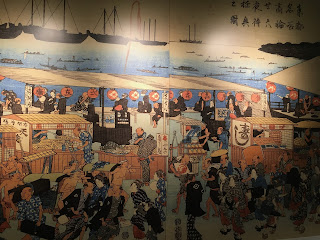
| Woodblock print of sushi shops in Edo (now Tokyo) |
Which is a little ironic, considering that this iconic Japanese dish did not originate in Japan.
The food now known as sushi most likely originated somewhere along the Mekong River in Southeast Asia, where people combined raw fish with salt and rice to prevent the fish from spoiling. While that dish dates to prehistory, a version--known as narezushi--came to Japan during the Yayoi Period (300 BCE - 300 CE).
During the Edo period (1603-1868), or possibly slightly earlier, people began to mix the fish and rice with seasoned vinegar rather than salt alone. They also started eating the rice along with the fish, instead of discarding the rice when the fermentation process finished.
 |
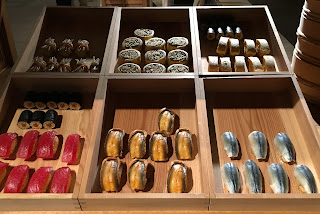
Models of full-sized "proto-sushi" from the Edo period
|
Over time, people realized that fresh fish taste better than fermented ones (or so I hear - see: allergy), and sushi developed into a fresh dish rather than a fermented one.
As a port town, Edo had access to a large number of fresh-caught fish and other sea delicacies on a daily basis. Markets grew up along the waterfront. Fishermen and fishmongers sold the fish themselves, but enterprising merchants also set up carts and stands nearby selling what we might consider "proto-sushi" - vinegared rice with fist-sized slabs of rice on top.
 |
Scale model of an early sushi cart (photographed at the Edo Tokyo Museum)
|
The bite-sized version of nigirizushi, which features sliced raw fish on seasoned rice, didn't appear in the gastronomic lexicon (if such a term exists) until the first half of the 19th century. Its popularity exploded after the Great Kanto Earthquake of 1923, when chefs from Edo (now Tokyo) spread across the country to flee the devastation in the Kanto region (the portion of Japan that includes Tokyo).
The rest, as they say, is culinary history. Sushi restaurants existed in the United States during the early 1900s, although most of them were forced to close when their proprietors were forced into internment camps during World War II.
Since the 1980s, sushi has enjoyed strong popularity in the United States--but the dish has been eaten (and loved) consistently in Japan (in all its incarnations) since its introduction during the Yayoi period.
There are even vegetarian/vegan versions, for those who don't or can't eat fish. The most popular involve konjac (an edible tuber that does an impressive squid interpretation, as well as a passable whitefish, in terms of consistency if not taste) although other vegetables often enter service for the cause as well.
 |
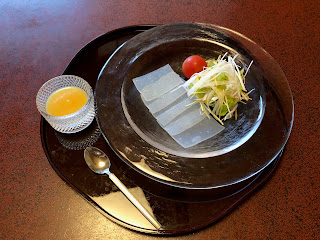
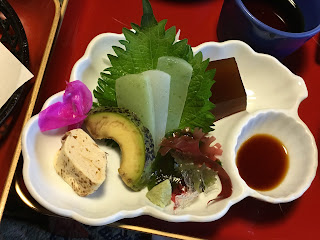
Konjac sashimi at Ryokan Iwaso, Miajima, Japan
|
 |
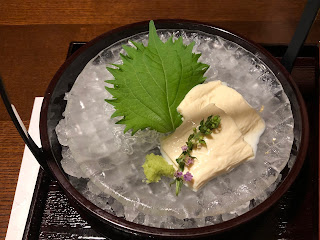
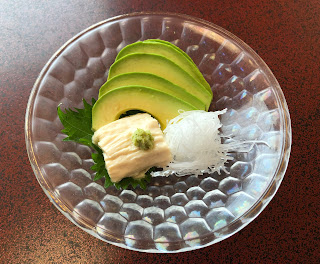
| Avocado sashimi, sharing the plate (clockwise) with grated daikon and fresh Yuba (tofu skin) |
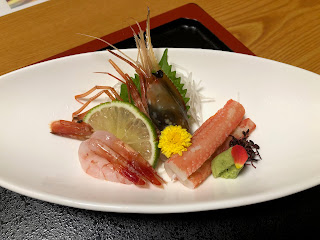
The easiest places to find vegetarian sushi and sashimi (the proper name for "sushi" that consists only of raw fish, without the rice) are in temples serving shojin ryorui (Buddhist temple cuisine), although some traditional sushi restaurants offer non-fish options also.
 |
Sushi for everyone!
|
There you have it - a brief history of Japan's most famous (if not entirely Japanese) culinary offering, from humble preservation technique to eye-catching masterpiece.
 |
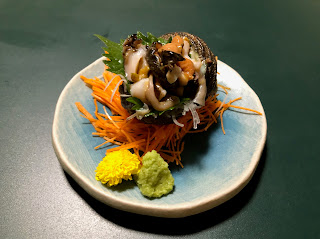
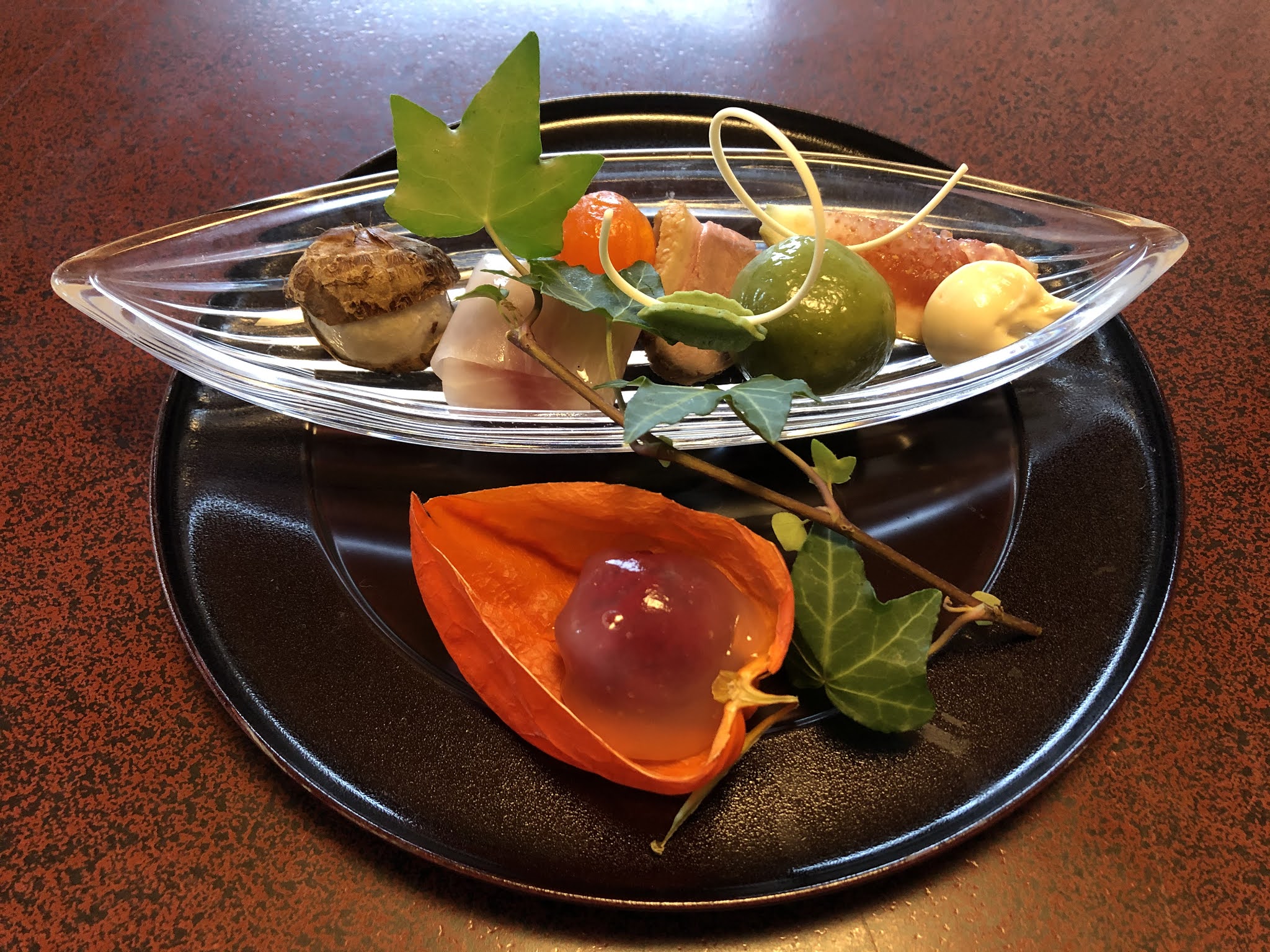
A vegetarian version of the customary summer "raw fish appetizer" at Ryokan Iwaso
|
And now for the real question: do you like sushi?