Showing posts with label reading. Show all posts

Tuesday, April 23, 2024

Culling My Life--or at least some Old Books...

 Ovidia--every other Tuesday

These were some of my 'best friends' when growing up--


In the old days before ebooks and library access (back then I only got to go to the national library on Stamford Road during the school holidays. The rest of the year there were only the two Primary School Library bookshelves and the Sunday School library... offerings were kind of limited).

The good thing about having only a few books is that reading and re-reading them got me knowing them almost by heart. 

Other favourites were The Diary of Anne Frank, The Bell Jar and Heidi, and J.D. Salinger's stories about the Glass family (much more so than The Catcher in the Rye), which became my fantasy family.

But it was this book (though I didn't love Nancy Drew as much as I did Tarzan or the Hardy Boys) that gave me my first reading/writing wake-up moment:


I didn't notice the hidden racism people talk about these days because it seemed normal that all the people in English books were white just like all the people in Chinese books were Chinese. But in Nancy Drew's Mystery of the Fire Dragon, I met Song Chi Che (Or Chi Che Song as she's called in the book), a gutsy Chinese girl who's kidnapped and rescued and survives (with the help of Nancy and George--who was another favourite). 

That's pretty much all I remember about the story--that Chi Che, a Chinese girl like me, could have adventures in stories that didn't end in a morality reminder to respect your parents/ eat every grain of rice on your plate/ not litter on the street.

After that I wrote some comic stories featuring Chi Che which have (fortunately) been lost.

Triggered by the renovations, I've been trying to cull my books. Not only because of the space crunch but because it made me realise how long it's been since I've picked up (let alone read through) some of these books.

These days I'm reading more on Kindle and Kobo than on paper. I'll always love physical books but it's often easier to increase the font on an e-reader than find my reading glasses. Plus I can mark pages, highlight passages and scribble notes to myself without feeling like a vandal.

But even if I'm okay buying ebooks, what about all my old books? Like all our old Calvin and Hobbes--


I loved these comics so much. Not just for Bill Watterson's brilliant depiction of the fantasy/real Hobbes but maybe even more for the family around Calvin that loved and supported without fully understanding him.

Calvin's parents would say, in logical, rational and practical terms, that I should only keep books that I intend to re-read, right? 

Besides, given I now have access to more books than I'll have time to read, it's time to let some the old ones go, right? 

I looked up several places to donate books to, though it's so sad that most of my beloved second hand bookshops are gone.

Mine aren't books that would be worth anything to anyone else.
But it feels wrong to give away books that feel more like close childhood friends/ teen buddies (Sylvia Plath, Joe Orton, JD Salinger) or respected elders (Agatha Christie, Nancy Mitford, MFK Fisher, Lawrence Block) who shaped what I am today even if we no longer spend as much time together.

I'll be keeping my Agatha Christies and Rex Stouts--even though I now have e-copies of most of these books. 


Unlike many other homes, we don't have an ancestral shrine here, so this bookshelf might serve the same purpose. A place that reminds us of who we are and where we come from and who we will always be grateful to.

I remember discovering and devouring Ovid's Metamorphosis--I found a copy (plastic bound--no browsing) in the MPH bookshop and insisted on getting it as that year's 'good results' book.

My mum said no. She told me it was a 'bad' book without being able to explain why. I realise now that she (incidentally also named 'Ovidia') must have been told Ovid wrote Ars Amatoria--a 'bad' book and--unlike me--accepted that.

I got my way on the condition I never brought it to school and never told anyone I had it. Yes, I'm telling you now, but my mother's passed on and won't read this.

And I really loved it The Metamorphosis. It's pretty much a run through of most of the stories in Roman Mythology with 'Amor' / Cupid wisely/ wittily/ naughtily triumphing over all the other Roman gods. I still have the fraying, falling apart, scotch-taped copy I got then. It's almost impossible to read (print too small, eyes too old) but that book's become a sentimental object for me-- I admit that even as I know that's Not what a book should be.

I know it's not just about letting go of that or any other copy of a physical book (thought would be a big step for me) but needing to figure out what 'writing books' or even 'reading' means to me in our digital age.

I'm not giving up on books--Amazon birthday vouchers are being Very carefully assessed and assigned--but what about the physical books I already have?

In some cases, even though I own ebook copies, I'm keeping my hardcover copies of Larousse Gastronomique and Tools of Titans because they are browsing friendly. Likewise all my Sherlock Holmes and Nero Wolfes... these work for me more like tarot cards. I don't think I'll ever sit down and read them cover to cover, but like tarot cards or how (some) people read the Bible, I can flip through the pages, let them fall open at random and know them well enough to read any passage or page in context. They are like old family photos for me.

But what about books that I read, learned from, respect and am in awe of but don't love?


(Okay, writing this makes me realise Haruki Murakami's probably going to stay)

Balanced with those I respect less but love more--


--even though I'm likely never going to cook out of these books I've created and enjoyed so many experiences while in their pages.

I've already packed up, given away/ donated four huge bags of books... (though there's no guarantee I won't head down to the charity store and buy them back next week!) as I realise this isn't just a shelf space issue.

It's so difficult because it's about trying to figure out why we write and what we want our writing to do and be. And how we can make that happen. Once upon a time it was all about holding a published book in your hand, feeling and weight and reality of it. If you wanted to share your life/story/soul with someone, you handed them a copy of your book.

But going even further back than books, it was all about telling stories, writing letters and recording journals in cipher. 

It was about serial stories in penny weekly magazines and storytellers entertaining homesick labourers with stories of home and dreams of happy futures and players enacting ghost month dramas to entertain spirits and their human descendants.

That's our lineage. We are still the music makers, we're still called to wake people to be 'the dreamers of dreams'. We just need to figure out what form we work in next. After all, we're descended from the inventors and adopters of the printing press (as well as those who feared not copying out scrolls or carving out tablets by hand signalled the downfall of humankind).

But how? Every generation's tried to answer this for themselves--another reason I've always loved reading letters and diaries.


(just a few more books I won't be giving away!)

And we will too!


Wednesday, January 10, 2024

The Bookcase Rebellion

 Sujata Massey


The Amazon-owned Washington Post recently reported on a poll  by The Economist/YouGov on people's reading habits.


Forty-six percent of people living in the United States read no books last year. Just five percent read one book. This book reading rate was about the same as when I began my writing career in the 1990s. Apparently, the top one percent in the survey were people who read 50 books or more a year. I know los of these people. Truthfully, I probably read thirty books a year, which ranks as the 88th percentile.


The public indifference to books makes the existence of the publishing industry—and advances paid for some flashy books—utterly bizarre. People don't naturally turn to books for fun, no matter how hard we writers wish to entertain, comfort, provoke, or inform.


But I love writing. And one side effect of being a writer is it the accumulation of printed matter. Whenever I have a book published, I'm gifted 25 free copies from the US publisher--and at least 5 copies on average from the foreign publishers who choose to translate one of my books. This means several hundred of books in the house are my own; volumes I'm not likely to be rereading. So why do I keep them? Why, for all the right reasons. I give them away to people who help me with my work, relatives, and the special person who's able to read a Rei Shimura novel in German or a Perveen Mistry book in Korean. And looking at them on the shelf is a reminder that no matter how much I'm struggling, I can get a book written.


But my own works are probably only five percent of what's stored in the house. Even though I regularly purge, I have overstuffed bookcases, a common situation for someone who loves to read and write. I coddle the books I've loved by housing them carefully with the intent of rereading. Yet so many new books come into my life each year that I rarely reopening a loved book. 


I have written about decluttering books before—my journeys hauling books to Little Book Libraries around town, to the drop off point for Books for Africa, to the loading dock for the Maryland Book Bank, and also to used bookstores, before so many of them went out of business. 


This past weekend I looked at my shelves and saw how they were overflowing. So I took a deep breath and brought down some boxes to load up and take to the Maryland Book Bank, which is just a couple of miles away. This felt like my harshest purge ever. I took away books that I consider excellent, often saving just my very favorite by a particular author. Some series, like those by friends Marcia Talley, Laura Lippman, and Lauren Henderson, remained intact. If you are a book person, you know how hard it is to break up a collection; even if the books aren’t being read anymore, they feel like family members who want to stay.


This time around, I am looking at things from a different perspective: that of the built-in bookcases that flank my dining room entrance. The narrow bookcases, clearly added by some do-it-yourselfer many decades ago, make up a total of 32 shelves rising almost eight feet high. The bookcases seemed to be crying out to be treated with respect, not like a dumping ground 


Lately it's seemed that my YouTube and Instagram feeds are packed with examples of beautiful bookcases; often painted in a bold color and wallpapered. They are serene spaces that show art and flowers and short runs of books, usually color-coordinated, or all looking vintage. Recently I stayed in a hotel where the bookcase in the suite held very old books—some dating from the late 1700s. The glamour of the curated bookcase has gone off the charts.


The people who style such bookcases probably aren’t ones who buy upwards of fifty books a year (yes, I buy more than I can possibly read). If it's a years that I’m a a judging committee,  between 150 and 500 books will be shipped to my house. Where do all my books live? Seven designated storage areas in the house (three studies, the living and dining rooms, the butler’s pantry, and a guest room). Oops, space eight is the floor next to my bed!


Recently, an interior designer walked through my home. I had invited her because of a vague feeling I want change in the house. The designer pointed out that there are too many visual elements pulling at the eye. She did not single out books—in fact, she kindly said, “books are the best thing” but she proposed a new bookcase for me. But before I jump to having this installed, I decided to see what I might do with the purge and making my own stab at styling a bookcase that included negative space. As I did the tedious work, hauling books here and there, alphabetizing others and making groupings for history, mystery, cooking and gardening, I took breaks to ponder how-to articles and peruse 'beautiful bookcases' on the Internet. This made me decide to group my vintage cloth- and paper-bound volumes together. If I had a square book that didn't fit the shelf, I faced it out. Bookcase styling is about judging a book by its cover. It's a way of experiencing my own aged book collection as if I were shopping somewhere browsing books I'd like to own.


Some midlifers feel unfulfilled until they buy a luxury car. And then there are those who throw over their old partner for someone younger and hotter. Reinventing my dust-collecting bookshelves feels like a daintier rebellion. It's my way of playing against tradition. I'm even thinking that in the next few months, the scarred white wooden shelves could be painted dark blue. Fabric on the back wall, or a decorative paper. And what about a few strategic spotlights?  


Thursday, June 29, 2023

IMMERSIBLES

Wendall--every other Thursday

Over the last ten years, immersive experiences have become all the rage. 


From the Wonderland exhibit in Melbourne in 2017
 

Don’t just look at the art, be surrounded by huge digital representations of it, walk through it, see a whole artist’s career as a moving slideshow. Hurry to The Van Gogh Experience!


Or “be” Barbie and enjoy your own iconic Barbie-inspired hairstyle done by a Paul Mitchell Professional!” Then attend The World of Barbie “Sips After Sunset” (adults only) in her interactive world, in a local mall. This is pure marketing for the film, of course, but overall, what do these installations offer us? 


As of this morning, in addition to The World of Barbie, there are sixteen “immersive” experiences currently running in Los Angeles. There’s Bubble World—"an immersive experience designed to challenge the imagination. Step into a hot air balloon flight simulator, dive into massive ball pits, witness robot-led bubble shows, and much, much more!


There’s The Subterranean Forest. “Stepping into what feels like a painting, your senses will immediately be activated by instruments like sound bowls and drums, plus watercolors, games, and so much more. Don’t miss this immersive installation!”


Dinos Alive, anexhibition featuring life-size animated replicas in an immersive Jurassic venue. Walk alongside the massive creatures that roamed our world millions of years ago!”


There’s Explore Vatican: Immersive Experience! “Using cutting-edge technology, allow us to transport you to the heart of Europe, where you'll encounter a captivating, up-close encounter with the rich history and art of Vatican City. Prepare to be whisked away on a journey like never before to the wonders that await, as we bring the Vatican's treasures right to your doorstep!”


Terrifyingly, there’s also this. “Are you brave enough to revisit humanity’s dark history at the largest medieval torture museum in the country? Come explore over 5,000 square feet of exhibits containing hundreds of examples of torture, punishments, and execution devices. Find out how these contraptions were used with interactive activities and lifelike, silicon models (!! bold and exclamation marks mine!) depicting the action. Get your tickets for the Medieval Torture Museum with Ghost Hunting in Los Angeles!"


The interactive Medieval Torture Museum (!)
 

And perhaps, most hilariously, The World of FRIENDS™ —The One Near Long Beach. The one near Long Beach? How many are there? Inside this one, “Immerse yourself like never before by exploring interactive set recreations like Monica and Rachel’s kitchen, reliving the famous PIVOT! scene, and posing on the iconic orange couch in Central Perk. Plus you’ll get to learn about the making of the show with props, costumes and so much more! Now that’s what I call kick-you-in-the-crotch, spit-on-your-neck fantastic!”


Even the Titanic Experience has immersive elements, no pun intended.


Be on the Titanic?
 

So, what do these experiences have in common, besides their ubiquitous exclamation marks? And what draws so many people to them? Is it just a natural extension of our armchair culture, and of the growth of virtual reality technology—a way to travel or participate without traveling or participating? Is it a need to be part of something bigger than ourselves? Or is it just, at heart, the need for the best selfies?


And is there a difference between an immersive experience that takes advantage of art that’s already been created, like The Van Gogh Experience, and living art, which is an experience in itself, created by an artist, like James Turrell’s “Breathing Light,” which challenges our perception of the objects, colors, and distances around us?


One of the James Turrell exhibits at MONA in Tasmania
 

In addition to several of Turrell’s installations, both in the U.S. and in Tasmania, I was lucky enough to walk through Rain Room at the Los Angeles County Museum of Art in 2015. This piece allowed visitors to “walk through a downpour without getting wet,” via motion sensors, making them “performers in this intersection of art, technology and nature.”


Rain Room at LACMA
 

I feel that these installations have actually challenged me and made me look at the world differently.


The entrance to the "Alice" exhibit in 2017
 

On the other hand, Wonderland, a 2017 exhibit at The Australian Center for the Moving Image, was pure fun. This exhibit had immersive elements, like having to enter by crawling through the tiny door, or attending the Mad Hatter’s Tea Party while surrounded by shifting images.


James entering the exhibit... 


Then Alice lets us into the passageway

Entering and sitting down at the Tea Party

The scene shifts 

On the other wall...
 

The exhibit also included the history of the depictions of Lewis Carroll’s Alice and the other  characters.


The Red Queen's costume

A room full of photos of Alice on film
 

Perhaps the most hilarious part of the experience was sitting for a photograph, which was then placed into an animated film of the famous croquet party. Obviously my husband James understood this idea much better than I, since he was smart enough to make a funny face, while mine is quite dull. 


A still of our animated adventures

I have always loved the Alice books and actually wrote a script about Humpty Dumpty, so it was certainly surreal to find myself beside him on a projected wall...


Me and my fave, Humpty Dumpty
 

Here's a video of our animated selves, if you have 36 seconds...


In the end, I think my favorite immersive experience is still a book, but how do you all feel about this trend and what it offers and perhaps, what it threatens?


     -- Wendall


Tuesday, March 7, 2023

Getting the reading fire roaring, again...


Expectant, the fifth novel in a terrific, CWA Dagger-shortlisted series starring headstrong young female Detective Sam Shephard, is among my recent great reads

Craig, every second Tuesday. 

Kia ora and gidday everyone.

Have you ever been in a reading funk? I've been a lifelong reader, loving books and stories since my earliest childhood memories. Growing up in New Zealand I spent a fair bit of time outdoors and playing various sports, but I also loved curling up with a good book - whether on a rainy day, on the couch in the evening, or in bed at night. 

I devoured books from Asterix to Agatha Christie, from CS Lewis to Roald Dahl to JRR Tolkien and so much more. 

That's continued throughout my life. There are times where I've read a lot more than others, but I've always read. Even when having a very busy job, or at law school, or travelling around the world, a novel has never been far from my reach. Recently however, to end 2022 and begin 2023, I was in a bit of a reading funk. I hadn't stopped reading as such - like I said, I've always read - but I was glacial. A small handful of novels read in a couple of months, rather than multiple books a week like usual. There was a lot going on personally that played a part. Even the books I really enjoyed were taking days or weeks to get through, rather than tearing through them in a day or two like usual. 

A love of reading is passed from generation to generation in my family

I just wasn't reading for sustained periods of time, for various reasons. I knew (hoped) I'd shake it off at some point, and that point thankfully arrived in last month when I picked up a novel I needed to read for an upcoming interview for a magazine article. I just couldn't put it down. I tore through it in hours. Back to my old self. 

The next day I started another crime novel I'd been looking forward to, and that was done by the following day. Two more that week. I was back! Even though I was just as busy, or busier, with work and family stuff than I had been during my protracted reading funk, I was really loving reading again and making time for that rather than mindlessly whiling time away with re-runs, YouTube videos, or other 'not have to think too much' decompressions. 

So today I thought I'd showcase some of the new books I've devoured in recent weeks - each gripped me from start to finish in a day or two - starting with the one that hauled me back to my usual reading self. Thanks Liz Nugent! 

STRANGE SALLY DIAMOND: released last week in the UK and Commonwealth, the fifth novel from star Irish storyteller Liz Nugent is a real cracker, introducing us to a beguiling, unusual 'heroine' as the gateway to a disturbing yet riveting tale. Nugent has shown with her past novels (eg LYING IN WAIT, OUR LITTLE CRUELTIES) that she has a masterful touch for dysfunctional families and memorable main characters - along with killer first lines and twisting storylines - but in her latest psychological she throws in a twist: the protagonist is actually kinda likable! 

Sally Diamond is a ‘socially deficient’ lady in her 40s whose neurodivergence and occasional extreme outbursts could be nurture or nature. After an appalling childhood she can't recall, she's led perhaps a too-sheltered teenage and adulthood thanks to her ex-psychiatrist father. The man she cremates at home following his terminal illness, drawing all kinds of attention from the police, local villagers, and someone very dangerous who remembers Sally's childhood. Nugent takes readers on quite a ride, using a full palette of emotions. STRANGE SALLY DIAMOND is dark, and funny. It's got hope, and despair. It traverses some of the worst that humanity can offer (TW for pedophilia, sexual abuse, etc) - though we're usually not 'in the room' for that, just knowing it has happened - while smoothly telling a fascinating story about an unforgettable character. 

OZARK DOGS by Eli Cranor: the next day, I dived into an advance copy of this upcoming novel (out in April in USA and UK etc), one of my most highly-anticipated reads of the year. This too was devoured in <24 hours. 

Cranor, a former QB and high school football coach, produced for me arguably the best debut crime novel of last year with DON'T KNOW TOUGH, an extraordinary tale with evocative prose and the jagged voice of abused teenage football star Billy Lowe. So I had high expectations going on, while wondering how Cranor could match his first effort.

Somehow, he may have even exceeded it.  Jeremiah Fitzjurls is an old man with violence scratching at his soul; a Vietnam sniper with a Bronze Star, an armoury full of weapons, and too many bad memories. His days are spent crushing cars at his junkyard and trying to protect his beloved granddaughter Joanna from sins new and old. His son, Joanna’s father, is in prison for murder. Their town doesn’t forget, and neither have the Ledfords, a vicious concoction of white supremacists and meth dealers. So when Joanna disappears after Homecoming, a violent reckoning is coming, unless Craven County Sheriff Mona McNabb can stop it.

OZARK DOGS is the kind of book that burrows beneath your skin. Cranor’s crafted a gritty, epic tale of family burdens and long shadows cast by past misdeeds. Terrible people or good people making terrible choices; the awful impact may be the same. Superb.

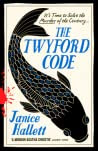
THE TWYFORD CODE by Janice Hallett: The next day I began my third in book in half a week - unheard of in recent times, but lovely to get back to that kind of reading habit. Having heard great things about Janice Hallett's debut THE APPEAL, an epistolary take on classic puzzle-style murder mysteries, I was curious to try THE TWYFORD CODE, which came out in the UK last year and was published in the United States in January.

THE TWYFORD CODE continues Hallett's  ‘found documents’ approach; this time readers are given semi-accurate transcripts of audio recordings aging ex-con Steven Smith has made on an old iPhone given to him by his estranged son. Looking for redemption, or perhaps just purpose, Steven tries to find out what happened to his remedial English teacher forty years before. Miss Isles vanished after an unauthorised field trip to the countryside haunts of Edith Twyford, a forgotten children’s author whose old-fashioned mysteries may have contained a secret code to solve a real mystery, along with their racism, sexism, and xenophobia. Was Miss Isles disappearance linked to the Twyford Code? Shadowy figures seem determined to stop Steven, who cajoles some old classmates into the hunt, with mixed success, and is joined by young librarian Lucy for what becomes a dangerous mission entwined with wartime secrets and London gangs. But how much can we believe?

Hallett deftly keeps readers guessing throughout an entertaining tale that's an original, intricate mystery. A few pacing issues, perhaps, and at times the conceit threatens to overwhelm the story or our connection to characters, but Hallett brings it all together brilliantly at the end. A very good read.

Four further great reads I tore through in a day or two recently

I also ripped through EVERYBODY KNOWS by Jordan Harper, an extraordinary LA-set noir tale, that same week I'd read STRANGE SALLY DIAMOND. Four books in a week, that's more like the old Craig! Since then I've read several other novels, and seem to be out of my reading funk. For now, at least. Other highly recommended new books I tore through and loved: I WILL FIND YOU by Harlan Coben, DON'T FEAR THE REAPER by Stephen Graham Jones, and EXPECTANT by Vanda Symon, aka 'the modern Queen of New Zealand Crime'. 

Have you ever found yourself in a reading funk? How'd you get out of it? Was it a particular book that helped get you back on track? Do you have go-to-authors that can re-light your reading fire? Let me know in the comments. 

Until next time. Ka kite anō. 

WhakataukÄ« of the fortnight: 

Inspired by Zoe and her 'word of the week', I'll be ending my fortnightly posts by sharing a whakataukÄ« (Māori proverb), a pithy and poetic thought to mull on as we go through life. 

Ahakoa he iti he pounamu
(Although it is small it is a treasure)

Wednesday, January 25, 2023

Bookstore Redux

 SUJATA MASSEY


A dear niece's birthday approaches next week. I had a brief moment of panic as I brainstormed a gift that could be easily mailed, and then calmed as I remembered the independent bookstore five minutes away. The Ivy Bookshop has been part of my life--my neighborhood bookstore--since the early days of my writing career. During the pandemic, current owner shifted the business from within a mall to a Victorian building she purchased that is full of light and good vibrations, and that's surrounded by green acreage and even has a roofed terrace perfect for outdoor signings. today, I browsed for a half hour and came away with something I hadn't known would be there--but that was just right for a birthday gift. Ooh, and a copy of Spare for myself! The experience led me to share what I wrote about my love for bookstores a couple of years ago.


Have you ever frequented a bookstore so often it became a second home? 


From the moment in childhood that my parents permitted me to walk to our neighborhood bookstore, I've engaged in this kind of squatting. From Micawber’s Books in St. Paul, to long-gone independents in Baltimore and Washington D.C., I've been an independent bookstore regular.


For the last eight years, I've been a homing pigeon to The Ivy Bookshop, just a few miles from my house in Baltimore. The Ivy Bookshop started in 2001 as a small, quite genteel general bookstore. I was happy to sign stock there, but there weren't many public events. What a change the store underwent with its second owners, Ed and Ann Berlin. I met them when I returned to life in Baltimore after a brief exodus to the Midwest. I quickly learned this wonderful couple wanted excitement in the store and would do everything to make writers feel like family.


So I was no longer just sitting in a chair paging through books. It was a thrill to be part of a bookstore that aimed to make local and international writers feel welcome. The store newsletter kept me abreast of many creative activities ranging from writing workshops to book talks. The Berlins were so successful in building community that they opened Bird in Hand, a bookstore-coffee shop near Johns Hopkins, which was easily accessible to people without cars. This shop also succeeded, with a younger, diverse customer base, some of whom were mostly there for the coffee.


Ed and Ann saw retirement on the horizon but were adamant the store should not be left looking for its next buyer. That’s how bookstores often lose their footing. When Ed met Emma Synder, the executive director of PEN-Faulkner Foundation, he learned the former Baltimorean dreamed of starting her own small business in Baltimore. He lured her in, and she became a a part owner in 2017. She became The Ivy’s sole proprietor in 2019.


I still visit with the Berlins, who live about a fifteen walk from my house. Recently, Ed gifted me with what he created during retirement: ADRIFT, a memoir that’s full of art he’s collected and stories of his travels and adventures. The built the Ivy into what it was--and they continue to be an important couple in Baltimore's cultural life.


Under Emma’s care, Bird in Hand and the Ivy Bookshop continued smoothly; but like Ed, she was always thinking ahead and trouble-shooting. Emma looked at independent bookstores around the country that had survived the expansions of Barnes & Noble and mail order behemoth that is Amazon. She deduced most secure bookstores were located in buildings they owned, so they were never subsequent to rent hikes and other problems related to tenancy. 


The obvious question arose. Should the Ivy leave its tiny space in a well-known strip mall to build something larger and with more economic resilience? Would the Ivy's customers, used to 18 years of bookshopping at a strip mall, go somewhere else? 


A charming green Victorian for sale two blocks from the original Ivy Bookshop provided the answer. The former church had a high ceilinged, long and wide room perfect for browsing, plus plus multiple other rooms. The property came with almost three acres of well-groomed lawns studded by trees and shrubs--quite unusual for any bookstore. There was a meditation path, a vintage gazebo, and a vast sheltered outdoor patio. There appeared to be enough room to open a coffee shop within the store, and to even keep a small apartment for the use of writers in residence or traveling on a book-signing journey.


Emma bought the property and renovations were well underway when a virus began spreading around the world.


Not only did Coronavirus slow the new shop's buildout, it made in person shopping at the existing old stores unsafe. The Ivy closed down for browsing entirely and pivoted to taking book orders online and having them fulfilled by drive-to-home and mail deliveries or curbside pickup. 


During this time, the Bird in Hand bookstore became a drop-off point for a Baltimore city CSA farm to leave bags of produce for people, something I was grateful for. Even though customers couldn't enter the store,the Ivy carefully set out tables holding the CSA food. They kept making coffee and serving pastries, but it was to patrons sitting outdoors at distanced tables. Online, both stores  hosted online book talks to promote authors who were releasing books into a world where there were no longer in-person book signings.


Despite the pandemic, renovation did proceed to completion and in October, the Ivy re-opened, following city rules about social distancing and reduced capacity.


I went for a private browsing appointment this week and discovered a bright, roomy space that is a book-lover’s dream. During my recent visit, I saw a constant steam of sole booklovers coming to pick up book orders or browse with appointments (it’s open to limited capacity walk-ins after 2 each day). On my way out, I saw shoppers outdoors browsing in the covered patio. 


It had been so long that I’ve shopped for anything except food or essential supplies. Passing by bookcases loaded with colorful titles, I felt my spirits rise. I left with four bags of books, knowing that I’ll be back many more times, and that in June, when my next book releases, I can have a garden book talk.


If you are not a person who often gives books as gifts, now is the perfect time to try it out. A small effort this month can make you part of a bookstore family's happy ending. 


Thursday, October 7, 2021

I need your help, please

 Stanley - Thursday

For many years, I've been part of an organisation called Books for Africa. It's a Minneapolis/St Paul-based non-profit whose goal is to provide as many books as possible to schools, libraries, and universities in Africa. You can read more about it here.

Over the past thirty years or so, Books for Africa has sent over 51 million books to the continent, to every one of its 55 countries - from the huge Nigeria to the minute Lesotho. It has also started sending e-readers and e-books, as well as complete law libraries. 

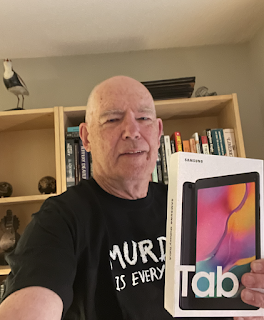
I'm taking 10 Samsung e-readers loaded with a law library to a library in South Africa

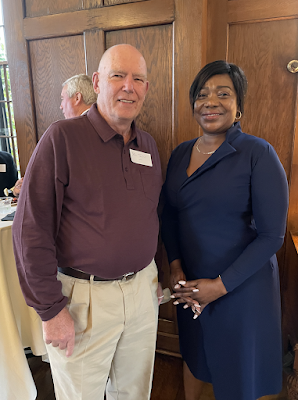
Yesterday, I attended a fund-raising event held at the University Club in St Paul. They keynote address was given by the African Union's ambassador to the United States, Her Excellency Hilda Suka-Mafudze. I was moved listening to the impact a simple initiative like Books for Africa can have on people's lives.

With Her Excellency Hilda Suka-Mafudze from Zimbabwe

In the past, I was involved in sending one container (approximately 40,000 books) to South Africa, now I want to help send another to Botswana, a country that has been so good to Michael and me, both for the setting of our books and the friendliness and helpfulness of its people. 

It is very expensive these days to send containers anywhere - approximately $11,000. Books for Africa feels it is essential that recipients have skin in the game, so it requires them to fund getting the container through customs and its transport to the distribution centre. 

There is an existing project in Botswana that I would like to support. It is called the Botswana Book Project, and you can read it about it here. Its goal is to raise $16,000 - more than just shipping a container. It will also fund the logistics and provide essential supplies such as solar lighting, bookshelves, etc. The project is about a quarter of the way to its goal. 

Please consider making a tax-deductible donation, even if it is $5. Every bit works. If you have friends who have travelled to Africa or who are believers in the power of books, please ask them to participate. I am committed to help the Botswana Book Project reach its goal and will match the first $1000 of donations.

If every reader of Murder is Everywhere contributed just the minimum of $5, we would be over halfway there.

Thank you.