Showing posts with label elections. Show all posts

Thursday, November 3, 2022

A solution to our financial problems

 Stanley - Thursday

As we reach the end of this election cycle, my mind keeps coming back to two things. 

First, what an abomination the election process is. People start running again, especially in the US House, the moment they are elected. This makes the country be in election mode practically the whole time. In addition, the amount of money spent on the election makes me bilious. It is not possible to have fair elections with that amount being thrown at the various races - particularly when so much of it comes from corporations, PACs, etc. And, of course, there is the tone and content of political discourse. It is often vulgar and untrue, and, what's even worse, people buy into the whole process. It's sick. Winning is now the only thing that counts (with very few exceptions). Sadly, it is becoming impossible to have a reasonable discussion with friends who hold differing views. Some of my friends are going to great length to avoid any politics at social gatherings.

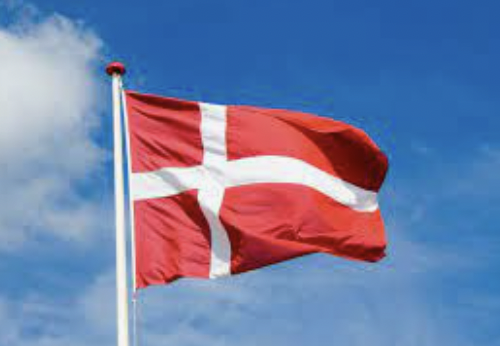
Oh that we could emulate, for example, the Danish election. The prime minister called for an election on October 5 (this year), and the election was over yesterday - basically a month, and it was done and dusted.
The second thing that has been on my mind is the economy, or more accurately the discussion of the economy. I was with friends recently, long-time friends, salt of the earth, smart, well-read, whose political views are generally conservative. We were very cautiously talking about the upcoming elections. One thing that struck me is the extent to which we relied on sound bites to convey our opinions: 'tax the rich', 'democrats tax and spend!', 'republicans give tax cuts to the rich!', 'a wealth tax will solve the problems!', 'trickle-down economics works!', 'trickle-down  economics is the root of all evil!', and so on. We said these things, parrot-like, with little or no deeper knowledge of what we were talking about.

Needless to say we left with the same views as those we brought to the table.

What made me doubly sad, is that these discussions haven't changed in the years I've been in the States. Word bites, sound bites. Shout. Scream. And more recently, hate is creeping into the whole process.

What we need is a fresh, new approach to economics. 

As I pondered these issues, I remembered the ideas and words of one of my favourite philosophers and economic thinkers - a man who live a hundred years ago: Alfred W Lawson. Maybe, I thought, maybe we don't need new ideas. Perhaps we should adopt old ideas - Lawson's ideas.

Alfred William Lawson, born in London, England, on March 24, 1869, which he later claimed was “the most momentous occurrence since the birth of mankind”.  Three weeks later his family moved to Canada and three years later settled in Detroit.  He was a man of many talents – professional baseball player, publisher, aviation pioneer, physicist, economist, philosopher, and university president.

He was also a prolific writer, whose output we can all envy.  He wrote a total of about 50 books, mainly about his scientific, philosophical, and economic theories.  
I have been a fan of Lawson since I learnt about him in the mid 1970’s from my friend Bob Jacobs. I have come to the conclusion that he was fundamentally influenced by his father, Robert Henry Lawson, who spent decades trying to perfect a perpetual motion machine.
Lawson was deeply involved in the early years of aviation. However, the Great Depression destroyed his aviation dreams, but also was the catalyst for him to start the Direct Credit Society, which soon had millions of supporters. 

In his 1931 book Direct Credits for Everybody, he wrote:
Owing to the brightness and scarcity of gold, as well as to its glittering appeal for childlike people, that metal was principally used as money in the beginning, and eventually became the standard of money value throughout the world.

But the visible supply of gold in the world could not keep pace with the ever increasing population who needed money for trading purposes, and credit then came into vogue which permitted trade to be carried on many times larger in amount than there was gold to pay for it.

And because there was not enough money for everybody to use there were men who made it their business to get control of it and make everybody pay for its use in the shape of interest. 
No autocrat of any type ever held such power over human beings as is held by the present international financiers who control the supply of money. They are the real masters of office holders, manufacturers, merchants and workmen. And they are gradually screwing them all down to nothingness.

The branch of capitalism which allows interest to be charged on money, has not only paralyzed mankind, but it is the two-edged sword that will destroy Capitalism unless abolished at once.
And:
There is no end to this interest-paying game. It is a series of circles running around within circles. It would require a lifetime to explain, so that everybody could understand, how it keeps people struggling for a pitiful existence; to explain how the money masters, who produce nothing, are overloaded with wealth and power, while everybody, who produces everything is reduced to beggary. 
Capitalism can be made to work, yes, but not before this undermining parasite called interest is exterminated.
To counter the iniquity of interest, he proposed that everyone be given (by the government) a Direct Credit to be used to maximise his or her potential – food, clothing, education, and so on.  In this way, everyone would have a chance to prosper, the poor would be fed and educated, and everyone’s talents would have the potential to be realised.  If the credit is squandered, the person gets no more.  If the credit is used wisely, the person will be able to repay it.  If an entrepreneur wants to start a company, the government provides a Direct Credit to each of the partners.  Again, if the credit is squandered, the participants can receive no more.  If successful, there will be enough profit to repay the credit.
Lawson argues that it is interest that kills innovation and often existence.
The system of Direct Credits will work for everybody. It will give work to everybody, opportunities to everybody, credit to everybody, money to everybody, nourishment to everybody, comforts to everybody, education to everybody, character to everybody, intelligence to everybody, and justice to everybody.

It will let Capital live in a clean way. It will let Labor co-operate with Capital on a fair basis. It will make Capital and Labor staunch friends who will work together in harmony for the benefit of everybody.

It will allow reasonable profits to the manufacturers and merchants. It will give high wages to workmen so they can purchase what they need from the merchants and utilise every useful thing made by the manufacturers.
It is easy to see why the Direct Credit Society had so many followers, especially during the Great Depression.  As the depression lessened, so did support for Lawson’s ideas.
However, today, with millions of people living hand to mouth, without hope of improvement or advancement, maybe a direct credit would help level the playing field of life and give more people the opportunity to prosper.
If he were alive today, I’ve no doubt that Lawson would shout at the politicians to wise up and adopt his direct credit approach. 
Our forefathers fought, bled and died that we could have the right to vote, but suffrage is worthless to everybody if it is used to keep in power international financiers who control 90 percent of the wealth produced by everybody.
At present if the government needs money for improvements or other things, it borrows it and issues interest paying bonds which are turned over to privateers for less money than the bonds call for. The government is forced to do this, the same as individuals and corporations, because there is not enough money in circulation to meet general expenses.

In this manner the government is kept in perpetual debt trying to pay the different interests upon the different bonds that are forever accumulating.
In today’s political and economic environment, I could see Lawson running for national office, challenging the economic status quo, with a large and rowdy following.  I’d love to see his attack ads.

Some of Lawson's views may have been regarded as crackpot at the time, but perhaps the time has arrived to revisit them!


Wednesday, November 4, 2020

What a Wednesday

 Sujata Massey


In the early hours of Wednesday November 4, I am running on fumes and bittersweet chocolate. 


I stayed awake much of Tuesday night, watching and waiting as the votes roll in for the 2020 presidential election. Where was the easy win for Biden that I expected?


I voted about a month ago, as an absentee, which in Maryland meant that I filled out a ballot the Board of Elections mailed to my home. I then carried it to a locked ballot box placed outside one of my favorite places, the Baltimore Museum of Art. Two days later, I got an email saying my ballot was received, and a few weeks after that I was notified that my vote had been counted. 


My situation was pretty ideal, and I appreciate Maryland's decision to start counting absentee ballots as they arrive, rather than waiting to open the envelopes on election night, as is happening in Pennsylvania. In Pennsylvania and other swing states,  the mail has been markedly slow, and many people didn't get absentee ballots in time, and don't have an assurance that their board of elections has their ballot to count. 


The waiting game is not new for me. As a writer, I must have patience with myself to make it through the process of writing a book…and then seeing the publisher bring it to the bookshelf. As a mother who adopted two children internationally, I had long waits that were filled with longing and worry for the babies who could not join me right away. 


Currently, I am waiting for a vaccination against the coronavirus that might be on the market by springtime…or some other time.


56 years of waiting have revealed that obsessing about the worst, while waiting, doesn’t change the outcome—or the way I feel, once destiny is revealed. 


What I did today, to get through the wait for election results, I spent my day going through a copy edited manuscript, doing some light cooking. Almost all day I live-streamed rousing alternative rock and funk from my favorite radio station, the Current, based in Minneapolis. I don’t usually fill my day with live radio, but this time I welcomed the distracting beat.


I kept walking my dogs. After lunch, I drove over to the polling station at Barclay Elementary School and smiled to see a line of people almost as long as the block. Someone was playing music on their phone, and there was a festive sound to people’s conversations. I drove to another larger polling place, where there was no line, making me think the staffing and organization was efficient, or more voters in that area had filed absentee ballots.  


When you work as a campaign volunteer--as I have in the prior three presidential elections--you get a small, personal snapshot of what's going on. It usually feels very optimistic, and I am good at talking myself into thinking the rest of the country is like the people I'm talking to.


But at the moment,my spirit is stressed. I suspect I'll be at a "Count Every Vote" demonstration on the street later today. I voted for Biden-Harris, for many reasons, including Trump's reckless endangerment of people's lives by not mounting a serious pandemic response. I thought that the rising death toll in red states would have meant something to the people living there. 


Still, nothing is set. Michigan, Wisconsin and Pennsylvania will take days to count votes. And it would be good if all votes from overseas citizens arrive by mail to be counted...and our mail is running slow.


I have to remind myself that a few extra days, or even a week, is nothing compared to the distress of the last four years, when environmental regulation collapsed, and jobs and lives were lost for no good reason.


And this is why waiting does not mean giving up. 


Thursday, April 25, 2019

Oh God!

Stanley - Thursday

Oh God! There are still eighteen months to go to the next US elections.


Some people think that the give and take, thrust and parry, of the run up to the nominations is essential for the voters to see how people function under pressure. I understand the argument, but just look at the results. It's bad enough listening to all the rhetoric from the candidates, but other issues bother me perhaps even more.

A hot issue in the 2018 congressional elections was healthcare. The Democrats did pretty well pushing hard on the need for good healthcare and the erosion of the same under the Republicans. To a large extent this resulted in the House switching from being Republican-controlled to being Democratic-controlled.

As you would expect, healthcare is still the prominent issue, with Democratic candidates ranging from supporting free universal care to improved overall coverage with no exemptions for pre-existing conditions. Any suggestion of universal coverage is immediately met with the SOCIALISM defence by the Republicans. For reasons I don't understand, the word SOCIALISM conjures up in many Americans' minds images of faceless bureaucrats and large concrete structures. For them, SOCIALISM is anathema to the American way - despite there already being huge, popular, socialist programs, such as Medicare and Medicaid.

Medicare is a national, premium-free insurance program for people over 65 and for people under 65 with certain disabilities. It can still be costly to be sick even if you have Medicare, and people who can afford it buy supplemental coverage. Medicaid is insurance for people with little or no income and few assets. It is a joint federal/state program that varies enormously from state to state in terms of coverage.

Now these programs are under attack from Republicans - in my mind partly to help reduce the deficit they incurred with their latest tax plan, partly because they are SOCIALIST, and partly....


What depresses me about the healthcare debate is how many people acknowledge that it would be nice to have a system like those in Northern Europe, but feel the USA couldn't get it to work. The country is too big, they say. It is too diverse. I understand that size and diversity would make universal coverage more difficult, but it is a new phenomenon to hear Americans say their country can't accomplish something it sets its mind to.


The Nordic countries, for example, believe it is in the national interest to have a healthy, educated population, even if it means higher taxes. Many Republicans disagree. I have friends, Republican friends, who don't want their taxes helping ne'er-do-well, down-and-out malingerers (sub-text: Blacks).


The USA spends more per capita on healthcare than any other country, yet the outcomes are generally not as good. In both infant mortality and under-5 mortality, for example, the USA is lower that thirtieth in country ranking. Every European country is better. Damn SOCIALISTS!

It is also estimated that about 1 million Americans file for bankruptcy every year because of medical bills! And bankruptcy stays on your record for 10 years, I think, adversely affecting all sorts of other aspects of your life.


The second issue that depresses me about the US elections is the amount of money spent on them. In 2016, over $6.5 BILLION was spent with nearly $2.4 BILLION being on the presidential race alone. In the 2018 congressional races, over $5.7 BILLION was spent. God knows what it will be by November 3, 2020.


It boggles the mind. It sickens me.

The third aspect of the elections that makes me sizzle are the attack ads. Rather than addressing issues of policy, many candidates spend their time attacking their opponents, often snipping comments out of context to show bad the other is. I hope that the myriad contenders for the Democratic nomination will stick to their positions and not sink into using personal attacks or scurrilous innuendo. Stick to the high road, I say.


I think I'm going to throw away my TV remote until November 4, 2020. And I hope Bose will develop some politician-cancelling headphones.


Saturday, March 10, 2018

As a Wise Bird Once Said [Five Years Ago]

Jeff--Saturday
 
As you may know, I'm recovering from shoulder surgery and hope to be back to two-handed typing soon, but for now I'm posting blasts from the past. This one, from five years ago, struck me as unbelievably prophetic...and yet still topical in the most twisted of ways!  It anticipated the successful run by Greece's SYRIZA party for control of Parliament, but in describing the predicament of the then ruling coalition, precisely describes the current situation of SYRIZA!  With elections looming on the horizon, I thought this a good time to run it again...while one hand's still tied down.

The Sky is Falling! 

But we all know better than to listen to Chicken Little.  And over in Greece, poor Kotopoulaki is about as welcome as Cassandra.  Okay, enough with the bold literary illusions.  It’s time to move on to reality.  Hmmm, that last line should be re-read at least three times by every soul in Greece officially charged with making sure that gorgeous Greek sky stays up there.

Frankly, anything that gets the Greek bureaucracy to look up from the tops of their shoes would be welcome.  Far too many still spend their time lurking around the dark edges of their land, hoping to find whatever pots of gold remain from those bright rainbow times of the past.

The Coalition Partners, Nea Demokratia & PASOK

Greece’s current government is now a two-party coalition instead of three, and its razor-thin majority margin has gone from electric to blade.  The likely largest vote getting party if new elections were called today is grooming its leader to be the next king.  Excuse me, I shouldn’t say “king” for his party (SYRIZA) is an amalgam of five…or is it four…or is it three…socialist parties (with views ranging from North Korean to Swedish).  Yet, from the way his professional image makers are out there packaging him and his party to the world, I think they’re secretly planning a coronation.

SYRIZA’s leader made his mark saying “no” to whatever the other guy said in trying to deal with the crisis.  If the IMF, EU, the ruling coalition, or any of the demon financiers of the West were for it, he was against it.  That makes it easy to say, “I told you so” now.  Smart politics, especially if one conveniently forgets that he refused an offer to form his own government and lead Greece through its crisis.

The Contender

My guess is he thinks it’s time to take his shot, and I come to that conclusion from such things as the op-ed piece placed in this week’s The New York Times titled, “Only Syriza Can Save Greece” bearing a central message of comfort to the west: “SYRIZA would be a good thing for America and the European Union.”  I wonder how that will play at home, where bashing America has been a political staple of the left since the fall of Greece’s Junta dictatorship in 1974—one of the last Greek governments publicly hailing itself as “good for America.”

Frankly, I don’t care who governs Greece as long as the new government’s very first act is to tear down that plaque which must exist somewhere in the secret recesses of the Parliament bearing this inscription: “All ye who enter here make as much as possible of the situation while you have the chance.”

The Parliament

Yes, there are selfless, dedicated public servants working hard to drive their country through its time of direst need.  But far too often they’re compromised or cutoff by colleagues driven only to help themselves.

The Reporter
The Greek people are not fools, no matter how some of their leaders might regard them.  Word is out, more so everyday.  Bankers who drove the country into its horrid corner are reported as being lavishly rewarded by friends in government (inspired possibly by bankers in the US), and the reporter who exposed a list of highly influential Greeks possibly owing taxes on Swiss bank accounts, suppressed for years by Greece’s Ministry of Finance, led to the prosecution of only one person: the reporter.  That he was found innocent didn’t matter to the prosecutor who has gone after him again.  He has his priorities. (Here’s the reporter’s side of the story.)   

Hello out there, the sky is falling! 

If this government fails, and SYRIZA steps in but things remain the same—frustrating the millions who believed its leader’s rhetoric—waiting in the wings is the neo-Nazi Chrysi Avgi party aka Golden Dawn, currently with 18 members in Parliament (of 300—not of the Thermopylae sort).  It, too, has packaged itself snappily.  Marketing specialists converted its unvarnished message of hate into nationalistic jingo rhetoric, and PR consultants cower those who dare challenge the parties brutal physical attacks upon “enemies of Greece.”

The Chrysi Avgi Party Symbol
The Party in Parliament
The Party in the streets
All that is necessary for Chrysi Avgi to prevail is for good, fair-minded Greeks to do nothing to demand better of their country.  And should Chrysi Avgi’s day come, Greece will know that the sky has fallen…for the Devil shall be ruling its land.


--Jeff

Tuesday, April 25, 2017

It's all in the taste

The first round of the French Presidential election on Sunday shook things up.  In France it's been described as an 'earthquake', a 'revolution' and a 'leap into the unknown'. Political novice Emmanuel Macron and far-right leader Marine le Pen topped the lists and will go into the second round on May 7. This marks the first time in over half a century that the traditional ruling parties of left and right have both stumbled on the first hurdle. But enough of elections.
Let's get to the sweet things.

My friend just arrived from Paris post-election and brought these for a house gift. She's welcome anytime!
What a treat after coming back from the LATimes BookFestival to find this on the kitchen table.
That's Todd Goldberg, Gary Phillips and one of Todd's writing students.
Have you ever heard of a cheese latte? Found this in LA and did not try. Will stick with the Macaroons from Paris.
But I'd like to talk about a film. A French favorite, made in 1966, that in a recent article in a Paris paper seems to be a film that is shown every April during the school break (two weeks long!) Almost everyone appears to have made this a tradition during Easter time. It got the highest ratings, as always, again this year. La Grand Voudrille or Don't Look Now we're being shot At. This is with Louis de Funes, Bouvril and Terry-Thomas.

You can watch the whole movie on youtube here and a lot of it is in English.
 A film about two ordinary Frenchmen helping the crew of a Royal Air Force bomber shot down over Paris make their way through German-occupied France to escape arrest.

For over forty years, until the release of Bienvenue chez les Ch'tis, a comedy in 2008, La Grande Vadrouille was the most successful French film in France, topping the box office. It remains the third most successful film ever in France, of any nationality, behind the 1997 version of Titanic and Bienvenue chez les Ch'tis.
The plot is simple it's summer 1941. Over German-occupied France, a Royal Air Force bomber becomes lost after a mission and is shot down over Paris by German flak. Three of the crew, Sir Reginald (Terry-Thomas) Peter Cunningham and Alan MacIntosh, parachute out over the city, where they run into and are hidden by a house painter, Augustin Bouvet, (Bouvril) a puppet show operator, Juliette, and the grumbling conductor of the OpƩra National de Paris, Stanislas Lefort (Louis de Funes). Involuntarily, Lefort, Juliette and Bouvet get themselves tangled up in the manhunt against the aviators led by Wehrmacht Major Achbach as they help the airmen to escape to the free zone with the help of Resistance fighters and sympathisers.
What better lens to view history then comedy?
Cara - Tuesday 

Tuesday, March 31, 2015

you've come a long way, bĆØbe

Although the measure was signed into law on April 21, 1944 under a provisional government led by Gen. Charles de Gaulle, French women did not actually cast their ballot for the first time until April 29, 1945, in what were the country’s first general elections since it was liberated from German occupation.
News reels from that historic day showed such prominent figures as IrĆØne Joliot-Curie, who won the Nobel Prize for chemistry in 1935, and Gilberte Brossolette, the widow of French Resistance hero Pierre Brossolette, at the polls, sliding their votes into the ballot boxes.


In 1993, only 5.7 percent of seats in France’s Parliament were occupied by women – barely more than that after the end of World War II. The lack of women in politics prompted France to pass a law in 2000 requiring political parties to present an equal number of men and women on voting lists, making it the first country to do so. Still, seventy-three percent of the National Assembly is comprised of men, while the Senate is 78 percent men.

But in the past two weekends that has changed
You could be forgiven for thinking that the French never stop voting. And on Mar. 22 and 29, they were at it again in departmental elections—local votes to elect local councils.

These are an important yardstick for the presidential election to come in 2017. But whatever the outcome of this two-part vote, the results will shake up French politics forever. For the first time, 50% of the seats on local councils will be given to women.

EgalitƩ
As a result of radical reforms set in motion by the socialist government, each canton will elect, not one but two representatives, a man and a woman. They will stand on the same ticket, known as a binĆ“me.
Whatever else happens across the two rounds of voting, France will wake up on Mar. 30 with departmental councils in which women make up 50% of the members. That’s a dramatic shift, since women make up just 14% of the councils now. Each person will vote for a ticket with two names on it, and both will sit in the departmental assembly. To avoid doubling the size of the assemblies, boundaries have been redrawn and the number of cantons halved to roughly 2,050, electing 4,100 councillors.

It is a mixed, dual-member, two-round majority system. A pair will be elected in the first round if they gain an absolute majority and if the votes cast for them constitute 25% of registered voters (not 25% of the votes cast).
If these conditions are not met, there is a second round. 
Once all this is over, France will have an elected body of regional representatives—half men and half women. Although the exact responsibilities of the new councils are yet to be set it stone, they are likely to go on to make decisions about the bread and butter issues that keep a local area running. That includes social welfare, school meals— a big issue at the moment—and local infrastructure and cultural projects.
The far-right National Front politician Marine le Pen.
Aside from setting an extraordinary example on equality, these elections will also set the tone for the next race for the presidency.
Whatever happens, France will wake up on Mar. 30 with departmental councils in which women make up 50% of the members.
Anne Hidalgo, mayor of Paris.

Cara - Tuesday

Saturday, June 29, 2013

As A Wise Bird Once Said...

The Sky is Falling! 

But we all know better than to listen to Chicken Little.  And over in Greece, poor Kotopoulaki is about as welcome as Cassandra.  Okay, enough with the bold literary illusions.  It’s time to move on to reality.  Hmmm, that last line should be re-read at least three times by every soul in Greece officially charged with making sure that gorgeous Greek sky stays up there.

Frankly, anything that gets the Greek bureaucracy to look up from the tops of their shoes would be welcome.  Far too many still spend their time lurking around the dark edges of their land, hoping to find whatever pots of gold remain from those bright rainbow times of the past.

The Coalition Partners, Nea Demokratia & PASOK

Greece’s current government is now a two-party coalition instead of three, and its razor-thin majority margin has gone from electric to blade.  The likely largest vote getting party if new elections were called today is grooming its leader to be the next king.  Excuse me, I shouldn’t say “king” for his party (SYRIZA) is an amalgam of five…or is it four…or is it three…socialist parties (with views ranging from North Korean to Swedish).  Yet, from the way his professional image makers are out there packaging him and his party to the world, I think they’re secretly planning a coronation.

SYRIZA’s leader made his mark saying “no” to whatever the other guy said in trying to deal with the crisis.  If the IMF, EU, the ruling coalition, or any of the demon financiers of the West were for it, he was against it.  That makes it easy to say, “I told you so” now.  Smart politics, especially if one conveniently forgets that he refused an offer to form his own government and lead Greece through its crisis.

The Contender

My guess is he thinks it’s time to take his shot, and I come to that conclusion from such things as the op-ed piece placed in this week’s The New York Times titled, “Only Syriza Can Save Greece” bearing a central message of comfort to the west: “SYRIZA would be a good thing for America and the European Union.”  I wonder how that will play at home, where bashing America has been a political staple of the left since the fall of Greece’s Junta dictatorship in 1974—one of the last Greek governments publicly hailing itself as “good for America.”

Frankly, I don’t care who governs Greece as long as the new government’s very first act is to tear down that plaque which must exist somewhere in the secret recesses of the Parliament bearing this inscription: “All ye who enter here make as much as possible of the situation while you have the chance.”

The Parliament

Yes, there are selfless, dedicated public servants working hard to drive their country through its time of direst need.  But far too often they’re compromised or cutoff by colleagues driven only to help themselves.

The Reporter
The Greek people are not fools, no matter how some of their leaders might regard them.  Word is out, more so everyday.  Bankers who drove the country into its horrid corner are reported as being lavishly rewarded by friends in government (inspired possibly by bankers in the US), and the reporter who exposed a list of highly influential Greeks possibly owing taxes on Swiss bank accounts, suppressed for years by Greece’s Ministry of Finance, led to the prosecution of only one person: the reporter.  That he was found innocent didn’t matter to the prosecutor who has gone after him again.  He has his priorities. (Here’s the reporter’s side of the story.)   

Hello out there, the sky is falling! 

If this government fails, and SYRIZA steps in but things remain the same—frustrating the millions who believed its leader’s rhetoric—waiting in the wings is the neo-Nazi Chrysi Avgi party aka Golden Dawn, currently with 18 members in Parliament (of 300—not of the Thermopylae sort).  It, too, has packaged itself snappily.  Marketing specialists converted its unvarnished message of hate into nationalistic jingo rhetoric, and PR consultants cower those who dare challenge the parties brutal physical attacks upon “enemies of Greece.”

The Chrysi Avgi Party Symbol
The Party in Parliament
The Party in the streets
All that is necessary for Chrysi Avgi to prevail is for good, fair-minded Greeks to do nothing to demand better of their country.  And should Chrysi Avgi’s day come, Greece will know that the sky has fallen…for the Devil shall be ruling its land.


Jeff—Saturday