Showing posts with label United States. Show all posts

Wednesday, November 4, 2020

What a Wednesday

 Sujata Massey


In the early hours of Wednesday November 4, I am running on fumes and bittersweet chocolate. 


I stayed awake much of Tuesday night, watching and waiting as the votes roll in for the 2020 presidential election. Where was the easy win for Biden that I expected?


I voted about a month ago, as an absentee, which in Maryland meant that I filled out a ballot the Board of Elections mailed to my home. I then carried it to a locked ballot box placed outside one of my favorite places, the Baltimore Museum of Art. Two days later, I got an email saying my ballot was received, and a few weeks after that I was notified that my vote had been counted. 


My situation was pretty ideal, and I appreciate Maryland's decision to start counting absentee ballots as they arrive, rather than waiting to open the envelopes on election night, as is happening in Pennsylvania. In Pennsylvania and other swing states,  the mail has been markedly slow, and many people didn't get absentee ballots in time, and don't have an assurance that their board of elections has their ballot to count. 


The waiting game is not new for me. As a writer, I must have patience with myself to make it through the process of writing a book…and then seeing the publisher bring it to the bookshelf. As a mother who adopted two children internationally, I had long waits that were filled with longing and worry for the babies who could not join me right away. 


Currently, I am waiting for a vaccination against the coronavirus that might be on the market by springtime…or some other time.


56 years of waiting have revealed that obsessing about the worst, while waiting, doesn’t change the outcome—or the way I feel, once destiny is revealed. 


What I did today, to get through the wait for election results, I spent my day going through a copy edited manuscript, doing some light cooking. Almost all day I live-streamed rousing alternative rock and funk from my favorite radio station, the Current, based in Minneapolis. I don’t usually fill my day with live radio, but this time I welcomed the distracting beat.


I kept walking my dogs. After lunch, I drove over to the polling station at Barclay Elementary School and smiled to see a line of people almost as long as the block. Someone was playing music on their phone, and there was a festive sound to people’s conversations. I drove to another larger polling place, where there was no line, making me think the staffing and organization was efficient, or more voters in that area had filed absentee ballots.  


When you work as a campaign volunteer--as I have in the prior three presidential elections--you get a small, personal snapshot of what's going on. It usually feels very optimistic, and I am good at talking myself into thinking the rest of the country is like the people I'm talking to.


But at the moment,my spirit is stressed. I suspect I'll be at a "Count Every Vote" demonstration on the street later today. I voted for Biden-Harris, for many reasons, including Trump's reckless endangerment of people's lives by not mounting a serious pandemic response. I thought that the rising death toll in red states would have meant something to the people living there. 


Still, nothing is set. Michigan, Wisconsin and Pennsylvania will take days to count votes. And it would be good if all votes from overseas citizens arrive by mail to be counted...and our mail is running slow.


I have to remind myself that a few extra days, or even a week, is nothing compared to the distress of the last four years, when environmental regulation collapsed, and jobs and lives were lost for no good reason.


And this is why waiting does not mean giving up. 


Saturday, October 31, 2020

Corona Chronicle #6: The Fall is Upon Us


The following column appeared this past Tuesday in Greece’s award-winning Athens Insider Magazine. The only change I’ve made to my published text is to update the statistics to include additional Covid-19 cases and deaths reported since Tuesday in Greece and the United States.
 

The original version as published can be found here.


With tourist season behind us, a restless populus is understandably anxious to resume its old ways, writes American mystery writer and long-time Greek resident Jeff Siger in his sixth Corona Chronicle.  But for those who question the wisdom of the latest measures here in Greece, one need only look to Trump’s America for a cautionary tale.

This is the sixth of my monthly chronicles on living through pandemic times, as told from the perspective of an American mystery writer who has called Greece home for 35 years. Since I wrote my last column, my wife and I are back in lockdown mode at our pastoral New Jersey farm.  We’ve kept track of the seasons by keeping an eye on the changing colors of the foliage and activities of our resident bear.  The colors have shifted from a varying palette of deep greens to the burnished golds and reds of autumn, the bear no longer cools itself in our pond, and my wife awaits the day that I write an optimistic column on the state of our world’s battle with this plague.  

I regret to inform her today shall not be that day. 


I sincerely wish I could write such a piece, but that would be disingenuous, and if experts are to be believed, no date looms on the horizon for when I predictably may be able to do so. 


People are tiring of the battle, desperate to put memories of 2020 behind them, and resume the unrestricted lives they once led. These last warm days of autumn are drawing folk out in droves, eager to escape the cabin fever that’s kept them penned in for months. I share their desire but temper mine with a simple indisputable scientific fact:  The virus does not tire, cannot be willed away, and takes ruthless advantage of any edge we give it.  And we’re giving it many.


When governments allow politics to trump public health science as the means for appeasing their electorate’s understandable longings for the pandemic to “just go away,” the virus pounces. Nowhere is that more evident than in the United States, except perhaps Brazil, but virtually all the world has shown itself vulnerable to some degree to that sort of thinking.  As we head into the worst of the flu season, we need hope, we need vaccines, we need therapeutics, but more than anything else we need leadership.

 

As I’ve written before—quoting Joseph Stalin—“The death of one person is a tragedy.  The death of millions a statistic.”  We cannot allow our leaders to allow us to fall prey to that sort of numbed thinking.  


Artists are attempting to put faces to the statistics, writers offer personal takes on the lives of the dead and crippled, and musicians seek to keep our souls afloat while we await to see whether we’ll be the next statistic.   But those efforts shall not help us to defeat the virus if inept leadership obtains. 


So how is Greece doing?

Starting in the last days of July, Greece’s statistics have steadily risen, attaining record weekly highs in mid-October, reporting more than 37,000 Covid-19 cases and over 600 deaths since February.  Deaths in October alone have far outstripped total pandemic deaths in Greece during all previous months.  Though more than eighty countries report higher case and death totals than Greece, its health authorities are alarmed.  Mask wearing is now mandated nationwide, lockdowns have been reimposed in some (but not all) regions of Greece where most cases are reported, and an overnight curfew is now in effect in Athens and other high alert areas. This is not the only crisis Greece is facing at the moment, but it is one the nation can address unilaterally--as it so successfully has earlier this year. 

The tourist season has had its expected impact on the spread, and a restless population is understandably anxious to resume its old ways, but as winter approaches, it is more important than ever that Greece’s government continues to follow the advice of its public health scientists.  For those who question the wisdom of that approach, one need only look to the United States for an example of the consequences of leadership disregarding science.  Reported cases in the United States now exceed 9,000,000 with deaths above 230,000.  Adjusting for a population thirty times the size of Greece, if Greece followed the example of the US, its case total would be greater than 300,000 (instead of 37,000) and deaths would exceed 7600 (instead of 600).  

Think about that…as you hopefully wash your hands, put on your mask, socially distance, and avoid crowds. 


And think about this too: In nations where governments tout plans for achieving “herd immunity,” is that really a plan, or simply an excuse for avoiding the difficult political decisions necessary to safeguard the health and safety of their citizens.  “Herd immunity” is an epidemiological term for when a sufficiently large percentage of a population (estimated to be 70% for Covid-19) has developed immunity to a virus so that it is unlikely to spread.  BUT, herd immunity is meant to be achieved through the administration of vaccines, not by a government’s barbaric decision to allow a frightening disease to run rampant through an unprotected population, unnecessarily killing millions and crippling multiples more. 

A return to the Middle Ages is not a solution.


By the way, there’s no need to take my word on any of this.  My resident bear can give you guidance on the subject. After all, he belongs to no herd…but finds prey among the weakest and unprotected of those who do.

Stay tune for better news. Those days shall come. I promise.


–Jeff


PS.  And for those of you who don’t find this scary enough…HAPPY HALLOWEEN.


Saturday, September 26, 2020

A Tale of Two Leaders


Saturday--Jeff

Greece has 16,627 reported Covid cases and 366 deaths. The US population is 30 times that of Greece, which after adjusting for comparative purposes, equates to approximately 500,000 Covid cases and 11,000 deaths in Greece--compared to 7,000,000 cases and 203,000 deaths in the United States. Bottom line, after adjusting for their different populations, America has 14 times the cases of infection and more than 18 times the deaths than Greece.

Why is that, one might ask.  I think the answer lies in the different approaches taken by their respective national leadership as reflected in the following excerpts (edited to eliminate opinion from fact) drawn from reporting by Greece’s newspaper of record, Ekathimerini, and CNN (US).

Ekathimerini on Prime Minister Mitsotakis:

Prime Minister Mitsotakis

Greek Prime Minister Kyriakos Mitsotakis appealed to the public on Thursday to wear masks and comply with health safety regulations so that stricter coronavirus containment measures can be averted, saying that it is a choice between “self-protection and lockdown.”

“The mask is our vaccination until we have a vaccination,” Mitsotakis said in a televised appeal to the public, warning that failure to comply and brings down the number of new infections and hospitalizations will lead to lockdown measures.

Lockdowns mean closed businesses and unemployment,” Mitsotakis said, warning of the damage to the already beleaguered economy by stricter restrictions and of the impact on society.

“The weeks ahead will likely determine the months and maybe even years to come, so we need to stay a step ahead of the coronavirus rather than behind it,” the prime minister added. “Managing the pandemic is not a pendulum that swings from total lockdown to total complacency,” he said.

CNN on President Trump:

President Trump and Dr. Fauci

As the US death toll from the pandemic passed 200,000, Dr. Anthony Fauci [America’s top infectious disease expert] warned Tuesday that he was worried that the high base level of infections could make it difficult to keep the virus under control in the colder months…

Fauci spoke while medical indicators head in a perilous direction as the US approaches its 7 millionth infection. Cases are rising in 24 states, Washington, DC, and two territories…. And there are now more than 59,000 cases of coronavirus on college campuses, after many schools decided to open despite adopting insufficient safety measures. 

Notre Dame canceled its game on Saturday against Wake Forest after seven Fighting Irish players tested positive for the virus. The move comes just a week after Trump claimed he had orchestrated the return of football for many of Notre Dame's Midwest (and battleground state) neighbors in the Big Ten conference…

"I think we've done an amazing job ... in my opinion we're rounding the turn," the President said in an interview… On Monday, he had claimed the virus "affects virtually nobody" while doubling down on previous claims that young people are "virtually immune" …

Asked about the 200,000 deaths as he headed out to another campaign event Tuesday in Pittsburgh, with a non-socially distanced crowd, the President said "it's a shame" but claimed he had nevertheless saved millions of lives.

And on Tuesday evening, the President mocked his election opponent, Democratic nominee Joe Biden, who has been observing the safety protocols recommended by Trump's government, for wearing a mask…

Trump's repeated predictions that a vaccine will be available before or around Election Day significantly outpace the optimism of most health experts and understate the complicated, months-long process that will be needed to get it to most Americans…

The President has in recent days taken to highlighting an alarming rise of new Covid-19 cases in Europe, … But he appears not to have considered that signs of a second wave abroad could be a worrying omen on this side of the Atlantic, which has a far higher baseline of infections and did not enjoy Europe's summer respite.

In other words, May God have mercy on our souls.

Hart Island, NYC.  Photo by Lucas Jackson, Reuters


--Jeff

Saturday, July 25, 2020

Ruthlessly at Play With Our Destinies and Moods


Jeff­–Saturday

Shortly after submitting my July column chronicling coronavirus for Greece’s Athens Insider Magazine, I received this email from its publisher: “When I suggested a monthly column, I really didn’t expect this invisible virus to play with our destinies and moods as ruthlessly as it has!”

And I thought I was the writer.

In a simple phrase she’d summed up the universal impact of a worldwide catastrophe on every soul on the planet … from pauper to President.  

That sort of insight on our times continues in this month’s issue of Athens Insider as it “kicks off the glorious Greek summer, rife with stories about how the way we perceive travel, fashion, the environment and freedom has been transformed forever.”  No wonder it’s been honored in its 20th year of publication by its hospitality industry peers with “The Best Travel Magazine Award.”  Congratulations.

And now, on to my column, as introduced by the publisher and titled, “The Fate of Nations at a Covid Crossroads.”

In his fourth chronicle since Covid took over our collective destinies, Jeff Siger, the American mystery writer who has called Greece home for 35 years, ponders on how countries like Greece have to balance conflicting goals – letting tourists in without jeopardizing national health. At issue in 2020 is whether Greece will emerge from the year with its reputation intact as a place where tourists and locals value one another, and the health of all is paramount. Siger believes that what will keep tourists flocking back is a sense that in Greece they’re safe, amidst a world seeming less so every day.

This is the fourth of my monthly chronicles on living through pandemic times, as told from the perspective of an American mystery writer who has called Greece home for 35 years. My wife and I are in lockdown mode at our rural New Jersey farm, and expect to be here for the foreseeable future. New York and New Jersey have done a good job at battling the crisis, but by and large the situation in the US is an unmitigated disaster.

Even the bear that wanders across my property seems adrift these days. Yes, it goes through the paces of what was once its normal life, scratching its back upon a fir tree, flopping into the pond to briefly escape stifling mid-day heat—but it does so without enthusiasm, as if by rote more than desire. A post put up by a South African friend of mine on Facebook, railing at her current circumstances, could just as easily have been written by the bear. Here it is: 

“I think that perhaps, finally, I am losing it. What is ‘it’ you may ask? Well it has something to do with the brain, with expectations, with disappointments and with a gross suppression of anything that made our life what it was. I am without enthusiasm, hanging on to a modicum of humour and too many times in a day think ‘WTF.’ I suspect about half the world's population feels similarly, but that doesn't help. What to do. What to do. I'm confused. I'm sad. I'm fed up and yes, I'm thoroughly pissed off. At something I can't see!”

GROWL.

I’m starting from an indisputable medical premise: Covid-19 is a highly contagious, multi-organ destructive virus unlike any medical science has ever known, with long term risks to those exposed who survive that are still not understood.  That reality has hundreds of millions in our world wandering around muttering to themselves Laurence Olivier’s famous line from the film Marathon Man, “Is it safe?”


 As I’d feared in earlier chronicles, the US and several other nations (notably Brazil) have politicized public health issues, muzzled respected healthcare professionals, and jettisoned sound scientific advice in pursuit of selfish political agendas.  But enough about the US and its sorry state of affairs.  Nothing is likely to change for the better there in the foreseeable future.


What I wonder is how Greece will fare now that it’s out of strict lockup and welcoming back tourists. Of course, there are still rules and restrictions to follow, and categories of tourists (e.g., Americans) barred from entering Greece (or the EU), but Greeks are understandably desperate to do business. Financially, 2020 will undoubtedly be depressing…following a decade of the same.

Greece faces a momentous month ahead, entering into the very heart of tourist season.  At risk is its battle-tested reputation as a worldwide leader in successfully confronting Covid-19. The question is, how much of its newly gilded international stature is the nation willing to risk sacrificing in order to meet increasing domestic pressure from its distraught summertime tourism industry?


What is needed is a vision that will serve the nation best in the long run.  I don’t have one. I write fiction.

What I do know is that in the hard-partying tourist parts of Greece (and no place knows how to throw a better party than Greece) it’s hard to imagine social distancing and face covering efforts succeeding without uniform strict enforcement. The US certainly hasn’t been successful on that score. And it’s paying the price.

Friends tell me that some islands are reminiscent of the 70s and early 80s, sparse crowds, umbrella-less beaches, more intimate experiences.  Some see that as a sign of a new dawn.

But let’s be real.  There’s no going back to the 70, 80s, 90s, 00s or even 10s.  Greece is a tourist goldmine, with monied interests having established a massive presence offering every facility and service one can imagine for those willing to pay to be part of it all. 

At issue in 2020 is whether Greece will emerge from the year with its reputation intact as a place where tourists and locals value one another, and the health of all is paramount. What will keep tourists flocking back is a sense that in Greece they’re safe, amidst a world seeming less so every day.

So far, the international media has largely showered praise upon Greece for how well it’s handled the pandemic, barely touching upon other matters facing the nation. But the media is fickle, and if things should turn around, so will the news coverage. Determination, faith in science, and broad national pride has rightly elevated Greece’s position in the world, but along with that inevitably comes the unwelcome companion role of target for those poised to pounce on a fall.

I’m rooting for Greece.  So’s the bear; it knows what it means to be a target. 


–Jeff

Saturday, January 5, 2019

Two Democracies Under Siege


Jeff—Saturday

Whenever I’m asked about the political climate in Greece these days, I say read your favorite US paper and simply give the characters Greek names—though at times you don’t even have to do that.  For example, if you mention Swiss pharmaceutical giant Novartis in Greece you’ll likely summon up the same sort of angry partisan reactions as you would in the US by mentioning the name [pick one]. 

And yes, that’s the same Novartis as paid $1.2 million dollars to American lawyer Michael Cohen.


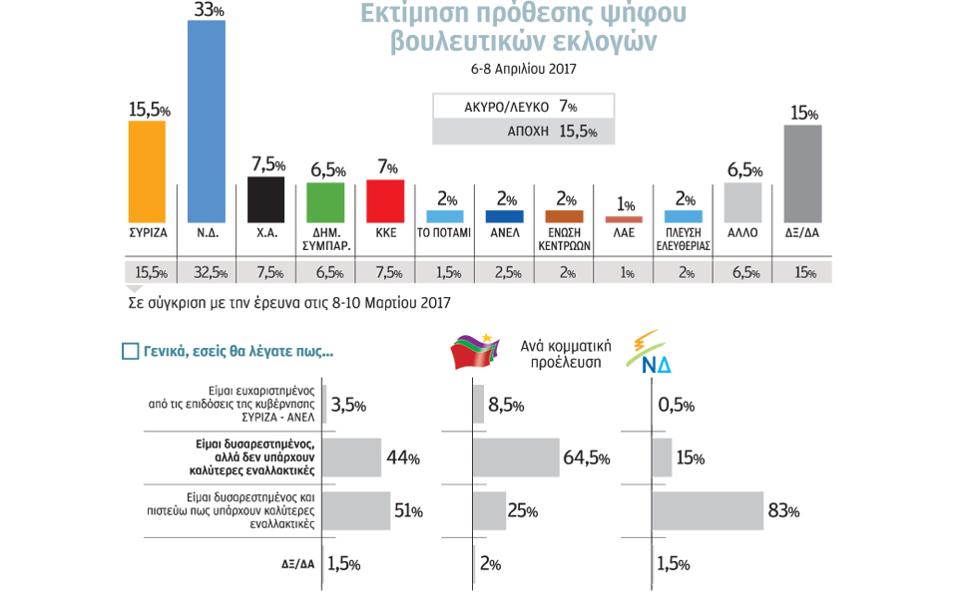
The situations in both countries began percolating at about the same time.  In January 2017, a story went public in Greece that had been rumored about in private for some time. It accused Novartis of orchestrating a bribery and corruption scheme involving Greek government officials and physicians in a more than four-billion-euro scandal intended to protect Novartis drugs from price decreases and to encourage the prescription of Novartis products during the heart of Greece’s financial crisis.  

It was said to be the largest such scandal in Greece’s history, and triggered an immediate political firestorm that still drags on, and likely will through national elections this year.  The Prime Minster accused two former Prime Ministers and other political adversaries of complicity in the scandal.  In response, the accused issued immediate denials and charged the Prime Minister and his political allies in Parliament of political shenanigans intended to buoy up the sitting Prime Minister’s badly sagging political popularity.

April 2017 Chart showing ruling party SYRIZA's (far left) relative popularity

There’s been at least one suicide attempt, anonymous witnesses offering unsubstantiated claims, charges of prosecutorial and judicial misconduct, media partisanship, and continuing efforts at sowing distrust at the nation’s institutions among the public. There are enough similarities between what confronts US and Greece to make one’s head spin.

Which is why I’m passing the buck on discussing what all this means for the respective polities to Nikos Konstandaras, managing editor of Athens Ekathimerini newspaper and contributing opinion writer to The New York Times.   He discusses Greece’s situation in an article reproduced below from Ekathimerini entitled, “Of Judges and Opportunists.” Draw your own conclusions on how it relates to US.

For the record, I’m not offering this in support of or opposition to any position, just to point out the uncomfortable similarities in what now confronts the world’s oldest and one of its youngest democracies.  Make of it what ye choose.

Nikos Konstandaras

Whether they wanted it or not, our judicial officials today find themselves at the center of political life. They share a lot of responsibility for what is happening and will have to play a leading role in fixing the situation. The government’s handling of the Novartis issue has raised serious questions regarding the separation of powers and the functioning of the state; also, one Cabinet member’s ever more intensive attacks on specific judicial officials as well as on the judiciary as a whole, demand an immediate and unequivocal answer. This must come from the judiciary as a whole. If judges and prosecutors do not defend their own honor, if they do not honor the trust of the people and the institution that they serve, who do they expect to do so?

Institutions exist to prevent problems and to solve them. We have come to understand that if the politicians, the judges and members of the news media had not shirked their responsibility of maintaining checks on each other, Greece would not have fallen into crisis. Now, instead of the crisis waking us up, we see more mismanagement, more vote-buying, more special interest groups taking care of their own issues at the expense of the majority.

The Novartis issue should have been an open-and-shut judicial investigation that would have brought those involved – whoever they are – to trial. Instead, it was used by the government in a brutal and irresponsible way, in order to undermine its opponents and possible opponents. Judicial officials – and former officials – appeared to either contribute to this situation or to condone it. In this climate, justice cannot help heal the wounds that brought us to bankruptcy and it cannot punish those guilty of corruption. Instead, it contributes to the questions regarding its independence and its integrity. The claims that judicial officials and witnesses have been subjected to political pressure, the targeting of specific judges and prosecutors by politicians and terrorists, the undermining of process, the persecution of specific targets, demand more than condemnation by the Union of Judges and Prosecutors. They demand a response from the judiciary’s top leadership. They demand action. They demand answers: What role have the ministers and top officials of the Justice Ministry played? What is the judiciary’s leadership doing to strengthen institutions? How will the judiciary respond to political players who undermine justice?

Elections always help provide answers to such questions. In the long run, though, the functioning of institutions depends on those who serve them. They have to choose between honoring the position that they hold or serving the interests of opportunists.

—Jeff

Saturday, April 11, 2015

This Time Around


I’m leaving for Greece in a few weeks. I can’t wait. Finally, I’ll be in a place where I’m not inundated with tales of what’s happening there. I’ll actually be there.  Instead of hearing what’s wrong, what’s right, what’s uplifting, what’s depressing, I’ll see it, experience it, feel it.

Sadly, I’m leaving just as the Greatest Show on Earth is getting underway…the US Presidential Election Campaign, filled with sideshow acts that would challenge Federico Fellini’s La Stratda troupe.  With Kaldis #7 done and my looking for inspiration for #8, imagine the character inspirations I’ll be missing so far away from that menagerie extraordinaire.


But alas, all is not lost.  There is an upside.  All I need do is look at a map and I realize how many of the great issues confronting our modern world can be found in Greece’s Mediterranean neighborhood.  I’d venture to say no western country is closer to what seriously challenges our planet than Greece.  And many of the players directly involved in all of that somehow find their way to Greece, onto Mykonos, and—if I have any luck at making truth sound as believable as fiction—into my books.


That’s not to say the US isn’t in the midst of horrendous messes, both domestic and international, but America’s electorate no longer holds out great expectations from those who make them promises to get elected. 


Greece, on the other hand, has new names running the government and though the honeymoon isn’t quite yet over, the people are getting restless, and events could turn this Grecian summer into something quite unexpected. 


I’ll be there hoping for the best…but likely writing a story contemplating the worst.  Or, maybe not. Perhaps I’ll write something different. A comedy filled with fairy tale concepts like love, understanding, and world peace. I’ll call it Round Trip, and feature a character always ending up in the same place no matter where he thinks he’s headed.  But no groundhogs.  I think ostriches—with their heads buried comfortably in the sand—are a far more symbolic expression of the times.


Kalo Paska to my Greek friends, and Good Luck to all.


Jeff—Saturday