

In a covered passage


Cara - Tuesday

 On the window was a respected Gault-Millau gourmet mention.
Time to go inside a place I'd passed for maybe sixteen, seventeen years. Get cheese for dinner, maybe a wedge of something to smuggle on the plane?
On the window was a respected Gault-Millau gourmet mention.
Time to go inside a place I'd passed for maybe sixteen, seventeen years. Get cheese for dinner, maybe a wedge of something to smuggle on the plane?  Pungent smells and a plethora of cheeses on their straw sat waiting.
 And a customer with a Provencal straw bag and long shopping list for this evenings meal.
 A small older woman in a white work coat with matching hair stood behind the counter serving her. The customer, very much in hostess mode for her upcoming meal, was asking for recommendations, lots of questions. In short being very French with her cheese seller who she referred to in that intimate way a good customer does. Minutes passed. More time and in my American way I just wanted to buy some cheese and get going. But this wasn't Safeway. On the sparkling clean wall was a photo of this little lady, the cheese seller, Loulou and an article about her.
 I read up while Madame customer was making her purchases which ended up filling two straw Provencal bags. Loulou was eighty-six years old, ran the cheese shop herself, and very ably from what I witnessed. She took payment with a chip card that requires the user to put in their code etc. I've seen younger cashiers at Franprix get flummoxed with this. Loulou was born in Hopital Tenon up the hill in Belleville, where Edith Piaf was born. She'd grown up here, married, raised a family and worked in the cheese shop all her life. She was the oldest commerçant in the quartier and helmed the shop staggeringly by herself. Finally it was my turn. I wanted to ask her so much and ended up with her recommendation for 'Tentation' a Brie-ish double creme melt in your mouth cheese. Yes, she said she'd lived here all her life and before I could ask her how the area had changed, how she felt about it and so much more a line of customers had formed.
I regret not using new eyes to see this gem I'd passed so many times. Of hurrying and not really looking. Next time. But I double plastic wrapped the cheese and smuggled it home. My husband and son took one taste and said 'this is Paris.'
I read up while Madame customer was making her purchases which ended up filling two straw Provencal bags. Loulou was eighty-six years old, ran the cheese shop herself, and very ably from what I witnessed. She took payment with a chip card that requires the user to put in their code etc. I've seen younger cashiers at Franprix get flummoxed with this. Loulou was born in Hopital Tenon up the hill in Belleville, where Edith Piaf was born. She'd grown up here, married, raised a family and worked in the cheese shop all her life. She was the oldest commerçant in the quartier and helmed the shop staggeringly by herself. Finally it was my turn. I wanted to ask her so much and ended up with her recommendation for 'Tentation' a Brie-ish double creme melt in your mouth cheese. Yes, she said she'd lived here all her life and before I could ask her how the area had changed, how she felt about it and so much more a line of customers had formed.
I regret not using new eyes to see this gem I'd passed so many times. Of hurrying and not really looking. Next time. But I double plastic wrapped the cheese and smuggled it home. My husband and son took one taste and said 'this is Paris.'
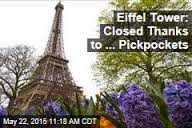
 "There have always been pickpockets at the Eiffel Tower, but we are now facing an organized network", said a union representative. The strikers want additional police to be deployed.
 The staff protest and strike came a day after Paris authorities launched a drive to improve tourist protection and said theft around Paris' main attractions was on the decline compared to last year.


 FOOD PREPARATION





