Showing posts with label WW1. Show all posts

Sunday, May 11, 2025

Proving Santayana

 Guest Blogger Michael J. Cooper

From Annamaria: Today I am happy to welcome back my fellow historical novelist, who writes riveting mystery-thrillers set in the Middle East.  His current series focuses on World War 1 at a time that provides a distant mirror for the current state of the world, important and - at the same time - entertaining reading.



Take it away, Michael: 

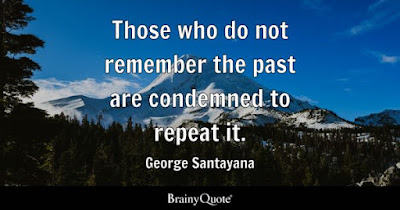
The great Spanish-American philosopher George Santayana famously said “those who don’t remember history are doomed to repeat it.” To avoid such repetitions, we historical novelists seek to bring readers back to the past so that they can learn what not to do.

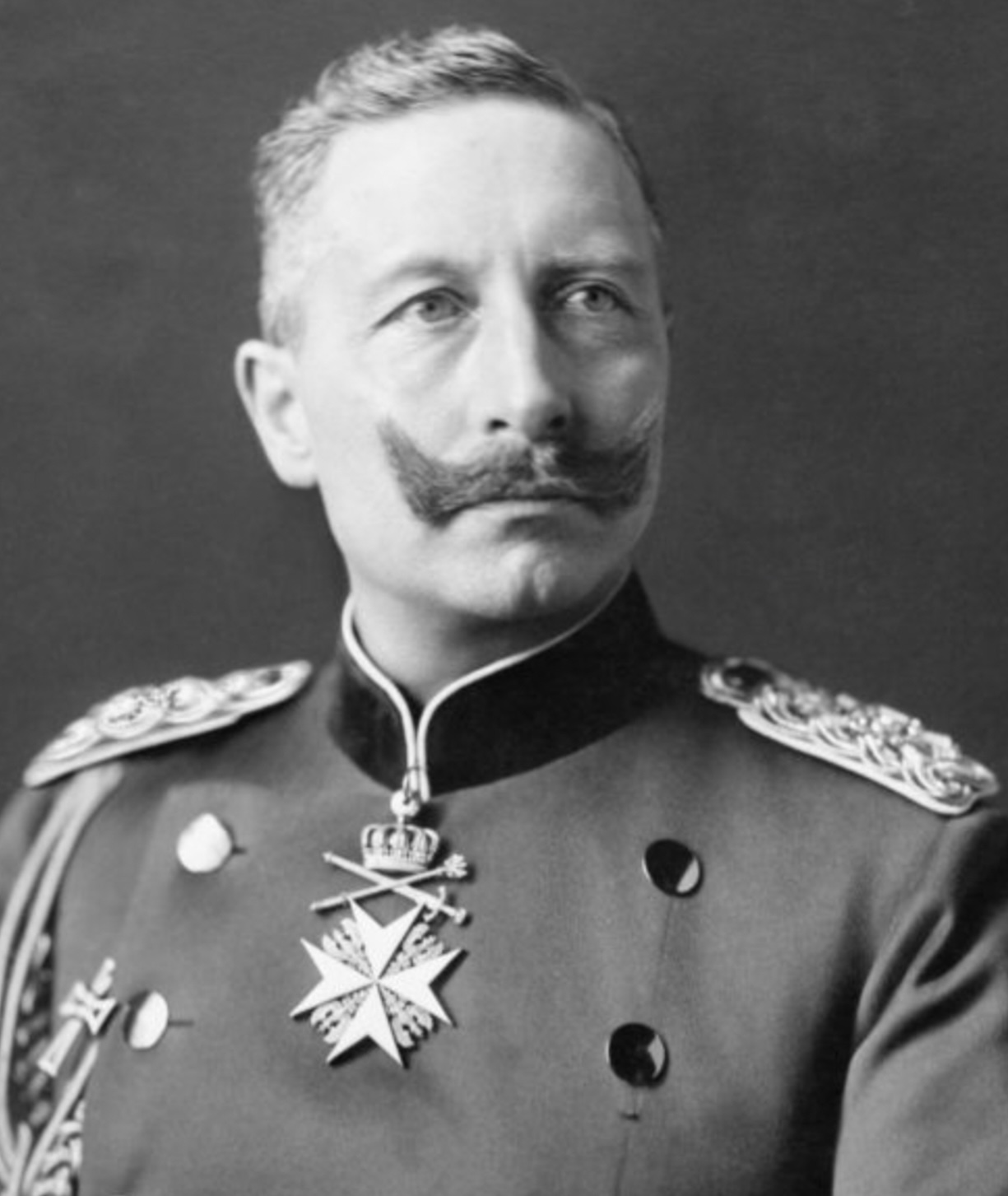
My two latest novels, set at the beginning of the First World War: Wages of Empire and Crossroads of Empire are a case in point. They include prominent historical figures Kaiser Wilhelm II, Gertrude Bell, TE Lawrence, Chaim Weizmann, and Faisal bin Hussein. And they particularly focus on Ottoman Palestine, since it was from Jerusalem where the kaiser dreamed to rule as Holy Roman Emperor and self-crowned King of Jerusalem, with dominion over Arabian oil reserves, control of the Suez Canal, and with an eye toward promoting German-Nordic racial supremacy throughout the world.

I gave Kaiser Wilhelm II of Germany, therefore, a prominent role in the books, because many historians believe that his decades’ long scheming and manipulating led directly to the Great War.  He methodically built up a naval force to challenge that of Great Britain, and he established layers of financial, military, commercial, and transportational ties with the Ottoman Empire. By-so-doing, Wilhelm made imperial Germany indispensable to a subservient Ottoman Empire at the beginning of the 20th century, reducing it to a vassal state. 

Apart from these maneuverings, the Kaiser makes for a great character study because of how outrageously strange he was, offering a veritable buffet of the bizarre to historians as well as to writers of historical fiction. To quote a prominent German historian, Thomas Nipperdey:  “Wilhelm was superficial, hasty, restless, unable to relax, without any deeper level of seriousness, without any sense of sobriety. He was arrogant, uncontrollable, without any concern for balance and boundaries, or even for reality and real problems. At the same time, he had a hyperactive sense of grievance, and was desperate for applause and success. He was theatrical, with an exaggerated bravado and desire to show off…”

As we read these descriptions of the German Kaiser, just imagine what it would be like to live in the grip of a head of state untethered by any restraint, who was able to rule by royal decree or by executive privilege.  A monarch motivated only by the need to feed his own monumental ego…

Just imagine.


In Wilhelm’s day, royalty commissioned paintings of themselves to project how they wished to be seen—by their subjects as well as by other nations. Nowadays, art, CGI, and AI serve the same functions. Herewith, some examples:


And a couple more:


 He has even imagined himself as the pope: 

Pope Pompous I
  

But we have at least been saved from that.  We have an American Pope who, given what he has said since his election, will focus on containing the worst impulses of a deranged and dangerous psychopath.


Viva Pope Leo XIV


Thursday, February 21, 2019

A very special, if confused, day

Stanley - Thursday

Today is Armed Forces Day in South Africa - chosen because it is the date of one of the country's worst military disasters - the sinking of the SS Mendi in 1917. 

What is confusing is how the tragedy has been regarded over the years. It's enough to give one a headache. And heartache. And it almost totally due to the oral history tradition of the blacks in South Africa that we remember it at all.

The story

Fighting a war is a very complex enterprise requiring not only soldiers, but also non-combatant personnel to support them. In 1916, the British government asked South Africa to send 10,000 men from the South African Native Labour Contingent to Europe to help the war effort. South Africa complied, and large numbers of black South Africans (about 21,000) headed for Europe, expressly barred from doing any fighting because of fears that they may return and confront the white government. Most who went were volunteers who hoped that they would be rewarded for their service on their return.

The South African Native Labour Contingent's last parade before heading to Europe

Just before embarking
On the evening of February 20, 1917, the SS Mendi set sail from Plymouth headed for La Havre, France, with 805 black privates, 5 white officers, 17 non-commissioned officers, and 33 crew. On the morning of the next day, another ship, the SS Darro, sailing at high speed in unfavourable conditions, rammed into the SS Mendi, causing it to sink in less than half an hour.

The SS Mendi
Due to the rapid listing of the SS Mendi, some lifeboats were unusable, others were not launched because the men were unable to untie the knots on the ropes holding them. Apparently, the men had not been told that the ropes were designed to be cut, not untied. And those that were launched soon filled up, a few overturning due to overloading. 

The SS Darro did nothing to help rescue the men of the SS Mendi. However, lifeboats from the SS Mendi's escort, the destroyer HMS Brisk, did all it could to rescue survivors. In the end, 649 men perished. In an enquiry into the tragedy, the captain of the SS Darro, a Captain Stump, was found negligent and had his license suspended for a year.

The wreck 
In a rare, possibly unique, gesture, all members of the white South African House of Assembly stood in respect for the dead.

The legend

The courage shown by those on the SS Mendi has become a legend in South Africa. Certainly, there are verified accounts of amazing discipline and bravery, with men helping each other without respect to colour. As you would expect, there are also stories that have been elaborated and exaggerated, the best known of which is of a black paster, Isaac Dyobha, who called out to the men too afraid to jump overboard:
Be quiet and calm, my countrymen, for what is taking place now is exactly what you came to do. You are going to die, but that is what you came to do. Brothers, we are drilling the drill of death. I, a Xhosa, say you are all my brothers. Zulus, Swazis, Pondos, Basutos, we die like brothers. We are the sons of Africa. Raise your war cries, brothers, for though they made us leave our assegais at our kraals, our voices are left with our bodies.
Assegai - spear
Kraal - village

It is also said that the men danced on the deck in their bare feet, stamping in unison. However, this is highly unlikely, given the listing of the ship.

The aftermath

Many of the dead are buried in the countries where their bodies were washed ashore. There are memorials in a number of places in Europe and South Africa, but official recognition was only given in 2017, a hundred years after the tragedy, with the installation of a plaque at the South African National Memorial at Delville Wood.

The plaque at Delville Wood
The survivors of the disaster were treated very badly on their return to South Africa. Their contribution was barely acknowledged and promises that had been made before heading to Europe were not kept. No members of the South African Native Labour Contingent received a ribbon or medal for their service, nor did they receive promised pensions or grants of land or cattle or a reprieve from the hated hut tax. 

However, some did have something to take home with them - the thanks of the king. As one veteran later wrote 
We met King George and Queen Mary. The King addressed us personally and thanked us for the services we rendered. He told us that we were going home within a few days, and when we reached home we must tell our Chiefs and fathers how he had thanked us.

King George thanking members of the South African Native Labour Contingent
Another veteran, A K Xabanisa, later wrote:
I am just like a stone which after killing a bird, nobody bothers about, nobody cares to see where it falls.
The UK at last gives something back - the bell from the SS Mendi
During the years of white rule in South Africa, particularly under the apartheid government, the story of the SS Mendi was downplayed. I was well into my adult years when I first heard about it.

On the other hand, for the most part, the incident has been a rallying cry for blacks - something to be proud of. But even among blacks, it has waxed and waned in importance. I read just last week, that a government agency refused to provide some financial support for a memorial service scheduled to take place today because the men on the SS Mendi were supporting a colonial cause.

It makes my head spin.

South Africa's highest award for courage is now called the Order of the Mendi Decoration for Courage. And the South African navy honours those who died by having a Warrior class fast-attack craft named the SAS Isaac Dyobha, and a Valour class frigate named the SAS Mendi.

As I am writing this, I can hear South African Airforce jets flying low over Table Bay and heavy guns firing from Bloubergstrand across from Robben Island in remembrance of all of the country's war dead, no matter their colour.

May they rest in peace.