Showing posts with label The Ways of Evil Men. Show all posts

Monday, January 27, 2014

Fragments of a People: Background to The Ways of Evil Men


I will NEVER be able to do justice to the research Leighton Gage must have done to write his brilliant last novel.  Neither will I be able to present the true inspiration for it, nor in any way present it with the brilliance of Leighton’s writing style.  So, you may well ask, where do I get the nerve to try?  My answer is that I have no idea.  But I was curious, when I began reading The Ways of Evil Men, as to whether the threatened people in the story were based on a real tribe and where exactly in Brazil they live.  The front matter of the book gave me a clue by mentioning the Ava-Canoeiro Indians.  I looked them up.

For anyone who wants a peep at the realities behind Leighton’s riveting story, here is a brief history of a tribe that was part of his inspiration.


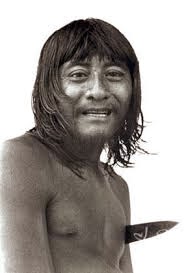
The Ava-Canoeiro Indians are the descendants of the Carijo, who were once a feared force in their area of Brazil, along the Tocantins river and the Island of Serra Negra, about six hours’ drive from Brazilia.  In 1962, a massacre in their village killed all but four young children.   Three girls and a boy somehow escaped the murderers and managed to survive by hiding in remote caves for over twenty years.    They lived in mortal fear of discovery.  They learned to silently kill rats and agouti for food.  They were so terrified that they aborted their babies so that their cries would not betray their existence.  One little girl, who never left the cave for her first six years, lived to grow up.


In 1983, when a nearby farmer finally found and befriended them, there was one woman still of child-bearing age.  After they began living in contact with the larger society, she gave birth to twins—a boy and a girl.  At that point, the only way to save the tribe from extinction was to try to find other Ava-Canoeiro hidden in the deep jungle for those children to marry.  An Indian tracker began the search.


Then in 1993, the situation became more urgent.  A hydro-electro dam built in the area meant that a large part of the territory where their tribes-people might be hiding was about to be wiped out by rising water.

As of the year 2000, search parties were still combing possible areas.  They had found evidence of human habitation, but the people themselves had remained invisible.


After that report, there is only scant information available in any of the English-language sources I found.  My understanding of written Portuguese is rudimentary, at best, and based only on the fact that I can read French and Italian and studied a lot of Latin in my antediluvian past.

Perhaps one of Leighton’s friends or fans who has access to better information will fill us in here.  I hope.  It would be wonderful to learn that some of the last human beings to escape captivity are still out there and surviving.

There is a 1999 film—hard to find, but probably available in university libraries—that documents the search for Ava-Canoeiro.  I took the title of this blog from the title of the film.


Annamaria - Monday 


Saturday, January 25, 2014

A Review of "The Ways of Evil Men," by Leighton Gage.


Our buddy Leighton was a gentleman-leader, relentless in the pursuit of aiding his friends, a gifted author, articulate spokesman for his cherished Brazil, and loved by all lucky enough to know him. Last July, when he passed on, I wrote that my fondest memory of Leighton was the time we shared together at a joint book signing he’d arranged at a Barnes & Noble in Reston, Virginia. We had such fun we vowed to take it on the road and call it “Silver Hairs on Tour.” As I said in July, “I’m afraid that will have to wait.”

Well, that day has arrived!  Leighton and I are back on the boards together again—if only in my heart.  The New York Journal of Books did me the distinct honor of allowing me to review Leighton’s final work, “The Ways of Evil Men,” and with the NYJB’s kind permission here is that review, published January 18, 2014:

“It isn’t very pretty what a town without pity can do.” That half-century-old song lyric by Gene Pitney can’t help but run though your mind as you read Leighton Gage’s seventh, Brazil-based Chief Inspector Mario Silva mystery The Ways of Evil Men.

If you’ve read other books in his series you already know how Gage’s fluid, precise, immediate prose captures within a fast-paced mystery the issues of class and social distinction, good and evil, and destructive obsession haunting his vast Brazil, a giant larger than the continental United States filled with diverse riches and complex contradictions.

The sense of place is set in the novel’s opening paragraph: “Sunrise is a brief affair in the rainforests of Pará. No more than a hundred heartbeats divide night from day and it is within those hundred heartbeats that a hunter must seize his chance. Before the count begins, he is unable to detect his prey. By the time it ends, his prey will surely have detected him.”

And the sense of what is to come follows in the fifth paragraph: “The hunt had taken them far. The sun was already approaching its zenith when they waded through the cold water of the stream, stepped onto the well-worn path that led from the fishing-place to the heart of their village, and heard the sound that chilled their hearts: the squabbling of King Vultures, those great and ugly birds, half the size of a man, that feed exclusively on carrion.”

As in all Gage books, the raw emotions and beauty of Brazil play as much a part as his characters, but in The Ways of Evil Men he’s created a high-energy masterpiece exploring what threatens his country at its core, and through the ensemble efforts of Silva’s team and other dedicated Brazilians, suggests salvation may come only through dedicated, individual action. It is a book that keeps you thinking beyond the time you’ve closed it.

On an Indian reservation amid Brazil’s remote, northern Amazon rainforest, 39 of 41 remaining members of a protected Indian tribe are found dead, leaving the future of the tribe and its reservation in the hands of government tribal relations agent Jade Calmon. 

When Jade’s efforts to discover the cause of the Indians’ death elicits no cooperation from local townspeople and officials, she turns to her “old-girl” network, getting her journalist-best friend from one of Brazil’s major newspapers to come write a story, and the niece of Silva’s boss to send him and his team to the scene to get to the truth. 

But intense racism and self-interest run deep and broad in this community, and there’s much to profit from the genocidal elimination of the Indians. Even the death of one of the community’s own is seen as a benefit. Silva and his team face unexpected twists, multiple suspects, a stonewalling community, and journalist Maura Mandel with a mind of her own.

There are few storytellers as gifted as Leighton Gage, and virtually none with his ability to convey messages of such societal importance in fast-paced, can’t-put-down mysteries that are not in any way preaching.

Leighton Gage passed away on July 26, 2013. I was blessed to have Leighton as my friend and as a colleague on the blog he founded, Murder Is Everywhere. He was a much loved, revered, and respected mentor and friend to many. In agreeing to do this review of Leighton’s final book I gave my word to be thoroughly objective, and in keeping with my promise I’ll share the one thing about it I could not stand: That there shall never be another.


Here's a link to Leighton's page on Amazon.

Jeff—Saturday

Tuesday, January 21, 2014

Juliet Grames: On Leighton Gage, as his Editor.


Juliet Grames is Associate Publisher of Soho Press, as well as the Editor of Soho Crime of which she acquires and edits for the Soho Crime Imprint. Juliet's the editor of several MIErs, myself, Tim Hallinan, Lisa Brackman and our dear Leighton Gage. After Leighton's passing she had this to say on Soho's Blog (not to steal her thunder on the gracious post she's doing below on today, the pub date of Leighton's The Ways of Evil Men):

"Soho Press, his publisher, and his Soho Crime confederates... are bereft, both at the loss of the gentleman himself and at the reality that his last book will, indeed, be his last book. Each of Leighton’s six published novels—Blood of the Wicked, Buried Strangers, Dying Gasp, Every Bitter Thing, A Vine in the Blood, Perfect Hatred—have each been critical gems, and I am heartbroken to think that Leighton will not witness the critical reception of his forthcoming The Ways of Evil Men, which is due to be published in January 2014—I am certain it will be the warmest yet."

Welcome Juliet and thank you for joining us today on the publication of Leighton's The Ways of Evil Men - I like to think he's looking down and winking. Back at you, L xo—Cara


The week I started at Soho in 2010, the office had just received Advance Reader Copies of Every Bitter Thing, the fourth book in the Chief Inspector Mario Silva series. A then-employee handed me a copy and said, “This guy is one of the best writers I’ve ever read. Get familiar.”

So that was the book I read my first week on the job—Every Bitter Thing. I don’t want to write anything that would spoil the exquisite story, but I was deeply impressed by it—“impressed” in the original meaning of the word; it left a mark on my reading habits. Yes, the story was energetic and satisfying entertainment. But I closed the book with goose bumps. In 282 pages, Leighton Gage had tricked me into asking myself what justice actually was. I’d thought I was just getting myself into a nicely written find-the-serial-killer procedural. Instead, I was shaken to my core. I wish I could give you more specifics, but I absolutely refuse to spoil this book for anyone who hasn’t read it. (If you haven’t read Every Bitter Thing, though, seriously, go read it now; it’s still one of my favorite crime novels, even though now that I’m more widely read I realize several of Leighton’s make that cut.)

The thing is, as it turned out, each of Leighton’s books had that quality—that surprise nugget of je ne sais quoi you had never encountered before. The thing that made you stop at the end of the book and think, wow, my brain has never been down that path before. Or, wow, these weren’t feelings I had been planning on having today. I think it’s the feeling we’re all looking for when we’re reading—the feeling of having the rug yanked out from under our expectations and of finding something totally new. But I know it’s not a feeling I have very often, although I read voraciously seeking it.

And each of Leighton’s books offered a different je ne sais quoi.

I had the privilege of working with Leighton editorially on three novels: A Vine in the Blood, Perfect Hatred, and his last novel, which publishes today, The Ways of Evil Men.

About a year ago right now, Leighton and I were exchanging ideas for how we would promote The Ways of Evil Men. His earlier books had received plenty of critical acclaim, but I thought Ways was going to be a real crowd pleaser, as well. I thought the new character of Jade Calmon was terrifically likable, the perfect access-point for introducing readers to the series. Furthermore, Leighton’s presentation the all-too-real issue at the center of the book—the covert genocides of micro-tribes—was eye-opening and would be sure to stir up conversation.

Leighton and I made plans for a dynamic pre-publication tour. It’s not something undertaken very often, but we all agreed this book was the right one to go all-out for. We made plans for Leighton to come to Chicago in the summer for the American Library Association annual convention, and brainstormed the other stops we would make along the way. It was all shaping up to be very exciting.
Weeks before the conference, Leighton wrote to tell me it didn’t look like he was going to be able to make it to Chicago. I knew how much he had been looking forward to ALA in Chicago. I have to admit this was another one of those times Leighton gave me goose bumps.

ALA was still a grand success for The Ways of Evil Men, although we booth-staffers were trying to hide how subdued we felt that Leighton was not there with us. Leighton’s friend Timothy Hallinan stood at the Soho Booth for seven hours and introduced more than 800 librarians to Mario Silva. But I can’t tell you how much I wish we could go back to those collection managers next year and say, “Remember that great writer you discovered in Chicago last year? Here’s his next book, which you’ll like even better, because he’s only getting better with every book.”

It isn’t really fair to be greedy. Leighton left us with seven darkly sparkling gems of je ne sais quoi, when many authors are happy to produce just one in their whole career. And I was lucky enough to work on three of them with him. I can’t help but be greedy, though, and wish that there might have been eight, nine, ten . . .

I hope I told Leighton often enough how special I thought his work was. I mean, there is no enough, is there? I wish I had told him more often.

I hope he knew that we at Soho felt honored to have him on our list.

I hope he knew about the goose bumps.

And I wish he could see how many other people—besides his editor, who might be considered biased—are saying those same kinds of things now.


Juliet Grames for Cara—Tuesday

Monday, January 20, 2014

Leighton’s Legacy Novel: The Ways of Evil Men


There are cultures where the people believe that when a person dies, his soul becomes a star in the sky.  I was tempted to say “primitive cultures,” but I thought better of it.  “Primitive” in such a context sounds almost pejorative.  But of all the things I have heard or been taught about what happens to a soul after the person dies, imagining it turning into a star is the loveliest, the most comforting, the most inspiring.

This past year we lost our beloved Leighton, but he left behind a book that arrives tomorrow.  And it comes with a star.

I am sure the book will earn many stars from readers, but the one I have in mind is the one The Ways of Evil Men earned from Publisher’s Weekly.  Their starred review, a prize not given lightly, said: "The late Gage (1942–2013) weaves an engaging plot and psychologically complex characters together with a sharp-edged social commentary on the Brazilian class system; his voice will be greatly missed in the crime fiction community."


The publisher’s description of the story is pure Leighton:
“Thirty-nine natives have recently dropped dead of mysterious causes. Given the tense relationship between the Awana tribe and the white townsfolk nearby, Jade Calmon, Pará's sole government-sponsored advocate for the native population, immediately suspects foul play and takes the two remaining Awana—a father and his eight-year-old son—into her custody. But when the father is discovered holding a bloody machete next to the body of a village big-shot, just before Silva's arrival, the plot thickens. Why would a peaceful man who doesn't believe in alcohol turn into a drunken killer.”

This coming June and July, the world’s eyes will be on Brazil when the World Cup competition takes place there.  Between now and then, what I hope for is that Leighton’s legacy book will be widely read and that the star of his talent will shine even brightly than ever before.


Annamaria - Monday
