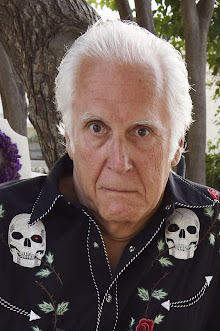
Jeff––Saturday
This past week, communities around the world observed Yom HaShoah--Holocaust Remembrance Day--to recall the victims of the Holocaust. I thought it appropriate share the thoughts of a distinguished writer of non-fiction on that solemn day.
Jonathan Siger is rabbi of Congregation Jewish Community North in Spring, Texas. In addition to his pulpit work, Rabbi Siger serves the Hillel Foundation at Texas A&M University as a Senior Jewish Educator. In addition, he is a River Chaplain Associate of the Seamen’s Church Institute and a lead volunteer Chaplain for the Harris County Sheriff’s Office. He’s also my son, and what he wrote speaks to far more than the Jewish Experience—especially these days.
I don’t get the question so much anymore, but for years, it was asked all the time. “Why did you become a rabbi?” Like many of my colleagues, I developed a stock ‘elevator speech’ with which to answer. And so, I often respond with the following: It was a way to combine what I was naturally best at, with what I was most passionate about. And this is true. It’s still true. But it is not the whole truth. I wanted to be liked, and I wanted to feel important.
I also wanted to defy the Nazis.
I first learned about the Shoah when I was seven years old. My parents had split by then, and we were visiting my mother’s parents in Massachusetts. They had a rock on the mantle over their fireplace with “Masada” written on it. They had a map of Israel on the wall. They had an awesome basement with a playroom and a workshop for my grandfather.
There were great things in that workshop. Tools, and an old guitar that sounded horrible and was missing strings but was still a real guitar, and a cool necklace with a big medal on it. I emerged from the basement, striding into the sitting room off the kitchen, strutting around with my new-found treasure. It turns out that the necklace was a battle trophy; something one of my uncles had brought back from the war. An "Iron Cross", as it happens, taken from a dead Nazi.
My grandmother was mortified at the sight of me wearing it. I wasn’t in trouble, but she snatched it from me, and I never saw it again. And that is how I learned that my grandmother had family that died and how that symbol reminded her of how the letters had just stopped coming in the late fall of 1941. Due to the diligent and invaluable work of a cousin, we learned the horrifying details a few years ago: dozens of members of the family died together at the Rumbala forest massacre outside Riga, Latvia.
 |
| The mass graves in which dozens of my family members lie buried along with 24,000 other Latvian Jews. |
 |
|
The site as it appears today |
My grandfather's family from Lapy, near Bialiystok, were apparently all executed in the street when their town was liquidated. Among the dead our cousin Ciril, who, based on this picture alone connected with some kind of theatrical production, was definitely both my kin and kind.
 |
| My cousin Ciril |
 |
| My grandmother's grandmother from her passport which was seized by the Reich after their invasion of Latvia |
 |
| S/Sgt. Benny Maretsky, POW, Stalag 13 |
I decided I would honor those who suffered so horribly or even died for being what I was. The Nazis and their barbaric comrades and collaborators would not prevail. My Jewish education would be an act of cultural self-defense. I would live a defiantly Jewish life. I would do my part to rebuild.
––Jeff