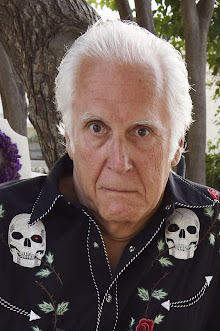
Michael - Thursday
The title is stolen from Unity Dow, an extraordinary woman who has been a lawyer, novelist,
sociological researcher, high court judge, and minister of education in
Botswana. The book is about the AIDS epidemic that devastated the country. At
one time, Botswana had the highest rate of infection of any country in the
world, and every Saturday had to be reserved.
Why talk about funerals now? you reasonably ask. Haven't we got enough depressing stuff? Well, funerals have become a big issue in this part of the world at the moment —
not because of the deaths from Covid, but because of their role in spreading
it. In order to understand why, we need to understand the role of the
funeral in many African cultures. It’s the closing of a loop, an event at least as important as any in the deceased’s life, and the point at which that life is
celebrated and recognized. And anyone who knew, or knew of, the deceased is expected to attend.
 |
| Tswana funeral |
In the Setswana culture, for example, after the immediate
preparation of the body, elderly persons are dispatched to inform all the
relatives. The more personal this is the better. People converge on the home of
the dead person from far and wide. Many keep vigil outside the home all night.
The news spreads. More people join. Prayers and condolence sermons take place
during the day. Relatives and older people known to the family must attend
these, and absence is frowned upon. There’s a master of ceremonies for all
this.
Traditionally, the night before the funeral, the corpse arrives at the
home. Young men are sent to dig the grave, and must then stay away from the
body; they have their own fireplace outside the compound, and are known as the “human
hyenas”. The next morning, amidst prayers, many mourners stand up and praise the
deceased, listing the virtues exhibited. By now it’s not only friends and relatives
who are present but the whole village and as many people from beyond as can
reach the location. Not only is anyone welcome to attend, but everyone who knew,
or knew of, the deceased is expected to attend. And after the burial, the
tension and mourning is relieved by a huge feast—the “after tears.” In our book,
“
A Death in the Family”, Kubu is
almost bankrupted by all this!
So now we come to the time of Covid and social distancing. During
our initial “hard” lockdown, only family were allowed to travel to, or attend, funerals.
(No other ceremonies such as weddings were allowed at all.) Many people regarded this as the
most invasive regulation, worse than curfews, and travel and alcohol bans. As things relaxed, up to fifty people were allowed to attend, and travel
from anywhere in the country, but parties remained forbidden. However, last weekend the
state president berated people for ignoring all of this. It’s not hard to
predict the outcomes of these large gatherings when the close family of the
deceased might well be infected themselves!
The virus opportunistically makes use of our social customs to
its own advantage—whether they be large funerals or spring breaks.
 |
| President Ramaphosa doing the imbizo |
Last night the president held a “virtual imbizo” – a session
where people could use social media or the broadcast media to ask him and his team
questions. It was impressive, and if he stuck to the party line, at least he
shared his thoughts and made people feel that their input was important. They could be as critical as they liked. (One complained about the limit on the size of funerals!) Can you imagine Donald Trump doing anything like that? He'd have to listen to the question for a start.
We now have 4,500 Covid deaths and over 300,000 cases in total in South Africa—a pretty
low death rate by world standards. Unfortunately, the number of excess deaths over what would be normal for the last four months is more like 11,000, pretty much the
expected rate. There will be more funerals ahead.
This is all so depressing that I must finish on a more
cheerful note. I haven’t read the new White House satire “Make Russia Great
Again” by Christopher Buckley, but if the book is as good as the review by
Ron Charles in the Washington Post, then it should be a scream. Charles’s last line: “Laughter may not be
the best medicine for covid-19, but it’s a heck of a lot better than bleach.”