|
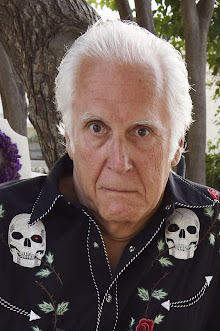
| Andrew Mlangeni |
Andrew Mlangeni, the last survivor of the infamous
Rivonia Treason Trial, was laid to rest this week.
 |
| Aerial view of Liliesleaf Farm |
The treason trial followed a swoop by the South African security
police on Liliesleaf Farm in Rivonia near Johannesburg. All the men arrested
there were wanted on a variety of charges including treason, sabotage, terrorism, and a
plethora of other offences including belonging the banned SA Communist Party
and the banned African National Congress. Those arrested were White, Black, and of
Indian descent. The defendants were a precursor to the Rainbow Nation—a common
purpose where race was not the issue.
Nelson Mandela was the most famous of those arrested, and he
was already under sentence for leaving the country illegally and for inciting
workers to strike (yes, that was illegal also). He was hiding at the property
in full view, pretending to be a gardener. Whites never looked twice at Blacks
dressed in shabby work clothes on White properties.
 |
| Supporters outside the trial |
The trial itself in 1964 was designed as a showpiece, the
Apartheid government demonstrating its invincibility. Instead, it became an
opportunity for the leaders of the ANC to speak out to the world. In the end,
all but one of the defendants was found guilty. The charges carried the death penalty and most people thought
that the accused would receive it, joining the throng of prisoners executed for
many types of offense. (South Africa had the highest number of executions in the
world at that time. Chris Marnewick, a South African lawyer now living in New
Zealand, wrote a memorable, if gruelling, novel on the destructive effect of
the death penalty on everyone connected with it called Shepherds and Butchers, which was made
into a critically-acclaimed film.)
When the time came to pass sentence, each
prisoner made a statement. This was when Nelson Mandela made his famous speech
that included the words:
“During my lifetime I have dedicated my life to this
struggle of the African people. I have fought against white domination, and I have
fought against black domination. I have cherished the ideal of a democratic and
free society in which all persons will live together in harmony and with equal
opportunities. It is an ideal for which I hope to live for and to see realised.
But, my Lord, if it needs be, it is an ideal for which I am prepared to die.”
 |
| Sentence |
Mlangeni, never one to seek the limelight, made a short
statement asking the judge to “remember what we, African and nonwhite people,
have had to suffer. That is all I have to say, except to add what I did was not
for myself but for my people.” All the accused were sentenced to life imprisonment. The
non-White prisoners were sent to Robben Island, South Africa’s answer to
Alcatraz. But they were grateful. “Life is beautiful,” one of the men told his
mother after the sentencing.
Mlangeni was one of the twelve children of a farm labourer who
died young and left his family to fend for themselves. Andrew worked as a golf caddy
and became a devotee of the game. He was recruited to the ANC’s armed wing, uMkhonto
WeSizwe, and went for training in China where he even met Chairman Mao. One can
imagine the impact that would’ve had on him. Then he returned to South Africa to try to pressure the government through acts of sabotage.
On Robben Island, he was the first of the prisoners to take advantage of being
allowed to study, and obtained a BA from UNISA, South Africa’s correspondence
university. He was studying law at the time of his release, 26 years after the trial.
Mlangeni liked to describe himself as a "backroom boy". He
wasn’t interested in ministerial positions. He served a term for the ANC in the
first democratic parliament, but then stepped down and was influential behind
the scenes. It gave him time to be with his family, time that had been stolen
from him for twenty-six years.
 |
| Socially distanced funeral |
Remaining true to the principals that had
sent him to prison in the first place. He attacked Jacob Zuma vehemently for corruption
when most others were turning a blind eye at best and helping themselves to the
spoils at worst. Zuma was a friend and colleague from the struggle days so this
was a painful task. He might have been a backroom boy, but when the time came to
speak out, he did so without hesitation and whatever the consequences. He was ostracised by the party and even by some of his friends,
but it was remembered at his state funeral this week by several speakers. “Social
distance, corruption, nepotism, arrogance, elitism, factionalism, manipulating
organisational principles and abusing state power… are deeply entrenched,” former
president Thabo Mbeki said of the ANC. Another minister said, “You saw it, tata (father)… instead
of fighting for the development of our people, we are fighting for positions.”

Andrew Mlangeni died this month after a sudden illness at 95 years of age. Hamba Kahle.