Showing posts with label R.M. Cartmel. Show all posts

Sunday, February 11, 2018

Things I Wish I’d Learned Sooner

Zoë Sharp

As I write this I’m in France, in Barcelonnette in the French Alps, not far from Nice, doing research for parts of two books I hope to be working on later this year. I’m also finishing writing another while I’m here, which is the kind of multi-tasking I like best.


 We drove down from the UK via the Dover to Calais ferry and then the autoroutes through France, on notably smooth roads that were almost devoid of other traffic, stopping in Beaune in the Burgundy region for lunch, and then an overnight in Épernay in the heart of Champagne country. Do you think there’s a pattern forming here?

leaving Dover ...
... and arriving in - ah, you work it out.
I have visited Beaune before, for the launch of the French edition of one of fellow crime author R.M. Cartmel’s wine and crime trilogy, set in and around nearby Nuits-Saint-Georges. This time involved less wine and more driving.

the beautiful town of Beaune
The mountain roads are twisting and tortuous, but the number of Napoleonic fortifications in this area is quite breath-taking, as is the wildlife. Already I’ve seen deer and a wild boar, and the last visit included ibex and marmots. I’m still hoping for chamois.
 
the elusive chamois
The scenery in the nearby mountains is stunning, as is the skiing, although it has brought it home to me just how much worse my fitness levels are since the last time I attempted sliding down a steep snow and ice-covered mountain with two short planks strapped to my feet. My legs give out long before the rest of me is ready to quit, sadly.

It all makes me wish I’d learned to ski as a child. The sight of small-fry whizzing down the slopes at warp speed, leaning back, no fear, is quite remarkable. I learned as an adult, and although it’s a little like riding a bicycle in that the basic skills never quite leave you, I’m not exactly a polished and stylish skier. I can make my way down the runs of medium difficulty, but each successful descent always comes with a certain feeling of relief that I’ve made it in one piece.


That got me thinking about other things I might have wished to learn earlier in life, particularly relating to music. I learned to play the guitar, dabbling in classical, but although I can translate music, I can’t read it fluently. Is it too late to acquire that skill, I wonder?

And although I haven’t picked up a guitar in years, I wonder if it’s too late to start learning to play the piano?


Languages are another regret. The school I attended from the age of five did not teach children another tongue until at least the age of twelve, by which time I can’t help believing that your facility to learn a language is already waning. It would have been so wonderful to grow up bilingual in French, Spanish, Italian, or German. At present, I can mutter a few phrases in these languages, but as soon as someone responds at any speed, I’m slightly lost.


I learned to scuba dive before I could swim, which had the effect of making me a bit of a poor swimmer when I don’t have a wetsuit to aid buoyancy, and a pair of fins for added propulsion. It’s only recently, too, that I learned to dive as in to dive into the water off the side of a boat.


I’ve never been a mover and shaker on the dance floor, even as a teenager, but more recently I’ve really got the urge to learn to tango. Watching videos like the sublime trailer for Annamaria Alfieri’s BLOOD TANGO only enhances the yen. (And it’s nothing to do with ‘Strictly Come Dancing’, I hasten to add. I’ve never watched it.)


I’ve also never had much of a singing voice. I love to sing but other people would probably rather I did not. I don’t know if someone with little or no aptitude can even be taught to carry a tune without the aid of a bucket, but perhaps now is the time to try?


So, what would you have learned at an earlier age, if you knew then what you know now? What skills do you wish you’d acquired while your capacity for absorbing knowledge had that little bit more elasticity about it?


This week’s Words of the Week are flotsam and jetsam. Although often lumped together, they are very different in maritime law. Jetsam is stuff thrown or jettisoned from a ship in trouble in order to lighten the load. If you find it, it's yours. Flotsam, on the other hand, is cargo or wreckage that has floated from a ship as it sank, and is legally the property of the vessel's owner.

Events

Coming up, I'll be speaking at the Kirk Ireton Women's Institute next week, February 14th at 7:30pm.

February 15th, I'm appearing at Adlington Library, Railway Road, Adlington, at 7pm.

And March 8th-10th I'll be teaching all about writing action and fight scenes at this year's Crime & Publishment at The Mill Forge in Gretna. PS: Oops, not until next year!

Sunday, June 19, 2016

Home of burgundy … and murder: R.M. Cartmel’s L’AFFAIRE RICHEBOURG


As I write this I am sitting in a little hotel in Beaune, Bourgogne, in the heart of the burgundy-producing area of France. I have to admit that I am not a wine buff. Until a couple of years ago, I couldn’t touch alcohol. Now I have the occasional sip of wine, and the even more occasional ‘flooded’ gin – which means a very small amount of gin accompanied by a very large amount of tonic.

So, you might wonder, why go to such a place of vinicultural worship?

It started at CrimeFest in May, with an invite from Sarah Williams of Crime Scene Books and The Book Consultancy. I’d seen Sarah at numerous events, but not had any great chance to talk with her until Bouchercon in North Carolina last year when, together with one of her authors, R.M. ‘Dick’ Cartmel, we were almost ‘last men standing’ in the bar on Sunday evening.

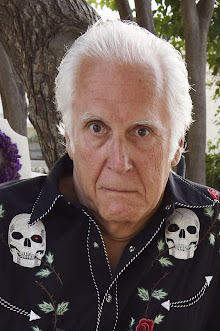
R.M. 'Dick' Cartmel, hard at work, chiselling fresh words from the word face
But out of the blue at Bristol, Sarah asked me if I’d like to join her, production manager Kelly Mundt, and Dick himself for a trip to burgundy the following month to help celebrate the launch of Dick’s first novel in translation, L’AFFAIRE RICHEBOURG, translated into French by Françoise Renevret.


How could I resist the lure of a part of France unknown to me, as well as a chance to compare the French high-speed TGV to the Shinkansen I’d ridden in Japan?
The TGV, displaying a magnificent insect collection
Coupled to that, I am currently reading the English version of Dick’s book – THE RICHEBOURG AFFAIR – and thoroughly enjoying the diffident character of Commander Charlemagne Truchaud, and a storyline that is interwoven with the business of winemaking. I hope the French take it to their hearts. The book – and the series – deserves all success.
The countryside of the burgundy region, as seen from the TGV
Dick Cartmel has a long association with this area of France, visiting as a child, and returning as a medical student in Dijon, probably more years ago than he cares to recall. He has a close relationship with friend Alain Ampaud, whom he refers to as his “French brother”. Indeed, it is Alain’s mother-in-law who did the translation for RICHEBOURG, and the book is dedicated to Alain’s grandmother.

During his student years, Dick wrote an alternative-history novella, but it wasn’t until he retired from his Peterborough General Practice in June 2012 that he returned to his passion for the written word. “I set off for Nuits-Saint-Georges the following day.” He had already spent holidays for the previous five years sitting in cafés in the town with Truchaud whispering in his ear.


He conceived the stories as a trilogy from the outset, with THE RICHEBOURG AFFAIR (2014) beginning in the spring with the pruning and the first shoots of the vines, moving through the summer flowering with THE CHARLEMAGNE CONNECTION (2015) and finally on to the last installment, which will be called THE ROMANÉE VINTAGE, set in September and due for publication early next year.


Truchaud, so Dick claims, arrived almost fully formed, with his name and signature trenchcoat intact. “That was probably something to do with Columbo,” he admits. “I’ve done all sorts of unspeakable things to that trench coat.”


Truchaud himself is rather shy, and uncomfortable with women – especially those with whom he has some kind of romantic attachment. Dick has spent some time with the local gendarmerie, asking questions, but the books have allowed him to indulge in his other passion, which is wine in general and the wines of the burgundy region in particular.

As well as help on the forensics side from pathologist Nick Marquez-Grant, Dick also has a “vinicultural editor, David Clark,” who advises on any technical matters beyond Dick’s range of knowledge.

However, Dick likes to be hands-on in his research, spending most of September 2014 picking and sorting grapes alongside experts with years of experience. A crop of bonnes mares and musigny grapes were saved almost by instinct before a violent storm would have ruined that year’s crop. “The musigny grapes are used to make a wine that is described as slipping down your throat like little Jesus in velvet trousers.”
One of the premier vineyards of the area. Each vine is possibly a hundred years old and worth a lot of money.
Beaune and Nuits-Saint-Georges are certainly beautiful French towns, the soft sandstone buildings contrasting with the sharp rooflines, and the serried rows of vines standing squat and orderly in the vast roadside vineyards. I can understand the quiet fascination it holds for Dick, even without quite his level of practiced appreciation of the wine itself. Indeed, if the much-vaunted ‘Brexit’ is voted for next week, he may well be moving out here more permanently.

Second in the trilogy
This week’s Word of the Week is viniculture, meaning the science, study and cultivation of grapes specifically for making wine, as opposed to viticulture which simply means the science, study and cultivation of grapes in general.