
Annamaria (She, her, hers) on Monday

It was a few years ago that I first attended a conference where attendees were asked to identify which gender pronouns they preferred to have applied to themselves. I had been prepared for the experience because I had been clued in by the incomparable podcast whose praises I regularly sing. RadioLab had, shortly before, broadcast a series called "Gonads." These fascinating episodes present, in detail, what happened inside our mothers' bodies during and after conception that eventually led to each of us becoming individually and uniquely us.
Aside: "Gonads," as applied to male anatomy, is a word that has taken on comic proportions in English. But both males and females, for the most part, have gonads. In women, we call them ovaries.

An early episode of "Gonads"details how most of the time the fetus develops with either two X chromosomes or an X and a Y. Most of us have learned that women have two Xs and men have an X and a Y. But healthy human beings sometimes come along with other combinations. Two Xs and a Y. Two of each. An X and two Ys.

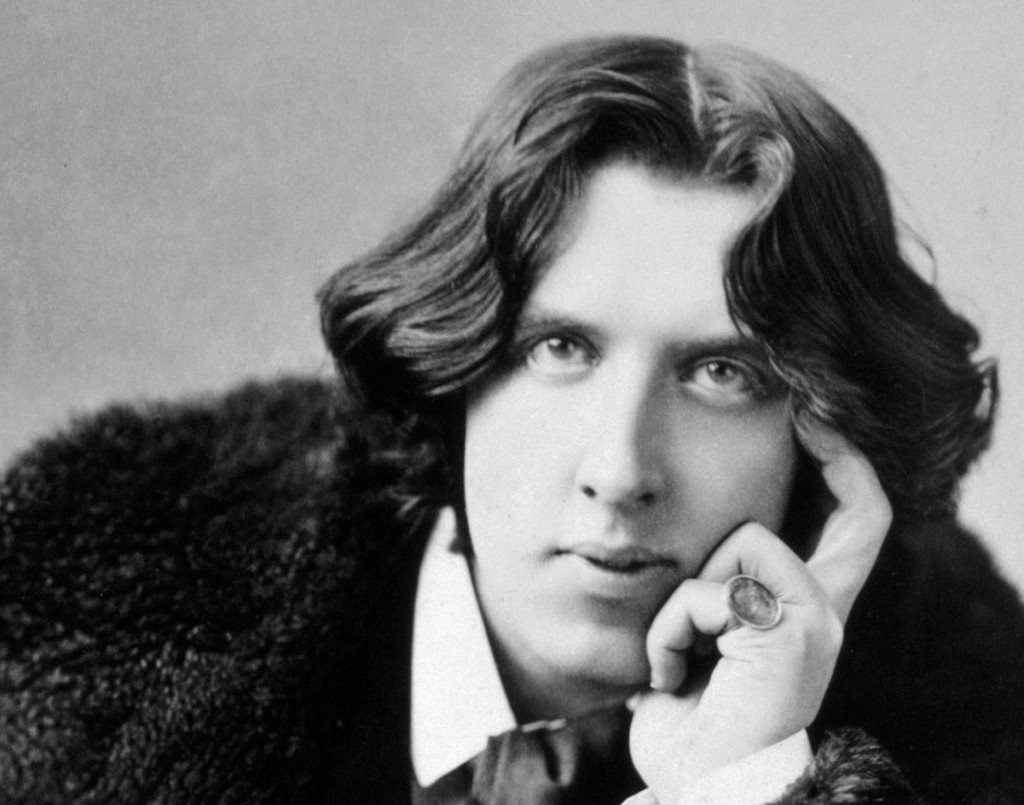
Because the English language uses gender-specific pronouns, speakers have made assumptions about the gender of people. Mistaken assumptions have sometimes caused embarrassment and pain. Hence, the new practice--in the USA and perhaps elsewhere--of asking people what pronouns they prefer to be used in their case. I was recently at a party, conversing with lesbian couple that I know. A person, newly introduced to me but unknown to my women friends, took a chair near us, and without preamble demanded to know my opinion of this "they, them, she, her stuff." I admit that I was hyper-sensitized by the company I was keeping at that moment. I spoke gently but I said what I really think: that the current practice is a way of righting a past wrong. That the designations and their appearance in people's signatures gives encouragement to those who, until now, did not feel that society welcomed them as full-fledged members.

In the past few days I have begun to wonder how this process is working itself out in countries where the local language employs gender grammatically. In Italian, a language I did not acquire until after the age of 40, mixing up the gender of a noun can have effects similar to using the wrong tone for a word in Mandarin. Una mostra is an exhibition. Un mostro is a monster. Added to my difficulty when learning Italian was that that French, which I learned first, uses gender in similar ways. But the same thing can be masculine in one and feminine in the other. It's la mer in French, but it's il mare in Italian, where some words that end in O are feminine. It's la radio, not il radio. And pronouns that apply to people can change depending, not on the sex of the person, but on the level of familiarity between the speakers. One uses tu with familiars and small children, and Lei with strangers. But lei means "she" in the third person. That polite form of "you" is written with a capital, but you can't see the capital letter in speech.
Then there are languages that follow Latin and also have a neuter grammatical designation. What happens there?
I wonder: How are speakers of languages other than English trying to be culturally sensitive to people who have been forced into uncomfortable gender roles?





