Showing posts with label Maryland. Show all posts

Wednesday, May 19, 2021

The Great Cicada Summer

 Sujata Massey


Hello, 2021!


All over Maryland, there’s one sweet word I hear every day: cicada.


The cicadas are here.


Or, should I say, Magicicada?Or to be very precise--I can't say it, but I can spell Magicicada septendecim, Magicicada Cassini and Magicicada septenecula, the three species making up Brood X which is based in Maryland and the Mid-Atlantic states nearby.


Do you know cicadas? They are much nicer than locusts. They don't leaves, for a start.


They are such special, here today, gone tomorrow friends. They bury to the ground as nymphs, wait seventeen years, and then come out to say hello.I am talking about a very special flying insect that emerges in eastern North America after a thirteen- or seventeen-year-long hibernation underground.  This brood of cicadas manages to survive predators like birds and other small mammals is by bursting forth in such numbers that the predators can eat their fill, and there are still enough left to mate and lay eggs for the future. Scientists don't know if cicadas have an internal body clock that gives them a mid-spring alarm wake-up. That is one long battery, to go for seventeen years.  


And what do cicadas have to do with writing? Well, some of us take seventeen years to get a career going. Others take seventeen years to write one book. Cicadas know how much time it takes to make art.


Molting on trees, where cicadas leave their exoskeletons


Hey, that old suit just isn't me!


Maryland rightly considers itself the world’s cicada capital because our area has been home (for perhaps 40 and 200 million years!) to a brood (species) that is the largest in the country. The estimated density of a cicada emergence is 1.5 million emerging per acre. Before you start imagining my Cicada summer as a sci-fi horror movie, let me confess I only saw two cicadas today during two hours of weeding. This could be related to environmental change, including the gardening “improvements” we’ve done, digging deep and adding more earth in various places. I was weeding this afternoon and only saw two cicadas. But when I walk through my neighborhood, I'm relieved to see some streets have healthy populations.


Looking for love in the right place


I remember so many more cicadas in years past. 


My first experience was in 1987, when I was a young reporter at the Baltimore Evening Sun. I remember cicadas flying into my hair when I was leaving my city apartment for work and going out in early evening on dates. I saw their shells littered on the pavement. drove through wooded areas, the sound of the male cicadas contracting their abdominal muscles was like the most overpowering techno music. A single cicada can make noise of 110 decibels, on par with a lawn mower. They definitely interfered with the outdoor bar scene.


I was a young mother for the next generation of Brood X in 2004. I recall the kids swinging on swings and climbing up slides, not running in fear from flying bugs. But I wasn’t that focused on appreciating the cicadas. It was the height of the Iraq War, and the Navy had recalled my husband to active duty. Would he go to the front lines in the Middle East or somewhere else? How would I manage the young kids and finish the book that was due? The cicadas’ songs could not drown out the panicked noise in my head. 


This time around, the cicadas arrived the week after my daughter’s death. At the start of April I’d told her they would be flying all summer,  and she’d winced, anticipating an insect invasion she didn’t remember from her childhood. But she missed every one of them. Neel’s here and keeping his eyes out, but he's still waiting for the big show. As a musician, it could impact the outdoor concerts he hopes to play. My husband is anxious for the cicadas' well-being, carefully lifting them off his car tires so they don't perish, and dissing the few neighbors who have chosen to protect young trees with fine mesh.


As I watch the cicadas crawl up trees to gather strength, and burst from their shells, I marvel at their steadfastness—and how patiently they wait, underground, for a few dazzling weeks of communal joy.


I may see red, but I'm not dangerous!


Wednesday, July 3, 2019

Plum Passion

Sujata Massey

A book I owned and adored as a child


In Maryland, strawberries mean spring, and peaches and plums mean summer. These aren’t the only fruits that prosper due to our excellent fruit-growing climate, but they are ones that are truly ravishing and worth only eating in season. 

I feel especially passionate about plums this summer. They are so varied—my farmers market had at least five varieties last weekend. The sensual experience of looking inside a plum reveals gold, pink, or purple or red flesh. The taste ranges from tart to tangy to sugary sweet. Sizes range from slightly bigger than a cherry to palm-sized. It carries a rose-scented perfume, because the plum is actually linked to the rose family...stop laughing. I am not talking about sex, okay? I am talking about a healthy, anti-oxidant rich plant.


Despite its obvious allure the plum is regarded as the slightly odd cousin to most stone fruit. Perhaps this is because some raw, ripe plums are still tart--and after cooking, plums take on a deep flavor. If the plum is dried, it becomes a prune—and there are no end of jokes about the medicinal benefits of prunes.  

I have a special affinity for plums because my German mother introduced me to them. In fact, she considers them the highlight of summer baking. I still remember my mother carrying crates of prune plums into our Minnesota house every August. These were not Minnesota plums—the weather there is too cold to plant plum orchards. But these California plums with tart interiors that were only in the supermarket for a few weeks were treated like treasures. Once the plums were free of stones--a tiresome process that could take hours--they became the stars of Pflaumenkuchen: neat rows of plum slices arranged atop a yeast dough stretched across a cookie sheet. Warm Pflaumenkuchen was served with coffee to adults, because very few children were excited about a sour fruit dessert topped with plain whipped cream. You could say that plums are the Cabernet Sauvignon of fruit. Big, bold, mind-blowing.


Other plums from the crates were boiled down into a dark, thick plum jam that would be eaten year round on toast. I liked this, too. After a childhood of plum jam, most jams made from strawberries and raspberries taste too sweet.

I live a thousand miles from my mother now, so we cannot make plum desserts together. But I am set on carrying the plum torch, and I have sampled all the different kinds of local plums that show up at my farmer’s market. This past weekend, I got a $6 container of Methley plums, doll-sized, purple globes that are slightly bigger than cherries. They are sweet and much juicier than the plums used in German confections; I understand the Methley originated in Asia, where plums are much juicier than the varieties native to Europe. 


I remain cheerfully determined to introduce plums to the prejudiced. This week, I found an easy recipe for deconstructed plum galette on the Food52 website. It specifically calls for Methley plums. Preparing the fruit from pitting to cooking took less than fifteen minutes, because the plums are small enough to fit inside a cherry-pitting tool.  

The dough was sticky and a little tricky to work with. It baked up delicious and crisp and the perfect foil to warm, juicy fruit. as the recipe suggested, I used two rounds to create a kind of plum sandwich. They were the perfect counterpoint. With cooking, the very sweet plums I'd tasted raw had deepened to a nuanced, bittersweet flavor.

My son took one look and said, no thanks.


Wednesday, November 7, 2018

The Race is Done!

Sujata Massey


Disclaimer: This column is about politics. It does not reflect the opinion of Murder Is Everywhere in general...just this writer.

Two years ago, it was my rotation for blog duty the day after the US presidential election. I planned to write something about it that night--because nothing else seemed relevant. I spent the day buzzing around, feeling anxious yet certain the stress would soon end, and I'd be celebrating my first woman president.

I turned out to be wrong. And as the shock at Donald Trump's surprise victory turned into a dull pain, wore off, people like me began thinking, how can we come back from this? The hope was for midterm elections in 2018. Many people who would not have considered a career in politics before decided to run for office, and there are record numbers of women and immigrant Americans on the ballot. 

Typically, the voting turnout for midterms is quite low—but the early voting for the 2018 midterms is significantly fired up, on both sides of the divide. 

I live in Maryland, a state where the most apparently important choices for me were whether to re-elect our incumbent Republican Governor Larry Hogan, our Democratic Attorney General Brian Frosh, and our U.S. Senator, Democrat Ben Cardin. I’m telling you, although a lot of people feel strongly about keeping their voting private. That’s why there are curtains around the tables-for-one where we fill out the ballot. I’m glad that where I am, it’s still done with a pen.

This midterm election has hung in my psyche like a suspense novel for two years. And today, I woke up to pounding rain and no sunshine. My mind went first to young voters, and whether they would think it was worth leaving their cozy nests to vote. Even though Uber and Lyft are offering free and reduced fares for people going to polls.

But is weather worth the worry? On November 8 2016’s election day, it was warm and beautifully sunny. I left Maryland to help with voter turnout in Pennsylvania. The people I met were lovely, the volunteers were stoked. It seemed like the very best kind of day to enhance voter participation—but in Pennsylvania, the state voted red for Trump.

I feel like I have a type of PTSD from being so disappointed in the last election. Perhaps that’s why I’ve given money to senator candidates in various states, but I did not abandon my own work to drive out of state to volunteer in different states, as I’ve done in the last two national elections. I am a shadow of myself. 

Today I worked on writing in the morning and went to the grocery store and water aerobics. It was raining, and I didn’t want to be drenched on my way to the neighbrhood's elementary-middle school that is also my polling place. The rain was just a faint sprinkle when I walked over at 1:30 with my husband. The school fence had a few political advertisements on them meant to remind voters of the obvious, but I saw no workers. I did see a friend from the neighborhood who joked he had just voted, and his vote would cancel mine. Is my choice written on my forehead—or was his assumption based on the fact that I’m an Asian woman? A joke between friends took on a curious subtext. That has what has happened, since the last election.

Inside the cafeteria where I once opened yogurt for kindergarteners, I greeted a few more neighbors. There were a few people waiting, and it took about ten minutes to check in--much easier than the hour-and-a-half line of my early voting friends told me she’d experienced. As I carried my ballot to an available curtained voting station, a five-year-old boy playfully ran out from underneath it, bringing back a sweet memory of voting here with a toddler daughter hanging onto my leg.

I thought it was important that my daughter, followed by my son, visit the poll with me. I wanted the children to think of voting as something to look forward to, and today I saw the voting officials give "I Voted" stickers to children, perhaps hoping for the same thing.

The first time I voted I was in my thirties. I had finally gotten naturalized, exchanging British citizenship for US citizenship. While I was naturalized in 1998, 2000 was the first year I voted in a US election. I voted for Al Gore, who lost to George W. Bush. But then—I had eight years of Barack Obama.

At ten o’clock tonight, I turned on the television to see what was happening with the election. I saw evidence of a much anticipated senate contest in Texas go to the incumbent, Republican senator Ted Cruz. I had been fixated on his challenger, Beto O'Rourke.

Yet Jacky Rosen, a strong woman Democrat running for Senate in Nevada, won. And many more women appear to be winning House seats, perhaps as continued fallout from the behavior of senators during the Brett Kavanaugh hearings. I am intensely grateful for this and looking forward to seeing what comes next.

 Two different sides seem to present us the chance for a balance of power.

The race is done, and I'm ready for a glass of water.

Wednesday, March 1, 2017

The East Coast's Steamy Springtime

Sujata Massey


T-shirt weather in February!

“Want to go for a walk?”

My daughter surprised me with this request last week. During the Baltimore winter, nobody in the family walks together--even the dog doesn't want to be out more than five minutes.

While Maryland winters are not fierce like the seasons I spent in Minnesota, they are still cold. There are always a few snowfalls and a cold wind blowing off the Atlantic. The difference between winter in Maryland and other places is that the damp wind can chill you to the bones. February is a good month for making soup.

It certainly hasn’t been the usual kind of February. Last December, meteorologists predicted this would be another warm winter, just like 2016. The forces at work were an especially strong El Nino wind and an Arctic Oscillation, a stream of winds above Canada and Alaska that has chosen to trap the cold weather far to the north of us. The US Geological Survey says spring arrived to the Washington DC area 22 days early.

I'm not ready to say that we are in spring (official date of Spring Equinox is March 20). In Baltimore--an hour's drive from DC--this winter brought only a slight, powdered-sugar style dusting of snow: less than an inch. The mountainous areas in Western Maryland where people ski had a tremendous melt of the small amount of snow that fell.  The ski resorts are all but closed up for the season, when they ordinarily would have had business for at least another month. It's weird. Just like the active calls of birds to each other, seeking mates, just a little bit too early.

When I say this is a hot winter, I mean that it’s been like California on many days. My husband, perhaps out of loyalty to his birthplace, says it's a "New Orleans winter." Instead of the typical temperatures in the '30s, it's been in the 60s and 70s Fahrenheit for many days in the past weeks. It reached 77 last Friday when I went walking with the dog and my daughter. At Johns Hopkins, the school set up signs encouraging students to practice mindfulness while outdoors. The staff arranged beach chairs to encourage meditating in nature, but the Hopkins students seemed more intent on getting to class.


No time to sit and sun oneself at Hopkins!


daffodils springing up at Johns Hopkins Homewood campus


For me, the national news has been so chilling, that the warm weather gives me a sort of fragile happiness—the feeling that life still is good. Walking in nature is good for mental health, as well as physical. 

I invited my husband to walk with me last Sunday afternoon and we took a 45 minute stroll through the neighborhood. Crocus in February are par for the course. However, we saw sights we would normally not see for a month: magnolia trees in bud, and pink hellebores in bloom. I planted a few hundred bulbs in my own garden around Thanksgiving week, and they are starting to show their faces. That seems hardly enough time underground to get their roots established.


magnolia buds 


hellebores


Apparently Japanese apricot trees and some early-blooming cherry trees are already in flower. I’m worried that a cold snap will kill the display; just as I feel nervous for any birds laying eggs. I also wonder what might happen if birds and rabbits decide to procreate early. Could their eggs survive a freeze?


well-naturalized crocuses


My fingers are crossed that the steamy early spring will not lead to a silent spring later on.

Wednesday, April 6, 2016

Trumping is Everywhere Now

Sujata Massey


Perhaps you have heard about the unexpected drama in the US presidential primary races. Are you surprised, shocked, or startled? I’ve been getting a sick feeling each morning when I pick up the Washington Post and read news about violence at rallies, hateful statements, and the rest. But I’m just as worried about a local election that could reframe life for my 620,000 neighbors. This is the 2016 race for Baltimore’s next mayor. 


When I moved to Baltimore, Maryland in 1982, the mayor was the late William Donald Schaefer, a slightly comical, profane, Democrat who could be called a curmudgeon one day and a cheerleader the next. Baltimore was much larger then: 776,000 people, although that number came after a slow, measured exodus of city residents from the late 1960s onward. City residents were dealing with the disappearance of shipping, steel and other old-industry jobs, but they hadn’t yet faced the plagues of cocaine and heroin addiction. Mayor “Willie Don” lured big companies and builders to create Baltimore’s Harborplace development. Urban homesteaders paid $1 for row-houses they pledged to renovate that would serve as their homes. A federal and a city program helped homebuyers built great residential neighborhoods like Federal Hill and Canton.
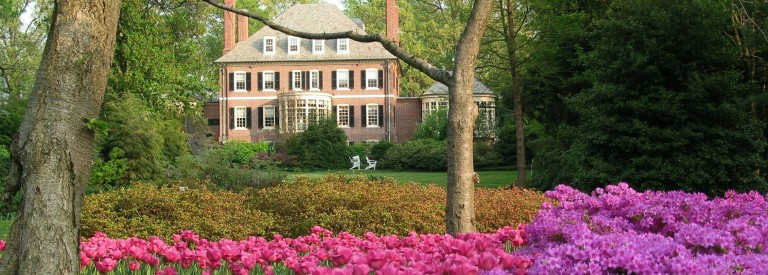
Baltimore's Sherwood Gardens in Guilford


If you live in the central zone bordered by the harbor to the south and the suburbs the north, life is still pretty pleasant. Our historic treasure of a house is larger here than our last one in the midwest, and was half the buying price. Our work lives are going well, and we love the weather and friendly people around us. But the factors I've already mentioned  have built a second shadow city that is larger than mine.
Arrest of Freddie Gray captured on cell phone video and shared by Baltimore Sun

In April 2015, a young man named Freddie Gray got spooked when he saw a group of police and started running. The cops caught him, put him in shackles in the back of their van, and took him on a rough ride to the jail that resulted in fatal injuries. Peaceful protests and discussions about Gray’s death escalated into a horrible day of mob destruction that was televised worldwide.

Following the events now called the Baltimore Uprising, our current mayor, Stephanie Rawlings-Blake, announced she wouldn’t run for re-election but would focus on rebuilding the city. The old police chief was fired, and a new police chief, Kevin Davis, is making a tremendous impact in solving crimes. However, the city can’t make the overall changes desperately needed without a strong mayor.

Currently there are many choices vying to be the Democratic candidate; and Democrats typically win the city. The candidates have been appearing at casual gatherings in people’s homes, community centers, churches and pubs. I’ve been to a few of these informal events and enjoyed the chance to ask serious questions directly. Televised and webcast debates and roundtable discussions with these candidates have been remarkably civil and friendly. They seem to be in harmony on the importance of giving people coming out of prison a real chance at work; drug treatment; fixing the schools; providing real education in the schools; and improving police-community relations.

The six most viable candidates include two city councilmen, Carl Stokes and Nick Mosby, who speak of their experience representing hard-hit neighbors. Sheila Dixon, a former Baltimore mayor who resigned in 2010 to avoid standing trial on charges of corruption, wants back in because she says she is the only one who knows how to do the job. Catherine Pugh, a Maryland state senator, is proud of pushing the state to send Baltimore needed funds. Elizabeth Embry, the deputy state’s attorney and former chief city prosecutor, says she wants to use data to make the city work and highlights her crime-fighting expertise. David Warnock, a businessman/philanthropist who moved here from Michigan, has big ideas about jobs, transportation infrastructure, and schools. You can watch a roundtable discussion with the gang on ABC's Square Off!


Right now, Sheila Dixon and Catherine Pugh are running neck and neck, but I’m attracted to a few of the underdog candidates. And here’s where the lessons of the national presidential race come in. A whole lot of small, respectable presidential candidates each gathered small pockets of votes and mini-spikes in polls. These scattered votes put Donald Trump front and center. Therefore, I fear a vote for one of the little guys in Baltimore is a vote for Ralph Nader. And there's yet another reading of the situation. There are others who will look to another side of the current political game and say that  the sparkling starlets I'm considering are only building steam on what might be called The Trump Effect.

Should follow my heart or my head? Still deciding. Could the two be linked?

Wednesday, December 16, 2015

Miracle on 34th Street


Baltimore is an older East Coast city with more than 200 distinctive neighborhoods. It's a port and manufacturing city that flourished during the 19th century. Starting in the 1960s, these industries declined and ultimately vanished.  Among the hardest-hit city neighborhoods was Hampden, which had originated as a mill village close to the Jones Falls. But about twenty years ago, artists and artisans began buying and renting the stone mills and cottages, as well as the hundreds of brick and stucco row houses on Hampden's tidy streets. Restaurateurs, antique and specialty store owners and service providers followed. This reborn residential-commercial area drew Baltimoreans hungry for good meals, special shops, and a stimulating life. 
A creatively decorated antiques and home decor shop in  Hampden

You've heard this gentrification story before: it's happened in New York, Paris, London, and so many other cities. The end result is a lot of the old people are driven out. Hampden (we pronounce it HAM-den) may sound like Baltimore’s own Soho, but what’s made it click is that the original residents welcomed the new folk, and the newcomer-artisans don't make gobs of money. They're as hardworking and warm as the Hampden originals.

Shared neighborly cheer reaches its peak with an event called “Miracle on 34th Street” or simply “The Hampden Christmas Lights.”

Home on the right features some Baltimore icons: Natty Boh beer and Utz Potato Chips
According to the  neighborhood's holiday website, after World War II several households on the block of 34th Street between Keswick Road and Chestnut Avenue began helping each other create holiday light displays. After all, during the war years, Baltimore homes had to paint over their window panes or cover them with dark paper to dissuade the anticipated Axis bombers. I've still got paint in the corners of some of my windowpanes.

Back to Hampden. As years passed, gaudy, kitsch, and wildly artistic Christmas dƩcor has made one block of 34th Street the go-to destination for families from all over the city. Just imagine: starting Thanksgiving weekend in late November, the neighbors on the north side all string lights from their third-story row-house roofs right across the street to the neighbors on the south side, forming a canopy of sparkle. Electric bills go way up, but no corners are cut in creating this fantasy-land.

34th Street at night


Hawkers are not allowed on the block, but established businesses thrive on the neighboring avenues and 36th Street, which is simply known as "The Avenue."  I got to be a part of that scene this year, when  the Falkenhams hardware shop on Chestnut and 34th (a very old local business) and The Food Market (one of the Hampden’s most popular new restaurants) generously offered space and donated food for a service-trip fundraiser for the GreenMount School. My husband, son and I sold hot chocolate and hotdogs and chilli to spectators of all ages who’d come to marvel at the lights.

Here's a short  Christmas Lights video  giving a sweeping look at 34th Street in Hampden in a recent year.


You have to be in Hampden at night to catch the excitement and magnitude of the decorations. But midday in December is perfect for relaxed shopping and more photography.


A tree made of hubcaps on 34th Street


A skeleton Santa holding a pie outside Dangerously Delicious


Indian colors and tiny twinkling lights at The Verandah, a South Asian cafe


A vintage Santa is the upstairs doorman of an antique shop


I imagine the 19th-century mill workers and their families would not recognize their neighborhood in 2015, but they'd be pleased.